
Introduction
Importing a passenger car to Senegal costs about 45% of its CIF value in taxes: 20% ECOWAS customs duty, five small levies totalling 2.9% of CIF, and 18% TVA on the running total. Used cars must be no more than 8 years from first registration, and Senegal requires left-hand drive (LHD).
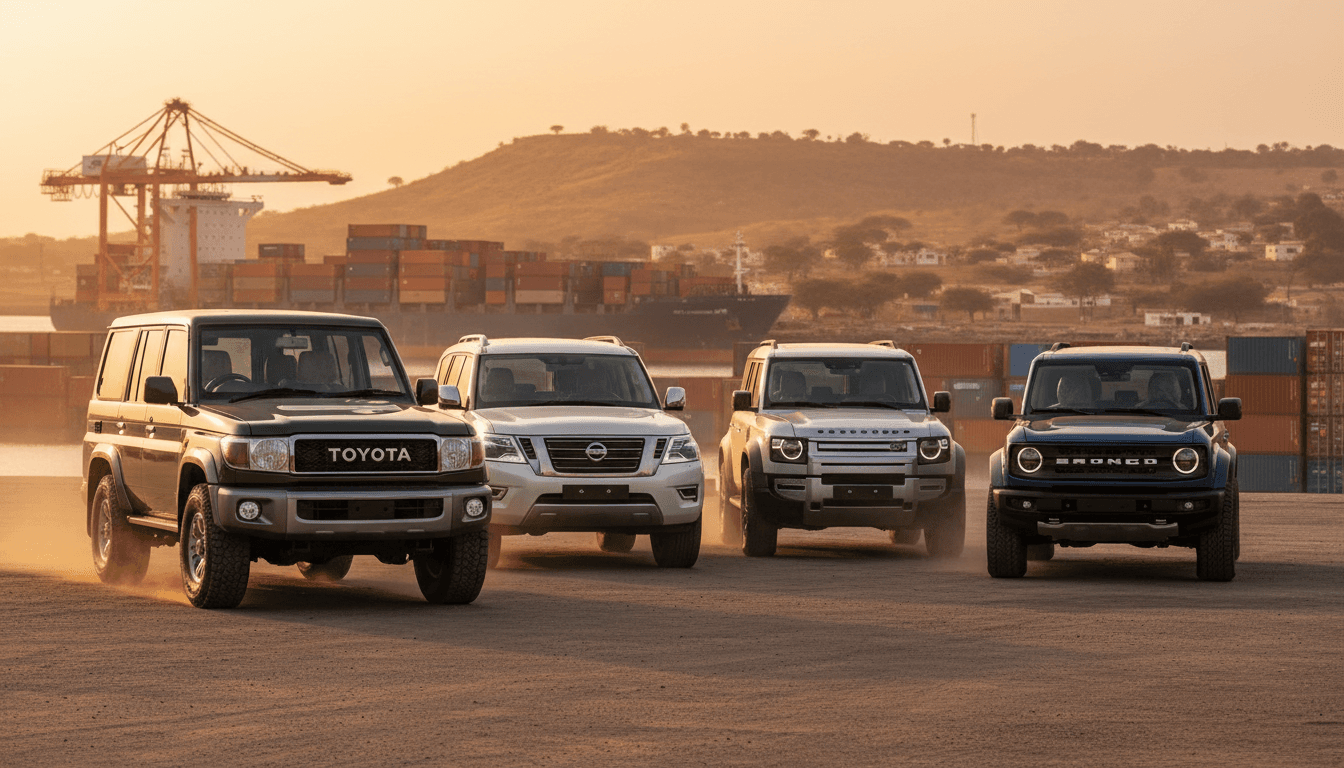
Senegal is one of West Africa's most strategically positioned countries for vehicle imports. Situated on the Atlantic coast with Dakar as its economic capital, the country serves as a gateway to the broader francophone West African market, and most cars, pickups and commercial vehicles arrive through the Port of Dakar.
The Senegalese customs regime is governed by the ECOWAS Common External Tariff (Tarif Exterieur Commun, or TEC), which Senegal shares with the other ECOWAS and WAEMU (UEMOA) member states. On top of the common tariff, Senegal applies a statistical fee (Redevance Statistique), three community levies (ECOWAS, WAEMU and African Union), a Senegalese shippers' council levy (COSEC) and Value Added Tax (Taxe sur la Valeur Ajoutee, or TVA) at 18%. Because only the TVA compounds, the total is a near-constant 45.02% of CIF for any passenger car, whatever its engine size or fuel.
Both new and used vehicles may be imported into Senegal, although used passenger cars face an age limit of eight years from the date of first registration. The country drives on the right side of the road and requires left-hand drive (LHD) vehicles. Importers must engage a licensed customs clearing agent (commissionnaire en douane agree) to process all documentation through the GAINDE customs management system. This guide covers every step from eligibility and duty estimation through customs clearance, technical inspection, and registration.
Quick Facts
| Detail | Information |
|---|---|
| Customs Authority | Direction Generale des Douanes (DGD) |
| Traffic Side | Right-hand traffic |
| Steering Requirement | Left-Hand Drive (LHD) required; RHD restricted |
| ECOWAS Customs Duty | 20% of CIF for passenger cars (HS 8703); pickups and goods vehicles (HS 8704) 20% or 10%, under review |
| Value Added Tax (TVA) | 18% on CIF + duty + all levies |
| Statistical Fee (RS) | 1% of CIF |
| ECOWAS Community Levy (PC) | 0.5% of CIF |
| WAEMU Solidarity Levy (PCS) | 0.8% of CIF |
| African Union Levy (PUA) | 0.2% of CIF |
| Shippers' Council Levy (COSEC) | 0.4% of CIF |
| Used Vehicle Age Limit | 8 years from date of first registration (passenger cars) |
| Main Port | Port of Dakar (SNDKR) |
| Main Airport | Blaise Diagne International Airport (DSS) |
| Customs System | GAINDE (Gestion Automatisee des Informations Douanieres et des Echanges) |
| Customs Clearance | 5-10 business days (complete paperwork) |
| Clearing Agent | Mandatory (commissionnaire en douane agree) |
| Currency | West African CFA Franc (XOF) |
| Total Tax Burden (typical) | About 45% of CIF for passenger cars (33-45% for pickups) |
Types of Cars That Can Be Imported
Senegal allows the import of both new and used vehicles, subject to age restrictions, documentation requirements, and technical standards. The same ECOWAS CET duty rates apply regardless of whether the vehicle is new or used, though used vehicles are subject to a depreciation-based valuation system that can reduce the taxable base.
New Vehicles
New vehicles from any origin country can be imported into Senegal provided they meet technical and safety standards. New vehicles are not subject to age restrictions and are assessed for duty on the basis of their invoice value or the catalogue/list price, whichever is higher. This is particularly relevant for vehicles sourced from India, the USA, Japan, or Europe, where manufacturer pricing is well documented.
Used Vehicles
Used vehicles must be no more than 8 years old from their date of first registration at the time of import. For vehicles arriving in 2026, this means the vehicle must have been first registered on or after 1 January 2018. The age is calculated from the date of first registration in the country of origin to the date of customs entry in Senegal.
Used vehicle valuation uses the Argus depreciation system:
- Used within 1 month: 5% depreciation from new price
- Used 2 months: 15% depreciation
- Used 3 or more months: additional 1% per month
- Maximum depreciation: 75% of the new catalogue price
This means even a heavily used vehicle will be assessed at no less than 25% of its original catalogue value for duty purposes.
Commercial Vehicles
- Passenger vehicles for commercial use (7 or more seats): maximum 8 years old
- Goods vehicles, trucks and buses: a more permissive age limit than passenger cars applies; the exact threshold is under review, so confirm it with your clearing agent before shipping
- Motorcycles and cycles below 50cc: prohibited from import
Open-bed pickups (Toyota Hilux, Ford Ranger, Isuzu D-Max, single or double cab) are classified as goods vehicles (HS 8704). Pickup-based SUVs with an enclosed body, such as the Fortuner, Everest, MU-X or Pajero Sport, are passenger cars (HS 8703) and pay the 20% passenger-car duty.
Electric Vehicles
There is currently no confirmed EV or hybrid concession for privately imported vehicles in Senegal. Battery electric (BEV), plug-in hybrid (PHEV) and self-charging hybrid (HEV) vehicles pay the same 20% duty, levies and 18% TVA as petrol and diesel cars, about 45% of CIF in total. EV charging infrastructure is minimal but developing in Dakar.
Cars You Can Import to Senegal
Each card is a full landed-cost calculation: the car's price, shipping, every duty and tax, and handling, worked out on 9 November 2026 with the rules in force that day. All are left-hand drive to suit Senegal's roads. Tap a car to see its full breakdown, or open it to change the trim, colour or port.
More cars you can import to Senegal
New cars IPAS sources to order that meet Senegal's import rules. Prices are ex works, before shipping and duty. Open a car to work out its full landed cost.
 LHDBackorder2026
Toyota Land Cruiser 78 Troop Carrier
SUV · 2 VariantsDieselFrom $54,200Ex Works, UAE LHDBackorder2026
Toyota RAV4 Prime
SUV · 4 VariantsPlug-in HybridFrom $49,800Ex Works, USA LHDBackorder2026
Toyota C-HR
SUV · 2 VariantsElectricFrom $44,400Ex Works, USA LHDBackorder2025
Chevrolet Corvette Stingray Coupe
Coupe · 3 VariantsPetrolFrom $86,400Ex Works, USA LHD/C-RHDBackorder2026
Chevrolet Silverado 3500 HD
Pickup · 10 VariantsPetrol · DieselFrom $64,100Ex Works, USA LHD/C-RHDBackorder2026
Chevrolet Silverado 2500 HD
Pickup · 17 VariantsPetrol · DieselFrom $62,600Ex Works, USA LHD/C-RHDBackorder2026
Cadillac Escalade ESV
SUV · 11 VariantsPetrolFrom $112,900Ex Works, USA LHDBackorder2026
Xiaomi SU7 Ultra
Sedan · 1 VariantElectricFrom $84,100Ex Works, China🇨🇳 LHDBackorder2026
Xiaomi YU7
SUV · 5 VariantsElectricFrom $37,100Ex Works, China🇨🇳 LHD/C-RHDBackorder2026
Ram 1500 RHO
Pickup · 1 VariantPetrolFrom $86,500Ex Works, USA LHDBackorder2026
Lexus IS 350
Sedan · 4 VariantsPetrolFrom $49,800Ex Works, Canada LHDBackorder2026
Lexus TX
SUV · 10 VariantsPetrol · HybridFrom $61,000Ex Works, Canada LHDBackorder2026
Denza N9
SUV · 6 VariantsPlug-in HybridFrom $61,900Ex Works, China🇨🇳 LHD/C-RHDBackorder2025
Ford Super Duty F-250
Pickup · 10 VariantsPetrol · DieselFrom $54,400Ex Works, USA LHDBackorder2026
Mercedes-Benz AMG GLS
SUV · 1 VariantHybridFrom $164,900Ex Works, Canada LHDBackorder2026
Dodge Durango
SUV · 8 VariantsPetrolFrom $46,800Ex Works, USA
Seaports and Airports Supporting Vehicle Import
Almost all vehicles entering Senegal arrive by sea through the Port of Dakar. Air freight is available through Blaise Diagne International Airport for high-value or urgent shipments, though this is uncommon for standard vehicle imports due to cost.
Seaports
| Port | Code | City | Notes |
|---|---|---|---|
| Port of Dakar | SNDKR | Dakar | Primary vehicle import port; container and RoRo capable |
Port of Dakar Details
The Port of Dakar is the principal gateway for all vehicle imports to Senegal. Located on the Cap-Vert peninsula, it is one of West Africa's deepest natural harbours and handles the majority of the country's international trade. Key features include:
- Container terminal with modern handling equipment
- Roll-on/Roll-off (RoRo) terminal for drive-on vehicle unloading
- Customs offices at Dakar-Port Nord and Dakar Port Sud
- Bonded storage areas for vehicles awaiting clearance
- Direct highway connections to downtown Dakar and the N1 national highway
- Regular shipping services from Europe, Asia, and the Americas
Vehicles arriving by sea must clear customs exclusively at the Dakar port customs offices. Overland arrivals through neighbouring countries can clear at regional border customs posts.
Airports
| Airport | Code | City | Notes |
|---|---|---|---|
| Blaise Diagne International Airport | DSS | Diass (near Dakar) | Air freight available; rarely used for vehicles |
Air freight is typically reserved for luxury or specialty vehicles where speed is critical. The cost of air-freighting a standard passenger car can be 5-10 times the sea freight rate, making it impractical for most imports.
Restrictions on Vehicle Import
Senegal imposes several restrictions and procedural requirements that importers must understand before shipping a vehicle.
Mandatory Clearing Agent
All vehicle imports must be processed through a licensed customs clearing agent (commissionnaire en douane agree). Individual importers cannot clear customs themselves. The clearing agent prepares the customs declaration (formulaire D10), manages document submission through the GAINDE system, coordinates inspections, and arranges duty payment. Agent fees typically range from 50,000 to 150,000 CFA (approximately $80-$250 USD) depending on the complexity of the shipment.
Import Declaration Requirement (DPI)
A Declaration Prealable d'Importation (DPI) is mandatory for all vehicle imports where the FOB value exceeds 1.5 million CFA (approximately $2,300 USD). Since nearly all passenger vehicles exceed this threshold, a DPI is effectively required for every car import. The DPI must be obtained before the vehicle is shipped.
Age Restrictions
- Private passenger vehicles: maximum 8 years from first registration; older cars are barred
- Commercial passenger vehicles (7+ seats): maximum 8 years old
- Goods vehicles, trucks and buses: more permissive limit (exact threshold under review)
- Motorcycles below 50cc: import prohibited entirely
Steering Configuration
Senegal drives on the right side of the road and requires left-hand drive (LHD) vehicles. Right-hand drive (RHD) imports are restricted, so do not ship an RHD car expecting to register it. Vehicles sourced from the USA, Europe, or India (for LHD-configured models) are best suited for the Senegalese market.
Cargo Tracking Note (CTN)
All Senegal-bound sea shipments require a Cargo Tracking Note (Bordereau de Suivi des Cargaisons, or BSC). This document must be obtained from the designated tracking authority before the vessel departs the origin port. Failure to present the CTN at Dakar results in penalties and delays.
No Individual Clearance
Unlike some countries where an individual can self-clear a personal import, Senegal requires all customs transactions to pass through a licensed agent. Budget for this cost when planning your import.
Duty Structure Overview
Senegal applies the ECOWAS Common External Tariff (CET) as the foundation of its customs duty structure. Five small levies are each charged on the CIF value, and TVA is then charged on the total. The result is about 45.02% of CIF for every passenger car, regardless of engine size or fuel type.
Key Tax Components
- Customs Duty (Droit de Douane) -- 20% of CIF for passenger cars (HS 8703), whatever the engine size. Pickups and goods vehicles (HS 8704) are quoted at 20% as the conservative figure; a 10% rate is also applied in practice and the correct ECOWAS CET rate for HS 8704 is under review. Vehicles of ECOWAS/WAEMU origin with a valid certificate of origin pay 0%.
- Statistical Fee (Redevance Statistique, RS) -- 1% of CIF.
- ECOWAS Community Levy (Prelevement Communautaire CEDEAO, PC) -- 0.5% of CIF.
- WAEMU Solidarity Levy (Prelevement Communautaire de Solidarite UEMOA, PCS) -- 0.8% of CIF.
- African Union Levy (Prelevement de l'Union Africaine, PUA) -- 0.2% of CIF.
- Shippers' Council Levy (COSEC, Conseil Senegalais des Chargeurs) -- 0.4% of CIF. This one is specific to Senegal.
- Value Added Tax (TVA) -- 18% of CIF plus customs duty plus all five levies.
- Excise -- No general excise applies to ordinary passenger cars. A special tax on very high-value or luxury vehicles is under review.
Calculation Sequence
The five levies are each charged on CIF alone (they do not stack on each other). Only the TVA is charged on the running total:
- Determine CIF Value (vehicle price + freight + insurance)
- Customs Duty = CIF x 20% (passenger cars)
- Levies = CIF x (1% + 0.5% + 0.8% + 0.2% + 0.4%) = CIF x 2.9%
- TVA = 18% x (CIF + Customs Duty + Levies)
- Total duties and taxes = Customs Duty + Levies + TVA
Worked Example: Passenger Car, CIF $25,000
| Component | Base | Rate | Amount (USD) |
|---|---|---|---|
| CIF value | -- | -- | $25,000 |
| Customs duty | CIF | 20% | $5,000 |
| Statistical fee (RS) | CIF | 1% | $250 |
| ECOWAS levy (PC) | CIF | 0.5% | $125 |
| WAEMU levy (PCS) | CIF | 0.8% | $200 |
| African Union levy (PUA) | CIF | 0.2% | $50 |
| COSEC | CIF | 0.4% | $100 |
| TVA | $30,725 | 18% | $5,531 |
| Total duties and taxes | $11,256 (45.02%) | ||
| Landed cost before port and clearing fees | $36,256 |
A double-cab pickup (HS 8704) at the same CIF costs the same $11,256 at the conservative 20% duty, or $8,306 (33.22% of CIF) if the 10% rate is applied. An electric or hybrid car costs the same as the petrol example above.
Used Vehicle Valuation
For used vehicles, Senegal applies an Argus-based depreciation to the catalogue price of the new equivalent. The depreciated value becomes the basis for CIF calculation. This means that a well-used vehicle may have a lower duty base than a new one, but the minimum assessed value is always 25% of the original catalogue price (maximum 75% depreciation).
Origin and Trade Agreements
Only vehicles of ECOWAS/WAEMU origin with a valid certificate of origin enter duty-free. The EU-West Africa EPA and AfCFTA do not zero-rate privately imported vehicles, so cars from Japan, India, the UK, Europe, the USA, Korea, China, Thailand and elsewhere pay the full 20% duty.
Get exact duty rates for your specific vehicle using CarImport.AI

Calculate your exact import duty to Senegal
Get a vehicle-specific duty and full landed-cost breakdown — HS classification, every tax, levy and FTA, plus shipping — calculated for your exact make, model and specs.
- Vehicle-specific HS code
- All duties, taxes & FTAs
- Shipping + est. landed cost
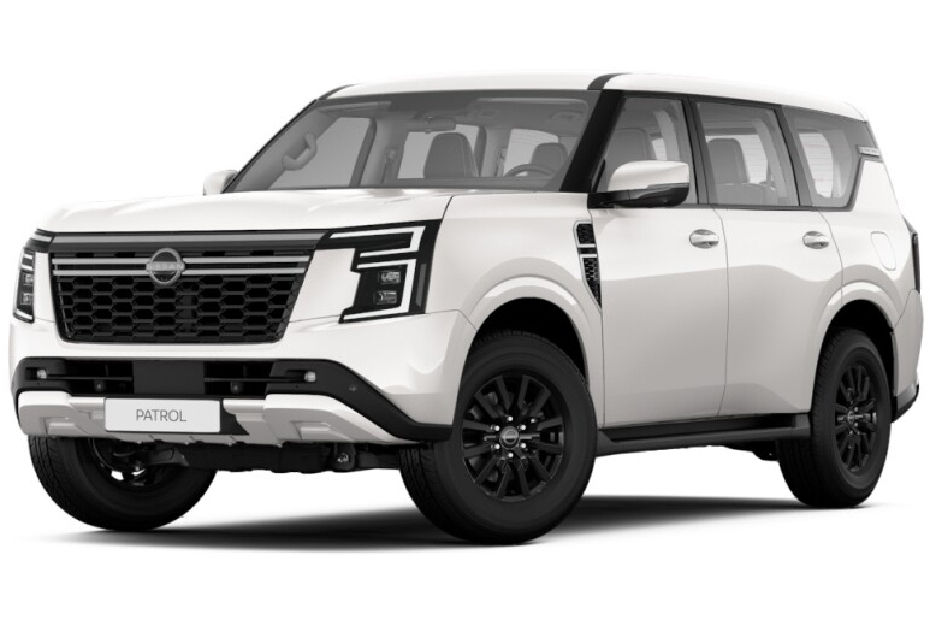
Worked Example: Importing a 2026 Nissan Patrol to Senegal
Here is the full landed cost of one car, a 2026 Nissan Patrol shipped from the UAE to Senegal, worked out on 9 November 2026 with the customs rules in force that day. It lands at 85,398,723 XOF (about US$145,131), and duties and taxes come to 63% of its CIF value.
| Item | Share of CIF | Amount |
|---|---|---|
| Vehicle priceIPAS price for a car sourced in the UAE | 43,955,355 XOFUS$74,700 | |
| Shipping and insuranceUAE to Senegal | 6,329,100 XOFUS$10,756 | |
| CIF valueCost, insurance and freight: the customs value | 50,284,455 XOFUS$85,456 | |
| Customs duties and taxes | ||
| Basic customs duty (20%)20% of CIF | 10,056,773 XOFUS$17,091 | |
| Additional duty (10%)Base or related charges differ from CIF; see the duty structure above18.5% of CIF | 9,323,596 XOFUS$15,845 | |
| GST/VAT (18%)Base or related charges differ from CIF; see the duty structure above24.5% of CIF | 12,298,085 XOFUS$20,900 | |
| Total duties and taxes63% of CIF | 31,678,454 XOFUS$53,836 | |
| Service and handling | ||
| Premium Import ServiceOptional end-to-end import management by IPAS | 2,417,839 XOFUS$4,109 | |
| Destination handlingPort terminal and customs clearance handling | 1,017,975 XOFUS$1,730 | |
| Total landed cost | 85,398,723 XOFUS$145,131 | |
Documents Required for Import
Senegal's customs authorities require a comprehensive set of documents for vehicle import clearance. Missing or incomplete documentation is the most common cause of delays at the Port of Dakar. All documents should be prepared before the vehicle is shipped.
Shipping Documents
- Bill of Lading (Connaissement) -- The shipping receipt and title document issued by the carrier
- Cargo Tracking Note (Bordereau de Suivi des Cargaisons, BSC) -- Mandatory tracking document for all Senegal-bound shipments
- Packing List -- Itemised list of cargo contents (if applicable)
Commercial Documents
- Commercial Invoice (Facture Commerciale) -- Must show the purchase price, vehicle specifications, and seller details. For new vehicles, the manufacturer invoice or dealer invoice is required
- Declaration Prealable d'Importation (DPI) -- Import pre-declaration required for all vehicles with FOB value exceeding 1.5 million CFA
- Proof of Payment -- Bank transfer confirmations or payment receipts
Vehicle Documents
- Vehicle Registration Certificate (Carte Grise) -- From the country of origin, for used vehicles
- Export or De-registration Certificate -- Proof the vehicle has been legally exported or de-registered from the origin country
- Certificate of Conformity (Certificat de Mise a la Consommation, CMC) -- Technical conformity certificate
- Technical Specifications Sheet -- Detailing engine capacity, make, model, year of manufacture, and VIN
Importer Documents
- Passport or National ID (individuals)
- Business Registration Certificate (NINEA) -- For commercial importers
- Tax Identification Number -- For commercial importers
- Insurance Certificate -- Marine cargo insurance covering the shipment
Customs Declaration
- Customs Declaration Form D10 -- Prepared and submitted by the licensed clearing agent through the GAINDE system. This is the master import document that consolidates all other paperwork.
Customs Clearance Timeline
The customs clearance process in Senegal is managed through the GAINDE automated system. With complete documentation and an experienced clearing agent, the process typically takes 5-10 business days. Expedited clearance in 48-72 hours is possible when all paperwork is perfectly in order.
| Stage | Duration | Description |
|---|---|---|
| Pre-shipment preparation | 1-2 weeks before sailing | Secure DPI, BSC, arrange clearing agent, prepare all documents |
| Vessel arrival and manifest | 1-2 days | Vessel docks at Port of Dakar; manifest is filed with customs |
| Document submission | 1-2 days | Clearing agent submits D10 declaration and supporting documents via GAINDE |
| Valuation and assessment | 2-4 days | Customs reviews documents, determines taxable value, may conduct physical inspection |
| Duty and tax payment | 1 day | Payment made through designated bank; receipt issued |
| Release and exit | 1-2 days | Customs issues release order (bon de sortie); vehicle exits port |
Total estimated clearance: 5-10 business days
Factors That Can Cause Delays
- Incomplete or inconsistent documentation (most common cause)
- Discrepancy between declared value and customs valuation
- Missing Cargo Tracking Note (BSC)
- Physical inspection triggered by risk profiling
- Public holidays or port congestion
- Outstanding DPI or expired documents
Tips for Fast Clearance
- Engage your clearing agent before the vehicle ships, not after arrival
- Ensure the commercial invoice matches the actual transaction value exactly
- Obtain the BSC before the vessel departs the origin port
- Keep digital copies of all documents accessible for quick resubmission
- Confirm DPI validity covers the expected arrival date
Homologation and Vehicle Approval
Vehicles imported into Senegal must pass a technical inspection (controle technique) before they can be registered for road use. This inspection verifies that the vehicle meets Senegalese safety and roadworthiness standards.
Technical Inspection Requirements
The technical inspection covers the following areas:
- Braking system functionality and performance
- Steering mechanism integrity
- Lighting and signalling equipment (headlights, indicators, brake lights)
- Tyres condition and specification
- Exhaust emissions (basic check -- Senegal does not currently enforce Euro-equivalent emissions standards)
- Body and chassis structural integrity
- Windscreen and mirror condition
- Horn and safety equipment
Headlight Alignment
For vehicles originally configured for right-hand traffic (such as those from the USA or continental Europe), headlight alignment is typically not an issue. However, any RHD vehicle would need headlight beam adjustment to avoid blinding oncoming traffic. RHD vehicles are restricted in Senegal in any case, so ship an LHD car.
Inspection Centres
Technical inspections are conducted at authorised centres (centres de controle technique agree) located in Dakar and major regional cities. The inspection must be completed before the vehicle can proceed to registration.
Inspection Validity
- New vehicles: inspection valid for 2 years from date of first registration
- Used vehicles: inspection valid for 1 year; must be renewed annually
No Formal Homologation Process
Unlike some markets that require full type-approval homologation (such as Australia or the EU), Senegal does not mandate a formal homologation certificate for individual imports. The technical inspection serves as the primary compliance gate. However, the vehicle must be a standard production model -- modified or kit cars may face additional scrutiny.
Registration Procedures and Costs
After customs clearance and successful technical inspection, the vehicle must be registered with the Senegalese transport authorities to obtain licence plates and a Carte Grise (registration certificate).
Registration Steps
- Customs Release -- Obtain the bon de sortie (release order) and all customs receipts
- Technical Inspection -- Pass the controle technique at an authorised centre
- Insurance -- Obtain mandatory third-party liability insurance from a Senegalese insurer. Comprehensive coverage is recommended but not legally required
- Registration Application -- Submit application to the Direction des Transports Terrestres (DTT) or the regional transport authority. Required documents include:
- Customs clearance certificate and duty receipts
- Technical inspection certificate
- Insurance certificate
- Proof of identity (passport or national ID)
- Proof of address in Senegal
- Pay Registration Fees -- Registration taxes and plate fees vary by vehicle type, engine capacity, and age
- Receive Carte Grise and Plates -- The Carte Grise is issued along with Senegalese licence plates
Ongoing Costs
- Annual Vehicle Tax (Vignette) -- An annual road tax that varies by vehicle category and engine displacement. Must be renewed each year.
- Annual Technical Inspection -- Used vehicles require annual inspection renewal
- Insurance Renewal -- Third-party liability insurance is mandatory at all times
Timeline
Registration typically takes 5-10 working days after all documents are submitted. In Dakar, processing may be faster due to higher staffing levels. Regional offices may take slightly longer.
Frequently Asked Questions
How much does it cost to import a car to Senegal?
Customs duties and taxes come to about 45% of the CIF value for any passenger car: 20% duty, 2.9% in levies and 18% TVA on the running total. For a car with a CIF value of $25,000, that is about $11,256, for a landed cost of about $36,256 before port handling and clearing-agent fees. Pickups pay the same at the conservative 20% duty, or about 33% if the 10% goods-vehicle rate is applied. Use CarImport.AI for an exact calculation for your vehicle.
What is the age limit for importing a used car to Senegal?
Used passenger vehicles must be no more than 8 years old from their date of first registration; older cars are barred. For 2026 imports, the vehicle must have been first registered on or after 1 January 2018. Commercial passenger vehicles (7+ seats) follow the same 8-year limit. Goods vehicles, trucks and buses have a more permissive limit, but the exact threshold is under review, so confirm it with your clearing agent before shipping.
Can I import a right-hand drive (RHD) vehicle to Senegal?
No in practice. Senegal drives on the right and requires left-hand drive vehicles; RHD imports are restricted and may be refused at inspection and registration. Import only LHD vehicles.
Do I need a customs clearing agent in Senegal?
Yes. Senegal requires all customs transactions to be processed through a licensed customs clearing agent (commissionnaire en douane agree). You cannot clear a vehicle through customs yourself, even for a personal import. The agent handles all GAINDE system submissions, document verification, and customs interactions on your behalf.
What is the Cargo Tracking Note (BSC) and is it mandatory?
The Bordereau de Suivi des Cargaisons (BSC) is a mandatory cargo tracking document required for all shipments destined for Senegal. It must be obtained before the vessel departs the origin port. Failure to present the BSC at Dakar will result in penalties, delays, and potential storage charges.
How long does customs clearance take at the Port of Dakar?
With complete and accurate documentation, customs clearance typically takes 5-10 business days. Expedited clearance in 48-72 hours is achievable when all paperwork is perfectly prepared and there are no valuation disputes. Delays are most commonly caused by missing documents, value discrepancies, or an absent BSC.
Are there any import duty exemptions for electric vehicles?
No concession is confirmed for privately imported vehicles. Battery electric, plug-in hybrid and hybrid cars pay the same 20% duty, 2.9% in levies and 18% TVA as petrol and diesel cars, about 45% of CIF in total. This may change as the government develops its clean energy policies, so check the latest position before you buy.
Can I import a vehicle from India to Senegal?
Yes. India is a growing source of affordable, fuel-efficient vehicles for the West African market. LHD-configured models from Indian manufacturers such as Maruti Suzuki, Tata Motors, Mahindra, and Hyundai India are well suited for Senegal. India has no trade agreement with Senegal covering vehicles, so the standard 20% duty, levies and 18% TVA apply (about 45% of CIF). Use CarImport.AI to calculate the exact landed cost for any specific Indian vehicle.
Ready to Import?
Importing a vehicle to Senegal involves navigating ECOWAS customs tariffs, engaging a licensed clearing agent, preparing extensive documentation, and completing technical inspection and registration. Whether you are importing a new vehicle from India, a used car from Europe, or a pickup from the USA, having accurate cost estimates and proper documentation is essential for a smooth process.
IPAS provides two powerful tools to help you plan and execute your vehicle import to Senegal:
CarImport.AI -- Source a vehicle through IPAS and calculate the full landed cost to Senegal, including customs duties, shipping, TVA, and all levies. Get exact duty rates for your specific vehicle, engine type, and origin country.
IPAS EXPRESS Pro Car Shipping -- Already have a vehicle? Get instant shipping quotes to Dakar, including sea freight, container options, and port handling costs.
Ready to Import Your Vehicle?
Two tools, two use cases. Pick the one that fits your needs.
Source a vehicle through IPAS and calculate the full landed cost — customs duties, shipping, and compliance — to destinations across the world.
Calculate Landed CostIPAS Express
Already have a vehicle? Get instant shipping quotes — sea freight, air freight, or RoRo — for one car or multiple vehicles worldwide.
Get Shipping Quote