
Introduction
Importing a new 2.0-litre petrol car into Azerbaijan costs about 25% of its CIF value in border taxes at USD 30,000: a specific duty per cubic centimetre, a displacement excise and 18% VAT. The one gate that matters most is steering. The car must be left-hand drive, because right-hand-drive vehicles cannot be imported or registered at all.
Azerbaijan works differently from almost every other market IPAS calculates for, because two of its three main border taxes ignore the price of the car. Customs duty on a petrol, diesel or hybrid passenger car is a fixed amount in US dollars per cubic centimetre of engine displacement. Excise is a fixed amount in manats set by a displacement ladder. Only the 18% VAT rises with value.
So the effective rate falls as the car gets more expensive. A new Toyota Land Cruiser 300 pays exactly the same duty (AZN 3,981.74) and the same excise (AZN 10,098) whatever it costs. That works out to 34.7% of a USD 60,000 CIF but 67.5% of a USD 20,000 CIF. An Azerbaijani tax rate quoted without a vehicle value tells you nothing.
Two other facts catch out most buyers. First, both propulsion VAT exemptions ended on 1 January 2026. Electric cars and hybrids now pay the full 18% VAT, even though most guides online still say they are exempt. Second, a car counts as "used" one year after its factory production date, whatever its mileage, and the duty on it almost doubles from that point.
Quick Facts
| Detail | Information |
|---|---|
| Customs Authority | State Customs Committee (Dövlət Gömrük Komitəsi) |
| Registration Authority | State Road Police (Dövlət Yol Polisi), Ministry of Internal Affairs |
| Traffic Side | Right-hand traffic (drive on the right) |
| Steering Requirement | Left-hand drive only. Importing and registering right-hand-drive vehicles are both prohibited (State Road Police registration regulation, clause 2.11) |
| Import duty, petrol / diesel / hybrid / PHEV car | USD per cm³: 0.40 new ≤ 1,500 cm³ · 0.70 new > 1,500 cm³ · 0.70 used ≤ 1,500 cm³ · 1.20 used > 1,500 cm³, converted at AZN 1.70 |
| Import duty, battery-electric car | 0% up to 3 years from production · 15% of customs value if older |
| Import duty, goods vehicles (HS 8704) | 5% new · USD 0.70 per cm³ used |
| Excise | Passenger cars only. AZN ladder on displacement, from 0.30 per cm³ (up to 2,000 cm³) to 70 per cm³ (above 5,000 cm³). ×1.5 petrol / ×2.0 diesel if over 7 years old |
| VAT | 18%, on customs value + duty + excise + processing fee + certificate fee |
| Fees | Customs processing fee AZN 15–1,000 (banded on value) · certificate fee AZN 30 · e-customs service AZN 30 + AZN 5.40 VAT |
| New 2.0L petrol car, CIF USD 30,000 | ~25.5% of CIF |
| New battery-electric car | ~18.4% of CIF, almost all of it VAT |
| New double-cab pickup classed as a goods vehicle | ~24.4% of CIF, with no excise |
| EV and hybrid VAT exemptions | Ended 1 January 2026 |
| "New" vs "used" | Used = 1 year or more from the factory production date, regardless of mileage |
| Age limit | None. Euro 4 emission standard is the minimum |
| Classic (raritet) vehicles | Over 40 years old, original or restored to original |
| Free trade agreements | Ten CIS bilaterals only; none covers the markets IPAS sources from |
| WTO | Not a member: the published tariff is the applied tariff |
| Gateway port | Poti, Georgia, then about 890 km by road to Baku |
| Currency | Azerbaijani manat (AZN), held at USD 1 = AZN 1.70 (Central Bank official rate) |
Types of Cars That Can Be Imported
Steering: left-hand drive only
The State Road Police vehicle registration regulation is explicit: "Sükanı sağ tərəfdə olan nəqliyyat vasitələrinin Azərbaycan Respublikasına gətirilməsi və dövlət qeydiyyatından keçirilməsi qadağandır". In English, bringing right-hand-drive vehicles into Azerbaijan and registering them are both prohibited.
The ban covers import as well as registration, so a right-hand-drive car cannot even be cleared and stored. Azerbaijan drives on the right and is a left-hand-drive-only market. Its neighbour Georgia chose differently, keeping right-hand-drive cars legal and taxing them more heavily, so don't carry Georgian assumptions across the border. A Japanese-market, UK-market or Australian-market car has no route into Azerbaijan, and the rule applies to classic vehicles too. Source a left-hand-drive vehicle from the start.
Emissions: Euro 4 is the gate
Cabinet of Ministers Resolution No. 73 of 14 March 2014, applied from 1 April 2014, sets Euro 4 as the minimum emission standard. The Central Customs Expertise Department of the State Customs Committee checks conformity at clearance. The Committee asks importers to send the factory production date, make, chassis number and colour in advance so that conformity can be confirmed before the car arrives. In practice this excludes vehicles built before roughly 2006.
Age: no limit, but three age thresholds change the bill
Azerbaijan does not bar a car from import because of its age. Age changes how much tax you pay, at three separate points that do three unrelated jobs:
| Age from factory production date | What changes |
|---|---|
| 1 year | The car becomes "used" and its duty rate rises: 0.70 → 1.20 USD per cm³ above 1,500 cm³, 0.40 → 0.70 at or below |
| Over 3 years | Above 3,000 cm³, a steeper excise ladder replaces the standard one. A battery-electric car's duty jumps from 0% to 15% |
| Over 7 years | Excise is multiplied by 1.5 for petrol and 2.0 for diesel |
"New" means under one year from production, not low mileage
This is the rule most likely to surprise a buyer of a delivery-mileage car. Cabinet of Ministers Decision No. 500 of 17 November 2017 defines a vehicle as used (istismar olunmuş) once one year or more has passed since its factory production date, regardless of the distance travelled. A 13-month-old car with 40 km on the odometer is legally used.
On a 1,598 cm³ Toyota Corolla at CIF USD 25,000, crossing that line raises the duty from AZN 1,901.62 to AZN 3,259.92. The total border bill goes from 25.1% to 28.9% of CIF. On a large engine the step is much bigger. Always check the production date before you buy, not just the odometer.
Classic vehicles (raritet)
A raritet (nadir) vehicle must have been manufactured more than 40 years before it crosses the Azerbaijani border. Its engine, body and chassis must be original or restored to original condition. Such vehicles clear under a separate customs procedure. The threshold is 40 years, not the 30 used in many other countries, and the procedure does not override the right-hand-drive ban.
Cars You Can Import to Azerbaijan
Each card is a full landed-cost calculation: the car's price, shipping, every duty and tax, and handling, worked out on 9 November 2026 with the rules in force that day. All are left-hand drive to suit Azerbaijan's roads. Tap a car to see its full breakdown, or open it to change the trim, colour or port.
More cars you can import to Azerbaijan
New cars IPAS sources to order that meet Azerbaijan's import rules. Prices are ex works, before shipping and duty. Open a car to work out its full landed cost.
 LHDBackorder2026
Toyota Corolla Cross
SUV · 9 VariantsPetrol · HybridFrom $30,000Ex Works, USA LHD/C-RHDBackorder2026
Toyota Tundra
Pickup · 10 VariantsPetrol · HybridFrom $49,500Ex Works, USA LHDBackorder2026
Toyota Hilux Double Cab 2.8
Pickup · 2 VariantsDieselFrom $49,900Ex Works, UAE LHDBackorder2026
Chevrolet Corvette E-Ray Coupe
Coupe · 3 VariantsHybridFrom $128,600Ex Works, USA LHD/C-RHDBackorder2025
Chevrolet Suburban
SUV · 14 VariantsPetrol · DieselFrom $81,700Ex Works, USA LHD/C-RHDBackorder2026
Ram 2500
Pickup · 16 VariantsPetrol · DieselFrom $56,200Ex Works, USA LHDBackorder2026
Xiaomi SU7 Ultra
Sedan · 1 VariantElectricFrom $84,100Ex Works, China🇨🇳 LHDBackorder2026
Nissan Patrol
SUV · 11 VariantsPetrolFrom $74,700Ex Works, UAE LHD/C-RHDBackorder2025
Ford F-150
Pickup · 19 VariantsPetrol · HybridFrom $46,600Ex Works, USA LHDBackorder2026
Lexus ES
Sedan · 12 VariantsHybrid · ElectricFrom $52,500Ex Works, Canada LHDBackorder2026
Lexus TX
SUV · 10 VariantsPetrol · HybridFrom $61,000Ex Works, Canada LHD/C-RHDBackorder2026
Tesla Cybertruck
Pickup · 2 VariantsElectricFrom $105,600Ex Works, USA LHDBackorder2026
Cadillac VISTIQ
SUV · 4 VariantsElectricFrom $92,900Ex Works, USA LHDBackorder2026
Cadillac OPTIQ
SUV · 9 VariantsElectricFrom $61,100Ex Works, USA LHDBackorder2026
Denza D9
Van & MPV · 7 VariantsPlug-in Hybrid · ElectricFrom $52,300Ex Works, China🇨🇳 LHDBackorder2027
Mercedes-Benz Maybach S-Class
Sedan · 3 VariantsHybrid · Plug-in HybridFrom $206,200Ex Works, Germany
Ports and Entry Points
Azerbaijan has a coastline, but only on the Caspian Sea, which has no connection to the world's oceans. Ocean freight from any of the markets IPAS sources from therefore lands on Georgia's Black Sea coast and continues by road.
| Facility | Location | Role |
|---|---|---|
| Port of Poti | Georgia, Black Sea | Main container gateway for vehicles bound for Azerbaijan |
| Batumi Port | Georgia, Black Sea | Alternative Georgian gateway |
| Poti to Baku road corridor | Via Tbilisi | About 890 km, typically 3–4 days by road (Batumi to Baku is about 960 km) |
| Baku | Azerbaijan | Delivery city, customs clearance and registration |
The vehicle crosses Georgia in transit, so the shipment needs transit documentation for the Georgian leg as well as the Azerbaijani import papers.
One point matters for the duty calculation. Azerbaijan values an import at the transaction price plus freight and insurance to the Azerbaijani border. The overland leg from Poti to the border is therefore part of the customs value, not just the ocean freight to Poti.
Restrictions on Vehicle Import for Individuals
- Right-hand drive is prohibited, for both import and registration.
- Euro 4 conformity is required and is checked at clearance.
- No age ban. Age changes the duty band, the excise ladder and the excise multiplier, but it never blocks entry.
- Customs value must be realistic and documented. Customs may examine the declared value. The Committee's own calculator asks users to enter the car's current average market price in Azerbaijan, which shows that values are checked against market benchmarks. A thinly documented low invoice will be challenged.
- Registration age. A car is registered to a person aged 18 or over.
Duty Structure Overview
Azerbaijan charges exactly five items on an imported vehicle, plus one fixed electronic-service line. In order:
- Customs value (CV). Transaction value + freight + insurance to the Azerbaijani border, converted to manats at the Central Bank rate (USD 1 = AZN 1.70).
- Import customs duty. For a petrol, diesel, hybrid or plug-in hybrid car this is a specific duty: USD per cm³ × displacement × 1.70. Battery-electric cars, HS 8703 90 and new goods vehicles pay a percentage instead.
- Excise (aksiz). A manat ladder on engine displacement, charged on HS 8703 passenger cars only.
- Customs processing fee (banded on CV) + AZN 30 certificate fee.
- VAT at 18% on (CV + duty + excise + processing fee + certificate fee).
On top of these comes the e-customs service charge of AZN 30 plus AZN 5.40 VAT. It sits outside the goods VAT base.
Import customs duty: the only breakpoint is 1,500 cm³
| Up to 1,500 cm³ | Over 1,500 cm³ | |
|---|---|---|
| New (under 1 year from production) | USD 0.40 per cm³ | USD 0.70 per cm³ |
| Used (1 year or more) | USD 0.70 per cm³ | USD 1.20 per cm³ |
The tariff lists more subheadings (≤ 1,000 / 1,000–1,500 / 1,500–3,000 / > 3,000 cm³ for petrol), but the rates within each pair are identical. In practice a single test at 1,500 cm³ decides the rate. Three points to note:
- The rate is in US dollars, not manats. Compute the duty in dollars, then convert at 1.70. Reading "0.70" as manats would understate the duty by 41%.
- Use the exact displacement. A 1,490 cm³ car pays USD 0.40 per cm³; a 1,598 cm³ car pays USD 0.70. Take the manufacturer's stated figure, never a rounded "1.5-litre" label.
- Hybrids and plug-in hybrids pay on their combustion engine's displacement at exactly the same rates.
Excise: a marginal ladder on displacement
Each band charges its rate only on the cubic centimetres inside it, on top of a fixed amount carried from the band below (Tax Code art. 190.4.1):
| Engine displacement | Standard ladder (AZN) | Over 3 years old and over 3,000 cm³ (AZN) |
|---|---|---|
| Up to 2,000 cm³ | 0.30 × cc | same as standard |
| 2,001–3,000 cm³ | 600 + 5.00 × (cc − 2,000) | same as standard |
| 3,001–4,000 cm³ | 5,600 + 13.00 × (cc − 3,000) | 5,600 + 15.00 × (cc − 3,000) |
| 4,001–5,000 cm³ | 18,600 + 35.00 × (cc − 4,000) | 20,600 + 40.00 × (cc − 4,000) |
| Over 5,000 cm³ | 53,600 + 70.00 × (cc − 5,000) | 60,600 + 80.00 × (cc − 5,000) |
The step at 2,000 cm³ is steep: the marginal rate jumps from AZN 0.30 to AZN 5.00 per cm³. A 1,999 cm³ car pays AZN 599.70 excise and a 2,100 cm³ car pays AZN 1,100.
The steeper right-hand column (art. 190.4.1-3) applies only when both conditions hold: displacement over 3,000 cm³ and age over 3 years. It can never affect a car of 3,000 cm³ or less.
If the car is more than 7 years old, the excise from either ladder is multiplied by 1.5 for petrol or 2.0 for diesel (art. 190.4.1-4). For a hybrid, the factor follows its combustion engine.
Customs processing fee
| Customs value (AZN) | Fee (AZN) |
|---|---|
| Up to 1,000 | 15 |
| Over 1,000 to 10,000 | 60 |
| Over 10,000 to 50,000 | 120 |
| Over 50,000 to 100,000 | 200 |
| Over 100,000 to 500,000 | 300 |
| Over 500,000 to 1,000,000 | 600 |
| Over 1,000,000 | 1,000 |
Worked example 1: Toyota Corolla, 1,598 cm³ petrol, new, CIF USD 25,000
Ninety-eight cubic centimetres over the 1,500 cm³ duty breakpoint, so it pays the higher new-car rate.
| Charge | Calculation | Amount (AZN) |
|---|---|---|
| Customs value | 25,000 × 1.70 | 42,500.00 |
| Import customs duty | 0.70 × 1,598 = USD 1,118.60 × 1.70 | 1,901.62 |
| Excise | 0.30 × 1,598 | 479.40 |
| Processing fee | CV in the 10,000–50,000 band | 120.00 |
| Certificate fee | fixed | 30.00 |
| VAT at 18% | 0.18 × (42,500 + 1,901.62 + 479.40 + 120 + 30) | 8,105.58 |
| E-customs service | 30 + 5.40 VAT | 35.40 |
| Total border charges | 10,672.00 (25.1% of CIF) | |
| Landed cost at the border | 53,172.00 |
That is about USD 6,278 in border charges.
Worked example 2: Toyota Land Cruiser 300, 3,346 cm³ petrol, new, CIF USD 60,000
Over 3,000 cm³ but only months old, so the standard excise ladder applies.
| Charge | Calculation | Amount (AZN) |
|---|---|---|
| Customs value | 60,000 × 1.70 | 102,000.00 |
| Import customs duty | 0.70 × 3,346 = USD 2,342.20 × 1.70 | 3,981.74 |
| Excise | 5,600 + 13 × (3,346 − 3,000) | 10,098.00 |
| Processing fee | CV in the 100,000–500,000 band | 300.00 |
| Certificate fee | fixed | 30.00 |
| VAT at 18% | 0.18 × (102,000 + 3,981.74 + 10,098 + 300 + 30) | 20,953.75 |
| E-customs service | 30 + 5.40 VAT | 35.40 |
| Total border charges | 35,398.89 (34.7% of CIF) | |
| Landed cost at the border | 137,398.89 |
Now price the same Land Cruiser at CIF USD 20,000. Duty and excise do not move at all. The processing fee drops to AZN 120 and VAT to AZN 8,681.35, so the total is AZN 22,946.49, or 67.5% of CIF. The cheaper the car, the higher the percentage.
Worked example 3: the same Land Cruiser 300 at 5 years old, CIF USD 45,000
Two thresholds are now crossed: it is over 1 year old (used duty rate) and over 3 years old with more than 3,000 cm³ (steeper excise ladder). It is not yet over 7, so no multiplier applies.
| Charge | Calculation | Amount (AZN) |
|---|---|---|
| Customs value | 45,000 × 1.70 | 76,500.00 |
| Import customs duty | 1.20 × 3,346 = USD 4,015.20 × 1.70 | 6,825.84 |
| Excise | 5,600 + 15 × (3,346 − 3,000) | 10,790.00 |
| Processing fee | CV in the 50,000–100,000 band | 200.00 |
| Certificate fee | fixed | 30.00 |
| VAT at 18% | 0.18 × (76,500 + 6,825.84 + 10,790 + 200 + 30) | 16,982.25 |
| E-customs service | 30 + 5.40 VAT | 35.40 |
| Total border charges | 34,863.49 (45.6% of CIF) | |
| Landed cost at the border | 111,363.49 |
Worked example 4: Tesla Model Y, battery-electric, new, CIF USD 50,000
Duty is 0% because the car is under three years old. Excise is zero because the car has no engine displacement. VAT is charged in full.
| Charge | Calculation | Amount (AZN) |
|---|---|---|
| Customs value | 50,000 × 1.70 | 85,000.00 |
| Import customs duty | tariff line 8703 80 000 2, 0% | 0.00 |
| Excise | no displacement, so nil base | 0.00 |
| Processing fee | CV in the 50,000–100,000 band | 200.00 |
| Certificate fee | fixed | 30.00 |
| VAT at 18% | 0.18 × (85,000 + 200 + 30) | 15,341.40 |
| E-customs service | 30 + 5.40 VAT | 35.40 |
| Total border charges | 15,606.80 (18.4% of CIF) | |
| Landed cost at the border | 100,606.80 |
These examples show how the structure works, but in Azerbaijan the exact answer depends on displacement to the cubic centimetre, the production date and the HS heading. Get the figure for your specific vehicle using CarImport.AI.

Calculate your exact import duty to Azerbaijan
Get a vehicle-specific duty and full landed-cost breakdown — HS classification, every tax, levy and FTA, plus shipping — calculated for your exact make, model and specs.
- Vehicle-specific HS code
- All duties, taxes & FTAs
- Shipping + est. landed cost
Free trade agreements: not available on IPAS routes
Azerbaijan has ten bilateral free trade agreements in force, all with CIS states: Russia, Moldova, Ukraine, Georgia, Turkmenistan, Uzbekistan, Kazakhstan, Kyrgyzstan, Belarus and Tajikistan. Even with one of these partners, the duty waiver applies only when origin and consignment are the same partner country, the goods are shipped directly and a CT-1 preferential certificate of origin is presented. A Russian-built car shipped from Germany gets nothing.
None of the markets IPAS sources from is a partner. That covers the US, Canada, the UK, Germany, Belgium, the UAE, Japan, Korea, China, Thailand, India, Australia, New Zealand and Mexico, so full duty applies to every vehicle IPAS supplies. Turkish-origin cars are not covered either: the 2020 Azerbaijan–Türkiye preferential trade agreement excludes HS 8703 and 8704. In any case, an agreement waives the customs duty only, never the excise, VAT or fees.
Azerbaijan is not a member of the World Trade Organization, so there is no separate bound MFN schedule. The published tariff is the rate applied.
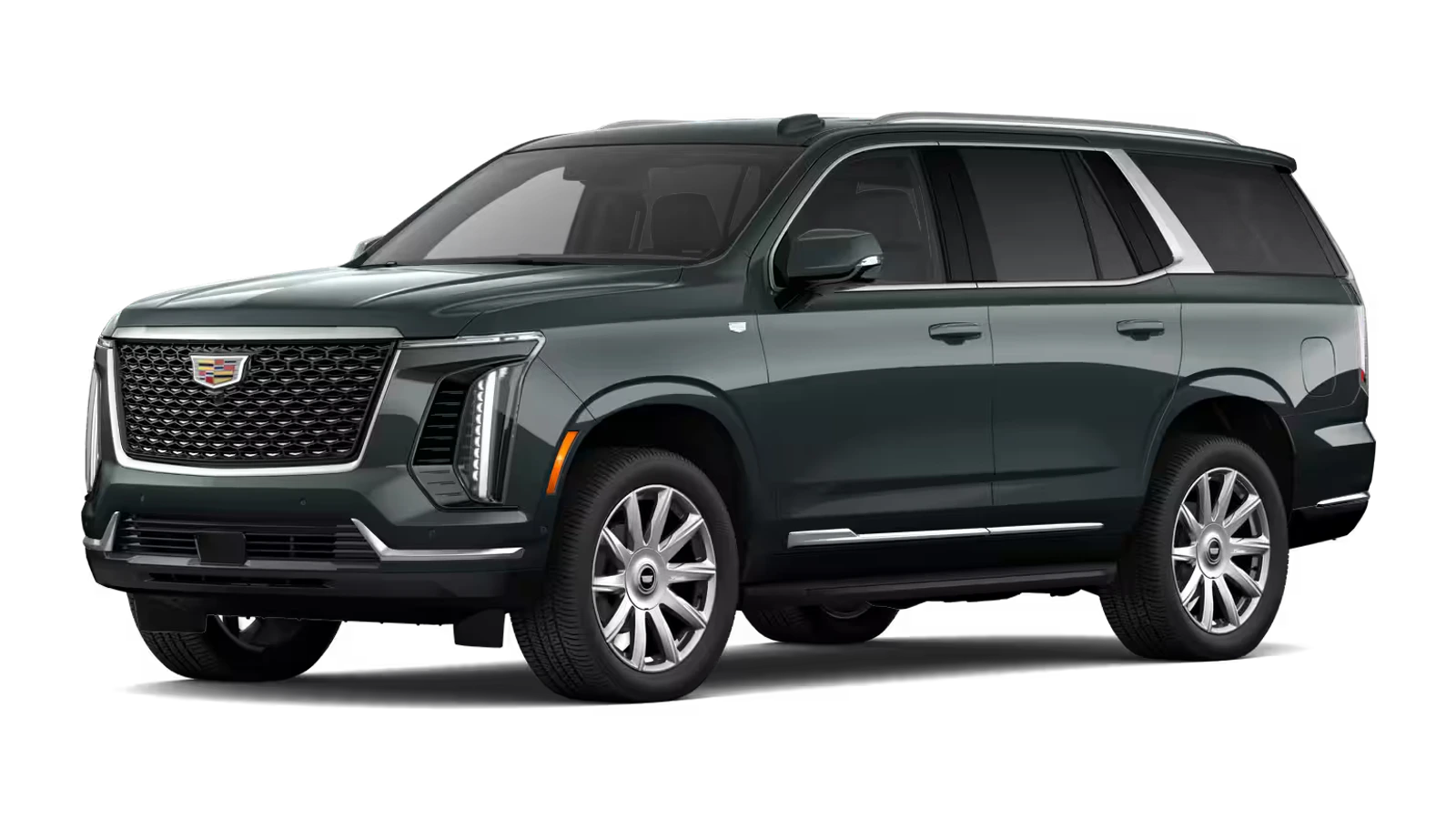
Worked Example: Importing a 2026 Cadillac Escalade to Azerbaijan
Here is the full landed cost of one car, a 2026 Cadillac Escalade shipped from the USA to Azerbaijan, worked out on 9 November 2026 with the customs rules in force that day. It lands at 419,740 AZN (about US$246,833), and duties and taxes come to 105.6% of its CIF value.
| Item | Share of CIF | Amount |
|---|---|---|
| Vehicle priceIPAS price for a car sourced in the USA | 185,865 AZNUS$109,300 | |
| Shipping and insuranceUSA to Azerbaijan | 9,953 AZNUS$5,853 | |
| CIF valueCost, insurance and freight: the customs value | 195,818 AZNUS$115,153 | |
| Customs duties and taxes | ||
| Basic customs duty3.8% of CIF | 7,380 AZNUS$4,340 | |
| Additional duty70.5% of CIF | 137,965 AZNUS$81,132 | |
| GST/VAT (18%)18% of CIF plus the duties above31.4% of CIF | 61,403 AZNUS$36,109 | |
| Total duties and taxes105.6% of CIF | 206,748 AZNUS$121,581 | |
| Service and handling | ||
| Premium Import ServiceOptional end-to-end import management by IPAS | 11,876 AZNUS$6,984 | |
| Destination handlingPort terminal and customs clearance handling | 5,297 AZNUS$3,115 | |
| Total landed cost | 419,740 AZNUS$246,833 | |
Pickups: the Classification Decision Worth Seven Points
In Azerbaijan the choice between HS 8703 (passenger car) and HS 8704 (goods vehicle) matters more than almost anywhere else. Goods vehicles are not on the excisable goods list (Tax Code arts. 190.1.7–190.1.10), so a correctly classified 8704 vehicle pays no excise at all. A new one also pays a plain 5% duty instead of the per-cm³ rate.
Worked example 5: Toyota Hilux 2.8 double cab, 2,755 cm³ diesel, new, CIF USD 40,000
| Classified HS 8704 (goods) | Classified HS 8703 (passenger) | |
|---|---|---|
| Customs value | AZN 68,000.00 | AZN 68,000.00 |
| Import customs duty | AZN 3,400.00 (5%) | AZN 3,278.45 (0.70 USD per cm³) |
| Excise | AZN 0.00 | AZN 4,375.00 |
| Processing + certificate fees | AZN 230.00 | AZN 230.00 |
| VAT at 18% | AZN 12,893.40 | AZN 13,659.02 |
| E-customs service | AZN 35.40 | AZN 35.40 |
| Total border charges | AZN 16,558.80 (24.4%) | AZN 21,577.87 (31.7%) |
The heading is worth AZN 5,019.07, or 7.4 percentage points, on this one vehicle. Almost all of the difference is the excise.
Azerbaijan publishes no national rule settling whether a double-cab pickup is a goods vehicle or a passenger car, so the international principal-design test applies. A separate open cargo bed, a cabin divided from the load area and goods-rated payload and suspension point to 8704. A fully enclosed SUV body with an integrated cargo area points to 8703, so a Toyota Fortuner or Ford Everest is a passenger car. Rear seats and rear doors alone do not decide a true pickup.
Because so much money depends on the answer, ask the State Customs Committee for a binding classification decision (malın təsnifatı üzrə məcburi qərar) before shipping a double cab. Supply the model designation, technical data sheet, seating, payload, gross vehicle weight and cargo-bed dimensions. This is an open question in the rules rather than a settled one.
Note too that used goods vehicles switch from 5% to USD 0.70 per cm³. That hurts a cheap, large-engined used truck and barely matters on an expensive one.
Electric and Hybrid Vehicles
Electric cars: the VAT exemption is gone
Tax Code article 164.1.41 used to exempt "the import and sale of vehicles powered only by an electric motor" from VAT. Law No. 297-VIIQD of 9 December 2025 rewrote the article with effect from 1 January 2026. It now covers only seatless electric buses imported by industrial-park residents for assembly, for one year. There is no longer any VAT exemption for an electric car.
What a battery-electric car still gets:
- 0% customs duty if it is 3 years old or newer (tariff line 8703 80 000 2). Over 3 years, the duty is 15% of customs value.
- Zero excise, because the excise base is engine displacement and an electric car has none.
- 18% VAT, in full.
A new electric car therefore lands at a little over 18% of CIF at almost any price: 18.5% at USD 25,000, 18.4% at USD 50,000 and 18.25% at USD 100,000. That still makes it the cheapest thing to import into Azerbaijan, but "cheap" is not "exempt". If a quote for a new electric car comes back near 0%, it is applying the repealed law.
The three-year cliff for electric cars. The 0% duty line ends at 3 years from production. On a 5-year-old electric car at CIF USD 30,000, duty is AZN 7,650 and the total rises to 36.3% of CIF. On a USD 45,000 electric car, one day of age past the third anniversary adds AZN 11,475 in duty (about USD 6,750). The one-year "used" rule that governs petrol and diesel cars does not apply to electric cars; their threshold is three years.
Hybrids: the exemption lapsed on 31 December 2025
Article 164.1.41-1 exempted hybrids up to 3 years old with engines up to 2,500 cm³ from VAT "from 1 January 2022 for 4 years". That window closed at the end of 2025 and was not extended. In 2026 a hybrid is taxed exactly like a conventional car of the same engine size: the same per-cm³ duty, the same excise ladder and full 18% VAT.
The effect is large. A new Toyota Camry Hybrid (2,487 cm³) at CIF USD 35,000 now pays AZN 18,090.35, or 30.4% of CIF. Under the pre-2026 rule it would have paid AZN 6,259.93, or 10.5%, so the lapse nearly tripled the bill.
Plug-in hybrids: never treated as electric
The 0% duty line covers vehicles driven only by an electric motor, and that word "only" excludes every plug-in hybrid. A PHEV pays duty and excise on its combustion engine like any other car. A new BMW X5 xDrive50e (2,998 cm³) at CIF USD 80,000 pays AZN 35,710.79, or 26.3% of CIF. Battery size and electric range play no part in the calculation. If a quote shows a plug-in hybrid materially cheaper than its petrol twin, it is wrong.
Gas-fuelled cars (CNG or LPG, factory or converted) are taxed as ordinary petrol cars on their cylinder capacity.
Older Cars: the Seven-Year Multiplier
Once a car is more than 7 years from production, its excise is multiplied by 1.5 (petrol) or 2.0 (diesel). Fuel type is worth money only past this point; below it, petrol and diesel cars of the same displacement pay identical duty and excise.
Example: Toyota Land Cruiser Prado, 2,755 cm³ diesel, 9 years old, CIF USD 28,000
| Charge | Calculation | Amount (AZN) |
|---|---|---|
| Customs value | 28,000 × 1.70 | 47,600.00 |
| Import customs duty | used: 1.20 × 2,755 = USD 3,306 × 1.70 | 5,620.20 |
| Excise | (600 + 5 × 755) × 2.0 diesel | 8,750.00 |
| Processing + certificate fees | 120 + 30 | 150.00 |
| VAT at 18% | 0.18 × (47,600 + 5,620.20 + 8,750 + 150) | 11,181.64 |
| E-customs service | 30 + 5.40 VAT | 35.40 |
| Total border charges | 25,737.24 (54.1% of CIF) |
The same car with a petrol engine would pay AZN 6,562.50 excise instead of AZN 8,750, and AZN 2,580.13 less in total. Because the Prado is under 3,000 cm³, the steeper over-3-years ladder never applies to it, however old it is.
Components That Do Not Exist in Azerbaijan
It helps to know what Azerbaijan does not charge at the border:
- no luxury or value-threshold tax
- no CO₂, emissions or environmental levy
- no engine-power (kW or hp) tax
- no recycling, utilisation or scrappage fee (unlike Russia and Kazakhstan)
- no first-registration cliff and no surtax on used vehicles
- no percentage duty on a petrol or diesel passenger car
Road tax (yol vergisi) applies to foreign-registered vehicles and motor fuel, not to a car imported and registered in Azerbaijan, and the law expressly excludes it from the VAT base. If a quote for Azerbaijan includes any line beyond duty, excise, the processing and certificate fees, VAT and the e-customs service charge, that line has been invented.
A word of caution on the State Customs Committee's own online calculator. Its excise ladders match the Tax Code exactly, but in three places it still shows older rules. It uses a 1.2 / 1.5 seven-year multiplier instead of the 1.5 / 2.0 in the Tax Code. It still zeroes VAT for electric cars and hybrids. And it charges 15% duty on all electric cars, ignoring the 0% line for those up to 3 years old. Where the calculator and the law disagree, the law applies.
Documents Required for Import
- Commercial invoice showing the transaction price
- Bill of lading
- Packing list
- Certificate of title or other ownership document, and the vehicle's technical passport
- Evidence of the factory production date, which decides new versus used, the excise ladder and any multiplier
- Euro 4 conformity evidence. Send the production date, make, chassis number and colour to the State Customs Committee's Central Customs Expertise Department in advance; the Committee issues the Euro 4 conformity certificate electronically
- Certificate of origin. A CT-1 certificate matters only for the CIS free-trade route, which IPAS origins do not use
- Transit documentation for the road leg through Georgia
- The Azerbaijani customs declaration
- For a double-cab pickup, a binding classification decision from the State Customs Committee is strongly recommended
- Evidence that the car has been removed from its previous country's register (needed later, at registration)
Customs Clearance Timeline
| Stage | Timing | Notes |
|---|---|---|
| Pre-purchase checks | Before buying | Confirm left-hand drive, Euro 4 and the production date. Request a binding classification for a pickup |
| Euro 4 pre-submission | Before arrival | Production date, make, chassis number and colour to the Central Customs Expertise Department |
| Ocean freight to Poti | Varies by origin | Container shipping to Georgia's Black Sea coast |
| Poti to Baku by road | About 3–4 days | Roughly 890 km in transit through Georgia |
| Customs declaration, Euro 4 check and payment | On arrival | Duty, excise, fees and VAT paid before release |
| Registration with the State Road Police | Within 10 days of customs clearance | A legal deadline under the registration regulation |
Most avoidable delay comes from the production date and the Euro 4 paperwork. Settle both before the car leaves its origin market.
Homologation and Vehicle Approval
Azerbaijan's approval gate is the Euro 4 emission standard under Cabinet Resolution No. 73 of 2014, checked by the Central Customs Expertise Department at clearance. The registration regulation also requires a vehicle's construction to meet the road-safety and environmental standards in force, and it bans right-hand drive in the same clause.
Before registration, the State Road Police examine the car to match its engine, body and chassis numbers and its colour against the documents, and then carry out a technical inspection. A recently manufactured car registered in Azerbaijan for the first time can be exempt from that inspection within the period set by the Road Traffic Law.
Registration Procedures and Costs
Registration follows the State Road Police regulation approved by Cabinet of Ministers Decision No. 39 of 15 March 1999. A vehicle brought in from abroad must be registered within ten days of customs clearance, at the registration office for the owner's address. The owner must be at least 18. The application needs:
- the registration application
- an identity document
- the document confirming ownership
- proof that the fees and taxes set by law have been paid
- the customs permit document issued on clearance
- evidence that the car has been removed from its previous country's register, plus its registration or transit plates
Applications can be lodged online, with appointments allocated through an electronic queue. The owner receives a registration certificate and two number plates.
Registration charges, technical inspection, plates and compulsory motor third-party liability insurance are paid after clearance. They are not part of the border cascade and are never added to the VAT base.
Recent Regulatory Changes (2022–2026)
- 1 January 2022: hybrid VAT exemption opens. Tax Code art. 164.1.41-1 exempted hybrids up to 3 years old with engines up to 2,500 cm³.
- 9 December 2022: hybrid exemption extended. Law 677-VIQD lengthened its term from 3 to 4 years.
- 9 December 2025: electric-car VAT exemption rewritten. Law No. 297-VIIQD replaced art. 164.1.41 with a narrow exemption for industrial-park electric buses, effective 1 January 2026.
- 31 December 2025: hybrid VAT exemption lapses. It was not extended.
- 1 January 2026: full VAT on every private car import. Battery-electric cars, hybrids and plug-in hybrids all pay 18% VAT.
- 31 December 2026: the electric-bus exemption ends. It does not affect private car imports, but article 164.1.41 is due to change again after this date.
- Coming 1 January 2028: electric goods vehicles lose 0% duty. Electric goods vehicles up to 3 years old currently enter at 0% duty; from 1 January 2028 the rate reverts to 5%. Check the delivery date before relying on 0%.
Frequently Asked Questions
How much does it cost to import a car to Azerbaijan?
It depends on engine size, age and value, because duty and excise are fixed amounts that do not move with price. A new 2.0-litre petrol car at CIF USD 30,000 pays about 25.5% of CIF in border charges. A new 1,598 cm³ Corolla at USD 25,000 pays 25.1%, and a new Land Cruiser 300 pays 34.7% at USD 60,000 but 67.5% at USD 20,000. A new electric car pays about 18.4%.
Can I import a right-hand-drive car to Azerbaijan?
No. The State Road Police registration regulation prohibits both bringing a right-hand-drive vehicle into Azerbaijan and registering one. The ban is absolute and applies to classic vehicles too. Only left-hand-drive vehicles can be imported.
Are electric cars VAT-free in Azerbaijan?
Not since 1 January 2026. Law No. 297-VIIQD replaced the electric-vehicle VAT exemption, and a privately imported electric car now pays the full 18% VAT. It still gets 0% duty if it is 3 years old or newer and pays no excise, so a new electric car lands at a little over 18% of CIF.
Do hybrids still get a VAT exemption in Azerbaijan?
No. The hybrid exemption for cars up to 3 years old with engines up to 2,500 cm³ ran from 1 January 2022 for four years and lapsed on 31 December 2025. In 2026 a hybrid pays the same duty, excise and VAT as a conventional car of the same engine size. Plug-in hybrids never qualified for the electric-car duty concession.
Is there an age limit for importing a car to Azerbaijan?
No. Azerbaijan does not bar a vehicle because of its age; the gate is the Euro 4 emission standard, which in practice excludes cars built before roughly 2006. Age does change the tax: the duty rises at 1 year, the excise ladder steepens above 3,000 cm³ after 3 years, and excise is multiplied by 1.5 (petrol) or 2.0 (diesel) after 7 years.
When does a car count as used in Azerbaijan?
Once one year has passed since its factory production date, regardless of mileage. A 13-month-old car with delivery mileage is legally used, and its duty rises from USD 0.70 to USD 1.20 per cm³ above 1,500 cm³. Check the production date, not the odometer.
Is a pickup cheaper to import than an SUV?
Usually, if it is classified as a goods vehicle. HS 8704 vehicles pay no excise, and a new one pays 5% duty. On a USD 40,000 Hilux double cab that makes a difference of AZN 5,019, or 7.4 percentage points. No national rule settles how double cabs are classified, so get a binding classification decision from the State Customs Committee before you ship.
Does a free trade agreement reduce the duty?
Not for any car IPAS supplies. Azerbaijan's ten agreements are all with CIS states, and they require the car to originate in and be shipped directly from the same partner country with a CT-1 certificate. Even then, they waive only the customs duty, never the excise or VAT.
Why does a cheaper car pay a higher percentage?
Because duty and excise depend on displacement and age, not price. Only the 18% VAT and a small banded fee rise with value. A larger share of a cheap car's value goes on fixed charges, so the effective rate falls as CIF rises.
Ready to Import?
In Azerbaijan, most of the cost is fixed by the engine before price comes into it. Every cubic centimetre is taxed twice, once in dollars and once in manats, and the steps at 1,500, 2,000 and 3,000 cm³ are where the money is. The production date decides whether the car is new or used, and a goods-vehicle classification can remove the excise altogether.
Before any of that come two gates: the car must be left-hand drive and meet Euro 4. And since 1 January 2026, electric cars and hybrids pay the full 18% VAT, whatever older guides say.
IPAS provides two tools to plan and execute your import:
CarImport.AI: source a vehicle through IPAS and calculate the full landed cost to Azerbaijan. It applies the per-cm³ duty, the displacement excise ladder with its age rules, the processing and certificate fees and 18% VAT for your exact engine, production date and value.
IPAS EXPRESS: already have a vehicle? Get an instant sea-freight quote to Baku via the Georgian port of Poti, with the overland leg included, itemised pricing and a stage-by-stage timeline.
Ready to Import Your Vehicle?
Two tools, two use cases. Pick the one that fits your needs.
Source a vehicle through IPAS and calculate the full landed cost — customs duties, shipping, and compliance — to destinations across the world.
Calculate Landed CostIPAS Express
Already have a vehicle? Get instant shipping quotes — sea freight, air freight, or RoRo — for one car or multiple vehicles worldwide.
Get Shipping Quote