
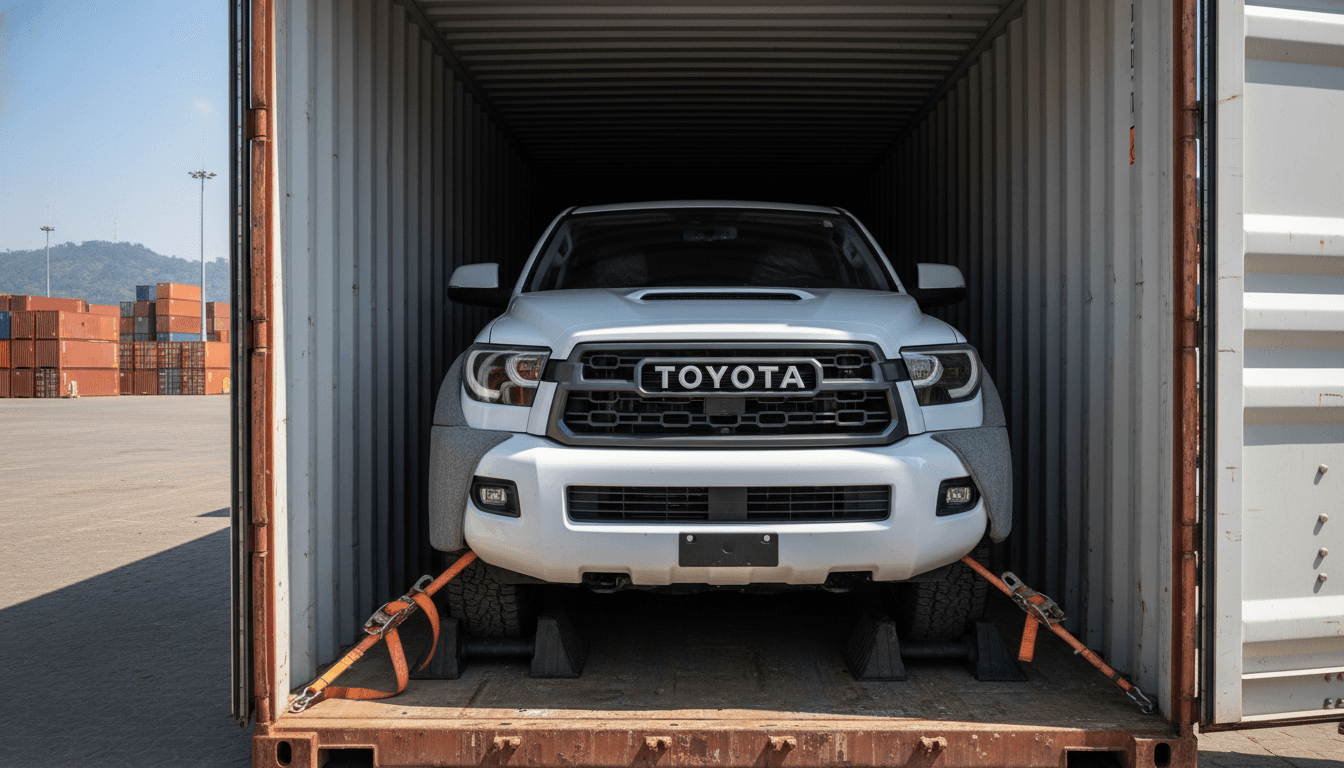
Introduction
Bahrain has one of the lightest vehicle import tax burdens in the world. There are exactly two federal charges at the border — a 5% customs duty and a 10% VAT — and nothing else. No excise on cars, no luxury tax, no engine-capacity surcharge, no environmental or carbon levy. A BHD 200,000 sports car and a BHD 30,000 hatchback pay the same rates. Total import charges come to 15.5% of CIF, which is a fraction of what the same vehicle would face in Sri Lanka, India or Singapore.
But Bahrain balances that generosity with the strictest age rule in the Gulf. No vehicle more than five years old from its date of manufacture may be imported and registered — a window narrower than the UAE's ten years, Kuwait's five, or Oman's. In 2026 that means a car built in 2021 or later. Parliament approved a proposal in April 2026 to extend the limit to ten years, but the Cabinet has not enacted it, so the five-year rule remains the law you must plan around.
Bahrain also drives on the right and registers left-hand-drive vehicles only. Combined with the age ceiling, this rules out the two largest sources of cheap used stock worldwide — Japanese and UK right-hand-drive exports — and pushes buyers toward newer left-hand-drive cars from the USA, Germany, South Korea and the wider Gulf.
One more thing worth stating plainly at the outset, because the internet gets it wrong: there is no electric-vehicle customs exemption in Bahrain. A battery EV pays the same 5% duty as a petrol car. This guide explains where that myth comes from and what genuine incentives do exist.
Quick Facts
| Detail | Information |
|---|---|
| Trade Bloc | GCC Customs Union |
| Customs Authority | Customs Affairs Directorate — customs.gov.bh |
| Tax Authority | National Bureau for Revenue (VAT) — nbr.gov.bh |
| Registration Authority | Ministry of Interior, Traffic and Licences Directorate |
| Traffic Side | Right-hand traffic (drive on the right) |
| Steering Requirement | LHD only — RHD vehicles cannot be registered for road use |
| Customs Duty | 5% of CIF (GCC Common External Tariff) |
| VAT | 10%, charged on (CIF + customs duty) |
| Excise / Selective Tax | None on vehicles (applies only to tobacco, energy drinks, carbonated drinks) |
| Luxury / environmental / carbon tax | None |
| Total import charges | 15.5% of CIF (standard, non-preferential origin) |
| GCC-manufactured origin | 0% duty with a GCC Certificate of Origin; 10% VAT still applies |
| US origin (BFTA) | 0% duty claimable with valid origin documentation; not automatic |
| Electric Vehicles | No customs duty exemption — 5% applies, same as petrol |
| Vehicle Age Limit | 5 years from date of manufacture (2021 or later in 2026) |
| Pending change | Parliament approved a 10-year limit in April 2026; not yet enacted by Cabinet |
| Classic vehicle exemption | None confirmed |
| Pickup Classification | Dual-cab pickups default to HS 8704; rate impact is neutral |
| Main Seaport | Khalifa Bin Salman Port, Hidd |
| Secondary Port | Mina Salman |
| Land Link | King Fahd Causeway to Saudi Arabia |
| Airport | Bahrain International Airport, Muharraq |
| Currency | Bahraini Dinar (BHD), pegged at 1 BHD = 2.6525 USD |
Types of Cars That Can Be Imported
New and Used Vehicles
Both are allowed, but the five-year age rule dominates every other consideration. New cars are straightforward. Used cars are viable only if they are genuinely recent.
Age — a hard 5-year ceiling
Bahrain permits no vehicle more than five years old, measured from the manufacturer's build date, not the date of first registration. In 2026, vehicles built in calendar year 2021 or later are eligible; anything built in 2020 or earlier is not.
This is enforced as a Ministry of Interior registration rule under the Road Traffic Law, not as a customs rule — which has an important consequence: it applies regardless of origin, regardless of importer type, and regardless of whether you are a private buyer or a dealer. There is no confirmed exemption for classic or heritage vehicles, none for returning residents' personal effects, and none for GCC-origin used cars. Unlike Australia, which has a by-law pathway for classics, Bahrain has no equivalent.
In April 2026 the Bahrain Parliament approved a proposal to extend the limit to ten years and referred it to the Cabinet. As of writing the Cabinet has not enacted it and the enabling decree has not appeared in the Official Gazette. Until it does, plan on five years.
Steering — LHD only
Bahrain drives on the right and, consistent with every GCC state, registers only left-hand-drive vehicles. Right-hand-drive cars from Japan, the UK, Australia, New Zealand, India, Thailand, South Africa, Singapore or Sri Lanka cannot be registered for road use. The only common exception is temporary import under a Carnet de Passages en Douane for transit, tourism or exhibition — which confers no road registration.
Every practical IPAS source market for Bahrain — the USA, Germany, South Korea and the Gulf — supplies left-hand-drive vehicles, so no steering conversion is required or budgeted.
Fuel Type
All propulsion types are admissible and all pay identical duty. Petrol, diesel, hybrid, plug-in hybrid, battery-electric and hydrogen fuel-cell vehicles are all charged 5%.
Cars You Can Import to Bahrain
Each card is a full landed-cost calculation: the car's price, shipping, every duty and tax, and handling, worked out on 9 November 2026 with the rules in force that day. All are left-hand drive to suit Bahrain's roads. Tap a car to see its full breakdown, or open it to change the trim, colour or port.
More cars you can import to Bahrain
New cars IPAS sources to order that meet Bahrain's import rules. Prices are ex works, before shipping and duty. Open a car to work out its full landed cost.
 LHDBackorder2026
Lexus TX
SUV · 10 VariantsPetrol · HybridFrom $61,000Ex Works, Canada LHDBackorder2026
Chevrolet Corvette ZR1 Convertible
Convertible · 2 VariantsPetrolFrom $212,000Ex Works, USA LHDBackorder2026
Chevrolet Corvette E-Ray Coupe
Coupe · 3 VariantsHybridFrom $128,600Ex Works, USA LHDBackorder2025
Chevrolet Corvette E-Ray Convertible
Convertible · 3 VariantsHybridFrom $137,500Ex Works, USA LHD/C-RHDBackorder2026
Ram 1500 RHO
Pickup · 1 VariantPetrolFrom $86,500Ex Works, USA LHDBackorder2026
Cadillac CT5
Sedan · 7 VariantsPetrolFrom $59,000Ex Works, USA LHDBackorder2026
Cadillac Escalade IQ
SUV · 4 VariantsElectricFrom $150,300Ex Works, USA LHD/C-RHDBackorder2025
GMC Yukon XL
SUV · 11 VariantsPetrol · DieselFrom $88,200Ex Works, USA LHDBackorder2026
GMC Acadia
SUV · 5 VariantsPetrolFrom $52,600Ex Works, USA LHDBackorder2026
Xiaomi SU7 Ultra
Sedan · 1 VariantElectricFrom $84,100Ex Works, China🇨🇳 LHDBackorder2026
Toyota Land Cruiser
SUV · 2 VariantsHybridFrom $69,100Ex Works, USA LHDBackorder2026
Toyota RAV4
SUV · 7 VariantsHybridFrom $38,300Ex Works, USA LHDBackorder2026
Toyota 4Runner
SUV · 12 VariantsPetrol · HybridFrom $50,200Ex Works, USA LHDBackorder2026
Zeekr 8X
SUV · 7 VariantsPlug-in HybridFrom $56,600Ex Works, China🇨🇳 LHDBackorder2026
Mercedes-Benz G-Class
SUV · 8 VariantsDiesel · Hybrid · ElectricFrom $140,300Ex Works, Germany LHD/C-RHDBackorder2025
Dodge Charger Daytona
Coupe · 2 VariantsElectricFrom $71,500Ex Works, USA
Seaports and Airports Supporting Vehicle Import
| Facility | Location | Role |
|---|---|---|
| Khalifa Bin Salman Port | Hidd, Muharraq | The primary commercial gateway and the main vehicle-handling terminal; deepwater, container and RoRo capable |
| Mina Salman | Manama | Older port, general cargo and support functions |
| King Fahd Causeway | Bahrain–Saudi Arabia | The land link; used for GCC road movements and onward regional distribution |
| Bahrain International Airport | Muharraq | Air-freighted vehicles — rare, and reserved for high-value or time-critical shipments |
Khalifa Bin Salman Port handles effectively all vehicle import volume. Because Bahrain is a small island market, sailings are often routed via Jebel Ali or a Saudi east-coast port with a feeder leg or causeway movement into Bahrain — a detail worth confirming when comparing freight quotes, since it affects both transit time and cost.
Restrictions on Vehicle Import for Individuals
- The five-year rule is absolute. It is a registration rule, so a vehicle that fails it cannot be brought into road use no matter how the import is structured. Check the build date on the VIN plate before committing to a purchase — a car first registered in 2021 but manufactured in late 2020 will be rejected.
- RHD vehicles cannot be registered. No approved conversion pathway exists.
- Treatment is identical for private and commercial importers. The duty rate, VAT rate, age limit, LHD requirement and FTA documentation requirements are the same whether you are an individual or a dealer. The only real difference is downstream: a VAT-registered business can reclaim input VAT on a business-use vehicle, whereas a private importer bears the 10% as a final, non-recoverable cost.
- FTA preference is never automatic. You must claim it at the declaration stage and present valid origin documentation. If you cannot, the standard 5% applies.
- The Tamkeen EV subsidy does not apply to private imports. It is structured around a purchase invoice from an authorised Bahraini dealer, so a car you buy abroad and ship in yourself does not qualify.
Duty Structure Overview
Bahrain applies a two-step cascade:
- Customs Duty at 5% of the CIF value in Bahraini dinars.
- VAT at 10% on (CIF + customs duty).
That is the complete federal border charge. Bahrain's Selective Tax, introduced in 2017, covers only tobacco products, energy drinks and carbonated drinks — it has never applied to vehicles or motor fuel. There is no luxury car tax, no environmental or carbon levy, and nothing resembling Sri Lanka's multi-component structure.
Customs valuation
The duty base is the CIF value converted into dinars at the exchange rate prevailing on the date of customs entry. Bahrain applies the WTO Customs Valuation Agreement through Article 22 of the GCC Common Customs Law: your declared transaction value is accepted at face value provided it reflects an arm's-length purchase. Customs may challenge an implausibly low declaration on a high-value car by reference to regional trade or auction data, but there is no published depreciation table — unlike Australian or Japanese practice, Bahrain does not apply a fixed age-based write-down.
The cascade, worked
| Charge | Rate | Base |
|---|---|---|
| Customs Duty | 5% | CIF |
| VAT | 10% | CIF + Customs Duty |
| Excise / luxury / environmental | none | — |
| Total | 15.5% | of CIF |
Worked example 1 — Petrol SUV from Germany, CIF US$45,000
| Charge | Calculation | Amount |
|---|---|---|
| Customs value (CIF) | — | $45,000 |
| Customs duty (5%) | $45,000 × 0.05 | $2,250 |
| VAT (10%) | ($45,000 + $2,250) × 0.10 | $4,725 |
| Total import charges | $6,975 (15.5% of CIF) | |
| Landed cost | $51,975 |
Worked example 2 — Battery EV from South Korea, CIF US$55,000
| Charge | Calculation | Amount |
|---|---|---|
| Customs duty (5%) | $55,000 × 0.05 | $2,750 |
| VAT (10%) | ($55,000 + $2,750) × 0.10 | $5,775 |
| Total import charges | $8,525 (15.5% of CIF) |
An EV pays exactly what a petrol car pays. See the next section.
Worked example 3 — US-origin vehicle with a valid BFTA origin claim, CIF US$60,000
| Charge | Calculation | Amount |
|---|---|---|
| Customs duty | 0% under BFTA, documentation accepted | $0 |
| VAT (10%) | $60,000 × 0.10 | $6,000 |
| Total import charges | $6,000 (10.0% of CIF) |
Note what a successful preference claim is actually worth: it removes the 5% duty and the VAT that would have cascaded on it, taking the effective burden from 15.5% down to 10%.
These figures show the structure. Get the exact duty and full landed cost for your specific vehicle and route using CarImport.AI.

Calculate your exact import duty to Bahrain
Get a vehicle-specific duty and full landed-cost breakdown — HS classification, every tax, levy and FTA, plus shipping — calculated for your exact make, model and specs.
- Vehicle-specific HS code
- All duties, taxes & FTAs
- Shipping + est. landed cost
Free trade agreements
| Agreement | Origin coverage | Effect on vehicles | Documentation |
|---|---|---|---|
| GCC Customs Union intra-trade | Saudi Arabia, UAE, Oman, Kuwait, Qatar | 0% duty for GCC-manufactured vehicles | GCC Certificate of Origin, direct transport between GCC states |
| BFTA (Bahrain–US FTA) | United States | 0% duty for originating goods | US Certificate of Origin or invoice self-declaration; 35% regional value content, or a change in tariff classification at heading level |
| GCC–Singapore FTA | Singapore | May provide preference | GCC–SG certificate; verify the tariff annex |
| GCC–EFTA FTA | Switzerland, Norway, Iceland, Liechtenstein | May provide preference | EUR.1 certificate or approved-exporter declaration |
| GAFTA | Arab League members | Potential preference | GAFTA Certificate of Origin |
| Japan, EU, UK, China, India, South Korea, Australia, Thailand | — | No FTA in force — 5% applies | — |
Two cautions matter here.
First, country of manufacture is what counts, not country of purchase. A Japanese-built Land Cruiser bought in Dubai and shipped to Bahrain is Japanese-origin and pays 5% — passing through the UAE confers nothing. Equally, many "American" models are assembled in Mexico or Canada and will fail the BFTA 35% regional-value-content test despite being bought in the United States.
Second, because of that, IPAS quotes the 5% MFN rate by default for every origin, and treats every preference as a documented claim rather than an automatic entitlement. If you hold valid origin paperwork, the saving is real and worth pursuing with your broker — but a quote that assumes it in advance would be unreliable.
Worked Example: Importing a 2026 Cadillac Escalade to Bahrain
Here is the full landed cost of one car, a 2026 Cadillac Escalade shipped from the USA to Bahrain, worked out on 9 November 2026 with the customs rules in force that day. It lands at 53,161 BHD (about US$141,385), and duties and taxes come to 15.5% of its CIF value.
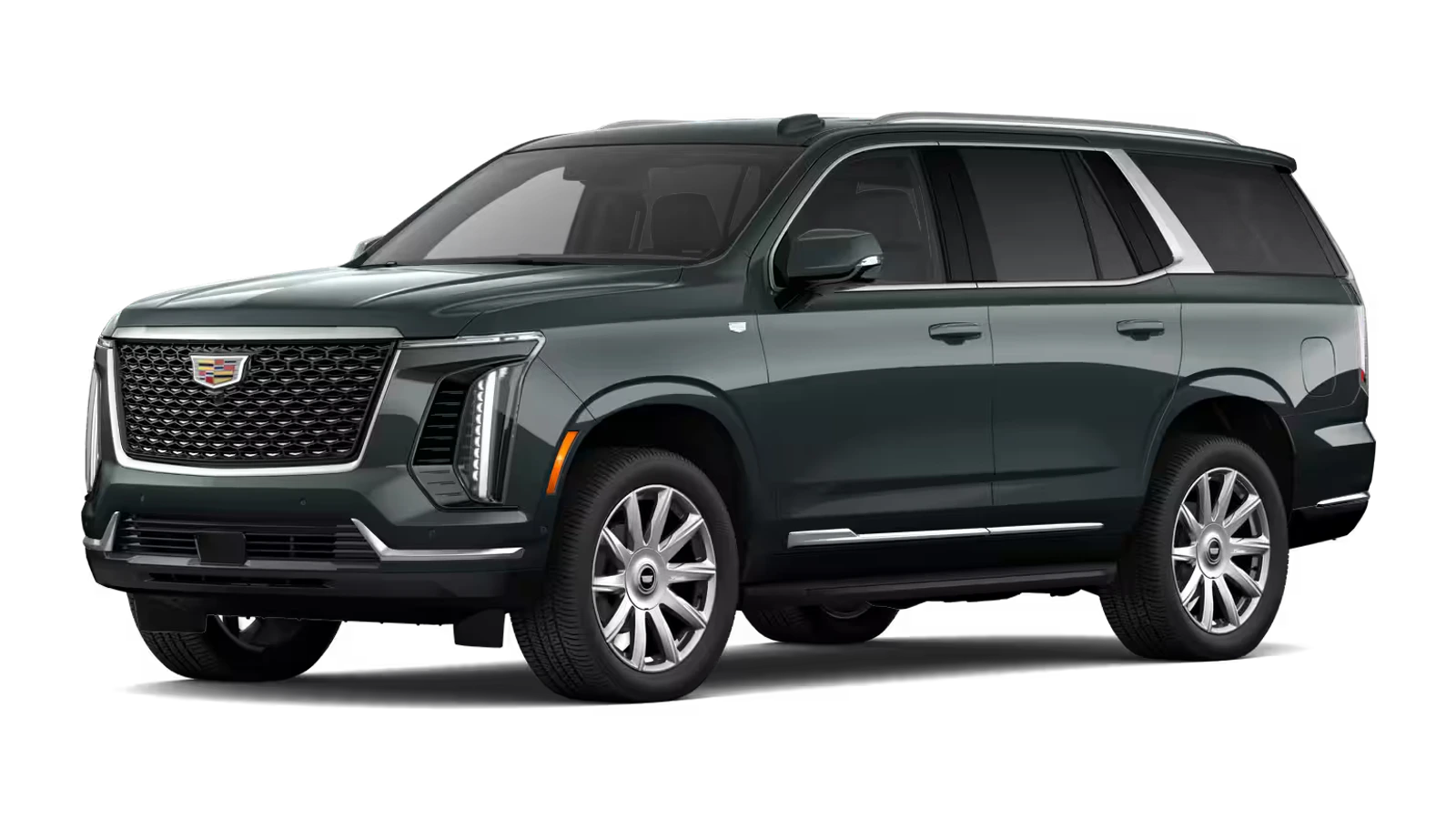
| Item | Share of CIF | Amount |
|---|---|---|
| Vehicle priceIPAS price for a car sourced in the USA | 41,097 BHDUS$109,300 | |
| Shipping and insuranceUSA to Bahrain | 3,067 BHDUS$8,157 | |
| CIF valueCost, insurance and freight: the customs value | 44,164 BHDUS$117,457 | |
| Customs duties and taxes | ||
| Basic customs duty (5%)5% of CIF | 2,208 BHDUS$5,873 | |
| GST/VAT (10%)10% of CIF plus the duties above10.5% of CIF | 4,637 BHDUS$12,333 | |
| Total duties and taxes15.5% of CIF | 6,845 BHDUS$18,206 | |
| Service and handling | ||
| Premium Import ServiceOptional end-to-end import management by IPAS | 1,505 BHDUS$4,002 | |
| Destination handlingPort terminal and customs clearance handling | 647 BHDUS$1,720 | |
| Total landed cost | 53,161 BHDUS$141,385 | |
Electric and Hybrid Vehicles
There is no BEV customs duty exemption in Bahrain. Battery-electric vehicles pay the standard 5% GCC Common External Tariff, exactly like petrol, diesel, hybrid and plug-in hybrid cars, giving the same 15.5% effective burden. Hydrogen fuel-cell vehicles are likewise 5%.
This is worth stating firmly because a "Bahrain waives duty on EVs" claim circulates widely, and it is not supported by any gazetted instrument. The operative published tariff — Minister of Interior Decision No. 29 of 2025, in the Official Gazette Issue 3800 supplement of 13 March 2025 — lists the passenger BEV national line at 5.00%, not Free. Under the GCC Common Customs Law, duty applies per the unified tariff unless a specific legal instrument grants an exemption, and no such BEV exemption instrument exists.
The circulating reports most likely conflate one of four separate things:
- FTA preference, which is origin-based rather than propulsion-based. A US-origin EV can reach 0% duty under BFTA — but so can a US-origin petrol car.
- GCC-origin intra-trade treatment, again origin-based.
- Importer-specific or fleet arrangements, which are not available to a private importer.
- Non-customs registration and road-fee incentives, which are applied after clearance.
There is also no EV relief on the VAT side — the 10% applies normally.
The Tamkeen subsidy
Tamkeen, Bahrain's Labour Fund, has historically offered a purchase subsidy of around 20% on EVs aimed at Bahraini nationals working in the private sector. Two things limit its relevance here. It was structured around a dealer invoice — you had to buy from an authorised Bahraini dealer to trigger the rebate — so it does not reach a private direct import where you buy abroad and ship the car in yourself. And Tamkeen launched a new 2026–2030 strategy in February 2026 focused on labour-market development, under which the specific status of the EV subsidy has not been publicly confirmed.
Do not build a Tamkeen rebate into your landed-cost budget for a direct import.
Pickup Trucks and Dual-Cab Classification
Bahrain's Customs Affairs Directorate has not published binding guidance on dual-cab pickup classification, so Bahrain Customs applies the WCO Harmonised System Explanatory Notes and general GCC tariff principles.
In practice, dual-cab pickups with an open cargo bed — Toyota Hilux, Ford Ranger, Isuzu D-Max, Mitsubishi Triton, Nissan Navara, Volkswagen Amarok — are treated as goods vehicles under HS 8704. Full-size American pickups such as the RAM 1500, Ford F-150, Chevrolet Silverado and Toyota Tundra sit in a greyer area where customs retains discretion between HS 8703 and HS 8704.
The good news is that the tariff impact is neutral: HS 8703 and HS 8704 both attract 5% duty and 10% VAT in Bahrain. Unlike Australia, where the split determines whether Luxury Car Tax applies, nothing about your tax bill changes. What the classification does affect is the road registration category (passenger versus commercial plates), the associated Ministry of Interior registration fees and your insurance category.
If certainty matters for a high-value pickup, you can request a binding Advance Ruling on classification from Bahrain Customs Affairs before shipping.
Documents Required for Import
- Commercial invoice showing the purchase price
- Bill of Lading (original or telex release)
- Packing list with make, model, year, VIN, engine capacity and colour
- Certificate of Origin — mandatory if claiming any FTA or GCC preference, recommended in all cases
- Certificate of Title or equivalent ownership document (US Title, German Fahrzeugbrief)
- Previous-country registration certificate
- Customs declaration (bill of entry), filed through a licensed customs broker
- Proof that the manufacture date falls inside the five-year window — the VIN plate or a manufacturer build certificate
- Passport and CPR (Bahraini national identity card) for the importer
- Bahraini motor insurance certificate, required at the registration stage
For an FTA claim, the original Certificate of Origin — or a EUR.1 movement certificate for EFTA origin, or an invoice self-declaration for US origin — must be presented at the declaration stage. A copy submitted afterwards will not retrospectively secure the preference.
Customs Clearance Timeline
| Stage | Typical duration | Notes |
|---|---|---|
| Vessel arrival to discharge | 1–3 days | Khalifa Bin Salman Port |
| Customs declaration and duty assessment | 1–3 working days | Filed by a licensed broker |
| Duty and VAT payment, customs release | 1 day | |
| Technical inspection | 1–2 days | Ministry of Interior approved centre |
| Registration and plate issuance | 1–2 days | Insurance must already be in place |
| Typical total | 1–2 weeks | With complete documents |
Clearance in Bahrain is fast by regional standards. Delays are usually caused by an origin document that arrives after the declaration has been filed, or by a build-date discrepancy that puts the vehicle outside the five-year window.
Homologation and Vehicle Approval
Bahrain's approval regime is lighter than the UAE's. There is no mandatory pre-shipment inspection comparable to Kenya's PVoC or Nigeria's SONCAP, and no separate national emissions test for an individual import. Compliance is confirmed after arrival through the Ministry of Interior technical inspection, which checks VIN and chassis numbers against the documents, verifies lighting, brakes and tyres, and looks for illegal modifications.
Because Bahrain follows GCC standards, a vehicle built to Gulf specification clears most easily. Cars built to US specification are widely accepted and common in the market. The practical compliance risks for a direct import are cosmetic or structural modifications that fail inspection, and — far more often — the age rule.
The technical inspection fee is modest, typically in the region of BHD 25–50, with customs clearance fees around BHD 30. These are small fixed administrative amounts rather than a material part of the landed cost.
Registration Procedures and Costs
Registration is handled by the Ministry of Interior's Traffic and Licences Directorate. The sequence is:
- Clear customs and obtain the release documentation showing duty and VAT paid.
- Arrange Bahraini motor insurance — registration cannot proceed without an active policy.
- Present the vehicle for technical inspection at an approved centre.
- Submit the registration application with the customs clearance certificate, ownership documents, inspection certificate, insurance policy, and your passport and CPR.
- Pay registration fees and receive plates.
Fees are low relative to the vehicle values involved — Bahrain's cost of ownership is among the lowest in the region. Registration is renewed periodically with a repeat technical inspection.
Recent Regulatory Changes (2022–2026)
- 1 January 2022 — VAT doubled. Legislative Decree No. 9 of 2021 raised the VAT rate from 5% to 10%, taking the effective import burden from 10.25% to 15.5%. This is the single largest change in recent years and it means older cost guidance understates the tax by roughly a third.
- 1 January 2025 — GCC Integrated Customs Tariff. The first edition of the unified GCC tariff took effect on HS 2022 nomenclature with a 12-digit code structure, adopted across all six GCC states.
- 13 March 2025 — operative Bahrain schedule published. Minister of Interior Decision No. 29 of 2025 published the Integrated GCC Customs Tariff Schedule in Official Gazette Issue 3800. This is the instrument that confirms battery EVs at 5%, not zero.
- February 2026 — new Tamkeen strategy. Tamkeen launched its 2026–2030 strategy; the status of the EV purchase subsidy under it has not been publicly confirmed.
- April 2026 — age limit extension proposed. Parliament approved extending the import age limit from five to ten years and referred it to the Cabinet. Not yet enacted; the five-year rule remains in force.
Frequently Asked Questions
How much does it cost to import a car to Bahrain?
Import charges total 15.5% of the CIF value — a 5% customs duty, then 10% VAT calculated on the CIF plus that duty. There is no excise, luxury tax or environmental levy on vehicles. A car with a CIF of $45,000 pays $6,975. Add shipping, clearance and inspection fees and registration on top. If your vehicle qualifies for a documented FTA or GCC-origin preference, the duty drops to zero and the total falls to 10%.
What is the age limit for importing a car to Bahrain?
Five years from the date of manufacture — so in 2026, vehicles built in 2021 or later. It is measured from the build date on the VIN plate, not from first registration, which catches out cars registered in one year but manufactured late in the previous one. Parliament approved a proposal in April 2026 to extend the limit to ten years, but the Cabinet has not enacted it, so five years remains the operative rule. There is no confirmed exemption for classic vehicles or returning residents.
Are electric vehicles exempt from customs duty in Bahrain?
No. Battery EVs pay the standard 5% customs duty and 10% VAT, the same as a petrol car — a 15.5% effective burden. The published tariff schedule under Minister of Interior Decision No. 29 of 2025 lists the passenger BEV line at 5.00%, not Free. Claims of an EV exemption generally confuse origin-based FTA preference, GCC-origin treatment, or non-customs registration incentives with a customs concession. The Tamkeen purchase subsidy, where it still operates, applies only to vehicles bought from an authorised Bahraini dealer and not to a private direct import.
Can I import a right-hand-drive car to Bahrain?
No, not for road use. Bahrain drives on the right and registers left-hand-drive vehicles only, consistent with all six GCC states. Right-hand-drive cars from Japan, the UK, Australia or India cannot be registered, and there is no approved conversion pathway. The only exception is temporary import under a Carnet de Passages en Douane, which does not confer registration.
Does a car bought in the USA automatically get 0% duty under the Bahrain–US FTA?
No. Two conditions must both hold. The vehicle has to genuinely originate in the United States — meeting either a 35% regional value content test or a change in tariff classification at heading level — and you must affirmatively claim the preference at the declaration stage with valid origin documentation. Many US-brand models are assembled in Mexico or Canada and fail the origin test despite being bought in America. IPAS therefore quotes the standard 5% by default and treats the preference as a claim to be substantiated with your broker.
How long does clearance take?
Typically one to two weeks from vessel arrival to plates, assuming complete documentation. The customs steps themselves are quick — declaration, assessment and payment usually complete within one to three working days. Most delays come from origin paperwork arriving late or a manufacture-date discrepancy.
Is the tax different for a dealer than for a private buyer?
The border charges are identical — same duty, same VAT, same age limit, same LHD rule. The difference is downstream: a VAT-registered business can reclaim the 10% input VAT on a business-use vehicle, while a private importer bears it as a final cost. The one genuine dealer advantage is access to the Tamkeen EV subsidy, which requires a dealer invoice.
Ready to Import?
Bahrain is an unusually cheap place to import a car and an unusually strict one to qualify for. The tax side is simple and light — 15.5% of CIF, with no excise or luxury tax anywhere in the structure, dropping to 10% if you hold valid origin documentation for a GCC-manufactured or US-origin vehicle. The money is rarely the problem.
The gates are. Confirm two things before you commit to any purchase: the build date on the VIN plate must fall inside the five-year window, and the car must be left-hand drive. Those two rules disqualify more prospective imports into Bahrain than everything else combined, and neither has a workaround.
IPAS provides two tools to plan and execute your import:
CarImport.AI — Source a vehicle through IPAS and calculate the full landed cost to Bahrain, including the 5% customs duty, 10% VAT and shipping. Get exact figures for your specific vehicle and origin, and see whether a documented GCC or BFTA origin claim is available to you.
IPAS EXPRESS — Already have a vehicle? Get instant shipping quotes to Khalifa Bin Salman Port — sea freight, RoRo or air — with transparent, itemised pricing and a stage-by-stage timeline.
Ready to Import Your Vehicle?
Two tools, two use cases. Pick the one that fits your needs.
Source a vehicle through IPAS and calculate the full landed cost — customs duties, shipping, and compliance — to destinations across the world.
Calculate Landed CostIPAS Express
Already have a vehicle? Get instant shipping quotes — sea freight, air freight, or RoRo — for one car or multiple vehicles worldwide.
Get Shipping Quote