
Introduction
Cambodia taxes vehicles by what powers them, and it does so more aggressively than almost anywhere else. A battery-electric car lands at 21% of its CIF value. The same-sized petrol car lands at 122.75%. That gap — more than a hundred percentage points, on the identical body — is the largest propulsion spread in any market IPAS calculates for, and it is the single most important thing to understand before choosing a vehicle for Cambodia.
The reason is that Cambodia grants its electrification concession on two components rather than one. Most countries that encourage EVs cut the excise and leave the duty alone. Cambodia cuts both: customs duty on a battery EV fell to 0% and the Special Tax to 10%, while a petrol car pays 35% duty and 50% Special Tax. Plug-in hybrids sit on a genuine middle rung — 7% duty and 40% Special Tax — which is unusual, because most tariff schedules offer only "concession or no concession".
That three-step duty ladder of 0%, 7% and 35% became operative on 1 April 2026 under Sub-Decree No. 52, and it applies at MFN to every origin. Any cost guidance predating it is out of date by a very large margin.
Two other things define Cambodia. Right-hand-drive vehicles are absolutely prohibited — banned since July 2022, subject to seizure, and conversion to left-hand drive expressly does not create a pathway. And there is no age limit at all: a twenty-year-old car pays exactly the same rates as a new one, with no surcharge and no uplift.
Quick Facts
| Detail | Information |
|---|---|
| Customs Authority | General Department of Customs and Excise (GDCE) |
| Traffic Side | Right-hand traffic (drive on the right) |
| Steering Requirement | LHD only — RHD prohibited and subject to seizure. Conversion is not a pathway |
| Customs Duty | 0% / 7% / 15% / 35% by tariff line — no other rates exist |
| Special Tax | 10% – 55% by line, charged on (CIF + duty) |
| VAT | 10% on (CIF + duty + Special Tax) |
| Valuation | CIF — Cambodia is not an FOB market |
| Total — battery EV | 21.000% of CIF |
| Total — plug-in hybrid over 1,000cc | 64.780% |
| Total — pickup (HS 8704) at MFN | 77.100% |
| Total — conventional hybrid over 1,000cc | 115.325% |
| Total — petrol/diesel up to 3,000cc | 122.750% |
| Total — petrol/diesel over 3,000cc | 130.175% |
| Total — ATIGA-origin petrol car | 65.000% |
| Displacement breakpoints | 1,000cc and 3,000cc — there is no 2,000cc break |
| Vehicle Age Limit | None — used vehicles pay the identical cascade |
| Salvage / flood titles | No prohibition located; Cambodia is a significant destination for US salvage stock |
| Person-type restriction | None — individuals, companies and dealers taxed identically |
| Emissions gate at import | None |
| Luxury tax / CO2 levy / age surcharge | None exist |
| Main Ports | Sihanoukville Autonomous Port (deepwater); Phnom Penh Autonomous Port (river) |
| Currency | Operative in USD; riel is legal tender at approximately 4,047 to the dollar |
Types of Cars That Can Be Imported
Steering — right-hand drive is prohibited outright
Cambodia drives on the right, and the Law on Road Traffic requires it. The prohibition on right-hand-drive vehicles is unusually emphatic:
- A Royal Government Circular of 2006 directed border authorities to prevent and ban any import of right-hand-drive vehicles.
- A Prime Ministerial decision of 6 July 2022 provided that from 7 July 2022 all newly imported RHD vehicles are banned and will be seized.
- That decision is explicit that neither tax payment nor steering-wheel modification will be accepted from a person intending to import an RHD vehicle.
The last point deserves emphasis because it differs from many markets: converting a car to left-hand drive before shipping does not make it admissible. The historic conversion-plus-tax route was a one-off amnesty for right-hand-drive vehicles already inside Cambodia, and it closed on 31 December 2022.
A right-hand-drive vehicle of any age, origin, value or condition is inadmissible, and the consequence of getting this wrong is seizure rather than a penalty.
Age — no limit, and no penalty
Used imports are permitted with no statutory age limit for passenger cars or goods vehicles. More unusually, a used vehicle pays exactly the same cascade at exactly the same rates as a new one. The tariff schedule contains no new/used distinction, no age surcharge and no depreciation-based uplift.
Only two consequences follow from a vehicle being used: it is excluded from the US zero-duty pathway described below, and it carries higher valuation risk, since customs scrutinise a declared value that looks low.
Condition
No salvage, flood or rebuilt-title prohibition was located in the regulations. Cambodia is in practice a significant destination for vehicles from US salvage auctions.
Who may import
There is no person-type gate. Private individuals, companies and dealers are taxed identically, and there is no emissions gate at import. Large engines are taxed punitively but not banned.
Cars You Can Import to Cambodia
Each card is a full landed-cost calculation: the car's price, shipping, every duty and tax, and handling, worked out on 9 November 2026 with the rules in force that day. All are left-hand drive to suit Cambodia's roads. Tap a car to see its full breakdown, or open it to change the trim, colour or port.
More cars you can import to Cambodia
New cars IPAS sources to order that meet Cambodia's import rules. Prices are ex works, before shipping and duty. Open a car to work out its full landed cost.
 LHD/C-RHDBackorder2026
Chevrolet Silverado 3500 HD DRW
Pickup · 8 VariantsPetrol · DieselFrom $65,800Ex Works, USA LHD/C-RHDBackorder2025
Chevrolet Silverado EV
Pickup · 3 VariantsElectricFrom $102,200Ex Works, USA LHDBackorder2026
Chevrolet Corvette Stingray Coupe
Coupe · 3 VariantsPetrolFrom $87,000Ex Works, USA LHDBackorder2026
Cadillac VISTIQ
SUV · 4 VariantsElectricFrom $92,900Ex Works, USA LHDBackorder2026
Lexus UX 300h
SUV · 4 VariantsHybridFrom $39,200Ex Works, Canada LHD/C-RHDBackorder2025
Ford Super Duty F-250
Pickup · 10 VariantsPetrol · DieselFrom $54,400Ex Works, USA LHD/C-RHDBackorder2025
Ford Bronco
SUV · 3 VariantsPetrolFrom $62,500Ex Works, USA LHD/C-RHDBackorder2026
GMC Sierra 3500HD
Pickup · 5 VariantsPetrol · DieselFrom $85,900Ex Works, USA LHDBackorder2026
Mercedes-Benz G-Class
SUV · 8 VariantsDiesel · Hybrid · ElectricFrom $140,300Ex Works, Germany LHDBackorder2026
Toyota Land Cruiser 78 Troop Carrier
SUV · 2 VariantsDieselFrom $54,200Ex Works, UAE LHDBackorder2027
Toyota Hilux Double Cab 2.8
Pickup · 2 VariantsDieselFrom $48,100Ex Works, UAE LHDBackorder2026
Toyota C-HR
SUV · 2 VariantsElectricFrom $44,400Ex Works, USA LHD/C-RHDBackorder2025
Dodge Charger Daytona
Coupe · 2 VariantsElectricFrom $71,500Ex Works, USA LHDBackorder2026
Zeekr 009
Van & MPV · 4 VariantsElectricFrom $69,800Ex Works, China🇨🇳 LHDBackorder2026
Denza B5
SUV · 2 VariantsPlug-in HybridFrom $41,200Ex Works, China🇨🇳 LHD/C-RHDBackorder2025
Lincoln Navigator
SUV · 3 VariantsPetrolFrom $119,900Ex Works, USA
Ports Supporting Vehicle Import
| Port | Location | Role |
|---|---|---|
| Sihanoukville Autonomous Port | Preah Sihanouk | Cambodia's only deepwater seaport and the principal vehicle gateway |
| Phnom Penh Autonomous Port | Phnom Penh | River port on the Mekong, accessible to smaller vessels and barge feeders |
Sihanoukville handles effectively all containerised and roll-on vehicle volume. Phnom Penh's river port is useful for barge movements from Vietnamese ports and for delivery closer to the capital.
Duty Structure Overview
Cambodia levies three taxes at the border, each on the running subtotal of everything before it:
- Customs Import Duty — 0%, 7%, 15% or 35% on CIF. No other rates exist in the schedule.
- Special Tax — 10% to 55%, charged on (CIF + customs duty).
- VAT at 10% — on (CIF + customs duty + Special Tax).
Valuation is CIF — cost, insurance and freight. Cambodia is not an FOB market, a point sometimes confused with South Africa.
Every component is a pure percentage and there is not one monetary threshold anywhere in the cascade — no luxury threshold, no value band, no exemption floor. The only banded discriminators are engine displacement and vehicle type, both physical characteristics. That is why the currency you calculate in cannot change the answer.
The propulsion ladder
| Propulsion (HS 8703 passenger car) | Duty | Special Tax | Effective on CIF |
|---|---|---|---|
| Battery electric | 0% | 10% | 21.000% |
| Plug-in hybrid, over 1,000cc | 7% | 40% | 64.780% |
| Conventional hybrid, over 1,000cc | 35% | 45% | 115.325% |
| Petrol or diesel, up to 3,000cc | 35% | 50% | 122.750% |
| Petrol or diesel, over 3,000cc | 35% | 55% | 130.175% |
Read the duty column carefully, because it is the part most often got wrong. Cambodia's electrification concession applies to the customs duty as well as the Special Tax:
- A battery EV gets both — duty to 0% and Special Tax to 10%.
- A plug-in hybrid gets a partial duty cut to 7% — neither zero nor full — plus a Special Tax cut to 40%.
- A conventional hybrid gets no duty relief at all. It pays the full 35%, with only the Special Tax dropping to 45%. The saving against a petrol car is a mere seven percentage points.
The gap between a plug-in hybrid at 64.78% and a conventional hybrid at 115.325% is enormous, and it turns entirely on whether the car can be plugged in.
Displacement bands — the breakpoints are 1,000cc and 3,000cc
There is no 2,000cc break in the Cambodian schedule. Any source citing one is describing a regime that does not exist.
- Petrol up to 1,000cc → Special Tax 20%. This is the only small-car relief and it reaches only kei-class and city cars.
- Petrol and diesel from 1,000cc to 3,000cc → 50%.
- Above 3,000cc → 55%.
- Diesel has no 20% band at all — the lowest diesel line, covering engines up to 1,500cc, already sits at 50%.
- HS 8704 goods vehicles have no displacement banding whatsoever.
Worked example 1 — Japanese-origin 2.5L petrol SUV, CIF US$30,000
| Charge | Calculation | Amount |
|---|---|---|
| Customs value (CIF) | — | $30,000 |
| Customs duty (35%) | $30,000 × 0.35 | $10,500 |
| Special Tax (50%) | ($30,000 + $10,500) × 0.50 | $20,250 |
| VAT (10%) | ($30,000 + $10,500 + $20,250) × 0.10 | $6,075 |
| Total taxes | $36,825 (122.75% of CIF) | |
| Landed cost | $66,825 |
Worked example 2 — The same car built in Thailand, with an ATIGA certificate, CIF US$30,000
| Charge | Calculation | Amount |
|---|---|---|
| Customs duty | 0% — ATIGA | $0 |
| Special Tax (50%) | $30,000 × 0.50 | $15,000 |
| VAT (10%) | ($30,000 + $15,000) × 0.10 | $4,500 |
| Total taxes | $19,500 (65.00% of CIF) |
The ASEAN origin saves $17,325 — but note that even at 0% duty the car still pays 65%, because the Special Tax and VAT are untouched by any agreement.
Worked example 3 — Battery EV, any origin, CIF US$35,000
| Charge | Calculation | Amount |
|---|---|---|
| Customs duty | 0% | $0 |
| Special Tax (10%) | $35,000 × 0.10 | $3,500 |
| VAT (10%) | ($35,000 + $3,500) × 0.10 | $3,850 |
| Total taxes | $7,350 (21.00% of CIF) |
Worked example 4 — Thai-built pickup with an ATIGA certificate, CIF US$25,000
| Charge | Calculation | Amount |
|---|---|---|
| Customs duty | 0% — ATIGA | $0 |
| Special Tax (40%) | $25,000 × 0.40 | $10,000 |
| VAT (10%) | ($25,000 + $10,000) × 0.10 | $3,500 |
| Total taxes | $13,500 (54.00% of CIF) |
The same pickup at MFN would pay 77.100%.
These figures show the structure. Cambodia's bill swings by over a hundred points on powertrain alone — get the exact figure for your specific vehicle using CarImport.AI.

Calculate your exact import duty to Cambodia
Get a vehicle-specific duty and full landed-cost breakdown — HS classification, every tax, levy and FTA, plus shipping — calculated for your exact make, model and specs.
- Vehicle-specific HS code
- All duties, taxes & FTAs
- Shipping + est. landed cost
Pickups versus their SUV twins
The HS 8703 / HS 8704 split is the second-largest lever in the Cambodian regime, worth about 45 percentage points:
| Charge | Pickup → HS 8704 | SUV twin → HS 8703 |
|---|---|---|
| Customs duty | 15% | 35% |
| Special Tax | 40% | 50% |
| Effective on CIF | 77.100% | 122.750% |
Cambodia has made the classification call at the schedule level, with explicit national lines for pickup trucks, so this is not a matter of interpretation. A Toyota Hilux, Ford Ranger, Isuzu D-Max, Mitsubishi Triton, Nissan Navara, Mazda BT-50, Ford F-150, RAM 1500, Chevrolet Silverado, Toyota Tundra or Tacoma goes to HS 8704. A Toyota Fortuner, Ford Everest, Isuzu MU-X, Mitsubishi Pajero Sport, Ford Expedition, Chevrolet Tahoe or Cadillac Escalade goes to HS 8703.
Note that pickups are not actually cheap in Cambodia — they carry their own elevated 40% Special Tax line, materially above the 30% that applies to ordinary lorries. They are simply much cheaper than a passenger car.
Worked Example: Importing a 2026 Cadillac Escalade to Cambodia
Here is the full landed cost of one car, a 2026 Cadillac Escalade shipped from the USA to Cambodia, worked out on 9 November 2026 with the customs rules in force that day. It lands at US$275,077, and duties and taxes come to 130.2% of its CIF value.
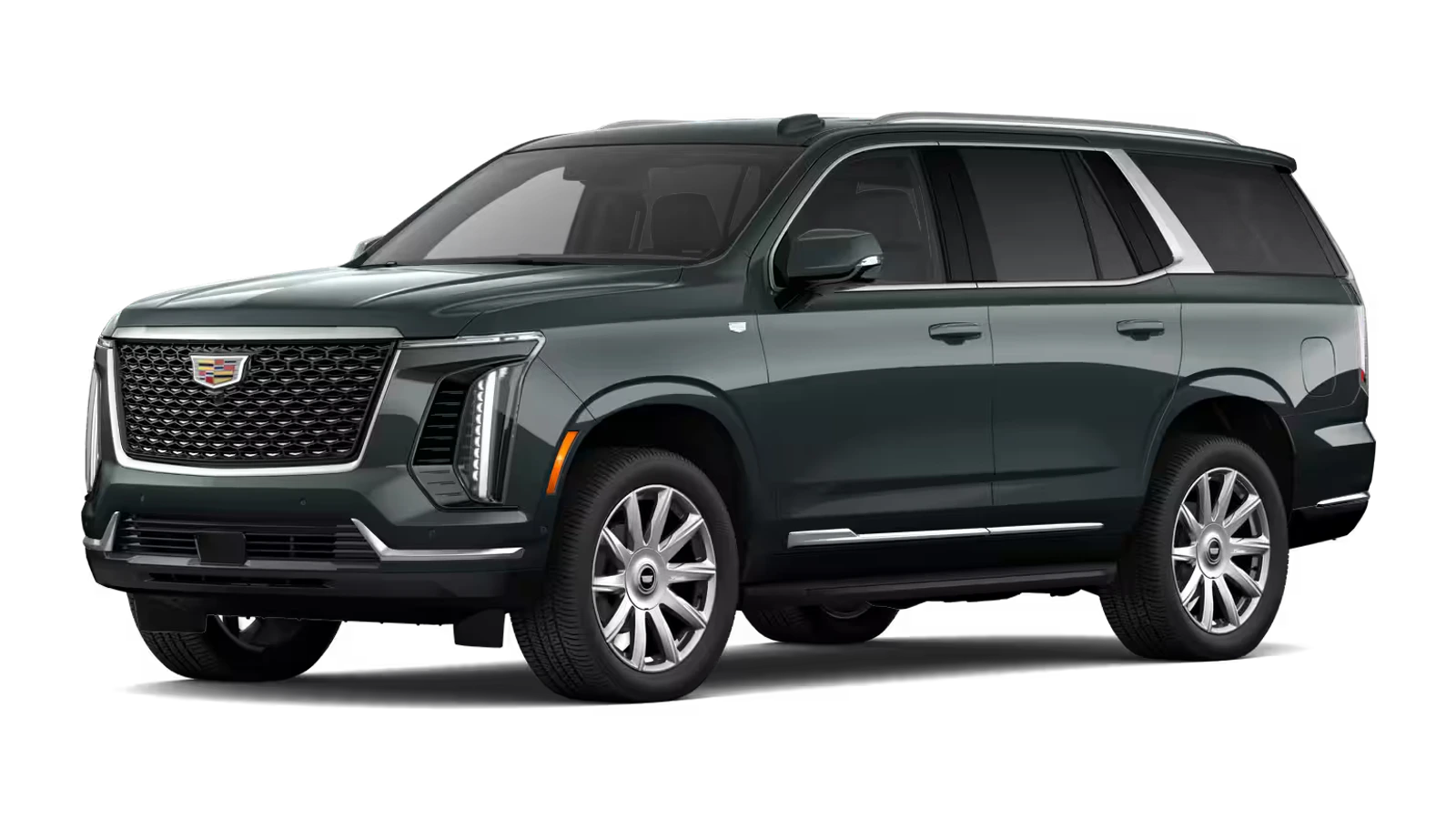
| Item | Share of CIF | Amount |
|---|---|---|
| Vehicle priceIPAS price for a car sourced in the USA | US$109,300 | |
| Shipping and insuranceUSA to Cambodia | US$6,003 | |
| CIF valueCost, insurance and freight: the customs value | US$115,303 | |
| Customs duties and taxes | ||
| Basic customs duty (35%)35% of CIF | US$40,356 | |
| Additional duty (55%)55% of CIF plus the duties above74.2% of CIF | US$85,612 | |
| GST/VAT (10%)10% of CIF plus the duties above20.9% of CIF | US$24,127 | |
| Total duties and taxes130.2% of CIF | US$150,095 | |
| Service and handling | ||
| Premium Import ServiceOptional end-to-end import management by IPAS | US$7,829 | |
| Destination handlingPort terminal and customs clearance handling | US$1,850 | |
| Total landed cost | US$275,077 | |
Free Trade Agreements
The one rule that governs every preference: an FTA reduces the customs duty only. The Special Tax and the VAT are Cambodian internal taxes and are never reduced by any agreement, any origin, ever. Because the Special Tax dominates the bill, even a zero duty leaves a very large tax.
| Origin | Instrument | Document | HS 8703 ICE car | HS 8704 pickup |
|---|---|---|---|---|
| Thailand, Indonesia, Malaysia, Vietnam, Singapore, Philippines, Brunei, Laos, Myanmar | ATIGA | Form D | 0% | 0% |
| India | AIFTA | Form AI | 5% | 5% diesel, 0% petrol |
| Australia, New Zealand | AANZFTA | AANZ CO | 5% | 0% diesel, 15% petrol |
| China | ACFTA | Form E | 5% | 0% |
| South Korea | AKFTA | Form AK | 28% | 15% |
| Japan | No usable preference for cars | — | 35% MFN | 5% |
| United Arab Emirates | CEPA — vehicles permanently carved out | — | 35% MFN | 15% MFN |
| Germany, EU, United Kingdom | No agreement exists | — | 35% MFN | 15% MFN |
| United States | MEF Prakas No. 632 — new vehicles only | CVDS | 0% if eligible | 0% if eligible |
Three points worth drawing out.
ATIGA is the dominant lever. Every HS 8703 and HS 8704 line in Cambodia's ATIGA schedule sits at 0% — automotive is in ASEAN's Priority Integration Sector track rather than on a sensitive list. Thai-built vehicles in particular are both geographically close and duty-free.
The US pathway covers new vehicles only. Prakas No. 632 provides a zero-duty route for eligible US-origin vehicles, but it excludes used cars — which matters given how much US salvage and used stock reaches Cambodia.
For electric vehicles, origin is irrelevant. Battery EVs and hybrid or electric goods vehicles are already 0% at MFN, so a Chinese BYD and an American Tesla both land at exactly 21.000%. There is nothing to gain from an origin certificate on an EV.
A preference must be claimed with the correct certificate of origin and compliance with that agreement's rules of origin — ATIGA requires 40% regional value content or a change in tariff heading. Without a valid certificate, MFN applies.
Electric and Hybrid Vehicles
Cambodia offers one of the most substantial electrification incentives anywhere, and it is worth being precise about its shape.
What changed in April 2026
Sub-Decree No. 52 of 26 March 2026, effective 1 April 2026, cut:
- Battery-electric family cars from 35% duty to 0% — across all twelve HS 8703.80 lines
- Plug-in hybrid family cars from 35% duty to 7%
- Electric, hybrid and plug-in hybrid goods vehicles from 15% duty to 0%
This is an MFN change applying to every origin. It sits on top of earlier Special Tax cuts made by Sub-Decree No. 122 of June 2023, which reduced hybrids from 50% to 45%, plug-in hybrids from 50% to 40%, goods vehicles from 40% to 30% and electric goods vehicles to 10%.
The practical ranking
| Choice | Effective rate | Versus a petrol equivalent |
|---|---|---|
| Battery electric | 21.000% | saves over 100 points |
| Plug-in hybrid | 64.780% | saves about 58 points |
| Conventional hybrid | 115.325% | saves only 7 points |
The lesson is blunt: in Cambodia, a conventional hybrid is barely cheaper than a petrol car, because it receives no customs duty relief at all. If you are choosing a vehicle for tax efficiency here, the meaningful decision is whether it plugs in — and better still, whether it is fully electric.
No VAT relief
VAT applies at 10% to everything, including battery EVs. There is no reduced or zero rate.
Components That Do Not Exist in Cambodia
Worth stating explicitly, because cost estimates sometimes invent them: there is no luxury tax, no value-threshold tax, no CO2 or environmental levy, no per-cubic-centimetre or per-kilowatt excise, no age surcharge or used-vehicle uplift, and no codified ad-valorem processing fee.
If a Cambodian estimate contains a line item outside customs duty, Special Tax and VAT, that line has been invented.
Documents Required for Import
- Commercial invoice showing the purchase price
- Bill of Lading (original or telex release)
- Packing list with make, model, year, VIN, engine displacement and body type
- Certificate of Origin — Form D for ATIGA, Form E for China, Form AI for India, Form AK for Korea, AANZ CO for Australia and New Zealand
- Certificate of Title or equivalent ownership document
- Export certificate or deregistration document from the origin country
- Customs declaration
- Evidence the vehicle is left-hand drive
- Importer identity documentation
- Cambodian motor insurance, at registration
Customs Clearance Timeline
| Stage | Typical duration | Notes |
|---|---|---|
| Vessel arrival to discharge | 1–3 days | Sihanoukville |
| Customs declaration and valuation | 3–7 working days | Valuation scrutiny is the main variable on used vehicles |
| Duty, Special Tax and VAT payment | 1–2 days | |
| Release and inland transport | 1–3 days | Sihanoukville to Phnom Penh |
| Registration and plates | 1–2 weeks | |
| Typical total | 2–4 weeks |
The dominant risk to the timeline is valuation. Because there is no age discount and no depreciation schedule, customs assess the declared CIF against their own view of the vehicle's worth, and a used car declared low will be queried. Supporting evidence of the purchase price — auction invoices, payment records — shortens this considerably.
Registration and Ongoing Costs
Registration is handled by the Ministry of Public Works and Transport. Registration-stage charges are denominated in riel and sit outside the border cascade and outside the VAT base — do not add them to the import tax figure.
Budget separately for registration and plate fees, technical inspection, and compulsory motor insurance.
Recent Regulatory Changes (2022–2026)
- 7 July 2022 — right-hand-drive import ban tightened. All newly imported RHD vehicles banned and subject to seizure, with conversion expressly excluded as a remedy.
- 31 December 2022 — RHD amnesty closed. The historic conversion-plus-tax route for RHD vehicles already inside Cambodia ended.
- 1 July 2023 — Special Tax cuts. Sub-Decree No. 122 reduced hybrids from 50% to 45%, plug-in hybrids from 50% to 40%, goods vehicles from 40% to 30%, and electric goods vehicles to 10%.
- 1 January 2026 — GDCE Notification 6069/25. Cut limousine duty from 35% to 15%, Specific Tax on EV motors from 10% to 0% and on EV batteries from 10% to 5%. It did not change HS 8703 or HS 8704 vehicle rates.
- 1 April 2026 — Sub-Decree No. 52. The headline change: battery-electric family cars from 35% to 0% duty, plug-in hybrids from 35% to 7%, and electric, hybrid and plug-in hybrid goods vehicles from 15% to 0%. Applies at MFN to every origin. Any guidance predating this is superseded.
Frequently Asked Questions
How much does it cost to import a car to Cambodia?
It depends overwhelmingly on the powertrain. A battery-electric car pays 21% of CIF. A petrol or diesel car up to 3,000cc pays 122.75%, or 65% if it qualifies for ASEAN origin. A plug-in hybrid pays about 65%, a conventional hybrid about 115%, and a pickup 77% at MFN or 54% with an ATIGA certificate. The spread between the cheapest and most expensive choice exceeds a hundred percentage points on the same purchase price.
Can I import a right-hand-drive car to Cambodia?
No, under any circumstances. Right-hand-drive vehicles have been banned since 7 July 2022 and are subject to seizure, not merely a penalty. Critically, converting the car to left-hand drive before shipping does not help — the governing decision expressly states that neither tax payment nor steering modification will be accepted. The conversion amnesty that once existed applied only to RHD vehicles already inside Cambodia and closed on 31 December 2022.
Do hybrids get a big tax break in Cambodia?
Only if they plug in. A plug-in hybrid receives both a partial duty cut to 7% and a Special Tax cut to 40%, landing at about 65%. A conventional non-plug-in hybrid receives no duty relief at all — it pays the full 35% duty, with only the Special Tax dropping from 50% to 45%, for a total of 115.325%. That is barely seven points below a petrol car. The distinction between plug-in and non-plug-in is worth roughly 50 percentage points.
Is there an age limit for importing a used car to Cambodia?
No. There is no statutory age limit for passenger cars or goods vehicles, and — unusually — a used vehicle pays exactly the same rates as a new one. There is no age surcharge, no depreciation uplift and no new/used distinction in the tariff schedule. Two practical consequences follow: used vehicles are excluded from the US zero-duty pathway, and they attract more valuation scrutiny at clearance.
Does buying from Thailand really make that much difference?
Yes, for anything with an engine. Under ATIGA every HS 8703 and HS 8704 line sits at 0% duty, so a Thai-built petrol car pays 65% instead of 122.75% — a saving of over 57 percentage points. You need a valid Form D certificate of origin and compliance with ATIGA's rules of origin. For a battery EV, however, origin makes no difference at all, since the duty is already zero at MFN for every country.
Why is my ASEAN-origin car still taxed so heavily at 0% duty?
Because a trade agreement reduces the customs duty only. The Special Tax and the VAT are Cambodian internal taxes and no agreement, from any partner, ever reduces them. On an ordinary petrol car the Special Tax alone is 50% of the duty-inclusive value, which is why an ATIGA car still lands at 65%.
Are pickups cheaper than SUVs?
Substantially — about 45 percentage points. Cambodia classifies pickups as goods vehicles under HS 8704 at 15% duty and 40% Special Tax, giving 77.100%, against 35% and 50% for a passenger car at 122.750%. The classification is set at the schedule level with explicit national lines, so it is not open to interpretation. That said, pickups are not cheap in absolute terms — their 40% Special Tax line is well above the 30% applied to ordinary lorries.
Is there a small-engine discount?
A narrow one. Petrol cars up to 1,000cc get a reduced Special Tax of 20%, but that reaches only kei-class and city cars. The next band runs from 1,000cc to 3,000cc at 50%, and above 3,000cc it is 55%. There is no 2,000cc breakpoint — a claim that appears in some guides but does not reflect the Cambodian schedule. Diesel gets no small-engine relief at all; the lowest diesel line already sits at 50%.
Ready to Import?
Cambodia is a market where the vehicle choice, not the paperwork, sets the price. The difference between a battery EV at 21% and a petrol SUV at 122.75% dwarfs anything an origin certificate, a shipping route or a negotiation can achieve. If tax efficiency matters to you at all, start with the powertrain and work outwards.
After that, two levers remain worth pulling: ASEAN origin, which removes the duty entirely on anything with an engine, and the pickup-versus-SUV classification, worth about 45 points. Note that neither helps an EV, which is already at the floor.
And check the one gate that has no workaround. The car must be left-hand drive — not converted to left-hand drive, but built that way. A right-hand-drive vehicle arriving in Cambodia is seized.
IPAS provides two tools to plan and execute your import:
CarImport.AI — Source a vehicle through IPAS and calculate the full landed cost to Cambodia, running the complete three-step cascade: customs duty at the correct propulsion rate, Special Tax and VAT. Get exact figures for your specific vehicle, displacement and origin.
IPAS EXPRESS — Already have a vehicle? Get instant shipping quotes to Sihanoukville or Phnom Penh — sea freight, RoRo or air — with transparent, itemised pricing and a stage-by-stage timeline.
Ready to Import Your Vehicle?
Two tools, two use cases. Pick the one that fits your needs.
Source a vehicle through IPAS and calculate the full landed cost — customs duties, shipping, and compliance — to destinations across the world.
Calculate Landed CostIPAS Express
Already have a vehicle? Get instant shipping quotes — sea freight, air freight, or RoRo — for one car or multiple vehicles worldwide.
Get Shipping Quote