
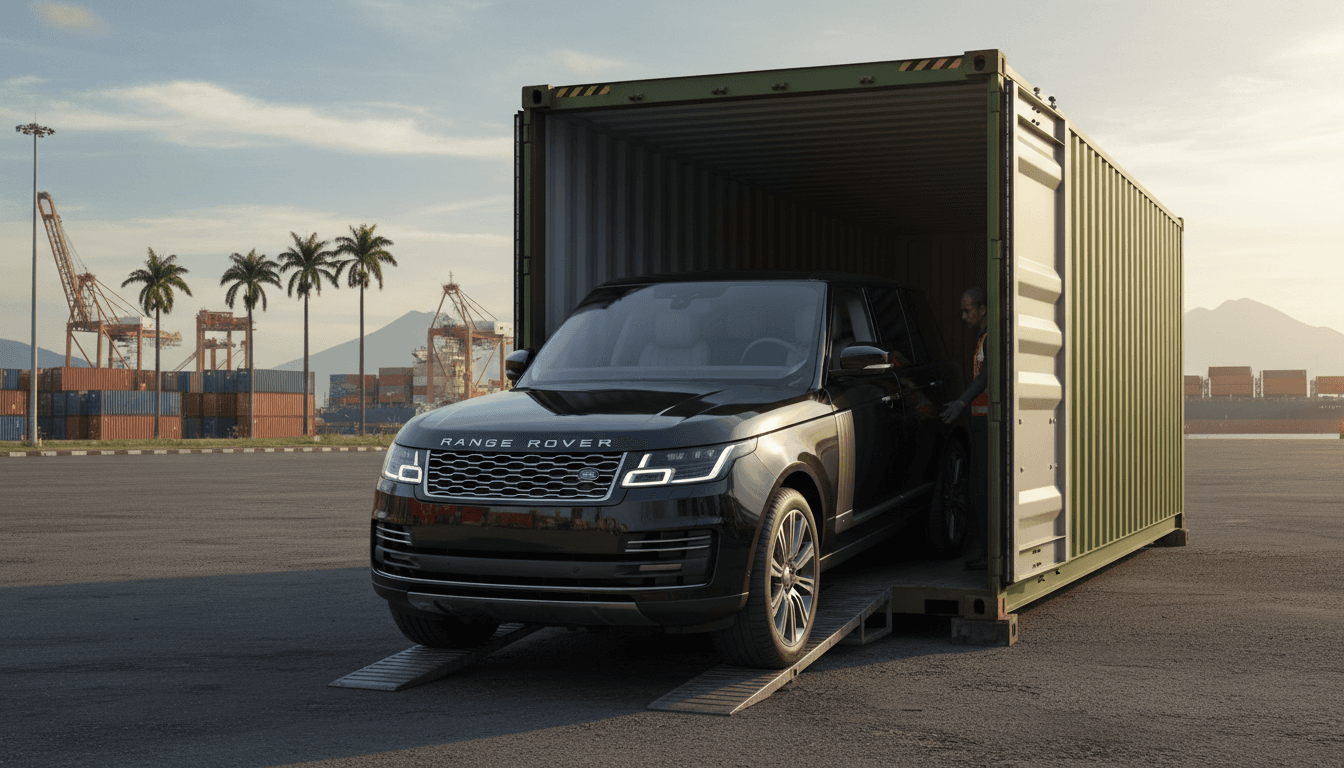
Introduction
A new car imported into Indonesia pays four border taxes: 50% Bea Masuk import duty (0% for ASEAN-built cars with a Form D), then PPnBM luxury tax of 15–95%, 12% PPN VAT and 10% PPh 22 income tax, each charged on CIF plus duty. Used imports are banned, and only right-hand-drive cars can be registered.
Indonesia is the largest economy in Southeast Asia and the fourth most populous nation on earth, with over 280 million people spread across more than 17,000 islands. Its domestic automotive market is one of the biggest in the region, producing and consuming well over one million vehicles annually. Yet despite this enormous appetite for cars, Indonesia maintains one of the most protectionist vehicle import regimes in Asia.
The import framework is administered by three principal agencies: the Directorate General of Customs and Excise (DGCE, under the Ministry of Finance) handles border clearance and duty collection; the Ministry of Trade (Kemendag) controls import licensing through LARTAS restrictions and the Persetujuan Impor approval process; and the Ministry of Transportation (Kemenhub) manages vehicle type approval (TIPE certification), emissions standards, and roadworthiness. All three agencies must be satisfied before a vehicle can legally enter and be registered in Indonesia.
The duty is added to the CIF value first, and the other three taxes are each charged on that larger figure, so the total is far higher than any single rate suggests. A petrol car up to 4,000 cc from a country without a trade agreement pays between 105.5% and 188% of its CIF value in border taxes, and 225.5% above 4,000 cc. A Thai-built car entering duty-free under ATIGA pays about 37–62%, and a Thai-built double-cab pickup about 30–35%. Used vehicles cannot be imported: Permendag 16/2025 requires imported goods to be new. This guide covers every step of the process, from licensing and eligibility checks through customs clearance, duty payment, and vehicle registration.
Quick Facts
| Detail | Information |
|---|---|
| Customs Authority | Directorate General of Customs and Excise (DGCE) |
| Trade Licensing | Ministry of Trade (Kemendag) |
| Type Approval | Ministry of Transportation (Kemenhub) |
| Steering | Right-Hand Drive (RHD) only for road registration |
| Customs Duty (BM) | 50% of CIF (MFN, passenger cars HS 8703); 0% from ASEAN under ATIGA |
| PPnBM (Luxury Tax) | 15–95% of CIF + duty by engine size and fuel consumption or CO2; 15% for battery EVs; double-cab pickups 10–30%. No reduced base for imported hybrids, PHEVs, LCGC-spec cars or EVs |
| PPN (VAT) | 12% of CIF + duty (not charged on PPnBM) for every passenger car and double cab, EVs included; 11% effective for single cabs, vans and trucks |
| PPh 22 (Income Tax) | 10% of CIF + duty on passenger cars (HS 8703), 7.5% on goods vehicles and double cabs (HS 8704), with or without an API licence; creditable |
| Used Vehicle Import | Banned (Permendag 16/2025) |
| EV Incentives | None for imports in 2026: the manufacturer-only facility (0% duty, government-borne PPnBM) ended 31 December 2025, and an imported BEV pays 15% PPnBM |
| Customs Valuation Rate | Weekly Kurs Pajak set by the Ministry of Finance |
| Primary Port | Tanjung Priok, Jakarta (~70% of vehicle imports) |
| Customs Clearance | 1-14 days depending on risk channel |
| Total Tax Burden (typical) | 105.5–188% of CIF for petrol cars up to 4,000 cc at MFN (225.5% above 4,000 cc); about 37–62% for Thai-built cars under ATIGA |
Types of Cars That Can Be Imported
Indonesia permits the import of new CBU (Completely Built-Up) and CKD (Completely Knocked Down) vehicles, but the regime is designed to strongly favour domestic assembly over finished imports. The combination of high duties and strict licensing requirements makes individual vehicle imports exceptionally expensive and administratively complex.
New Vehicles
New CBU passenger cars can be imported by licensed entities holding an API (Angka Pengenal Impor) and the relevant LARTAS approvals from the Ministry of Trade. Both API-U (general importers) and API-P (producer importers) may apply, though the process favours commercial importers and manufacturers over individuals. Import of a new vehicle also requires obtaining TIPE (Type Approval) from the Ministry of Transportation before the vehicle can be legally registered. There is no year-of-manufacture age limit for new vehicles, but they must meet Euro 4 emissions standards at minimum. The vehicle must be right-hand drive to be registered for road use.
Used Vehicles -- Banned
Used vehicle imports are not permitted. Article 33(1) of Permendag 16/2025 requires imported goods to be new, and the only exceptions (diplomats, exhibition vehicles, returning residents) need explicit authorisation from the Director General of Foreign Trade. In practice, a private buyer cannot import a used car into Indonesia.
Electric Vehicles (BEV)
Battery Electric Vehicles (BEV) classified under HS 8703.80 pay PPnBM (Luxury Goods Sales Tax) at 15% of CIF plus duty when imported fully built (PMK 141/2021 Pasal 2(3) and 25(1)). The 0% PPnBM base often quoted for EVs applies only to cars delivered by their Indonesian producer, not to imports. The import facility that combined 0% Bea Masuk with government-borne PPnBM ran only to 31 December 2025 and was open only to approved manufacturers with local-production commitments (Investment Minister Regulation 6/2023; PMK 135/2024). It never covered private importers, and no renewal has been found. From 1 January 2026 an imported BEV pays 50% duty (unless an FTA applies), 15% PPnBM, 12% PPN and 10% PPh 22: about 105.5% of CIF, the same as a petrol car in the most efficient band. A Thai-built BEV entering under ATIGA with a Form D pays about 37%.
Hybrid and LCGC Vehicles
Indonesia's reduced PPnBM bases for hybrids, plug-in hybrids and Low Cost Green Cars (LCGC) apply only to vehicles built and delivered by an Indonesian producer (PMK 141/2021 Pasal 25(3)). An imported hybrid, PHEV or LCGC-spec car pays the ordinary PPnBM band for its engine size and measured fuel consumption or CO2, on the full CIF plus duty. Efficient hybrids and PHEVs usually test into the lowest band, 15% (more than 15.5 km/L for petrol or under 150 g/km CO2); that is their only advantage over a petrol car. The band comes from the vehicle's type-test report, and if no report can be shown at import the highest band applies: 40% up to 3,000 cc, 70% above. All of these pay 12% PPN.
Prohibited and Restricted Categories
- Used vehicles
- Vehicles that do not meet Euro 4 emissions standards
- Vehicles without valid TIPE (Type Approval) certification
- Vehicles imported without LARTAS approval from Ministry of Trade
- Left-hand-drive (LHD) vehicles, which cannot be registered for road use
Cars You Can Import to Indonesia
Each card is a full landed-cost calculation: the car's price, shipping, every duty and tax, and handling, worked out on 9 November 2026 with the rules in force that day. All are right-hand drive to suit Indonesia's roads, converted where the car is only built left-hand drive. Tap a car to see its full breakdown, or open it to change the trim, colour or port.
More cars you can import to Indonesia
New cars IPAS sources to order that meet Indonesia's import rules. Prices are ex works, before shipping and duty. Cars marked C-RHD are built left-hand drive and converted to right-hand drive before shipping; the calculator adds the conversion. Open a car to work out its full landed cost.
 RHDBackorder2026
Nissan Tekton
SUV · 12 VariantsPetrolFrom $9,400Ex Works, India RHDBackorder2026
Suzuki Baleno
Hatchback · 13 VariantsPetrol · CNGFrom $6,900Ex Works, India RHDBackorder2026
Toyota Rumion
Van & MPV · 8 VariantsPetrol · CNGFrom $9,000Ex Works, India RHDBackorder2026
Toyota Urban Cruiser Hyryder
SUV · 18 VariantsPetrol · Hybrid · CNGFrom $10,200Ex Works, India RHDBackorder2026
Porsche Cayenne
SUV · 12 VariantsPetrol · Plug-in Hybrid · ElectricFrom $117,700Ex Works, UK RHDBackorder2026
Mercedes-Benz AMG GLE Coupe
SUV · 5 VariantsHybrid · Plug-in HybridFrom $132,100Ex Works, UK RHDBackorder2026
Mercedes-Benz EQS Saloon
Sedan · 9 VariantsElectricFrom $121,900Ex Works, UK LHD/C-RHDBackorder2025
Lincoln Navigator L
SUV · 3 VariantsPetrolFrom $122,900Ex Works, USA LHD/C-RHDBackorder2026
Ram 1500 RHO
Pickup · 1 VariantPetrolFrom $86,500Ex Works, USA RHDBackorder2025
Chevrolet Corvette Z06 Coupe
Coupe · 1 VariantPetrolFrom $190,000Ex Works, NZ RHDBackorder2026
Chevrolet Corvette Stingray Coupe
Coupe · 2 VariantsPetrolFrom $120,200Ex Works, NZ LHD/C-RHDBackorder2026
Chevrolet Silverado 2500 HD
Pickup · 17 VariantsPetrol · DieselFrom $62,600Ex Works, USA RHDBackorder2026
Lexus RX
SUV · 7 VariantsHybridFrom $46,200Ex Works, Japan LHD/C-RHDBackorder2025
GMC Yukon XL
SUV · 11 VariantsPetrol · DieselFrom $88,200Ex Works, USA RHDBackorder2026
Mahindra XEV 9e
SUV · 15 VariantsElectricFrom $26,300Ex Works, India RHDBackorder2026
BMW 7 Series M Models
Sedan · 7 VariantsPlug-in Hybrid · ElectricFrom $155,200Ex Works, UK
Seaports and Airports Supporting Vehicle Import
Indonesia's archipelagic geography means that vehicle imports are concentrated through a small number of major gateway ports. Tanjung Priok in Jakarta handles approximately 70% of all vehicle imports into the country.
Seaports
| Port | Code | City | Notes |
|---|---|---|---|
| Tanjung Priok | IDJKT | Jakarta | Primary vehicle import port, ~70% of all imports |
| Port of Surabaya (Tanjung Perak) | IDSUB | Surabaya | Second-largest port, serves East Java and eastern Indonesia |
| Tanjung Emas | - | Semarang | Central Java gateway |
| Belawan | - | Medan | North Sumatra gateway |
| Batam Free Trade Zone | - | Batam | Free trade zone; vehicles cannot move to the mainland without paying full import taxes |
| Makassar | - | Makassar | South Sulawesi gateway for eastern Indonesia |
Airports
| Airport | Code | City | Notes |
|---|---|---|---|
| Soekarno-Hatta International Airport | CGK | Jakarta | Main air freight hub for vehicle imports |
Port Selection Guidance
For most vehicle imports, Tanjung Priok (Jakarta) is the recommended entry point. It has the most developed customs infrastructure, the fastest processing times, the highest concentration of customs brokers, and the most competitive terminal handling rates. Surabaya is a practical alternative for buyers based in East Java and eastern Indonesia. Batam, Bintan and Karimun are free trade zones with their own tax regime: a car can enter there tax-free, but it cannot be taken to the mainland without paying the full import taxes. The IPAS calculator covers mainland imports only.
Plan your vehicle shipment to Indonesia with transparent, itemized costs using IPAS EXPRESS Pro Car Shipping
Restrictions on Vehicle Import for Individuals
Indonesia imposes some of the heaviest licensing and regulatory requirements on vehicle imports in Southeast Asia. The system is designed to protect the domestic automotive manufacturing industry.
Import Licensing Requirements
All vehicle importers must hold an API (Angka Pengenal Impor) licence, which is embedded within the NIB (Nomor Induk Berusaha, or business identification number) under the OSS (Online Single Submission) system. Two types apply:
- API-U (Umum / General): For general trading companies importing vehicles for resale
- API-P (Produsen / Producer): For manufacturers importing vehicles or components for assembly
Individual private imports are not formally prohibited, but the licensing requirements effectively restrict imports to registered businesses. An individual would need to register a company and obtain the appropriate licences before importing.
LARTAS Restrictions
Vehicles are classified as LARTAS goods (restricted imports) under Indonesia's trade regulations. This means importers must obtain a Persetujuan Impor (Import Approval) from the Ministry of Trade before the vehicle arrives. The approval process requires submitting detailed vehicle specifications, proof of licensing, and evidence of compliance with Indonesian standards.
Type Approval (TIPE)
Before any imported vehicle can be registered for road use in Indonesia, it must have received Type Approval (TIPE) from the Ministry of Transportation. This involves:
- Submitting complete technical documentation to Kemenhub
- Vehicle emissions testing (Euro 4 minimum since 2022)
- Safety testing to UN ECE or equivalent standards
- SNI (Indonesian National Standard) compliance for specific components including tyres, glass, and lighting
TIPE certification is typically held by the brand's official Indonesian distributor. Individual importers must apply for TIPE independently, which can take several months and involve significant testing costs.
Quantity and Purpose Restrictions
There are no formal quantity limits per shipment, but individual importers without established commercial credentials face heightened scrutiny from both Customs (DGCE) and Trade (Kemendag) authorities. Importers should be prepared to demonstrate the commercial purpose of each import transaction.
Duty Structure Overview
Indonesia applies a multi-layered tax system on imported vehicles. For a petrol passenger car from a country with no trade agreement, the layers add up to between 105.5% and 188% of the CIF value, and 225.5% above 4,000 cc. The exact amount depends on the HS code, engine displacement, fuel type, measured fuel consumption or CO2, and whether an FTA preferential rate applies. Foreign-currency values are converted at the weekly Kurs Pajak set by the Ministry of Finance, not the market rate, so a quote is tied to the rate of the week it is calculated.
Layer 1: Bea Masuk (BM) -- Customs Duty
The MFN (Most Favoured Nation) duty on passenger cars under HS 8703 is 50% of CIF, for petrol, diesel, hybrid and electric lines alike. Cars built in ASEAN countries pay 0% under ATIGA with a Form D certificate of origin. Double-cab pickups are classified as goods vehicles (HS 8704, "kabin ganda") in Indonesia; light goods vehicles up to 5 tonnes are typically 50% MFN, and heavier trucks pay less.
Layer 2: PPnBM -- Luxury Goods Sales Tax
This is Indonesia's most distinctive tax layer. Since 16 October 2021 (PP 73/2019 as amended by PP 74/2021), the rate depends on engine capacity, fuel type and measured fuel consumption or CO2 emissions. Body shape (sedan, MPV, SUV, 4x2 or 4x4) no longer matters. On an imported car PPnBM is the tariff multiplied by the full Nilai Impor (CIF plus customs duty), under PMK 141/2021 Pasal 25(1). The reduced bases Indonesia gives to locally built LCGC, hybrid, PHEV and electric cars do not apply to imports, and hybrids and PHEVs are taxed in the same rows as petrol and diesel cars of the same size (PMK 42/2022 Lampiran I):
| Vehicle | Fuel consumption (petrol / diesel) or CO2 | PPnBM on CIF + duty |
|---|---|---|
| Car ≤3,000 cc, incl. hybrid, PHEV and LCGC-spec | >15.5 / >17.5 km/L, or <150 g/km | 15% |
| Car ≤3,000 cc | >11.5–15.5 / >13.0–17.5 km/L, or 150–200 g/km | 20% |
| Car ≤3,000 cc | >9.3–11.5 / >10.5–13.0 km/L, or >200–250 g/km | 25% |
| Car ≤3,000 cc | <9.3 / ≤10.5 km/L, or >250 g/km | 40% |
| Car >3,000–4,000 cc, incl. hybrid and PHEV | Same four bands | 40% / 50% / 60% / 70% |
| Battery electric or fuel-cell car (BEV/FCEV) | n/a | 15% |
| Double-cab pickup ≤3,000 cc | >15.5 / >17.5 km/L or <150 g/km; 11.6–15.5 / 13.1–17.5 km/L or 150–200 g/km; ≤11.6 / ≤13.1 km/L or ≥200 g/km | 10% / 12% / 15% |
| Double-cab pickup >3,000–4,000 cc | Same three bands | 20% / 25% / 30% |
| Electric double-cab pickup | n/a | 10% |
| Any vehicle >4,000 cc (car or double cab) | Any | 95% |
| Single-cab pickup, van, truck | n/a | Not subject to PPnBM |
The band is set by the vehicle's type-test report, or the manufacturer's or origin-country test report for a type not yet tested in Indonesia. If no report can be shown at import, the highest band of the group applies (PMK 141/2021 Pasal 24(5)): 40% for a car up to 3,000 cc, 70% for 3,000–4,000 cc, 15% or 30% for a double cab. Two diesel fuel-consumption cut-offs (the 40% car row and the 12% double-cab row) are being checked against the signed regulation, with a review due by 19 November 2026; where the CO2 figure is known, it decides the band.
Layer 3: PPN -- Value Added Tax
PPN is charged at 12% on the Nilai Impor, which is CIF + BM. PPnBM is not part of that base: PMK 141/2021 Pasal 1 angka 13 defines the Nilai Impor as excluding PPN and PPnBM, and PMK 131/2024 Pasal 2(2) charges PPN on the Nilai Impor. The full 12% applies to every vehicle that is subject to PPnBM: every passenger car, including BEVs, hybrids and LCGC-spec cars, and double-cab pickups. The effective 11% rate (12% on an 11/12 base, the "DPP nilai lain" mechanism) applies only to vehicles outside PPnBM: single-cab pickups, vans, trucks and vehicles for 16 or more people.
Layer 4: PPh 22 -- Advance Income Tax
PPh 22 is charged on CIF + BM only; it does not include PPnBM or PPN. The annexes of PMK 41/2022 set the rate by tariff heading: 10% for every passenger car under HS 8703 (Lampiran A), including hybrids and EVs, and 7.5% for every goods vehicle under HS 8704 (Lampiran B), including double-cab pickups. The rate is the same with or without an API licence (PMK 34/2017 Pasal 2(1)); the 2.5% rate quoted in older guides is for goods in neither annex. PPh 22 is a creditable advance against annual income tax, but it is a real cash outflow at the time of import.
FTA Preferential Rates
Indonesia keeps passenger cars on the sensitive list of most of its trade agreements, so most preferences are partial. ATIGA is the only route IPAS treats as reliably 0% for passenger cars. Where an agreement's tariff line for a specific vehicle is unconfirmed, IPAS quotes the 50% MFN rate.
| Agreement | Partner Countries | BM Rate on Passenger Cars |
|---|---|---|
| ATIGA (ASEAN Free Trade Area) | Thailand, Malaysia, Vietnam, Philippines, etc. | 0% for most lines (Form D) |
| IA-CEPA | Australia | 0% for most subheadings (line confirmation pending) |
| IJEPA / AJCEP | Japan | Phased; often still above 0%, especially above 3,000 cc |
| IK-CEPA / AKFTA | South Korea | Phased; often above 0% |
| ACFTA | China | Passenger cars largely on the sensitive list |
| RCEP | 15 Asia-Pacific countries | Passenger cars largely excluded from immediate elimination |
| AANZFTA | Australia, New Zealand | Phased |
| Indonesia-EFTA CEPA | Switzerland, Norway, Iceland, Liechtenstein | Limited |
| AIFTA | India | Vehicles excluded: 50% MFN |
| Indonesia-EU CEPA | EU | Signed 23 September 2025, not yet in force (target 1 January 2027): 50% MFN |
| No agreement | UK, USA, Canada, Mexico | 50% MFN |
An FTA rate changes only the Bea Masuk. Because the other three taxes are charged on CIF plus duty, a 0% duty also shrinks all of them.
To qualify for FTA rates, the vehicle must be accompanied by the appropriate Certificate of Origin (Form D for ASEAN, Form E for China, Form AK for Korea, etc.) and meet the Rules of Origin requirements for the relevant agreement.
Worked Examples
These figures come from the IPAS customs reference for Indonesia and use the cascade above: PPnBM, PPN and PPh 22 each charged on CIF + BM. The PPnBM band shown is an assumption; the vehicle's test report decides it.
| Vehicle | Origin and duty | CIF (IDR) | Total border taxes (IDR) | Share of CIF |
|---|---|---|---|---|
| Toyota Hilux 2.4 single cab (diesel) | Thailand, 0% ATIGA; no PPnBM, PPN 11%, PPh 22 7.5% | 350,000,000 | 64,750,000 | 18.5% |
| Toyota Hilux 2.8 double cab (diesel) | Thailand, 0% ATIGA; PPnBM 15%, PPh 22 7.5% | 500,000,000 | 172,500,000 | 34.5% |
| Toyota Camry 2.5 Hybrid | Thailand, 0% ATIGA; PPnBM 15% | 700,000,000 | 259,000,000 | 37.0% |
| Mercedes-Benz C200 2.0 petrol | Germany, 50% MFN; PPnBM 20% | 1,800,000,000 | 2,034,000,000 | 113.0% |
| BMW iX (BEV) | Germany, 50% MFN; PPnBM 15% | 1,800,000,000 | 1,899,000,000 | 105.5% |
| Toyota Land Cruiser 300 3.5 V6 petrol | Japan, 50% MFN; PPnBM 70% | 1,600,000,000 | 3,008,000,000 | 188.0% |
| Range Rover P530 4.4 V8 petrol | UK, 50% MFN; PPnBM 95% | 3,500,000,000 | 7,892,500,000 | 225.5% |
For the Land Cruiser, the tax works out as: Bea Masuk 50% of CIF 800,000,000, giving a Nilai Impor (CIF + BM) of 2,400,000,000; PPnBM 70% of that 1,680,000,000; PPN 12% of that 288,000,000; PPh 22 10% of that 240,000,000.
Changes for 2026
- The manufacturer-only facility for CBU battery EVs (0% duty, PPnBM borne by the government) ended on 31 December 2025, and no renewal has been found. An imported BEV now pays 50% duty unless an FTA applies, plus 15% PPnBM: the 0% PPnBM base is for Indonesian-built EVs only.
- The reduced PPnBM bases for hybrids, PHEVs and LCGC cars likewise apply only to locally built vehicles. Imported ones pay their fuel-consumption or CO2 band.
- PPh 22 is 10% on passenger cars and 7.5% on HS 8704 goods vehicles and double cabs, with or without an API licence (PMK 41/2022); older guides quote 2.5%.
- PPN is 12% of CIF + duty for every passenger car and double cab under PMK 131/2024, and it is not charged on top of PPnBM.
- Permendag 16/2025 confirms that imported goods must be new, which rules out used cars.
- The Indonesia-EU CEPA, signed in September 2025, is targeted to take effect on 1 January 2027. Until then, EU-built cars pay 50%.
Get exact duty rates for your specific vehicle using CarImport.AI

Calculate your exact import duty to Indonesia
Get a vehicle-specific duty and full landed-cost breakdown — HS classification, every tax, levy and FTA, plus shipping — calculated for your exact make, model and specs.
- Vehicle-specific HS code
- All duties, taxes & FTAs
- Shipping + est. landed cost
Worked Example: Importing a 2026 GMC Hummer EV SUV to Indonesia
Here is the full landed cost of one car, a 2026 GMC Hummer EV SUV shipped from the USA to Indonesia, worked out on 9 November 2026 with the customs rules in force that day. It lands at 5,983,076,425 IDR (about US$330,478), and duties and taxes come to 105.5% of its CIF value.
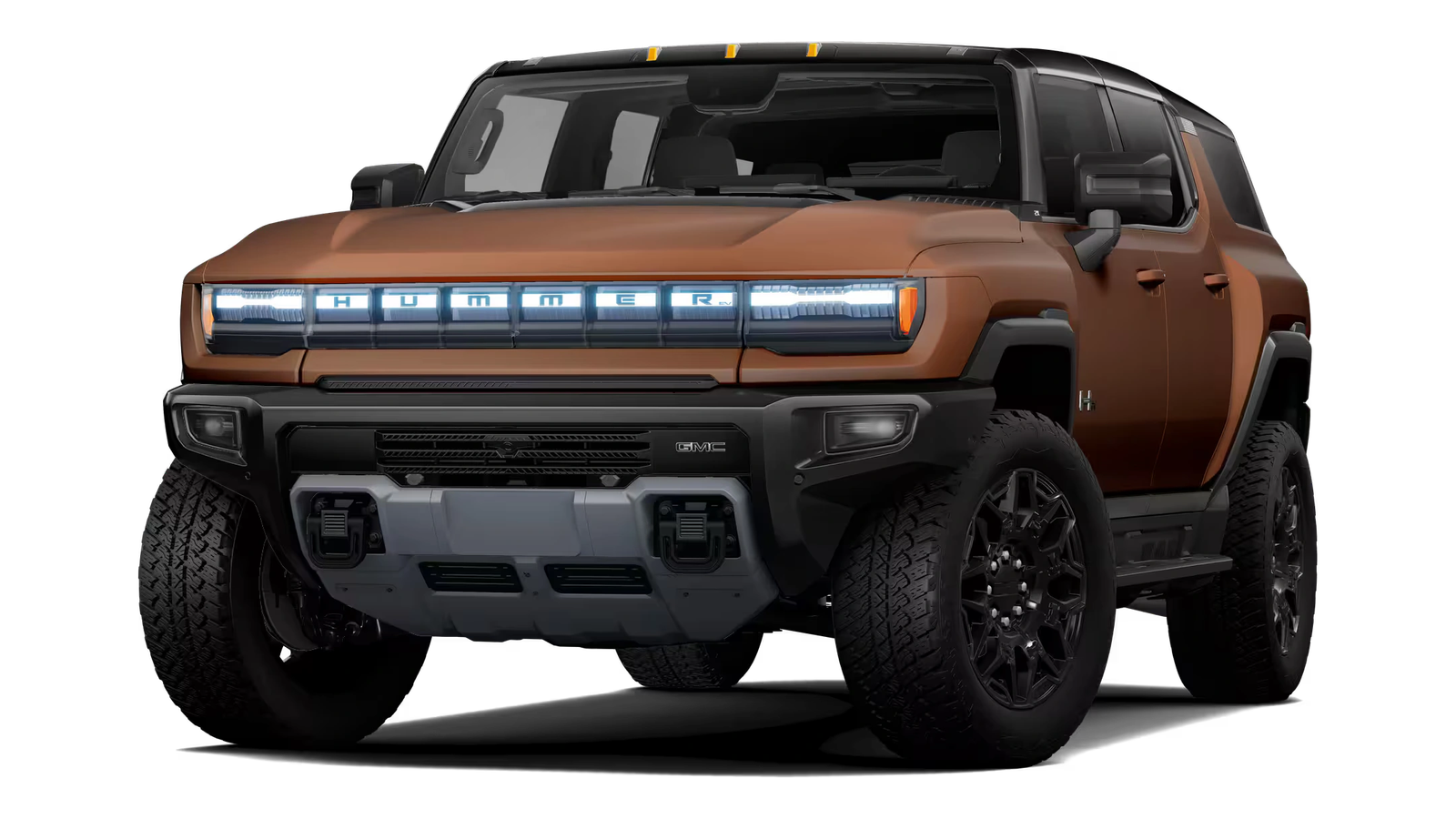
| Item | Share of CIF | Amount |
|---|---|---|
| Vehicle priceIPAS price for a car sourced in the USA | 1,846,639,702 IDRUS$102,000 | |
| Right-hand-drive conversion | 615,546,567 IDRUS$34,000 | |
| Shipping and insuranceUSA to Indonesia | 351,531,403 IDRUS$19,417 | |
| CIF valueCost, insurance and freight: the customs value | 2,813,717,672 IDRUS$155,417 | |
| Customs duties and taxes | ||
| Basic customs duty (50%)50% of CIF | 1,406,849,784 IDRUS$77,708 | |
| Additional duty (15%)Base or related charges differ from CIF; see the duty structure above37.5% of CIF | 1,055,137,338 IDRUS$58,281 | |
| GST/VAT (12%)Base or related charges differ from CIF; see the duty structure above18% of CIF | 506,468,095 IDRUS$27,975 | |
| Total duties and taxes105.5% of CIF | 2,968,455,216 IDRUS$163,964 | |
| Service and handling | ||
| Premium Import ServiceOptional end-to-end import management by IPAS | 170,578,816 IDRUS$9,422 | |
| Destination handlingPort terminal and customs clearance handling | 30,324,721 IDRUS$1,675 | |
| Total landed cost | 5,983,076,425 IDRUS$330,478 | |
Documents Required for Import
The documentation requirements for importing a vehicle into Indonesia are extensive. Missing or incorrect documents will result in delays, additional inspections, or rejection at the border.
Customs and Shipping Documents
- Bill of Lading (B/L) or Airway Bill (AWB) -- original
- Commercial Invoice -- three original copies, showing FOB value, freight, and insurance
- Packing List -- detailed description of vehicle and any accompanying items
- Certificate of Origin -- appropriate form for FTA claims (Form D, E, AK, IA-CEPA, AANZ, etc.)
- Insurance Certificate -- marine or air cargo insurance covering the shipment
- Letter of Credit or proof of payment -- evidence of the commercial transaction
- PIB (Pemberitahuan Impor Barang) -- Import Declaration filed electronically via CEISA/INSW
Licensing and Approval Documents
- API/NIB -- import licence / business identification number
- LARTAS permit -- Persetujuan Impor from Ministry of Trade (Kemendag)
- TIPE certificate -- Type Approval from Ministry of Transportation (Kemenhub)
- SNI certificate -- if applicable for specific components
Vehicle-Specific Documents
- Vehicle title or proof of ownership from origin country
- Manufacturer's Certificate of Conformity or equivalent
- Emissions test certificate (Euro 4 compliance)
- VIN plate documentation conforming to SNI requirements
Post-Clearance Documents
- BPKB application (vehicle ownership certificate)
- STNK application (vehicle registration certificate)
- BBN-KB payment receipt (transfer of title tax)
- PKB payment receipt (annual vehicle tax)
- SWDKLLJ payment receipt (road accident insurance)
Customs Clearance Timeline
Indonesia uses the CEISA 4.0 electronic customs system, integrated with the Indonesia National Single Window (INSW). All import declarations are submitted electronically, and the system assigns a risk-based clearance channel.
Pre-Arrival
Before the vessel arrives, the importer (or customs broker) must submit the PIB (Import Declaration) electronically through the INSW portal. The declaration includes all vehicle specifications, valuation data, HS code classification, and supporting documents.
Risk Channel Assignment
| Channel | Name | Process | Timeline |
|---|---|---|---|
| Jalur Hijau | Green Lane | Automatic clearance, no inspection | 1-2 working days |
| Jalur Kuning | Yellow Lane | Document verification only | 3-5 working days |
| Jalur Merah | Red Lane | Full physical inspection + document check | 5-14 working days |
Factors Affecting Channel Assignment
- Importer profile and compliance history
- Value of the shipment relative to declared HS code norms
- Whether the importer is a first-time or low-frequency user
- Random audit selection
Typical End-to-End Timeline
| Stage | Duration |
|---|---|
| Pre-arrival PIB filing | 1-3 days before vessel arrival |
| Vessel arrival and discharge | 1-2 days |
| Risk channel processing (Green) | 1-2 days |
| Risk channel processing (Yellow) | 3-5 days |
| Risk channel processing (Red) | 5-14 days |
| Duty payment and release | 1-2 days after assessment |
| Port-to-door transport | 1-3 days (Jakarta), 3-7 days (regional) |
| Total (Green Lane, best case) | 5-10 days |
| Total (Red Lane, worst case) | 15-25 days |
Duty Payment
Import duties and taxes are paid through designated banks integrated with the CEISA system. Payment must be completed before the vehicle can be released from customs control. The system supports electronic fund transfer and bank guarantee mechanisms for high-volume importers.
Homologation and Vehicle Approval
Indonesia requires comprehensive vehicle type approval before any imported vehicle can be registered for road use. The process is managed by the Ministry of Transportation (Kemenhub) and involves multiple testing and certification stages.
TIPE (Type Approval)
TIPE certification is the cornerstone of Indonesia's vehicle approval system. The process involves:
- Application submission to the Directorate General of Land Transportation
- Technical documentation review -- full vehicle specifications, engineering drawings, and test reports
- Emissions testing -- Must meet Euro 4 standards (mandatory since 2022). Euro 4 requires limits on carbon monoxide, hydrocarbons, nitrogen oxides, and particulate matter
- Safety testing -- Compliance with UN ECE regulations or equivalent international standards covering crashworthiness, braking, lighting, and occupant protection
- Noise emission testing -- Must meet Indonesian noise limits
SNI Compliance
Certain vehicle components must independently meet SNI (Standar Nasional Indonesia) requirements:
- Tyres (SNI 0098 and SNI 0100)
- Safety glass (SNI ISO 3537)
- Lighting equipment
- Wheel rims
- Other safety-critical components as specified by Kemenhub
Emissions Standards
Indonesia has enforced Euro 4 emissions standards for all new vehicle imports since 2022. Vehicles that do not carry Euro 4 or equivalent certification will be refused type approval. There is no retroactive exemption for older emissions categories.
Timeline for TIPE Approval
For vehicles already certified by the brand's Indonesian distributor, TIPE is typically pre-approved and the process is administrative. For independent importers applying for TIPE on a vehicle not yet approved in Indonesia, the process can take 3-6 months and involve physical testing at accredited laboratories. This is a significant barrier for individual imports and one of the primary reasons most vehicles enter Indonesia through authorised dealer channels.
Registration Procedures and Costs
Once a vehicle has cleared customs and holds valid TIPE certification, the final step is registration with the Indonesian authorities. This process involves the Samsat (One-Roof Administrative System) offices, which combine police, tax, and insurance functions in a single location.
Step 1: BPKB (Vehicle Ownership Certificate)
The BPKB (Buku Pemilik Kendaraan Bermotor) is Indonesia's vehicle title document. It is issued by the Indonesian National Police (Polri) and serves as proof of ownership. Application requires:
- Customs release documents
- TIPE certificate
- Valid identification (KTP for citizens, KITAS/KITAP for foreign residents)
- Proof of address
- Vehicle inspection report
Step 2: STNK (Vehicle Registration Certificate)
The STNK (Surat Tanda Nomor Kendaraan) is the annual registration certificate that must be carried in the vehicle at all times. It is issued at the Samsat office alongside the number plates.
Step 3: BBN-KB (Transfer of Title Tax)
BBN-KB (Bea Balik Nama Kendaraan Bermotor) is a one-time transfer of title tax applied to the first registration of an imported vehicle. Under the regional tax law UU HKPD (UU 1/2022), each province sets its own rate, capped at 12% of the vehicle's assessed value (NJKB) for first ownership. Since 5 January 2025, regencies and cities also levy an "opsen" surcharge of 66% of the BBN-KB due, so the combined charge can reach about 19.9% of assessed value.
Step 4: PKB (Annual Vehicle Tax)
PKB (Pajak Kendaraan Bermotor) is an annual tax based on the vehicle's assessed value. Under UU HKPD the first-vehicle rate is capped at 1.2%, plus a 66% opsen surcharge (about 2% combined at the cap). Indonesia applies a progressive rate structure, meaning owners of multiple vehicles in the same household pay higher rates on the second and subsequent vehicles. Rates vary by province.
Step 5: SWDKLLJ (Road Accident Insurance)
SWDKLLJ (Sumbangan Wajib Dana Kecelakaan Lalu Lintas Jalan) is a mandatory road accident insurance contribution paid at the time of registration. The amount varies by vehicle type but is generally modest (IDR 143,000 for passenger cars, approximately $8).
Estimated Registration Costs
| Item | Estimated Cost |
|---|---|
| BPKB issuance | IDR 375,000 (~$21) |
| STNK issuance | IDR 200,000 (~$11) |
| Number plates | IDR 100,000 (~$6) |
| BBN-KB (transfer tax) | Up to 12% of assessed value, plus 66% opsen (up to ~19.9% combined) |
| PKB (first year) | Up to 1.2% of assessed value, plus 66% opsen (~2% combined) |
| SWDKLLJ | IDR 143,000 (~$8) |
Note: The BBN-KB is by far the largest registration cost. On a vehicle assessed at IDR 500,000,000 (~$28,600), BBN-KB at the 12% cap is IDR 60,000,000 and the opsen adds IDR 39,600,000, a total of about IDR 99,600,000 (~$5,700).
Frequently Asked Questions
Q: Can I import a used car to Indonesia as an individual?
A: No. Article 33(1) of Permendag 16/2025 requires imported goods to be new, so used cars cannot be imported. The narrow exceptions (diplomats, exhibition vehicles, returning residents) need explicit authorisation from the Director General of Foreign Trade and do not apply to private buyers.
Q: How much does it cost to import a new car to Indonesia?
A: For a petrol car up to 3.0 litres from a country with no trade agreement (USA, UK, EU), border taxes run from 105.5% to 143% of the CIF value depending on its fuel-consumption or CO2 band. A 3.0–4.0 litre engine can reach 188%, and above 4,000 cc the 95% PPnBM takes it to 225.5%. On a $30,000 CIF car that is roughly $31,650–$42,900 in taxes, or about $56,400 for a 3.5-litre V6 in the 70% band. The same efficient petrol car built in Thailand, with a Form D, pays about $11,100. Use CarImport.AI to calculate the exact landed cost for your specific vehicle.
Q: Are electric vehicles cheaper to import into Indonesia?
A: Not in 2026. An imported BEV pays 15% PPnBM on CIF plus duty: the 0% PPnBM base applies only to EVs built in Indonesia, and the 0% import duty facility, which was only ever for approved manufacturers, ended on 31 December 2025. A BEV from a country without a trade agreement now pays 50% duty, 15% PPnBM, 12% PPN and 10% PPh 22: about 105.5% of CIF, or $31,650 on a $30,000 CIF car. That is the same as the most efficient petrol car. A Thai-built EV or hybrid entering duty-free under ATIGA in the 15% band pays about 37% ($11,100).
Q: Do I need a special licence to import a vehicle?
A: Yes. All vehicle importers must hold an API (Angka Pengenal Impor) licence within their NIB (business identification number). Additionally, vehicles are LARTAS-restricted goods, requiring a Persetujuan Impor (Import Approval) from the Ministry of Trade. Type Approval (TIPE) from the Ministry of Transportation is also mandatory before registration.
Q: What steering side does Indonesia use?
A: Indonesia drives on the left side of the road and only right-hand drive (RHD) vehicles can be registered for road use. Left-hand-drive vehicles from the USA, continental Europe and other LHD markets are not a viable import. Source a factory RHD model instead, for example from Thailand, Japan, the UK or Australia.
Q: Which port should I ship my vehicle to in Indonesia?
A: Tanjung Priok in Jakarta is the recommended port for most vehicle imports. It handles approximately 70% of all vehicle imports, has the most developed customs infrastructure, and offers the fastest clearance times. Surabaya (Tanjung Perak) is a practical alternative for East Java destinations.
Q: Can I claim FTA reduced duty rates?
A: Yes, if the vehicle originates from a country with which Indonesia has a Free Trade Agreement and meets the Rules of Origin requirements. Cars and pickups built in ASEAN countries (Thailand, Malaysia, etc.) pay 0% duty under ATIGA with a Form D, and Australian-built vehicles can pay 0% under IA-CEPA for most subheadings (line confirmation pending). Japanese, Korean and Chinese cars get only partial or phased reductions, because passenger cars are on Indonesia's sensitive lists. EU, UK, US and Indian cars pay the full 50%. A valid Certificate of Origin in the correct form must accompany the shipment.
Q: How long does the entire import process take?
A: From vessel arrival to customs release, the timeline ranges from 5 days (Green Lane) to 25 days (Red Lane). TIPE approval for vehicles not yet certified in Indonesia can add 3-6 months. Registration at Samsat typically takes 5-10 working days after customs release. For vehicles with existing TIPE certification, the total process from arrival to registration is typically 2-6 weeks.
Ready to Import a Vehicle to Indonesia?
Indonesia's complex, multi-layered import regime demands precise calculations and thorough preparation. Between customs duty, PPnBM luxury tax, VAT, income tax, and provincial registration fees, the margin for error is enormous -- and getting the numbers wrong can cost thousands of dollars.
Two tools to get started:
CarImport.AI -- Calculate the exact landed cost of importing any vehicle to Indonesia. Get a complete breakdown of Bea Masuk (customs duty), PPnBM (luxury tax), PPN (VAT), PPh 22, and all associated charges tailored to your specific vehicle, origin country, and FTA eligibility. Calculate your landed cost
IPAS EXPRESS Pro Car Shipping -- Already have a vehicle? Get instant shipping quotes for sea freight or air freight to Tanjung Priok (Jakarta), Surabaya, or other Indonesian ports. Compare container options with transparent, itemized pricing. Get a shipping quote
Ready to Import Your Vehicle?
Two tools, two use cases. Pick the one that fits your needs.
Source a vehicle through IPAS and calculate the full landed cost — customs duties, shipping, and compliance — to destinations across the world.
Calculate Landed CostIPAS Express
Already have a vehicle? Get instant shipping quotes — sea freight, air freight, or RoRo — for one car or multiple vehicles worldwide.
Get Shipping Quote