
Introduction
Importing a new petrol car to Jordan costs about 54.5% of its CIF value in tax: 0% customs duty, 30% Special Sales Tax, 16% General Sales Tax on top, plus service charges. Hybrids land near 42.9%, battery EVs near 31.3%. The gate that matters most: left-hand drive only, no diesel cars, and no more than five years old.
Jordan is one of the most widely misreported vehicle markets in the region, and the reason is a single government announcement. When the Council of Ministers cut vehicle taxes with effect from 1 November 2025, it described the new burden as 51% on petrol cars, 39% on hybrids and 27% on electric cars. Those three numbers are not the Special Sales Tax. Each is the Special Tax plus the 16% General Sales Tax charged on top of it. The actual Special Tax rates are 30%, 20% and 10%. Treating 51% as the Special Tax and then adding 16% on top overstates a petrol car by more than 24 points of CIF.
Two other features make Jordan unusual. First, customs duty on a passenger car is zero for every country of origin, so trade agreements do almost nothing for a saloon or SUV. Pickups are the opposite: they carry a real 25% duty, and a United States or European Union origin claim cuts the total from 52.7% to 18.7% of CIF. That is the single most valuable lever in the Jordanian system.
Second, every vehicle arrives through Aqaba, Jordan's only seaport, which sits inside the Aqaba Special Economic Zone with its own 7% sales tax. That 7% does not apply to a car entering the Jordanian market. The zone law expressly excludes taxes and fees on vehicles, so the full national cascade is payable.
Quick Facts
| Detail | Information |
|---|---|
| Customs Authority | Jordan Customs Department |
| Official tariff and calculator | Jordan Customs ASYCUDA portal: Integrated Customs Tariff and Taxation Simulation |
| Registration Authority | Drivers and Vehicles Licensing Department |
| Traffic Side | Right-hand traffic (drive on the right) |
| Steering Requirement | LHD only. Right-hand drive prohibited under the vehicle conformity rules in force since 1 November 2025. Conversion is not a pathway |
| Customs Duty | 0% on passenger cars (HS 8703), every origin. 25% MFN on pickups, vans and goods vehicles (HS 8704); 0% with a US or EU origin claim |
| Special Sales Tax | 30% petrol · 20% any hybrid (mild, full, plug-in, range-extender) · 10% battery-electric. Charged on CIF + duty. Not charged at all on HS 8704 |
| General Sales Tax | 16%, on CIF + duty + Special Tax |
| Service charges | 0.2% customs service allowance (min JOD 50, max JOD 500), plus a 1% fee on duty-exempt imports (max JOD 3,000) or a 5% fee on duty-liable goods (max JOD 10,000) |
| Import fine | 2.5% of CIF. Waived for importer-card holders and for cars cleared in a free zone |
| Total, petrol car | 54.5% of CIF |
| Total, hybrid / mild hybrid / plug-in hybrid | 42.9% of CIF |
| Total, battery-electric car | 31.3% of CIF |
| Total, pickup (HS 8704) | 52.7% at MFN · 18.7% with a US or EU origin claim |
| Valuation | CIF, no uplift. Jordan Customs keeps a vehicle value database and may substitute its own figure |
| Age limit, passenger car | Prohibited if made more than 5 years before the clearance year (2021 or newer clears in 2026) |
| Age limit, goods vehicle | Prohibited if made 5 years or more before the clearance year (2022 or newer clears in 2026) |
| Age limit, electric car | Prohibited if more than 3 years old including the clearance year |
| Diesel | Diesel passenger cars prohibited. Diesel pickups and vans are allowed |
| Luxury tax / CO2 levy / engine-size tax | None exist |
| Main Seaport | Aqaba, the only seaport |
| Currency | Jordanian dinar (JOD), pegged to the US dollar since 1995. Customs rate USD 1 = JOD 0.709 |
The totals above include the 2.5% import fine and apply to a customs value between JOD 25,000 and JOD 250,000 (CIF roughly USD 35,000 to USD 353,000). Outside that window the service-charge floor and caps move the figure slightly, as explained below.
Types of Cars That Can Be Imported
Steering: right-hand drive is prohibited
Jordan drives on the right and registers left-hand-drive vehicles. The vehicle conformity rules in force since 1 November 2025 list right-hand-drive vehicles among those that may not be imported or offered for sale. IPAS does not offer right-hand-drive conversion for Jordan: no Jordanian provision has been found under which converting a car to left-hand drive makes it admissible, so a conversion would cost money without making the car importable.
Diesel passenger cars are banned, but diesel pickups are not
Jordan's prohibited-imports list (Kashf No. 2, item 2) bans diesel saloon cars, under Prime Ministry Decision No. 1941 of 22 November 2005. In Jordanian usage "saloon" means the whole passenger-car class, so the ban covers diesel SUVs, estates and hatchbacks as well as sedans. A diesel BMW 320d or a Range Rover D350 cannot be imported for the Jordanian market at any price.
The ban does not reach goods vehicles. A diesel double-cab pickup, a diesel van or a diesel goods vehicle is HS 8704 and is admissible, subject to the goods-vehicle age rule. Diesel hybrids and diesel plug-in hybrids sit in separate tariff headings and are treated as admissible.
Age: two rules, one year apart, with opposite boundaries
This is the most error-prone admissibility fact in Jordan.
| Clearance year 2026 | Passenger car (HS 8703) | Pickup or goods vehicle (HS 8704) |
|---|---|---|
| Model 2022 to 2026 | Admissible | Admissible |
| Model 2021 (5 years) | Admissible: 5 is not "more than 5" | Prohibited: 5 is "5 or more" |
| Model 2020 or older | Prohibited | Prohibited |
Passenger cars are prohibited when made more than five years before the clearance year (Kashf No. 2 item 25). Goods vehicles are prohibited at five years or more (Kashf No. 2 item 20), with special-use vehicles allowed up to ten years. So a 2021 saloon clears in 2026 and a 2021 double-cab pickup does not.
Both rules are a simple subtraction of the manufacture year from the year of customs clearance. Shipment date, arrival date and months elapsed do not count, so both limits move forward every 1 January. A car bought in late December and cleared in January has aged a year for this purpose.
Electric cars: a tighter, three-year cap
The conformity rules in force since 1 November 2025 prohibit an electric car more than three years old including the clearance year. On IPAS's current reading, model years 2024, 2025 and 2026 qualify in 2026 and 2023 or older does not. The exact wording at the boundary year (a car two model years old) is under review, so a current or previous model-year EV is the safe choice. The cap names electric cars only; hybrids and plug-in hybrids follow the ordinary five-year rule.
That means the cheapest tax category in Jordan also has the strictest age limit.
No classic-car exemption from the age rule
Jordan's tariff has lines for classic and heritage vehicles, but the five-year import bar in Kashf No. 2 contains no classic carve-out. A February 2026 Cabinet decision set how classic and heritage vehicles are valued for the Special Tax, and IPAS has not yet confirmed how it interacts with the age bar. Anyone looking at a classic should get a written ruling from Jordan Customs before buying.
Condition and history
The conformity rules prohibit vehicles that are:
- classified as salvage or junk in the country of origin
- flood-damaged, fire-damaged or damaged in a major accident
- carrying an altered, obliterated or forged chassis number
- former taxis, police vehicles or school-transport vehicles
- fitted with an engine converted from gas to petrol or diesel
Glass and equipment
Passenger cars with factory dark glass that blocks the view from outside are prohibited from any origin (Kashf No. 2 item 24), and locally tinted cars cannot be registered. The list also bans PA systems, lamps above 75 W, illuminated plate frames, exhaust sound amplifiers and air or multi-tone horns. Remove such equipment before shipping.
Origin
No country of origin is banned. Cars built in China, India, Japan, Korea or anywhere else are freely importable and, on a passenger car, pay exactly the same tax as a European or American one.
Cars You Can Import to Jordan
Each card is a full landed-cost calculation: the car's price, shipping, every duty and tax, and handling, worked out on 9 November 2026 with the rules in force that day. All are left-hand drive to suit Jordan's roads. Tap a car to see its full breakdown, or open it to change the trim, colour or port.
More cars you can import to Jordan
New cars IPAS sources to order that meet Jordan's import rules. Prices are ex works, before shipping and duty. Open a car to work out its full landed cost.
 LHDBackorder2026
Cadillac LYRIQ
SUV · 14 VariantsElectricFrom $71,000Ex Works, USA LHD/C-RHDBackorder2026
Cadillac Escalade ESV
SUV · 11 VariantsPetrolFrom $112,900Ex Works, USA LHD/C-RHDBackorder2025
Ford Bronco
SUV · 3 VariantsPetrolFrom $62,500Ex Works, USA LHDBackorder2026
Lexus ES
Sedan · 12 VariantsHybrid · ElectricFrom $52,500Ex Works, Canada LHDBackorder2026
Lexus RX
SUV · 17 VariantsPetrol · Hybrid · Plug-in HybridFrom $53,100Ex Works, Canada LHDBackorder2026
Lexus LC 500
Coupe · 3 VariantsPetrolFrom $102,200Ex Works, Canada LHD/C-RHDBackorder2025
Lincoln Navigator
SUV · 3 VariantsPetrolFrom $119,900Ex Works, USA LHDBackorder2026
Toyota 4Runner
SUV · 12 VariantsPetrol · HybridFrom $50,200Ex Works, USA LHDBackorder2026
Toyota Sequoia
SUV · 8 VariantsHybridFrom $77,800Ex Works, USA LHDBackorder2026
Toyota Land Cruiser 71
SUV · 2 VariantsPetrolFrom $55,100Ex Works, UAE LHDBackorder2026
Infiniti QX80
SUV · 6 VariantsPetrolFrom $100,500Ex Works, USA LHDBackorder2026
GMC Acadia
SUV · 5 VariantsPetrolFrom $52,600Ex Works, USA LHDBackorder2026
Dodge Durango
SUV · 8 VariantsPetrolFrom $46,800Ex Works, USA LHDBackorder2026
Denza D9
Van & MPV · 7 VariantsPlug-in Hybrid · ElectricFrom $52,300Ex Works, China🇨🇳 LHDBackorder2026
Denza B8
SUV · 3 VariantsPlug-in HybridFrom $66,600Ex Works, China🇨🇳 LHDBackorder2026
Chevrolet Corvette E-Ray Convertible
Convertible · 3 VariantsHybridFrom $138,000Ex Works, USA
Ports Supporting Vehicle Import
| Facility | Location | Role |
|---|---|---|
| Aqaba New Port (multipurpose terminal) | Aqaba, Red Sea | RoRo, general cargo and bulk across nine berths |
| Aqaba Container Terminal | Aqaba, Red Sea | Container shipments |
| Zarqa Free Zone | Zarqa, near Amman | Inland free zone with its own vehicles customs house; cars can be cleared here |
Aqaba is Jordan's only seaport and the only sea route for a vehicle. Because it sits inside the Aqaba Special Economic Zone, every imported car crosses the zone boundary on its way to the rest of the country. The port of entry does not change the tax rate. Clearing a car in a free zone such as Zarqa does change one line: cars cleared in a free zone are exempt from the 2.5% import fine.
Restrictions on Vehicle Import for Individuals
- Private individuals may import. There is no dealer-only rule and passenger cars need no import licence, because they are not on Jordan's licensing list (Kashf No. 1).
- There is no once-every-few-years personal allowance. The temporary-entry regime for Jordanians living abroad is not a route to permanent import.
- The 2.5% import fine usually applies to a private importer. It is waived for registered importers holding a valid importer card and for cars cleared in a free zone. A separate waiver for personal imports applies only up to JOD 10,000 a year, which a vehicle will normally exceed.
- Aqaba residence confers nothing. Aqaba zone benefits attach to registered enterprises operating in the zone, not to individuals living there.
- The steering, diesel, age, condition and conformity gates above apply to everyone.
Who this guide does not cover. Ambulances, hearses and cars adapted for hand control by disabled drivers have their own tariff lines and, under a February 2026 Cabinet decision, are exempt from the Special Tax. Diplomatic imports, registered enterprises in the Aqaba zone and temporary-entry vehicles also follow separate rules. The figures in this guide are for an ordinary import for home use.
Duty Structure Overview
Jordan charges three cascading taxes and up to three parallel charges. The cascading taxes each sit on the running total; the parallel charges sit on the customs value alone.
- Unified customs duty, on CIF. 0% on every passenger car; 25% at MFN on HS 8704.
- Special Sales Tax, on (CIF + duty). 30%, 20% or 10% by propulsion. Not charged on HS 8704.
- General Sales Tax at 16%, on (CIF + duty + Special Tax).
Plus, each on the customs value only:
- Customs service allowance, 0.2%, with a JOD 50 floor and a JOD 500 ceiling.
- Service fee: 1% on duty-exempt imports, capped at JOD 3,000 (every passenger car), or 5% on duty-liable goods, capped at JOD 10,000 (pickups at MFN). Never both, and neither when a trade-agreement preference is claimed.
- Import fine, 2.5%, waived for importer-card holders and free-zone clearance.
The customs value is the CIF price (cost, insurance and freight to Aqaba) with no uplift of any kind, under article 28 of Customs Law No. 20 of 1998. The service charges and the import fine are not part of the General Sales Tax base. Jordan Customs truncates each line to whole dinars, so a hand calculation will differ by a few dinars.
The headline numbers are not the rates
| Government headline | Special Tax | 16% GST on the Special-Tax-inclusive base | Sum |
|---|---|---|---|
| "Petrol 51%" | 30% | 16% × 1.30 = 20.8% | 50.8% |
| "Hybrid 39%" | 20% | 16% × 1.20 = 19.2% | 39.2% |
| "Electric 27%" | 10% | 16% × 1.10 = 17.6% | 27.6% |
Every announced figure is the Special Tax and the General Sales Tax combined. Read 27% as the electric Special Tax rate and you overstate an EV by almost 20 points of CIF.
The propulsion ladder has exactly three steps
| Propulsion | Special Tax | Total of CIF |
|---|---|---|
| Combustion only (petrol) | 30% | 54.5% |
| Any combustion + electric combination: mild hybrid, full hybrid, plug-in hybrid, range-extender, hydrogen fuel cell | 20% | 42.9% |
| Battery-electric only, no onboard generation | 10% | 31.3% |
Nothing else moves the rate: not engine size, not value, not battery capacity, not CO2, not weight and not origin. A 998cc city car and a 6.2-litre V8 both pay 30%.
The effective rate rises slightly on cheaper cars
The JOD 50 floor on the service allowance is a bigger share of a smaller car. Below a customs value of JOD 25,000 (about USD 35,261 CIF), the total creeps above the flat figures: a petrol car at CIF USD 20,000 pays about 54.64%. Above JOD 250,000 the ceilings bite and the total dips: a petrol car at CIF USD 500,000 pays about 54.29%.
Worked example 1: Toyota Camry 2.0 petrol, new, US origin, CIF US$50,000
Customs value at 0.709: JOD 35,450.
| Charge | Calculation | Amount (JOD) |
|---|---|---|
| Customs value (CIF) | 50,000 × 0.709 | 35,450 |
| Customs duty | 0%, HS 8703 | 0 |
| Special Sales Tax | 35,450 × 30% | 10,635 |
| General Sales Tax | (35,450 + 10,635) × 16% | 7,373 |
| Customs service allowance | 35,450 × 0.2% | 70 |
| Duty-exempt service fee | 35,450 × 1% | 354 |
| Import fine | 35,450 × 2.5% | 886 |
| Total border tax | 19,318 (54.49% of CIF) | |
| Total in USD | about US$27,247 | |
| Landed before local charges | about US$77,247 |
Jordan Customs' own calculator returned exactly these figures for this tariff line and value. A 2.0-litre petrol car from Japan, Germany, Korea or India at the same CIF pays the identical amount.
Worked example 2: Toyota Corolla Hybrid 1.8, new, Japanese origin, CIF US$28,000
Customs value: JOD 19,852, which is below the JOD 25,000 break-even, so the service-allowance floor applies.
| Charge | Calculation | Amount (JOD) |
|---|---|---|
| Customs value (CIF) | 28,000 × 0.709 | 19,852 |
| Customs duty | 0% | 0 |
| Special Sales Tax | 19,852 × 20% | 3,970 |
| General Sales Tax | (19,852 + 3,970) × 16% | 3,811 |
| Customs service allowance | JOD 50 floor applies (0.2% would be 39) | 50 |
| Duty-exempt service fee | 19,852 × 1% | 198 |
| Import fine | 19,852 × 2.5% | 496 |
| Total border tax | 8,525 (42.94% of CIF) | |
| Total in USD | about US$12,024 | |
| Landed before local charges | about US$40,024 |
The same car as an ordinary petrol Corolla would pay 30% Special Tax and land near 54.5%. The hybrid saves about 11.6 points of CIF.
Worked example 3: Tesla Model Y Long Range, new, US origin, CIF US$48,000
Customs value: JOD 34,032.
| Charge | Calculation | Amount (JOD) |
|---|---|---|
| Customs value (CIF) | 48,000 × 0.709 | 34,032 |
| Customs duty | 0% | 0 |
| Special Sales Tax | 34,032 × 10% | 3,403 |
| General Sales Tax | (34,032 + 3,403) × 16% | 5,989 |
| Customs service allowance | 34,032 × 0.2% | 68 |
| Duty-exempt service fee | 34,032 × 1% | 340 |
| Import fine | 34,032 × 2.5% | 850 |
| Total border tax | 10,650 (31.29% of CIF) | |
| Total in USD | about US$15,021 | |
| Landed before local charges | about US$63,021 |
Claiming the Jordan-US Free Trade Agreement with a US origin certification removes the 1% service fee: the total falls to JOD 10,310, or 30.30% of CIF. The duty is 0% either way.
Worked example 4: Ford F-150 Lariat SuperCrew 3.5 petrol, new, US origin, CIF US$80,000
A double-cab pickup is HS 8704 in Jordan, so the cascade changes completely. Customs value: JOD 56,720.
| Charge | MFN (no origin claim) | Jordan-US FTA claimed |
|---|---|---|
| Customs duty | 25%: 14,180 | 0% |
| Special Sales Tax | Not charged on HS 8704 | Not charged |
| General Sales Tax | (56,720 + 14,180) × 16% = 11,344 | 56,720 × 16% = 9,075 |
| Customs service allowance | 113 | 113 |
| Duty-liable service fee | 5%: 2,836 | Not charged |
| Import fine | 1,418 | 1,418 |
| Total border tax (JOD) | 29,891 (52.70% of CIF) | 10,606 (18.70% of CIF) |
| Total in USD | about US$42,159 | about US$14,959 |
The same truck at the same price, with one origin document in the file, saves 34 points of CIF, about US$27,200.
These examples show the structure. Get the exact figure for your vehicle, propulsion and origin using CarImport.AI.

Calculate your exact import duty to Jordan
Get a vehicle-specific duty and full landed-cost breakdown — HS classification, every tax, levy and FTA, plus shipping — calculated for your exact make, model and specs.
- Vehicle-specific HS code
- All duties, taxes & FTAs
- Shipping + est. landed cost
Free trade agreements: nearly worthless on a car, decisive on a pickup
A trade agreement in Jordan relieves the customs duty only. The Special Sales Tax and the General Sales Tax are internal taxes under the General Sales Tax Law and are never reduced by origin.
On a passenger car the duty is already 0% for everyone, so a preference can only remove the 1% duty-exempt service fee, a saving of one point of CIF. On a pickup or goods vehicle the duty is a real 25%, and the result depends entirely on which agreement applies:
| Origin and preference claimed | Duty on HS 8704 | Pickup total of CIF |
|---|---|---|
| United States, Jordan-US FTA | 0% | 18.7% |
| European Union, EU-Jordan Association Agreement | 0% | 18.7% |
| Canada, Jordan-Canada FTA | 25% | 52.7% |
| Arab states, Pan-Arab FTA (GAFTA) | 25% | 52.7% |
| Türkiye (FTA terminated 22 November 2018) | 25% | 52.7% |
| Japan, Korea, China, India, Thailand, Australia, Mexico | 25%, no preference available | 52.7% |
These are the results Jordan Customs' own calculator returned with each preference code applied, not inferences from agreement texts. The preference is never automatic: a US-origin vehicle needs a US FTA origin certification (the Jordan-US agreement uses a certification, not an EUR.1), and an EU-origin vehicle needs an EUR.1 or an approved-exporter invoice declaration. A vehicle merely shipped from an Arab state is not Arab-originating. Without the claim and the document, the importer pays MFN.
Worked Example: Importing a 2026 Cadillac Escalade to Jordan
Here is the full landed cost of one car, a 2026 Cadillac Escalade shipped from the USA to Jordan, worked out on 9 November 2026 with the customs rules in force that day. It lands at 135,840 JOD (about US$191,594), and duties and taxes come to 54.5% of its CIF value.
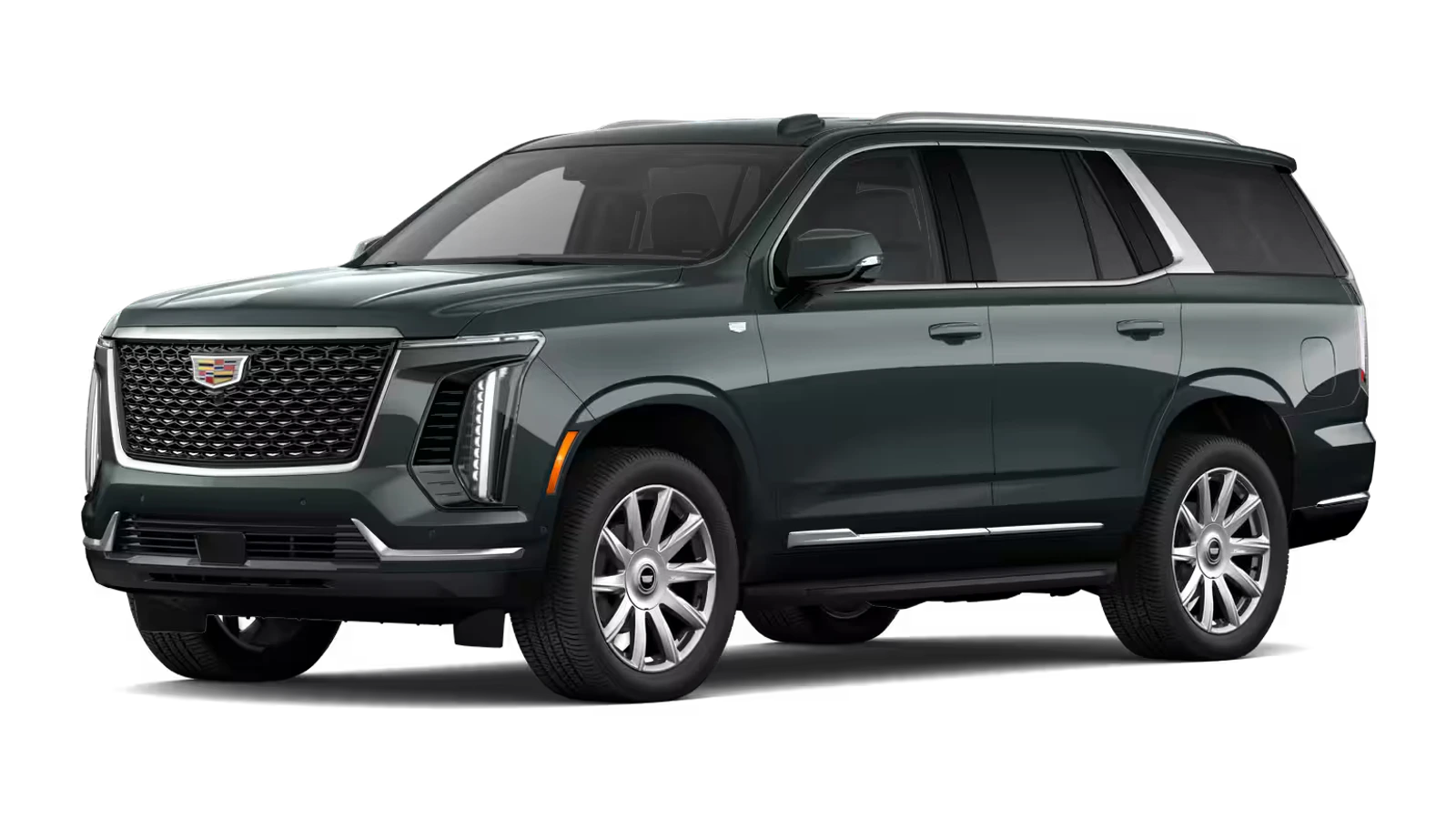
| Item | Share of CIF | Amount |
|---|---|---|
| Vehicle priceIPAS price for a car sourced in the USA | 77,494 JODUS$109,300 | |
| Shipping and insuranceUSA to Jordan | 7,062 JODUS$9,961 | |
| CIF valueCost, insurance and freight: the customs value | 84,556 JODUS$119,261 | |
| Customs duties and taxes | ||
| Basic customs duty (0%)0% of CIF | 0 JODUS$0 | |
| Additional duty (30%)Base or related charges differ from CIF; see the duty structure above33.7% of CIF | 28,495 JODUS$40,191 | |
| GST/VAT (16%)Base or related charges differ from CIF; see the duty structure above20.8% of CIF | 17,587 JODUS$24,806 | |
| Total duties and taxes54.5% of CIF | 46,083 JODUS$64,997 | |
| Service and handling | ||
| Premium Import ServiceOptional end-to-end import management by IPAS | 3,854 JODUS$5,436 | |
| Destination handlingPort terminal and customs clearance handling | 1,347 JODUS$1,900 | |
| Total landed cost | 135,840 JODUS$191,594 | |
Pickups and Goods Vehicles: a Different Cascade
Jordan's tariff names double-cab pickups as their own sub-lines inside HS 8704.21 (diesel), 8704.31 (petrol), 8704.41 (diesel-electric) and 8704.51 (petrol-electric). There is no double-cab line anywhere in HS 8703, so a Hilux, Ranger, F-150, Silverado, RAM 1500 or Tundra is a goods vehicle by the text of the tariff.
Moving from HS 8703 to HS 8704 changes four things at once:
| Component | Passenger car (HS 8703) | Pickup or van (HS 8704) |
|---|---|---|
| Customs duty | 0% | 25% MFN |
| Special Sales Tax | 10% / 20% / 30% | Not charged |
| General Sales Tax base | CIF + duty + Special Tax | CIF + duty |
| Service fee | 1%, max JOD 3,000 | 5%, max JOD 10,000 |
At MFN the difference against a petrol car is small: 52.7% against 54.5%. The expensive mistake is not the classification but failing to ask about origin. A US- or EU-built pickup with the right certificate lands at 18.7%; the identical truck without it pays 52.7%.
Two cautions. The goods-vehicle age rule is a year tighter than the car rule, so a 2021 pickup cannot clear in 2026. And the hybrid concession does not carry over: HS 8704 has no Special Tax for a hybrid drivetrain to reduce. IPAS's research has not separately verified the duty on hybrid pickup lines such as the F-150 PowerBoost, so confirm those on the Jordan Customs tariff before relying on a figure.
Electric and Hybrid Vehicles
Battery-electric cars: 10% Special Tax, no value bands
A pure battery-electric car pays 10% Special Tax and 16% General Sales Tax, for a total of 31.3% of CIF. The 16% General Sales Tax applies in full; there is no EV relief in it and no EV relief in the duty, which is already zero.
Jordan's EV tax changed repeatedly before November 2025, and the old schedules were banded by value in dinars: a graduated 10% / 30% / 40% schedule, temporary late-2024 bands of 10% below JOD 10,000, 20% up to JOD 25,000 and 27.5% above, and an announced escalator that would have reached 55% by 2027. The 1 November 2025 decision abolished all of it. Every JOD 10,000 and JOD 25,000 EV threshold still in circulation is dead. Jordan Customs' calculator returned 10% at every value tested.
The trade-off is the age cap: an EV must be no more than three years old including the clearance year, against five years for a petrol car.
Hybrids: the widest concession in the tariff
Every vehicle that combines a combustion engine with electric propulsion pays 20% Special Tax and lands at 42.9% of CIF, wherever its tariff heading sits:
- a full hybrid (HS 8703.40 / 8703.50)
- a plug-in hybrid (HS 8703.60 / 8703.70), with no extra concession for the plug
- a mild hybrid, which stays in the petrol heading on its own sub-line but still pays the 20% hybrid rate, not 30%
- a range-extender or hydrogen fuel-cell car, which sits in the electric heading but pays 20%, not the 10% battery rate
The two traps sit at the edges. Quoting a 48-volt mild hybrid such as a Mercedes-Benz C 200 as an ordinary petrol car overstates it by 11.6 points of CIF: at CIF US$60,000 it pays JOD 18,248 (42.90%), not JOD 23,183 (54.50%). Quoting a range-extender as a pure battery EV understates it by the same 11.6 points.
The Aqaba Zone 7%: Why It Does Not Apply
The Aqaba Special Economic Zone levies a 7% sales tax on goods and services consumed inside the zone, and because every car lands at Aqaba, that figure is tempting. It is wrong for an import into Jordan.
Article 30(c)(4) of the Aqaba Special Economic Zone Law No. 32 of 2000 states that the zone's tax exemption does not include taxes and fees imposed on vehicles. The 7% is a tax on in-zone consumption, not a customs duty and not a substitute for the national Special Tax. Zone benefits attach to registered enterprises operating in the zone, and vehicles they use enter only on temporary status. A car entered for the Jordanian domestic market crosses the zone boundary and pays the full national cascade. Quoting the 7% on a petrol car would understate the tax by about 45 points of CIF.
Free zones such as Zarqa suspend collection while a car is stored, but they do not reduce the value: the customs value is set at clearance and there is no allowance for storage time. Their one monetary effect is the waiver of the 2.5% import fine on cars cleared there.
Components That Do Not Exist in Jordan
Jordan has no luxury tax or value threshold, no engine-displacement or engine-capacity tax, no CO2 or environmental levy, no per-unit or flat charge, no battery-capacity or electric-range band, no weight band inside the light-pickup category, no valuation uplift, and no registration-stage tax at the border. Emissions enter Jordanian law only as a type-approval condition.
If a Jordanian estimate contains a line outside customs duty, Special Sales Tax, General Sales Tax, the two service charges and the import fine, that line has been invented. Annual registration and licensing fees are real, but they are charged after clearance and are not part of the import tax.
Documents Required for Import
- Commercial invoice showing the purchase price
- Bill of Lading (original or telex release)
- Packing list with make, model, model year, engine capacity and propulsion type
- Evidence of the year of manufacture, which decides the age gate
- Ownership document showing a clean history (not salvage, flood, fire or major-accident, not ex-taxi, police or school transport)
- Technical conformity certificate from one of the accepted regimes: EU type-approval or EU small-series approval, a GCC conformity certificate, a Saudi type-approval conformity certificate, or a US FMVSS compliance data document
- Origin certificate, where a preference is claimed: a US FTA origin certification for the Jordan-US agreement, an EUR.1 or invoice declaration for the EU, EFTA or UK, or an Arab preferential certificate of origin for GAFTA. Optional on a car, worth 34 points of CIF on a US or EU pickup
- Importer card, if the importer of record holds one, so the 2.5% import fine is not charged
- Customs import declaration for home use, lodged on Jordan Customs' ASYCUDA system
Customs Clearance Process
| Stage | What happens |
|---|---|
| Before shipping | Confirm the car is left-hand drive, not a diesel passenger car, inside the age limit, clean-titled and covered by an accepted conformity certificate. Check the Jordan Customs vehicle value enquiry for the model |
| Arrival at Aqaba | The car is discharged at Aqaba and either cleared there or taken to a free zone such as Zarqa and cleared there |
| Declaration and valuation | The import declaration is lodged with the tariff line, CIF value and any preference claim. Jordan Customs may replace the declared value with its own database figure |
| Payment | Duty, Special Tax, General Sales Tax and the service charges are due at clearance and must be paid before release |
| Release and registration | The released car is registered and licensed with the Drivers and Vehicles Licensing Department |
Clearance time depends mostly on paperwork, so IPAS does not publish a fixed duration for Jordan. The avoidable delays all come from checks that should happen before buying: the model year against the age rule, the conformity certificate, and, for a pickup, the origin certificate.
Valuation risk. Jordan Customs runs a vehicle value enquiry service that returns an assessed value by make, model and year, or by chassis number. Its own note says the assessed figure moves with exchange rates, factory prices and specification. A declared invoice is therefore not automatically final. IPAS quotes on the declared CIF; if Jordan Customs assesses a higher value, every percentage line rises with it.
Homologation and Vehicle Approval
Since 1 November 2025 a passenger car must comply with one of four technical regimes: European, United States, GCC or Saudi. The rules are set out in the Jordan Standards and Metrology Organization's Instructions No. 5 of 2025 on conformity assessment procedures for vehicles (Official Gazette No. 6012, 1 October 2025). Acceptable evidence is an EU type-approval certificate, an EU small-series approval, a GCC conformity certificate, a Saudi type-approval conformity certificate, or a US FMVSS compliance data document.
There is no Euro 5 or Euro 6 number in the rule; the test is conformity with a named regime, not a specific emissions stage. There is also no mileage test. In practice a model built only to a domestic standard, with none of those certificates, has no route in.
Registration Procedures and Costs
Registration and licensing are handled by the Drivers and Vehicles Licensing Department after customs release. These charges sit outside the border cascade and must never be added to the General Sales Tax base.
- Annual registration and licensing fees are set by a 2024 regulation on vehicle registration, licensing and driving fees. A 2026 amendment bases those charges on the vehicle's pre-customs value rather than its engine capacity.
- Tinted glass: locally tinted vehicles may not be registered.
- Port, terminal, storage, clearing and inland delivery charges are separate from the import tax.
Recent Regulatory Changes (2022–2026)
- 2022 to 2025: EV tax instability. The electric-car Special Tax moved through several value-banded schedules, including temporary late-2024 bands of 10%, 20% and 27.5% and an announced 2025–2027 escalator to as much as 55%.
- 28 June 2025: Cabinet tax decision. Combined Special and General Sales Tax on petrol cars cut from 71% to 51% and on hybrids from 60% to 39%; the EV rate unified regardless of value. In force 1 November 2025. The operative Special Tax rates are 30%, 20% and 10%.
- 16 September 2025: amended Import Instructions (Ministry of Industry, Trade and Supply, Official Gazette No. 6009) added salvage vehicles and the three-year EV age cap to the prohibited-imports list.
- 1 October 2025: vehicle conformity instructions (Jordan Standards and Metrology Organization Instructions No. 5 of 2025, Official Gazette No. 6012) set the right-hand-drive, salvage, ex-fleet, altered-chassis and gas-conversion bans and the EU / US / GCC / Saudi conformity requirement. In force 1 November 2025.
- 1 November 2025: EV value bands and escalator abolished. Battery-electric cars pay a flat 10% Special Tax at every value.
- 1 February 2026: Cabinet decisions (Official Gazette No. 6030) exempted ambulances, hearses and hand-controlled cars for disabled drivers from the Special Tax, leaving the 16% General Sales Tax, and set the valuation of classic and heritage vehicles.
- 2026: registration fees re-based on pre-customs value instead of engine capacity.
Under review. IPAS's customs research reviews three Jordanian points on 15 November 2026: the formal citation of the amended Special Tax regulation (the rates themselves are those Jordan Customs' own calculator applies), the formal citations for the 2025 conformity rules, and the exact boundary year of the three-year EV age cap. The rules described in this guide are in force today; the review concerns citations and one boundary case.
Frequently Asked Questions
How much does it cost to import a car to Jordan?
For a new petrol car, about 54.5% of the CIF value in border taxes: 0% customs duty, 30% Special Sales Tax, 16% General Sales Tax on CIF plus the Special Tax, a 0.2% service allowance, a 1% service fee and a 2.5% import fine. Hybrids pay about 42.9% and battery-electric cars about 31.3%. Deduct 2.5 points if the importer holds an importer card or the car is cleared in a free zone. Port, clearing and registration costs are extra.
Is the tax on petrol cars in Jordan 51%?
No. The 51% announced for 1 November 2025 is the Special Sales Tax and the General Sales Tax combined. The Special Tax is 30%, and the 16% General Sales Tax is then charged on CIF plus that 30%, which adds 20.8 points. Treating 51% as the Special Tax and adding 16% on top overstates a petrol car by more than 24 points of CIF. The same applies to the "39%" hybrid and "27%" electric figures, which are really 20% and 10%.
Can I import a diesel car to Jordan?
Not a diesel passenger car. Diesel saloons, SUVs, estates and hatchbacks are on Jordan's prohibited-imports list. Diesel double-cab pickups, vans and goods vehicles are a different tariff heading and can be imported, subject to the goods-vehicle age rule. Diesel hybrids and diesel plug-in hybrids are also treated as admissible.
What is the age limit for importing a car to Jordan?
A passenger car is prohibited if it was made more than five years before the year of customs clearance, so in 2026 a 2021 model still clears. A pickup or goods vehicle is prohibited at five years or more, so in 2026 a 2021 pickup does not. An electric car must be no more than three years old including the clearance year. All three limits are counted in calendar years and move forward on 1 January.
Can I import a right-hand-drive car to Jordan?
No. The vehicle conformity rules in force since 1 November 2025 prohibit importing or offering right-hand-drive vehicles. IPAS does not offer conversion for Jordan, because no Jordanian provision has been found under which converting to left-hand drive makes a car admissible.
Does the Jordan-US Free Trade Agreement reduce the tax on a car?
Barely, on a car. The customs duty on a passenger car is already 0% for every origin, so the agreement only removes the 1% duty-exempt service fee. On a pickup it is decisive: a US-built double-cab pickup with a US FTA origin certification pays 0% duty instead of 25%, and its total falls from 52.7% to 18.7% of CIF. The EU-Jordan Association Agreement gives the same result for EU-built pickups.
Does the Aqaba Special Economic Zone's 7% rate apply to imported cars?
No. The Aqaba zone law expressly excludes taxes and fees imposed on vehicles from the zone exemption, and the 7% is a sales tax on in-zone consumption. A car imported for use in Jordan pays the full national cascade even though it lands at Aqaba.
Is there a luxury tax or engine-size tax in Jordan?
No. A 6.2-litre V8 and a one-litre city car pay the same 30% Special Tax, and a JOD 350,000 car pays the same rate as a JOD 10,000 car. At very high values the service-charge caps actually lower the effective rate slightly, to about 54.3% at CIF US$500,000.
Ready to Import?
Jordan rewards getting two decisions right before you buy. The first is the drivetrain: the same body can pay 54.5% as a petrol car, 42.9% as any kind of hybrid, or 31.3% as a battery EV, with no penalty for engine size or value. The second, for pickups only, is origin: a US- or EU-built truck with the right certificate pays 18.7% instead of 52.7%.
Before either, the gates: left-hand drive, no diesel passenger car, within the age limit (five years for a car, under five for a pickup, three for an EV), a clean history and a recognised conformity certificate. A good price on a car that fails any of them is not a deal in Jordan.
IPAS provides two tools to plan and execute your import:
CarImport.AI: Source a vehicle through IPAS and calculate the full landed cost to Jordan, running the complete cascade in dinars: customs duty, Special Sales Tax at the correct propulsion rate, 16% General Sales Tax, the service charges and the import fine. Get an exact figure for your specific vehicle and origin.
IPAS EXPRESS: Already have a vehicle? Get instant shipping quotes to Aqaba — sea freight, RoRo or air — with transparent, itemised pricing and a stage-by-stage timeline.
Ready to Import Your Vehicle?
Two tools, two use cases. Pick the one that fits your needs.
Source a vehicle through IPAS and calculate the full landed cost — customs duties, shipping, and compliance — to destinations across the world.
Calculate Landed CostIPAS Express
Already have a vehicle? Get instant shipping quotes — sea freight, air freight, or RoRo — for one car or multiple vehicles worldwide.
Get Shipping Quote