
Introduction
Oman runs one of the lowest-tax vehicle import regimes in the world. The structure is a clean two-step GCC cascade — 5% customs duty on the CIF value, then 5% VAT on the duty-inclusive total — giving a combined 10.25% of CIF. There is no excise or selective tax on cars, no luxury tax, no CO2 or emissions levy and no engine-displacement surcharge. Oman's Selective Tax exists, but it covers tobacco, alcohol, pork and sugary drinks; motor vehicles are explicitly outside its scope.
Oman also ran what was, for three years, arguably the most generous electric-vehicle border incentive on earth: the "Triple Zero" scheme, under which a fully electric car paid 0% customs duty, 0% VAT and no registration fee. That programme took effect on 1 July 2023 for a three-year period, and the period closed on 30 June 2026. As of writing, no formal extension has been publicly gazetted. This guide explains what that means for an EV import today and how to check the position before you commit.
On admissibility, Oman is more permissive than most of its neighbours. Unlike Kuwait, it applies no nationals-only restriction — private individuals, resident expatriates, dealers and manufacturers are all treated identically. Unlike Saudi Arabia, it places no person-type bar on importing pickups. Its used-vehicle age ceiling of seven years is more generous than Bahrain's five or Kuwait's five, and it genuinely welcomes classics: vehicles 50 years and older are admissible outright, with a special-approval pathway for those between 30 and 50.
What Oman does insist on is left-hand drive, which rules out Japanese-domestic and UK stock, and a clean title — salvage, flood and structurally damaged vehicles are prohibited.
Quick Facts
| Detail | Information |
|---|---|
| Trade Bloc | GCC Customs Union |
| Customs Authority | Directorate General of Customs — customs.gov.om |
| Tax Authority | Oman Tax Authority — taxoman.gov.om |
| Registration Authority | Royal Oman Police (ROP), Directorate General of Traffic |
| Customs single window | Bayan electronic clearance system |
| Traffic Side | Right-hand traffic (drive on the right) |
| Steering Requirement | LHD only — RHD private cars are not admissible |
| Customs Duty | 5% of CIF (GCC Common External Tariff) |
| VAT | 5%, charged on (CIF + customs duty) |
| Excise / Selective Tax | None on motor vehicles |
| Luxury / CO2 / displacement surcharge | None |
| Total import charges | 10.25% of CIF |
| GCC-manufactured origin | 0% duty; 5% VAT still applies |
| US origin (US–Oman FTA) | 0% duty claimable with valid origin documentation and direct shipment |
| Electric Vehicles | "Triple Zero" (0% duty, 0% VAT) ran 1 Jul 2023 – 30 Jun 2026; no extension gazetted — verify before quoting |
| Hybrids and PHEVs | Never in scope for the EV incentive — always 10.25% |
| Age limit — private cars | Under 7 years from year of manufacture |
| Age limit — trucks and buses | Under 10 years |
| Age limit — heavy equipment | Under 15 years |
| Classic vehicles | 50+ years admissible; 30–50 years by ROP special approval |
| Used vehicles from GCC states | Formal Export Certificate mandatory since 1 July 2025 |
| Prohibited | Salvage, flood and structurally damaged titles; stolen vehicles |
| Importer type | No restriction — private, expatriate, dealer and OEM treated identically |
| Main Seaports | Sohar, Salalah, Duqm |
| Currency | Omani Rial (OMR), pegged at 1 USD = 0.3845 OMR |
Types of Cars That Can Be Imported
New and Used Vehicles
Both are permitted. New vehicles carry no age limit at all.
Age limits by category
Oman measures age from the year of manufacture, and applies different ceilings by vehicle class:
| Category | Limit |
|---|---|
| Private passenger cars | Under 7 years |
| Trucks and buses | Under 10 years |
| Heavy equipment | Under 15 years |
| Classic vehicles, 50+ years | Admissible |
| Classic vehicles, 30–50 years | By ROP special approval (heritage or limited-edition) |
The seven-year private-car window is notably more generous than Bahrain's five years or Kuwait's five, and the classic pathway is genuinely usable — unlike Kuwait, which bans vehicles over 30 years outright. Note that the classic pathway is an admissibility concession only: it does not carry any duty reduction.
Steering — LHD only
Oman drives on the right and left-hand drive is mandatory. Right-hand-drive private passenger cars are not admissible, which eliminates Japanese-domestic, UK, Singapore-domestic and Australian stock. IPAS source markets for Oman — the USA, Germany, South Korea and the Gulf — all supply left-hand-drive vehicles, so no conversion is required.
Condition
Salvage, flood-damaged and structurally compromised titles are prohibited, as are stolen vehicles. Window tint above the permitted limit is a common inspection failure and worth checking before shipping.
Used vehicles arriving from other GCC states
Since 1 July 2025, a formal Export Certificate issued by the origin country's traffic authority is mandatory for used vehicles imported from GCC member states. The older Clearance Certificate is no longer accepted. If you are buying a used car in the UAE or Saudi Arabia to bring into Oman, this document is now a hard requirement.
Cars You Can Import to Oman
Each card is a full landed-cost calculation: the car's price, shipping, every duty and tax, and handling, worked out on 9 November 2026 with the rules in force that day. All are left-hand drive to suit Oman's roads. Tap a car to see its full breakdown, or open it to change the trim, colour or port.
More cars you can import to Oman
New cars IPAS sources to order that meet Oman's import rules. Prices are ex works, before shipping and duty. Open a car to work out its full landed cost.
 LHDBackorder2026
Xiaomi SU7
Sedan · 3 VariantsElectricFrom $31,400Ex Works, China🇨🇳 LHDBackorder2026
Nissan Patrol
SUV · 11 VariantsPetrolFrom $74,700Ex Works, UAE LHDBackorder2026
Infiniti QX80
SUV · 6 VariantsPetrolFrom $100,500Ex Works, USA LHDBackorder2026
Infiniti QX60
SUV · 6 VariantsPetrolFrom $61,900Ex Works, USA LHD/C-RHDBackorder2026
Ram 3500
Pickup · 9 VariantsPetrol · DieselFrom $57,800Ex Works, USA LHDBackorder2026
Denza B5
SUV · 2 VariantsPlug-in HybridFrom $41,200Ex Works, China🇨🇳 LHDBackorder2026
Denza N9
SUV · 6 VariantsPlug-in HybridFrom $61,900Ex Works, China🇨🇳 LHDBackorder2026
Cadillac Escalade IQL
SUV · 4 VariantsElectricFrom $153,300Ex Works, USA LHDBackorder2026
Toyota Grand Highlander
SUV · 13 VariantsPetrol · HybridFrom $50,200Ex Works, USA LHDBackorder2027
Toyota Hilux Double Cab
Pickup · 3 VariantsPetrolFrom $40,300Ex Works, UAE LHDBackorder2026
Lexus GX 550
SUV · 6 VariantsPetrolFrom $76,300Ex Works, Canada LHDBackorder2026
Mercedes-Benz AMG GLS
SUV · 1 VariantHybridFrom $164,900Ex Works, Canada LHDBackorder2026
Jeep Gladiator
Pickup · 8 VariantsPetrolFrom $48,000Ex Works, USA LHD/C-RHDBackorder2026
GMC Sierra EV
Pickup · 7 VariantsElectricFrom $89,400Ex Works, USA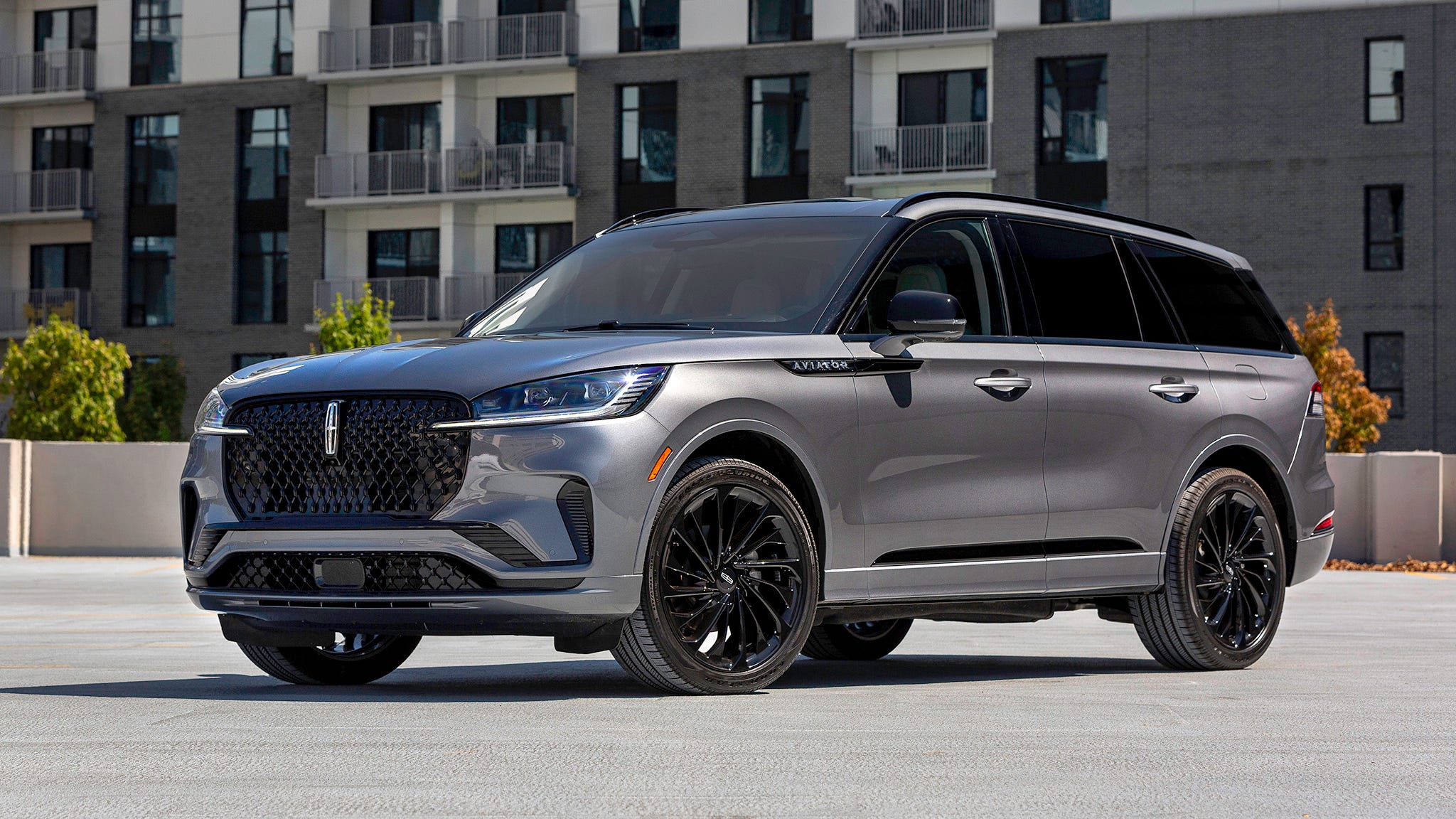 LHDBackorder2026
Lincoln Aviator
SUV · 5 VariantsPetrolFrom $70,300Ex Works, USA LHD/C-RHDBackorder2026
Chevrolet Silverado 1500
Pickup · 29 VariantsPetrol · DieselFrom $57,700Ex Works, USA
Seaports and Airports Supporting Vehicle Import
| Facility | Location | Role |
|---|---|---|
| Port of Sohar | Al Batinah North | The principal cargo and vehicle gateway; deepwater, container and RoRo capable, close to Muscat |
| Port of Salalah | Dhofar | Major transshipment hub on the Indian Ocean, outside the Strait of Hormuz |
| Port of Duqm | Al Wusta | Newer deepwater industrial port with growing capacity |
| Muscat International Airport | Muscat | Air-freighted vehicles — rare, for high-value or urgent shipments |
Sohar handles the bulk of vehicle volume for the populated north of the country. Salalah is strategically useful because it sits outside the Strait of Hormuz and is a major transshipment point on Asia–Europe routes, which sometimes produces better sailing options than a Gulf-interior port.
Restrictions on Vehicle Import for Individuals
- No person-type restriction. This is where Oman is unusually open. Customs duty and VAT apply identically to private individuals, resident expatriates, dealers and manufacturers. An expatriate resident can import a vehicle in their own name — something not possible in Kuwait. Oman also places no bar on residents importing pickups, unlike Saudi Arabia.
- Right-hand-drive vehicles are not admissible for private registration.
- Age ceilings apply by category as set out above, measured from year of manufacture.
- Damaged-title vehicles are prohibited.
- FTA preference must be claimed with documentation. It is never applied automatically.
Duty Structure Overview
Oman applies a two-step cascade, structurally identical to the UAE:
- Customs Duty at 5% of the CIF value.
- VAT at 5% on (CIF + customs duty).
Duty is assessed on CIF — cost, insurance and freight — not on FOB. That distinction matters when comparing Oman against markets like South Africa, which use an FOB base.
The single most common calculation error
VAT in Oman cascades: its base is CIF plus the customs duty, not CIF alone.
- Correct: VAT = (CIF + Duty) × 5% → total 10.25% of CIF
- Wrong: VAT = CIF × 5% → total 10.00% of CIF
The difference is only a quarter of a percentage point, but it is the canonical GCC cascade error and it shows up constantly in third-party cost estimates. On a $60,000 car it is $150.
The cascade, worked
| Charge | Rate | Base |
|---|---|---|
| Customs Duty | 5% | CIF |
| VAT | 5% | CIF + Customs Duty |
| Excise / luxury / CO2 | none | — |
| Total | 10.25% | of CIF |
Worked example 1 — Petrol SUV from the USA, CIF US$50,000
| Charge | Calculation | Amount |
|---|---|---|
| Customs value (CIF) | — | $50,000 |
| Customs duty (5%) | $50,000 × 0.05 | $2,500 |
| VAT (5%) | ($50,000 + $2,500) × 0.05 | $2,625 |
| Total import charges | $5,125 (10.25% of CIF) | |
| Landed cost | $55,125 |
Worked example 2 — Plug-in hybrid from Germany, CIF US$65,000
| Charge | Calculation | Amount |
|---|---|---|
| Customs duty (5%) | $65,000 × 0.05 | $3,250 |
| VAT (5%) | ($65,000 + $3,250) × 0.05 | $3,413 |
| Total import charges | $6,663 (10.25% of CIF) |
A plug-in hybrid pays the full rate. The EV incentive never covered PHEVs — see the next section.
Worked example 3 — Battery EV, CIF US$55,000, cleared during the Triple Zero window
| Charge | Calculation | Amount |
|---|---|---|
| Customs duty | 0% under the incentive | $0 |
| VAT | 0% (zero-rated) | $0 |
| Total import charges | $0 (0.00% of CIF) |
The same EV cleared after the window closed, absent an extension, pays the standard 5% duty and 5% VAT — $5,638, or 10.25%. That is the difference the expiry makes.
These figures show the structure. Get the exact duty and full landed cost for your specific vehicle and route — including the current EV position — using CarImport.AI.

Calculate your exact import duty to Oman
Get a vehicle-specific duty and full landed-cost breakdown — HS classification, every tax, levy and FTA, plus shipping — calculated for your exact make, model and specs.
- Vehicle-specific HS code
- All duties, taxes & FTAs
- Shipping + est. landed cost
Free trade agreements
| Agreement | Status | Effect on vehicles | Documentation |
|---|---|---|---|
| US–Oman FTA | In force since 1 Jan 2009 | 0% duty for qualifying US-origin vehicles | Certificate of Origin, 35% appraised-value regional content, direct shipment |
| GCC Customs Union | In force | 0% duty for GCC-manufactured vehicles | GCC origin proof |
| GCC–Singapore FTA | In force | Vehicle lines unverified — assume 5% | GSFTA certificate |
| GCC–EFTA FTA | In force | Vehicle lines unverified — assume 5% | EUR.1 certificate |
| India–Oman CEPA | Ratified by Oman; intended entry into force June 2026 | Chapter 87 line not published — assume 5% | To be confirmed |
| GCC–UK | Not in force (negotiating) | 5% applies | — |
| GCC–Korea | Signed December 2023, not in force for Oman | 5% applies | — |
| Japan, China, EU, Thailand | No agreement | 5% applies | — |
Two practical warnings on the US FTA, which is the one most likely to be relevant. First, direct shipment matters: routing a US-origin car through Jebel Ali can forfeit preferential status unless the goods remain under customs control and the movement is handled under the Makasa arrangement. Second, origin means manufacture, not purchase — many US-brand vehicles are assembled in Mexico or Canada and will fail the 35% regional value content test.
Even where duty falls to zero, the 5% VAT still applies. A successful preference claim therefore takes the total from 10.25% to 5%, not to zero.
Worked Example: Importing a 2026 Cadillac Escalade to Oman
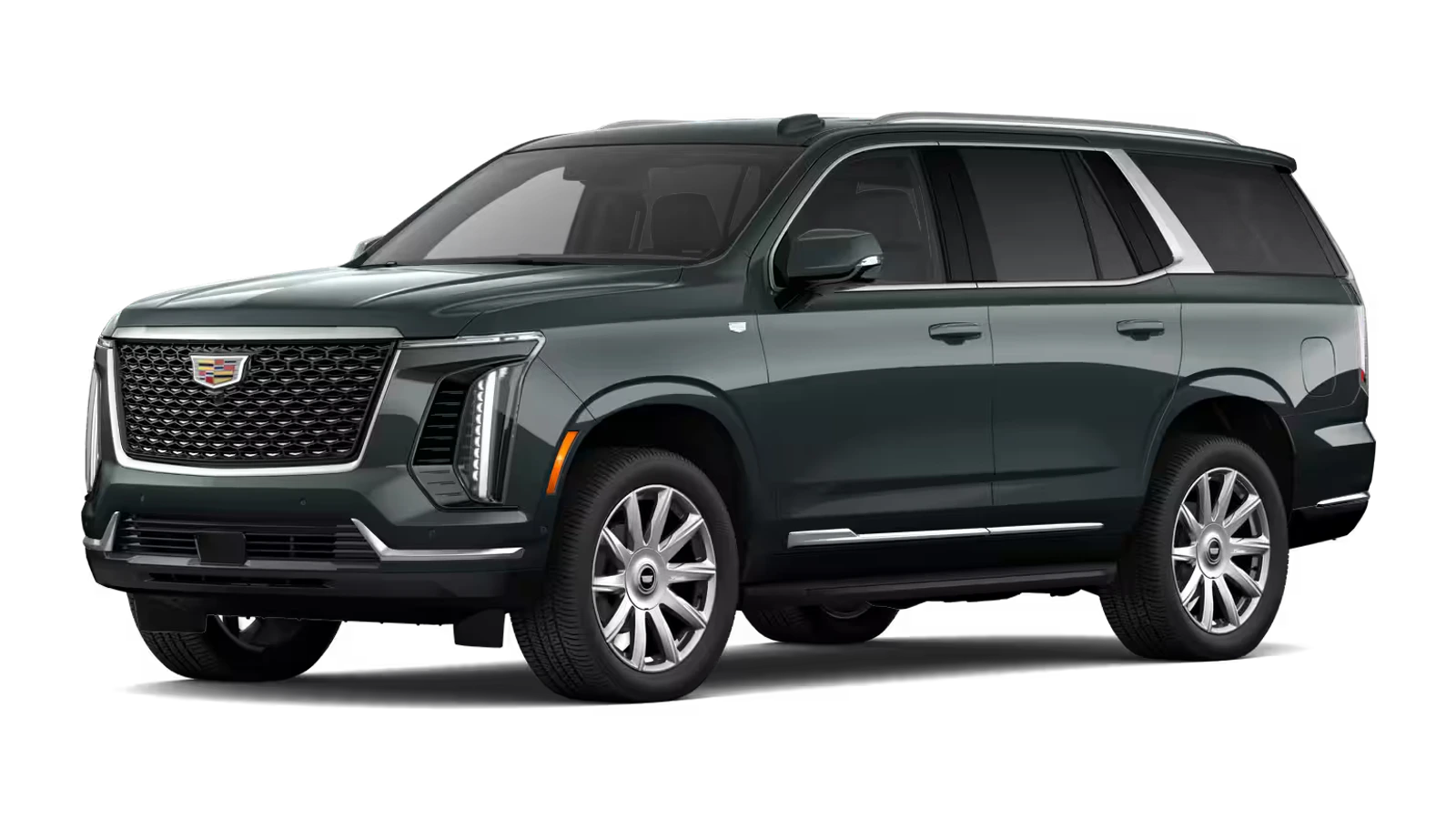
Here is the full landed cost of one car, a 2026 Cadillac Escalade shipped from the USA to Oman, worked out on 9 November 2026 with the customs rules in force that day. It lands at 51,390 OMR (about US$133,655), and duties and taxes come to 10.2% of its CIF value.
| Item | Share of CIF | Amount |
|---|---|---|
| Vehicle priceIPAS price for a car sourced in the USA | 42,026 OMRUS$109,300 | |
| Shipping and insuranceUSA to Oman | 2,655 OMRUS$6,905 | |
| CIF valueCost, insurance and freight: the customs value | 44,681 OMRUS$116,205 | |
| Customs duties and taxes | ||
| Basic customs duty (5%)5% of CIF | 2,234 OMRUS$5,810 | |
| GST/VAT (5%)5% of CIF plus the duties above5.3% of CIF | 2,346 OMRUS$6,101 | |
| Total duties and taxes10.2% of CIF | 4,580 OMRUS$11,911 | |
| Service and handling | ||
| Premium Import ServiceOptional end-to-end import management by IPAS | 1,453 OMRUS$3,779 | |
| Destination handlingPort terminal and customs clearance handling | 677 OMRUS$1,760 | |
| Total landed cost | 51,390 OMRUS$133,655 | |
Electric and Hybrid Vehicles
What the Triple Zero scheme was
From 1 July 2023, Oman granted fully electric vehicles a 100% exemption from customs duty, a 0% VAT rate, and a waiver of ROP registration fees. For a battery EV this produced a genuine zero at the border — no duty, no VAT — which made Oman one of the most attractive EV import destinations anywhere.
Its current status
The incentive was granted for a three-year period, "subject to extension", running from 1 July 2023. That period closed on 30 June 2026. As of writing, no formal extension has been publicly gazetted.
IPAS's position is therefore conservative and explicit:
- For import declarations dated on or before 30 June 2026, a qualifying battery EV was 0% duty and 0% VAT.
- For declarations dated after 30 June 2026, absent a confirmed and published extension, a battery EV reverts to standard treatment — 5% duty plus 5% VAT, giving the same 10.25% as a petrol car.
If you are planning an EV import into Oman now, treat 10.25% as your budget and verify the current position with the Oman Tax Authority or your customs broker at declaration. If an extension has been gazetted, you gain; if you had assumed zero and it has not, you would be short by more than a tenth of the vehicle's value.
What the incentive never covered
The scheme was strictly binary — fully electric or nothing:
- Battery EVs (HS 8703.80): in scope.
- Hydrogen fuel-cell vehicles: treated as in scope by analogy as zero-emission electric cars, though the cited decision names the battery-electric line specifically. Confirm before relying on it.
- Conventional hybrids (HEV): never in scope. Always 5% + 5%.
- Plug-in hybrids (PHEV): never in scope. Always 5% + 5%.
Do not extend the EV treatment to a hybrid or plug-in hybrid under any circumstances. This is the second most common Oman error after the VAT cascade mistake.
Registration-fee waiver is not a customs exemption
The Royal Oman Police waiver of registration fees for EVs is a post-clearance, registration-stage measure. It is genuinely valuable, but it is administered by the ROP and sits entirely outside the customs cascade. Do not fold it into a border-tax figure, and do not read reports of "Oman waives fees on EVs" as evidence that the customs exemption is still running — the two are separate measures with separate lifespans.
Documents Required for Import
- Commercial invoice showing the purchase price
- Bill of Lading (original or telex release)
- Packing list with make, model, year, VIN, engine capacity and colour
- Certificate of Origin — mandatory for any FTA or GCC preference claim
- Certificate of Title or equivalent ownership document
- Previous-country registration certificate
- Export Certificate from the origin traffic authority — mandatory for used vehicles arriving from GCC states since 1 July 2025
- Bayan customs declaration
- GSO conformity documentation
- Passport and resident card or civil ID of the importer
- Omani motor insurance certificate, required at registration
Customs Clearance Timeline
| Stage | Typical duration | Notes |
|---|---|---|
| Vessel arrival to discharge | 1–3 days | Sohar or Salalah |
| Bayan declaration and duty assessment | 1–3 working days | Electronic single window |
| Duty and VAT payment, customs release | 1 day | |
| ROP technical inspection | 1–2 days | Used vehicles |
| Registration and plate issuance | 1–3 days | Insurance must be in place |
| Typical total | 1–2 weeks | With complete documents |
The Bayan system makes Omani clearance comparatively quick. Delays typically come from a missing GCC Export Certificate on a used regional purchase, or from an origin document arriving after the declaration has been filed.
Homologation and Vehicle Approval
Oman follows GCC standards, so Gulf-specification vehicles clear most smoothly, and US-specification cars are common and well accepted. There is no mandatory pre-shipment inspection comparable to Kenya's PVoC or Nigeria's SONCAP — conformity is confirmed through the GSO documentation submitted at clearance and, for used vehicles, an ROP technical inspection after arrival.
The ROP inspection verifies VIN and chassis numbers against the documents and examines lighting, brakes, tyres and modifications. Excessive window tint is a recurring failure point.
Registration Procedures and Costs
Registration is handled by the Royal Oman Police, Directorate General of Traffic:
- Clear customs through Bayan and obtain the release documentation.
- Arrange Omani motor insurance.
- Present the vehicle for ROP technical inspection (used vehicles).
- Submit the registration application with customs clearance, ownership documents, the inspection certificate and insurance.
- Pay registration fees and receive plates.
The post-clearance charges are modest fixed amounts and sit outside the 10.25% customs figure — itemise them separately:
| Item | Typical cost |
|---|---|
| Bayan declaration fee | OMR 5 (personal) / OMR 15 (commercial) |
| GSO conformity / standardisation fee | OMR 5 |
| ROP technical inspection (used vehicles) | OMR 5 upward, depending on centre |
| ROP registration fee — small car | Around OMR 30 |
| ROP registration fee — large engine, over 4,500cc | Around OMR 53 |
| ROP registration fee — commercial truck | OMR 133–193 |
Registration fees are set by engine capacity and vehicle type. Battery EVs have had their registration fee waived as a separate ROP measure.
Recent Regulatory Changes (2023–2026)
- 1 July 2023 — EV Triple Zero introduced. Fully electric vehicles granted 0% customs duty, 0% VAT and waived registration fees for a three-year period, subject to extension.
- 1 January 2025 — GCC Integrated Customs Tariff. The 12-digit unified GCC tariff took effect on HS 2022 nomenclature across all six member states.
- 1 July 2025 — GCC Export Certificate mandatory. Used vehicles imported from other GCC states now require a formal Export Certificate from the origin traffic authority; the older Clearance Certificate is no longer accepted.
- June 2026 — India–Oman CEPA. Ratified by Oman with intended entry into force in June 2026. Oman offers duty-free treatment on roughly 98% of tariff lines, but the Chapter 87 vehicle line has not been published, so vehicles should be quoted at the standard rate until confirmed.
- 30 June 2026 — EV Triple Zero three-year period ended. No extension publicly gazetted as of writing. Verify the current position before quoting an EV import.
Frequently Asked Questions
How much does it cost to import a car to Oman?
Import charges total 10.25% of the CIF value — 5% customs duty, then 5% VAT calculated on the CIF plus that duty. There is no excise, luxury tax or CO2 levy on vehicles. A car with a CIF of $50,000 pays $5,125. Beyond that, budget shipping, the Bayan declaration fee, GSO conformity fee, inspection and ROP registration, which are small fixed amounts rather than percentage charges.
Are electric vehicles still exempt from duty and VAT in Oman?
The Triple Zero scheme — 0% customs duty, 0% VAT and waived registration fees on fully electric cars — ran for a three-year period from 1 July 2023, which closed on 30 June 2026. No extension has been publicly gazetted as of writing. IPAS therefore quotes EVs at the standard 10.25% and recommends confirming the current position with the Oman Tax Authority or your broker at declaration. If the scheme has been extended, you benefit; if you budget on the assumption it has and it has not, you are short by more than a tenth of the car's value.
Did the EV incentive cover hybrids?
No, and this is important. The scheme was strictly for fully electric vehicles. Conventional hybrids and plug-in hybrids were never in scope and have always paid the full 5% duty plus 5% VAT. Hydrogen fuel-cell vehicles are arguably in scope as zero-emission electric cars, but the decision names the battery-electric line specifically, so confirm before relying on it.
Can an expatriate resident import a car into Oman?
Yes. Oman applies no person-type restriction — customs duty and VAT are identical for private individuals, resident expatriates, dealers and manufacturers, and an expatriate can import in their own name. This is more open than Kuwait, where only nationals may import directly, and Oman also places no bar on residents importing pickups, unlike Saudi Arabia.
What is the age limit for importing a used car to Oman?
Under seven years from the year of manufacture for private passenger cars, under ten years for trucks and buses, and under fifteen for heavy equipment. New vehicles have no limit. Oman is also friendly to classics: vehicles of 50 years and older are admissible outright, and those between 30 and 50 years can be brought in with ROP special approval. The classic pathway is an admissibility concession only and carries no duty reduction.
Can I import a right-hand-drive car to Oman?
No. Oman drives on the right and left-hand drive is mandatory for private registration, which rules out Japanese-domestic, UK, Singapore-domestic and Australian stock.
Does a car bought in the USA get 0% duty under the US–Oman FTA?
Only if it genuinely qualifies. The vehicle must originate in the United States — meeting a 35% appraised-value regional content test — you must present a valid Certificate of Origin, and the shipment must be direct. Routing through Jebel Ali can forfeit the preference unless the goods stay under customs control under the Makasa arrangement. Many US-brand models are built in Mexico or Canada and fail the origin test. Note too that even at 0% duty the 5% VAT still applies, so a successful claim takes you to 5%, not zero.
Do I need anything extra to bring a used car in from the UAE or Saudi Arabia?
Yes. Since 1 July 2025, used vehicles imported from GCC states require a formal Export Certificate issued by the origin country's traffic authority. The older Clearance Certificate is no longer accepted, and a missing Export Certificate is one of the more common causes of delay at the border.
Ready to Import?
Oman combines a low, simple tax structure with the most relaxed admissibility rules in the Gulf. At 10.25% of CIF, with a seven-year age window, a genuine classic-car pathway and no restriction on who may import, it is the easiest GCC market for an expatriate resident or a collector to work with.
The two things to get right are the EV question and the paperwork. Do not budget an electric car at zero without confirming that the Triple Zero scheme has been extended beyond 30 June 2026 — and never extend that treatment to a hybrid or plug-in hybrid, which were never covered. If you are buying used stock from elsewhere in the Gulf, secure the Export Certificate before the car moves.
IPAS provides two tools to plan and execute your import:
CarImport.AI — Source a vehicle through IPAS and calculate the full landed cost to Oman, including the 5% customs duty, 5% VAT and shipping. Get exact figures for your specific vehicle and origin, and see whether a US–Oman FTA or GCC-origin claim is available to you.
IPAS EXPRESS — Already have a vehicle? Get instant shipping quotes to Sohar, Salalah or Duqm — sea freight, RoRo or air — with transparent, itemised pricing and a stage-by-stage timeline.
Ready to Import Your Vehicle?
Two tools, two use cases. Pick the one that fits your needs.
Source a vehicle through IPAS and calculate the full landed cost — customs duties, shipping, and compliance — to destinations across the world.
Calculate Landed CostIPAS Express
Already have a vehicle? Get instant shipping quotes — sea freight, air freight, or RoRo — for one car or multiple vehicles worldwide.
Get Shipping Quote