
Introduction
Qatar has the cleanest vehicle import tax structure of any market IPAS calculates for. There is one charge at the border — a 5% customs duty on the CIF value — and that is the whole of it. Qatar has not implemented VAT, levies no selective or excise tax on motor vehicles, and imposes no luxury tax, no environmental levy and no engine-displacement surcharge.
The effective rate is therefore a flat 5.00% of CIF, tied with Kuwait as the lowest in the Gulf and among the lowest anywhere in the world. For context, the same car pays 10.25% arriving in the UAE or Oman, 15.5% in Bahrain and 20.75% in Saudi Arabia.
That said, "cheap" and "easy" are different things. Qatar runs a strict five-year age ceiling with no penalty-payment workaround, requires left-hand drive, and maintains one of the most explicit prohibited-vehicle lists in the region — barring not just flood and accident-damaged cars but former taxis, former police vehicles and any modified vehicle. It also applies a frequency rule that surprises people: one private car every three years, with resident expatriates required to hold the vehicle for at least three years before selling it.
One more thing worth knowing up front. Qatar has no bilateral trade agreements of its own — unlike the UAE, which has five CEPAs in force. Every preferential pathway into Qatar runs through a GCC-bloc agreement, and only two of those currently deliver a zero rate on vehicles.
Quick Facts
| Detail | Information |
|---|---|
| Trade Bloc | GCC Customs Union |
| Customs Authority | General Authority of Customs — customs.gov.qa |
| Tax Authority | General Tax Authority — gta.gov.qa |
| Registration Authority | Ministry of Interior, Traffic Department |
| Traffic Side | Right-hand traffic (drive on the right) |
| Steering Requirement | LHD only — RHD prohibited except pre-1971 classics |
| Customs Duty | 5% of CIF (GCC Common Customs Tariff) |
| VAT | None — Qatar has not implemented VAT as of 2026 |
| Selective / Excise Tax | None on motor vehicles |
| Luxury / environmental / displacement surcharge | None |
| Total import charges | 5.00% of CIF — joint-lowest in the GCC |
| Zero-rate FTAs | GCC–Singapore and GCC–EFTA (Switzerland, Norway, Iceland, Liechtenstein) |
| Bilateral CEPAs | None — Qatar has zero bilateral agreements |
| Electric Vehicles | No concessional rate — 5% applies, same as petrol |
| Age limit — cars, light trucks, buses | 5 years from manufacture |
| Age limit — heavy trucks over 5t GVW | 10 years |
| Classic vehicles | 30+ years admissible under the classic exemption |
| Frequency limit | One private car every 3 years |
| Expatriate resale restriction | Must hold the vehicle at least 3 years before sale |
| Prohibited | Flood, accident, fire, rollover and structurally damaged vehicles; ex-taxis; ex-police cars; modified vehicles |
| Pickup Classification | All pickups → HS 8704, regardless of cab style |
| HS code depth | 12-digit GCC Integrated Customs Tariff since 1 January 2025 |
| Main Seaport | Hamad Port |
| Free Zones | Ras Bufontas and Umm Alhoul (QFZA) |
| Currency | Qatari Riyal (QAR), pegged at 3.6400 to the US dollar |
Types of Cars That Can Be Imported
New and Used Vehicles
Both are permitted within the age ceiling. New vehicles are unconstrained.
Age — a hard 5-year ceiling with no workaround
Minister of Economy and Trade Decision No. 21 of 2004 governs used vehicle imports and sets the limits, measured from the manufacture date:
| Vehicle class | Maximum age |
|---|---|
| Passenger cars (HS 8703) | 5 years |
| Light trucks and pickups (HS 8704.21–8704.32) | 5 years |
| Buses | 5 years |
| Heavy transport trucks (HS 8704, GVW over 5 tonnes) | 10 years |
| Classic cars (30 years and older) | Admissible under the classic exemption |
There is no penalty-payment workaround for an age violation. In some markets an over-age vehicle can be brought in on payment of a surcharge; in Qatar it simply cannot be admitted. Check the manufacture date on the VIN plate before you buy — not the first registration date, which is often a year later.
Steering — LHD only
Qatar drives on the right and prohibits right-hand-drive vehicles for mainland import, with the single exception of pre-1971 classics. Japanese-domestic, UK, Singapore, Australian and other RHD stock is not admissible. All practical IPAS source markets for Qatar supply left-hand-drive vehicles, so no conversion arises.
Prohibited vehicles — an unusually explicit list
Qatar's General Authority of Customs publishes a specific prohibition covering vehicles that have been sunk or flood-damaged, accident-damaged, fire-damaged, rolled over, or structurally damaged; vehicles formerly used as taxis or police cars; and modified vehicles that are not in original condition.
The last two catch people out. A well-maintained ex-taxi or an ex-police interceptor is barred on its history alone, regardless of condition. And "modified" is read broadly — aftermarket suspension, engine or bodywork changes can trigger rejection, so a tuned or customised car is a poor candidate for Qatar.
Fuel Type
All propulsion types are admissible and all pay 5%. Qatar publishes no concessional or Free lines for electric or fuel-efficient vehicles.
Cars You Can Import to Qatar
Each card is a full landed-cost calculation: the car's price, shipping, every duty and tax, and handling, worked out on 9 November 2026 with the rules in force that day. All are left-hand drive to suit Qatar's roads. Tap a car to see its full breakdown, or open it to change the trim, colour or port.
More cars you can import to Qatar
New cars IPAS sources to order that meet Qatar's import rules. Prices are ex works, before shipping and duty. Open a car to work out its full landed cost.
 LHDBackorder2025
Chevrolet Corvette Stingray Coupe
Coupe · 3 VariantsPetrolFrom $86,400Ex Works, USA LHD/C-RHDBackorder2026
Chevrolet Silverado EV
Pickup · 8 VariantsElectricFrom $77,900Ex Works, USA LHDBackorder2025
Chevrolet Corvette E-Ray Coupe
Coupe · 3 VariantsHybridFrom $130,500Ex Works, USA LHDBackorder2026
Cadillac LYRIQ
SUV · 14 VariantsElectricFrom $71,000Ex Works, USA LHDBackorder2026
Cadillac VISTIQ
SUV · 4 VariantsElectricFrom $92,900Ex Works, USA LHDBackorder2027
Mercedes-Benz Maybach S-Class
Sedan · 3 VariantsHybrid · Plug-in HybridFrom $206,200Ex Works, Germany LHDBackorder2026
Mercedes-Benz AMG GLS
SUV · 1 VariantHybridFrom $164,900Ex Works, Canada LHD/C-RHDBackorder2025
Ford Bronco
SUV · 3 VariantsPetrolFrom $62,500Ex Works, USA LHDBackorder2026
Lexus TX
SUV · 10 VariantsPetrol · HybridFrom $61,000Ex Works, Canada LHDBackorder2026
Lexus LX
SUV · 7 VariantsPetrol · HybridFrom $108,700Ex Works, Canada LHDBackorder2026
Toyota Land Cruiser
SUV · 2 VariantsHybridFrom $69,100Ex Works, USA LHDBackorder2026
Toyota 4Runner
SUV · 12 VariantsPetrol · HybridFrom $50,200Ex Works, USA LHDBackorder2026
Infiniti QX80
SUV · 6 VariantsPetrolFrom $100,500Ex Works, USA LHD/C-RHDBackorder2025
GMC Sierra 2500HD
Pickup · 6 VariantsPetrol · DieselFrom $90,000Ex Works, USA LHD/C-RHDBackorder2026
Ram 1500 RHO
Pickup · 1 VariantPetrolFrom $86,500Ex Works, USA LHD/C-RHDBackorder2025
Dodge Charger Daytona
Coupe · 2 VariantsElectricFrom $71,500Ex Works, USA
Seaports and Airports Supporting Vehicle Import
| Facility | Location | Role |
|---|---|---|
| Hamad Port | Umm Alhoul, south of Doha | The primary deepwater gateway; handles effectively all vehicle import volume, container and RoRo capable |
| Doha Port | Doha | Older city port, now largely cruise and general cargo |
| Hamad International Airport | Doha | Air-freighted vehicles — rare, for high-value or urgent shipments |
| Ras Bufontas Free Zone | Near the airport | QFZA free zone, air-freight-linked |
| Umm Alhoul Free Zone | Adjacent to Hamad Port | QFZA free zone, sea-freight-linked |
Hamad Port opened in 2017 and replaced Doha Port as the country's commercial gateway. Because Qatar is a peninsula with a single land border, effectively all vehicle imports arrive by sea, frequently with a transshipment leg through a regional hub.
A note on the free zones: Qatar operates two QFZA zones, but their published regulations do not clearly document a re-export pathway for right-hand-drive or salvage vehicles of the kind the UAE's DUCAMZ provides. If you are considering staging non-admissible stock through Qatar, verify the position directly with QFZA before shipping — do not assume the UAE model applies.
Restrictions on Vehicle Import for Individuals
- One private car every three years. Both Qatari nationals and resident expatriates holding a Qatari ID are subject to this frequency limit.
- Expatriates must hold for three years before selling. A resident expatriate who imports a car cannot flip it — the vehicle must be held for at least three years before resale.
- No person-type bar on commercial vehicles. Unlike Saudi Arabia, which prohibits resident expatriates from importing HS 8704 vehicles, Qatar places no such restriction. Resident expatriates can import single-cab and dual-cab pickups and trucks freely at the standard 5%.
- Right-hand-drive vehicles are prohibited except pre-1971 classics.
- The prohibited-vehicle list is enforced on history, not just condition — ex-taxis, ex-police cars and modified vehicles are barred outright.
- FTA preference requires documentation and is never applied automatically.
Duty Structure Overview
Qatar's cascade is architecturally two components, but the second is currently dormant:
- Customs Duty at 5% of the CIF value in Qatari riyals.
- VAT at 0% — the structure exists but Qatar has not implemented VAT.
Qatar's Selective Tax, established by Law No. 25 of 2018 and effective from January 2019, covers tobacco, energy drinks, carbonated drinks and certain special-purpose goods. Motor vehicles are explicitly outside its scope. There is no luxury tax in the Qatari tariff schedule and no environmental levy on imports.
The cascade, worked
| Charge | Rate | Base |
|---|---|---|
| Customs Duty | 5% | CIF |
| VAT | 0% (not implemented) | — |
| Selective / luxury / environmental | none | — |
| Total | 5.00% | of CIF |
Worked example 1 — Petrol SUV from the USA, CIF US$60,000
| Charge | Calculation | Amount |
|---|---|---|
| Customs value (CIF) | — | $60,000 |
| Customs duty (5%) | $60,000 × 0.05 | $3,000 |
| VAT | not implemented | $0 |
| Total import charges | $3,000 (5.00% of CIF) | |
| Landed cost | $63,000 |
Worked example 2 — Battery EV from Germany, CIF US$55,000
| Charge | Calculation | Amount |
|---|---|---|
| Customs duty (5%) | $55,000 × 0.05 | $2,750 |
| Total import charges | $2,750 (5.00% of CIF) |
An EV pays the same 5% as a petrol car. Qatar publishes no concessional line for electric or fuel-efficient vehicles — unlike Australia, which has Free duty pathways for qualifying EVs.
Worked example 3 — Swiss-origin vehicle under the GCC–EFTA agreement, CIF US$80,000
| Charge | Calculation | Amount |
|---|---|---|
| Customs duty | 0% under GCC–EFTA, documentation accepted | $0 |
| Total import charges | $0 (0.00% of CIF) |
With no VAT to follow, a successful FTA claim in Qatar means the vehicle enters entirely free of border tax.
These figures show the structure. Get the exact duty and full landed cost for your specific vehicle and route using CarImport.AI.

Calculate your exact import duty to Qatar
Get a vehicle-specific duty and full landed-cost breakdown — HS classification, every tax, levy and FTA, plus shipping — calculated for your exact make, model and specs.
- Vehicle-specific HS code
- All duties, taxes & FTAs
- Shipping + est. landed cost
A warning about VAT
Qatar signed the GCC Unified VAT Agreement in Riyadh in November 2016, committing in principle to a VAT of at least 5%. It has not implemented it. The UAE and Saudi Arabia introduced VAT in January 2018, Bahrain in January 2019 and Oman in April 2021; Qatar and Kuwait remain the two GCC states without it. Qatar's Prime Minister stated in April 2023 that no date had been set, and as of 2026 it remains unimplemented.
If Qatar does implement VAT at the expected 5%, the cascade would become 5% duty followed by 5% VAT on the duty-inclusive value — an effective rate of 10.25%, matching the UAE. That would double the border cost overnight. For a shipment planned months ahead, it is worth confirming the position before committing.
Free trade agreements
| Agreement | In force | Origin coverage | Effect on vehicles |
|---|---|---|---|
| GCC–Singapore FTA | 1 September 2013 | Singapore | 0% — certificate of origin from the competent Singapore authority, 35% value-added or the Annex 3 product-specific rule |
| GCC–EFTA FTA | 1 July 2014 | Switzerland, Norway, Iceland, Liechtenstein | 0% — industrial goods fully liberalised; certificate of origin under EFTA–GCC rules |
| GCC–UK FTA | Signed 20 May 2026, not yet in force | United Kingdom | 5% until ratification is gazetted |
| Intra-GCC | Ambiguous for vehicles | Saudi Arabia, UAE, Bahrain, Kuwait, Oman | Quote 5% — see below |
| USA, Japan, Korea, Germany, China, India, Australia, Thailand | No agreement | — | 5% |
Two points deserve emphasis.
Intra-GCC treatment for vehicles is genuinely ambiguous in Qatar. The GCC Customs Union framework normally extends a zero rate to GCC-manufactured goods meeting a 40% local-content threshold with a valid GCC certificate of origin. However, the position for motor vehicles specifically is not clearly confirmed for Qatar, so IPAS quotes 5% conservatively. If you hold a genuine GCC certificate of origin for a GCC-manufactured vehicle, verify directly with the General Authority of Customs before assuming a preference.
The EFTA route is unusually valuable here. Because Qatar has no VAT, a Swiss or Norwegian-origin vehicle with proper documentation lands entirely tax-free. That is a rare outcome anywhere in the world.
Worked Example: Importing a 2026 Cadillac Escalade to Qatar
Here is the full landed cost of one car, a 2026 Cadillac Escalade shipped from the USA to Qatar, worked out on 9 November 2026 with the customs rules in force that day. It lands at 472,174 QAR (about US$129,718), and duties and taxes come to 5% of its CIF value.
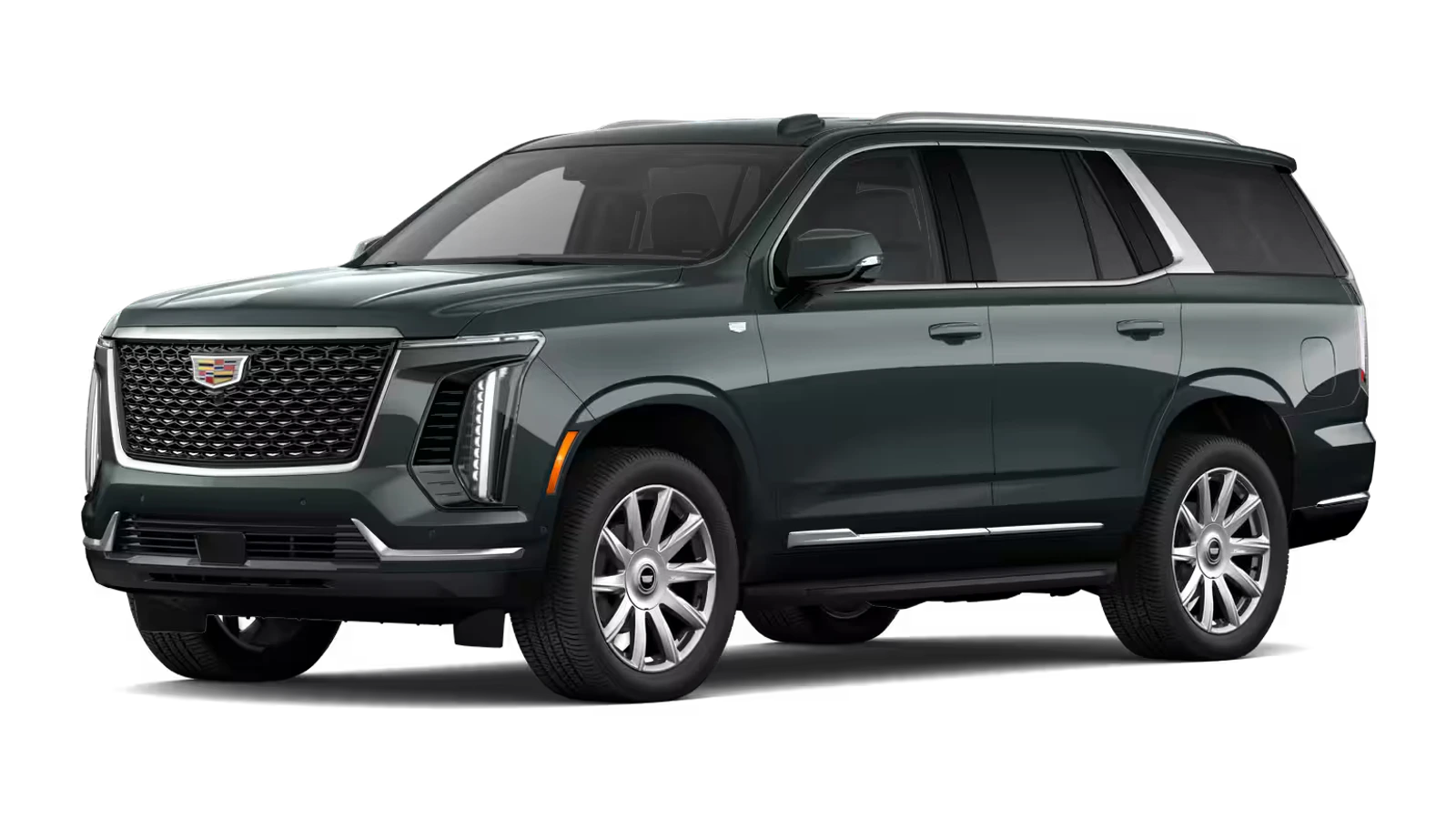
| Item | Share of CIF | Amount |
|---|---|---|
| Vehicle priceIPAS price for a car sourced in the USA | 397,852 QARUS$109,300 | |
| Shipping and insuranceUSA to Qatar | 32,975 QARUS$9,059 | |
| CIF valueCost, insurance and freight: the customs value | 430,827 QARUS$118,359 | |
| Customs duties and taxes | ||
| Basic customs duty (5%)5% of CIF | 21,542 QARUS$5,918 | |
| Total duties and taxes5% of CIF | 21,542 QARUS$5,918 | |
| Service and handling | ||
| Premium Import ServiceOptional end-to-end import management by IPAS | 13,344 QARUS$3,666 | |
| Destination handlingPort terminal and customs clearance handling | 6,461 QARUS$1,775 | |
| Total landed cost | 472,174 QARUS$129,718 | |
Electric and Hybrid Vehicles
Qatar offers no concessional customs treatment for electric or hybrid vehicles. Battery EVs, plug-in hybrids and conventional hybrids all pay the standard 5% duty, exactly like a petrol or diesel car.
The Qatar tariff schedule publishes no Free lines for electric or fuel-efficient vehicles, which distinguishes it from markets such as Australia that carve out concessional 8-digit codes for qualifying EVs, and from Oman, which ran a time-limited zero-duty EV scheme.
In practice, this matters far less than it would elsewhere. With a flat 5% and no VAT, an EV entering Qatar already faces one of the lowest import tax burdens in the world — there is simply no headroom for a concession to be meaningful. A $55,000 EV pays $2,750 at the border, which is less than the duty alone would be in most markets, let alone the total.
Qatar's EV push is being pursued through fleet electrification and charging infrastructure rather than through border tax relief.
Pickup Trucks and Dual-Cab Classification
Qatar follows the GCC unified body-style test: an open cargo bed makes a vehicle a goods vehicle under HS 8704, regardless of cab configuration. Single-cab, extended-cab and double-cab pickups all classify the same way.
| Vehicle | HS Code |
|---|---|
| Toyota Hilux, single or double cab | 8704.21 |
| Nissan Navara double cab | 8704.21 |
| Mitsubishi Triton double cab | 8704.21 |
| Isuzu D-Max double cab | 8704.21 |
| Ford Ranger Raptor | 8704.31 |
| RAM 1500 Crew Cab | 8704.31 |
| Toyota Tundra double cab | 8704.31 |
There is an important exception. A pickup-derived passenger vehicle — one where the open cargo bed has been replaced by an enclosed passenger compartment — reverts to HS 8703. That covers the Toyota Fortuner, Ford Everest, Isuzu MU-X and Mitsubishi Pajero Sport.
The rate impact is zero: both headings are 5% in Qatar and there is no VAT to differentiate them. What the classification affects is type approval, the registration category at the Ministry of Interior Traffic Department, and the origin documentation required for a product-specific rule under an FTA.
Documents Required for Import
- Commercial invoice showing the purchase price
- Bill of Lading (original or telex release)
- Packing list with make, model, year, VIN, engine capacity and colour
- Certificate of Origin — mandatory for any FTA preference claim
- Certificate of Title or equivalent ownership document
- Previous-country registration certificate
- Customs declaration with a valid 12-digit HS code
- Qatari ID and passport of the importer
- Proof that the manufacture date falls inside the five-year window
- GSO conformity documentation
- Qatari motor insurance certificate, required at registration
Customs Clearance Timeline
| Stage | Typical duration | Notes |
|---|---|---|
| Vessel arrival to discharge | 1–3 days | Hamad Port |
| Customs declaration and duty assessment | 1–3 working days | 12-digit HS code required |
| Duty payment and customs release | 1 day | |
| Technical inspection | 1–2 days | MOI Traffic Department |
| Registration and plate issuance | 1–3 days | Insurance must be in place |
| Typical total | 1–2 weeks | With complete documents |
Assessment is fast because the calculation is trivial. Delays come from the gates rather than the tax — most often a manufacture date outside the window, or a vehicle history that trips the prohibited list.
Homologation and Vehicle Approval
Qatar adopts GSO technical regulations, with the current list published as GSO MV-2026-MY-D2 in August 2024. Gulf-specification vehicles clear most easily; US-specification cars are common and widely accepted in the market.
There is no mandatory pre-shipment inspection of the Kenyan or Nigerian type. Compliance is verified after arrival through the Ministry of Interior technical inspection, which checks VIN and chassis numbers against the documents and examines lighting, brakes, tyres and modifications.
Two Qatar-specific points are worth noting. Ministry of Commerce and Industry Circular No. 3 of 2023 regulates permitted noise levels for cars and motorcycles — relevant if you are importing a vehicle with an aftermarket or performance exhaust. And because "modified" vehicles are on the prohibited list, the inspection is a genuine risk point for any car that has been altered from original specification.
Registration Procedures and Costs
Registration is handled by the Ministry of Interior Traffic Department:
- Clear customs and obtain release documentation showing duty paid.
- Arrange Qatari motor insurance.
- Present the vehicle for technical inspection.
- Submit the registration application with customs clearance, ownership documents, the inspection certificate, insurance and your Qatari ID.
- Pay fees and receive plates.
Post-clearance charges are modest and sit outside the 5% duty figure:
| Item | Typical cost |
|---|---|
| Port and terminal handling | QR 100–300 |
| Registration (MOI) | QR 500–1,500 |
These are administrative amounts set by the port and the Ministry of Interior rather than federal customs charges, so keep them separate from the duty calculation.
Recent Regulatory Changes (2023–2026)
- 2023 — customs law amended. Law No. 10 of 2023 amended the primary Customs Law No. 40 of 2002.
- 2023 — noise regulation. MoCI Circular No. 3 of 2023 set permitted noise levels for cars and motorcycles.
- August 2024 — GSO regulations updated. GSO Technical Regulations MV-2026-MY-D2 published; Qatar adopts.
- 1 January 2025 — 12-digit tariff. Amir Decree No. 98 of 2024 implemented the GCC Integrated Customs Tariff on 12-digit HS 2022 nomenclature, repealing the earlier decree. Qatar was the earliest GCC adopter, completing the migration within seven months — ahead of Saudi Arabia and well ahead of the UAE's phased rollout.
- 2025 — further customs amendments. Decree No. 63 of 2025 and Cabinet Decision No. 8 of 2025 amended customs procedures.
- 20 May 2026 — GCC–UK FTA signed. Not yet in force in Qatar pending ratification. UK-origin vehicles remain at 5% until an entry-into-force date is gazetted.
- VAT still not implemented as of 2026, leaving Qatar and Kuwait as the only GCC states without it.
Frequently Asked Questions
How much does it cost to import a car to Qatar?
Import tax is a flat 5% of the CIF value and nothing else — no VAT, no excise, no luxury tax, no engine-size surcharge. A car with a CIF of $60,000 pays $3,000. Alongside Kuwait, that is the lowest effective rate in the GCC. Add shipping, port handling of roughly QR 100–300 and registration of QR 500–1,500, all of which sit outside the duty calculation.
Does Qatar charge VAT on imported cars?
No. Qatar signed the GCC Unified VAT Agreement in 2016 but has never implemented VAT, and as of 2026 it remains one of only two GCC states without it. This is why Qatar's effective rate is 5.00% rather than the 10.25% seen in the UAE and Oman. If Qatar introduces VAT at the expected 5%, the effective rate would roughly double to 10.25%, so confirm the position for any shipment being planned well ahead.
What is the age limit for importing a used car to Qatar?
Five years from the manufacture date for passenger cars, light trucks, pickups and buses, and ten years for heavy trucks over 5 tonnes GVW. Classic cars of 30 years and older are admissible under a separate exemption. Critically, there is no penalty-payment workaround — an over-age vehicle simply cannot be admitted, so verify the build date on the VIN plate rather than relying on the first registration year.
Are electric vehicles cheaper to import into Qatar?
No. EVs pay the same 5% customs duty as petrol and diesel cars — Qatar publishes no concessional or Free tariff line for electric or fuel-efficient vehicles. In practice this matters little, since 5% with no VAT is already among the lowest border burdens anywhere. Qatar is pursuing electrification through fleet policy and charging infrastructure rather than import tax relief.
Can a resident expatriate import a car into Qatar?
Yes. Resident expatriates holding a Qatari ID can import both passenger cars and commercial vehicles at the standard 5% — Qatar does not apply the person-type bar on pickups and trucks that Saudi Arabia does. Two conditions attach: you may import one private car every three years, and you must hold the vehicle for at least three years before selling it.
Can I import an ex-taxi or a modified car?
No. Qatar's prohibited list is unusually explicit and bars vehicles previously used as taxis or police cars, along with modified vehicles that are not in original condition, and any car that has been flooded, fire-damaged, rolled over, accident-damaged or structurally damaged. The ex-taxi and ex-police prohibitions apply on the vehicle's history regardless of its current condition, and "modified" is read broadly enough to catch aftermarket suspension, engine and body changes.
Can I import a right-hand-drive car to Qatar?
No, other than pre-1971 classics. Qatar drives on the right and prohibits right-hand-drive vehicles for mainland import. Unlike the UAE, Qatar's free zones do not clearly document a re-export pathway for RHD stock, so verify with QFZA before assuming one exists.
Does Qatar have trade agreements that reduce vehicle duty?
Two, and both are GCC-bloc agreements rather than Qatari bilaterals — Qatar has no CEPAs of its own. The GCC–Singapore FTA and the GCC–EFTA FTA both deliver 0% on vehicles with valid origin documentation, which means a Swiss, Norwegian, Icelandic, Liechtenstein or Singaporean-origin car can enter completely free of border tax given there is no VAT. The GCC–UK FTA was signed in May 2026 but is not yet in force. Intra-GCC treatment for vehicles is ambiguous and should be verified with the General Authority of Customs before being relied on.
Ready to Import?
Qatar is, on tax alone, about as cheap as vehicle importing gets — a single 5% duty, no VAT, nothing else. If your car is Swiss, Norwegian or Singaporean in origin with the right paperwork, it can land entirely free of border tax.
The work is in qualifying. Confirm four things before you buy: the manufacture date sits inside the five-year window, the car is left-hand drive, its history is clean of taxi, police, accident and flood use, and it is unmodified. Then check your own eligibility against the one-car-every-three-years rule. Those gates decide far more Qatar imports than the tax rate ever will.
IPAS provides two tools to plan and execute your import:
CarImport.AI — Source a vehicle through IPAS and calculate the full landed cost to Qatar, including the 5% customs duty and shipping. Get exact figures for your specific vehicle and origin, and see whether a GCC–EFTA or GCC–Singapore origin claim is available to you.
IPAS EXPRESS — Already have a vehicle? Get instant shipping quotes to Hamad Port — sea freight, RoRo or air — with transparent, itemised pricing and a stage-by-stage timeline.
Ready to Import Your Vehicle?
Two tools, two use cases. Pick the one that fits your needs.
Source a vehicle through IPAS and calculate the full landed cost — customs duties, shipping, and compliance — to destinations across the world.
Calculate Landed CostIPAS Express
Already have a vehicle? Get instant shipping quotes — sea freight, air freight, or RoRo — for one car or multiple vehicles worldwide.
Get Shipping Quote