
Introduction
Switzerland is one of the cheapest countries in Europe to bring a car into, and one of the most misdescribed. Since 1 January 2024 the customs duty on motor vehicles has been CHF 0 — Switzerland unilaterally abolished tariffs on all industrial goods, which includes cars, pickups and motorcycles. The old weight-based specific duty of roughly CHF 12–15 per 100 kg is gone entirely.
What remains at the border is a 4% federal Automobile Tax and 8.1% VAT, and because both rates are fixed and duty is zero, the border charge on any passenger car is a flat, invariant 12.424% of CIF. It does not vary by origin, fuel type, engine size or value. A Japanese Kei car and a German V8 pay the same percentage.
That invariance has a useful corollary: trade agreements and EUR.1 certificates are irrelevant to a Swiss import. EFTA membership, the 1972 Switzerland–EU agreement, the Japan and China agreements — all reduce duty to zero, but MFN is already zero, so preferential origin proof buys you nothing at the Swiss border.
Two corrections are worth making at the outset because they appear constantly in circulating guidance. The 4% Automobile Tax is not waived for EU or EFTA origin — German, French and Italian cars pay it exactly like Japanese or American ones. And battery-electric vehicles are no longer exempt from it; the EV exemption that ran from 1997 was revoked on 1 January 2024.
Where the real variability lies is after the border: the CO2 sanction, a per-gram penalty administered by the Federal Office of Energy and payable before first registration. On a new, high-emission petrol car it can run into thousands of francs. On a battery EV, or on a vehicle old enough to count as used, it is zero — and the rules for what counts as used create a genuinely exploitable window.
Quick Facts
| Detail | Information |
|---|---|
| Customs Authority | Federal Office for Customs and Border Security (BAZG / OFDF) |
| Environmental Authority | Federal Office of Energy (BFE / SFOE) — CO2 sanction |
| Tax Authority | Federal Tax Administration (ESTV) |
| Traffic Side | Right-hand traffic (drive on the right) |
| Steering Requirement | Both LHD and RHD are admissible — no conversion required |
| Customs Duty | CHF 0 on all HS 8703, 8704 and 8711 since 1 January 2024 |
| Automobile Tax | 4% of customs value — all origins, all fuel types, including EVs |
| VAT | 8.1%, cascading on (CIF + Automobile Tax + clearance fees + inland freight) |
| Total border charges | 12.424% of CIF — invariant for every passenger car |
| Free trade agreements | A non-lever — MFN duty is already zero |
| Goods vehicles over 1,600 kg unladen | Exempt from the 4% Automobile Tax |
| CO2 sanction | Registration stage, per gram over an individual weight-adjusted target |
| CO2 sanction — used vehicles | Exempt where first registered abroad over 12 months ago, or over 6 months ago with more than 5,000 km |
| CO2 sanction — battery EVs | Zero |
| Vehicle Age Limit | None — among the most flexible globally |
| Veteran vehicles (30+ years) | CO2-exempt, but still pay 4% Automobile Tax and 8.1% VAT |
| Non-EU specification vehicles | Require a technical data sheet and modifications, typically CHF 3,000–10,000 |
| Banned | Flood, fire and salvage-branded vehicles; stolen vehicles |
| Currency | Swiss Franc (CHF) — floating |
Types of Cars That Can Be Imported
Steering — both configurations accepted
Switzerland drives on the right and left-hand drive is standard, but right-hand-drive vehicles are fully admissible and require no conversion. This is unusual for a right-side-driving country and it means a UK or Japanese right-hand-drive car can be imported without the conversion cost that would apply in, say, the UAE or Chile.
Age — no limit at all
Switzerland imposes no maximum import age, making it one of the most flexible markets in the world for older and collector vehicles. The constraints are technical rather than chronological: a vehicle being registered for the first time must meet the EU-harmonised emissions standard in force, currently Euro 6d or 6e for most passenger cars.
Veteran vehicles
Vehicles over 30 years old can be registered under the veteran code, which exempts them from the CO2 sanction by age. But note carefully: they still pay the 4% Automobile Tax and 8.1% VAT. Switzerland has no reduced collector-car VAT rate — unlike Germany at 7% or France at 5.5%. A classic car costs the same 12.424% at the Swiss border as a new one.
Condition
Flood-damaged, fire-damaged, salvage-branded and stolen vehicles are prohibited.
Specification — the real cost divider
- EU-specification vehicles carry a Certificate of Conformity, which gives access to a simplified MFK technical inspection. This is the smooth path.
- Non-EU specification vehicles — American, Japanese-domestic or Gulf-market cars — have no Certificate of Conformity. They require a technical data sheet (Fahrzeugdatenblatt) from a recognised centre, plus physical modifications typically covering lighting and noise. Budget CHF 3,000 to 10,000.
For a US-specification import, that homologation cost frequently exceeds the entire border tax. It is the single largest variable in a Swiss import after the CO2 sanction.
Cars You Can Import to Switzerland
Each card is a full landed-cost calculation: the car's price, shipping, every duty and tax, and handling, worked out on 9 November 2026 with the rules in force that day. All are left-hand drive to suit Switzerland's roads. Tap a car to see its full breakdown, or open it to change the trim, colour or port.
More cars you can import to Switzerland
New cars IPAS sources to order that meet Switzerland's import rules. Prices are ex works, before shipping and duty. Open a car to work out its full landed cost.
 LHDBackorder2026
Toyota Hilux Double Cab 2.8
Pickup · 2 VariantsDieselFrom $49,900Ex Works, UAE LHDBackorder2026
Toyota Hilux Double Cab V6 4.0
Pickup · 2 VariantsPetrolFrom $47,400Ex Works, UAE LHDBackorder2026
Chevrolet Corvette ZR1 Coupe
Coupe · 2 VariantsPetrolFrom $202,000Ex Works, USA LHDBackorder2026
Chevrolet Colorado
Pickup · 7 VariantsPetrolFrom $41,400Ex Works, USA LHDBackorder2025
Chevrolet Corvette E-Ray Coupe
Coupe · 3 VariantsHybridFrom $130,500Ex Works, USA LHDBackorder2026
Cadillac CELESTIQ
Sedan · 1 VariantElectricFrom $434,800Ex Works, USA LHD/C-RHDBackorder2026
GMC Yukon
SUV · 5 VariantsPetrolFrom $83,500Ex Works, USA LHD/C-RHDBackorder2026
GMC Sierra EV
Pickup · 7 VariantsElectricFrom $89,400Ex Works, USA LHD/C-RHDBackorder2026
GMC Hummer EV Pickup
Pickup · 3 VariantsElectricFrom $115,900Ex Works, USA LHDBackorder2026
Infiniti QX80
SUV · 6 VariantsPetrolFrom $100,500Ex Works, USA LHDBackorder2027
Ford Expedition
SUV · 13 VariantsPetrolFrom $76,300Ex Works, USA LHDBackorder2025
Ford Mustang Convertible
Convertible · 1 VariantPetrolFrom $67,900Ex Works, USA LHDBackorder2026
Lexus NX
SUV · 16 VariantsPetrol · Hybrid · Plug-in HybridFrom $48,000Ex Works, Canada LHDBackorder2026
Lexus TX
SUV · 10 VariantsPetrol · HybridFrom $61,000Ex Works, Canada LHDBackorder2026
Mercedes-Benz G-Class
SUV · 8 VariantsDiesel · Hybrid · ElectricFrom $140,300Ex Works, Germany LHDBackorder2026
Mercedes-Benz AMG GLS
SUV · 1 VariantHybridFrom $164,900Ex Works, Canada
Duty Structure Overview
Stage 1 — the border, collected by BAZG
- Customs Duty — CHF 0. Abolished for all industrial goods on 1 January 2024.
- Automobile Tax at 4% of the customs value.
- VAT at 8.1% on (CIF + duty + Automobile Tax + clearance fees + inland freight).
The invariant rate
Because duty is zero and both remaining rates are fixed:
Border tax = 4% × CIF + 8.1% × (1.04 × CIF) = 12.424% of CIF
Total border landed cost is 1.12424 × CIF, for every passenger car, regardless of origin, fuel, displacement or value. This is one of the few genuinely invariant rates in any market IPAS covers.
Worked example — any passenger car, CIF CHF 50,000
| Charge | Calculation | Amount (CHF) |
|---|---|---|
| Customs value (CIF) | — | 50,000 |
| Customs duty | 0 since 1 January 2024 | 0 |
| Automobile Tax (4%) | 50,000 × 0.04 | 2,000 |
| VAT (8.1%) | (50,000 + 2,000) × 0.081 | 4,212 |
| Total border charges | 6,212 (12.424% of CIF) | |
| Border landed cost | 56,212 |
The same 12.424% applies whether this is a German diesel estate, a Japanese hybrid, an American pickup or a Chinese electric SUV.
This is the border figure. The CO2 sanction and homologation costs below are where a Swiss import actually varies. Get a full picture using CarImport.AI.

Calculate your exact import duty to Switzerland
Get a vehicle-specific duty and full landed-cost breakdown — HS classification, every tax, levy and FTA, plus shipping — calculated for your exact make, model and specs.
- Vehicle-specific HS code
- All duties, taxes & FTAs
- Shipping + est. landed cost
The Automobile Tax — two corrections
This 4% federal excise, levied under the Automobile Tax Act and earmarked for the national highways fund, is where most published guidance goes wrong:
- It is not a tariff and an EUR.1 certificate does not waive it. Guidance stating "0% for EU/EFTA origin, 4% for non-EU" is incorrect. European cars pay the 4% exactly like Japanese or American ones.
- Battery-electric vehicles are not exempt. The EV exemption ran from 1997 to 2023 and was revoked on 1 January 2024 by Federal Council decision. BEVs now pay the 4% like any combustion car.
The one genuine Automobile Tax exemption
Goods vehicles under HS 8704 with an unladen weight above 1,600 kg are exempt from the Automobile Tax entirely.
This is the key fiscal lever for pickups and vans. A Ford F-150 or RAM 1500, correctly classified under HS 8704 and above 1,600 kg unladen, enters free of the 4% — paying only the 8.1% VAT, for a border rate of 8.1% rather than 12.424%. Passenger cars under HS 8703 are always subject to the 4%, regardless of weight, and light commercials at or below 1,600 kg unladen are also caught.
A note on foreign VAT
When buying from an EU VAT-registered dealer, Swiss import taxes are computed on the net, VAT-excluded price — provided the invoice separates the foreign VAT. The foreign VAT, such as German MwSt at 19%, is then refunded on proof of export.
If the invoice shows only a gross price, Swiss Customs will tax the full gross amount, and you end up paying Swiss tax on top of German tax. Insist on an invoice that separates the two.
Free trade agreements do nothing
Switzerland has agreements with the EU, EFTA partners, Japan, China, the UK and many others. All would reduce vehicle duty to zero — but MFN is already zero, so preferential origin proof is not required and confers no benefit at the Swiss border.
Origin documentation retains one narrow use: if you later re-export the vehicle into the EU, origin cumulation matters because the EU charges a 10% external tariff. For the Swiss import itself, it is irrelevant.
Tariff classification under the Swiss "Tares" nomenclature is still legally required — not for duty, which is zero, but to determine Automobile Tax scope and which CO2 target regime applies.
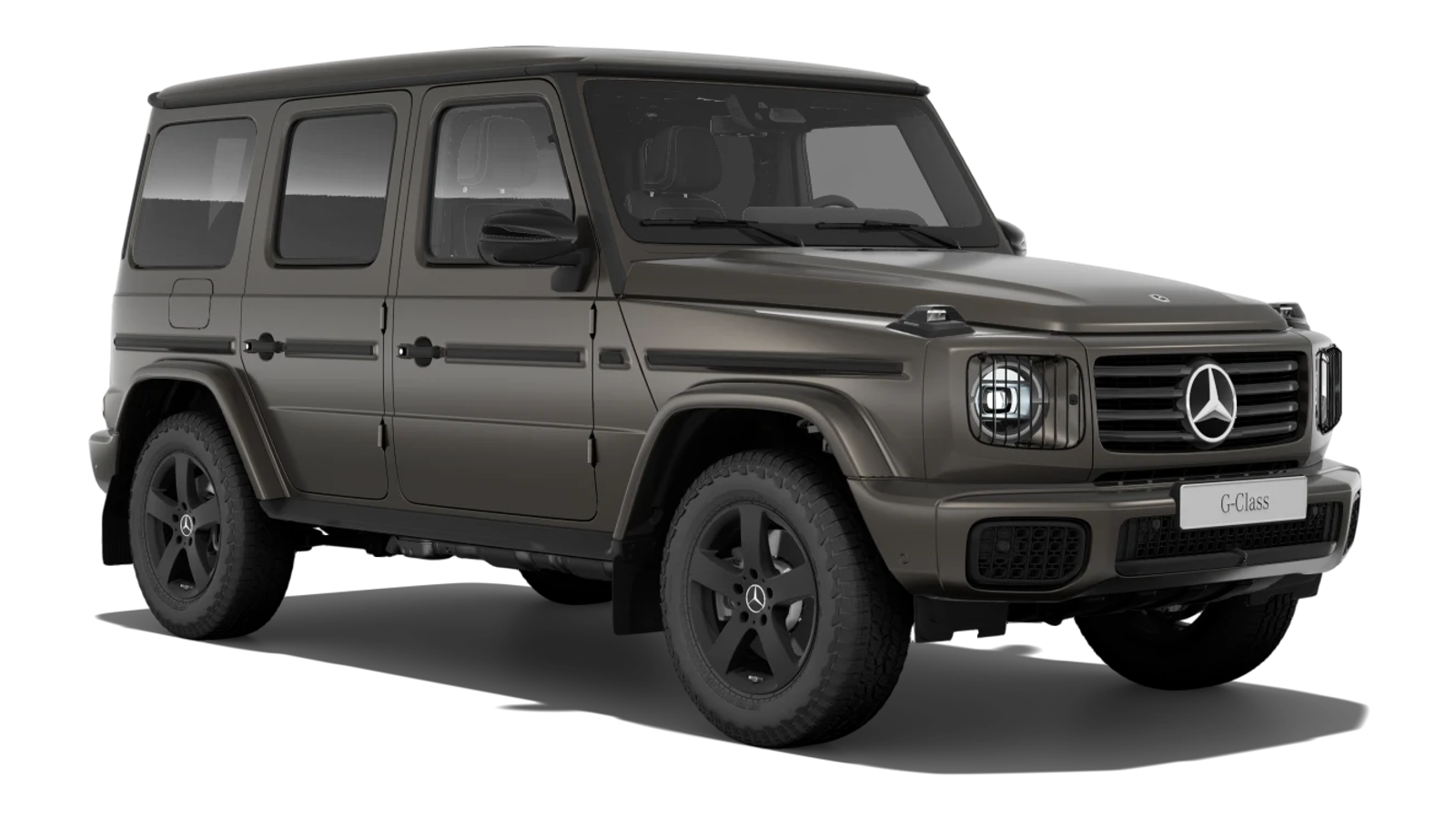
Worked Example: Importing a 2026 Mercedes-Benz G-Class to Switzerland
Here is the full landed cost of one car, a 2026 Mercedes-Benz G-Class shipped from Germany to Switzerland, worked out on 9 November 2026 with the customs rules in force that day. It lands at 153,422 CHF (about US$187,168), and duties and taxes come to 24.2% of its CIF value.
| Item | Share of CIF | Amount |
|---|---|---|
| Vehicle priceIPAS price for a car sourced in Germany | 115,004 CHFUS$140,300 | |
| Shipping and insuranceGermany to Switzerland | 3,855 CHFUS$4,703 | |
| CIF valueCost, insurance and freight: the customs value | 118,859 CHFUS$145,003 | |
| Customs duties and taxes | ||
| Basic customs duty (0%)0% of CIF | 0 CHFUS$0 | |
| Ad valorem excise (4%)4% of CIF | 4,754 CHFUS$5,800 | |
| CO₂ emissions levyest. 228 g/km11.8% of CIF | 14,054 CHFUS$17,145 | |
| GST/VAT (8.1%)8.4% of CIF | 10,013 CHFUS$12,215 | |
| Total duties and taxes24.2% of CIF | 28,821 CHFUS$35,160 | |
| Service and handling | ||
| Premium Import ServiceOptional end-to-end import management by IPAS | 4,357 CHFUS$5,315 | |
| Destination handlingPort terminal and customs clearance handling | 1,385 CHFUS$1,690 | |
| Total landed cost | 153,422 CHFUS$187,168 | |
The CO2 Sanction — Where a Swiss Import Actually Varies
The CO2 sanction is the largest financial risk on a new combustion vehicle and the most misunderstood line in Swiss import costing.
What it is not
It is not a border charge. It is assessed and paid before first registration, separately from customs clearance, by the Federal Office of Energy rather than by customs. It is not in the VAT base. Treat it as a registration-stage estimate, never as a duty.
Who is assessed how
- Large importers bringing 50 or more vehicles a year and registered with the SFOE are assessed on a fleet average, so their EVs offset their combustion cars.
- Small importers — under 50 vehicles a year, which includes every private importer — are assessed per individual vehicle, with no fleet offset.
The used-vehicle exemption — the exploitable window
The sanction applies only to a vehicle "first placed on the market" in Switzerland. A vehicle is exempt, treated as used, if either:
- it was first registered abroad more than 12 months before the Swiss customs declaration; or
- it was first registered abroad more than 6 months before declaration and has covered more than 5,000 km.
That second condition is the young-used sweet spot. A near-new, high-emission car imported just past six months and 5,000 km pays zero CO2 sanction while still being essentially new. For a large-engined petrol vehicle this is worth far more than any tax planning at the border.
How the penalty is calculated on a new vehicle
Each vehicle has an individual, weight-adjusted CO2 target:
Individual target = 93.6 + slope × (unladen mass − 1,727 kg)
The base target is 93.6 g CO2/km on the WLTP cycle for 2025 and 2026, stepped down from 118 g/km. The reference mass is 1,727 kg for passenger cars. Light commercial vehicles use a separate base target of 153.9 g/km.
The penalty is then a flat rate per excess gram:
CO2 sanction = (WLTP CO2 − individual target) × rate per gram
The per-gram rate is set annually by the Federal Council within a band of roughly CHF 95 to 152, linked to the euro exchange rate against the EU's €95 per gram. It was reduced to around CHF 95 in 2024. Because both the slope and the annual rate are set by ordinance rather than published on a summary page, use the official BFE penalty calculator for a binding figure — any estimate should be labelled as such.
Note that the old tiered scheme — CHF 7.50, 22.50, 37.50 and 142.50 per gram in ascending bands — ended in 2019, and the "CHF 95/119/143/152 from 108 g/km" tier that still circulates is outdated.
Battery EVs and mitigation
A battery EV at 0 g/km, or any vehicle at or below its individual target, pays CHF 0.
A small importer facing a sanction can also mitigate it through assignment (Abtretung) to a large importer or a CO2 exchange, typically paying a market fee of around 40% to 60% of the state sanction. This is a genuine and commonly used route for a one-off high-emission import.
The Relocation Exemption
Someone genuinely transferring domicile to Switzerland can import a vehicle free of Automobile Tax, VAT and the CO2 sanction, subject to:
- at least 12 months' prior residence abroad
- at least 6 months' prior ownership of the vehicle
- a genuine transfer of domicile
- a 12-month restriction on resale
For a relocating buyer this removes the entire cost stack, which makes it worth structuring a move around if the timing is flexible.
Documents Required for Import
- Commercial invoice showing the purchase price, with any foreign VAT separately stated
- Bill of Lading, CMR or transport documentation
- Packing list with make, model, year, VIN, engine capacity, unladen weight and WLTP CO2
- Certificate of Title or equivalent ownership document
- Export certificate or deregistration document from the origin country
- Certificate of Conformity (CoC) for EU-specification vehicles
- Technical data sheet (Fahrzeugdatenblatt) for non-EU-specification vehicles
- Evidence of first registration abroad and mileage — establishes the CO2 used-vehicle exemption
- Swiss customs declaration
- Proof of residence in Switzerland, or relocation documentation if claiming the household-goods exemption
Customs Clearance Timeline
| Stage | Typical duration | Notes |
|---|---|---|
| Border clearance | 1–2 days | Automobile Tax and VAT assessed and paid |
| CO2 sanction assessment (new vehicles) | 1–2 weeks | BFE / SFOE, before registration |
| Technical data sheet (non-EU vehicles) | 2–6 weeks | Plus time for any modification work |
| MFK technical inspection | 1–2 weeks | Simplified for EU vehicles with a CoC |
| Cantonal registration | Days | |
| Typical total, EU-specification | 2–4 weeks | |
| Typical total, non-EU specification | 6–12 weeks | Homologation dominates |
Swiss border clearance is fast — the calculation is trivial given the invariant rate. The timeline is driven by homologation for non-European vehicles and by CO2 assessment for new ones.
Homologation and Registration
EU-specification vehicles with a Certificate of Conformity go through a simplified MFK inspection and register straightforwardly.
Non-EU-specification vehicles — American, Japanese-domestic, Gulf-market — need a technical data sheet issued by a recognised centre, plus physical modifications. Lighting is the usual culprit: headlight beam pattern, side markers, rear fog lamps. Noise compliance can also require work. Budget CHF 3,000 to 10,000 and several weeks.
Registration itself is cantonal, so the office you deal with and some administrative details depend on where you live. You will also need the motorway vignette.
Recent Regulatory Changes (2024–2026)
- 1 January 2024 — industrial tariffs abolished. Customs duty on all HS Chapters 25–97 went to zero, taking motor vehicle duty from the old weight-based specific rate to CHF 0 for every origin. This is the single largest change and it makes all pre-2024 duty guidance obsolete.
- 1 January 2024 — VAT raised to 8.1% from 7.7%, to fund the OASI pension.
- 1 January 2024 — EV Automobile Tax exemption revoked. Battery-electric vehicles had been exempt from the 4% since 1997; they now pay it like any combustion car.
- 2024 — CO2 per-gram rate reduced to around CHF 95 from CHF 101.
- 2025 — CO2 base target stepped down to 93.6 g/km from 118 g/km, unchanged for 2026. The reference mass moved to 1,727 kg from 1,693 kg in 2024.
Frequently Asked Questions
How much does it cost to import a car into Switzerland?
At the border, a flat 12.424% of CIF — 4% Automobile Tax plus 8.1% VAT charged on the tax-inclusive value. Customs duty has been zero since January 2024. That rate is invariant: origin, fuel type, engine size and value make no difference. A car with a CIF of CHF 50,000 pays CHF 6,212. What varies is the CO2 sanction on a new combustion vehicle, and homologation cost if the car is not EU-specification.
Is there really no import duty on cars in Switzerland?
Correct. Switzerland unilaterally abolished customs duties on all industrial goods on 1 January 2024, which covers cars, pickups and motorcycles. The historic weight-based duty of roughly CHF 12–15 per 100 kg no longer applies to any vehicle from any country. A consequence is that trade agreements and EUR.1 certificates are now irrelevant to a Swiss import — MFN is already zero, so there is nothing for a preference to reduce.
Do European cars avoid the 4% Automobile Tax?
No, and this is the most common error in circulating guidance. The Automobile Tax is a federal excise, not a tariff, so an EUR.1 origin certificate does not waive it. German, French and Italian cars pay the 4% exactly like Japanese or American ones. The only genuine exemption is for goods vehicles under HS 8704 with an unladen weight above 1,600 kg.
Are electric vehicles exempt from the Automobile Tax?
Not any more. Battery EVs were exempt from 1997, but the exemption was revoked on 1 January 2024 and they now pay the 4% like any combustion vehicle. Where EVs do still win is the CO2 sanction — at 0 g/km they attract no penalty at all, which on a comparable high-emission new car can be thousands of francs.
What is the CO2 sanction and will I have to pay it?
It is a per-gram penalty on emissions above an individual, weight-adjusted target, administered by the Federal Office of Energy and paid before first registration — not at the border, and not in the VAT base. Whether you pay it depends almost entirely on whether the vehicle counts as new. It applies only to a vehicle first placed on the market in Switzerland, and a car is exempt if it was first registered abroad more than 12 months ago, or more than 6 months ago with over 5,000 km. Battery EVs pay nothing.
How can I legally avoid the CO2 sanction on a high-emission car?
Use the used-vehicle threshold. A vehicle first registered abroad more than six months before your Swiss declaration, with more than 5,000 km on it, is exempt — while still being essentially new. For a large-engined petrol or diesel car this is worth considerably more than anything you can do at the border. Failing that, a small importer can assign the sanction to a large importer or CO2 exchange, typically for 40–60% of the state figure.
Can I import a right-hand-drive car into Switzerland?
Yes. Both left- and right-hand-drive vehicles are admissible and no conversion is required, despite Switzerland driving on the right. A UK or Japanese right-hand-drive car can be imported without the conversion cost that applies in many other right-side-driving markets.
Is there an age limit, and do classic cars get a discount?
There is no maximum import age — Switzerland is among the most flexible markets in the world for older vehicles. But a classic gets no tax relief at the border: vehicles over 30 years old registered under the veteran code are exempt from the CO2 sanction by age, yet still pay the full 4% Automobile Tax and 8.1% VAT. Switzerland has no reduced collector-car VAT rate, unlike Germany at 7% or France at 5.5%.
What extra does an American-specification car cost?
Not at the border — the 12.424% is identical. The difference is homologation. Without a Certificate of Conformity, a US-specification vehicle needs a technical data sheet from a recognised centre plus physical modifications, usually to lighting and sometimes noise. Budget CHF 3,000 to 10,000 and several additional weeks. On a moderately priced car that can exceed the entire border tax.
Ready to Import?
Switzerland is unusual in that the border tax is genuinely fixed and genuinely low — 12.424%, the same for everyone — so there is nothing to optimise there. No origin certificate helps, no trade agreement applies, and no powertrain is favoured.
The money moves in two other places. The CO2 sanction on a new combustion vehicle can run to thousands of francs, and the six-month, 5,000-kilometre used threshold removes it entirely — which makes a lightly-used car dramatically cheaper than an identical new one. Homologation on a non-European-specification car costs CHF 3,000 to 10,000 and adds weeks, so an EU-specification vehicle with a Certificate of Conformity is a materially easier import than an American one.
Get those two right and the rest is simple. And if you are relocating to Switzerland, check the household-goods exemption before anything else — it removes the whole stack.
IPAS provides two tools to plan and execute your import:
CarImport.AI — Source a vehicle through IPAS and calculate the full landed cost to Switzerland, including the 4% Automobile Tax and 8.1% VAT, with the CO2 sanction position flagged separately.
IPAS EXPRESS — Already have a vehicle? Get instant shipping quotes into Switzerland — sea freight to a northern European port plus inland transport, or air — with transparent, itemised pricing and a stage-by-stage timeline.
Ready to Import Your Vehicle?
Two tools, two use cases. Pick the one that fits your needs.
Source a vehicle through IPAS and calculate the full landed cost — customs duties, shipping, and compliance — to destinations across the world.
Calculate Landed CostIPAS Express
Already have a vehicle? Get instant shipping quotes — sea freight, air freight, or RoRo — for one car or multiple vehicles worldwide.
Get Shipping Quote