
Introduction
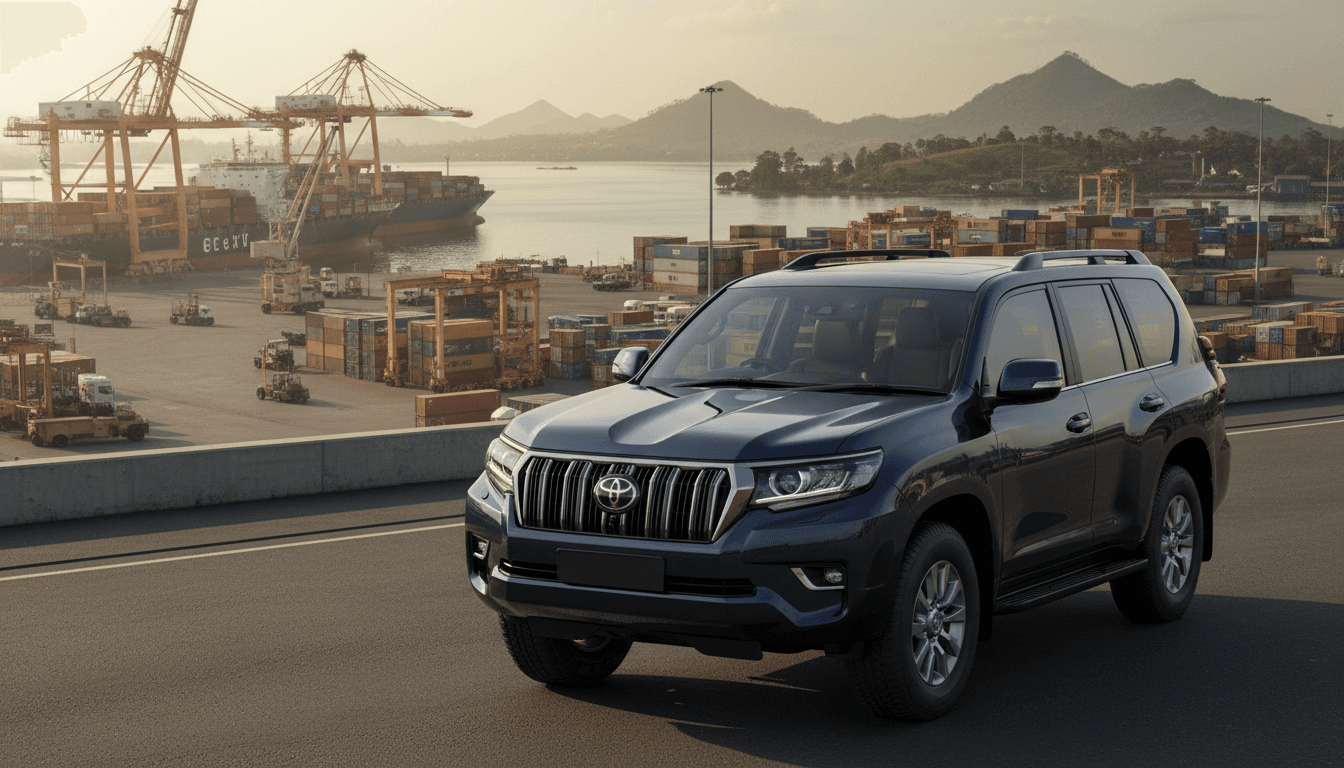
Taiwan operates one of the heaviest and most intricate vehicle import regimes in the world. The headline tariff of 17.5% is only the first of five cascading levies, each stacking on the running total of the ones before it. By the time you reach the bottom of the tower, an ordinary petrol car has paid roughly 54% of its customs value in tax, a larger-engined one about 60%, and a luxury vehicle above the NT$3,000,000 threshold around 76%.
Electric vehicles are the striking exception. Taiwan does not use the tariff to encourage EVs — battery-electric cars pay the same 17.5% duty as everything else. Instead, the concession sits in the Commodity Tax, and it is generous: the first NT$1,400,000 of value is entirely exempt, with anything above taxed at half rate. A modestly priced battery EV can land at around 23% — less than half what its petrol equivalent pays.
Before any of that arithmetic matters, two hard gates decide whether the import is possible at all. Taiwan registers left-hand-drive vehicles only, with no conversion pathway. And it bans CBU vehicles of Mainland Chinese origin — assessed by country of manufacture, not by brand, which means a Shanghai-built Tesla is inadmissible while the same model built in Berlin or Fremont is fine.
A third obstacle is not a gate but often behaves like one: ARTC homologation. Every individually imported vehicle that has not been type-approved by the manufacturer's local agent must pass safety, emissions, noise and energy-efficiency testing, costing NT$80,000 to NT$400,000 and taking two to four months. On a rare or older car that cost can exceed the vehicle's value, and it is the dominant non-tariff barrier to importing into Taiwan.
Quick Facts
| Detail | Information |
|---|---|
| Customs Authority | Customs Administration (關務署), Ministry of Finance |
| Trade Authority | International Trade Administration (TITA), MOEA |
| Homologation | ARTC / VSCC, under MOTC and the Environmental Protection Administration |
| Traffic Side | Right-hand traffic (drive on the right) |
| Steering Requirement | LHD only — RHD prohibited, no conversion pathway |
| Import Duty | 17.5% MFN on duty-paying value — uniform across all fuel types |
| Commodity Tax | 25% (≤2,000cc) / 30% (>2,000cc) / 15% (trucks), on (DPV + duty) |
| Business Tax (VAT) | 5% on (DPV + duty + Commodity Tax) |
| Trade Promotion Service Fee | 0.04% of DPV — parallel, not cascading |
| Luxury Tax (SGSST) | 10%, only if (DPV + duty + Commodity Tax) ≥ NT$3,000,000 |
| Total — economy petrol car | ≈ 54% of DPV |
| Total — over 2,000cc | ≈ 60% of DPV |
| Total — luxury above threshold | ≈ 76% of DPV |
| Total — battery EV under the cap | ≈ 23% of DPV |
| EV concession | Commodity Tax: first NT$1,400,000 exempt, remainder at half rate. Extended to 31 December 2030 |
| Hybrids and PHEVs | No concession — full 25%/30% by displacement |
| China-origin CBU | Banned by country of manufacture (code MW0) |
| Vehicle Age Limit | No verified blanket limit — ARTC homologation is the practical constraint |
| Used-vehicle valuation | Personal-import depreciation schedule, up to 65% off |
| Import permit | Required where FOB exceeds USD 20,000 |
| ARTC homologation cost | NT$80,000–400,000, taking 2–4 months |
| Main Seaports | Kaohsiung, Keelung, Taichung, Taipei Port |
| Currency | New Taiwan Dollar (TWD, NT$) |
Types of Cars That Can Be Imported
Steering — left-hand drive only
Taiwan registers left-hand-drive vehicles only. Right-hand-drive cars — Japanese domestic, UK, Australian, Hong Kong — cannot be registered for road use, and there is no conversion pathway. A narrow exhibition-only exception exists but does not permit ordinary use. This is a hard rejection, so verify the steering configuration before you do anything else.
Mainland Chinese origin is banned
CBU vehicles manufactured in Mainland China are prohibited from import under trade regulation code MW0. This is assessed by country of manufacture, not by brand, which produces some counterintuitive results:
- A Tesla built at the Shanghai plant is inadmissible. The identical model built in Berlin or Fremont is fine.
- Chinese-built Volvo and Polestar vehicles are inadmissible; the same models built in Europe are not.
- Chinese-brand vehicles assembled in Thailand or Vietnam — BYD, MG, Chery — face substantial-transformation scrutiny and carry a high rejection risk.
Because the ban keys off the plant rather than the badge, verify the manufacturing location from the VIN before purchase. This is the single most expensive mistake available in a Taiwanese import, since a vehicle rejected on origin cannot be remedied.
Age — no blanket limit, but ARTC decides
Contrary to a widely repeated claim that Taiwan permits only vehicles between one and ten years old, there is no verified blanket age band. New CBU imports are allowed, and used imports are allowed subject to homologation and depreciation-based valuation.
The practical constraint is ARTC. An older vehicle must still meet current Stage 6 emissions standards, which becomes progressively harder and eventually impossible as the car ages. The barrier is technical, not a date on a calendar.
Fuel type
All fuel types are admissible. The duty is identical across them; the differentiation happens in the Commodity Tax, where only pure battery-electric vehicles receive a concession.
Cars You Can Import to Taiwan
Each card is a full landed-cost calculation: the car's price, shipping, every duty and tax, and handling, worked out on 9 November 2026 with the rules in force that day. All are left-hand drive to suit Taiwan's roads. Tap a car to see its full breakdown, or open it to change the trim, colour or port.
More cars you can import to Taiwan
New cars IPAS sources to order that meet Taiwan's import rules. Prices are ex works, before shipping and duty. Open a car to work out its full landed cost.
 LHDBackorder2026
Toyota C-HR
SUV · 2 VariantsElectricFrom $44,400Ex Works, USA LHDBackorder2026
Toyota Land Cruiser
SUV · 2 VariantsHybridFrom $69,100Ex Works, USA LHDBackorder2026
Toyota Sequoia
SUV · 8 VariantsHybridFrom $77,800Ex Works, USA LHD/C-RHDBackorder2026
Cadillac Escalade
SUV · 11 VariantsPetrolFrom $109,300Ex Works, USA LHD/C-RHDBackorder2026
Cadillac Escalade ESV
SUV · 11 VariantsPetrolFrom $112,900Ex Works, USA LHDBackorder2026
Denza B8
SUV · 3 VariantsPlug-in HybridFrom $66,600Ex Works, China🇨🇳 LHDBackorder2026
Denza B5
SUV · 2 VariantsPlug-in HybridFrom $41,200Ex Works, China🇨🇳 LHDBackorder2026
Zeekr 9X
SUV · 4 VariantsPlug-in HybridFrom $74,900Ex Works, China🇨🇳 LHDBackorder2025
Chevrolet Corvette E-Ray Convertible
Convertible · 3 VariantsHybridFrom $137,500Ex Works, USA LHD/C-RHDBackorder2026
Chevrolet Silverado 3500 HD DRW
Pickup · 8 VariantsPetrol · DieselFrom $65,800Ex Works, USA LHDBackorder2026
Jeep Wrangler
SUV · 11 VariantsPetrolFrom $43,200Ex Works, USA LHD/C-RHDBackorder2025
GMC Yukon
SUV · 5 VariantsPetrolFrom $81,500Ex Works, USA LHD/C-RHDBackorder2025
Ford Bronco
SUV · 3 VariantsPetrolFrom $62,500Ex Works, USA LHD/C-RHDBackorder2026
Ford Super Duty F-350
Pickup · 5 VariantsPetrolFrom $56,400Ex Works, USA LHDBackorder2026
Mercedes-Benz AMG E-Class
Sedan · 1 VariantPlug-in HybridFrom $97,000Ex Works, Canada LHDBackorder2026
Lexus RZ
SUV · 5 VariantsElectricFrom $52,600Ex Works, Canada
Seaports Supporting Vehicle Import
| Port | Location | Role |
|---|---|---|
| Port of Kaohsiung | Southern Taiwan | The island's largest port and principal container gateway |
| Port of Keelung | Northern Taiwan | Serves the Taipei metropolitan area |
| Taipei Port | Bali, New Taipei | Modern deepwater facility; growing vehicle handling |
| Port of Taichung | Central Taiwan | Serves the central industrial region |
Kaohsiung and Keelung handle most vehicle volume. Taipei Port has increasingly taken on vehicle traffic for the northern population centre.
Restrictions on Vehicle Import for Individuals
- RHD vehicles are prohibited with no conversion route.
- Mainland-China-manufactured CBU vehicles are banned.
- ARTC homologation is required for any vehicle not already type-approved by the manufacturer's Taiwanese agent.
- A TITA import permit is required where the FOB value exceeds USD 20,000 — which covers most vehicles of interest.
- Personal-import depreciation requires genuine prior ownership. To access the depreciation schedule, the vehicle must have been owned and registered abroad by the importer for at least six months before the Taiwanese declaration.
Duty Structure Overview
Taiwan's cascade has five levies, applied in this order:
- Import Duty = DPV × 17.5%
- Commodity Tax = (DPV + duty) × 25% / 30% / 15%
- Business Tax (VAT) = (DPV + duty + Commodity Tax) × 5%
- Trade Promotion Service Fee = DPV × 0.04% (parallel — based on DPV alone)
- Luxury Tax (SGSST) = 10%, only if (DPV + duty + Commodity Tax) ≥ NT$3,000,000
Duty-Paying Value
DPV is the CIF value — FOB plus freight and insurance — converted to New Taiwan Dollars at the Customs published ten-day-period exchange rate. For used cars, Customs may assess DPV using the personal-import depreciation schedule or published value guides, and takes the higher of the declared and assessed values.
Import Duty — 17.5%, and uniform
The rate is 17.5% across every HS 8703 subheading — petrol, diesel, hybrid, plug-in hybrid and battery-electric alike — and across HS 8704 light commercial vehicles up to 5 tonnes. Taiwan deliberately does not use the tariff to incentivise electrification; that work is done entirely in the Commodity Tax.
Commodity Tax — the largest single component
| Vehicle | Rate |
|---|---|
| Passenger car up to 2,000cc | 25% |
| Passenger car over 2,000cc | 30% |
| Truck / goods vehicle (HS 8704) | 15% |
The base is DPV plus import duty. On a large-engined car this single levy exceeds the tariff by a factor of two.
Luxury Tax — conditional, and still in force
The Specifically Selected Goods and Services Tax applies at 10% where the running total of DPV, duty and Commodity Tax reaches NT$3,000,000. When triggered, it is charged on DPV plus duty plus Commodity Tax plus Business Tax.
It is worth being explicit that this tax is still operative for vehicles. The real-property portion of the SGSST Act was superseded by the consolidated housing and land tax in 2016, which has led some sources to treat the whole Act as repealed. The goods portion — covering passenger cars, yachts and aircraft at or above NT$3,000,000 — remains in force and is a frequently omitted line.
Worked example 1 — Petrol hatchback, 1,600cc, DPV NT$1,000,000
| Charge | Calculation | Amount (NT$) |
|---|---|---|
| Duty-paying value | — | 1,000,000 |
| Import duty (17.5%) | 1,000,000 × 0.175 | 175,000 |
| Commodity Tax (25%) | (1,000,000 + 175,000) × 0.25 | 293,750 |
| Business Tax (5%) | (1,000,000 + 175,000 + 293,750) × 0.05 | 73,438 |
| Trade Promotion Fee (0.04%) | 1,000,000 × 0.0004 | 400 |
| Luxury Tax | subtotal below NT$3,000,000 | 0 |
| Total taxes | 542,588 (54.3% of DPV) | |
| Landed cost | 1,542,588 |
Worked example 2 — Petrol SUV, 3,000cc, DPV NT$2,000,000
| Charge | Calculation | Amount (NT$) |
|---|---|---|
| Import duty (17.5%) | 2,000,000 × 0.175 | 350,000 |
| Commodity Tax (30%) | (2,000,000 + 350,000) × 0.30 | 705,000 |
| Business Tax (5%) | 3,055,000 × 0.05 | 152,750 |
| Trade Promotion Fee | 2,000,000 × 0.0004 | 800 |
| Luxury Tax | subtotal NT$3,055,000 ≥ threshold → 10% of NT$3,207,750 | 320,775 |
| Total taxes | 1,529,325 (76.5% of DPV) | |
| Landed cost | 3,529,325 |
Note how the luxury threshold works. The car's DPV is NT$2,000,000, well under NT$3,000,000 — but the threshold tests the running subtotal after duty and Commodity Tax, which reaches NT$3,055,000. The Luxury Tax then adds a further NT$320,775. This is why the SGSST catches many more vehicles than a NT$3,000,000 sticker price would suggest.
Worked example 3 — Battery EV, DPV NT$1,000,000
| Charge | Calculation | Amount (NT$) |
|---|---|---|
| Import duty (17.5%) | 1,000,000 × 0.175 | 175,000 |
| Commodity Tax | (DPV + duty) = NT$1,175,000, below the NT$1,400,000 cap → exempt | 0 |
| Business Tax (5%) | (1,000,000 + 175,000) × 0.05 | 58,750 |
| Trade Promotion Fee | 400 | |
| Total taxes | 234,150 (23.4% of DPV) | |
| Landed cost | 1,234,150 |
The identical vehicle with a petrol engine would pay NT$542,588. The EV concession is worth over NT$300,000 here, and it comes entirely from the Commodity Tax exemption.
These figures show the structure. Taiwan's tower is unusually sensitive to engine displacement and to the NT$3M threshold — get the exact figure for your specific vehicle using CarImport.AI.

Calculate your exact import duty to Taiwan
Get a vehicle-specific duty and full landed-cost breakdown — HS classification, every tax, levy and FTA, plus shipping — calculated for your exact make, model and specs.
- Vehicle-specific HS code
- All duties, taxes & FTAs
- Shipping + est. landed cost
Effective rate summary
| Vehicle | Approximate total on DPV |
|---|---|
| Battery EV under the Commodity Tax cap | ≈ 23% |
| Petrol or diesel up to 2,000cc | ≈ 54% |
| Petrol or diesel over 2,000cc | ≈ 60% |
| Anything crossing the NT$3M luxury threshold | ≈ 76% |
| Goods vehicle (HS 8704, 15% Commodity Tax) | ≈ 41% |
Free trade agreements — effectively a non-lever
Taiwan's in-force agreements cover New Zealand (ANZTEC), Singapore (ASTEP), Panama, Guatemala, Honduras and Eswatini. Some HS 8703 lines reach 0% for originating goods — but none of those countries manufactures CBU passenger cars, so a real vehicle cannot satisfy the rules of origin and falls back to 17.5% MFN.
Transshipment through Singapore, a free port, confers no origin.
Taiwan has no agreement with Japan, Germany, the United States or South Korea — which covers essentially all realistic sourcing. Assume 17.5%.
One development to watch: the US–Taiwan Agreement on Reciprocal Trade, signed in February 2026, would eliminate or reduce roughly 99% of tariffs including on vehicles. It is not yet in force, pending ratification by the Legislative Yuan and amendment of the tariff schedule. Until it is promulgated, US-origin cars remain at 17.5%.
Worked Example: Importing a 2025 Ford Mustang Fastback to Taiwan
Here is the full landed cost of one car, a 2025 Ford Mustang Fastback shipped from the USA to Taiwan, worked out on 9 November 2026 with the customs rules in force that day. It lands at 3,674,689 TWD (about US$111,862), and duties and taxes come to 76.5% of its CIF value.
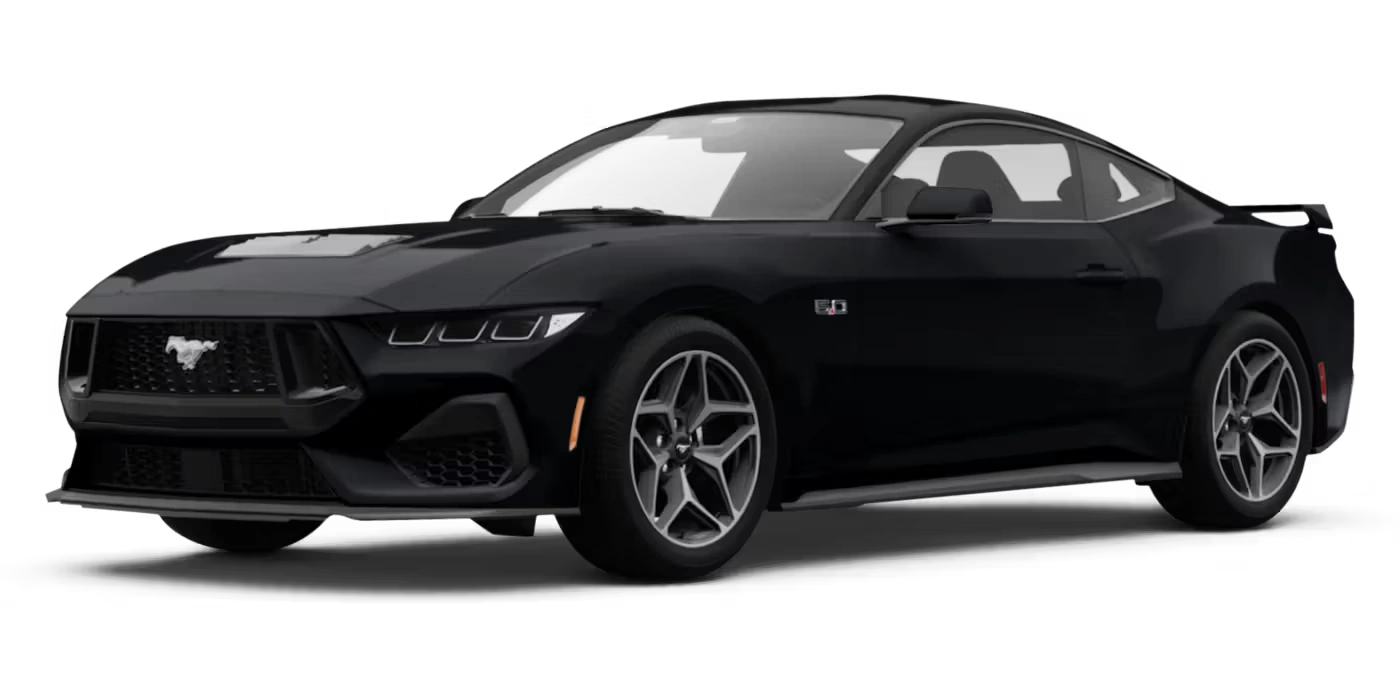
| Item | Share of CIF | Amount |
|---|---|---|
| Vehicle priceIPAS price for a car sourced in the USA | 1,836,326 TWDUS$55,900 | |
| Shipping and insuranceUSA to Taiwan | 154,199 TWDUS$4,694 | |
| CIF valueCost, insurance and freight: the customs value | 1,990,525 TWDUS$60,594 | |
| Customs duties and taxes | ||
| Basic customs duty (17.5%)17.5% of CIF | 348,344 TWDUS$10,604 | |
| Additional duty (30%)Base or related charges differ from CIF; see the duty structure above51.3% of CIF | 1,021,707 TWDUS$31,102 | |
| GST/VAT (5%)Base or related charges differ from CIF; see the duty structure above7.6% of CIF | 152,031 TWDUS$4,628 | |
| Total duties and taxes76.5% of CIF | 1,522,081 TWDUS$46,334 | |
| Service and handling | ||
| Premium Import ServiceOptional end-to-end import management by IPAS | 103,610 TWDUS$3,154 | |
| Destination handlingPort terminal and customs clearance handling | 58,473 TWDUS$1,780 | |
| Total landed cost | 3,674,689 TWDUS$111,862 | |
Used Vehicles and the Depreciation Schedule
For genuine personal imports — where the vehicle has been owned and registered abroad by the importer for at least six months before the Taiwanese declaration — Customs applies a depreciation schedule to the FOB value:
| Age (import year minus model year) | Depreciation | Residual |
|---|---|---|
| Same year | 10% | 90% |
| 1 year | 20% | 80% |
| 2 years | 35% | 65% |
| 3 years | 50% | 50% |
| 4 years | 60% | 40% |
| 5 years | 65% | 35% |
| Over 5 years | By assessment | around 35% minimum |
This matters enormously, because DPV sits at the base of the whole tower. Halving the DPV halves the duty, the Commodity Tax and the Business Tax together — and frequently drops the running subtotal below the NT$3,000,000 luxury threshold, removing a further 10% levy entirely.
The three-year point, at 50% depreciation, is the practical sweet spot: enough write-down to transform the tax bill, while the vehicle is still new enough to clear ARTC emissions testing without difficulty.
Note that commercial imports do not get this schedule — their transaction price is scrutinised against market value guides instead.
Electric and Hybrid Vehicles
The concession is in the Commodity Tax, not the tariff
Battery-electric vehicles pay the same 17.5% import duty as everything else. The benefit comes from Article 12-3 of the Commodity Tax Act, extended to 31 December 2030:
- The portion of (DPV + duty) up to NT$1,400,000 is entirely exempt from Commodity Tax.
- The portion above NT$1,400,000 is taxed at half the statutory rate — 12.5% for a passenger car, or 7.5% for a truck.
For a moderately priced EV this eliminates the largest component of the tower outright. For an expensive one it halves the rate on the excess, which is still substantial.
Hybrids and plug-in hybrids get nothing
Only pure battery-electric vehicles — and qualifying fuel-cell vehicles — fall under Article 12-3. Conventional hybrids and plug-in hybrids receive no concession at all and pay the full 25% or 30% Commodity Tax according to engine displacement, exactly like a petrol car.
This is a common and expensive misunderstanding. A plug-in hybrid with a 2,500cc engine pays 30% Commodity Tax and is treated identically to a petrol SUV.
No Business Tax relief
The 5% Business Tax applies to electric vehicles as to everything else. Only the Commodity Tax is concessioned.
Documents Required for Import
- Commercial invoice showing FOB and CIF values
- Bill of Lading (original or telex release)
- Packing list with make, model, year, VIN, engine displacement and colour
- Certificate of Title or equivalent ownership document
- Previous-country registration certificate — and, for a personal import claiming depreciation, evidence of at least six months' registered ownership abroad
- VIN-based evidence of the manufacturing plant — necessary to demonstrate the vehicle is not of Mainland Chinese origin
- TITA import permit where FOB exceeds USD 20,000
- Customs import declaration
- ARTC / VSCC homologation application and technical documentation
- Emissions and noise compliance documentation
- Taiwanese identity or business documentation
Customs Clearance Timeline
| Stage | Typical duration | Notes |
|---|---|---|
| TITA import permit | 1–2 weeks | Obtain before shipping where FOB exceeds USD 20,000 |
| Vessel arrival to discharge | 1–3 days | Kaohsiung or Keelung |
| Customs declaration and valuation | 3–7 working days | Five-levy cascade; DPV may be reassessed |
| Duty and tax payment, release | 1–2 days | |
| ARTC / VSCC homologation | 2–4 months | The dominant variable by a wide margin |
| Registration and plates | 3–7 days | After homologation passes |
| Typical total | 3–5 months |
Almost all of the elapsed time is homologation. The customs steps, though fiscally complex, move quickly.
Homologation and Vehicle Approval
ARTC homologation is Taiwan's most significant non-tariff barrier. Every individually imported vehicle that has not already been type-approved by the manufacturer's Taiwanese agent must be tested individually at ARTC or VSCC for:
- Safety compliance
- Emissions — Stage 6, equivalent to Euro 6
- Noise limits
- Energy efficiency
The cost runs NT$80,000 to NT$400,000 and the process takes two to four months. For a rare, old or low-value vehicle, homologation can cost more than the car — which is why it functions as a de facto barrier even in the absence of a formal age limit.
Two practical implications. First, budget homologation as a first-class line item, not an afterthought — on a NT$1,000,000 car it can add 8% to 40% of the vehicle's value. Second, favour vehicles that already hold European or American type approval and current emissions certification, as they move through testing faster and with fewer modifications.
Registration and Ongoing Costs
Taiwan collects all five levies at import in a single stage — there is no separate registration-stage tax of the kind Israel or Korea impose. What sits outside the import cascade is:
- ARTC homologation costs, described above
- Annual Vehicle License Tax, banded by engine displacement
- Fuel tax and compulsory insurance
- Standard registration and plate fees
The annual License Tax is displacement-banded, which compounds the Commodity Tax logic: a large-engined car pays more at import and more every year thereafter.
Recent Regulatory Changes (2024–2026)
- Commodity Tax EV concession extended to 31 December 2030. The Article 12-3 exemption on the first NT$1,400,000 and half rate above it now runs to the end of the decade, giving unusual planning certainty.
- SGSST vehicle clause remains in force. Despite the 2016 replacement of the Act's real-property provisions by the consolidated housing and land tax, the goods portion covering vehicles at or above NT$3,000,000 continues to operate. Treat any source describing it as repealed with caution.
- February 2026 — US–Taiwan Agreement on Reciprocal Trade signed. It would eliminate or reduce roughly 99% of tariffs including on automobiles, but it is not yet in force pending Legislative Yuan ratification and amendment of the tariff schedule. US-origin vehicles remain at 17.5% MFN until it is promulgated.
Frequently Asked Questions
How much does it cost to import a car to Taiwan?
Substantially more than the 17.5% tariff suggests, because four further levies stack on top. An economy petrol car pays about 54% of its customs value in total tax, a car over 2,000cc about 60%, and anything crossing the NT$3,000,000 luxury threshold about 76%. A battery EV under the Commodity Tax cap pays roughly 23%. On top of tax, budget NT$80,000–400,000 for ARTC homologation.
Can I import a right-hand-drive car to Taiwan?
No. Taiwan registers left-hand-drive vehicles only, and there is no conversion pathway. Japanese-domestic, UK, Australian and Hong Kong right-hand-drive vehicles cannot be registered for road use. A narrow exhibition-only exception exists but does not allow ordinary use.
Why can't I import a Chinese-built Tesla?
Taiwan bans CBU vehicles of Mainland Chinese origin, assessed by country of manufacture rather than by brand. A Tesla built at the Shanghai plant is inadmissible; the identical model built in Berlin or Fremont is perfectly acceptable. The same logic applies to Chinese-built Volvo and Polestar vehicles. Because the ban keys off the plant, always verify the manufacturing location from the VIN before purchase — a vehicle rejected on origin grounds cannot be remedied.
Do hybrids get the electric vehicle tax break?
No. Only pure battery-electric vehicles, and qualifying fuel-cell vehicles, fall under the Commodity Tax concession. Conventional hybrids and plug-in hybrids receive nothing and pay the full 25% or 30% Commodity Tax by engine displacement, exactly like a petrol car. A 2,500cc plug-in hybrid is taxed as a 2,500cc petrol SUV.
How does the electric vehicle concession work?
Through the Commodity Tax rather than the tariff. The first NT$1,400,000 of (customs value plus duty) is entirely exempt, and anything above that is taxed at half the statutory rate — 12.5% instead of 25% or 30%. The concession runs to 31 December 2030. Battery EVs still pay the full 17.5% import duty and the full 5% Business Tax; only the Commodity Tax is relieved.
Is there an age limit for importing a used car to Taiwan?
There is no verified blanket age band, despite a widely repeated claim of a one-to-ten-year window. New imports are permitted and used imports are permitted subject to homologation and valuation. The real constraint is ARTC: an older vehicle must still meet current Stage 6 emissions standards, which becomes progressively harder with age. The barrier is technical rather than calendar-based.
Why is a used car so much cheaper to import?
Because Customs applies a depreciation schedule to the FOB value on genuine personal imports, and the depreciated value sits at the base of the entire five-tier tower. A three-year-old car is written down 50%, which halves the duty, the Commodity Tax and the Business Tax simultaneously — and often drops the running subtotal below the NT$3,000,000 luxury threshold, removing a further 10% levy. To qualify you must have owned and registered the vehicle abroad for at least six months before declaring it in Taiwan.
Will the luxury tax apply to my car?
It depends on the running subtotal, not the sticker price. The 10% SGSST applies where customs value plus duty plus Commodity Tax reaches NT$3,000,000 — so a car with a customs value of NT$2,000,000 can trigger it once duty and Commodity Tax are added. That catches many more vehicles than a NT$3,000,000 threshold implies. It is also a genuinely live tax: the Act's property provisions were superseded in 2016, but the vehicle clause was not.
Ready to Import?
Taiwan punishes guesswork. Five levies stack on one another, engine displacement moves the Commodity Tax by five points, and a threshold test on a running subtotal rather than a sticker price decides whether a further 10% applies. Small differences in specification produce large differences in the bill.
Three decisions dominate the outcome. Powertrain: a battery EV under the Commodity Tax cap pays around 23% where its petrol twin pays 54%. Age: a three-year-old personal import is written down 50%, which cascades through the whole tower. And homologation: choose a vehicle with existing European or American type approval and current emissions certification, because ARTC testing at NT$80,000–400,000 over two to four months is where imports into Taiwan actually stall.
Then check the two hard gates first — left-hand drive, and not built in Mainland China. Neither has a workaround.
IPAS provides two tools to plan and execute your import:
CarImport.AI — Source a vehicle through IPAS and calculate the full landed cost to Taiwan, running the complete five-tier cascade: import duty, Commodity Tax with any EV concession, Business Tax, Trade Promotion Fee and the conditional Luxury Tax. Get exact figures for your specific vehicle, displacement and value.
IPAS EXPRESS — Already have a vehicle? Get instant shipping quotes to Kaohsiung, Keelung or Taipei Port — sea freight, RoRo or air — with transparent, itemised pricing and a stage-by-stage timeline.
Ready to Import Your Vehicle?
Two tools, two use cases. Pick the one that fits your needs.
Source a vehicle through IPAS and calculate the full landed cost — customs duties, shipping, and compliance — to destinations across the world.
Calculate Landed CostIPAS Express
Already have a vehicle? Get instant shipping quotes — sea freight, air freight, or RoRo — for one car or multiple vehicles worldwide.
Get Shipping Quote