
Introduction
Importing a new car to Thailand in 2026 costs about 125–208% of CIF in taxes for a petrol or diesel car up to 3,000cc from outside ASEAN: 80% customs duty, 13–34% CO2-based excise, a 10% interior tax and 7% VAT. Above 3,000cc it reaches 328%. Used car imports are banned, and the car must be right-hand drive.
Thailand is the largest automotive manufacturing hub in Southeast Asia — the "Detroit of Asia" — producing over 1.8 million vehicles annually for export. Paradoxically, importing a vehicle into Thailand is one of the most expensive and restrictive processes in the world. The Kingdom uses a multi-layered tax structure combining an 80% MFN customs duty with an excise tax set by CO2 emissions and powertrain, an interior tax surcharge, and 7% VAT. Electric cars are the exception: their excise is 2% for every importer from 1 January 2026.
The Thai Customs Department administers border clearance and duty collection, while the Excise Department (Ministry of Finance) controls the excise tax regime. Vehicle type approval is split between the Thai Industrial Standards Institute (TISI) for product conformity and the Department of Land Transport (DLT) for registration and road-worthiness certification. Thailand has banned used vehicle imports since December 2019, with narrow exceptions such as diplomatic vehicles, returning residents and classic cars (30+ years).
Despite the high barriers, Thailand's Free Trade Agreement network offers 0% customs duty on cars built in ASEAN countries (ATIGA), Australia (TAFTA) and New Zealand (TNZCEP), and on Chinese-built electric cars (ACFTA). Japanese and Korean cars get only partial cuts. This guide covers every step from eligibility rules through customs clearance, excise tax calculation, TISI/DLT approval, and vehicle registration.
Quick Facts
| Detail | Information |
|---|---|
| Customs Authority | Thai Customs Department |
| Excise Authority | Excise Department, Ministry of Finance |
| Standards Body | Thai Industrial Standards Institute (TISI) |
| Registration Body | Department of Land Transport (DLT) |
| Steering | Right-Hand Drive (RHD) — an LHD car can clear customs but cannot be registered for the road |
| Basic Customs Duty (MFN) | 80% of CIF on every passenger car (HS 8703), including EVs, and on pickups (HS 8704) |
| Excise Tax | Petrol/diesel 13–34% by CO2, 50% above 3,000cc · hybrids 6–24% (40% above 3,000cc) · plug-in hybrids 5–10% · EVs 2% |
| Interior Tax | 10% of excise tax amount |
| VAT | 7% on cumulative value (reduced rate; statutory rate 10%) |
| Used Vehicle Import | Banned since 10 December 2019 |
| Classic Cars (30+ years) | Permitted; 45% excise if value is THB 2 million or more; weekend road use only |
| Primary Port | Laem Chabang Port (Chonburi) |
| Total Tax Burden (MFN) | About 125–208% of CIF up to 3,000cc; 328% above; 97% for an EV |
| Duty-Free Origins | ASEAN (ATIGA), Australia, New Zealand; Chinese-built EVs (ACFTA) |
Types of Cars That Can Be Imported
Thailand permits the import of new CBU (Completely Built-Up) vehicles but maintains one of the strictest used vehicle bans in the world.
New Vehicles
Import of new CBU passenger cars is permitted for both individuals and registered dealers. There is no categorical restriction limiting imports to licensed importers — any person or entity can import a new vehicle provided they obtain TISI certification, pay all applicable duties, and secure DLT type approval. However, the cumulative tax burden (125–208% of CIF for most cars from outside ASEAN) makes individual imports commercially unviable in most cases.
Used Vehicles — Banned
Thailand enacted a ban on used motor vehicle imports (tractors, buses, passenger cars and trucks, including all pickups) under the Ministry of Commerce Notification on Used Motor Vehicles, issued 13 June 2019 and in force from 10 December 2019. Violations result in immediate confiscation and destruction of the vehicle, plus a fine equal to 5 times the imported value. No auction of confiscated vehicles is permitted.
Exceptions to the Used Vehicle Ban:
- Diplomatic mission vehicles (subject to Ministry of Foreign Affairs oversight)
- Returning residents: a Thai national returning after at least 18 months abroad, or a foreign national with a work permit or long-term visa, may bring their own car as personal effects — it must be no more than 5 years old, owned and registered abroad in their name, and covered by a Department of Foreign Trade import permit obtained before shipment. Full duty and taxes apply.
- Prototype vehicles for research and testing
- Vehicles to be modified and re-exported
- Museum display vehicles
- Military vehicles (subject to Ministry of Defence approval)
- Used ambulances and fire trucks
- Antiques over 100 years old (separate framework)
Classic and Vintage Cars (30+ Year Rule)
Under the excise rate schedule gazetted in September 2025, passenger cars manufactured 30 to 100 years before import may qualify for a classic-car excise rate of 45% instead of the standard rate. All conditions must be met: the car must be a passenger car (pickups and commercial vehicles are excluded), its declared value must be at least THB 2 million, and it must be original or restored to original condition. Customs duty (80% MFN, or the origin's FTA rate) and 7% VAT still apply. Classic-registered cars carry special plates and may be driven only at weekends, on public holidays and at approved events, and a left-hand-drive classic cannot be road-registered at all. Import permits and Ministry of Commerce clearance remain required. Confirm the criteria with the Excise Department before you buy.
Prohibited Categories
- All used vehicles, including pickups — since December 2019
- Left-hand drive vehicles for road use (DLT inspection fails them)
- Right-hand steering vehicles mechanically converted from LHD
- Stolen vehicles or vehicles with tampered chassis numbers
Cars You Can Import to Thailand
Each card is a full landed-cost calculation: the car's price, shipping, every duty and tax, and handling, worked out on 9 November 2026 with the rules in force that day. All are right-hand drive to suit Thailand's roads. Tap a car to see its full breakdown, or open it to change the trim, colour or port.
More cars you can import to Thailand
New cars IPAS sources to order that meet Thailand's import rules. Prices are ex works, before shipping and duty. Open a car to work out its full landed cost.
 RHDBackorder2026
Mercedes-Benz AMG E-Class
Sedan · 2 VariantsPlug-in HybridFrom $122,300Ex Works, UK RHDBackorder2027
Mercedes-Benz Maybach S-Class
Sedan · 3 VariantsHybrid · Plug-in HybridFrom $213,400Ex Works, UK RHDBackorder2026
Mercedes-Benz Maybach GLS
SUV · 1 VariantHybridFrom $219,900Ex Works, UK RHDBackorder2026
Kia Syros EV
SUV · 7 VariantsElectricFrom $16,200Ex Works, India RHDBackorder2026
Kia Carens Clavis
SUV · 37 VariantsPetrol · DieselFrom $10,100Ex Works, India RHDBackorder2025
Toyota RAV4
SUV · 2 VariantsHybridFrom $34,800Ex Works, Japan RHDBackorder2026
Toyota Urban Cruiser Ebella
SUV · 2 VariantsElectricFrom $28,300Ex Works, India RHDBackorder2026
Hyundai Alcazar (Creta Grand)
SUV · 9 VariantsPetrol · DieselFrom $14,000Ex Works, India RHDBackorder2026
Denza B8
SUV · 2 VariantsPlug-in HybridFrom $69,100Ex Works, China🇨🇳 RHDBackorder2026
Renault Triber
Van & MPV · 18 VariantsPetrol · CNGFrom $6,700Ex Works, India RHDBackorder2026
Mahindra Scorpio N
SUV · 52 VariantsPetrol · DieselFrom $12,300Ex Works, India RHDBackorder2026
Force Motors Gurkha
SUV · 2 VariantsDieselFrom $14,700Ex Works, India RHDBackorder2026
Bentley Torcal
SUV · 3 VariantsElectricFrom $212,500Ex Works, UK RHDBackorder2025
Chevrolet Corvette Z06 Coupe
Coupe · 1 VariantPetrolFrom $190,000Ex Works, NZ RHDBackorder2026
Chevrolet Corvette Stingray Coupe
Coupe · 2 VariantsPetrolFrom $120,200Ex Works, NZ RHDBackorder2026
Suzuki Ertiga
SUV · 9 VariantsPetrol · CNGFrom $8,200Ex Works, India
Seaports and Airports Supporting Vehicle Import
| Port | Code | Type | Notes |
|---|---|---|---|
| Laem Chabang Port | THLCH | Sea | Primary gateway — handles majority of CBU vehicle imports; RoRo terminal infrastructure |
| Bangkok Port (Khlong Toei) | THBKK | Sea | Original gateway; smaller volumes due to draft limitations |
| Songkhla Port | THSGZ | Sea | Southern Thailand gateway |
| Bangkok Suvarnabhumi Airport | BKK | Air | Air freight for high-value or urgent shipments |
| Don Mueang International Airport | DMK | Air | Secondary air freight capability |
| U-Tapao Rayong-Pattaya International Airport | UTP | Air | Eastern Seaboard air freight gateway |
Laem Chabang Port is the operationally preferred port for all major automotive importers, located approximately 130 km southeast of Bangkok. It offers dedicated RoRo terminal infrastructure, bonded warehouse facilities, and direct road/rail connections to the Eastern Economic Corridor (EEC). Bangkok Port (Khlong Toei) in central Bangkok handles smaller volumes due to congestion and draft limitations.
Restrictions on Vehicle Import for Individuals
Thailand does not impose a per-person annual cap on new vehicle imports. However, several practical restrictions effectively limit individual imports:
Key Rules:
- Only new vehicles may be imported — used cars are banned since December 2019 (except the narrow cases above)
- Vehicle must obtain TISI Certificate of Conformity before importation (can take 3-6 months for first-time type approval)
- Import licence may be required from the Ministry of Commerce Foreign Trade Department (processing takes approximately 25 days)
- Vehicle must be right-hand drive (RHD) — LHD vehicles cannot pass DLT registration inspection
- All customs duties, excise tax, interior tax, and VAT must be paid at the point of customs entry
- The cumulative tax burden (125–208% of CIF for most cars from outside ASEAN) makes individual imports commercially prohibitive in most cases
LHD Vehicle Restrictions:
Thailand drives on the left side of the road (Left-Hand Traffic), making RHD the standard. There is no single law banning LHD cars, but an LHD vehicle fails the DLT inspection for road registration, so in practice it can only be imported as a static collector or display item. In practice, only diplomatic mission vehicles regularly operate LHD vehicles under diplomatic plates. This rules out US-spec cars and most cars built for continental Europe, Korea and many Chinese models — check the steering side of the actual car, not just where it was built.
Duty Structure Overview
Thailand applies one of the most complex and highest vehicle import tax regimes in the world. The duty structure operates in four cumulative layers, with each subsequent tax calculated on an expanding base that includes all previous taxes.
Layer 1: Basic Customs Duty — 80% of CIF (MFN)
The standard MFN (Most Favoured Nation) rate for passenger cars under HS Chapter 8703 is 80% of CIF value, on every subheading including electric cars. Pickups (HS 8704.21/.31) also pay 80% — Thailand protects its pickup industry as hard as its car industry. This is among the highest customs duty rates for vehicles globally. FTA-origin vehicles with a valid certificate of origin may pay much less:
| Origin | Petrol/diesel/hybrid cars | Electric cars | Pickups |
|---|---|---|---|
| ASEAN (ATIGA, Form D), Australia (TAFTA), New Zealand (TNZCEP) | 0% | 0% | 0% |
| Japan (JTEPA) | 80% up to 3,000cc petrol / 2,500cc diesel; 60% above, and for hybrids and plug-in hybrids | 20% | 0% |
| South Korea (AKFTA) | 80% up to 3,000cc petrol / 2,500cc diesel; 64% above, and for hybrids and plug-in hybrids | 40% | 32% |
| China (ACFTA, Form E) | 50% | 0% | 80% |
| USA, Canada, UK, EU, UAE, India, Mexico, Switzerland | 80% | 80% | 80% |
Origin means where the car was built, not where it was bought: a car bought in Australia but built in Japan takes the Japanese rate.
Layer 2: Excise Tax — on (CIF + Customs Duty)
The excise tax is calculated on Assessable Value 1 (AV1 = CIF + Customs Duty). Because the law includes the interior tax inside the excise base, the effective excise is AV1 × r ÷ (1 − 1.1 × r), where r is the stated rate — so a stated 25% works out at about 34.5% of AV1, and a stated 50% at about 111%. Rates come from the excise schedule in force since 1 January 2026, which sets the rate by CO2 emissions and powertrain (see the table below).
Layer 3: Interior Tax — 10% of Excise Tax
A local-government surcharge equal to 10% of the excise tax amount, collected simultaneously with excise at customs entry. If no excise is due, no interior tax is due.
Layer 4: VAT — 7% on Cumulative Value
Thailand's VAT rate is 7% (a temporary reduction from the statutory 10%, extended year by year). The extension in force ran to 30 September 2026; the Cabinet approved a further extension to 30 September 2027 in July 2026, which must be published in the Royal Gazette to take effect. IPAS quotes 7%. VAT is calculated on Assessable Value 2 (AV2 = AV1 + Excise Tax + Interior Tax).
Get exact duty rates for your specific vehicle using CarImport.AI

Calculate your exact import duty to Thailand
Get a vehicle-specific duty and full landed-cost breakdown — HS classification, every tax, levy and FTA, plus shipping — calculated for your exact make, model and specs.
- Vehicle-specific HS code
- All duties, taxes & FTAs
- Shipping + est. landed cost
Excise Tax Schedule by Vehicle Type (from 1 January 2026):
| CO2 emissions / condition | Petrol & diesel | Mild hybrid | Full hybrid | Plug-in hybrid |
|---|---|---|---|---|
| Up to 100 g/km | 13% | 10% | 6% | 5% (electric range 80 km or more) / 10% (under 80 km) |
| 101–120 g/km | 22% | 12% | 9% | as above |
| 121–150 g/km | 25% | 25% | 14% | as above |
| 151–200 g/km | 29% | 29% | 19% | as above |
| Over 200 g/km | 34% | 34% | 24% | as above |
| Engine over 3,000cc (any CO2) | 50% | 50% | 40% | 30% |
| Other vehicles | Excise Rate |
|---|---|
| Battery electric car (BEV) — all importers | 2% |
| Electric pickup | 2% |
| Double-cab pickup | 12% (under confirmation) |
| Single-cab pickup | 3% (under confirmation) |
| Classic car, 30–100 years, value THB 2 million+ | 45% |
Mild-hybrid rates above 120 g/km and above 3,000cc have not been published separately, so IPAS applies the petrol/diesel rate there. The pickup rates are the 2016 bands, which the 2026 reform has not been confirmed to change.
Worked Example — MFN Import (THB 1,000,000 CIF Petrol Sedan, 1,800cc, CO2 130 g/km):
| Component | Calculation | Amount (THB) |
|---|---|---|
| CIF Value | Base | 1,000,000 |
| Customs Duty (80%) | 1,000,000 x 80% | 800,000 |
| AV1 (CIF + Duty) | 1,000,000 + 800,000 | 1,800,000 |
| Excise Tax (25%) | 1,800,000 x 0.25 ÷ (1 − 1.1 x 0.25) | 620,690 |
| Interior Tax (10% of Excise) | 620,690 x 10% | 62,069 |
| AV2 | 1,800,000 + 620,690 + 62,069 | 2,482,759 |
| VAT (7%) | 2,482,759 x 7% | 173,793 |
| Total Landed Cost | 2,656,552 | |
| Total Tax Burden | ~166% of CIF |
Same Vehicle from ASEAN Origin (0% Customs Duty under ATIGA):
| Component | Calculation | Amount (THB) |
|---|---|---|
| CIF Value | Base | 1,000,000 |
| Customs Duty (0% ATIGA) | 0 | 0 |
| AV1 | 1,000,000 | 1,000,000 |
| Excise Tax (25%) | 1,000,000 x 0.25 ÷ (1 − 1.1 x 0.25) | 344,828 |
| Interior Tax (10% of Excise) | 344,828 x 10% | 34,483 |
| AV2 | 1,000,000 + 344,828 + 34,483 | 1,379,310 |
| VAT (7%) | 1,379,310 x 7% | 96,552 |
| Total Landed Cost | 1,475,862 | |
| Total Tax Burden | ~48% of CIF |
Figures are rounded to the nearest baht. A German-built electric car at the same CIF pays 80% duty but only 2% excise — about 97% of CIF in total — while a Chinese-built electric car with a Form E pays about 9%.
Worked Example: Importing a 2026 Toyota Land Cruiser 300 to Thailand
Here is the full landed cost of one car, a 2026 Toyota Land Cruiser 300 shipped from Japan to Thailand, worked out on 9 November 2026 with the customs rules in force that day. It lands at 6,075,758 THB (about US$181,019), and duties and taxes come to 280.4% of its CIF value.
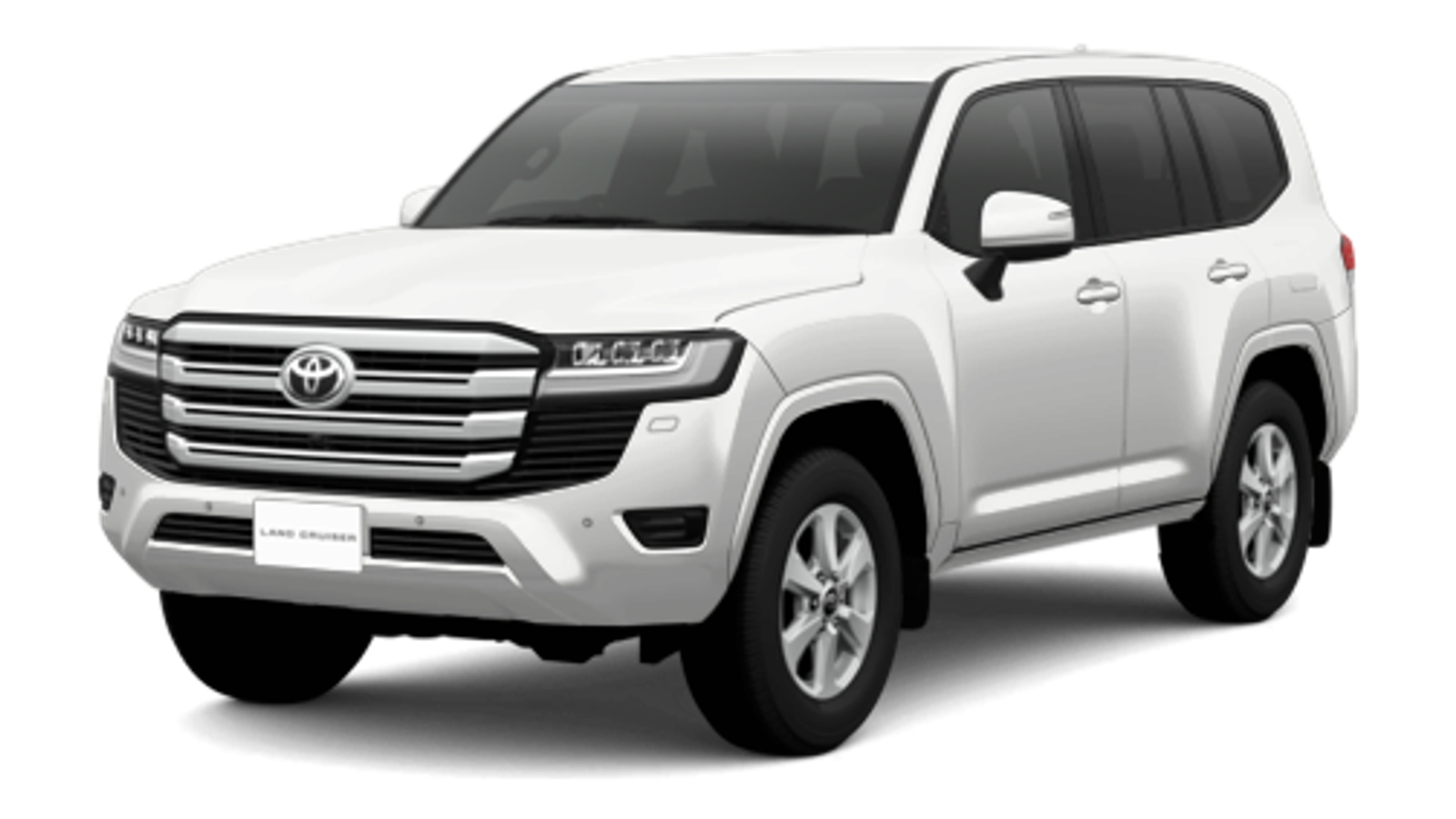
| Item | Share of CIF | Amount |
|---|---|---|
| Vehicle priceIPAS price for a car sourced in Japan | 1,366,063 THBUS$40,700 | |
| Shipping and insuranceJapan to Thailand | 169,499 THBUS$5,050 | |
| CIF valueCost, insurance and freight: the customs value | 1,535,562 THBUS$45,750 | |
| Customs duties and taxes | ||
| Basic customs duty (60%)60% of CIF | 921,337 THBUS$27,450 | |
| Additional duty (50%)Base or related charges differ from CIF; see the duty structure above195.6% of CIF | 3,002,888 THBUS$89,467 | |
| GST/VAT (7%)7% of CIF plus the duties above24.9% of CIF | 382,196 THBUS$11,387 | |
| Total duties and taxes280.4% of CIF | 4,306,421 THBUS$128,304 | |
| Service and handling | ||
| Premium Import ServiceOptional end-to-end import management by IPAS | 172,352 THBUS$5,135 | |
| Destination handlingPort terminal and customs clearance handling | 61,422 THBUS$1,830 | |
| Total landed cost | 6,075,758 THBUS$181,019 | |
Documents Required for Import
Core Customs Documents:
- Thai Customs Import Declaration (Bai Khad Ror) — electronic submission via Customs e-Logistics system
- Original Bill of Lading (B/L) or Sea Waybill / Airway Bill
- Original Commercial Invoice (seller-issued, specifying CIF value)
- Packing List
- Insurance Certificate (CIF basis)
- Certificate of Origin — mandatory for FTA preferential duty claims (Form D for ATIGA, Form JTEPA for Japan, Form E for China, Form AK for Korea, the TAFTA or TNZCEP certificate for Australia or New Zealand, Form RCEP); without it the 80% MFN rate applies
Regulatory Approvals:
- TISI Certificate of Conformity — Thai Industrial Standards Institute mandatory product certification
- DLT Type Approval Certificate — Department of Land Transport vehicle type approval (T-Mark)
- Import Licence — required for specific categories (Ministry of Commerce Foreign Trade Department), including a pre-shipment permit for returning residents
- Manufacturer's technical specifications and homologation documents, including the CO2 figure that sets the excise rate
Supporting Documents:
- Authorisation letter (if filed through a customs broker)
- Proof of payment / bank transfer documents
- Vehicle identification number (VIN) documentation
Customs Clearance Timeline
| Stage | Typical Duration | Notes |
|---|---|---|
| Import licence processing | ~25 days | Must be filed with Ministry of Commerce Foreign Trade Department before shipment |
| TISI and DLT pre-approval | 3-6 months | First-time type approvals; must be secured before shipment |
| Arrival and cargo declaration | 1-2 days | Electronic customs declaration via e-Logistics system |
| Duty, excise, and VAT assessment | 2-3 business days | Thai Customs calculates; importer receives payment notice |
| Payment of all duties | Same day | All customs duty, excise, interior tax, and VAT |
| Physical inspection (if selected) | 3-5 business days | Risk-based selection; VIN verification, document matching |
| Release from port | 1-2 days | Post-clearance |
| Port clearance (clean documents) | 7-15 business days | Assumes TISI/DLT already approved and import licence obtained |
The most significant delays come from TISI certification and DLT type approval, which must be completed before the vehicle ships. For first-time importers or new vehicle models, this pre-approval process can take 3-6 months. The actual port clearance with all approvals in place typically takes 7-15 working days.
Thai Customs converts foreign-currency invoices at the Bank of Thailand TT selling rate on the declaration date.
Homologation and Vehicle Approval
Thailand requires dual regulatory approval from two separate agencies before any new vehicle can be imported and registered.
TISI (Thai Industrial Standards Institute)
Under the Ministry of Industry, TISI oversees mandatory product certification under the Thai Industrial Standard (TIS) scheme. All new passenger cars and light commercial vehicles must obtain a TISI Certificate of Conformity before importation. Requirements include:
- Emissions standards — Thailand enforces Euro 5 equivalent emission standards for new vehicles
- Safety standards — Passive safety (seatbelts, airbags), lighting, braking performance aligned with UN-ECE regulations
- Fuel economy and CO2 disclosure requirements
- For BEVs, emissions certification is not required (no exhaust emissions), but TISI safety certification remains mandatory
DLT (Department of Land Transport)
Under the Ministry of Transport, DLT issues Type Approval (T-Mark) covering vehicle safety, construction standards, and road compliance. DLT responsibilities include:
- Vehicle type approval under the Motor Vehicle Act B.E. 2522 (1979)
- Type approval for buses and heavy trucks under the Land Transport Act
- Annual/periodic vehicle inspection
- Green Book (vehicle registration certificate) issuance post-import
Key Point: Both TISI and DLT approvals must be secured before the vehicle ships to Thailand. First-time type approvals for new models can take 3-6 months, making advance planning essential.
Registration Procedures and Costs
After customs clearance, the vehicle registration process is managed by the Department of Land Transport (DLT).
Step 1: Submit Type Approval Documentation to DLT
Submit all TISI conformity certificates and manufacturer technical documentation to the DLT Provincial Office or Bangkok DLT headquarters.
Step 2: Vehicle Inspection
DLT conducts a physical inspection covering VIN verification, dimensions, safety equipment compliance, steering position and structural integrity.
Step 3: Pay Registration Fees and Road Tax
| Fee | Amount | Notes |
|---|---|---|
| Initial registration fee | THB 1,000-5,000 | Varies by vehicle type and value |
| Annual road tax | THB 300-1,200/year | Based on engine displacement (cc) or motor power (kW for EVs) |
| Compulsory motor insurance (Por Ror Bor) | Varies | Third-party liability insurance mandatory before registration |
Step 4: Obtain Green Book and Licence Plates
The Green Book (Registration Certificate) is Thailand's vehicle logbook, issued upon successful registration. Licence plates are issued by the DLT Provincial Transport Office.
Recent Regulatory Changes (2025–2026)
- New excise structure (1 January 2026): excise is now set by CO2 and powertrain on separate tables for petrol/diesel, mild hybrids, full hybrids and plug-in hybrids; battery-electric cars pay 2% for every importer (it was 8–10% for importers outside the EV3.5 programme)
- EV3.5 duty cut expired (31 December 2025): the 40% import-duty reduction for EVs was not renewed and was only ever open to manufacturers in the programme; the EV3.5 cash subsidy is also manufacturer-only
- VAT 7% extension: the reduced rate ran to 30 September 2026; an extension to 30 September 2027 was approved by the Cabinet in July 2026 and awaits publication in the Royal Gazette — the statutory fallback is 10%
- Classic-car excise (September 2025): a 45% excise rate for qualifying passenger cars aged 30–100 years, valued at THB 2 million or more
- Japan review (2027): Thailand's JTEPA commitment on Japanese cars up to 3,000cc is listed for the 2027 general review; until then those cars pay 80%
Frequently Asked Questions
How much does it cost to import a car to Thailand?
Thailand has one of the highest import tax burdens globally. For a petrol or diesel car up to 3,000cc from outside ASEAN, total taxes add about 125–208% on top of CIF value: 80% customs duty + 13–34% excise by CO2 + 10% interior tax on the excise + 7% VAT, all calculated cumulatively. Above 3,000cc the total reaches about 328%. ASEAN-origin vehicles pay 0% customs duty, reducing the total burden to about 25–71% of CIF for the same cars. Use CarImport.AI for your exact calculation.
Can I import a used car to Thailand?
No. Thailand banned used motor vehicle imports, including pickups, from 10 December 2019. Violations result in confiscation, destruction of the vehicle, and a fine of 5 times the imported value. Limited exceptions exist for diplomatic vehicles, prototypes, museum display vehicles, and returning residents bringing their own car (no more than 5 years old, with an import permit obtained before shipment).
Can I import a classic or vintage car?
Yes. Passenger cars manufactured 30 to 100 years ago may qualify for a 45% excise rate if their declared value is at least THB 2 million and they are original or restored to original condition. Customs duty and VAT still apply, so the total can still exceed 280% of CIF. Classic-registered cars may be driven only at weekends, on public holidays and at approved events, and a left-hand-drive classic cannot be registered. Import permits and Ministry of Commerce clearance are required.
What is the difference between MFN and ATIGA import duty?
MFN (Most Favoured Nation) is the default 80% customs duty applied to vehicles from countries without a Free Trade Agreement. ATIGA (ASEAN Trade in Goods Agreement) allows 0% customs duty for vehicles manufactured in ASEAN member countries (Indonesia, Malaysia, Vietnam, etc.) with a Form D certificate of origin, reducing the total tax burden on a typical 1,800cc sedan from about 166% to about 48% of CIF value.
Are electric vehicles cheaper to import?
Yes. From 1 January 2026 battery-electric cars pay 2% excise, for every importer, against 13–50% for petrol and diesel cars. Customs duty still depends on origin: 80% from Europe or the US (about 97% of CIF in total), 20% from Japan, 40% from Korea, and 0% from China, ASEAN, Australia or New Zealand with a valid certificate of origin (about 9% in total). The EV3.5 40% duty reduction expired on 31 December 2025, and the EV3.5 cash subsidy is only for manufacturers in the programme.
Can I import a left-hand drive vehicle?
Only as a collector or display item. Thailand drives on the left, and an LHD vehicle fails the DLT inspection for road registration, even though customs can clear it. In practice, only diplomatic mission vehicles regularly operate LHD vehicles in Thailand.
Which countries have 0% customs duty under FTAs?
ASEAN member countries (under ATIGA), Australia (under TAFTA) and New Zealand (under TNZCEP) get 0% customs duty on all CBU cars and pickups. Chinese-built electric cars also get 0% under ACFTA, but other Chinese cars pay 50% and Chinese pickups 80%. Japan's JTEPA gives 0% on pickups, 20% on EVs and 60% on cars above 3,000cc and hybrids — but Japanese cars up to 3,000cc still pay 80%.
How long does the import process take?
The total process can take 4-9 months from initial planning to registration. TISI certification and DLT type approval alone take 3-6 months for first-time models. Actual port clearance with all pre-approvals in place takes 7-15 working days.
Ready to Import Your Vehicle?
Thailand's import regime is among the most expensive in the world for MFN-origin vehicles — with cumulative taxes of about 125–208% of CIF for most cars and over 300% for large engines. However, the ASEAN Free Trade Agreement (ATIGA) dramatically reduces the burden for vehicles manufactured in Indonesia, Malaysia, Vietnam, and other ASEAN members, and Australian, New Zealand and Chinese-built electric cars also enter duty-free, making origin selection critical.
Two tools to get you started:
CarImport.AI — Calculate the exact landed cost of importing any vehicle to Thailand. Get a complete breakdown of customs duty, excise tax, interior tax, and VAT tailored to your specific vehicle and origin country. Calculate your landed cost
IPAS EXPRESS Pro Car Shipping — Already have a vehicle? Get instant shipping quotes for sea freight to Laem Chabang or Bangkok Port. Compare container and RoRo options with real-time pricing. Get a shipping quote
Ready to Import Your Vehicle?
Two tools, two use cases. Pick the one that fits your needs.
Source a vehicle through IPAS and calculate the full landed cost — customs duties, shipping, and compliance — to destinations across the world.
Calculate Landed CostIPAS Express
Already have a vehicle? Get instant shipping quotes — sea freight, air freight, or RoRo — for one car or multiple vehicles worldwide.
Get Shipping Quote