Introduction
Importing a new car to Nigeria costs about 50-55% of its CIF value in taxes from 1 July 2026: 20% duty, a 10% import levy (5% if used), a 7% surcharge, small ECOWAS and CISS charges, a 2-4% Green Tax from 2,000 cc and 7.5% VAT. EVs pay about 40% and pickups about 30%. Nigeria requires left-hand drive.
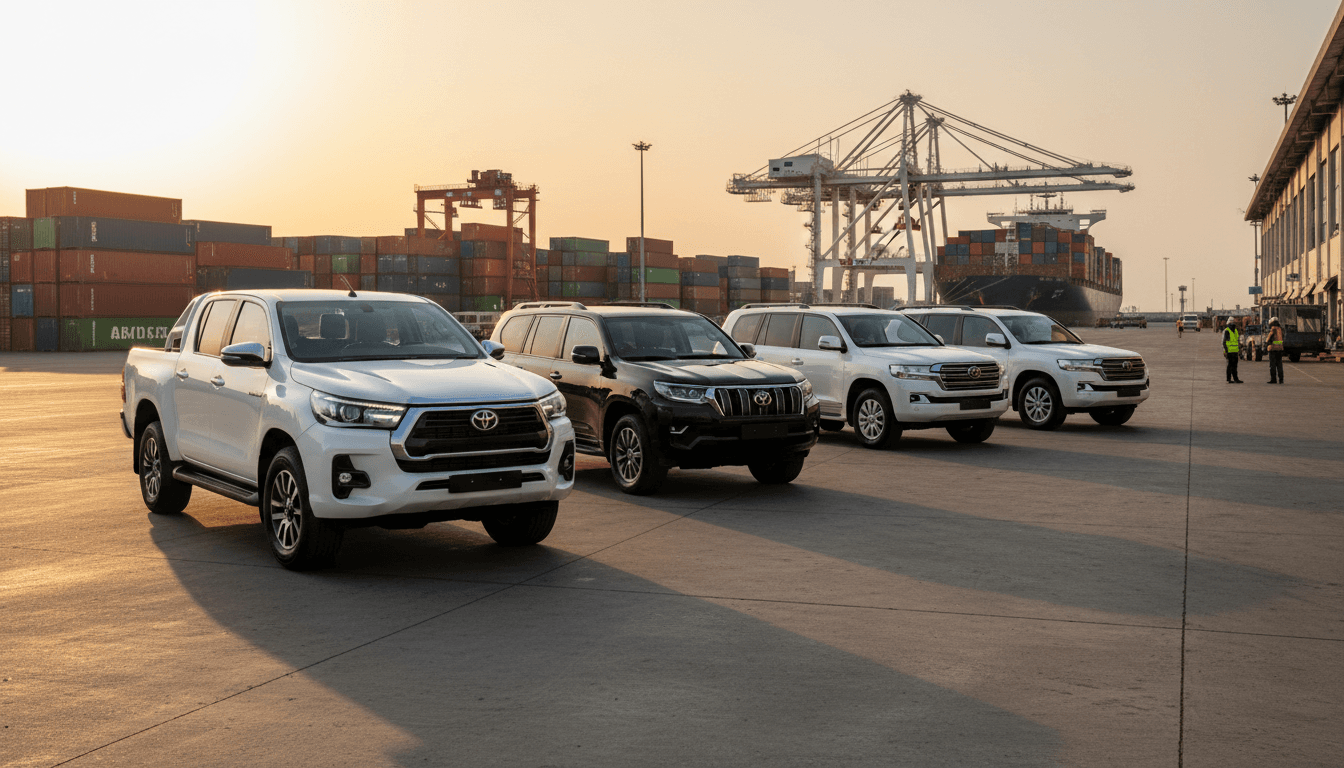
Nigeria is West Africa's largest economy and one of the continent's most active vehicle import markets. With limited domestic manufacturing capacity, the country imports hundreds of thousands of vehicles annually — predominantly used cars from the United States, Canada, and Europe, with a growing share of new vehicles from Asia. Lagos, home to Apapa and Tin Can Island ports, handles the vast majority of vehicle imports.
The import process is administered by three key agencies: the Nigeria Customs Service (NCS) handles tariff classification, duty assessment, and port clearance; the Standards Organisation of Nigeria (SON) enforces conformity assessment through the SONCAP programme; and the Federal Road Safety Corps (FRSC) manages vehicle registration and number plate issuance. A commercial bank is also required to process the mandatory Form M import authorisation, making the banking relationship a critical part of the workflow.
Nigeria's duty structure is among the most complex in Africa. It combines Import Duty, the import levy (NAC levy), a 7% surcharge, the ECOWAS Trade Levy, the CISS fee, the Green Tax and VAT — with rates that vary depending on whether the vehicle is new, used or electric, its engine capacity, and its HS code classification. Two changes took effect on 1 July 2026: the import levy was cut to 10% for new cars and 5% for used cars (0% for electric vehicles), and a Green Tax of 2% or 4% began on engines of 2,000 cc and above. Total taxes on a passenger car now run from about 45% of CIF (used, under 2,000 cc) to about 55% (new, 4,000 cc and above). Commercial vehicles classified under HS 8704 (such as pickup trucks) pay about 28-32%. This guide covers the complete process from Form M application through customs clearance and FRSC registration.
Quick Facts
| Detail | Information |
|---|---|
| Lead Agency | Nigeria Customs Service (NCS) |
| Standards Body | Standards Organisation of Nigeria (SON) — SONCAP |
| Registration Body | Federal Road Safety Corps (FRSC) |
| Steering | Left-Hand Drive (LHD) required — Nigeria drives on the right; RHD restricted |
| Age Limit | About 9 years at import (some sources cite 12 years; under review) |
| Import Duty | 20% passenger cars (HS 8703); 10% pickups and goods vehicles (HS 8704) |
| Import (NAC) Levy | 10% new car; 5% used car; 0% electric vehicles, pickups and goods vehicles (from 1 July 2026) |
| Surcharge | 7% of CIF + import duty |
| ECOWAS Trade Levy / CISS | 0.5% of CIF / 1% of FOB |
| Green Tax | 0% under 2,000 cc; 2% for 2,000-3,999 cc; 4% for 4,000 cc and above; EVs exempt (from 1 July 2026) |
| VAT | 7.5% on CIF plus all duties and levies |
| Main Ports | Lagos (Apapa, Tin Can Island), Lekki Deep Sea Port |
| Customs System | B'Odogwu (replaced NICIS II) |
| Clearance Timeline | 7-21 business days; congestion can extend to 30+ days |
| Total Tax Burden (typical) | About 45-55% of CIF for passenger cars; about 40% for EVs; about 28-32% for pickups |
Types of Cars That Can Be Imported
Nigeria permits both new and used vehicle imports, but the duty structure strongly favours local assembly (CKD/SKD) over fully built imports (CBU). The age limit, the import levy and the Green Tax create a significant cost differential between vehicle categories.
New Vehicles (CBU) New completely built-up vehicles can be imported but face the highest combined rates: 20% Import Duty plus a 10% import levy, and a Green Tax of 2% (2,000-3,999 cc) or 4% (4,000 cc and above). The total is about 50% of CIF under 2,000 cc, 52.5% for 2,000-3,999 cc and 54.6% from 4,000 cc. The levy is a deliberate policy to incentivise local assembly under the National Automotive Industry Development Plan. A vehicle counts as "used" for the levy once it is more than 6 months from first registration or has covered 6,000 km or more.
Used Vehicles Used vehicles are the most common import category. The age limit is reported inconsistently: the stricter and more recent reading is about 9 years at import, while some sources still cite 12 years. Plan on the 9-year limit and confirm the cutoff year with your clearing agent before you buy. Used cars pay 20% Import Duty plus a 5% import levy (from 1 July 2026), about 45% of CIF in total under 2,000 cc and about 47% from 2,000 cc.
CKD and SKD (Assembly Kits) Completely Knocked Down (CKD) kits attract 0% Import Duty. Semi-Knocked Down (SKD) kits attract 5%. These preferential rates are the core mechanism of the NAIDP, designed to drive vehicle assembly within Nigeria.
Electric Vehicles From 1 July 2026, battery electric vehicles (HS 8703.80) pay no import levy and are exempt from the Green Tax. They still pay the full 20% Import Duty, the 7% surcharge, the ECOWAS levy, CISS and 7.5% VAT, about 39.6% of CIF in total against about 52.5% for a comparable new petrol car. A VAT zero-rating for EVs has been reported but is not confirmed, so budget for 7.5% VAT. Hybrids and plug-in hybrids do not get the EV concessions: they pay the same as petrol cars of the same engine size.
Commercial Vehicles (Pickups/Trucks) Vehicles classified under HS 8704 (motor vehicles for the transport of goods) benefit from significantly lower rates — 10% Import Duty with no import levy. Any pickup with an open cargo bed, single or double cab (Toyota Hilux, Ford Ranger, Isuzu D-Max, Ford F-150), is classified HS 8704. The Green Tax is applied to pickups by engine size as well (its scope for commercial vehicles is under review), so a new Hilux 2.8 pays about 30% of CIF and a 5.0-litre F-150 about 32%. Pickup-based SUVs such as the Fortuner, Everest and MU-X are passenger cars (HS 8703).
Prohibited Vehicles
- Used vehicles over the age limit (about 9 years; some sources cite 12)
- Salvage, write-off, or structurally damaged vehicles
- Vehicles that fail SONCAP conformity assessment
Cars You Can Import to Nigeria
Each card is a full landed-cost calculation: the car's price, shipping, every duty and tax, and handling, worked out on 9 November 2026 with the rules in force that day. All are left-hand drive to suit Nigeria's roads. Tap a car to see its full breakdown, or open it to change the trim, colour or port.
More cars you can import to Nigeria
New cars IPAS sources to order that meet Nigeria's import rules. Prices are ex works, before shipping and duty. Open a car to work out its full landed cost.
 LHD/C-RHDBackorder2025
GMC Hummer EV Pickup
Pickup · 2 VariantsElectricFrom $115,900Ex Works, USA LHD/C-RHDBackorder2027
Lincoln Navigator L
SUV · 6 VariantsPetrolFrom $111,600Ex Works, USA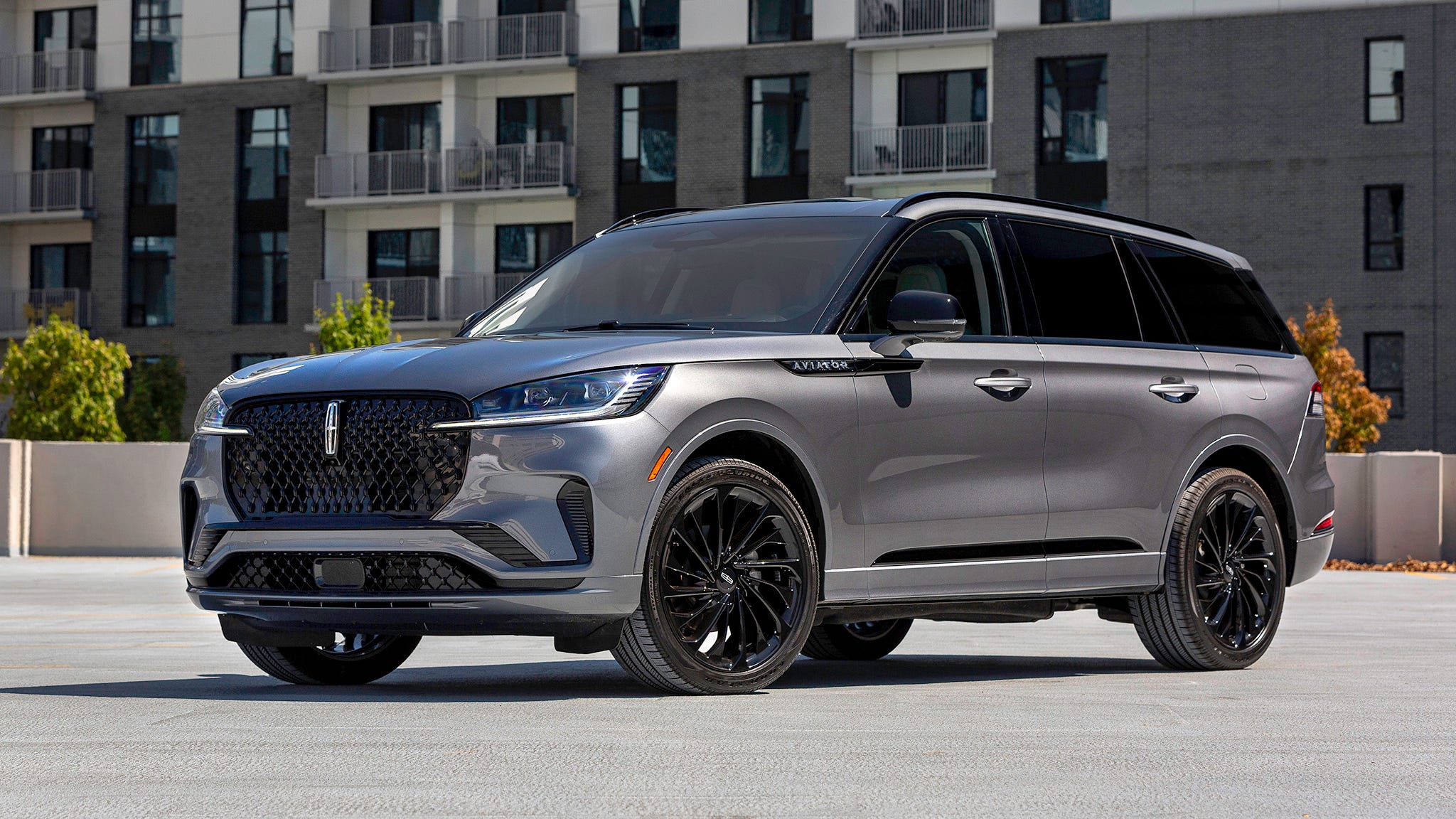 LHDBackorder2026
Lincoln Aviator
SUV · 5 VariantsPetrolFrom $70,300Ex Works, USA LHDBackorder2026
Lincoln Corsair
SUV · 5 VariantsPetrol · Plug-in HybridFrom $48,000Ex Works, USA LHDBackorder2026
Toyota 4Runner
SUV · 12 VariantsPetrol · HybridFrom $50,200Ex Works, USA LHDBackorder2026
Toyota RAV4 Prime
SUV · 4 VariantsPlug-in HybridFrom $49,800Ex Works, USA LHDBackorder2025
Toyota Tacoma
Pickup · 11 VariantsPetrol · HybridFrom $37,900Ex Works, USA LHDBackorder2026
Zeekr 9X
SUV · 4 VariantsPlug-in HybridFrom $74,900Ex Works, China🇨🇳 LHDBackorder2026
Jeep Wrangler
SUV · 11 VariantsPetrolFrom $43,200Ex Works, USA LHDBackorder2026
Jeep Gladiator
Pickup · 8 VariantsPetrolFrom $48,000Ex Works, USA LHD/C-RHDBackorder2025
Dodge Charger Daytona
Coupe · 2 VariantsElectricFrom $71,500Ex Works, USA LHDBackorder2026
Chevrolet Corvette E-Ray Convertible
Convertible · 3 VariantsHybridFrom $138,000Ex Works, USA LHD/C-RHDBackorder2026
Chevrolet Silverado 2500 HD
Pickup · 17 VariantsPetrol · DieselFrom $62,600Ex Works, USA LHDBackorder2026
Chevrolet Corvette Stingray Coupe
Coupe · 3 VariantsPetrolFrom $87,000Ex Works, USA LHDBackorder2026
Mercedes-Benz G-Class
SUV · 8 VariantsDiesel · Hybrid · ElectricFrom $140,300Ex Works, Germany LHDBackorder2027
Ford Expedition
SUV · 13 VariantsPetrolFrom $76,300Ex Works, USA
Seaports and Airports
Lagos handles the overwhelming majority of Nigeria's vehicle imports. Three port complexes serve the city, with Tin Can Island traditionally preferred for RoRo vehicle shipments.
Major Ports
| Port | Location | Notes |
|---|---|---|
| Apapa Port | Lagos | Largest port; primarily containerised cargo |
| Tin Can Island | Lagos | Preferred for RoRo vehicle traffic; adjacent to Apapa |
| Lekki Deep Sea Port | Lagos | Modern facility; designed to relieve Apapa/Tin Can congestion |
| Onne Port | Rivers State | Industrial focus; lower vehicle traffic |
| Calabar Port | Cross River State | Lower volume; less congested alternative |
| Port Harcourt | Rivers State | General cargo; some vehicle imports |
Typical Sea Freight Transit Times
| Origin | Destination | Transit Time |
|---|---|---|
| Houston / Jacksonville, USA | Lagos | 25-35 days |
| Southampton / Tilbury, UK | Lagos | 14-21 days |
| Antwerp / Rotterdam, Europe | Lagos | 14-18 days |
| Dubai (Jebel Ali), UAE | Lagos | 25-35 days |
| Yokohama, Japan | Lagos | 40-50 days |
Port Congestion Congestion at Apapa and Tin Can Island is a chronic issue. Average dwell time is 4-5 days under normal conditions but can reach 30+ days during peak periods (October-December). The NPA E-Call-Up System has improved truck scheduling, but structural bottlenecks remain. Lekki Deep Sea Port is the recommended alternative for new shipments where available.
Restrictions on Vehicle Import
Age Limit Nigeria's used-vehicle age limit is reported inconsistently. The stricter, more recent reading under the new NCS valuation system is about 9 years at import; older sources cite 12 years. Until the Nigeria Customs Service publishes a definitive notice, plan on 9 years and confirm the cutoff year with your clearing agent. Vehicles exceeding the age limit face seizure or heavily penalised duty assessment.
Steering Requirement Nigeria drives on the right (it switched from left-hand traffic on 2 April 1972) and requires left-hand drive (LHD) vehicles. RHD imports are restricted and are generally considered non-conforming for road use, so do not ship an RHD car.
Salvage and Damaged Vehicles Salvage-titled or accident-damaged vehicles are not permitted and are classified as non-roadworthy. Attempting to import them risks seizure and forfeiture at the port.
Import (NAC) Levy The import levy collected for the National Automotive Council protects and incentivises local assembly. From 1 July 2026 it is 10% of CIF for new passenger cars and 5% for used ones (down from 20% and 15%), and 0% for electric vehicles, pickups, goods vehicles and buses. It is in addition to the standard Import Duty and makes CBU passenger cars more expensive to import than CKD/SKD assembly kits.
SONCAP Requirement All vehicles must obtain SONCAP certification (Product Certificate and Shipment Certificate) from an approved inspection body before shipping. Vehicles arriving without valid SONCAP documentation face delays, additional inspection costs, and potential rejection.
Duty Structure Overview
Nigeria's import duty structure is one of the most layered in Africa. It combines seven separate tax and levy components, with rates that vary by vehicle condition (new vs used), fuel type, engine capacity, and HS code classification. The rates below apply from 1 July 2026.
| Component | Rate | Applied On | Notes |
|---|---|---|---|
| Import Duty (ID) | 20% (HS 8703) / 10% (HS 8704) | CIF value | Same for every engine size and fuel |
| Import (NAC) Levy | 10% new / 5% used / 0% EV, pickups, goods vehicles | CIF value | Cut from 20% / 15% on 1 July 2026 |
| Surcharge (SUR) | 7% | CIF + Import Duty | Base under review; some brokers apply it to the duty alone |
| ECOWAS Trade Levy (ETL) | 0.5% | CIF value | Applies to all vehicles made outside ECOWAS |
| CISS Fee | 1% | FOB value | Comprehensive Import Supervision Scheme |
| Green Tax | 0% / 2% / 4% | CIF value | Under 2,000 cc exempt; 2,000-3,999 cc 2%; 4,000 cc+ 4%; EVs exempt |
| VAT | 7.5% | CIF + all of the above | Finance Act 2020 rate |
Rate Summary by Common Category
| Category | Import Duty | Levy | Green Tax | Approx. Total Tax Burden |
|---|---|---|---|---|
| Used petrol or diesel car, under 2,000 cc | 20% | 5% | 0% | ~45% of CIF |
| Used car, 2,000-3,999 cc | 20% | 5% | 2% | ~47% of CIF |
| New car, under 2,000 cc | 20% | 10% | 0% | ~50% of CIF |
| New car or hybrid, 2,000-3,999 cc | 20% | 10% | 2% | ~52.5% of CIF |
| New car, 4,000 cc and above | 20% | 10% | 4% | ~54.6% of CIF |
| Battery Electric (BEV) | 20% | 0% | 0% | ~39.6% of CIF |
| Pickup (HS 8704), 2,000-3,999 cc | 10% | 0% | 2% | ~30% of CIF |
| Pickup (HS 8704), 4,000 cc and above | 10% | 0% | 4% | ~32% of CIF |
Worked Example: New Toyota Camry 2.5 Petrol from Japan, CIF $25,000
| Line | Basis | Amount (USD) |
|---|---|---|
| Import Duty 20% | CIF | $5,000 |
| Import levy 10% (new car) | CIF | $2,500 |
| Surcharge 7% | CIF + duty ($30,000) | $2,100 |
| ECOWAS Trade Levy 0.5% | CIF | $125 |
| CISS 1% | FOB (taken as $23,750) | $238 |
| Green Tax 2% (2,487 cc) | CIF | $500 |
| VAT 7.5% | CIF + all lines above ($35,463) | $2,660 |
| Total duties and taxes | $13,122 (52.49%) | |
| Landed cost before port and clearing fees | $38,122 |
The same car as a used import pays a 5% levy instead of 10%, bringing the total to about $11,778 (47.1%). A new BYD Atto 3 at the same CIF pays about $9,897 (39.6%), and a new Hilux 2.8 double cab about $7,559 (30.2%). Duty is assessed in naira at the official exchange rate on the day of declaration.
Origin and Trade Agreements
Only vehicles of genuine ECOWAS origin enter duty-free under the ECOWAS Trade Liberalisation Scheme. Nigeria has not ratified the EU-ECOWAS EPA, the AfCFTA does not yet cover vehicles, and there is no trade agreement with the USA, the UK, Japan, China, India or other sourcing markets, so they all pay the full rates. A car shipped via Cotonou or Lome keeps its country of manufacture and pays the same as one landed in Lagos.
4% FOB Levy (Suspended) A 4% FOB levy introduced by NCS in 2025 was suspended by a Ministry of Finance circular dated 15 September 2025. It was designed to replace the 1% CISS and the 7% surcharge, which therefore still apply. If it is restored, expect those two charges to fall away rather than stack.
VIN Valuation NCS uses a VIN-based valuation database to cross-check declared CIF values. If the declared value is below the NCS benchmark for that VIN, the higher benchmark value is used for duty calculation.
Get exact duty calculations for your specific vehicle using CarImport.AI

Calculate your exact import duty to Nigeria
Get a vehicle-specific duty and full landed-cost breakdown — HS classification, every tax, levy and FTA, plus shipping — calculated for your exact make, model and specs.
- Vehicle-specific HS code
- All duties, taxes & FTAs
- Shipping + est. landed cost
Worked Example: Importing a 2026 Cadillac Escalade to Nigeria
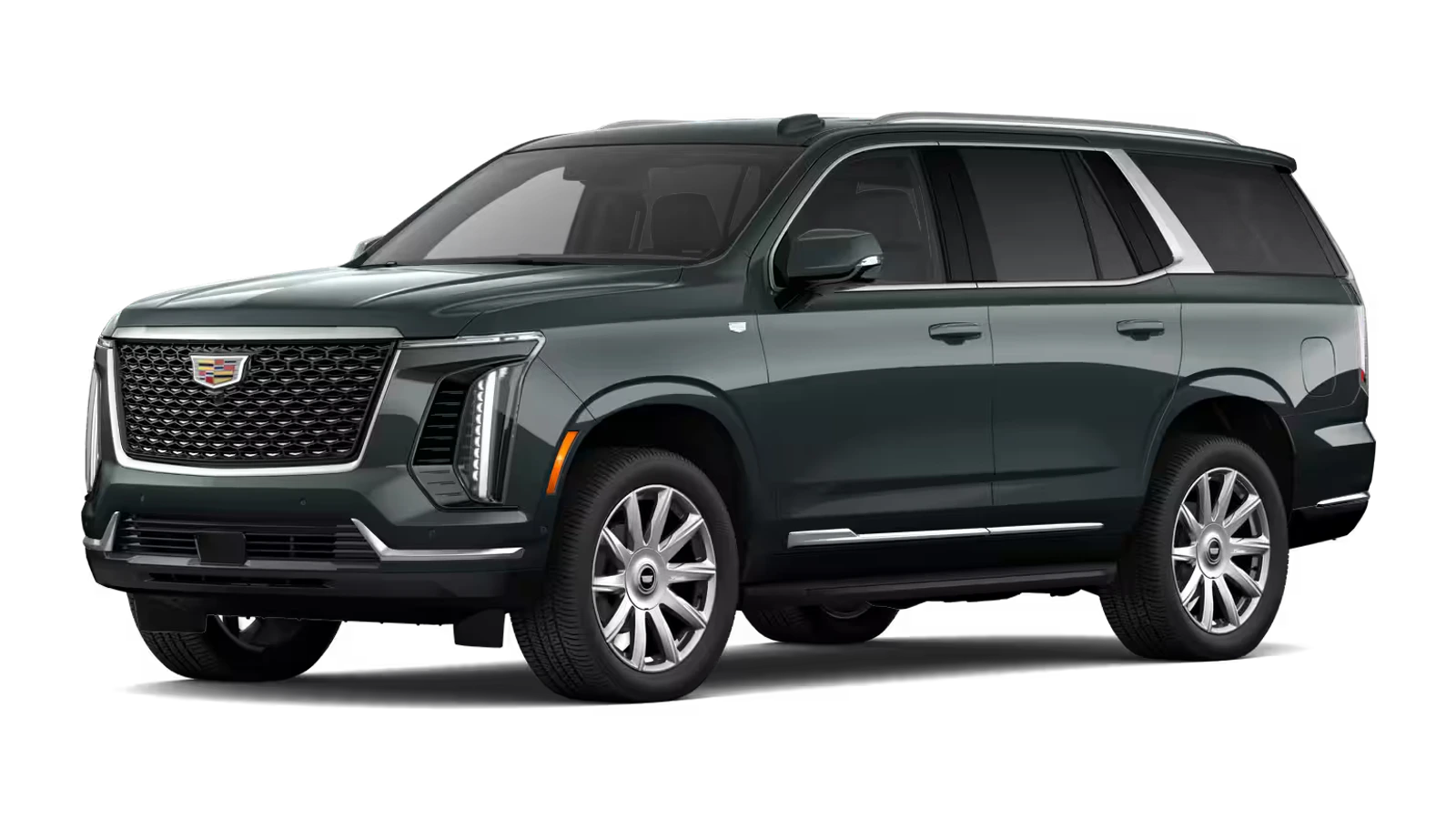
Here is the full landed cost of one car, a 2026 Cadillac Escalade shipped from the USA to Nigeria, worked out on 9 November 2026 with the customs rules in force that day. It lands at 250,322,030 NGN (about US$185,941), and duties and taxes come to 54.6% of its CIF value.
| Item | Share of CIF | Amount |
|---|---|---|
| Vehicle priceIPAS price for a car sourced in the USA | 147,144,513 NGNUS$109,300 | |
| Shipping and insuranceUSA to Nigeria | 8,621,349 NGNUS$6,404 | |
| CIF valueCost, insurance and freight: the customs value | 155,765,862 NGNUS$115,704 | |
| Customs duties and taxes | ||
| Basic customs duty (20%)20% of CIF | 31,153,442 NGNUS$23,141 | |
| Additional duty (10%)Base or related charges differ from CIF; see the duty structure above23.8% of CIF | 37,149,614 NGNUS$27,595 | |
| GST/VAT (7.5%)7.5% of CIF plus the duties above10.8% of CIF | 16,805,169 NGNUS$12,483 | |
| Total duties and taxes54.6% of CIF | 85,108,225 NGNUS$63,219 | |
| Service and handling | ||
| Premium Import ServiceOptional end-to-end import management by IPAS | 7,105,478 NGNUS$5,278 | |
| Destination handlingPort terminal and customs clearance handling | 2,342,465 NGNUS$1,740 | |
| Total landed cost | 250,322,030 NGNUS$185,941 | |
Documents Required
For Customs Clearance (NCS)
- Form M (E-Form M) — import authorisation via your commercial bank on the Single Window platform
- PAAR (Pre-Arrival Assessment Report) — pre-assessed duty liability from NCS
- SONCAP Product Certificate (PC) — vehicle model compliance
- SONCAP Shipment Certificate (SC) — per-shipment compliance
- Original Bill of Lading
- Commercial Invoice declaring CIF value
- Packing List
- Certificate of Origin from exporter's Chamber of Commerce
- Marine Insurance Certificate
- TIN Certificate (Tax Identification Number from FIRS)
- CAC Certificate (Corporate Affairs Commission — for companies)
- Licensed Customs Agent credentials
For FRSC Registration
- NCS release documents and duty payment receipts
- Vehicle purchase documentation
- Valid motor insurance (minimum third-party)
- Passport photographs
- TIN certificate
- Proof of address
Customs Clearance Timeline
| Stage | Duration | Details |
|---|---|---|
| Form M application and approval | 1-3 days | Via commercial bank on Single Window platform |
| SONCAP inspection (pre-shipment) | 2-4 weeks | At origin country via Cotecna or Bureau Veritas |
| PAAR issuance | Within hours | After SONCAP activation on Single Window |
| Sea freight transit | 2-7 weeks | USA 25-35 days, UK 14-21 days, Japan 40-50 days |
| Port discharge and terminal handling | 2-5 days | Terminal operator issues Delivery Order |
| NCS duty assessment and payment | 3-7 days | Electronic payment via designated banks |
| Physical examination and VIN verification | 1-3 days | NCS inspects against declared documentation |
| Release order and vehicle pickup | 1-2 days | NPA E-Call-Up system for truck scheduling |
Total Estimated Timeline: 5-12 weeks (from Form M to port release)
Tips to Avoid Delays:
- Begin SONCAP certification immediately after Form M approval — it is the longest pre-shipment step
- Ensure all documents are ready before vessel arrival to avoid demurrage charges (typically $150-500/day after the 7-14 day free period)
- Use a licensed clearing agent with experience in vehicle imports — DIY clearance is not practically possible through the electronic system
- Avoid shipping during Q4 (October-December) when port congestion peaks
- Consider Lekki Deep Sea Port as an alternative to Apapa and Tin Can Island
Homologation and Vehicle Approval
SONCAP (Standards Organisation of Nigeria Conformity Assessment Programme)
SONCAP is the mandatory conformity assessment for all regulated products imported into Nigeria, including vehicles. The process is administered by SON through approved inspection bodies.
Approved Inspection Bodies:
- Cotecna
- Bureau Veritas
- Other SON-approved agencies in major export countries
SONCAP Process:
- The exporter contacts an approved inspection body in the country of export
- The inspector issues a Product Certificate (PC) confirming the vehicle model meets Nigerian standards
- A Shipment Certificate (SC) is issued for the specific unit being shipped
- Both certificates are activated on the Nigeria Single Window platform
- The PAAR can then be generated
What SONCAP Covers:
- Vehicle safety standards compliance
- Emissions standards (minimum Euro II)
- VIN and documentation verification
- General roadworthiness assessment
SONCAP Fees: Vary by inspection body and country. Budget USD 200-500 per vehicle for inspection and certification.
Vehicles Without SONCAP: Vehicles arriving without valid SONCAP documentation face destination inspection at the port, significant delays, additional costs, and risk of rejection. Always complete SONCAP before shipping.
Registration Procedures and Costs
After customs release, the vehicle must be registered with the Federal Road Safety Corps (FRSC) before use on public roads. Registration is administered at the state level through Motor Licensing Authorities (MLAs) with FRSC oversight.
Registration Steps:
- VIN verification through the FRSC NVIS system (nvis.frsc.gov.ng)
- Roadworthiness inspection at an FRSC-approved centre
- Obtain minimum third-party motor insurance from a licensed insurer
- Submit registration application to the state Motor Licensing Authority
- Pay registration fees and road tax
- Receive state-specific number plates from FRSC
Registration Costs
| Component | Approximate Cost |
|---|---|
| Number plate (standard) | NGN 12,000-25,000 |
| Vehicle registration | NGN 5,000-15,000 |
| Roadworthiness certificate | NGN 5,000-10,000 |
| Road tax (annual) | Varies by state and engine capacity |
| Third-party insurance (annual) | NGN 5,000-15,000 |
State-Level Plates: Each Nigerian state issues distinct number plates with a state-specific alphanumeric format (e.g., Lagos: AAA-000-XX). Federal plates follow a different format and are issued for government and diplomatic vehicles.
Hackney Permit: Required for all commercial vehicles (taxis, transport vans, trucks). Issued by the state Transport Authority separately from the standard registration.
Frequently Asked Questions
Q: How long does it take to import a car to Nigeria? A: The full process from purchase to port release typically takes 5-12 weeks. This includes shipping (2-7 weeks depending on origin), SONCAP certification (2-4 weeks, done in parallel), and customs clearance (1-3 weeks). Port congestion at Lagos can add additional weeks during peak periods.
Q: Can I import a salvage or accident-damaged vehicle? A: No. Salvage, write-off, or structurally damaged vehicles are not permitted and face seizure at the port. Nigeria Customs and SONCAP conformity assessment require vehicles to meet safety and roadworthiness standards.
Q: What is the cheapest way to import a car to Nigeria? A: Import a commercial vehicle classified under HS 8704 (such as a pickup truck) — these attract only 10% Import Duty with no import levy, giving a total tax burden of about 28-32% of CIF depending on the engine size. For passenger cars, a battery electric car (about 40% of CIF, with no levy and no Green Tax) or a used car under 2,000 cc (about 45%, with a 5% levy and no Green Tax) is cheapest. Always confirm the HS classification with your clearing agent before purchase.
Q: Do I need a licensed clearing agent? A: Yes, it is practically mandatory. A licensed customs broker is required to file the Single Goods Declaration on the NCS electronic system (Bodogwu). DIY clearance without a licensed agent is not possible through the system.
Q: What happens if my vehicle is seized at port? A: A seized vehicle goes into NCS custody. You have the right to dispute the seizure and file for compound settlement (payment of a fine plus outstanding duties). Unresolved seizures result in the vehicle being forfeited and auctioned. Engage an experienced customs attorney immediately if this occurs.
Q: Can I import a vehicle without Form M? A: No. Form M is the mandatory import authorisation for all regulated imports into Nigeria. Without an approved Form M, the vehicle cannot be legally cleared through NCS. Apply through your commercial bank on the Single Window platform before shipping.
Q: What is the difference between Apapa and Tin Can Island ports? A: Apapa is the larger, older port handling primarily containerised general cargo. Tin Can Island handles more RoRo (vehicle) traffic and has slightly less congestion. Both share the same road access bottlenecks. For vehicle imports, Tin Can Island is generally preferred. Lekki Deep Sea Port is the newest option with modern handling capacity.
Q: How does the Naira exchange rate affect import costs? A: Customs duties are assessed in USD via VIN valuation but paid in Naira at the CBN official exchange rate (around NGN 1,500-1,600 per USD in mid-2026). Naira volatility directly affects your clearing cost — a 10% depreciation increases your Naira payment proportionally. Always budget for exchange rate risk.
Start Your Nigeria Import
Importing a vehicle to Nigeria requires careful navigation of the Form M process, SONCAP certification, and a layered duty structure — but with the right preparation and a licensed clearing agent, the process is well-established and predictable. Commercial vehicles (HS 8704) offer the best value, electric cars now avoid the import levy and Green Tax, and other passenger car imports should factor in the 10% (new) or 5% (used) import levy and the Green Tax from 2,000 cc.
Ready to calculate your exact landed cost? Use CarImport.AI for an instant, accurate breakdown of all customs duties, levies, shipping costs, and fees for your specific vehicle to Nigeria.
Calculate Your Import Cost on CarImport.AI
Already own a vehicle and need shipping? Use IPAS EXPRESS Pro Car Shipping to get competitive sea freight and air freight quotes to Lagos, Port Harcourt, or any Nigerian port.
Sources: Nigeria Customs Service (customs.gov.ng); Standards Organisation of Nigeria (son.gov.ng); Federal Road Safety Corps (frsc.gov.ng); Nigerian Ports Authority (nigerianports.gov.ng); Nigeria Single Window for Trade (trade.gov.ng); ECOWAS CET Tariff; Finance Act 2020.
Ready to Import Your Vehicle?
Two tools, two use cases. Pick the one that fits your needs.
Source a vehicle through IPAS and calculate the full landed cost — customs duties, shipping, and compliance — to destinations across the world.
Calculate Landed CostIPAS Express
Already have a vehicle? Get instant shipping quotes — sea freight, air freight, or RoRo — for one car or multiple vehicles worldwide.
Get Shipping Quote