
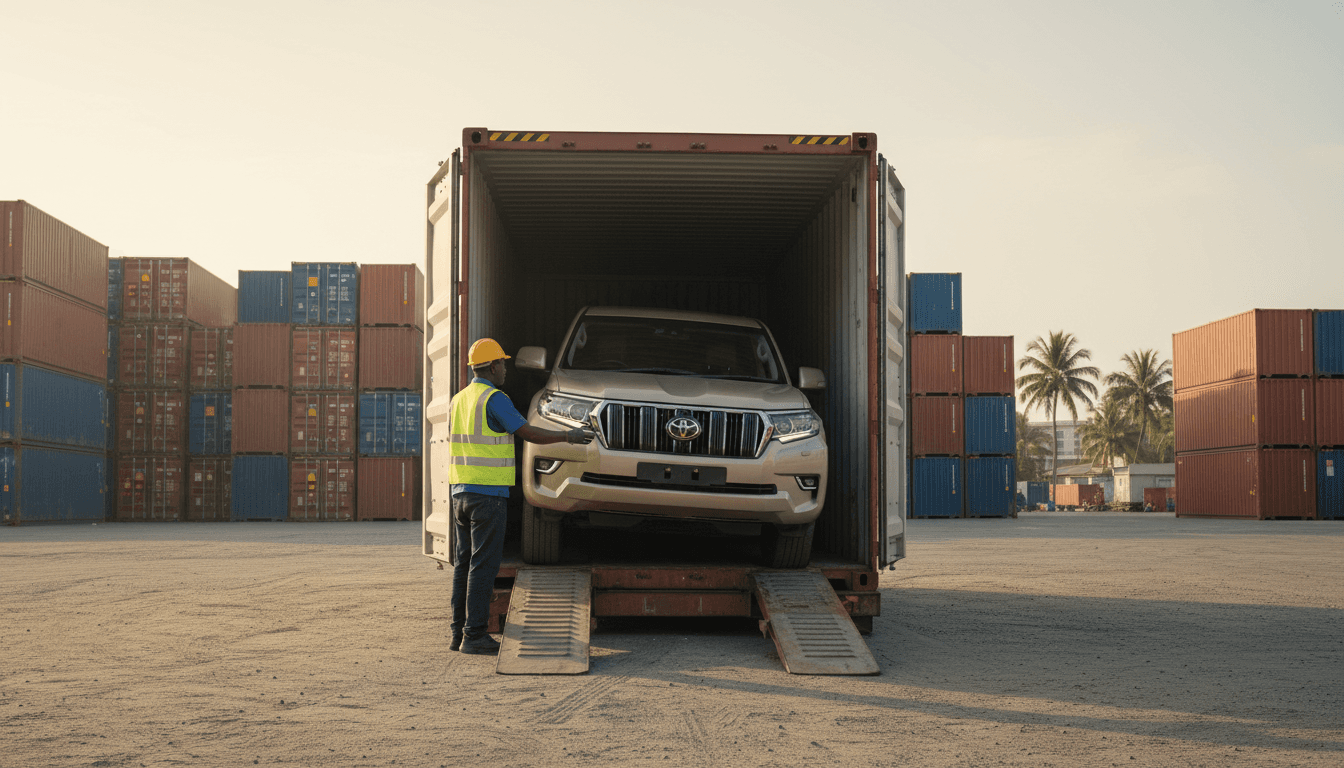
Introduction
Importing a car to Kenya in 2026 adds roughly 92–116% of the customs value in taxes: 35% import duty for FY 2026/27, excise of 20%, 25% or 35% by engine (10% for battery EVs), 16% VAT, a 2.5% Import Declaration Fee and a 2% Railway Development Levy. The car must be right-hand drive and less than 8 years old.
Kenya is one of East Africa's largest and most active vehicle import markets. With no domestic car manufacturing at scale, the country relies almost entirely on imported vehicles. Each year, tens of thousands of used and new vehicles enter Kenya through the Port of Mombasa, sourced primarily from Japan, the UK, the UAE, Singapore, South Africa, and Thailand.
The Kenyan import regime is administered by three primary agencies: the Kenya Revenue Authority (KRA) handles customs assessment and tax collection; the Kenya Bureau of Standards (KEBS) enforces vehicle roadworthiness, emissions standards, and the age limit through pre-export verification; and the National Transport and Safety Authority (NTSA) manages registration, licensing, and the issuance of number plates. All three agencies work in concert, and understanding their overlapping requirements is essential to a smooth import experience.
Kenya's layered tax structure — combining Import Duty, Excise Duty, VAT, IDF, and RDL — adds between about 92% and 116% on top of the customs value for a petrol or diesel passenger car, because Kenya raised its import duty from the 25% EAC rate to 35% for FY 2026/27. Battery electric vehicles pay a lower 10% excise, which brings the total to about 77%. This guide covers every step of the process, from eligibility checks and pre-shipment inspection through customs clearance, duty payment, and NTSA registration.
Quick Facts
| Detail | Information |
|---|---|
| Lead Agency | Kenya Revenue Authority (KRA) — Customs & Border Control |
| Standards Body | Kenya Bureau of Standards (KEBS) — PVOC inspections |
| Registration Body | National Transport and Safety Authority (NTSA) |
| Steering | Right-Hand Drive (RHD) only |
| Import Duty | 35% of Customs Value (FY 2026/27, 1 July 2026 – 30 June 2027; EAC rate of 25% stayed) |
| Excise Duty | 20% (up to 1,500cc) / 25% (over 1,500cc) / 35% (petrol over 3,000cc, diesel over 2,500cc) / 10% (BEV) |
| VAT | 16% |
| IDF Fee | 2.5% of Customs Value (no minimum amount in the Act) |
| Railway Development Levy | 2% of Customs Value |
| Age Limit (2026) | Less than 8 years from Year of First Registration (YoR 2019 or later) |
| Main Port | Port of Mombasa |
| Customs Clearance | 7-14 days (with clean paperwork) |
| NTSA Registration | 3-5 working days after customs release |
| Total Tax Burden (typical) | 92-116% of customs value for petrol and diesel cars; about 77% for BEVs |
Types of Cars That Can Be Imported
Kenya permits the import of both new and used vehicles, subject to strict age and roadworthiness requirements. The same statutory duty rates apply to new and used CBU vehicles; what changes with age is the customs value, because KRA depreciates the Current Retail Selling Price (CRSP) by age.
New Vehicles New vehicles from any origin can be imported provided they meet KEBS standards, are right-hand drive, and pass pre-shipment quality verification. A new vehicle has no Year of First Registration, so the age limit is not a barrier, but it receives little depreciation under CRSP valuation (5% for a vehicle up to 6 months old).
Used Vehicles Used vehicles must be less than 8 years old from their Year of First Registration. For 2026 imports, this means only vehicles first registered in 2019 or later are accepted. KEBS notices confirm that 2018-registered vehicles arriving after 31 December 2025 are rejected at the importer's expense.
Electric Vehicles and Hybrids Used EV imports must comply with the same age and RHD requirements. Battery electric vehicles (HS 8703.80) pay a reduced excise duty of 10%, compared to 20-35% for petrol and diesel vehicles. Hybrids and plug-in hybrids get no EV relief: they pay 20% excise up to 1,500cc and 25% above, and never the 35% rate.
Prohibited Vehicles
- Left-hand drive vehicles (except narrow special-purpose exemptions)
- Vehicles 8 years or older from Year of First Registration
- Used large buses over 7 metres and used double-deckers
- Used rigid trucks between 3.5 and 30 tonnes GVM
- Used tractor heads and prime movers
- Salvage, written-off, and cut-and-join vehicles
Cars You Can Import to Kenya
Each card is a full landed-cost calculation: the car's price, shipping, every duty and tax, and handling, worked out on 9 November 2026 with the rules in force that day. All are right-hand drive to suit Kenya's roads. Tap a car to see its full breakdown, or open it to change the trim, colour or port.
More cars you can import to Kenya
New cars IPAS sources to order that meet Kenya's import rules. Prices are ex works, before shipping and duty. Cars marked C-RHD are built left-hand drive and converted to right-hand drive before shipping; the calculator adds the conversion. Open a car to work out its full landed cost.
 LHD/C-RHDBackorder2026
Ram 1500 RHO
Pickup · 1 VariantPetrolFrom $86,500Ex Works, USA RHDBackorder2026
Toyota Hilux
Pickup · 3 VariantsDieselFrom $28,800Ex Works, India RHDBackorder2025
Lexus GX 550
SUV · 2 VariantsPetrolFrom $82,600Ex Works, Japan RHDBackorder2026
Lexus ES
Sedan · 7 VariantsElectricFrom $54,600Ex Works, Japan RHDBackorder2026
Skoda Slavia
Sedan · 10 VariantsPetrolFrom $9,100Ex Works, India RHDBackorder2026
Skoda Kylaq
SUV · 9 VariantsPetrolFrom $10,400Ex Works, India LHD/C-RHDBackorder2026
Chevrolet Tahoe
SUV · 14 VariantsPetrol · DieselFrom $79,800Ex Works, USA LHD/C-RHDBackorder2025
Chevrolet Silverado EV
Pickup · 3 VariantsElectricFrom $102,200Ex Works, USA RHDBackorder2026
Jeep Compass
SUV · 17 VariantsDieselFrom $16,200Ex Works, India LHD/C-RHDBackorder2025
Lincoln Navigator
SUV · 3 VariantsPetrolFrom $119,900Ex Works, USA RHDBackorder2026
Honda Prelude
Coupe · 2 VariantsHybridFrom $49,400Ex Works, Japan RHDBackorder2026
Honda Elevate
SUV · 11 VariantsPetrolFrom $10,700Ex Works, India RHDBackorder2026
Denza B5
SUV · 2 VariantsPlug-in HybridFrom $57,000Ex Works, China🇨🇳 RHDBackorder2026
Kia Syros EV
SUV · 7 VariantsElectricFrom $16,200Ex Works, India RHDBackorder2026
Hyundai Creta Electric
SUV · 18 VariantsElectricFrom $23,300Ex Works, India RHDBackorder2026
Bentley Torcal
SUV · 3 VariantsElectricFrom $212,500Ex Works, UK
Seaports and Airports
Almost all CBU vehicles enter Kenya through the Port of Mombasa. A modern inland container depot at Embakasi, Nairobi, provides an alternative clearance location connected by the Standard Gauge Railway.
Seaports
| Port | Code | Location | Notes |
|---|---|---|---|
| Mombasa | KEMBA | Mombasa | Main vehicle import port; RoRo and container berths |
| ICD Nairobi (Embakasi) | KENBO | Nairobi | Inland depot linked by SGR; container clearance available |
Port Details The Port of Mombasa handles containers, RoRo vessels, and general cargo across multipurpose berths (1-2, 5, 11, 12). It is connected to the hinterland by the SGR railway, metre-gauge rail, and highway network. The ICD Embakasi facility has capacity for over 450,000 TEU per year with four warehouses and three sheds.
Transport from Mombasa to Nairobi
- Road transport (car carriers, flatbeds) remains the default for individual cars
- SGR freight moves containers from Mombasa to ICD Nairobi
- Last-mile trucking from ICD to final destination
Bonded Storage Licensed bonded warehouses exist around Mombasa and Nairobi where vehicles can be stored under bond with duties unpaid until ex-warehouse clearance. This is important for dealers managing cash flow or planning re-exports.
Emerging Facility The Dongo Kundu Special Economic Zone near Mombasa is being developed as a freeport with vehicle berths and free-trade facilities, aimed at local assembly and logistics. Full vehicle-related operations are being phased in through 2026.
Restrictions on Vehicle Import
Age Limit Under Legal Notice No. 78 of 2005 and KS 1515, as stated by KRA, a vehicle must be less than 8 years old from its Year of First Registration: the import year minus the registration year must be 7 or less. For 2026, only vehicles with YoR of 2019 or later are accepted. KEBS enforces rolling annual cut-offs — vehicles failing the age requirement are rejected at the importer's cost.
Steering Requirement Only right-hand drive vehicles are permitted for registration. Narrow exemptions exist for ambulances, fire tenders, and certain large construction vehicles imported for specific government projects.
Emission Standards KS 1515:2019 upgraded Kenya's emission requirement to Euro 4 for new vehicles. Pre-shipment PVOC inspections include emissions testing against KEBS benchmarks. While full legal enforcement remains under litigation, importers should treat Euro 4 compliance as the de facto minimum.
Heavy Vehicle Bans
- Used passenger minibuses over 7 metres are barred
- Used rigid trucks between 3.5 and 30 tonnes GVM are prohibited
- Used tractor heads and prime movers are banned
Salvage and Rebuilt Vehicles Salvage, written-off, and cut-and-join vehicles generally fail KEBS roadworthiness inspection and are rejected.
Duty Structure Overview
Kenya's import duty structure is a layered (cascading) system where each tax component builds on the previous ones. The combination of Import Duty, Excise Duty, VAT, IDF, and RDL results in a total tax burden of about 92-116% of customs value for petrol and diesel passenger vehicles.
| Component | Rate | Applied On | Notes |
|---|---|---|---|
| Import Duty | 35% | Customs Value (CV) | EAC Gazette Legal Notice EAC/160/2026 stays the 25% EAC Common External Tariff for Kenya and applies 35% for FY 2026/27 |
| Excise Duty | 20%, 25%, 35% or 10% | CV + Import Duty | Set by tariff line — see the table below |
| VAT | 16% | CV + Import Duty + Excise | Standard rate |
| IDF | 2.5% | Customs Value | Miscellaneous Fees and Levies Act 2016 s.7(2); no minimum amount |
| RDL | 2% | Customs Value | Railway Development Levy, same Act s.8(2) |
Excise Duty by Vehicle Type
| Vehicle Category | Excise Rate | Effective total on CV |
|---|---|---|
| Petrol, diesel or hybrid up to 1,500cc | 20% | 92.42% |
| Petrol 1,501-3,000cc, diesel 1,501-2,500cc, any hybrid or PHEV over 1,500cc, pickups over 1,500cc | 25% | 100.25% |
| Petrol over 3,000cc (8703.24.90) and diesel over 2,500cc (8703.33.90) | 35% | 115.91% |
| Battery Electric (HS 8703.80) | 10% | 76.76% |
| Antique, vintage or classic vehicles (Finance Act 2026, from 1 July 2026) | 50% | — |
Petrol and diesel do not share one ladder: a 2,755cc diesel Land Cruiser Prado pays 35% excise, while a 2,755cc petrol car pays 25%. Pickups (HS 8704) are not excise-free — a 2.8-litre diesel Hilux double-cab pays 25%, because the 35% line names passenger-car tariff numbers only. Hydrogen fuel-cell cars and electric goods vehicles fall in the 20% line.
Worked Example — Toyota Harrier 2.0 petrol (1,986cc), CV KES 3,500,000
| Component | Base | Rate | Amount (KES) |
|---|---|---|---|
| Import Duty | CV | 35% | 1,225,000 |
| Excise Duty | CV + duty (4,725,000) | 25% | 1,181,250 |
| VAT | CV + duty + excise (5,906,250) | 16% | 945,000 |
| IDF | CV | 2.5% | 87,500 |
| RDL | CV | 2% | 70,000 |
| Total taxes | 3,508,750 (100.25% of CV) |
What changed in 2026
- From 1 July 2026, import duty is 35% instead of the 25% EAC rate, under a one-year stay that runs to 30 June 2027. If it is not renewed in the FY 2027/28 EAC Gazette, duty returns to 25% on 1 July 2027.
- The Finance Act 2026 added a 50% excise line for antique, vintage and classic vehicles from 1 July 2026. Such vehicles also fail the 8-year age limit, so they cannot be imported in practice.
- The IDF is 2.5% of customs value with no minimum fee (the old 3.5% rate and KES 5,000 minimum no longer apply).
Trade Agreements No trade agreement currently gives a verified duty preference to cars from Japan, the UK, the EU, India, Thailand, the UAE or other major source markets, so full duty applies. The Kenyan exclusion schedules of the EU-Kenya and UK-Kenya agreements are still being checked.
CRSP Valuation KRA does not simply accept your declared invoice price. It values imported motor vehicles from the Current Retail Selling Price (CRSP) of a comparable new unit, reduced to a customs value and then depreciated by age. KRA's depreciation guideline runs from 5% (up to 6 months) and 10% (6-12 months) through 15%, 20%, 30%, 40%, 50% and 60% to 70% for a vehicle over 7 and up to 8 years old. A new CRSP schedule took effect on 1 July 2025. Because the customs value comes from CRSP, any estimate based on your own CIF price may differ from KRA's assessment.
Get exact duty calculations for your specific vehicle using CarImport.AI

Calculate your exact import duty to Kenya
Get a vehicle-specific duty and full landed-cost breakdown — HS classification, every tax, levy and FTA, plus shipping — calculated for your exact make, model and specs.
- Vehicle-specific HS code
- All duties, taxes & FTAs
- Shipping + est. landed cost
Worked Example: Importing a 2026 Toyota Urban Cruiser Hyryder to Kenya
Here is the full landed cost of one car, a 2026 Toyota Urban Cruiser Hyryder shipped from India to Kenya, worked out on 9 November 2026 with the customs rules in force that day. It lands at 5,616,106 KES (about US$43,221), and duties and taxes come to 92.4% of its CIF value.
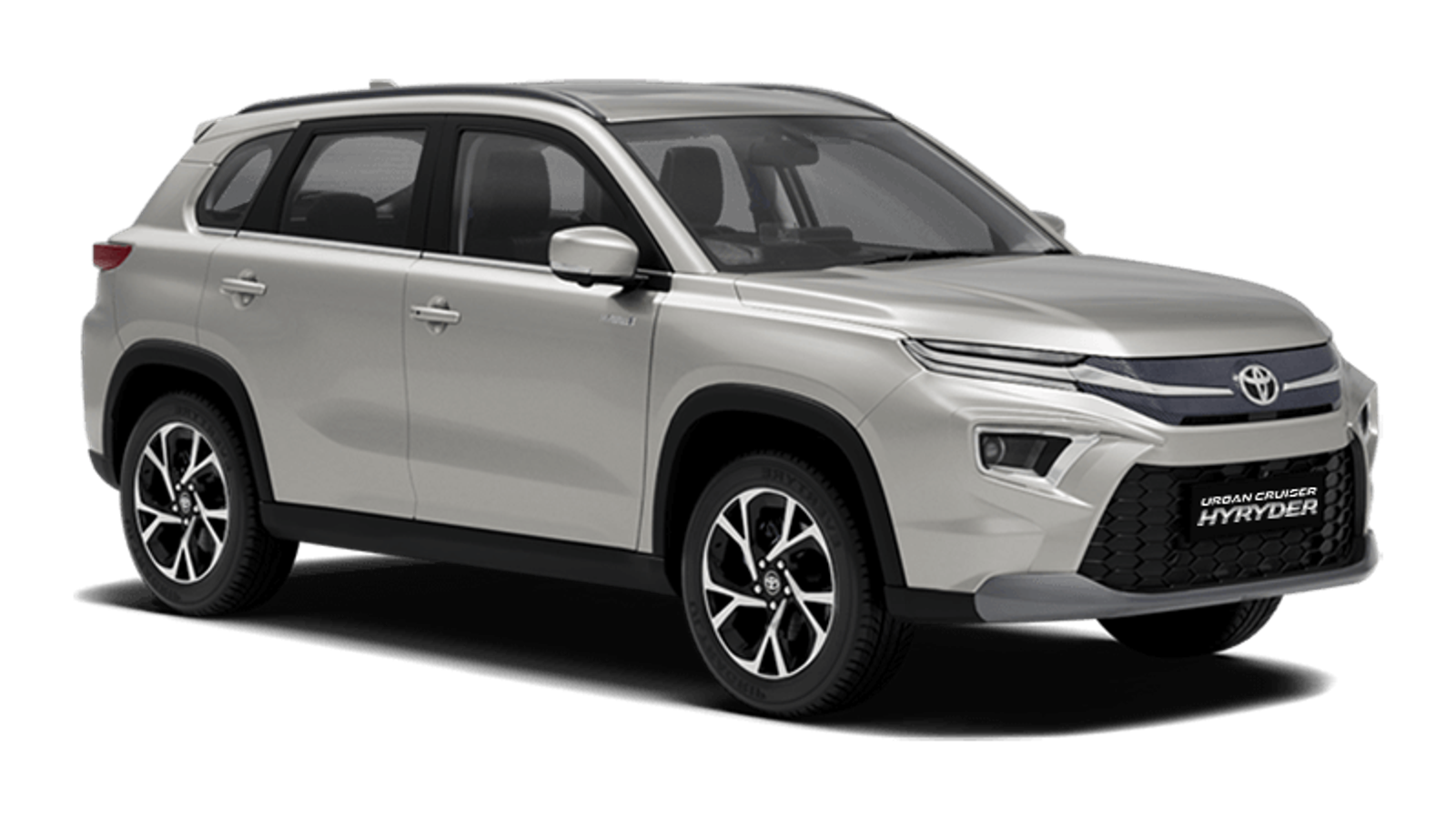
| Item | Share of CIF | Amount |
|---|---|---|
| Vehicle priceIPAS price for a car sourced in India | 2,014,059 KESUS$15,500 | |
| Shipping and insuranceIndia to Kenya | 706,610 KESUS$5,438 | |
| CIF valueCost, insurance and freight: the customs value | 2,720,669 KESUS$20,938 | |
| Customs duties and taxes | ||
| Basic customs duty (35%)35% of CIF | 952,195 KESUS$7,328 | |
| Additional duty (20%)Base or related charges differ from CIF; see the duty structure above31.5% of CIF | 856,950 KESUS$6,595 | |
| GST/VAT (16%)Base or related charges differ from CIF; see the duty structure above25.9% of CIF | 705,181 KESUS$5,427 | |
| Total duties and taxes92.4% of CIF | 2,514,325 KESUS$19,350 | |
| Service and handling | ||
| Premium Import ServiceOptional end-to-end import management by IPAS | 154,368 KESUS$1,188 | |
| Destination handlingPort terminal and customs clearance handling | 226,744 KESUS$1,745 | |
| Total landed cost | 5,616,106 KESUS$43,221 | |
Documents Required
For Customs Clearance (KRA)
- Original Commercial Invoice (purchase invoice)
- Original Bill of Lading
- Import Declaration Form (IDF) approved by KRA with fee paid
- Original logbook or registration certificate from country of export, cancelled or deregistered
- KEBS PVOC Certificate of Conformity (CoC) or Certificate of Roadworthiness (CoR)
- Marine insurance certificate
- Freight invoice (if not included in commercial invoice)
- Copy of importer's KRA PIN certificate
- National ID or Passport (or Certificate of Incorporation for companies)
For NTSA Registration
- KRA Customs Clearance Certificate and tax payment receipts
- Cancelled foreign logbook or export certificate
- Import Declaration Form (IDF)
- KEBS CoC/CoR from pre-shipment inspection
- Local motor insurance certificate
- KRA PIN and National ID
- Form A registration application via NTSA TIMS
Customs Clearance Timeline
| Stage | Duration | Details |
|---|---|---|
| IDF application and approval | 2-5 days | Online via KRA iCMS; must be done before shipping |
| PVOC inspection (pre-shipment) | 3-7 days | At origin country via KEBS-appointed agents |
| Sea freight transit | 2-6 weeks | Depends on origin (Japan 2-3 weeks, UK 4-6 weeks) |
| Port discharge and verification | 2-3 days | Physical inspection of chassis number, engine, RHD, condition |
| KRA assessment and duty payment | 3-5 days | Electronic payment via banks or mobile money |
| Port release | 1-2 days | After full duty payment confirmed |
| NTSA registration | 3-5 working days | After customs clearance and document upload to TIMS |
Total Estimated Timeline: 5-12 weeks (from pre-shipment inspection to registration)
Tips to Avoid Delays:
- Complete PVOC inspection before shipping — vehicles arriving without a valid CoC face destination inspection, additional costs, and risk of rejection
- Ensure the Bill of Lading accurately lists the chassis number, consignee, and correct vehicle description
- Appoint a licensed clearing agent early — KRA explicitly advises all importers to use one
- Pre-calculate duties using KRA's CRSP schedule to avoid underpayment and re-assessment
Homologation and Vehicle Approval
KEBS Pre-Export Verification of Conformity (PVOC)
All used vehicles imported into Kenya must undergo a mandatory pre-export roadworthiness inspection by a KEBS-appointed agent in the country of export before shipping. KEBS has contracted Quality Inspection Services Inc. Japan (QISJ) to perform these inspections in countries with high vehicle export volumes to Kenya.
Countries with PVOC inspection agents: Japan, UAE, UK, Singapore, South Africa, Thailand
What PVOC covers:
- Vehicle age verification against the 8-year rule
- Roadworthiness checks (brakes, tyres, suspension, lights)
- Emissions testing against KS 1515 benchmarks
- Chassis and engine number verification
- Odometer integrity check
- RHD configuration confirmation
PVOC fees: Typically USD 155-225 per vehicle, depending on the country of inspection.
Vehicles from non-PVOC countries: If shipping from a country without QISJ coverage, the vehicle is subject to destination inspection at Mombasa at extra cost and extended processing time.
Failed PVOC: Vehicles that fail pre-shipment PVOC are rejected and cannot be shipped with a CoC. If a vehicle arrives in Kenya without valid documentation, it faces destination inspection; failure there may result in re-export at your cost or destruction.
Registration Procedures and Costs
After customs clearance, the vehicle must be registered with the National Transport and Safety Authority (NTSA) through the TIMS online portal.
Registration Steps:
- NTSA or authorised inspection partner checks chassis number, engine number, emissions, brakes, tyres, and overall roadworthiness
- Submit all documents via NTSA TIMS portal (customs release note, IDF, tax receipts, CoC/CoR, cancelled foreign logbook, insurance, KRA PIN, ID)
- Pay registration fees
- Receive Kenyan number plates and a new digital logbook
Registration Costs
| Component | Cost (KES) |
|---|---|
| NTSA registration fee | ~13,000 |
| NTSA sticker | ~800 |
| Number plates | ~2,050 |
| Roadworthy inspection (if required) | Variable |
Post-Registration Requirements:
- Third-party motor insurance is mandatory before driving on public roads
- Annual road licence fees depend on vehicle type and engine capacity
- Periodic vehicle inspections are required for continued roadworthiness
Transfer of Ownership: Fully online through NTSA TIMS — seller initiates transfer, buyer accepts, pays transfer fees and stamp duty (if applicable), and a new digital logbook is issued in the buyer's name.
Frequently Asked Questions
Q: How long does it take to import a car to Kenya? A: With documents and PVOC arranged before shipping, expect 3-6 weeks for sea transit, 7-14 days for customs clearance at Mombasa with a competent agent, and 3-5 working days for NTSA registration. Total timeline is typically 5-12 weeks from purchase to driving on Kenyan roads.
Q: Can I import a car older than 8 years? A: No. The vehicle must be less than 8 years old from its Year of First Registration. For 2026, only vehicles first registered in 2019 or later are accepted. Older vehicles are rejected at the importer's expense, with no exceptions for private passenger cars.
Q: What is the cheapest way to import a car to Kenya? A: Choose a vehicle with an engine capacity of 1,500cc or below (20% excise instead of 25%), and avoid diesel cars over 2,500cc and petrol cars over 3,000cc, which pay 35% excise. A unit a few years old benefits from CRSP depreciation (30% at 3-4 years, 40% at 4-5 years) while staying inside the age limit, and popular models with favourable CRSP valuations (compact Toyotas) are typically the best value. Always arrange PVOC pre-shipment to avoid costly destination inspection.
Q: Do I need a clearing agent? A: Practically, yes. KRA explicitly advises importers to contract a licensed clearing agent to lodge entries, pay duties, and handle documentation. Self-clearing as a first-time importer risks delays, storage charges, and possible re-assessment of duties.
Q: What happens if my car fails PVOC inspection? A: If it fails pre-shipment PVOC, the vehicle cannot be shipped with a Certificate of Conformity. The exporter must either repair and re-inspect or sell locally. If a vehicle arrives without valid PVOC documentation, it faces destination inspection at Mombasa. Failure there can result in penalties, re-export at your cost, or destruction.
Q: Are there any duty concessions for electric vehicles? A: Battery electric vehicles (HS 8703.80) pay a reduced excise duty of 10%, compared to 20-35% for petrol and diesel vehicles. Import Duty (35%), VAT (16%), IDF (2.5%) and RDL (2%) still apply, for a total of about 77% of customs value. Kenya's VAT relief for electric vehicles covers electric buses, motorcycles and bicycles, not electric cars. Hybrids and plug-in hybrids pay the normal 20% or 25% excise.
Q: What is Kenya's import duty rate in 2026? A: 35% of customs value from 1 July 2026 to 30 June 2027. The EAC Common External Tariff rate is 25%, but the June 2026 EAC Gazette lets Kenya stay that rate and apply 35% for one year. Excise, VAT, IDF and RDL are charged on top.
Q: Can I import a left-hand drive vehicle? A: No. Kenya requires right-hand drive for all registered vehicles. Narrow exemptions exist only for ambulances, fire tenders, and certain government-project construction vehicles. Standard LHD passenger cars cannot be registered.
Q: How does KRA determine the customs value of my vehicle? A: KRA values the vehicle from the Current Retail Selling Price (CRSP) of a comparable new unit, reduced to a customs value and depreciated by age (from 5% for the newest vehicles to 70% for those over 7 years old), rather than from your invoice. The current CRSP schedule took effect on 1 July 2025 and is published on the KRA website.
Start Your Kenya Import
Importing a vehicle to Kenya is straightforward when you understand the age limit, steering requirement, PVOC process, and KRA's cascading tax structure. With the right preparation and a licensed clearing agent, the entire process from purchase to registration can be completed in 5-12 weeks.
Ready to calculate your exact landed cost? Use CarImport.AI for an instant, accurate breakdown of all customs duties, taxes, shipping costs, and fees for your specific vehicle to Kenya.
Calculate Your Import Cost on CarImport.AI
Already own a vehicle and need shipping? Use IPAS EXPRESS Pro Car Shipping to get competitive sea freight and air freight quotes to Mombasa or any Kenyan port.
Sources: Kenya Revenue Authority (kra.go.ke); Kenya Bureau of Standards (kebs.org); National Transport and Safety Authority (ntsa.go.ke); EAC Gazette Vol. AT 1 No. 16 of 30 June 2026 (Legal Notice No. EAC/160/2026); Excise Duty Act 2015 (consolidated 1 July 2025); Finance Act 2026; VAT Act 2013 and Miscellaneous Fees and Levies Act 2016 (consolidated 1 July 2026).
Ready to Import Your Vehicle?
Two tools, two use cases. Pick the one that fits your needs.
Source a vehicle through IPAS and calculate the full landed cost — customs duties, shipping, and compliance — to destinations across the world.
Calculate Landed CostIPAS Express
Already have a vehicle? Get instant shipping quotes — sea freight, air freight, or RoRo — for one car or multiple vehicles worldwide.
Get Shipping Quote