
Introduction
Importing a car to Armenia in 2026 costs customs duty (15% of CIF on a car up to 3 years old, a per-cm³ rate on older cars) plus 20% VAT on the duty-inclusive value. There is no excise or recycling fee, the car must be left-hand drive to register, and qualifying EVs pay nothing until 31 December 2026.
Armenia is a small, mountainous country in the South Caucasus and a member of the Eurasian Economic Union (EAEU), the customs bloc it shares with Russia, Belarus, Kazakhstan and Kyrgyzstan. Because of that membership, importing a car into Armenia is governed by a two-layer rulebook: EAEU law (the EAEU Customs Code, the Common Customs Tariff and Technical Regulation TR CU 018/2011 on vehicle safety) sits on top of Armenia's own Tax Code, which sets the 20% import VAT.
Armenia is also one of the more distinctive import markets in the region. It drives on the right, so a car must be left-hand drive to be registered. Its import-tax structure is unusually simple — customs duty followed by 20% VAT, with no excise, no recycling fee and no environmental levy at import — but the duty itself splits sharply by age: a flat 15% on new cars, and a specific per-cubic-centimetre rate on used cars that climbs with engine size and age, making old, large-engine vehicles uneconomic. And it runs one of the most generous electric-vehicle incentives in the region for 2026: a 15,000-unit zero-duty quota plus a VAT exemption for newer EVs, both ending on 31 December 2026.
This guide walks through every stage of importing a car to Armenia in 2026: what you can bring in, the Georgian-port transit route (Armenia is landlocked), the duty and VAT structure, the EV incentives and their 2026 cut-offs, the documents and timeline, homologation under EAEU rules, and the final registration with the Road Police. Because Armenia requires left-hand-drive cars, vehicles sourced from LHD markets — the USA, Germany, the UAE, South Korea — need no steering conversion.
Quick Facts
| Detail | Information |
|---|---|
| Trade Bloc | Eurasian Economic Union (EAEU) |
| Customs & Tax Authority | State Revenue Committee (SRC) — petekamutner.am / src.am |
| Registration Authority | Road Police, Ministry of Internal Affairs — roadpolice.am |
| Service Portals | hartak.am (National Services Gateway), e-payments.am |
| Traffic Side | Right-hand traffic (drive on the right) |
| Steering Requirement | Car must be LHD to register; an RHD car is admissible only after conversion to LHD |
| Customs Duty — new car (up to 3 yrs) | 15% ad valorem of CIF |
| Customs Duty — used car (over 3 yrs) | Specific EAEU rate per cm³ (AMD 643–2,444 per cm³), banded by age and engine size |
| Customs Duty — EAEU-made vehicle | 0% (vehicles genuinely manufactured in the bloc); 20% VAT still applies |
| VAT | 20%, charged on (CIF + customs duty) |
| Excise | None — motor vehicles are not on Armenia's excisable-goods list |
| Recycling / Utilisation Fee | None |
| Environmental Tax at import | None (an annual HP-based property tax applies after registration) |
| Electric Vehicles | 0% duty under the 15,000-unit 2026 quota; VAT-exempt (EVs built after 31 Dec 2023); both end 31 Dec 2026 |
| Vehicle Age Limit | No hard limit; the used-car per-cm³ duty rises with age + engine size |
| Individual Import Limit | One vehicle per category per calendar year (personal use) |
| State Registration Duty | AMD 23,000 flat at the Road Police |
| Main Transit Ports | Poti and Batumi (Georgia) — Armenia has no seaports |
| Main Land Borders | Bagratashen, Bavra, Gogavan (Georgia); Meghri/Agarak (Iran) |
| Primary Clearance Terminal | Gyumri Northern Customs House (Shirak province) |
| Compliance Regime | TR CU 018/2011 — SBKTS single-vehicle certificate for private imports |
| Currency | Armenian Dram (AMD) |
Types of Cars That Can Be Imported
Armenia permits private individuals to import both new and used passenger cars (HS 8703) for personal use, but several rules shape what is actually worth bringing in.
New and Used Vehicles
Both are allowed. "Personal use" is the key threshold: an individual may import one vehicle per category (one car, one motorcycle, one trailer) per calendar year as a personal import. Import a second car in the same year and customs treats the activity as commercial. The duty and VAT rates themselves are the same for an individual and a business — the difference is that a VAT-registered business can reclaim the 20% import VAT, while a private buyer cannot.
Age — No Hard Limit, But a Tax Wall
Armenia does not impose an absolute age ban. Instead, the customs duty on a used car (over 3 years from manufacture) is charged as a specific rate per cubic centimetre that climbs with the car's age and engine size — so importing an old, large-engine vehicle becomes economically irrational, and the duty alone on an older high-displacement car can exceed its purchase price. Older vehicles also struggle to obtain the mandatory SBKTS safety certificate.
Steering — Must Be LHD to Register
A car must be left-hand drive to be registered in Armenia, which drives on the right. A right-hand-drive vehicle is admissible at the border, but it cannot be registered in RHD configuration — it must be converted to left-hand drive before the Road Police will register it. Because conversion adds cost and complexity, the practical route is to source a factory left-hand-drive car. Every IPAS source market for Armenia (USA, Germany, UAE, South Korea) supplies LHD vehicles, so no conversion is needed.
Fuel Type
New petrol, diesel and LPG/CNG cars all pay the same 15% duty; for used cars the rate depends on engine size and age, not fuel. Battery-electric vehicles and series hybrids are heavily incentivised in 2026 (see the Electric & Hybrid Vehicles section). Conventional and plug-in hybrids are taxed like internal-combustion cars.
Cars You Can Import to Armenia
Each card is a full landed-cost calculation: the car's price, shipping, every duty and tax, and handling, worked out on 9 November 2026 with the rules in force that day. All are left-hand drive to suit Armenia's roads. Tap a car to see its full breakdown, or open it to change the trim, colour or port.
More cars you can import to Armenia
New cars IPAS sources to order that meet Armenia's import rules. Prices are ex works, before shipping and duty. Open a car to work out its full landed cost.
 LHDBackorder2026
Toyota Land Cruiser 71
SUV · 2 VariantsPetrolFrom $55,100Ex Works, UAE LHDBackorder2026
Toyota bZ
SUV · 5 VariantsElectricFrom $41,900Ex Works, USA LHD/C-RHDBackorder2025
GMC Sierra 2500HD
Pickup · 6 VariantsPetrol · DieselFrom $90,000Ex Works, USA LHDBackorder2026
Mercedes-Benz S-Class
Sedan · 2 VariantsHybridFrom $131,800Ex Works, Canada LHDBackorder2025
Chevrolet Corvette Stingray Coupe
Coupe · 3 VariantsPetrolFrom $86,400Ex Works, USA LHD/C-RHDBackorder2026
Chevrolet Silverado 2500 HD
Pickup · 17 VariantsPetrol · DieselFrom $62,600Ex Works, USA LHDBackorder2026
Chevrolet Corvette Z06 Coupe
Coupe · 3 VariantsPetrolFrom $137,700Ex Works, USA LHDBackorder2026
Dodge Durango
SUV · 8 VariantsPetrolFrom $46,800Ex Works, USA LHDBackorder2026
Dodge Charger 2-Door
Coupe · 6 VariantsPetrol · ElectricFrom $60,000Ex Works, USA LHDBackorder2026
Nissan Armada
SUV · 4 VariantsPetrolFrom $72,800Ex Works, Canada LHD/C-RHDBackorder2026
Ram 2500
Pickup · 16 VariantsPetrol · DieselFrom $56,200Ex Works, USA LHDBackorder2026
Jeep Wrangler
SUV · 11 VariantsPetrolFrom $43,200Ex Works, USA LHDBackorder2026
Lexus LC 500
Coupe · 3 VariantsPetrolFrom $102,200Ex Works, Canada LHDBackorder2026
Lexus ES
Sedan · 12 VariantsHybrid · ElectricFrom $52,500Ex Works, Canada LHDBackorder2026
Cadillac CELESTIQ
Sedan · 1 VariantElectricFrom $434,800Ex Works, USA LHDBackorder2026
Denza B5
SUV · 2 VariantsPlug-in HybridFrom $41,200Ex Works, China🇨🇳
Seaports, Border Crossings and Airports
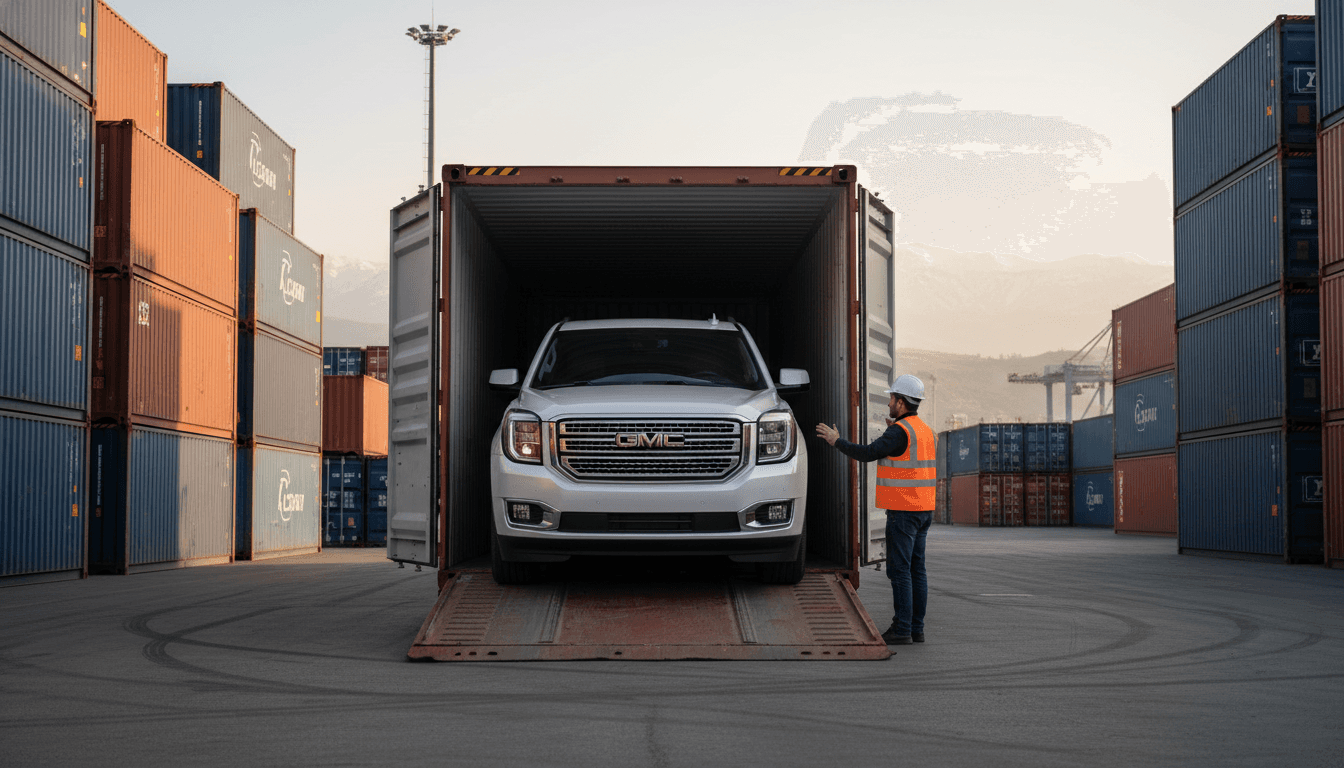
Armenia is landlocked with no seaports, so vehicle logistics are multimodal — sea to a Georgian port, then overland by car-carrier into Armenia.
Maritime Transit (via Georgia)
Cars sourced from the USA, Japan, South Korea, the UAE or Western Europe arrive by sea at the Georgian Black Sea ports of Poti and Batumi. From there they are loaded onto car-carrier trucks and driven south into Armenia.
Land Border Crossings
| Crossing | Neighbour | Role |
|---|---|---|
| Bagratashen | Georgia | Highest-volume crossing, on the main Tbilisi–Yerevan route |
| Bavra | Georgia | Western route, closer to the Black Sea |
| Gogavan | Georgia | Secondary northern crossing |
| Meghri / Agarak | Iran | Sole operating southern crossing (for Middle East / Iran transit) |
Armenia's borders with Turkey and Azerbaijan are closed to all traffic, so every overland import effectively transits Georgia (or, less commonly, Iran).
Inland Clearance Terminal
Vehicles are not cleared at the borderline. They move under customs transit to a designated inland terminal — primarily the Gyumri Northern Customs House (Tbilisyan Highway 2/14, Gyumri, Shirak province), which operates as a single window combining SRC inspection, valuation and Road Police registration.
Air Freight
Yerevan's Zvartnots International Airport can handle air-freighted vehicles, but the cost makes this route rare outside ultra-luxury or time-critical shipments.
Restrictions on Vehicle Import for Individuals
- One vehicle per category per year. Exceeding this means customs treats the import as commercial. The duty and VAT rates do not change, but the import is handled as a business consignment rather than a personal one.
- Free circulation vs national-only. A car on which the full EAEU Common Customs Tariff has been paid achieves EAEU "free circulation" — it can later be sold or registered in Russia, Belarus or Kazakhstan. Vehicles cleared under a national concession (notably EVs under the 2026 zero-duty quota) are cleared for Armenian circulation only and are "ring-fenced": they cannot be resold or transferred to a resident of Russia or Kazakhstan (or Belarus, for series hybrids) without paying the duty difference.
- Temporary-import deposit (since 2024). Armenia closed a long-standing loophole where residents drove foreign-plated (often Georgian) cars year-round under "temporary import". Since 1 January 2024, a resident temporarily importing a non-EAEU vehicle must lodge a cash deposit equal to the full duties and taxes that would be owed on a permanent import; the deposit is refunded only when the vehicle is re-exported on time.
- Returning residents. A relocating resident may bring one vehicle they have owned for at least six months before the move free of duty and VAT.
Duty Structure Overview
Armenia's import-tax structure is refreshingly simple — a two-step cascade with no excise and no recycling fee:
- Customs Duty on the customs (CIF) value.
- VAT at 20% on (CIF + customs duty).
There is no excise tax (motor vehicles are not on Armenia's excisable-goods list), no recycling or utilisation fee, no luxury or CO2 levy, and no environmental tax at the import stage. The only twist is in the duty itself, which splits by the car's age. Separately, the Road Police charge a flat AMD 23,000 state duty at registration.
Customs valuation (Cval)
The customs value is the CIF value — FOB purchase price plus international freight and insurance to the EAEU border — converted to Armenian dram at the Central Bank of Armenia rate on the day the declaration is registered. The SRC runs an anti-undervaluation reference-price database: if a declared invoice looks too low for that make/model/year, the SRC reassesses against its own reference price.
Customs duty — by age
| Vehicle | Customs duty |
|---|---|
| New car (up to 3 years from manufacture) | 15% ad valorem of CIF |
| Used car (over 3 years) | A specific EAEU rate per cm³, banded by age and engine size (table below) |
| Battery EV / series hybrid (qualifying) | 0% under the 2026 quota (otherwise 15%) |
| Pickup / light commercial (HS 8704, up to 5 t) | 10–15% of CIF depending on the exact tariff line; IPAS quotes 15% until the line is confirmed |
For new cars the maths is clean: 15% duty, then 20% VAT on the duty-inclusive value, for an effective 38% of CIF (15% + 20% × 1.15). Engine size makes no difference to a new car's duty — a 3.0-litre pays the same percentage as a 1.6-litre.
For used cars the duty is a specific amount per cubic centimetre of engine displacement rather than a percentage, and 20% VAT is then charged on top of (CIF + duty):
| Engine displacement | 3–5 years old | Over 5 years old |
|---|---|---|
| Up to 1,000 cm³ | AMD 643 (€1.5) per cm³ | AMD 1,286 (€3.0) per cm³ |
| 1,001–1,500 cm³ | AMD 729 (€1.7) | AMD 1,372 (€3.2) |
| 1,501–1,800 cm³ | AMD 1,072 (€2.5) | AMD 1,500 (€3.5) |
| 1,801–2,300 cm³ | AMD 1,158 (€2.7) | AMD 2,058 (€4.8) |
| 2,301–3,000 cm³ | AMD 1,286 (€3.0) | AMD 2,144 (€5.0) |
| Over 3,000 cm³ | AMD 1,543 (€3.6) | AMD 2,444 (€5.7) |
The rates are set in euros; the AMD figures use a reference rate of €1 = AMD 428.71, and the charge at clearance uses the Central Bank of Armenia euro rate on the declaration date. Age counts from the manufacture date, so a 2020 car cleared in 2026 is "over 5 years". The EAEU schedule can split the older band further (5–7 years and over 7 years), so for a borderline-age car confirm the exact figure with the SRC's official vehicle calculator or via CarImport.AI. Because the rate is tied to displacement rather than value, it falls heavily on cheap, old, large-engine cars.
VAT
20% on (CIF + customs duty). EVs that qualify for the 2026 exemption pay 0% VAT (see the next section).
No excise, no recycling fee, no import environmental tax
Despite what some import guides claim, Armenia levies no per-cm³ excise on cars (the excisable-goods list is alcohol, tobacco and petroleum products only — a per-cm³ car excise is a Russian or Kazakh rule, not Armenia's), no vehicle recycling/utilisation fee, and no environmental tax at import. There is an annual, horsepower-based vehicle property tax, but that is an ownership cost paid after registration — not part of the landed cost.
Worked example 1 — New petrol sedan, 2.0L (2,000 cc), from the USA, CIF US$25,000
| Charge | Calculation | Amount |
|---|---|---|
| Customs value (CIF) | — | $25,000 |
| Customs duty (15%) | $25,000 × 0.15 | $3,750 |
| VAT (20%) | ($25,000 + $3,750) × 0.20 | $5,750 |
| Excise / recycling / env tax | none | $0 |
| Total import charges | $9,500 (38% of CIF) |
Add the flat AMD 23,000 (about $63) registration duty at the Road Police.
Worked example 2 — Used petrol sedan, 1.6L (1,600 cc), 3–5 years old, from Germany, CIF US$12,000 (≈ AMD 4,416,000 at 368 AMD per US$)
| Charge | Calculation | Amount |
|---|---|---|
| Customs duty (used, per-cm³) | 1,600 cm³ × AMD 1,072 | AMD 1,715,200 (~$4,661) |
| VAT (20%) | (AMD 4,416,000 + AMD 1,715,200) × 0.20 | AMD 1,226,240 (~$3,332) |
| Total import charges | duty + VAT | AMD 2,941,440 (~$7,993, ~67% of CIF) |
The same car over 5 years old would pay AMD 1,500 per cm³ — AMD 2,400,000 of duty, more than half its value, before VAT. On an old, large-engine car the per-cm³ duty alone can exceed the vehicle's value.
Worked example 3 — New battery EV, from Germany, CIF US$40,000
| Charge | Calculation | Amount |
|---|---|---|
| Customs duty | 0% under the 2026 EV quota | $0 |
| VAT | exempt (qualifying EV) | $0 |
| Total import charges | $0 (0% of CIF) |
This applies only if the importer is a permanent resident of Armenia, the car was manufactured after 31 December 2023, it clears between 22 January and 31 December 2026, and quota units remain. The flat AMD 23,000 registration duty still applies. The same EV cleared from 1 January 2027, unless the concession is renewed, would pay $6,000 duty plus $9,200 VAT — $15,200, or 38% of CIF, exactly like a petrol car.
These figures show the structure. Get the exact duty — especially the per-cm³ rate on a used car — and the total landed cost for your specific vehicle using CarImport.AI.
EAEU-origin vehicles
A vehicle genuinely manufactured within the EAEU (for example, made in Russia or Belarus) enters Armenia at 0% customs duty, though 20% VAT still applies on its value.
Free trade agreements
No FTA reduces the duty on cars from Japan, Thailand, the UK, Australia, South Korea, China, the USA or the UAE. Armenia negotiates trade deals only as part of the EAEU, and the bloc's agreements (Vietnam, Serbia, Iran, Singapore) do not cover those origins, so the standard 15% applies.
Worked Example: Importing a 2026 Cadillac Escalade to Armenia
Here is the full landed cost of one car, a 2026 Cadillac Escalade shipped from the USA to Armenia, worked out on 9 November 2026 with the customs rules in force that day. It lands at 83,466,699 AMD (about US$231,467), and duties and taxes come to 92.8% of its CIF value.
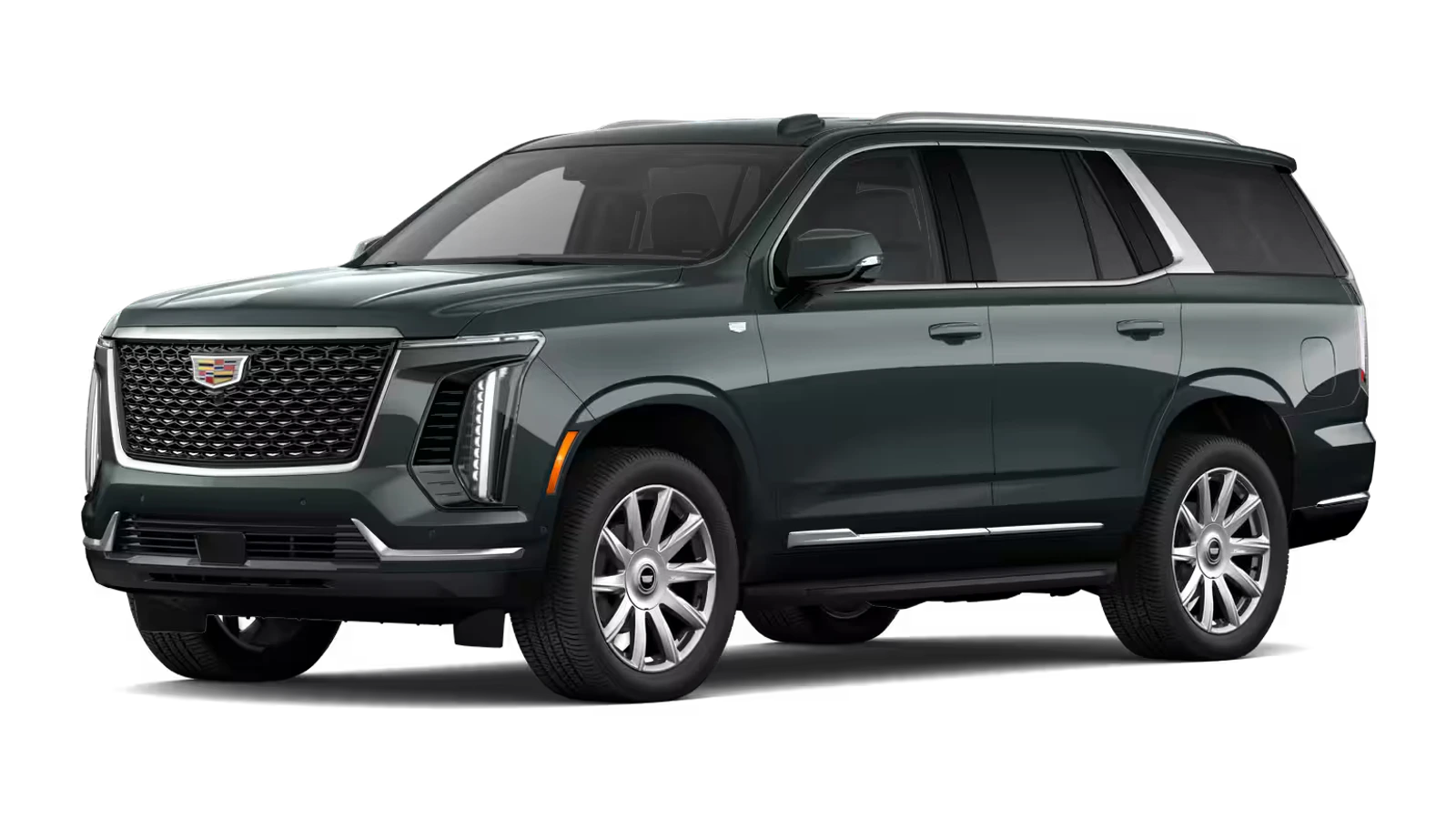
| Item | Share of CIF | Amount |
|---|---|---|
| Vehicle priceIPAS price for a car sourced in the USA | 39,413,438 AMDUS$109,300 | |
| Shipping and insuranceUSA to Armenia | 2,110,584 AMDUS$5,853 | |
| CIF valueCost, insurance and freight: the customs value | 41,524,022 AMDUS$115,153 | |
| Customs duties and taxes | ||
| Basic customs duty (90.7984%)90.8% of CIF | 37,703,118 AMDUS$104,557 | |
| Ad valorem excise0% of CIF | 0 AMDUS$0 | |
| CO₂ emissions levy334 g/km2% of CIF | 830,459 AMDUS$2,303 | |
| Total duties and taxes92.8% of CIF | 38,533,577 AMDUS$106,860 | |
| Service and handling | ||
| Premium Import ServiceOptional end-to-end import management by IPAS | 2,361,561 AMDUS$6,549 | |
| Destination handlingPort terminal and customs clearance handling | 1,047,539 AMDUS$2,905 | |
| Total landed cost | 83,466,699 AMDUS$231,467 | |
Electric and Hybrid Vehicles
Armenia runs one of the region's most aggressive EV incentive regimes — but both reliefs are 2026-only, with specific cut-offs that change the maths.
The 2026 zero-duty quota
Under EEC Council Decision No. 111 (5 December 2025) and Armenian Government Decision N 1971-N (25 December 2025), Armenia has a quota of 15,000 vehicles that can be imported at 0% customs duty during 2026, split 12,000 units for private individuals and non-dealer entities and 3,000 units for official dealers. It covers pure battery EVs (HS 8703.80.000.3) and series hybrids (HS 8703.80.000.5). To qualify, the vehicle must be manufactured after 31 December 2023, cleared on or after 22 January 2026 (cars cleared 1–21 January paid the standard 15%), and imported by a permanent resident of Armenia. Once the quota is exhausted, the standard 15% duty returns.
The VAT exemption and its 2026 sunset
Armenia historically exempted all imported EVs from the 20% VAT. For 2026 this is phased by vehicle age and then ends:
- 1–31 January 2026: all imported EVs are VAT-exempt regardless of age.
- 1 February – 31 December 2026: the exemption applies only to EVs manufactured after 31 December 2023.
- The exemption expires entirely on 31 December 2026.
From 1 January 2027
Both the zero-duty quota and the VAT exemption expire on 31 December 2026. Unless the EAEU and the Armenian government publish a renewal, an EV cleared in 2027 pays the full 15% duty (new) or the per-cm³ rate (used) plus 20% VAT — about 38% of CIF on a new car, the same as a petrol car. The 2026 measures were themselves adopted only weeks before they took effect, so do not plan a 2027 clearance on the assumption that they will be extended; IPAS will review the position in December 2026.
Hybrids: only series hybrids qualify
The concessions apply to pure battery EVs and series hybrids (the two HS 8703.80 lines above). Conventional hybrids (HEV, HS 8703.40/.50) and plug-in hybrids (PHEV, HS 8703.60/.70) do not qualify — they are taxed exactly like petrol cars: 15% duty (if new) and 20% VAT.
Ring-fencing
Quota EVs are bound to the Armenian market. They cannot be transferred to a resident of Russia or Kazakhstan (or Belarus, for series hybrids) without paying the difference up to the standard EAEU tariff.
Documents Required for Import
A complete, consistent document set is essential — a mismatched VIN digit between the title and the bill of lading is a leading cause of clearance delays.
For customs clearance (SRC)
- National passport or ID card (establishes identity and residency)
- Original purchase invoice or bill of sale (notarised) — the basis for the customs value
- Bill of Lading (BOL) or CMR waybill — proves freight cost for the CIF base
- Foreign vehicle registration / certificate of title — proves ownership, manufacture date and engine size
- SBKTS certificate (TR CU 018/2011 conformity) — mandatory before the car can be registered
- Passenger customs declaration (often lodged via e-customs by a broker)
- Interpol theft-clearance check (for the subsequent registration step)
- Proof of payment of duties and taxes (e-payments.am confirmations)
- Notarised power of attorney (if a broker acts on your behalf)
Customs Clearance Timeline
| Stage | Typical duration | Notes |
|---|---|---|
| Border to inland terminal (under transit) | 24–48 hours | Drive directly to the Gyumri customs house |
| Declaration + inspection + valuation + payment | 5–12 working days | With a flawless dossier and a pre-arranged SBKTS |
| Fast-track physical release (EarlyOne pre-booking) | 10–15 minutes | If duties are pre-funded and documents are in order |
Delays almost always trace back to undervaluation queries or document errors, which sequester the car in the bonded lot and accrue daily storage fees.
Homologation and Vehicle Approval
Every vehicle entering Armenia must comply with EAEU Technical Regulation TR CU 018/2011, "On the safety of wheeled vehicles." There are two conformity routes:
- OTTC (whole-vehicle type approval) — for commercial importers bringing in fleets; requires destructive crash testing and is impractical for an individual.
- SBKTS (single-vehicle construction safety certificate) — the route for a private individual importing one car. The vehicle undergoes a physical lab inspection of lighting, brakes, glass and seatbelt anchorages — no crash testing. An LPG or CNG installation must also pass this conformity check.
On steering: a right-hand-drive car cannot be registered as-is — it must be converted to left-hand drive before registration.
On emissions, a structurally safe older car can be imported — the cost deterrent on old, large-engine vehicles comes from the per-cm³ used-car duty, not an emissions tax. The ERA-GLONASS emergency-call system is mandated in the EAEU regulation but is not required for private single-vehicle imports.
Registration Procedures and Costs
After the SRC releases the car at Gyumri, it is in the country but not yet road-legal. You have 15 days from the customs declaration to register with the Road Police and obtain plates.
Steps
- Book online at roadpolice.am, selecting the "Requires examination" option (for a newly imported, unregistered car).
- Physical inspection — officers verify the VIN, engine number and colour against the customs release documents and check for illegal modifications.
- Pay the state fees via e-payments.am or on-site terminals.
- Ownership transaction — submit ID, customs documents, the inspection protocol and payment receipts.
- Issuance — the Vehicle Registration Certificate (technical passport) and metal plates are issued.
Fees (AMD)
| Item | Cost (AMD) | ≈ USD |
|---|---|---|
| Vehicle registration state fee | 5,000 | ~$14 |
| Technical passport (registration certificate) | 6,000 | ~$16 |
| Standard license plates | 12,000 | ~$33 |
| Standard total | 23,000 | ~$63 |
| Transit plate (optional, pre-registration) | 3,000 | ~$8 |
(USD figures at roughly 368 AMD to the dollar, late May 2026.)
Armenia also sells tiered vanity plates: "desirable" plates at 36,000 AMD, "high-demand" combinations from 60,000 AMD up to several million, and "special" symmetrical plates sold by government auction.
After registration, the car is liable for the annual vehicle property tax, which is based on engine power (horsepower) and has been charged at 100% of the computed amount since 1 January 2026; EVs are assessed on their continuous power rating.
Recent Regulatory Changes (2024–2026)
- 1 January 2024 — temporary-import deposit. Residents temporarily importing a non-EAEU car must now lodge a cash deposit equal to the full import duties and taxes, refunded only on re-export. This closed the foreign-plate (Georgian-registered) loophole.
- 2025 → 2026 — EV quota expanded. Armenia's zero-duty EV quota rose from 8,000 units to 15,000 units for 2026 (EEC Council Decision No. 111 and Government Decision N 1971-N), in force for clearances from 22 January 2026.
- 1 January / 1 February 2026 — EV VAT exemption age-gated. A full VAT exemption applied in January, then from 1 February 2026 it was restricted to EVs manufactured after 31 December 2023 — older EVs now pay the 20% VAT.
- 1 January 2026 — property tax at full rate. The HP-based annual vehicle property tax reached 100% of the computed amount.
- 31 December 2026 — EV reliefs expire. Both the zero-duty quota and the VAT exemption end; unless renewed, EVs cleared from 1 January 2027 pay the same 15% duty and 20% VAT as petrol cars.
Frequently Asked Questions
Can I import a right-hand-drive car to Armenia?
A car must be left-hand drive to be registered in Armenia. A right-hand-drive vehicle can be brought in, but it cannot be registered in RHD form — it must first be converted to left-hand drive. Because conversion adds cost, the practical answer is to source a factory LHD car; IPAS's source markets (USA, Germany, UAE, South Korea) all supply LHD vehicles.
How are the import taxes calculated?
It's a simple two-step cascade: customs duty, then 20% VAT on the duty-inclusive value. The duty is 15% of CIF for a new car (up to 3 years old), giving an effective 38% of CIF once VAT is added. For a used car (over 3 years) the duty is instead a specific rate per cm³ — from AMD 643 to AMD 2,444 per cm³ — that rises with age and engine size, so the effective rate varies widely. There is no excise, no recycling fee and no environmental tax at import; a flat AMD 23,000 registration duty is paid at the Road Police. Use CarImport.AI for an exact, vehicle-specific calculation — especially the per-cm³ rate on a used car.
Is there an age limit for importing a used car?
There is no hard age ban, but the used-car customs duty is a per-cm³ rate that rises with age and engine size, so importing an old, large-engine car is usually uneconomic — the duty alone can exceed the car's value. Newer, smaller-engine cars and EVs are far more practical.
Are electric vehicles really tax-free to import?
In 2026, close to it, if the car qualifies. Under the 2026 quota, 15,000 battery EVs and series hybrids enter at 0% customs duty, and EVs manufactured after 31 December 2023 are exempt from the 20% VAT (all EVs were VAT-exempt for January 2026 only). Both reliefs end on 31 December 2026; unless renewed, an EV cleared in 2027 pays the same 15% duty and 20% VAT as a petrol car. There is no excise or recycling fee either. The quota is for permanent residents of Armenia, and conventional or plug-in hybrids do not qualify — they are taxed like petrol cars.
Does Armenia have a seaport?
No. Armenia is landlocked. Most imported cars arrive by sea at the Georgian ports of Poti or Batumi, then travel overland by car-carrier through the Bagratashen, Bavra or Gogavan crossings into Armenia. Clearance is completed inland at the Gyumri customs house.
How long does clearance take?
A car moves from the border to the Gyumri terminal under transit within 24–48 hours, and full clearance typically takes 5–12 working days with complete documents and a pre-arranged SBKTS. With the EarlyOne pre-booking app and pre-funded duties, the physical release can take as little as 10–15 minutes.
How many cars can I import per year?
One per category per calendar year as a personal import. A second car in the same year is treated as a commercial import. The duty and VAT rates are the same, but only a VAT-registered business can reclaim the import VAT.
Ready to Import?
Importing a car to Armenia in 2026 means working through EAEU rules, the left-hand-drive registration requirement, a simple customs-duty-then-20%-VAT cascade (15% duty on new cars, a per-cm³ rate on used ones), and Georgian-port transit logistics — then registering with the Road Police within 15 days. The two big levers are powertrain and age: a new battery EV can clear the border almost tax-free under the 2026 quota (until 31 December 2026), while an old large-engine petrol or diesel car can attract duty greater than its value. And because Armenia needs left-hand-drive cars, vehicles sourced from the USA, Germany, the UAE or South Korea need no steering conversion.
IPAS provides two tools to plan and execute your import:
CarImport.AI — Source a vehicle through IPAS and calculate the full landed cost to Armenia, including customs duty, 20% VAT and shipping. Get exact figures for your specific vehicle, engine size, age and origin — especially the per-cm³ duty on a used car.
IPAS EXPRESS Pro Car Shipping — Already have a vehicle? Get instant shipping quotes — sea freight to Poti or Batumi plus overland transit into Armenia — with transparent, itemised pricing and a stage-by-stage timeline.
Ready to Import Your Vehicle?
Two tools, two use cases. Pick the one that fits your needs.

Source a vehicle through IPAS and calculate the full landed cost — customs duties, shipping, and compliance — to destinations across the world.
Calculate Landed CostIPAS Express
Already have a vehicle? Get instant shipping quotes — sea freight, air freight, or RoRo — for one car or multiple vehicles worldwide.
Get Shipping Quote