
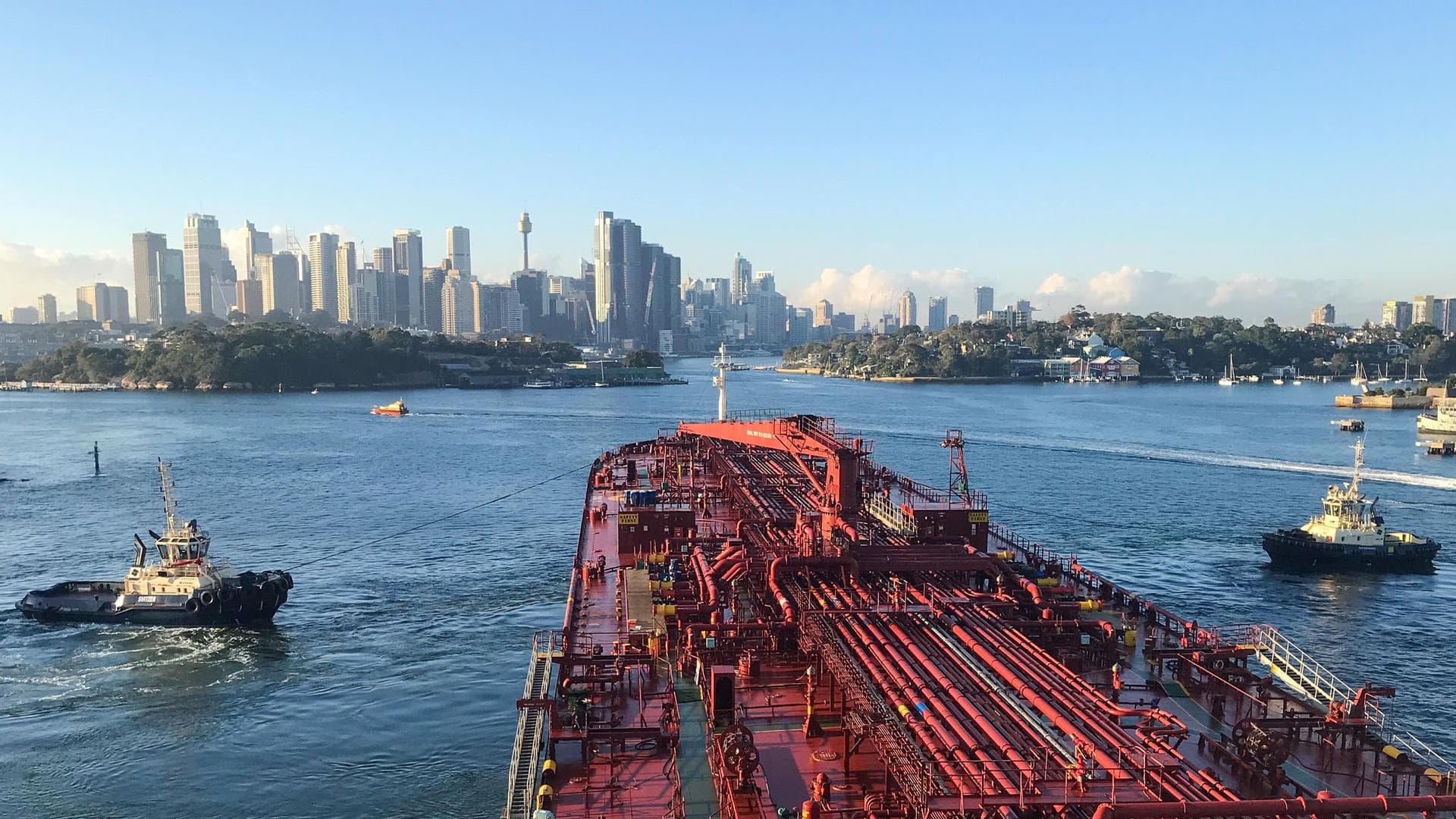
Introduction
To import a car to Australia you need a federal import approval through ROVER before the vehicle ships. At the border you pay 5% customs duty on the CIF value (0% for qualifying FTA origins such as Japan, Korea, the US, Thailand and China), 10% GST, and 33% Luxury Car Tax on value above A$80,809 (A$91,661 for fuel-efficient cars).
Australia is one of the most attractive destinations for vehicle imports in the Asia-Pacific region. With a well-established regulatory framework, world-class port infrastructure, and strong consumer demand for specialist and performance vehicles, the country offers genuine pathways for private individuals and businesses to bring in cars from overseas. Local car manufacturing ceased in 2017, so the nation now relies entirely on imports for its new car supply.
The Australian government administers vehicle imports through the Department of Infrastructure, Transport, Regional Development, Communications, Sport and the Arts, with customs duty, GST and Luxury Car Tax collected at the border by the Australian Border Force (ABF). The import approval system centres on the Road Vehicle Standards Act 2018 (RVSA), which replaced the older Motor Vehicle Standards Act from 1 July 2021. Under this framework, every road vehicle needs an import approval and must be entered on the Register of Approved Vehicles (RAV) before it can be registered. Australia has free trade agreements in force with the United States, Japan, South Korea, China, Thailand, Malaysia, Singapore, New Zealand, the ASEAN members and others that cut customs duty on qualifying vehicles to zero. There is no Australia-EU agreement, so cars from Germany, France, Italy and other EU countries pay the full 5%.
Whether you are importing a brand-new performance car from the United States, a specialist Japanese domestic model, or a classic vehicle over 25 years old, understanding the approval pathways, duty structure, and compliance requirements is essential. This guide covers every step of the process, from approval applications through to state-level registration.
Quick Facts
| Detail | Information |
|---|---|
| Steering | Right-Hand Drive (RHD) primary; C-RHD accepted |
| Customs Duty | 5% General rate; 0% for qualifying originating vehicles under FTAs (US, Japan, Korea, China, Thailand, Malaysia, Singapore, NZ, ASEAN, Hong Kong and others) |
| EV / PHEV duty | 0% from any origin for battery-electric, plug-in hybrid and fuel-cell cars with a customs value below A$91,661 |
| Classic vehicle duty | 0% for vehicles 30 or more years old (GST and LCT still apply) |
| GST | 10% on (customs value + customs duty) |
| Luxury Car Tax | 33% of the GST-inclusive value above the threshold, multiplied by 10/11 |
| LCT Threshold (FY 2026-27, from 1 July 2026) | A$80,809 (other vehicles) / A$91,661 (fuel-efficient, 3.5 L/100 km or less) |
| Major Seaports | Melbourne (AUMEL), Sydney (AUSYD), Brisbane (AUBNE) |
| Approval Body | Department of Infrastructure (ROVER portal) |
| Compliance Standard | Australian Design Rules (ADR) |
| Emissions Standard | ADR 79/05 (Euro 6d equivalent): new models first supplied from 1 December 2025; all new light vehicles from 1 July 2028 |
| Approval Processing Time | Up to 60 business days |
| Biosecurity | Mandatory cleaning and inspection required |
Types of Cars That Can Be Imported
Australia permits both new and used vehicle imports, but each category follows a distinct approval pathway. Understanding which pathway applies to your vehicle is the first critical decision in the import process.
New Vehicles (Vehicle Type Approval) New vehicles are normally imported under a vehicle type approval, which allows an unlimited number of vehicles of a particular type to be imported and is generally used for commercial importation. A vehicle without a type approval can only come in through one of the single-vehicle pathways below.
Used Vehicles -- Personal Effects Pathway (Moving to Australia) Migrants settling in Australia, and Australian citizens returning permanently after living overseas, can bring their own vehicle under a concessional RAV entry approval for personal effects. You must have become the owner while living overseas, owned and used it continuously for at least 12 months immediately before you first arrived in Australia to stay, apply within 6 months of that arrival, and not have been granted a personal-effects approval in the past 5 years.
Specialist and Enthusiast Vehicles (SEVS) The Specialist and Enthusiast Vehicle Scheme allows the import of vehicles with features such as high performance, low emissions or accessibility features that are not otherwise provided to the Australian market. Eligible models must appear on the SEVs Register, the applicant needs access to an approved Model Report, and the vehicle must be modified by a Registered Automotive Workshop (RAW) and checked by an Authorised Vehicle Verifier before it is entered on the RAV.
Classic and Historic Vehicles (25+ Years) Vehicles originally built (or significantly modified) more than 25 years ago can be imported under the "older vehicles" concessional RAV entry pathway. Most do not need to be on the SEVs Register and do not need to meet current ADRs, but they must still clear biosecurity and customs. The customs duty concession is separate and only starts at 30 years: in 2026 that means vehicles built on or before 31 December 1995. GST, and LCT on high-value cars, apply at any age.
Racing and Non-Road Vehicles Vehicles that will not be used on Australian roads, such as cars for races and rallies, public exhibition, or film and TV work, can be imported under a non-RAV entry import approval. These vehicles must not be driven on public roads.
Cars You Can Import to Australia
Each card is a full landed-cost calculation: the car's price, shipping, every duty and tax, and handling, worked out on 9 November 2026 with the rules in force that day. All are right-hand drive to suit Australia's roads. Tap a car to see its full breakdown, or open it to change the trim, colour or port.
More cars you can import to Australia
New cars IPAS sources to order that meet Australia's import rules. Prices are ex works, before shipping and duty. Cars marked C-RHD are built left-hand drive and converted to right-hand drive before shipping; the calculator adds the conversion. Open a car to work out its full landed cost.
 LHD/C-RHDBackorder2026
Ford Super Duty F-350
Pickup · 5 VariantsPetrolFrom $56,400Ex Works, USA RHDBackorder2026
Toyota Hilux Travo Overland
Pickup · 4 VariantsDieselFrom $37,800Ex Works, Thailand RHDBackorder2026
Toyota Land Cruiser FJ
SUV · 1 VariantPetrolFrom $46,100Ex Works, Thailand RHDBackorder2026
Toyota Land Cruiser 250
SUV · 7 VariantsPetrol · DieselFrom $41,600Ex Works, Japan RHDBackorder2026
Kia Seltos
SUV · 40 VariantsPetrol · DieselFrom $9,900Ex Works, India RHDBackorder2026
Kia Syros
SUV · 17 VariantsPetrol · DieselFrom $9,000Ex Works, India RHDBackorder2026
Kia Carens Clavis
SUV · 37 VariantsPetrol · DieselFrom $10,100Ex Works, India LHD/C-RHDBackorder2025
GMC Sierra 2500HD
Pickup · 6 VariantsPetrol · DieselFrom $90,000Ex Works, USA RHDBackorder2026
Hyundai Verna
Sedan · 12 VariantsPetrolFrom $9,900Ex Works, India RHDBackorder2026
Mercedes-Benz Maybach EQS SUV
SUV · 2 VariantsElectricFrom $243,000Ex Works, UK RHDBackorder2026
Mercedes-Benz EQS SUV
SUV · 4 VariantsElectricFrom $163,800Ex Works, UK RHDBackorder2026
Lexus RX
SUV · 7 VariantsHybridFrom $46,200Ex Works, Japan RHDBackorder2025
Lexus GX 550
SUV · 2 VariantsPetrolFrom $82,600Ex Works, Japan RHDBackorder2026
Chevrolet Corvette Stingray Convertible
Convertible · 1 VariantPetrolFrom $139,400Ex Works, NZ RHDBackorder2026
Chevrolet Silverado 1500
Pickup · 2 VariantsPetrolFrom $89,100Ex Works, NZ RHDBackorder2025
Chevrolet Corvette Z06 Coupe
Coupe · 1 VariantPetrolFrom $190,000Ex Works, NZ
Seaports and Airports
Australia has excellent port infrastructure across its major coastal cities. The choice of port can affect shipping costs, transit times, and proximity to compliance workshops.
Major Seaports
| Port | Code | Location | Notes |
|---|---|---|---|
| Melbourne | AUMEL | Victoria | Largest vehicle import port; extensive RAW network nearby |
| Sydney | AUSYD | New South Wales | Major east coast hub; good for US and Japan routes |
| Brisbane | AUBNE | Queensland | Strong connections to Japan and Southeast Asia |
| Fremantle | AUFRE | Western Australia | Closest port for Indian Ocean and Middle East routes |
| Adelaide | AUADL | South Australia | Smaller volume; good for specific regional needs |
Air Freight Airports
| Airport | Code | Location |
|---|---|---|
| Sydney (Kingsford Smith) | SYD | New South Wales |
| Melbourne (Tullamarine) | MEL | Victoria |
| Brisbane | BNE | Queensland |
| Perth | PER | Western Australia |
Air freight is available for high-value or urgent shipments but costs significantly more than sea freight. Most vehicle imports arrive by sea, either in containers (for maximum protection) or via Roll-on/Roll-off (RORO) shipping.
Typical Sea Freight Transit Times
| Origin | Destination Port | Transit Time |
|---|---|---|
| Los Angeles, USA | Melbourne | 3-4 weeks |
| Yokohama, Japan | Sydney | 2-3 weeks |
| Mumbai, India | Melbourne | 3-4 weeks |
| Southampton, UK | Sydney | 5-7 weeks |
| Jebel Ali, UAE | Fremantle | 2-3 weeks |
Restrictions for Individual Importers
While Australia allows personal vehicle imports, several restrictions apply that importers must be aware of before committing to a purchase.
Personal Effects Conditions:
- You must be an Australian citizen, or hold or be applying for a visa or permanent residence that lets you stay in Australia indefinitely
- You must have become the owner while living overseas and owned and regularly used the vehicle for at least 12 continuous months immediately before you first arrived in Australia to stay
- The application must be lodged within 6 months of your first arrival
- You cannot have been granted a personal-effects import approval in the previous 5 years
- The vehicle must be for your own personal use, not for resale
- You must hold an import approval before the vehicle arrives; ABF will not release a vehicle that lands without one
General Restrictions:
- All vehicles must be entered on the Register of Approved Vehicles before state registration, which means meeting the ADRs or qualifying for a concession
- Importing asbestos is prohibited in almost all circumstances, so vehicles must be free of asbestos-containing components
- Biosecurity cleaning is mandatory -- all vehicles must be free of soil, plant material, and biological contaminants
- Left-hand drive (LHD) vehicles can only be registered in limited circumstances (e.g., diplomatic, temporary use, or specific state exemptions)
- Light vehicle models approved and supplied for the first time from 1 December 2025 must meet ADR 79/05 (Euro 6d equivalent) emissions; models already on sale must comply by 1 July 2028
- Vehicles with odometer discrepancies or salvage titles may face additional scrutiny
Age Restrictions:
- Used vehicles under 25 years old must enter through SEVS (via a RAW) or the personal-effects pathway
- No general pathway exists for importing used vehicles that are less than 25 years old for resale, other than SEVS-listed models modified by a RAW
Duty Structure Overview
Australia's border charges on a car have three parts: customs duty, Goods and Services Tax (GST), and Luxury Car Tax (LCT) for vehicles above the value threshold. There is no separate excise on motor cars. Free trade agreements can remove the customs duty, and electrified cars below the fuel-efficient car limit pay no duty from any origin.
| Vehicle Type | Customs Duty | GST | LCT | Total Tax as % of CIF |
|---|---|---|---|---|
| Petrol, diesel or hybrid car, LCT value up to A$80,809 | 5% (0% FTA) | 10% | None | 10-15.5% |
| Petrol, diesel or hybrid car, LCT value above A$80,809 | 5% (0% FTA) | 10% | 33%* | ~15.5-50% (up to ~43% with FTA) |
| BEV / PHEV / FCEV, customs value below A$91,661 | 0% (any origin) | 10% | Only on LCT value above A$91,661 | ~10% |
| BEV / PHEV / FCEV, customs value A$91,661 or more | 5% (0% FTA) | 10% | 33%* above A$91,661 | ~15.5-50% (lower with FTA) |
| Dual-cab ute classed as a goods vehicle (HS 8704) | 5% (0% FTA) | 10% | Not applicable | 10-15.5% |
*The 33% LCT rate applies only to the portion of the GST-inclusive value that exceeds the threshold, with the GST stripped out of that excess (×10/11). The effective rate therefore climbs gradually as the value rises above the threshold.
How Duties Are Calculated:
- Customs Value = Purchase price + international shipping + insurance (CIF value), in AUD
- Customs Duty = CIF x 5% (or 0% if an FTA, the EV/PHEV free line or the classic concession applies)
- GST = (CIF + Customs Duty) x 10%
- LCT = ((CIF + Customs Duty + GST) - LCT Threshold) x 10/11 x 33% (only if the value exceeds the threshold)
Worked Examples (FY 2026-27 thresholds, AUD):
| Vehicle | Origin | CIF | Duty | GST | LCT | Landed | Tax % of CIF |
|---|---|---|---|---|---|---|---|
| Toyota Land Cruiser 300 GR Sport (diesel) | Japan (JAEPA) | 140,000 | 0 | 14,000 | 21,957 | 175,957 | 25.7% |
| BMW X5 xDrive30d | Germany (no FTA) | 110,000 | 5,500 | 11,550 | 13,872 | 140,922 | 28.1% |
| Tesla Model 3 Long Range (BEV) | USA | 72,000 | 0 | 7,200 | 0 | 79,200 | 10.0% |
| BMW iX xDrive50 (BEV above the limit) | Germany (no FTA) | 180,000 | 9,000 | 18,900 | 34,872 | 242,772 | 34.9% |
| Toyota HiLux dual-cab ute (HS 8704) | Japan (JAEPA) | 78,000 | 0 | 7,800 | Not applicable | 85,800 | 10.0% |
The Land Cruiser shows the LCT arithmetic: LCT value A$154,000 less the A$80,809 threshold leaves A$73,191, and A$73,191 × 10/11 × 33% = A$21,957. The Tesla pays no duty under either AUSFTA or the BEV free line, and its LCT value of A$79,200 is below the A$91,661 fuel-efficient threshold.
FTA Partner Countries (0% Customs Duty for qualifying originating vehicles): United States (AUSFTA), Japan (JAEPA), South Korea (KAFTA), China (ChAFTA), Thailand (TAFTA), Malaysia (MAFTA), Singapore (SAFTA), New Zealand (ANZCERTA), the ASEAN members (AANZFTA), Indonesia (IA-CEPA), Hong Kong (A-HKFTA), Peru (PAFTA) and CPTPP members such as Canada, Mexico and Chile. The UK (A-UKFTA) and India (AI-ECTA) agreements are in force, but IPAS's calculator applies the 5% rate to UK and Indian vehicles unless the specific tariff line is confirmed duty-free. The Australia-UAE CEPA came into force on 1 October 2025; check the tariff line before assuming 0%.
Important Notes:
- The LCT thresholds are indexed every 1 July by the Australian Taxation Office (ATO). The FY 2026-27 figures above apply from 1 July 2026 until 30 June 2027
- Since 1 July 2025 a car counts as fuel-efficient for LCT only at 3.5 L/100 km combined or less (previously 7 L/100 km). Battery-electric and fuel-cell cars qualify; most plug-in hybrids do; most non-plug-in hybrids (for example a Camry Hybrid at about 4.7 L/100 km) no longer do
- Electric cars are not exempt from LCT. They get a higher threshold and, below the fuel-efficient car limit, duty-free tariff lines
- LCT applies to an imported luxury car regardless of its age. The "2-year-old" rule only covers sales of cars already in Australia
- Dual-cab utes principally designed to carry goods (most HiLux, Ranger, D-Max and Triton models) are classified as goods vehicles and pay no LCT
- GST applies to all imports regardless of FTA status
- FTA preference is not automatic: the vehicle must meet the agreement's rules of origin and you need the right origin documentation
- The ABF also charges a small fixed Import Processing Charge per declaration (about A$192 for sea cargo)
Get your exact landed cost with real-time duty calculations: Calculate on CarImport.AI
Worked Example: Importing a 2026 Ford Ranger to Australia
Here is the full landed cost of one car, a 2026 Ford Ranger shipped from Thailand to Australia, worked out on 9 November 2026 with the customs rules in force that day. It lands at 58,954 AUD (about US$40,499), and duties and taxes come to 10% of its CIF value.
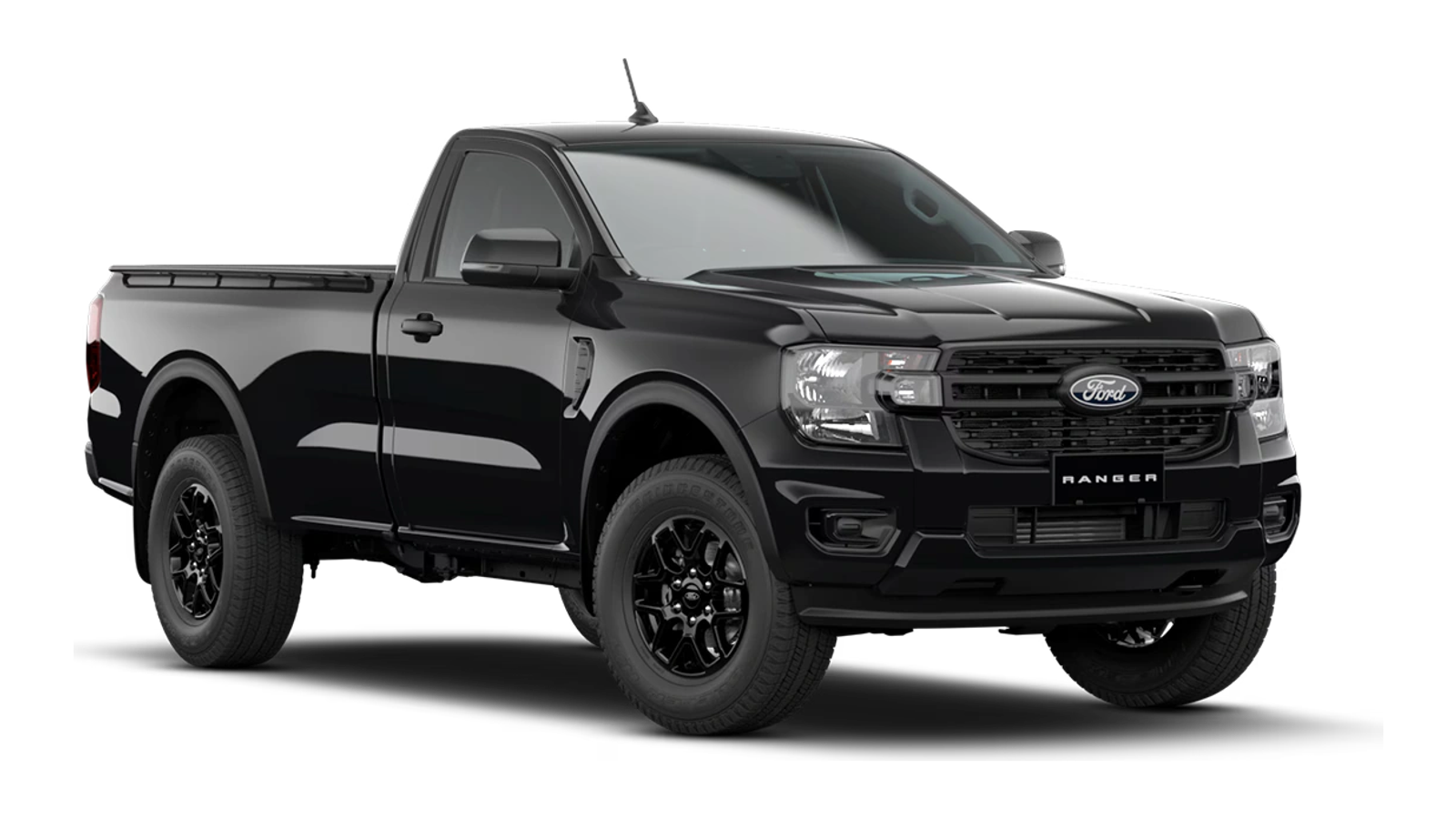
| Item | Share of CIF | Amount |
|---|---|---|
| Vehicle priceIPAS price for a car sourced in Thailand | 41,633 AUDUS$28,600 | |
| Shipping and insuranceThailand to Australia | 7,985 AUDUS$5,485 | |
| CIF valueCost, insurance and freight: the customs value | 49,618 AUDUS$34,085 | |
| Customs duties and taxes | ||
| Basic customs duty (0%)0% of CIF | 0 AUDUS$0 | |
| GST/VAT (10%)10% of CIF | 4,961 AUDUS$3,408 | |
| Total duties and taxes10% of CIF | 4,961 AUDUS$3,408 | |
| Service and handling | ||
| Premium Import ServiceOptional end-to-end import management by IPAS | 1,610 AUDUS$1,106 | |
| Destination handlingPort terminal and customs clearance handling | 2,766 AUDUS$1,900 | |
| Total landed cost | 58,954 AUDUS$40,499 | |
Documents Required
The following documents are required to import a vehicle into Australia. Missing or incomplete documentation will delay customs clearance and may result in the vehicle being held at the port.
Pre-Shipment Documents:
- ROVER import approval (obtained before the vehicle ships)
- Original commercial invoice or bill of sale showing purchase price, seller details, and vehicle description
- Proof of overseas ownership and use (minimum 12 months for personal-effects imports)
- Valid passport and Australian visa/residency documentation
Shipping Documents:
- Bill of Lading (B/L) or Air Waybill (AWB)
- Packing list detailing vehicle contents and personal effects (if any)
- Export certificate from the country of origin
- Certificate of Title or equivalent ownership document
- Certificate of Origin or origin declaration (to claim an FTA duty rate)
Customs Clearance Documents:
- Customs Import Declaration (completed by your customs broker)
- Biosecurity import permit or declaration
- Asbestos-free certificate or declaration
- Vehicle identification details (VIN, engine number, body type)
- Evidence of compliance modifications (if applicable)
Post-Clearance Documents:
- Register of Approved Vehicles (RAV) entry (this replaced the old compliance plate scheme)
- RAW and Authorised Vehicle Verifier records for SEVS vehicles
- Roadworthy certificate (state-specific)
- Stamp duty payment receipt (for registration)
It is strongly recommended to engage a licensed customs broker with experience in vehicle imports. They will prepare and lodge the Import Declaration on your behalf and coordinate with the Australian Border Force and biosecurity authorities.
Customs Clearance Timeline
The import process involves several sequential steps, each with its own timeframe. Planning ahead is essential to avoid costly storage charges at the port.
| Stage | Duration | Details |
|---|---|---|
| ROVER import approval application | Up to 60 business days | Apply well before the vehicle ships |
| Sea freight transit | 2-7 weeks | Depends on origin country and shipping method |
| Biosecurity inspection and cleaning | 1-3 days | At the port of arrival; may require treatment |
| Customs clearance and duty payment | 2-5 working days | After documentation is lodged by your broker |
| Release from port | 1-2 days | After clearance and payment confirmed |
| ADR compliance workshop | 2-8 weeks | For vehicles requiring compliance modifications |
| State registration | 1-2 weeks | After the vehicle is entered on the RAV |
Total Estimated Timeline: roughly 2-6 months (from application to registration, mostly driven by approval time and any workshop modifications)
Tips to Avoid Delays:
- Apply for ROVER approval as early as possible, ideally before purchasing the vehicle
- Ensure the vehicle is thoroughly cleaned before shipping to pass biosecurity
- Have all documents prepared and provided to your customs broker before the vessel arrives
- Pre-book a Registered Automotive Workshop (RAW) for compliance work
- Budget for port storage fees if delays occur (typically AUD 30-80 per day after the free storage period)
Homologation and ADR Compliance
All road vehicles imported into Australia must comply with the Australian Design Rules (ADRs) unless they qualify for a specific concession. ADR compliance is the most technically involved part of the import process and often the most expensive.
What Are Australian Design Rules (ADRs)?
ADRs are national standards for vehicle safety, emissions, and anti-theft performance. They cover areas including:
- Occupant protection (seatbelts, airbags, seat anchorage)
- Lighting and visibility (headlamps, indicators, reflectors)
- Emissions and noise
- Braking performance
- Electronic stability control (ESC)
- Child restraint anchorage points
- Anti-theft (immobiliser requirements)
Euro 6d Emissions (ADR 79/05)
ADR 79/05 brings Euro 6d-equivalent noxious emissions limits for light vehicles (passenger and commercial vehicles up to 3.5 tonnes gross vehicle mass). It applies:
- To light vehicle models approved and supplied in Australia for the first time on or after 1 December 2025
- To all new light vehicles supplied from 1 July 2028, including models already on sale before December 2025
- To both petrol and diesel powertrains
Vehicles certified to the US Tier 3 light-duty standards are accepted, because the US limits and durability requirements are compatible with Euro 6d.
Compliance Process (SEVS vehicles):
- Check the model is on the SEVs Register and that an approved Model Report exists
- Obtain a concessional RAV entry approval before import
- A Registered Automotive Workshop (RAW) carries out the modifications set out in the Model Report (e.g., headlight changes, speedometer conversion to km/h, ESC verification)
- An Authorised Vehicle Verifier checks the work and enters the vehicle on the Register of Approved Vehicles, which replaced the old compliance plate
Estimated Compliance Costs:
- Minor modifications (Japanese/UK RHD vehicles): AUD 2,000-5,000
- Moderate modifications (US LHD to RHD conversion): AUD 15,000-40,000+
- Full LHD to RHD conversion with ADR compliance: AUD 25,000-50,000+
These are post-clearance costs paid to the workshop. They are not customs charges and are not included in the duty, GST and LCT figures above.
Concessions:
- Vehicles more than 25 years old can be entered on the RAV under the older-vehicles pathway without meeting current ADRs
- Racing and exhibition vehicles that will not be registered can use a non-RAV entry import approval
- Certain diplomatic and temporary-use vehicles may receive exemptions
Registration Procedures and Costs
After customs clearance and entry on the RAV, the vehicle must be registered with the relevant state or territory road authority. Registration requirements and costs vary by state.
General Registration Steps:
- Obtain a roadworthy certificate (or equivalent safety inspection)
- Arrange Compulsory Third Party (CTP) insurance
- Pay stamp duty on the vehicle's value
- Pay registration fees
- Obtain number plates
State-by-State Stamp Duty Rates:
| State/Territory | Stamp Duty Rate | Notes |
|---|---|---|
| New South Wales | 3% (up to AUD 45,000), then 5% on the excess | Sliding scale |
| Victoria | 4.2% (up to AUD 80,809), then 5.2%, 7% and 9% bands above | Low-emission cars stay at 4.2% at any value |
| Queensland | 2-4% (up to AUD 100,000), 4-6% above | Rate depends on cylinders; hybrids and EVs pay the lowest |
| Western Australia | 2.75-6.5% | 6.5% above AUD 50,000 |
| South Australia | 3-4% | Based on value brackets |
| Tasmania | 3% (up to AUD 35,000), 4% above AUD 40,000 | Sliding step between AUD 35,000 and 40,000 |
| ACT | Varies | Based on value and environmental rating |
| Northern Territory | 3% | Flat rate |
Typical Annual Registration Costs (approximate):
| Component | Cost Range (AUD) |
|---|---|
| Registration fee | 300-600 |
| CTP insurance | 400-900 |
| Stamp duty (one-time, on AUD 50,000 value) | 1,000-3,250 |
| Roadworthy inspection | 100-300 |
| Number plates | 30-50 |
Important Notes:
- Stamp duty is calculated on the market value or purchase price, whichever is higher
- Some states offer reduced stamp duty for electric and hybrid vehicles
- CTP insurance costs vary by state, vehicle type, and driver history
- Green slip (NSW) or TAC charge (VIC) is the CTP component
Frequently Asked Questions
Q: Can I import a left-hand drive (LHD) vehicle to Australia? A: LHD vehicles can be imported but face significant restrictions for road registration. Most states require conversion to RHD for permanent registration. Exceptions exist for vehicles over 25 years old, certain specialist vehicles, and diplomatic use. LHD vehicles used only for motorsport or display do not require conversion.
Q: How much does it cost to convert a car from LHD to RHD in Australia? A: A full LHD to RHD conversion by a Registered Automotive Workshop typically costs between AUD 25,000 and AUD 50,000 or more, depending on the vehicle's complexity. IPAS offers a Certified RHD (C-RHD) conversion at a flat USD 30,000, performed before shipping, which can be more cost-effective than converting in Australia.
Q: Do I have to pay Luxury Car Tax on every imported vehicle? A: No. LCT only applies when the vehicle's GST-inclusive value (CIF + duty + GST) exceeds the threshold. For FY 2026-27 (from 1 July 2026) the thresholds are A$80,809 for most vehicles and A$91,661 for fuel-efficient vehicles using 3.5 L/100 km or less. LCT is charged at 33% on the excess × 10/11. It applies to imported cars of any age, but not to goods vehicles such as most dual-cab utes.
Q: Which countries have Free Trade Agreements that eliminate customs duty? A: Qualifying vehicles from the United States (AUSFTA), Japan (JAEPA), South Korea (KAFTA), China (ChAFTA), Thailand (TAFTA), Malaysia, Singapore, New Zealand, the ASEAN members, Hong Kong and CPTPP members pay 0% duty. UK and Indian vehicles are treated at 5% in IPAS's calculator unless the specific tariff line is confirmed duty-free. EU-built cars pay 5% because there is no Australia-EU agreement. You need a Certificate of Origin or origin declaration to claim a preference.
Q: How long does the entire import process take? A: Allow roughly 2 to 6 months from ROVER application to state registration. The Department can take up to 60 business days to decide an import application. Sea freight adds 2-7 weeks depending on origin. ADR compliance work can take an additional 2-8 weeks if modifications are required.
Q: Can I import a used car to sell in Australia? A: Generally, no. There is no open pathway for importing used vehicles under 25 years old for resale. The commercial route for younger used cars is SEVS: the model must be on the SEVs Register and the car modified by a Registered Automotive Workshop. Individuals moving to Australia can bring their own car under the personal-effects pathway (12 months' ownership, once every five years), but not to sell.
Q: What happens if my vehicle fails biosecurity inspection? A: If the vehicle is found to contain soil, plant material, or other biological contaminants, it will be directed for mandatory cleaning and treatment at your expense. In severe cases, the vehicle may be held until it passes re-inspection. Costs range from AUD 200 to AUD 1,000 depending on the level of contamination.
Q: Do electric vehicles receive any import duty concessions? A: Yes, two. Battery-electric, plug-in hybrid and fuel-cell cars with a customs value below A$91,661 pay 0% customs duty from any origin, with no FTA paperwork needed. They also use the higher A$91,661 LCT threshold. Above that value an EV pays 5% duty (0% with an FTA) and LCT on the excess, because there is no LCT exemption for EVs. Several states also cut stamp duty for EVs.
Q: Do dual-cab utes pay Luxury Car Tax? A: Usually not. Dual-cab utes principally designed to carry goods, such as most HiLux, Ranger, D-Max and Triton models, are classified as goods vehicles (HS 8704), which are outside LCT. They still pay 5% duty (0% with an FTA) and 10% GST. Passenger-focused derivatives can be classified as cars, so confirm with your customs broker.
Start Your Australia Import
Importing a vehicle to Australia is achievable with the right preparation and professional support. IPAS provides end-to-end import services covering vehicle sourcing, C-RHD conversion, shipping, customs clearance, and compliance coordination.
Ready to calculate your exact landed cost? Use CarImport.AI for an instant, accurate breakdown of all duties, taxes, shipping costs, and compliance fees for your specific vehicle and origin country.
Calculate Your Import Cost on CarImport.AI
Already own a vehicle and need shipping? Use IPAS EXPRESS Pro Car Shipping to get competitive sea freight and air freight quotes to Melbourne, Sydney, Brisbane, or any Australian port.
Need expert guidance? Contact the IPAS team for personalised import assistance, including ROVER application support, RAW workshop coordination, and complete door-to-door logistics.
Sources: Department of Infrastructure, Transport, Regional Development, Communications, Sport and the Arts (infrastructure.gov.au); Australian Border Force (abf.gov.au); Australian Taxation Office (ato.gov.au); Department of Agriculture, Fisheries and Forestry (agriculture.gov.au); state revenue offices (stamp duty).
Ready to Import Your Vehicle?
Two tools, two use cases. Pick the one that fits your needs.

Source a vehicle through IPAS and calculate the full landed cost — customs duties, shipping, and compliance — to destinations across the world.
Calculate Landed CostIPAS Express
Already have a vehicle? Get instant shipping quotes — sea freight, air freight, or RoRo — for one car or multiple vehicles worldwide.
Get Shipping Quote