
Introduction
Chile's vehicle import tax is one of the simplest in the world. There are two components and nothing else: a 6% customs duty on CIF, then 19% IVA on the duty-inclusive total. That produces exactly one number — 26.14% of CIF — and because Chile's free trade agreement network is unusually dense, most vehicles pay 19.00% instead, with the duty falling to zero.
In practice there are only three legal effective rates in the whole regime. There is no displacement tax, no CO2 tax at the border, no luxury tax, no engine-capacity band, no per-unit fee, no customs processing charge and no electric-vehicle concession. If a Chilean import estimate contains a third tax line, it is wrong.
The difficulty in Chile is not arithmetic. It is admissibility. Chile prohibits the import of used vehicles — and "used" is defined by model year, not by mileage or by an age limit in years. A zero-kilometre, never-registered 2024 model cannot be imported in 2026, because it fails the model-year test. There is no five-year rule, no eight-year rule and no age allowance of any kind.
There is also a trap that catches practitioners and calculators alike. Chile's DL 825 contains an Article 43 bis that still appears in the official statute database as not repealed, and which reads as imposing an additional tax based on engine displacement — 15% of customs value on a 2,000cc car, 39% on a 2,800cc pickup. Its rate has been zero since 1 January 2000. Never apply it, and never derive a percentage from engine displacement in Chile.
Quick Facts
| Detail | Information |
|---|---|
| Customs Authority | Servicio Nacional de Aduanas — aduana.cl |
| Tax Authority | Servicio de Impuestos Internos — sii.cl |
| Traffic Side | Right-hand traffic (drive on the right) |
| Steering Requirement | LHD |
| Customs Duty | 6% of CIF at MFN; 0% from most origins under Chile's FTA network |
| IVA (VAT) | 19% on (CIF + duty) |
| Total — MFN origin | 26.14% of CIF |
| Total — FTA origin (0% duty) | 19.00% of CIF |
| Displacement tax | None — DL 825 Article 43 bis has a rate of zero since 2000 |
| Luxury tax at the border | None — Ley 21.420 is an annual ownership tax |
| CO2 tax at the border | None — the impuesto verde is a registration-stage charge |
| Customs processing / statistical fee | Does not exist |
| EV or hybrid border concession | None |
| Used vehicle import | PROHIBITED — Ley 18.483 Article 21 |
| Definition of "unused" | A model-year test, not an age limit |
| Emission floor | Euro 6b or EPA Tier 3 Bin 125, since 31 March 2023 |
| Green tax (impuesto verde) | Registration stage, paid to Tesorería; blocks registration until paid |
| Free zones | ZOFRI (Iquique / Región de Tarapacá) and Región de Magallanes |
| Main Ports | Valparaíso, San Antonio, Iquique |
| Currency | Chilean Peso (CLP) |
Cars You Can Import to Chile
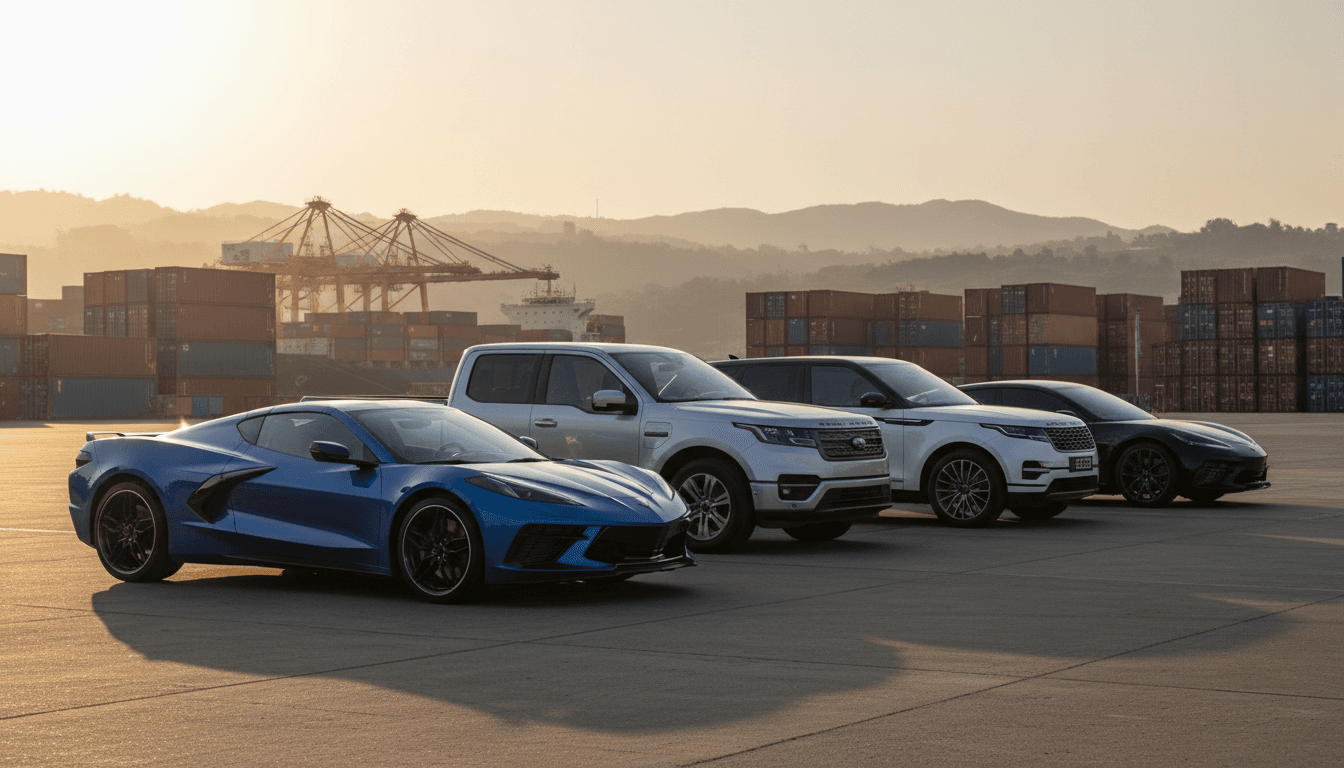
Each card is a full landed-cost calculation: the car's price, shipping, every duty and tax, and handling, worked out on 9 November 2026 with the rules in force that day. All are left-hand drive to suit Chile's roads. Tap a car to see its full breakdown, or open it to change the trim, colour or port.
More cars you can import to Chile
New cars IPAS sources to order that meet Chile's import rules. Prices are ex works, before shipping and duty. Open a car to work out its full landed cost.
 LHDBackorder2026
Lexus ES
Sedan · 12 VariantsHybrid · ElectricFrom $52,500Ex Works, Canada LHDBackorder2026
Lexus TX
SUV · 10 VariantsPetrol · HybridFrom $61,000Ex Works, Canada LHDBackorder2026
Lexus NX
SUV · 16 VariantsPetrol · Hybrid · Plug-in HybridFrom $48,000Ex Works, Canada LHDBackorder2026
Toyota bZ Woodland
SUV · 2 VariantsElectricFrom $54,400Ex Works, USA LHDBackorder2026
Toyota Land Cruiser 71
SUV · 2 VariantsPetrolFrom $55,100Ex Works, UAE LHDBackorder2026
Dodge Durango
SUV · 8 VariantsPetrolFrom $46,800Ex Works, USA LHDBackorder2026
Xiaomi YU7
SUV · 5 VariantsElectricFrom $37,100Ex Works, China🇨🇳 LHD/C-RHDBackorder2025
GMC Sierra 2500HD
Pickup · 6 VariantsPetrol · DieselFrom $90,000Ex Works, USA LHD/C-RHDBackorder2026
GMC Hummer EV Pickup
Pickup · 3 VariantsElectricFrom $115,900Ex Works, USA LHDBackorder2026
Mercedes-Benz S-Class
Sedan · 2 VariantsHybridFrom $131,800Ex Works, Canada LHDBackorder2027
Mercedes-Benz Maybach S-Class
Sedan · 3 VariantsHybrid · Plug-in HybridFrom $206,200Ex Works, Germany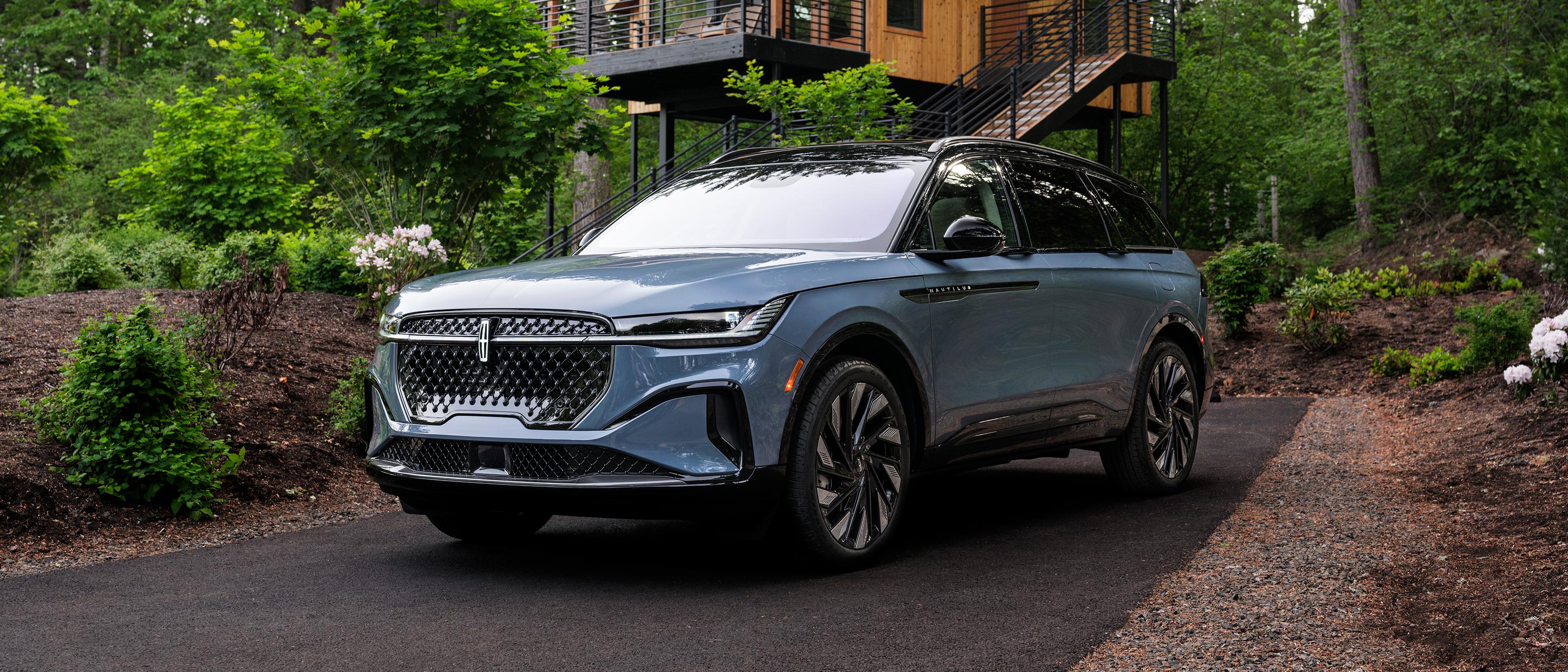 LHDBackorder2026
Lincoln Nautilus
SUV · 6 VariantsPetrol · HybridFrom $67,200Ex Works, USA LHDBackorder2026
Cadillac VISTIQ
SUV · 4 VariantsElectricFrom $92,900Ex Works, USA LHDBackorder2026
Nissan Armada
SUV · 4 VariantsPetrolFrom $72,800Ex Works, Canada LHD/C-RHDBackorder2025
Chevrolet Suburban
SUV · 14 VariantsPetrol · DieselFrom $81,700Ex Works, USA LHDBackorder2026
Zeekr 009
Van & MPV · 4 VariantsElectricFrom $69,800Ex Works, China🇨🇳
The Used-Vehicle Prohibition — Read This First
Ley N° 18.483, the Estatuto Automotriz, provides at Article 21 that only unused vehicles may be imported. Aduana states it plainly in its own guidance: the importation of used vehicles is prohibited, subject only to the narrow exceptions below.
A used vehicle that arrives at Valparaíso or San Antonio without a qualifying exception cannot be cleared for consumption. It must be re-shipped at the importer's cost or dealt with as prohibited merchandise. This is not a penalty situation — the goods simply cannot enter.
"Unused" is a model-year test
Let Y be the calendar year in which the import declaration is accepted by Aduanas.
| Vehicle model year | Admissible? |
|---|---|
| Y + 1 | Yes |
| Y | Yes |
| Y − 1 | Yes — but only if the declaration is accepted on or before 30 April of year Y |
| Y − 2 or older | No — prohibited |
For a declaration made during 2026:
- MY2027 → admissible
- MY2026 → admissible
- MY2025 → admissible only until 30 April 2026; from 1 May 2026, prohibited
- MY2024, MY2023 and older → prohibited, regardless of mileage
The vehicle must also genuinely be unused — never registered, with no meaningful prior use. Both conditions must hold. A zero-kilometre, never-registered MY2024 car is prohibited in 2026 because it fails the model-year test even though it is physically new.
The 30 April cut-off deserves particular attention. It creates a hard calendar deadline: a prior-model-year vehicle that would be perfectly admissible in March becomes prohibited in May. If you are shipping a Y−1 model, the declaration acceptance date — not the sailing date — is what matters.
Exceptions
Article 21 permits a narrow set of used imports:
- Enumerated special-use vehicles: ambulances, prison vans, hearses, fire engines, ladder trucks, street sweepers, snowploughs, water trucks, crane trucks, projector and workshop vehicles, concrete mixers, radiological vehicles, armoured cash-transport vehicles, breakdown vehicles, motorhomes, and off-road transport vehicles. Aduana reads "special uses" as non-exhaustive and has admitted competition vehicles subject to a transport ministry technical opinion and a Director-level resolution.
- Special regimes under Section 0 of the customs tariff and goods enjoying full or partial duty exemption.
- The free zones — see below.
Free Zones
Chile operates free zones at ZOFRI in Iquique, whose extension zone is the whole Región de Tarapacá, and in the Región de Magallanes.
Used vehicles can enter these zones under a conditional special-use regime. Duties and IVA are suspended or exempt inside the zone, and residents of the zones and their extension zones acquire vehicles paying a reported 1.7% of CIF in place of the ordinary levies.
Circulation is restricted. A vehicle registered in a free zone may travel in the rest of Chile for up to 90 days per calendar year under a pasavante issued by Aduana — personal, non-transferable, valid for one year, and requiring domicile in the zone.
Nationalisation into the rest of Chile follows the general rule:
- A new vehicle may be nationalised on payment of the ordinary 6% duty and 19% IVA, and on meeting the Euro 6b or EPA Tier 3 Bin 125 emission floor.
- A used vehicle may not be nationalised for permanent mainland circulation. The Article 21 prohibition reasserts itself the moment the vehicle leaves the special regime, and since 31 March 2023 any vehicle failing the emission floor is confined to the zones regardless.
The free-zone route is therefore a genuine option for someone resident in Iquique or Magallanes, and not a workaround for anyone else.
Duty Structure Overview
Chile's border cascade has two components:
- Derecho ad valorem (customs duty) — 6% of CIF at MFN, or 0% for FTA-originating goods. Uniform across every HS 8703 and HS 8704 line.
- IVA — 19% on (CIF + duty).
Customs value is CIF — cost of the goods, insurance premium and freight. Chile is not an FOB market.
A recargo por uso (used-goods surcharge) equal to 50% of the duty amount exists, taking the effective duty from 6% to 9% at MFN, but it applies only on the narrow used-import pathways described above. It is zero where the duty is zero.
The invariant arithmetic
| Origin | Calculation | Effective rate |
|---|---|---|
| MFN (no agreement) | CIF × 1.06 × 1.19 | 26.14% of CIF |
| FTA-originating (0% duty) | CIF × 1.19 | 19.00% of CIF |
Worked example — Aduana's own published figures
| Line | USD |
|---|---|
| FOB | 25,000.00 |
| Freight | 2,325.00 |
| Insurance | 500.00 |
| CIF | 27,825.00 |
| Customs duty, 6% of CIF | 1,669.50 |
| IVA, 19% of (27,825.00 + 1,669.50) | 5,603.96 |
| Total taxes | 7,273.46 |
That is 26.14% of CIF, and there is no third tax line in Aduana's own worked example. Use this as the arithmetic anchor.
Worked example — the same vehicle with a valid FTA certificate of origin
| Line | USD |
|---|---|
| CIF | 27,825.00 |
| Customs duty | 0.00 |
| IVA, 19% of 27,825.00 | 5,286.75 |
| Total taxes | 5,286.75 (19.00% of CIF) |
The certificate of origin is worth just under US$2,000 on this vehicle.
These figures show the structure. Get the exact landed cost for your specific vehicle and origin using CarImport.AI.

Calculate your exact import duty to Chile
Get a vehicle-specific duty and full landed-cost breakdown — HS classification, every tax, levy and FTA, plus shipping — calculated for your exact make, model and specs.
- Vehicle-specific HS code
- All duties, taxes & FTAs
- Shipping + est. landed cost
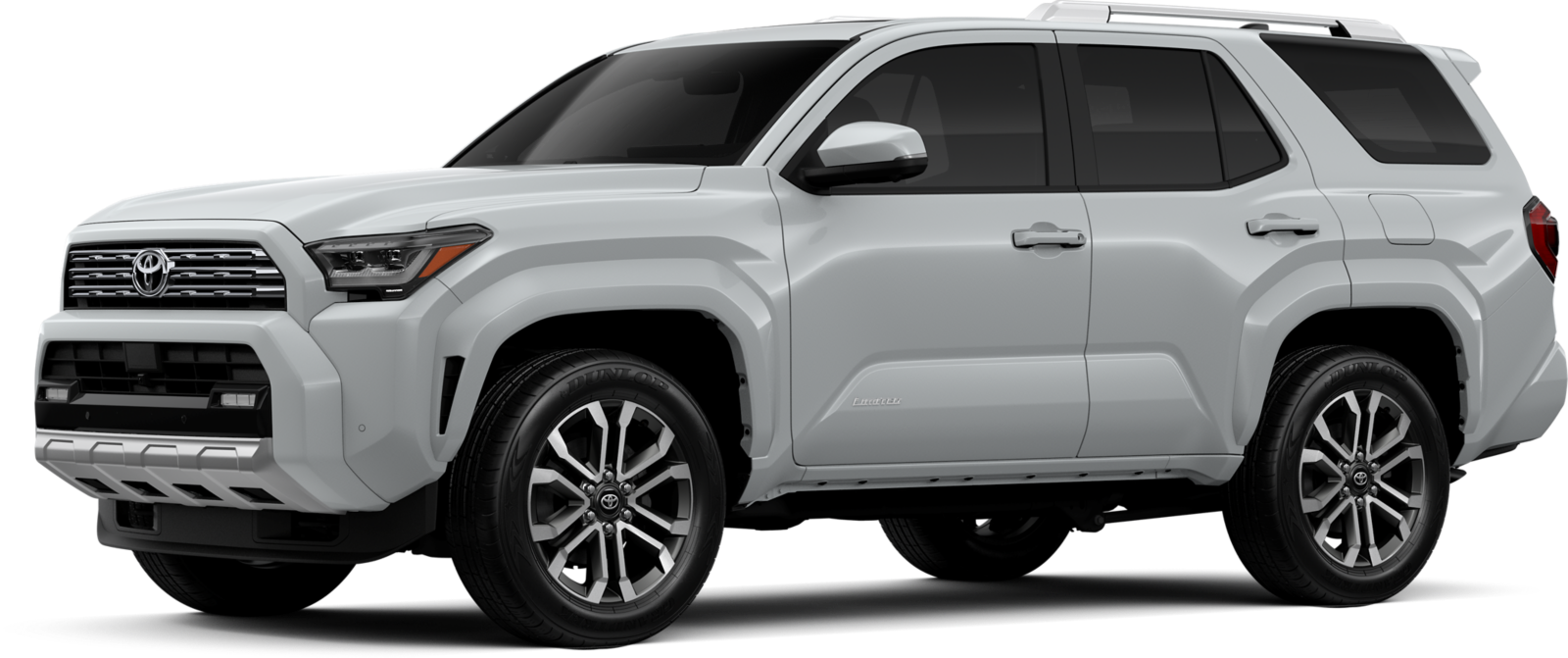
Worked Example: Importing a 2026 Toyota 4Runner to Chile
Here is the full landed cost of one car, a 2026 Toyota 4Runner shipped from the USA to Chile, worked out on 9 November 2026 with the customs rules in force that day. It lands at 68,434,304 CLP (about US$70,016), and duties and taxes come to 19% of its CIF value.
| Item | Share of CIF | Amount |
|---|---|---|
| Vehicle priceIPAS price for a car sourced in the USA | 49,065,957 CLPUS$50,200 | |
| Shipping and insuranceUSA to Chile | 5,262,373 CLPUS$5,384 | |
| CIF valueCost, insurance and freight: the customs value | 54,328,330 CLPUS$55,584 | |
| Customs duties and taxes | ||
| Basic customs duty (0%)0% of CIF | 0 CLPUS$0 | |
| GST/VAT (19%)19% of CIF | 10,322,422 CLPUS$10,561 | |
| Total duties and taxes19% of CIF | 10,322,422 CLPUS$10,561 | |
| Service and handling | ||
| Premium Import ServiceOptional end-to-end import management by IPAS | 1,906,926 CLPUS$1,951 | |
| Destination handlingPort terminal and customs clearance handling | 1,876,626 CLPUS$1,920 | |
| Total landed cost | 68,434,304 CLPUS$70,016 | |
The Phantom Tax — Article 43 bis
This is the most important correction in any Chilean import calculation.
DL 825, the Chilean VAT law, contains an Article 43 bis which the official LeyChile database still displays as no derogado — not repealed. It reads as imposing an additional tax on vehicle imports, calculated by multiplying engine displacement in cubic centimetres by 0.03 and subtracting 45, capped at US$7,503.55.
Applied literally, that formula would produce 15% of customs value on a 2,000cc car and 39% on a 2,800cc pickup. A 2014 Congress library note still describes the tax as applicable, and tax service circulars still cross-reference the article.
The rate has been zero since 1 January 2000.
Ley N° 18.483, Article 19, provided that the tax established by Article 43 bis would be reduced by 10% annually from 1 January 1990. That cumulative reduction reached 100% in 1999. Aduana's own Oficio Circular N° 290 of 13 October 2003, quoting the tax service, states that from 1 January 2000 the Article 43 bis tax ceased to apply. Aduana's published worked example shows no such line, and the annual decree that was meant to reindex the US$7,503.55 cap has not been issued in recent years.
The trap exists precisely because the article was never formally repealed — unlike Articles 46 and 46 bis, the old 85% and 100% vehicle luxury taxes, which were formally derogated with effect from 1 January 2007.
The rule: the impuesto adicional under Article 43 bis is zero. Show it as an explicit zero line so it is visibly accounted for, and never derive a percentage from engine displacement in Chile. Chile has no displacement-based tax.
Free Trade Agreements
Chile has one of the densest FTA networks in the world, and for vehicles it is almost comprehensive. All agreements below are fully phased — no staged reduction remains on vehicle lines in 2026.
| Origin | Agreement | Duty on HS 8703 / 8704 | Origin proof required |
|---|---|---|---|
| United States | TLC Chile–EE.UU. (2004) | 0% | Certificado de Origen |
| European Union | Acuerdo de Asociación (2003) | 0% | Origin declaration or EUR.1 |
| United Kingdom | Continuity agreement | 0% | Origin declaration |
| Japan | EPA (2007) | 0% | Certificate of Origin |
| South Korea | TLC (2004) | 0% | Certificado de Origen |
| China | TLC (2006) | 0% | Certificado de Origen |
| Canada | TLC (1997) | 0% | Certificado de Origen |
| Mexico | TLC (1999) | 0% | Certificado de Origen |
| Thailand | TLC (2015) | 0% | Certificado de Origen |
| Australia | TLC (2009) | 0% | Certificado de Origen |
| New Zealand | P4 / CPTPP | 0% | Self-certification |
| EFTA (Switzerland, Norway, Iceland, Liechtenstein) | Chile–EFTA (2004) | 0% | Origin declaration |
| Mercosur (Argentina, Brazil, Uruguay, Paraguay) | ACE 35 (1996) | 0% | Certificado ALADI |
| Pacific Alliance (Colombia, Peru, Mexico) | (2016) | 0% | Certificado de Origen |
| India | PTA — no vehicle concession | 6% MFN | none available |
| United Arab Emirates | No agreement in force | 6% MFN | n/a |
| Any other origin without an agreement | — | 6% MFN | n/a |
Two warnings.
India is not an FTA origin for vehicles. The Chile–India Preferential Trade Agreement is a positive-list agreement, and Chile's concession list does not contain HS 8703 or HS 8704. Indian-origin cars and pickups pay the full 6%. Do not grant a preference merely because the two countries have an agreement.
Origin means country of manufacture under the agreement's rules of origin, not country of shipment. A Japanese-built vehicle re-exported from Dubai remains Japanese-origin only if a valid Japanese certificate of origin accompanies it. Without valid origin documentation, the 6% MFN rate applies regardless of where the car was built.
Electric and Hybrid Vehicles
Chile provides no border concession for electric or hybrid vehicles. A battery EV pays the same 6% duty (or 0% with FTA origin) and the same 19% IVA as a petrol car — there is no reduced rate, no exemption and no cap.
Where electrification helps is the impuesto verde at the registration stage, described below, which is driven by fuel consumption and NOx emissions. An electric vehicle scores at or near zero on both inputs, so its green tax is negligible. But that is a registration-stage benefit, not an import one.
The Green Tax — Registration Stage, Not a Border Charge
The impuesto verde under Ley N° 20.780 is real and must be budgeted, but it is not a customs charge. It is paid to the Servicio de Tesorería, or an authorised bank, by the person in whose name the vehicle will be registered. The statute is explicit that a vehicle cannot be entered in the Register of Motorised Vehicles until the tax has been paid.
The formula, expressed in UTM (a monthly inflation-indexed tax unit):
Tax in UTM = [ (35 ÷ urban fuel economy in km/litre) + (120 × NOx in g/km) ] × (sale price × 0.00000006)
The sale price used is IVA-inclusive. UTM is reindexed monthly and must never be frozen at an old value.
Three points follow. It is not collected by Aduanas, it is not part of the customs value, and it is not in the IVA base. Report it as a separate registration-stage line, after and outside the border total. A calculation that folds the green tax into the import cascade is structurally wrong.
Note that the formula rewards fuel economy and low NOx, which is why diesel vehicles tend to fare badly and electric vehicles very well.
Other Charges That Do Not Exist
Worth stating explicitly, because they are frequently invented:
- No customs processing, statistical or despacho fee. Chile levies none.
- No state port or terminal charge. Commercial port charges exist but are not taxes.
- No per-cubic-centimetre, per-kilowatt or CO2 tax at the border.
- No luxury tax at the border. Ley 21.420 is an annual ownership tax, not an import charge.
- No scrappage or recycling fee on vehicles. Chile's extended producer responsibility law covers tyres, not vehicles.
Emissions Requirements
Since 31 March 2023, imported vehicles must meet a floor of Euro 6b or EPA Tier 3 Bin 125. A vehicle failing that standard cannot be nationalised for mainland circulation and is confined to the free zones.
Because the used-vehicle prohibition already restricts imports to essentially current-model-year vehicles, this rarely binds on a normal import — a current-model car from the US, EU, Japan or Korea will comfortably exceed the floor. It matters mainly for free-zone nationalisation and for vehicles from markets with looser emissions regimes.
Documents Required for Import
- Commercial invoice showing FOB, freight and insurance separately
- Bill of Lading (original or telex release)
- Packing list with make, model, model year, VIN, engine capacity and fuel type
- Certificate of Origin in the correct format for the applicable agreement — this is what converts 26.14% into 19.00%
- Manufacturer's certificate confirming the vehicle is new and unregistered
- Emissions compliance documentation (Euro 6b or EPA Tier 3 Bin 125)
- Fuel economy and NOx data, for the green tax assessment at registration
- Declaración de Ingreso (DIN) customs declaration
- Chilean tax identification (RUT) for the importer
Customs Clearance Timeline
| Stage | Typical duration | Notes |
|---|---|---|
| Vessel arrival to discharge | 1–3 days | Valparaíso or San Antonio |
| Declaration acceptance and assessment | 2–5 working days | The acceptance date determines the model-year test |
| Duty and IVA payment, release | 1–2 days | |
| Homologation and technical compliance | 1–3 weeks | Emissions verification |
| Green tax payment and registration | 1–2 weeks | Registration blocked until paid |
| Typical total | 3–6 weeks |
The single most important date in a Chilean import is the acceptance of the declaration, because that is what fixes the model-year test. Shipping a Y−1 model vehicle that arrives in April but is not declared until May turns an admissible import into a prohibited one.
Recent Regulatory Changes
- 1 January 2000 — Article 43 bis reduced to zero. The cumulative 10% annual reduction under Ley 18.483 Article 19 reached 100% in 1999. The article was never formally repealed, which is why it remains a trap.
- 1 January 2007 — old luxury taxes derogated. DL 825 Articles 46 and 46 bis, the 85% and 100% vehicle luxury taxes, were formally repealed by Ley N° 19.914.
- 2023 — CPTPP entered into force for Chile, adding a further origin pathway alongside the existing bilateral network.
- 31 March 2023 — emission floor. Vehicles failing Euro 6b or EPA Tier 3 Bin 125 are confined to the free zones and cannot be nationalised for mainland circulation.
Frequently Asked Questions
How much does it cost to import a car to Chile?
Either 26.14% or 19.00% of CIF, and nothing in between. The full rate is 6% customs duty plus 19% IVA on the duty-inclusive value. If the vehicle originates in a country with which Chile has a trade agreement — which covers the US, EU, UK, Japan, Korea, China, Canada, Mexico, Australia, New Zealand, Thailand, EFTA, Mercosur and the Pacific Alliance — the duty falls to zero and you pay 19.00%. India and the UAE are the notable exceptions and pay the full 6%.
Can I import a used car into Chile?
Almost certainly not. Ley 18.483 prohibits the importation of used vehicles, and "used" is defined by model year rather than by mileage or age. In 2026 you may import a 2026 or 2027 model, and a 2025 model only if the declaration is accepted on or before 30 April 2026. Anything from 2024 or earlier is prohibited even at zero kilometres and never registered. Chile has no five-year or eight-year rule — the test is model year, full stop. Narrow exceptions exist for ambulances, fire engines, motorhomes and certain other special-use vehicles, and for the Iquique and Magallanes free zones.
What is the 30 April deadline?
It is the cut-off for importing a prior-model-year vehicle. A model-year 2025 car can be imported during 2026 only if the customs declaration is accepted on or before 30 April 2026; from 1 May it becomes prohibited. Note that it is the declaration acceptance date that counts, not the sailing or arrival date — so a vehicle that arrives in late April but is declared in May has missed it.
Is there a tax based on engine size in Chile?
No, and this is the most common error in Chilean import calculations. DL 825 Article 43 bis reads as imposing a displacement-based additional tax and still appears in the official statute database as not repealed — but its rate has been zero since 1 January 2000, following the cumulative reduction under Ley 18.483. Aduana's own worked example contains no such line. Applied literally the formula would add 15% on a 2,000cc car and 39% on a 2,800cc pickup, so getting this wrong is expensive. Chile has no displacement tax.
Do electric vehicles get an import discount?
Not at the border. EVs pay the same 6% duty (or 0% with FTA origin) and the same 19% IVA as any petrol car — Chile offers no border concession for electrification. Where an EV does benefit is the green tax at registration, which is calculated from urban fuel consumption and NOx emissions. An electric vehicle scores at or near zero on both and pays a negligible green tax, but that is a registration-stage saving rather than an import one.
What is the impuesto verde and is it part of the import cost?
It is a green tax under Ley 20.780, calculated from urban fuel economy, NOx emissions and the IVA-inclusive sale price. It is genuinely payable — a vehicle cannot be entered in the Register of Motorised Vehicles until it is paid — but it is not a customs charge. It is paid to the Treasury at the registration stage, is not in the customs value, and is not in the IVA base. Budget it separately from the 26.14% or 19.00% border figure.
Does buying from Dubai give me the Japanese rate?
Only if a valid Japanese certificate of origin travels with the vehicle. Origin under Chilean rules means the country of manufacture as established under the relevant agreement's rules of origin, not the country the car shipped from. Without valid origin documentation, the 6% MFN rate applies regardless of where the vehicle was actually built. Note also that the UAE itself has no agreement with Chile.
Are there any extra customs fees?
No. Chile levies no customs processing fee, no statistical fee and no state port charge. There is no scrappage or recycling levy on vehicles, and no luxury tax at the border — Ley 21.420 is an annual ownership tax. If a Chilean estimate shows a third tax line beyond duty and IVA, it is wrong.
Ready to Import?
Chile is the rare market where the tax question is trivial and the eligibility question is everything. Two components, two possible rates, and a published worked example from the customs service itself — there is very little to model.
What needs care is the calendar. The model-year test is unforgiving, it turns on the declaration acceptance date rather than the shipping date, and the 30 April cut-off for prior-model-year vehicles converts an admissible import into a prohibited one overnight. Plan the declaration date, not just the sailing.
Then secure the certificate of origin. Chile's agreement network is dense enough that most vehicles qualify for zero duty, and the difference between 26.14% and 19.00% is entirely a documentation question.
And ignore anything that tries to charge you by engine size. Chile has no displacement tax.
IPAS provides two tools to plan and execute your import:
CarImport.AI — Source a vehicle through IPAS and calculate the full landed cost to Chile, including the 6% duty or FTA zero rate, 19% IVA and shipping, with the model-year admissibility position checked up front.
IPAS EXPRESS — Already have a vehicle? Get instant shipping quotes to Valparaíso, San Antonio or Iquique — sea freight, RoRo or container — with transparent, itemised pricing and a stage-by-stage timeline.
Ready to Import Your Vehicle?
Two tools, two use cases. Pick the one that fits your needs.
Source a vehicle through IPAS and calculate the full landed cost — customs duties, shipping, and compliance — to destinations across the world.
Calculate Landed CostIPAS Express
Already have a vehicle? Get instant shipping quotes — sea freight, air freight, or RoRo — for one car or multiple vehicles worldwide.
Get Shipping Quote