
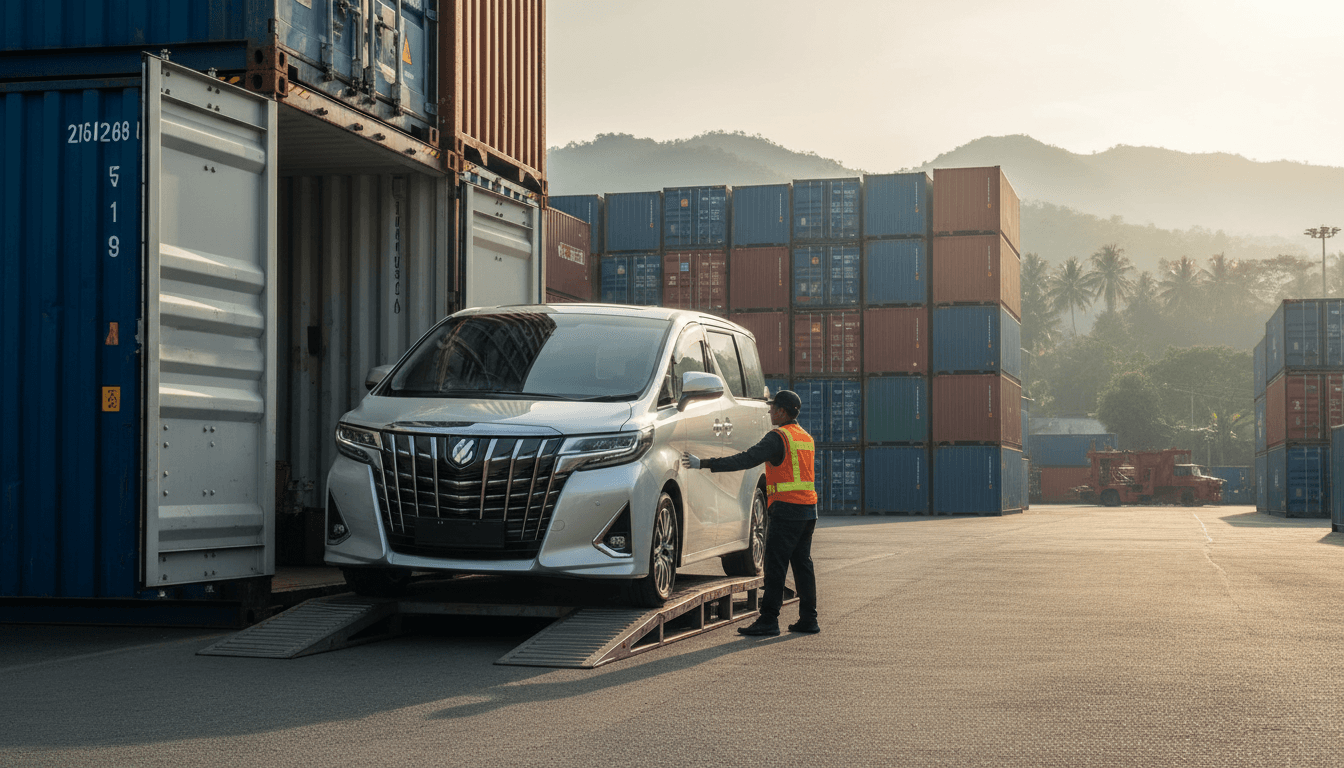
Introduction
Importing a car into mainland China means three border taxes on CIF: 15% customs duty, a 1%–40% consumption tax set by engine size, and 13% VAT. A 2.0-litre petrol car from a non-agreement origin pays 36.79% of CIF in border tax; a battery-electric car pays 29.95%. Used cars cannot be imported; right-hand drive cannot be registered.
What makes China different from almost every other market is the consumption tax (消费税). Its base is not the value of the car plus duty. Under Article 7 of the Provisional Regulations on Consumption Tax, the base is a "composite taxable price" (组成计税价格) that already contains the consumption tax itself: (CIF + duty) ÷ (1 − rate). The tax is therefore charged on a figure that includes the tax. Many online calculators miss this and simply multiply (CIF + duty) by the rate, which understates the consumption tax by a quarter in the 25% band and by 40% in the 40% band.
The consequence is a steep ladder driven almost entirely by engine displacement. At the standard 15% duty, a car of up to 1.0 litre pays 31.26% of CIF in border tax. A 3.5-litre car pays 73.27%. Anything above 4.0 litres pays 116.58% — more than the car itself is worth at the border. Price, age and origin play no part in choosing the band; only cylinder capacity does.
Two other things define China in 2026. First, origin matters more than most buyers expect: Australian and New Zealand-built cars enter at 0% duty, some Thai-built cars at 0%, Indian-built cars at 13.5% — while Japanese and Korean-built passenger cars get nothing from their trade agreements. Second, US-built vehicles carry additional tariffs of 10% or 20% on top of the 15% duty, and part of that regime is due to change on 10 November 2026 unless it is renewed.
Before any of the tax, though, come the gates. China admits new vehicles only. It requires left-hand drive. And a private individual cannot be the consignee: the vehicle must be imported by a licensed Chinese enterprise holding an automatic import licence.
Quick Facts
| Detail | Information |
|---|---|
| Customs Authority | General Administration of Customs of China (GACC, 海关总署) |
| Tariff Authority | Customs Tariff Commission of the State Council (国务院关税税则委员会) |
| Scope | Mainland China only — Hong Kong SAR, Macao SAR and Taiwan are separate customs territories |
| Traffic Side | Right-hand traffic (drive on the right) |
| Steering Requirement | LHD only — GB 7258-2017 clause 6.1 requires the steering wheel on the left. RHD cannot be registered |
| Vehicle Age | New vehicles only — used vehicles are prohibited imports. No age band, no classic exception |
| Customs Duty | 15% MFN on every built-up passenger car and goods vehicle line |
| Preferential Duty | 0% Australia, New Zealand, Chile, Hong Kong SAR, Macao SAR and others; 0% or 15% Thailand/ASEAN by tariff line; 13.5% India (APTA) |
| US-Origin Duty (to 10 Nov 2026) | 25% on most US-built cars; 35% on petrol-only cars above 2.5 L and goods vehicles up to 5 tonnes |
| Consumption Tax | 1% / 3% / 5% / 9% / 12% / 25% / 40% by engine displacement, on (CIF + duty) ÷ (1 − rate) |
| Consumption Tax — exempt | Battery-electric cars (HS 8703.80) and every HS 8704 goods vehicle, including most double-cab pickups |
| Hybrids and Plug-in Hybrids | No concession — taxed on the displacement of the combustion engine, exactly like petrol |
| VAT | 13%, on CIF + duty + consumption tax |
| Total, 1.5–2.0 L petrol car, MFN origin | 36.7895% of CIF |
| Total, battery-electric car, MFN origin | 29.9500% of CIF |
| Total, petrol car above 4.0 L, MFN origin | 116.5833% of CIF |
| Ultra-luxury consumption tax | 10% at the retail stage where the retail price is at least RMB 900,000 excluding VAT — not a border tax |
| Vehicle purchase tax | 10% at registration, on CIF + duty + consumption tax — not a border tax |
| Import licence | Automatic import licence (自动进口许可证) required, issued to enterprises only |
| Importer of record | A Chinese enterprise with a foreign-trade operator filing — a natural person cannot be the consignee |
| Certification | CCC (China Compulsory Certification) and China 6b emissions compliance |
| Quota | None |
| Main Ports | Tianjin (Dongjiang Free Trade Port Zone), Shanghai Waigaoqiao, Guangzhou Nansha, Shenzhen, Dalian, Qingdao, Ningbo |
| Currency | Chinese Yuan Renminbi (CNY, ¥) |
| Customs exchange rate | RMB central parity of the third Wednesday of the preceding month, held for the whole month |
Types of Cars That Can Be Imported
New vehicles only — the used-vehicle prohibition
Used motor vehicles (旧机动车) cannot be commercially imported into mainland China. The national tariff lines for HS 8703 and HS 8704 carry customs supervision condition code "6" — 旧机电产品禁止进口, "used mechanical and electrical products prohibited from import". A used vehicle also cannot obtain CCC certification or an automatic import licence, so every route is closed.
This is a prohibition, not a rate. There is no age band, no surcharge for older vehicles, no classic-car exception and no 30-year pathway. A vehicle that has been registered anywhere before is outside the system entirely. For that reason IPAS calculates and quotes new vehicles only for China.
Steering — left-hand drive only
GB 7258-2017, the national technical standard for motor-vehicle safety, states at clause 6.1 that an automobile's steering wheel shall be on the left side. GB 7258 is the technical basis for both registration and the inspection of imported vehicles, so a right-hand-drive car cannot be registered. Converting a vehicle to left-hand drive before shipment does not create a clean pathway either: the converted vehicle must still satisfy CCC and type-conformity requirements as a left-hand-drive vehicle.
Parallel imports (平行进口)
Alongside the official brand channel, China operates a parallel-import channel in which licensed enterprises import vehicles built for other markets — often described as 非中规车, "non-China-specification" vehicles. Tax is identical in both channels. Since 1 July 2026, an importer of a non-China-specification vehicle must declare the original destination-market version in the "specification and model" field of the customs declaration — for example "原欧规" (originally EU-spec) or "原美规" (originally US-spec).
Body style and pickups
Saloons, hatchbacks, estates, coupés, SUVs, MPVs and minibuses of up to nine seats including the driver are passenger vehicles under HS 8703 and pay consumption tax. Vans and trucks on a goods chassis and single-cab pickups are HS 8704 goods vehicles and pay none. Double-cab pickups are decided by an arithmetic weight test, explained in the duty section below — and the answer is worth a great deal.
Out of scope
Buses and coaches of more than nine seats (HS 8702), special-purpose vehicles such as motorhomes and ambulances (HS 8705), motorcycles, and CKD or SKD kits are outside this guide.
Cars You Can Import to China
Each card is a full landed-cost calculation: the car's price, shipping, every duty and tax, and handling, worked out on 9 November 2026 with the rules in force that day. All are left-hand drive to suit China's roads. Tap a car to see its full breakdown, or open it to change the trim, colour or port.
More cars you can import to China
New cars IPAS sources to order that meet China's import rules. Prices are ex works, before shipping and duty. Open a car to work out its full landed cost.
 LHDBackorder2026
Chevrolet Corvette Z06 Convertible
Convertible · 3 VariantsPetrolFrom $144,700Ex Works, USA LHD/C-RHDBackorder2025
Chevrolet Silverado 2500 HD
Pickup · 15 VariantsPetrol · DieselFrom $64,600Ex Works, USA LHDBackorder2025
Chevrolet Corvette E-Ray Convertible
Convertible · 3 VariantsHybridFrom $137,500Ex Works, USA LHD/C-RHDBackorder2025
GMC Sierra 2500HD
Pickup · 6 VariantsPetrol · DieselFrom $90,000Ex Works, USA LHD/C-RHDBackorder2026
GMC Hummer EV Pickup
Pickup · 3 VariantsElectricFrom $115,900Ex Works, USA LHD/C-RHDBackorder2025
GMC Yukon
SUV · 5 VariantsPetrolFrom $81,500Ex Works, USA LHDBackorder2026
Toyota Hilux Single Cab
Pickup · 2 VariantsPetrolFrom $34,000Ex Works, UAE LHDBackorder2026
Toyota Land Cruiser 78 Troop Carrier
SUV · 2 VariantsDieselFrom $54,200Ex Works, UAE LHDBackorder2026
Toyota Land Cruiser 76
SUV · 5 VariantsPetrolFrom $51,400Ex Works, UAE LHD/C-RHDBackorder2026
Ram 1500
Pickup · 12 VariantsPetrolFrom $48,300Ex Works, USA LHDBackorder2027
Mercedes-Benz Maybach S-Class
Sedan · 3 VariantsHybrid · Plug-in HybridFrom $206,200Ex Works, Germany LHD/C-RHDBackorder2026
Cadillac Escalade
SUV · 11 VariantsPetrolFrom $109,300Ex Works, USA LHDBackorder2026
Cadillac CT5
Sedan · 7 VariantsPetrolFrom $59,000Ex Works, USA LHDBackorder2026
Jeep Wrangler
SUV · 11 VariantsPetrolFrom $43,200Ex Works, USA LHDBackorder2026
Lexus LX
SUV · 7 VariantsPetrol · HybridFrom $108,700Ex Works, Canada LHD/C-RHDBackorder2026
Tesla Cybertruck
Pickup · 2 VariantsElectricFrom $105,600Ex Works, USA
Seaports Supporting Vehicle Import
| Port | Location | Role |
|---|---|---|
| Tianjin — Dongjiang Free Trade Port Zone | Northern China, Bohai Bay | The largest parallel-import vehicle port in China, and the primary IPAS entry point |
| Shanghai — Waigaoqiao | Eastern China | Active parallel-import port |
| Guangzhou — Nansha | Southern China, Pearl River Delta | Active parallel-import port |
| Shenzhen | Southern China | Active parallel-import port |
| Dalian | North-east China | Active parallel-import port |
| Qingdao | Shandong | Active parallel-import port |
| Ningbo | Zhejiang | Active parallel-import port |
| Fujian ports and inland rail ports | Various | Also active in the parallel-import channel |
Duty, consumption tax and VAT are identical at every port. Port choice affects logistics cost and timing, not tax.
Restrictions on Vehicle Import for Individuals
- A natural person cannot be the consignee. The importer of record must be a Chinese enterprise holding a foreign-trade operator filing (对外贸易经营者备案). In practice an individual buyer purchases through a licensed importer, which clears the vehicle and sells it on.
- An automatic import licence is required, and it is issued to enterprises only. Vehicles appear in the 2026 list of goods subject to automatic import licensing (《自动进口许可管理货物目录(2026年)》, MOFCOM–GACC Announcement No. 90 of 2025, effective 1 January 2026).
- No restricted import licence is needed. The 2026 list of goods subject to import licence management (《进口许可证管理货物目录(2026年)》) contains no Chapter 87 vehicle line. The two licences are often confused.
- New vehicles only. Used vehicles are prohibited.
- Left-hand drive only.
- CCC certification or a valid exemption determination is required before registration. Exemptions cover research, testing, exhibition, competition, teaching and temporary entry — not ordinary retail imports.
- No quota applies to motor vehicles.
Duty Structure Overview
China levies exactly three taxes at the border, in this order:
- Customs Duty (关税) — on CIF. 15% MFN, lower from some trade-agreement origins, higher from the United States.
- Consumption Tax (消费税) — on (CIF + duty) ÷ (1 − r), where r is the band rate set by engine displacement.
- Import VAT (增值税) at 13% — on CIF + duty + consumption tax.
There is no fourth border component: no port levy, no environment levy, no luxury levy at the border and no registration charge collected by Customs.
Step 1 — Customs duty
The MFN rate is 15% on every built-up line of HS 8703 and HS 8704 (Customs Tariff Commission Announcement No. 4 of 2018, effective 1 July 2018). There is one base rate for everything — a battery-electric car pays the same 15% as a V12. Variation comes only from origin: trade-agreement rates below 15%, and US-origin supplements above it.
Step 2 — Consumption tax, the critical step
The consumption tax rate is set by cylinder capacity alone. Price, age and origin play no part:
| Engine displacement | Consumption tax rate |
|---|---|
| Up to 1,000 cm³ | 1% |
| Over 1,000 to 1,500 cm³ | 3% |
| Over 1,500 to 2,000 cm³ | 5% |
| Over 2,000 to 2,500 cm³ | 9% |
| Over 2,500 to 3,000 cm³ | 12% |
| Over 3,000 to 4,000 cm³ | 25% |
| Over 4,000 cm³ | 40% |
| Battery-electric (HS 8703.80) | Exempt — no cylinder capacity |
| Any HS 8704 goods vehicle | Exempt |
Every upper bound is inclusive — the statute reads "…以上至…(含…)". An engine of exactly 2,000 cm³ is in the 5% band, not 9%; exactly 3,000 cm³ is 12%, not 25%; exactly 4,000 cm³ is 25%, not 40%. Use the homologated cylinder capacity from the type-approval document, never a badge: a "3.0" engine is frequently 2,995 cm³ and occasionally just over 3,000 cm³, and the two land in different bands. At a 15% duty, the 3,000 cm³ boundary alone is worth 25.68 points of CIF.
The formula is:
Consumption tax = (CIF + duty) × r ÷ (1 − r)
Dividing by (1 − r) is what makes the base self-referential. In the 25% band, the consumption tax equals one third of (CIF + duty), not one quarter; in the 40% band, two thirds rather than 40%.
Step 3 — VAT
Import VAT is 13% under the VAT Law of the People's Republic of China, in force from 1 January 2026. No motor vehicle qualifies for a reduced or zero rate. The base is CIF + duty + consumption tax.
The built-in check
Because of the way the consumption tax base is defined, CIF + duty + consumption tax is exactly equal to (CIF + duty) ÷ (1 − r). The VAT base and the consumption tax base are the same number. If a quote shows them differing, the consumption tax has been calculated wrongly.
That also gives a closed form for the whole cascade:
Total landed cost = CIF × (1 + duty rate) × 1.13 ÷ (1 − r)
The skeleton rates
Because China's border cascade contains no fixed fee, no per-unit charge and no value threshold, the total tax as a share of CIF depends only on the duty rate and the consumption tax band. These are the only legal outcomes:
| Consumption tax band | 0% duty (AU, NZ, some ASEAN) | 13.5% (India, APTA) | 15% (MFN) | 25% (US, most) | 35% (US, listed lines) |
|---|---|---|---|---|---|
| Exempt — BEV, HS 8704 | 13.0000% | 28.2550% | 29.9500% | 41.2500% | 52.5500% |
| 1% — up to 1.0 L | 14.1414% | 29.5505% | 31.2626% | 42.6768% | 54.0909% |
| 3% — 1.0–1.5 L | 16.4948% | 32.2216% | 33.9691% | 45.6186% | 57.2680% |
| 5% — 1.5–2.0 L | 18.9474% | 35.0053% | 36.7895% | 48.6842% | 60.5789% |
| 9% — 2.0–2.5 L | 24.1758% | 40.9396% | 42.8022% | 55.2198% | 67.6374% |
| 12% — 2.5–3.0 L | 28.4091% | 45.7443% | 47.6705% | 60.5114% | 73.3523% |
| 25% — 3.0–4.0 L | 50.6667% | 71.0067% | 73.2667% | 88.3333% | 103.4000% |
| 40% — over 4.0 L | 88.3333% | 113.7583% | 116.5833% | 135.4167% | 154.2500% |
Not every cell is reachable from every origin — a 35% duty applies only to the US-origin lines listed below — but any China quote whose total does not appear in this table contains an invented tax or a misapplied base.
Worked example 1 — Japanese-built 3.5 L V6 petrol SUV, new, CIF ¥800,000
Japan's RCEP rate on this line equals MFN, so there is no benefit. The 3,445 cm³ engine falls in the 25% band.
| Charge | Calculation | Amount (CNY) |
|---|---|---|
| Customs value (CIF) | — | 800,000.00 |
| Customs duty at 15% | 800,000 × 0.15 | 120,000.00 |
| Consumption tax base | (800,000 + 120,000) ÷ 0.75 | 1,226,666.67 |
| Consumption tax at 25% | 1,226,666.67 × 0.25 | 306,666.67 |
| VAT at 13% | 1,226,666.67 × 0.13 | 159,466.67 |
| Total border tax | 586,133.33 (73.2667% of CIF) | |
| Total landed | 1,386,133.33 |
Check: 800,000 × 1.15 × 1.13 ÷ 0.75 = 1,386,133.33. Had the consumption tax been calculated the common wrong way — 25% of (CIF + duty) — the total would be ¥1,299,500, an understatement of ¥86,633.33.
At registration, the buyer separately pays vehicle purchase tax of 10% × 1,226,666.67 = ¥122,666.67. That is outside the border total.
Worked example 2 — Indian-built 2.0 L petrol SUV, new, CIF ¥200,000, with APTA certificate
India's Asia-Pacific Trade Agreement rate is 13.5%. The engine is 1,997 cm³ — below 2,000, so the 5% band applies.
| Charge | Calculation | Amount (CNY) |
|---|---|---|
| Customs value (CIF) | — | 200,000.00 |
| Customs duty at 13.5% (APTA) | 200,000 × 0.135 | 27,000.00 |
| Consumption tax base | (200,000 + 27,000) ÷ 0.95 | 238,947.37 |
| Consumption tax at 5% | 238,947.37 × 0.05 | 11,947.37 |
| VAT at 13% | 238,947.37 × 0.13 | 31,063.16 |
| Total border tax | 70,010.53 (35.0053% of CIF) | |
| Total landed | 270,010.53 |
Without a valid APTA certificate of origin the duty reverts to 15% MFN and the total becomes ¥273,578.95, or 36.7895% — the certificate is worth ¥3,568.42 on this car.
Worked example 3 — Thai-built 2.8 L diesel SUV, new, CIF ¥280,000, with ACFTA Form E
The ASEAN–China agreement gives 0% on every diesel passenger-car line above 2.5 L. The 2,755 cm³ engine falls in the 12% band.
| Charge | Calculation | Amount (CNY) |
|---|---|---|
| Customs value (CIF) | — | 280,000.00 |
| Customs duty | 0% — ACFTA, Form E held | 0.00 |
| Consumption tax base | (280,000 + 0) ÷ 0.88 | 318,181.82 |
| Consumption tax at 12% | 318,181.82 × 0.12 | 38,181.82 |
| VAT at 13% | 318,181.82 × 0.13 | 41,363.64 |
| Total border tax | 79,545.45 (28.4091% of CIF) | |
| Total landed | 359,545.45 |
Without Form E the total border tax is ¥133,477.27 (47.6705%). The certificate saves ¥53,931.82 — and notice that the saving is not only the ¥42,000 of duty. Because the consumption tax and VAT both build on (CIF + duty), removing the duty also removes ¥5,727.27 of consumption tax and ¥6,204.54 of VAT.
Worked example 4 — US-built 6.2 L V8 petrol SUV, new, CIF ¥700,000
The worst case in the Chinese system: MFN 15%, plus the 10% general US supplement, plus a further 10% because petrol-only cars above 2.5 L are listed. The 6,162 cm³ engine falls in the 40% band.
| Charge | Calculation | Amount (CNY) |
|---|---|---|
| Customs value (CIF) | — | 700,000.00 |
| Customs duty — MFN 15% | 700,000 × 0.15 | 105,000.00 |
| US general supplement 10% | 700,000 × 0.10 | 70,000.00 |
| US listed-line supplement 10% | 700,000 × 0.10 | 70,000.00 |
| Total customs duty (35%) | 245,000.00 | |
| Consumption tax base | (700,000 + 245,000) ÷ 0.60 | 1,575,000.00 |
| Consumption tax at 40% | 1,575,000 × 0.40 | 630,000.00 |
| VAT at 13% | 1,575,000 × 0.13 | 204,750.00 |
| Total border tax | 1,079,750.00 (154.2500% of CIF) | |
| Total landed | 1,779,750.00 |
The two US supplements are each charged on CIF and added to the duty — they do not compound on each other. If the suspension described below lapses on 10 November 2026 without renewal, the duty on this vehicle becomes 59%, and the landed cost ¥2,096,150 (199.4500% of CIF).
Worked example 5 — US-built battery-electric SUV, new, CIF ¥300,000
Passenger battery-electric cars are not on the listed-line annex, so only the 10% general supplement applies. There is no consumption tax.
| Charge | Calculation | Amount (CNY) |
|---|---|---|
| Customs value (CIF) | — | 300,000.00 |
| Customs duty — MFN 15% + US general 10% | 300,000 × 0.25 | 75,000.00 |
| Consumption tax | Exempt — no cylinder capacity | 0.00 |
| VAT at 13% | (300,000 + 75,000) × 0.13 | 48,750.00 |
| Total border tax | 123,750.00 (41.2500% of CIF) | |
| Total landed | 423,750.00 |
These figures show the structure. In China the engine's homologated cylinder capacity, the exact eight-digit tariff line and the country of manufacture decide the answer — get the exact figure for your specific vehicle using CarImport.AI.

Calculate your exact import duty to China
Get a vehicle-specific duty and full landed-cost breakdown — HS classification, every tax, levy and FTA, plus shipping — calculated for your exact make, model and specs.
- Vehicle-specific HS code
- All duties, taxes & FTAs
- Shipping + est. landed cost
The pickup weight test — the most valuable classification in China
Because HS 8704 goods vehicles pay no consumption tax at all, whether a double-cab pickup is a passenger car or a goods vehicle can matter more than every rate combined. China Customs applies an arithmetic test, using seat weights from GB/T 12428-2005:
- Passenger weight = 75 kg for the driver + 65 kg for each other seat
- Cargo weight = gross vehicle mass − kerb mass − passenger weight
- If passenger weight is greater than cargo weight → HS 8703, and the consumption tax applies
- If passenger weight is equal to or less than cargo weight → HS 8704, and the consumption tax is zero
A five-seat double cab has a passenger weight of 75 + 4 × 65 = 335 kg. A typical diesel double cab with a gross vehicle mass of 3,200 kg and a kerb mass of 2,250 kg has a cargo weight of 615 kg — so it is a goods vehicle. At a CIF of ¥250,000 from an MFN origin it lands at ¥324,875 (29.9500%); had it failed the test and landed in the 5% band as a passenger car, it would have been ¥341,973.68 (36.7895%).
The stakes rise sharply with engine size. A US-built 5.7 L V8 petrol crew cab at CIF ¥320,000 that passes the test lands at ¥488,160 (52.5500%); the same vehicle classified as a passenger car in the 40% band would land at ¥813,600 (154.2500%) — a difference of ¥325,440 on a single unit.
A heavy luxury crew cab with a low payload can fail the test: a five-seater with a gross vehicle mass of 3,000 kg and a kerb mass of 2,600 kg has a cargo weight of just 65 kg and is classified as a passenger car. Always run the arithmetic on the actual figures. China's domestic registration class for pickups (轻型载货汽车, light goods vehicle) does not bind the customs classification.
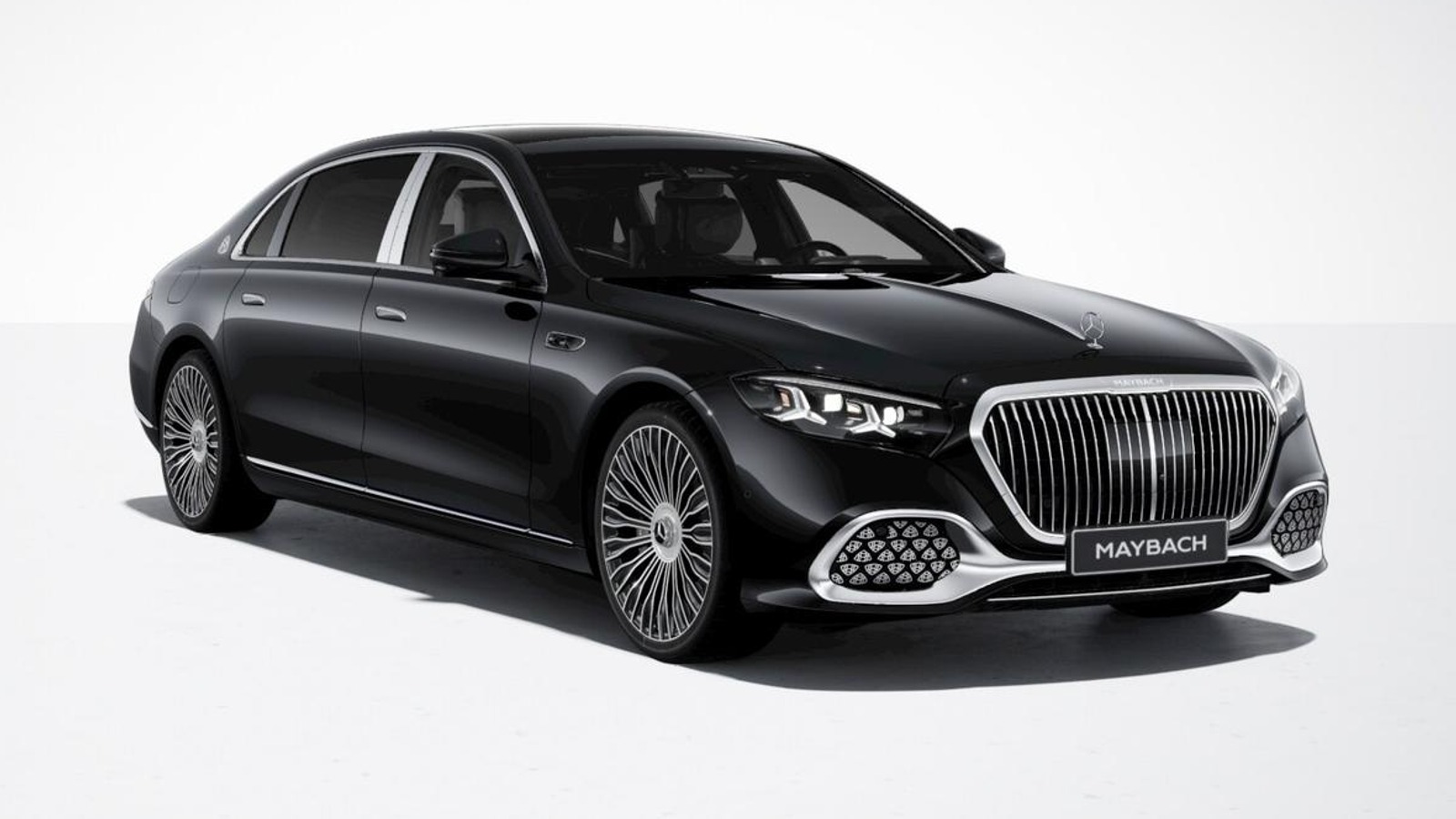
Worked Example: Importing a 2026 Mercedes-Benz Maybach S-Class to China
Here is the full landed cost of one car, a 2026 Mercedes-Benz Maybach S-Class shipped from Germany to China, worked out on 9 November 2026 with the customs rules in force that day. It lands at 4,728,898 CNY (about US$707,940), and duties and taxes come to 116.6% of its CIF value.
| Item | Share of CIF | Amount |
|---|---|---|
| Vehicle priceIPAS price for a car sourced in Germany | 2,084,098 CNYUS$312,000 | |
| Shipping and insuranceGermany to China | 31,702 CNYUS$4,746 | |
| CIF valueCost, insurance and freight: the customs value | 2,115,800 CNYUS$316,746 | |
| Customs duties and taxes | ||
| Basic customs duty (15%)15% of CIF | 317,371 CNYUS$47,512 | |
| Additional duty (40%)Base or related charges differ from CIF; see the duty structure above76.7% of CIF | 1,622,116 CNYUS$242,839 | |
| GST/VAT (13%)13% of CIF plus the duties above24.9% of CIF | 527,190 CNYUS$78,923 | |
| Total duties and taxes116.6% of CIF | 2,466,676 CNYUS$369,274 | |
| Service and handling | ||
| Premium Import ServiceOptional end-to-end import management by IPAS | 133,596 CNYUS$20,000 | |
| Destination handlingPort terminal and customs clearance handling | 12,825 CNYUS$1,920 | |
| Total landed cost | 4,728,898 CNYUS$707,940 | |
Free Trade Agreements
The critical rule: a trade agreement reduces the customs duty only. It never reduces the consumption tax rate or the VAT rate. But because both of those taxes build on (CIF + duty), a duty reduction does flow through the whole stack, as worked example 3 shows.
China's preferential rates come from the official implementation annex to the 2026 Tariff Adjustment Plan (Customs Tariff Commission Announcement No. 11 of 2025, published 29 December 2025, in force 1 January 2026). They are set line by line, and in several cases a preferential rate is higher than MFN — in which case the importer simply pays MFN 15%.
| Origin | Duty on passenger cars (HS 8703) |
|---|---|
| Australia | 0% on every line (ChAFTA certificate of origin) |
| New Zealand | 0% on every line |
| Thailand and ASEAN | 0% or 15%, line by line (Form E) — see below |
| India | 13.5% on essentially every line (APTA certificate of origin) |
| Chile, Peru, Costa Rica, Iceland, Cambodia, Hong Kong SAR, Macao SAR | 0% |
| Singapore | 0% on the same lines as ACFTA |
| Georgia | 0% on diesel, diesel-hybrid, diesel plug-in hybrid and battery-electric lines; no concession on petrol |
| Mauritius | 3.6% |
| Nicaragua, Serbia | 12% |
| Japan | 15% — the RCEP column is blank or equal to MFN |
| South Korea | 15% — the China–Korea FTA shows 22.5%, above MFN, so it is never used |
| Switzerland | 15% — the China–Switzerland FTA has no passenger-car concession |
| Taiwan (ECFA) | 15% — no concession |
| Germany, Belgium, UK, Canada, UAE, Mexico | 15% MFN — no agreement in force |
| United States | 15% plus the US-origin supplements below |
Japanese and Korean cars get nothing. This is the most widely assumed and most wrong point about China's agreements. RCEP does not lower the duty on a Japanese-built passenger car, and neither RCEP nor the bilateral FTA lowers it on a Korean-built one. Both pay 15%.
ACFTA is irregular, even inside one subheading. The ASEAN–China agreement gives 0% on these passenger-car groups and nothing on the rest:
- Petrol 2.5–3.0 L off-road, minibus and "other" bodies — but not saloons, which pay 15%
- Diesel "other" lines up to 2.5 L, and every diesel line above 2.5 L
- Petrol hybrids of 2.5–3.0 L in non-saloon bodies, and diesel hybrids of 2.5 L and above
- Every diesel plug-in hybrid
- Every battery-electric car
Every other line — all petrol cars up to 2.5 L, petrol cars above 3.0 L, most petrol hybrids and every petrol plug-in hybrid — pays 15%. A Thai-built 2.8 L petrol SUV enters at 0%; a Thai-built 2.8 L petrol saloon pays 15%. Where the exact line cannot be established with confidence, assume 15%.
Goods vehicles are different. Australia and New Zealand are 0% on every HS 8704 line. The China–Korea FTA is a real preference on goods vehicles (10% on the lines up to 5 tonnes). ACFTA gives 5% on a petrol pickup (8704.31) but nothing on a diesel pickup (8704.21) — so a Thai-built diesel double cab pays the full 15%.
A preference must be claimed with a valid certificate of origin. Without one, 15% MFN applies.
US-Origin Additional Tariffs — and the 10 November 2026 Date
Two separate additional tariffs apply to US-built vehicles. Each is charged on CIF and added to the 15% duty; the combined duty then feeds the consumption tax and VAT in the normal way.
- General supplement, +10% on all US-origin goods — Customs Tariff Commission Announcement No. 4 of 2025, as adjusted by Announcement No. 10 of 2025 (issued 5 November 2025, effective 10 November 2025 at 13:01). That announcement continued, for one year, the suspension of a further 24%, and retained the 10%.
- Listed-line supplement, +10% — Announcement No. 1 of 2025, effective 10 February 2025. Its annex lists petrol-only passenger cars above 2.5 L ("仅装点燃式发动机") and goods vehicles up to 5 tonnes, including battery-electric goods vehicles.
| US-built vehicle | Total customs duty before 10 Nov 2026 | If the suspension lapses on 10 Nov 2026 |
|---|---|---|
| Petrol passenger car up to 2.5 L | 25% | 49% |
| Petrol passenger car above 2.5 L | 35% | 59% |
| Diesel passenger car, any size | 25% | 49% |
| Hybrid or plug-in hybrid passenger car, any size | 25% | 49% |
| Battery-electric passenger car | 25% | 49% |
| Goods vehicle up to 5 tonnes, including electric | 35% | 59% |
| Goods vehicle above 5 tonnes | 25% | 49% |
Note the asymmetries. The listed-line annex is petrol-only, so a US-built large-displacement hybrid SUV pays 25%, not 35%. And a US-built electric passenger car pays 25% while a US-built electric goods vehicle pays 35%.
The dated change. The one-year suspension of the further 24% runs out on 10 November 2026 at 13:01. If no renewal, extension or replacement is announced by then, the 24% revives on top of the retained 10%, and US-origin duty rises to 49% or 59%. On a US-built 2.5–3.0 L petrol car (12% consumption tax band), the total border tax moves from 73.3523% to 104.1705% of CIF — a jump of 30.82 points on a single day. IPAS has scheduled a review of this position for 14 November 2026. If a US-built vehicle is due to clear Chinese customs around that date, plan for both figures.
The listed-line supplement remains in force because no instrument has stopped it — Announcement No. 9 of 2025 stopped a different measure (Announcement No. 2 of 2025, on agricultural goods) by name and said nothing about it. IPAS applies it. The 2018 vehicle-specific retaliatory tariffs (25% and 5%) have been suspended since 1 January 2019, and the 2025 escalations to 84% and 125% are also suspended; none of them applies.
Electric and Hybrid Vehicles
There is no EV duty concession
A battery-electric car pays the same 15% MFN customs duty as a petrol car of any size. Any claim that "EVs enter China duty-free" is wrong. Where a BEV does enter at 0% duty, it is because of where it was built — Australia, New Zealand, ASEAN, Chile, Hong Kong SAR or Macao SAR — not because it is electric.
The consumption tax exemption is definitional
A battery-electric car pays no consumption tax, and the reason is mechanical rather than environmental: the tax is banded on cylinder capacity, and a BEV has none. At MFN, a BEV therefore lands at 29.9500% of CIF — the lowest rate available to any passenger car, and identical to an HS 8704 goods vehicle. From a 0% origin it is 13.0000%; from the United States, 41.2500% before 10 November 2026.
Because there is nothing else in the stack to dilute it, origin matters proportionally more for an electric car than for anything else. Moving a BEV from 15% to a 0% origin cuts the total from 29.95% to 13.00% of CIF.
China levies no per-kWh, per-kW or range-based charge on electric vehicles. Fuel-cell vehicles, and any passenger vehicle whose cylinder capacity cannot be determined, are also exempt from the consumption tax.
Hybrids and plug-in hybrids get nothing
Self-charging hybrids (HS 8703.40 and 8703.50) and plug-in hybrids (8703.60 and 8703.70) are taxed at the ordinary band of the combustion engine's displacement. There is no hybrid concession, no electric-range test and no CO2 test. The structural proof is that China's own tariff divides those four headings into exactly the same seven cylinder-capacity groups as the pure petrol and diesel headings.
A 2,487 cm³ self-charging hybrid saloon from Japan at a CIF of ¥220,000 lands at ¥314,164.84 (42.8022%) — exactly what a 2,487 cm³ pure-petrol saloon pays. The hybrid system changes the tariff subheading and nothing else. The same applies to a 2,998 cm³ plug-in hybrid SUV: 12% band, 47.6705% at MFN.
Mild-hybrid and 48 V belt-starter-generator systems that cannot propel the vehicle on their own are not hybrids for tariff purposes and are classified as pure petrol or diesel.
LPG and CNG
A car running on LPG or CNG is a spark-ignition vehicle, classified and taxed exactly like a petrol car. The consumption tax schedule never mentions fuel, so there is no gaseous-fuel band, concession or penalty — and a gas conversion does not change cylinder capacity, so it cannot move a vehicle across a band boundary.
At registration
New-energy vehicles may qualify for a reduction in the 10% vehicle purchase tax, but only if the model is listed in the official list of new-energy models eligible for purchase-tax reduction (《减免车辆购置税的新能源汽车车型目录》). A parallel-imported unit is frequently not on that list, so do not assume the reduction applies.
The Ultra-Luxury Tax — a Retail Tax, Not a Border Tax
China charges a further 10% ultra-luxury consumption tax (超豪华小汽车消费税) on very expensive passenger cars, but it is not collected at the border. It is levied at the retail stage, on the seller, when the vehicle is sold to the end customer.
- Threshold: a retail price of RMB 900,000 or more per vehicle, excluding VAT, including accessories and services charged to the buyer.
- Scope: passenger cars and light commercial passenger vehicles of all power types, expressly including battery-electric and fuel-cell cars.
- Rate: 10%, in addition to the displacement-based consumption tax already paid at import.
- Instrument: Ministry of Finance and State Taxation Administration Announcement No. 3 of 2025, issued 17 July 2025 and effective 20 July 2025.
The RMB 1,300,000 threshold still widely quoted online was superseded on 20 July 2025 and should not be used. Second-hand sales of ultra-luxury cars are not taxed.
Because it is a retail-stage tax, it never enters the border total or the VAT base. On a German-built 6.0 L V12 saloon at CIF ¥1,500,000, the border taxes come to ¥1,748,750 (116.5833%) and the landed cost to ¥3,248,750. At an assumed retail price of ¥4,200,000 excluding VAT, the seller owes a further ¥420,000 of ultra-luxury tax at retail — a separate cost, not part of the landed figure.
Components That Do Not Exist in China
It is as useful to know what China does not charge at the border. There is no CO2 or emissions-based tax, no per-cm³ charge (displacement selects a percentage; it is never charged per cubic centimetre), no per-kWh or per-kW charge on electric vehicles, no border luxury tax, no value threshold of any kind inside the cascade, no age surcharge or depreciation allowance, no classic-car concession, no port or infrastructure levy, no withholding tax on import, and no customs processing fee expressed as a percentage of CIF.
If a cost estimate for China contains a border line item other than duty, consumption tax and VAT, that line has been invented. The vehicle purchase tax and the ultra-luxury tax are real, but they belong to registration and retail, not to the border.
Documents Required for Import
- Commercial invoice showing the transaction value
- Bill of lading
- Packing list with make, model, cylinder capacity, propulsion type and body style
- Certificate of origin where a preference is claimed — ACFTA Form E, ChAFTA certificate, APTA certificate or the relevant agreement's form. Without it, 15% MFN applies
- Automatic import licence (自动进口许可证), issued to the importing enterprise
- Foreign-trade operator filing (对外贸易经营者备案) of the importing enterprise, which must be the consignee
- CCC certificate for the model, or a valid exemption determination
- China 6b emissions compliance (GB 18352.6-2016) for light-duty vehicles, or GB 17691-2018 for heavy-duty
- Environmental information disclosure for the model on the Ministry of Ecology and Environment's vehicle environmental information platform
- Homologation or type-approval documentation stating the exact cylinder capacity, which sets the consumption tax band
- For a double-cab pickup: gross vehicle mass, kerb mass and seating capacity, for the weight test
- For a non-China-specification vehicle: the original destination-market version, declared in the "specification and model" field of the customs declaration
Customs Clearance Timeline
| Stage | What happens | Notes |
|---|---|---|
| Before shipment | Confirm the importing enterprise, automatic import licence, CCC route and China 6b compliance | Do this before buying — a vehicle that cannot be certified cannot be registered |
| Arrival and declaration | The importer files the customs declaration, including the original-market version for a parallel import | Tianjin, Shanghai, Guangzhou and the other parallel-import ports |
| Valuation and assessment | Customs converts CIF to CNY at the month's fixed rate and assesses duty, consumption tax and VAT | The rate is the RMB central parity of the third Wednesday of the preceding month |
| Payment and release | The three border taxes are paid and the vehicle is released | |
| Inspection | The imported vehicle is inspected | |
| Import certificate | After release and a passed inspection, Customs issues the combined Import Certificate (Automobiles, Motorcycles) | Since 1 July 2026 this replaces two separate documents; the consignee must apply within three years of release and inspection |
| Registration | Vehicle purchase tax paid; insurance, plates and registration | Outside the border cascade |
China's fixed monthly exchange rate is a useful planning detail: a CIF value converted into yuan holds for the whole calendar month, rather than moving daily. If the relevant Wednesday is not an interbank trading day, the next trading day's rate is used.
Homologation and Vehicle Approval
CCC certification (China Compulsory Certification, also called 3C) is required before a vehicle can be registered. Exemption determinations exist for research, testing, exhibition, competition, teaching and temporary entry, but not for ordinary retail imports. The specific CCC route a parallel importer uses for a given model should be confirmed before the vehicle is bought.
Emissions: light-duty vehicles must meet China 6b (GB 18352.6-2016); heavy-duty vehicles GB 17691-2018. Both apply to imports. The model's environmental information must also be disclosed on the Ministry of Ecology and Environment's platform before registration.
Steering and safety: GB 7258-2017 is the technical basis for registration and for the inspection of imported vehicles, and its clause 6.1 requires the steering wheel on the left.
The combined import certificate. Under GACC and Ministry of Public Security Announcement No. 88 of 2026 (signed 16 June 2026, published 24 June 2026, effective 1 July 2026), the Import Certificate (Automobiles, Motorcycles) and the Imported Motor Vehicle Inspection Certificate are now issued as a single document once the vehicle has been released and has passed inspection.
Registration Procedures and Costs
These charges sit outside the border cascade. They are real costs, but they are not part of the customs calculation and never enter the VAT base:
- Vehicle purchase tax (车辆购置税), 10% — paid to the tax authority at first registration. For a self-used imported vehicle, the base is CIF + duty + consumption tax (Vehicle Purchase Tax Law, Article 6) — the same figure as the VAT base. A reduction for new-energy vehicles applies only to models on the official eligible-model list.
- Ultra-luxury consumption tax, 10% — at retail, where the retail price is RMB 900,000 or more excluding VAT.
- Compulsory traffic accident liability insurance
- Licence plates
- Annual vehicle and vessel tax (车船税)
- Port, terminal, storage, customs-broker and agency charges
The vehicle purchase tax is easy to fold into the border total by mistake, precisely because its base is literally the border VAT base. Keep it separate.
Recent Regulatory Changes (2022–2026)
- 1 December 2024 — Customs Tariff Law in force. The 《中华人民共和国关税法》 confirms CIF as the customs value.
- 10 February 2025 — US listed-line supplement. Announcement No. 1 of 2025 added 10% on US-built petrol-only passenger cars above 2.5 L and goods vehicles up to 5 tonnes.
- 2025 — US escalations suspended. The escalations to 84% and 125% (Announcements No. 5 and No. 6 of 2025) are suspended.
- 20 July 2025 — ultra-luxury threshold lowered from RMB 1,300,000 to RMB 900,000 excluding VAT, and extended to all power types including battery-electric and fuel-cell vehicles.
- 10 November 2025 — US general supplement held at 10%. Announcement No. 10 of 2025 suspended the further 24% for one year and retained 10%; Announcement No. 9 stopped the separate agricultural measure.
- 1 January 2026 — VAT Law in force, with the 13% rate.
- 1 January 2026 — 2026 tariff plan and FTA annex in force (Announcement No. 11 of 2025, published 29 December 2025), setting every preferential rate line by line.
- 1 January 2026 — 2026 automatic import licence list (MOFCOM–GACC Announcement No. 90 of 2025) in force, covering vehicles.
- 27 February 2026 — Canada countermeasures. China's measures against Canada cover agricultural and seafood goods only and do not touch motor vehicles; Canadian-built cars stay at 15% MFN.
- 1 July 2026 — "two certificates in one". The import certificate and inspection certificate merged into one document, and non-China-specification vehicles must declare their original market version.
- 10 November 2026 — US suspension expiry (upcoming). Unless renewed, the further 24% revives and US-origin duty rises to 49% or 59%. IPAS review scheduled for 14 November 2026.
- 1 January 2027 — next annual tariff plan (upcoming). The FTA implementation annex is republished each year, so preferential rates should be re-checked from that date.
Frequently Asked Questions
How much does it cost to import a car to China?
It depends almost entirely on engine size and origin. At the standard 15% duty, border taxes run from 31.26% of CIF for a car of up to 1.0 litre, through 36.79% for a 1.5–2.0 litre car and 73.27% for a 3.0–4.0 litre car, to 116.58% above 4.0 litres. A battery-electric car pays 29.95%. On top of that the buyer pays 10% vehicle purchase tax at registration, and very expensive cars carry a 10% retail-stage ultra-luxury tax.
Can I import a used car into China?
No. Used motor vehicles are prohibited imports into mainland China, enforced through customs supervision condition code "6" on the vehicle tariff lines. There is no age band, no classic-car exception and no 30-year route. A previously registered vehicle cannot be cleared at all, which is why IPAS quotes new vehicles only for China.
Can I import a right-hand-drive car to China?
No. GB 7258-2017 clause 6.1 requires the steering wheel to be on the left, and that standard is the basis for registration and for the inspection of imported vehicles. Converting a car to left-hand drive before shipment does not create a clean pathway, because the converted vehicle must still meet CCC and type-conformity requirements.
Can an individual import a car into China?
Not as the consignee. The importer of record must be a Chinese enterprise with a foreign-trade operator filing, and the automatic import licence is issued to enterprises only. Individual buyers purchase through a licensed importer, which clears the vehicle and handles the import paperwork.
Are electric cars duty-free in China?
No. A battery-electric car pays the same 15% customs duty as a petrol car. What it does not pay is consumption tax, because that tax is banded on cylinder capacity and a BEV has none. The result is a border total of 29.95% of CIF at MFN — the lowest of any passenger car — or 13% from a zero-duty origin such as Australia, New Zealand or ASEAN.
Do hybrids get a tax break in China?
No. Hybrids and plug-in hybrids are taxed at the consumption tax band of their combustion engine's displacement, exactly like a petrol car of the same size. A 2.5-litre hybrid pays the same as a 2.5-litre petrol car. There is no electric-range or CO2 discriminator.
How are US-built cars taxed in China, and what changes in November 2026?
US-built vehicles pay 15% duty plus a 10% general supplement — 25% in total — and petrol-only cars above 2.5 litres and goods vehicles up to 5 tonnes pay a further 10%, giving 35%. The suspension of a further 24% expires on 10 November 2026. If it is not renewed, US-origin duty rises to 49% or 59%, adding about 31 points of CIF to the tax on a 2.5–3.0 litre US petrol car.
Do Japanese or Korean cars get a lower duty under a trade agreement?
No. RCEP gives no reduction on Japanese-built passenger cars, and the China–Korea FTA rate on most passenger-car lines is 22.5% — higher than MFN — so Korean-built cars also pay 15%. The origins that do benefit are Australia and New Zealand (0%), parts of ASEAN including Thailand (0% on specific lines), and India (13.5%).
Is there a luxury tax on imported cars in China?
Yes, but not at the border. A 10% ultra-luxury consumption tax applies at the retail stage when the retail price is RMB 900,000 or more excluding VAT, for all power types including electric. The RMB 1,300,000 figure often quoted online was replaced on 20 July 2025.
Ready to Import?
China is a market where the engine decides the bill. The consumption tax band — set by homologated cylinder capacity alone, with inclusive upper limits — moves the border total from under a third of CIF to more than the car's own value. Origin then decides the duty: zero from Australia and New Zealand, line by line from Thailand, 13.5% from India, 15% from Japan, Korea and Europe, and 25% to 35% from the United States, with a dated change on 10 November 2026.
And before any of that, the gates: the car must be new, it must be left-hand drive, it must be certifiable under CCC and China 6b, and it must be imported by a licensed Chinese enterprise. Check those first.
IPAS provides two tools to plan and execute your import:
CarImport.AI — Source a new vehicle through IPAS and calculate the full landed cost to China, running the complete three-step cascade in yuan: customs duty with any trade-agreement rate or US supplement, the self-referential consumption tax by engine band, and 13% VAT — with the vehicle purchase tax shown separately.
IPAS EXPRESS — Already have a new, unregistered left-hand-drive vehicle to ship? Get instant shipping quotes to Tianjin and other Chinese ports, with transparent, itemised pricing and a stage-by-stage timeline.
Ready to Import Your Vehicle?
Two tools, two use cases. Pick the one that fits your needs.
Source a vehicle through IPAS and calculate the full landed cost — customs duties, shipping, and compliance — to destinations across the world.
Calculate Landed CostIPAS Express
Already have a vehicle? Get instant shipping quotes — sea freight, air freight, or RoRo — for one car or multiple vehicles worldwide.
Get Shipping Quote