
Introduction
Importing a new petrol or diesel car to Colombia from a country without a trade agreement costs about 77.8% of its CIF value in tax, or 89% when the car's FOB value is US$30,000 or more. Electric cars pay just 5%. Only brand-new, current-model-year, left-hand-drive vehicles can be imported.
Colombia is a market where three decisions set almost the whole tax bill, and all three are made before the car is bought.
The first is where the car was built. Since 10 January 2026, petrol and diesel passenger cars pay 40% customs duty at the standard rate, up from 35%, under Decreto 1432 de 2025. But Colombia has trade agreements with the United States, Canada, the European Union, the UK, South Korea and Mexico, and a car that originates in any of them pays 0% duty. The same SUV can land at 35% of CIF from Texas and 89% from Japan.
The second is the drivetrain. A battery-electric car pays no duty, 5% VAT and no consumption tax: 5% of CIF, from any country, at any price. Hybrids and plug-in hybrids sit in between.
The third is the model year. Colombia does not allow used vehicles at all, and it treats a new car with an earlier model year than the year of import as old stock that cannot be licensed. In 2026, that means model year 2026 or 2027 only.
Quick Facts
| Detail | Information |
|---|---|
| Customs Authority | DIAN (Dirección de Impuestos y Aduanas Nacionales) |
| Trade ministry and import registration | Ministry of Commerce, Industry and Tourism (MinCIT), through the VUCE single window |
| Registration Authority | Ministry of Transport homologation, then registration with a local transit office on the national RUNT register |
| Traffic Side | Right-hand traffic (drive on the right) |
| Steering Requirement | LHD only. IPAS does not quote right-hand-drive or converted vehicles for Colombia |
| Customs Duty, petrol and diesel cars | 40% standard rate since 10 January 2026. 0% for cars originating in the US, Canada, the EU, the UK, South Korea or Mexico |
| Customs Duty, hybrids and plug-in hybrids | 35% standard rate; 0% from agreement countries |
| Customs Duty, battery-electric | 0% from every origin |
| Customs Duty, light pickups (up to 4,537 kg GVW) | 35% standard rate; 0% from agreement countries |
| VAT (IVA) | 19%; 5% for electric, hybrid and plug-in hybrid vehicles. Charged on CIF + duty |
| National consumption tax (INC) | 8% if the FOB value is below US$30,000; 16% at or above it. Charged on CIF + duty. Electric cars are excluded |
| Total, petrol or diesel car, standard rate | 77.8% of CIF (FOB under US$30,000) · 89.0% (FOB US$30,000 or more) |
| Total, same car from an agreement country | 27.0% · 35.0% |
| Total, hybrid or plug-in hybrid, standard rate | 52.55% · 63.35% |
| Total, battery-electric car | 5.0% |
| Total, light pickup, standard rate | 71.45% · 82.25% |
| Used vehicles | Not admissible |
| Model year | Must not be earlier than the year the import registration is filed (2026 or 2027 in 2026) |
| Luxury tax / CO2 levy / engine-size tax | None. The consumption tax's US$30,000 line is the only value threshold |
| Main Seaport | Cartagena, IPAS's only Colombian port |
| Currency | Colombian peso (COP), floating. The declaration is converted at DIAN's applicable exchange rate |
Types of Cars That Can Be Imported
New only. Used vehicles cannot be imported or registered
Colombia treats used goods as products that need a prior import licence (Decreto 925 de 2013, articles 4 and 14), and article 16 grants licences for automobiles only to antique and classic vehicles, returning Colombian diplomats and a few special-purpose vehicles. The Traffic Code is blunter still: "De ninguna manera se podrá hacer un registro inicial de un vehículo usado" — a used vehicle can never receive a first registration (Ley 769 de 2002, article 37).
A car that has been registered abroad, even for a few kilometres (a European day registration or a Japanese registered-but-unused car), is treated by IPAS as used and is not offered for Colombia. A brand-new, never-registered car with delivery mileage is new.
Current model year only: the "saldo" rule
This is the gate that catches most buyers out. Under article 15 of Decreto 925 de 2013, a new vehicle counts as old stock ("saldo") if, when the import registration is filed:
- its model year is earlier than the filing year, or
- two or more years have passed since it was built.
Old stock needs a prior licence, and none is available for an ordinary car or pickup. In practice:
| Import registration filed in | Admissible model years |
|---|---|
| 2026 | 2026 and 2027 |
| 2027 | 2027 and 2028 |
A brand-new model-year 2025 car with 15 km on the clock is blocked in 2026. And on 1 January 2027 every unsold model-year 2026 car becomes blocked, so timing matters for orders placed late in the year.
Steering: left-hand drive only
Colombia drives on the right, and every vehicle needs Ministry of Transport homologation of its technical characteristics before it can be registered (Ley 769 de 2002, article 37). IPAS has found no established homologation route for right-hand-drive or converted vehicles, so it quotes left-hand-drive cars only and does not offer right-hand-drive conversion for Colombia.
Emissions
Importers of road vehicles need an emissions certificate from the national environmental licensing authority, ANLA (the CEPD, under Resolución 762 de 2022). Electric vehicles are exempt from the CEPD but need ANLA's Montreal Protocol approval for their air-conditioning system. Diesel vehicles imported since 1 January 2023 must meet Euro VI or an equivalent standard (Ley 1972 de 2019).
Origin
No country of origin is banned. What the origin decides is the duty rate, explained below.
Cars You Can Import to Colombia
Each card is a full landed-cost calculation: the car's price, shipping, every duty and tax, and handling, worked out on 9 November 2026 with the rules in force that day. All are left-hand drive to suit Colombia's roads. Tap a car to see its full breakdown, or open it to change the trim, colour or port.
More cars you can import to Colombia
New cars IPAS sources to order that meet Colombia's import rules. Prices are ex works, before shipping and duty. Open a car to work out its full landed cost.
 LHDBackorder2026
Lexus RX
SUV · 17 VariantsPetrol · Hybrid · Plug-in HybridFrom $53,100Ex Works, Canada LHDBackorder2026
Lexus ES
Sedan · 12 VariantsHybrid · ElectricFrom $52,500Ex Works, Canada LHD/C-RHDBackorder2025
Ford Super Duty F-250
Pickup · 10 VariantsPetrol · DieselFrom $54,400Ex Works, USA LHD/C-RHDBackorder2026
Chevrolet Silverado 1500
Pickup · 29 VariantsPetrol · DieselFrom $57,700Ex Works, USA LHDBackorder2025
Chevrolet Corvette Stingray Convertible
Convertible · 3 VariantsPetrolFrom $94,800Ex Works, USA LHD/C-RHDBackorder2025
Chevrolet Suburban
SUV · 14 VariantsPetrol · DieselFrom $81,700Ex Works, USA LHDBackorder2026
Cadillac Escalade IQL
SUV · 4 VariantsElectricFrom $153,300Ex Works, USA LHD/C-RHDBackorder2026
Cadillac Escalade ESV
SUV · 11 VariantsPetrolFrom $112,900Ex Works, USA LHDBackorder2026
Toyota Hilux Double Cab 2.8
Pickup · 2 VariantsDieselFrom $49,900Ex Works, UAE LHDBackorder2026
Toyota RAV4
SUV · 7 VariantsHybridFrom $38,300Ex Works, USA LHDBackorder2026
Mercedes-Benz S-Class
Sedan · 2 VariantsHybridFrom $131,800Ex Works, Canada LHDBackorder2026
Mercedes-Benz AMG GT 4-Door Coupe Electric
Sedan · 3 VariantsElectricFrom $128,800Ex Works, Germany LHD/C-RHDBackorder2026
Ram 1500
Pickup · 12 VariantsPetrolFrom $48,300Ex Works, USA LHDBackorder2026
Xiaomi SU7 Ultra
Sedan · 1 VariantElectricFrom $84,100Ex Works, China🇨🇳 LHD/C-RHDBackorder2026
GMC Sierra EV
Pickup · 7 VariantsElectricFrom $89,400Ex Works, USA LHD/C-RHDBackorder2025
Lincoln Navigator
SUV · 3 VariantsPetrolFrom $119,900Ex Works, USA
Ports Supporting Vehicle Import
| Port | Location | Role |
|---|---|---|
| Port of Cartagena (COCTG) | Cartagena, Caribbean coast | IPAS's port of entry for Colombia: container shipments |
IPAS ships every Colombian order to Cartagena. The port of entry does not change any tax: duty, VAT and the consumption tax are national and identical at every Colombian port. Port, terminal, customs-broker and onward delivery charges are separate from the import taxes.
Two special zones are outside this guide: Colombia's free trade zones, and the San Andrés, Providencia and Santa Catalina archipelago and the Amazonas department, which are excluded from the national consumption tax (Estatuto Tributario, article 512-1). A car imported through Cartagena for use on the mainland pays the full national cascade.
Restrictions on Vehicle Import for Individuals
- Private individuals may import a new car for their own use. Passenger cars and pickups are "libre importación" in DIAN's tariff, so no special import licence is needed for a new, current-model-year vehicle, but the import must still be registered through VUCE (Decreto 925 de 2013, article 26).
- The importer pays the consumption tax at clearance. Colombia charges the national consumption tax when the vehicle is cleared by its final user (Estatuto Tributario, article 512-1), so for a private import it is part of the landed cost. A dealer importing for resale charges it later on the showroom sale instead.
- There is no personal allowance or once-every-few-years exemption for an ordinary import. The diplomatic and classic-car exceptions are outside this guide.
- The used, model-year, steering and emissions gates above apply to everyone.
Duty Structure Overview
Colombia charges three taxes at the border, and only three:
- Customs duty (gravamen arancelario) on the CIF customs value. 40%, 35%, 15%, 5% or 0% by tariff line, or 0% for a car originating in an agreement country.
- VAT (IVA) at 19%, or 5% for electric, hybrid and plug-in hybrid vehicles (Estatuto Tributario, articles 468 and 468-1), on CIF + duty (article 459).
- National consumption tax (impuesto nacional al consumo, INC) at 8% or 16%, also on CIF + duty (articles 512-3 and 512-4).
VAT and the consumption tax share the same base. Neither is charged on the other. That gives a simple formula for the total tax as a share of CIF:
Total = duty + (1 + duty) × (VAT + consumption tax)
The US$30,000 consumption-tax cliff
The consumption tax is 8% when the vehicle's FOB value is below US$30,000 and 16% when it is US$30,000 or more, and the higher rate applies to the whole base, not just the excess. A car at FOB US$29,999 pays 8%; at US$30,000 it pays 16%. The test uses the FOB price in dollars, not the CIF value and not the peso amount.
On a standard-rate petrol car that one dollar moves the total from 77.8% to 89.0% of CIF. When pricing a car close to the line, it pays to know the exact FOB figure.
The rate grid
| Vehicle | Duty | VAT | Consumption tax | Total, FOB under US$30k | Total, FOB US$30k+ |
|---|---|---|---|---|---|
| Petrol or diesel car, no agreement | 40% | 19% | 8% / 16% | 77.80% | 89.00% |
| Petrol or diesel car, agreement origin | 0% | 19% | 8% / 16% | 27.00% | 35.00% |
| Hybrid or plug-in hybrid, no agreement | 35% | 5% | 8% / 16% | 52.55% | 63.35% |
| Hybrid or plug-in hybrid, agreement origin | 0% | 5% | 8% / 16% | 13.00% | 21.00% |
| Battery-electric, any origin | 0% | 5% | Excluded | 5.00% | 5.00% |
| Light pickup (petrol or diesel), no agreement | 35% | 19% | 8% / 16% | 71.45% | 82.25% |
| Light pickup, agreement origin | 0% | 19% | 8% / 16% | 27.00% | 35.00% |
Engine size does not change the rate. A 1.2-litre Swift and a 5.3-litre V8 pay the same 40% duty; displacement only selects the tariff line printed on the declaration.
Worked example 1: Suzuki Swift 1.2 petrol, new, Indian origin, CIF US$14,000 (FOB US$13,000)
| Charge | Calculation | Amount (USD) |
|---|---|---|
| Customs duty | 14,000 × 40% | 5,600 |
| VAT | (14,000 + 5,600) × 19% | 3,724 |
| Consumption tax | (14,000 + 5,600) × 8% | 1,568 |
| Total border tax | 10,892 (77.80% of CIF) | |
| Landed before local charges | about US$24,892 |
India has no trade agreement with Colombia, so the 40% standard rate applies.
Worked example 2: Toyota Land Cruiser 250 2.4 turbo petrol 4WD, new, Japanese origin, CIF US$62,000 (FOB US$58,000)
| Charge | Calculation | Amount (USD) |
|---|---|---|
| Customs duty | 62,000 × 40% | 24,800 |
| VAT | (62,000 + 24,800) × 19% | 16,492 |
| Consumption tax | (62,000 + 24,800) × 16% | 13,888 |
| Total border tax | 55,180 (89.00% of CIF) | |
| Landed before local charges | about US$117,180 |
Japan has no trade agreement with Colombia, and the FOB value is above US$30,000, so this car takes both the 40% duty and the 16% consumption tax.
Worked example 3: Hyundai Tucson 2.0 petrol, new, Korean origin, CIF US$26,000 (FOB US$24,500)
| Charge | Calculation | Amount (USD) |
|---|---|---|
| Customs duty | 0%, Colombia–Korea FTA | 0 |
| VAT | 26,000 × 19% | 4,940 |
| Consumption tax | 26,000 × 8% | 2,080 |
| Total border tax | 7,020 (27.00% of CIF) | |
| Landed before local charges | about US$33,020 |
The Colombia–Korea agreement's phase-out on these lines finished on 1 January 2025. With a valid proof of origin, a Korean-built car pays no duty at all.
Worked example 4: Toyota Corolla Cross Hybrid 1.8, new, Japanese origin, CIF US$27,000 (FOB US$25,500)
| Charge | Calculation | Amount (USD) |
|---|---|---|
| Customs duty | 27,000 × 35% | 9,450 |
| VAT | (27,000 + 9,450) × 5% | 1,822.50 |
| Consumption tax | (27,000 + 9,450) × 8% | 2,916 |
| Total border tax | 14,188.50 (52.55% of CIF) | |
| Landed before local charges | about US$41,188.50 |
The hybrid keeps the 35% duty (Decreto 1432 de 2025 raised only petrol and diesel lines) and gets the 5% VAT rate. The same car as a petrol Corolla Cross would pay 77.8%.
Worked example 5: BYD Atto 3, battery-electric, new, Chinese origin, CIF US$30,000
| Charge | Calculation | Amount (USD) |
|---|---|---|
| Customs duty | 0% | 0 |
| VAT | 30,000 × 5% | 1,500 |
| Consumption tax | Excluded for non-armoured electric vehicles | 0 |
| Total border tax | 1,500 (5.00% of CIF) | |
| Landed before local charges | about US$31,500 |
Worked example 6: Toyota Hilux 2.8 diesel double cab, GVW 3,050 kg, new, Thai origin, CIF US$28,000 (FOB US$26,500)
| Charge | Calculation | Amount (USD) |
|---|---|---|
| Customs duty | 28,000 × 35%, light pickup line | 9,800 |
| VAT | (28,000 + 9,800) × 19% | 7,182 |
| Consumption tax | (28,000 + 9,800) × 8% | 3,024 |
| Total border tax | 20,006 (71.45% of CIF) | |
| Landed before local charges | about US$48,006 |
All six results were reproduced exactly by IPAS's live customs calculation for Colombia. Amounts are shown in dollars; the actual declaration is made in pesos at DIAN's exchange rate, which does not change the percentages.
These examples show the structure. Get the exact figure for your vehicle, drivetrain and origin using CarImport.AI.

Calculate your exact import duty to Colombia
Get a vehicle-specific duty and full landed-cost breakdown — HS classification, every tax, levy and FTA, plus shipping — calculated for your exact make, model and specs.
- Vehicle-specific HS code
- All duties, taxes & FTAs
- Shipping + est. landed cost
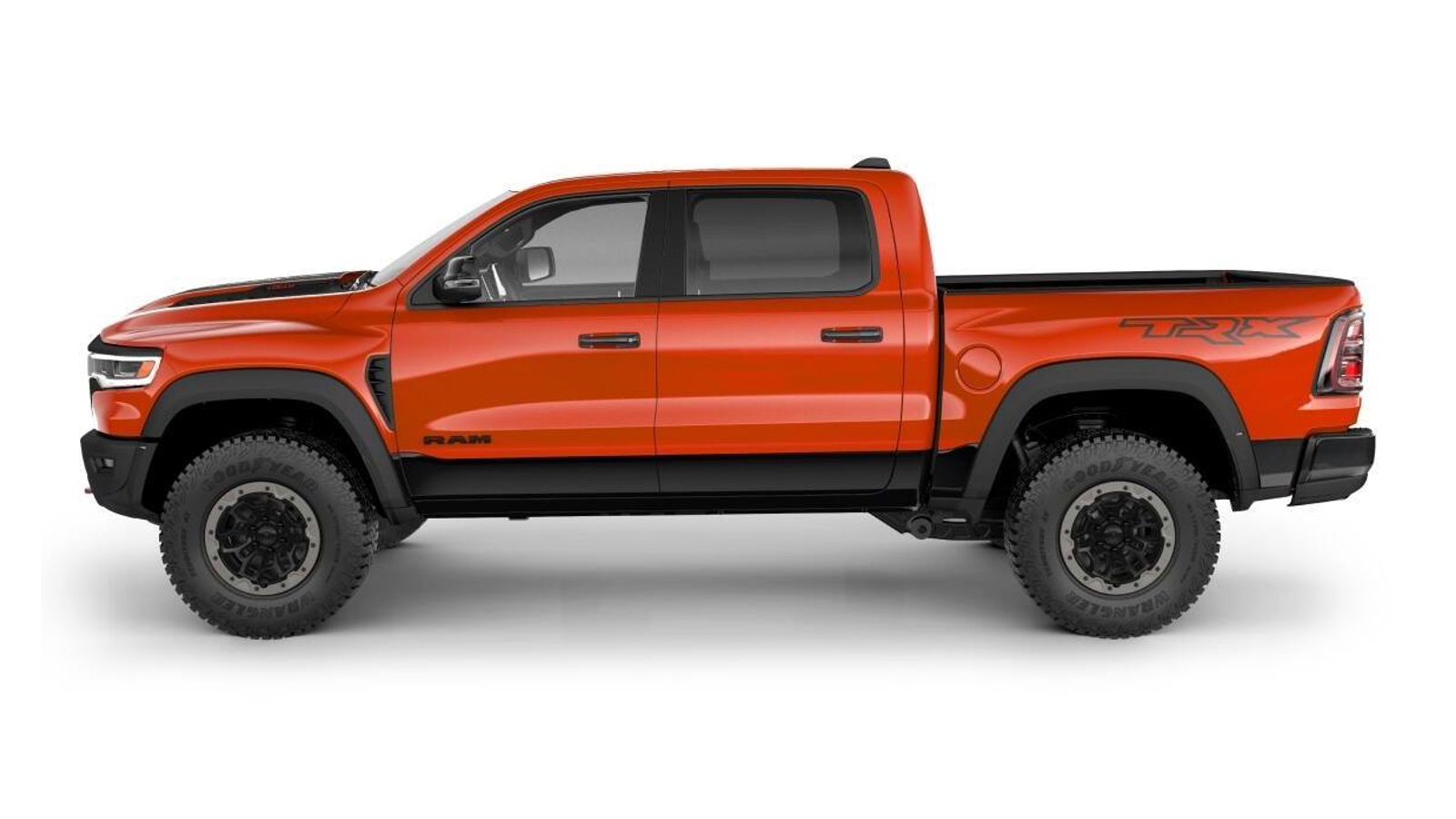
Worked Example: Importing a 2027 Ram 1500 TRX SRT to Colombia
Here is the full landed cost of one car, a 2027 Ram 1500 TRX SRT shipped from the USA to Colombia, worked out on 9 November 2026 with the customs rules in force that day. It lands at 615,674,291 COP (about US$189,815), and duties and taxes come to 35% of its CIF value.
| Item | Share of CIF | Amount |
|---|---|---|
| Vehicle priceIPAS price for a car sourced in the USA | 421,661,396 COPUS$130,000 | |
| Shipping and insuranceUSA to Colombia | 16,843,751 COPUS$5,193 | |
| CIF valueCost, insurance and freight: the customs value | 438,505,147 COPUS$135,193 | |
| Customs duties and taxes | ||
| Basic customs duty (0%)0% of CIF | 0 COPUS$0 | |
| Additional duty (16%)16% of CIF | 70,161,213 COPUS$21,631 | |
| GST/VAT (19%)19% of CIF | 83,317,048 COPUS$25,687 | |
| Total duties and taxes35% of CIF | 153,478,261 COPUS$47,318 | |
| Service and handling | ||
| Premium Import ServiceOptional end-to-end import management by IPAS | 17,463,269 COPUS$5,384 | |
| Destination handlingPort terminal and customs clearance handling | 6,227,614 COPUS$1,920 | |
| Total landed cost | 615,674,291 COPUS$189,815 | |
Free Trade Agreements: the Biggest Lever
A trade agreement in Colombia removes the customs duty only. VAT and the consumption tax are internal taxes and are charged in full whatever the origin. Decreto 1432 de 2025 itself says the 40% applies without prejudice to Colombia's trade agreements (article 3), so an originating car is not caught by the increase.
| Where the car was built | Agreement | Duty on cars (incl. hybrids) | Duty on light pickups |
|---|---|---|---|
| United States | Colombia–US Trade Promotion Agreement | 0% | 0% |
| Canada | Colombia–Canada FTA | 0% | 0% |
| Germany, Belgium and the rest of the EU | EU–Colombia Trade Agreement | 0% | 0% |
| UK | UK–Colombia Trade Agreement | 0% | 0% |
| South Korea | Colombia–Korea FTA (phase-out complete 1 January 2025) | 0% | 0% |
| Mexico | G-3 FTA and Pacific Alliance | 0% | 0% |
| Japan, China, India, Thailand, UAE, Australia, New Zealand | None | 40% petrol/diesel · 35% hybrid | 35% |
These are the rates DIAN's own tariff system lists for each agreement. Two points decide whether a car qualifies:
- Origin means where the car was built, not the brand. A Japanese-brand SUV assembled in the United States can qualify under the US agreement; a European-brand car assembled in China cannot qualify under the EU agreement.
- The preference is never automatic. The importer needs the proof of origin the agreement requires, and the car must meet that agreement's rules of origin. Without it, the standard rate applies.
On a petrol car above the US$30,000 cliff, the difference between a US-built and a Japanese-built model is 54 points of CIF: 35% against 89%.
Pickups: a Separate Tariff, Same Consumption Tax
Colombia classifies pickups with a separate cargo bed on an independent chassis as goods vehicles (HS 87.04), whether single, extended or double cab. The tax law defines the "pick-up" inside heading 87.04 and names the double cab expressly (Estatuto Tributario, articles 512-3 and 512-4).
- Duty on a light pickup (gross vehicle weight up to 4,537 kg) is 35%, not the 40% charged on petrol and diesel cars, because Decreto 1432 de 2025 raised only passenger-car lines. Above 4,537 kg the rate drops to 15%.
- The consumption tax still applies. Pickups are taxed by name at 8% or 16%, exactly like cars. Only vans, chassis-cabs and trucks over 10,000 lb gross weight are excluded.
- SUVs built on pickup platforms (Fortuner, Everest, Pajero Sport, Land Cruiser) are passenger cars at 40%.
A US-built F-150 or a Mexican-built pickup with valid proof of origin pays 0% duty, so the total is 27% or 35% of CIF.
Electric and Hybrid Vehicles
Battery-electric: the cheapest car to import, by far
A battery-electric car pays 0% duty (Decreto 1881 de 2021), 5% VAT (Estatuto Tributario, article 468-1) and no consumption tax, because non-armoured electric vehicles are excluded (article 512-5). The result is 5% of CIF from any country and at any price: no value bands and no US$30,000 cliff. Electric pickups and goods vehicles are also 0% duty.
Hybrids and plug-in hybrids: 35% duty, 5% VAT, consumption tax applies
Full hybrids and plug-in hybrids stay at 35% duty; the 40% increase did not touch them. They get the reduced 5% VAT, but unlike electric cars they do pay the 8% or 16% consumption tax. A plug-in hybrid gets no extra concession over a conventional hybrid.
Two cautions:
- Mild hybrids are taxed as petrol cars. A 48-volt system whose electric motor cannot drive the wheels does not move the car into the hybrid heading, so it pays 40% duty and 19% VAT.
- The old 5% hybrid duty is gone. A yearly quota of hybrids at 5% duty under Decreto 1116 de 2017 was repealed by Decreto 1550 de 2024. The newer 5% quotas under Decreto 595 de 2026 are reserved for approved industrial projects and are not available to a private import.
Components That Do Not Exist in Colombia
Colombia has no luxury tax, no engine-displacement tax, no CO2 levy at the border, no age-based tax and no per-unit charge on imported cars. The only value threshold is the consumption tax's US$30,000 FOB line.
One proposed tax is also not in force: an emergency decree would have raised the consumption tax on cars over US$30,000 to 19% for 2026, but the Constitutional Court suspended it in January 2026 and struck it down in April 2026. The rate remains 16%.
If a Colombian estimate contains a line other than customs duty, VAT and the consumption tax, it is not an import tax. Port, broker, registration and SOAT insurance costs are real, but they are separate from the border cascade.
Documents Required for Import
- Commercial invoice showing the purchase price, plus the FOB value, which sets the consumption-tax rate
- Bill of Lading (original or telex release)
- Packing list with make, model, model year, build date, engine and drivetrain
- Manufacturer's documents showing the car is new and has never been registered
- Import registration through VUCE (Decreto 925 de 2013, article 26)
- ANLA emissions certificate (CEPD), or for an electric car the ANLA Montreal Protocol approval for the air-conditioning system
- Proof of origin where a trade-agreement preference is claimed, in the form that agreement requires
- Customs import declaration, normally filed through a licensed customs broker (agencia de aduanas)
Customs Clearance Process
| Stage | What happens |
|---|---|
| Before buying | Confirm the car is new, never registered, left-hand drive, of the current or next model year, and covered by an emissions certificate. If an agreement applies, confirm the proof of origin is available |
| Before shipping | File the import registration through VUCE |
| Arrival at Cartagena | The car is discharged and the import declaration is lodged with the tariff line, CIF value, FOB value and any preference claim |
| Payment | Duty, VAT and the consumption tax are paid before release |
| Release and registration | Ministry of Transport homologation, mandatory SOAT insurance and registration with a local transit office on the RUNT register |
IPAS does not publish a fixed clearance time for Colombia. The avoidable delays come from checks that belong before purchase: the model year, the emissions certificate and the proof of origin.
Recent Regulatory Changes (2019–2026)
- 29 November 2019: battery-electric cars to 0% duty (Decreto 2051 de 2019), carried into the 2022 tariff.
- 1 January 2022: new tariff in force (Decreto 1881 de 2021, HS 2022): 35% on petrol, diesel and hybrid cars.
- 23 December 2024: hybrid 5% quota repealed (Decreto 1550 de 2024). Hybrids pay the full 35%.
- 1 January 2025: Korean cars reach 0% duty as the Colombia–Korea phase-out completes.
- 10 January 2026: petrol and diesel cars to 40% (Decreto 1432 de 2025, published 26 December 2025). Agreement rates preserved.
- January–April 2026: proposed 19% consumption tax struck down by the Constitutional Court; the 16% rate continues.
- 2 July 2026: industrial 5% quotas for electrified vehicles (Decreto 595 de 2026), limited to approved industrial projects.
Under review. IPAS's customs research reviews two Colombian points on 23 November 2026: the formal instrument behind the left-hand-drive rule, and whether a car previously registered abroad with delivery mileage counts as used. Until then IPAS quotes left-hand-drive, never-registered cars only.
Frequently Asked Questions
How much does it cost to import a car to Colombia?
For a new petrol or diesel car from a country without a trade agreement, about 77.8% of the CIF value in border taxes when the FOB value is under US$30,000, and 89% when it is US$30,000 or more: 40% duty, 19% VAT and an 8% or 16% consumption tax, the last two both charged on CIF plus duty. From a trade-agreement country the duty is 0%, so the total is 27% or 35%. Port, broker and registration costs are extra.
Can I import a used car to Colombia?
No. Colombia grants no import licence for used cars (Decreto 925 de 2013), and the Traffic Code forbids the first registration of a used vehicle (Ley 769 de 2002, article 37). The only exceptions are antique and classic vehicles and returning Colombian diplomats.
Can I import a brand-new car from last year's model year?
Not in most cases. A new car whose model year is earlier than the year the import registration is filed counts as old stock and cannot be licensed. In 2026 only model years 2026 and 2027 qualify, and on 1 January 2027 unsold model-year 2026 stock stops qualifying.
Which countries' cars pay no import duty in Colombia?
Cars built in the United States, Canada, the European Union, the UK, South Korea and Mexico, with valid proof of origin under the relevant trade agreement. VAT and the consumption tax still apply. Cars built in Japan, China, India, Thailand, the UAE, Australia and New Zealand pay the standard rate.
Is it cheaper to import an electric car to Colombia?
Much cheaper. A battery-electric car pays 0% duty, 5% VAT and no consumption tax, so the total is 5% of CIF from any country and at any price. A comparable petrol car without a trade agreement pays 77.8% or 89%.
Do hybrids get a tax break in Colombia?
Partly. Full hybrids and plug-in hybrids pay 35% duty instead of 40% and 5% VAT instead of 19%, but they still pay the consumption tax, for a total of 52.55% or 63.35% of CIF without a trade agreement. Mild hybrids whose motor cannot drive the wheels are taxed as petrol cars.
What is the US$30,000 rule for cars in Colombia?
The national consumption tax is 8% when the vehicle's FOB value is below US$30,000 and 16% when it is US$30,000 or more, charged on the whole CIF-plus-duty base. It is a cliff, not a sliding scale. Electric cars are excluded from the consumption tax altogether.
Can I import a right-hand-drive car to Colombia?
IPAS does not quote right-hand-drive vehicles for Colombia. Colombia drives on the right, every vehicle needs Ministry of Transport homologation before registration, and no homologation route for right-hand-drive or converted vehicles has been established.
Ready to Import?
Colombia rewards three checks before you buy: origin (a US, Canadian, EU, UK, Korean or Mexican build pays no duty), drivetrain (an electric car pays 5% in total) and model year (current or next year only, never registered, left-hand drive). After that, know the FOB price, because US$30,000 is a cliff.
IPAS provides two tools to plan and execute your import:
CarImport.AI: Source a vehicle through IPAS and calculate the full landed cost to Colombia, running the complete cascade: customs duty at the right rate for the car's origin and drivetrain, VAT, and the consumption tax on the correct side of the US$30,000 line. Get an exact figure for your specific vehicle.
IPAS EXPRESS: Already have a vehicle? Get instant shipping quotes to Cartagena — container sea freight or air — with transparent, itemised pricing and a stage-by-stage timeline.
Ready to Import Your Vehicle?
Two tools, two use cases. Pick the one that fits your needs.
Source a vehicle through IPAS and calculate the full landed cost — customs duties, shipping, and compliance — to destinations across the world.
Calculate Landed CostIPAS Express
Already have a vehicle? Get instant shipping quotes — sea freight, air freight, or RoRo — for one car or multiple vehicles worldwide.
Get Shipping Quote