

Introduction
Importing a car to Cyprus from outside the EU costs 10% customs duty on the CIF value plus 19% VAT on CIF + duty, about 30.9% of CIF in total. Japanese and Korean-built cars, and UK-built cars that meet the rules of origin, pay 0% duty and VAT only. Cyprus has charged no excise on cars since March 2019.
Cyprus is an island nation in the eastern Mediterranean and a full member of the European Union since 2004. With a population of approximately 1.2 million, it combines EU regulatory standards with a British-inherited left-hand traffic system. The country has no domestic automobile manufacturing, so its vehicle fleet is imported from EU member states, Japan, South Korea, and increasingly from the USA and India.
As an EU member, Cyprus applies the EU Common Customs Tariff to all non-EU vehicle imports: a uniform 10% on every passenger-car line (HS 8703), whatever the engine or fuel type, and 19% VAT on CIF plus duty. After customs, a flat €150 registration fee and a CO2-based annual circulation tax are paid to the Road Transport Department. Vehicles already in free circulation in another EU member state enter duty-free, though VAT applies to new vehicles. Japanese and South Korean vehicles enter duty-free under the EU-Japan EPA and EU-Korea FTA respectively.
Cyprus drives on the left, a legacy of British rule, and right-hand drive (RHD) vehicles are the standard. Left-hand drive (LHD) vehicles can be registered after Single Vehicle Approval (SVA). Used cars from outside the EU face additional registration restrictions set by the Road Transport Department and must be registered through an authorised importer. This guide covers every step from eligibility and duty estimation through customs clearance at Limassol, type approval, and registration with the Road Transport Department.
Quick Facts
| Detail | Information |
|---|---|
| Customs Authority | Cyprus Customs and Excise Department (Ministry of Finance) |
| Registration Authority | Road Transport Department (RTD) |
| EU Membership | Full EU member since 2004 |
| Traffic Side | Left-hand traffic |
| Steering Requirement | RHD standard; LHD registrable after Single Vehicle Approval |
| EU Customs Duty (non-EU passenger cars, HS 8703) | 10% of CIF (every engine size and fuel type) |
| EU Customs Duty (Japan, Korea, qualifying UK origin) | 0% with valid proof of origin |
| EU Customs Duty (EU free circulation) | 0% |
| VAT | 19% on CIF + customs duty |
| Excise Duty on Cars | None since 22 March 2019 |
| Registration Fee | €150 (flat, paid to the RTD) |
| Annual Circulation Tax | CO2-based, paid to the RTD |
| Used Vehicles from outside the EU | Registered only through an authorised importer; RTD restrictions apply |
| Main Port | Port of Limassol (CYLMS) |
| Main Airport | Larnaca International Airport (LCA) |
| Currency | Euro (EUR) |
| Customs-Stage Tax (non-EU, 10% duty) | 30.9% of CIF |
| Customs-Stage Tax (0% duty origins) | 19% of CIF |
Types of Cars That Can Be Imported
Cyprus allows the import of both new and used vehicles by individuals and companies. The rules differ significantly depending on whether the vehicle is coming from within the EU or from a third country.
New Vehicles (EU Origin)
New vehicles already in free circulation within any EU member state attract zero customs duty in Cyprus. However, if the vehicle counts as "new" (less than 6 months since first registration, or fewer than 6,000 km on the odometer), VAT at 19% is charged in Cyprus on the purchase price. This is the standard EU VAT rule for intra-community acquisitions of new means of transport.
Used Vehicles (EU Origin)
Used vehicles registered in another EU member state under that state's normal tax conditions, and which are neither under 6 months old nor under 6,000 km, are not subject to VAT or customs duty on arrival in Cyprus. A used EU-registered car can be driven in Cyprus for up to 6 months on its foreign registration; to keep it longer it must be registered with the RTD.
New and Used Vehicles (Non-EU Origin)
Vehicles from non-EU third countries pay the EU customs duty of 10% on the CIF value for every passenger car (HS 8703), plus 19% VAT on CIF + duty. Commercial vehicles (HS 8704) pay 10% or 22% depending on weight and engine size. Used passenger cars from a third country must be registered online by an authorised importer, and the RTD applies additional registration restrictions to them, so check eligibility with the RTD before shipping.
Electric Vehicles
Electric cars pay the same 10% EU customs duty and 19% VAT as any other passenger car when imported from outside the EU (a Japanese or Korean-built EV pays 0% duty with proof of origin). Since no car in Cyprus pays excise, there is no separate EV excise exemption to claim. Cyprus's Electromobility Promotion Scheme paid purchase grants of up to €9,000 for a new private battery electric vehicle (BEV) and up to €20,000 for some social categories, but its calls have closed, the 2026 budget included no new scheme, and a targeted scheme is reported for 2027. Do not count on a grant without checking that a call is open. Low-emission cars pay the lowest rate of the CO2-based annual circulation tax.
Classic and Vintage Vehicles
Vehicles over 30 years old can be registered as vintage or historic vehicles with a FIVA certificate, in addition to the documents needed to register a used car. Customs duty and VAT still apply at the standard rates when a classic car arrives from outside the EU.
Fuel Type Restrictions
There is no blanket restriction on any fuel type (petrol, diesel, hybrid, electric). Older and higher-emission vehicles pay more through the CO2-based annual circulation tax.
Steering Configuration
RHD vehicles are the standard. LHD vehicles can be registered, but the RTD requires Single Vehicle Approval (SVA, form TOM 139B) for a left-hand drive car. Typical adaptations include RHD-pattern headlights to avoid dazzling oncoming traffic, mirrors on both sides plus an interior mirror, and a rear badge showing the vehicle is LHD. No full RHD conversion is required.
Cars You Can Import to Cyprus
Each card is a full landed-cost calculation: the car's price, shipping, every duty and tax, and handling, worked out on 9 November 2026 with the rules in force that day. All are right-hand drive to suit Cyprus's roads. Tap a car to see its full breakdown, or open it to change the trim, colour or port.
More cars you can import to Cyprus
New cars IPAS sources to order that meet Cyprus's import rules. Prices are ex works, before shipping and duty. Cars marked C-RHD are built left-hand drive and converted to right-hand drive before shipping; the calculator adds the conversion. Open a car to work out its full landed cost.
 RHDBackorder2025
Toyota Tundra
Pickup · 2 VariantsHybridFrom $118,500Ex Works, Australia RHDBackorder2026
Mercedes-Benz Maybach EQS SUV
SUV · 2 VariantsElectricFrom $243,000Ex Works, UK RHDBackorder2026
Mercedes-Benz S-Class
Sedan · 12 VariantsHybrid · Plug-in HybridFrom $134,000Ex Works, UK RHDBackorder2026
Porsche Cayenne
SUV · 12 VariantsPetrol · Plug-in Hybrid · ElectricFrom $117,700Ex Works, UK RHDBackorder2026
Mahindra Thar OG
SUV · 15 VariantsPetrol · DieselFrom $11,000Ex Works, India RHDBackorder2026
BMW M340i
Sedan · 1 VariantPetrolFrom $62,800Ex Works, India RHDBackorder2026
BMW M5 Touring
Hatchback · 2 VariantsPlug-in HybridFrom $148,500Ex Works, UK RHDBackorder2026
Kia Carens Clavis
SUV · 37 VariantsPetrol · DieselFrom $10,100Ex Works, India RHDBackorder2026
Kia Seltos
SUV · 40 VariantsPetrol · DieselFrom $9,900Ex Works, India RHDBackorder2026
Ford Mustang Convertible
Convertible · 1 VariantPetrolFrom $95,400Ex Works, UK LHD/C-RHDBackorder2025
Ford Super Duty F-250
Pickup · 10 VariantsPetrol · DieselFrom $54,400Ex Works, USA LHD/C-RHDBackorder2026
Tesla Cybertruck
Pickup · 2 VariantsElectricFrom $105,600Ex Works, USA RHDBackorder2026
Suzuki Celerio
Hatchback · 8 VariantsPetrol · CNGFrom $5,700Ex Works, India RHDBackorder2026
Suzuki Dzire
Sedan · 9 VariantsPetrol · CNGFrom $7,100Ex Works, India RHDBackorder2026
Rolls-Royce Spectre
Coupe · 2 VariantsElectricFrom $389,800Ex Works, UK LHD/C-RHDBackorder2026
GMC Sierra 3500HD
Pickup · 5 VariantsPetrol · DieselFrom $85,900Ex Works, USA
Seaports and Airports Supporting Vehicle Import
Cyprus is an island nation with well-developed port infrastructure. The Port of Limassol handles the vast majority of vehicle imports.
Seaports
| Port | Code | City | Notes |
|---|---|---|---|
| Port of Limassol | CYLMS | Limassol | Primary vehicle import port; RoRo and container capable |
The Port of Limassol is the principal gateway for vehicle imports to Cyprus. Located on the southern coast, it is the island's largest commercial port and handles the majority of international trade. Key features include:
- Container terminal and RoRo facilities for vehicle unloading
- Customs offices administered by the Cyprus Customs and Excise Department
- Bonded storage areas for vehicles awaiting clearance
- Regular shipping services from Northern Europe (Hamburg, Rotterdam), the Mediterranean, and Asia
- Sea transit from Northern Europe is approximately 6-10 days by RoRo or container
Airports
| Airport | Code | City | Notes |
|---|---|---|---|
| Larnaca International Airport | LCA | Larnaca | Air freight available for urgent or high-value shipments |
Air freight is available but is rarely used for standard vehicle imports due to the significant cost premium over sea freight. It may be considered for luxury vehicles or time-critical deliveries.
Restrictions on Vehicle Import
Used Vehicles from Outside the EU
EU law sets no maximum import age, but Cyprus Customs states that the Road Transport Department applies its own restrictions to the registration of used vehicles imported from outside the EU. A used passenger car (category M1) from a third country must be registered online by an authorised importer, not by a private individual directly. Contact the RTD (roadtransport@rtd.mcw.gov.cy) before shipping to confirm that your specific vehicle can be registered. Customs duty and VAT are owed whether or not the car can later be registered.
Transfer of Normal Residence
Individuals moving their normal residence to Cyprus from outside the EU may be granted relief from import duty and VAT on their personal vehicle. The application is made on Form Ap. 2 at any Customs District Office; if approved, an import declaration is lodged with Form C.104O to release the car under relief. While the application is decided, the car may be driven temporarily under Form C.104O for one month. RTD registration restrictions for used non-EU vehicles can still apply, so check with the RTD before shipping.
Clearance Options
A vehicle arriving from outside the EU must either be cleared on payment of duty and VAT, placed in a customs warehouse, imported temporarily (visitors only), moved to another EU member state, or exported to a third country. Clear the vehicle promptly to avoid port storage charges.
Chinese-Origin BEVs
Since 30 October 2024, the EU has charged definitive countervailing duties on new battery electric cars made in China (Regulation (EU) 2024/2754, in force to 29 October 2029). The duty is producer-specific and is added to the standard 10% customs duty: Tesla Shanghai 7.8% (17.8% combined), BYD 17.0% (27.0%), Geely Group 18.8% (28.8%), other cooperating producers 20.7% (30.7%), and SAIC and all other producers 35.3% (45.3%). Used BEVs are outside the measure. VAT is then charged on CIF plus both duties.
Russia and Belarus
Vehicles of Russian or Belarusian origin cannot be imported into the EU under the EU sanctions regulations on Russia and Belarus.
North Cyprus (TRNC) Vehicles
The Republic of Cyprus does not recognise the Turkish Republic of Northern Cyprus (TRNC). Vehicles registered in Northern Cyprus with TRNC plates are not transferable to the Republic of Cyprus under normal procedures. Individuals relocating from North to South Cyprus with a vehicle should seek legal advice and contact the Cyprus Customs and Excise Department directly.
Duty Structure Overview
Cyprus applies the EU Common Customs Tariff to non-EU imports, plus 19% VAT. There is no excise and no customs-stage vehicle tax in Cyprus, so what you pay at the border is customs duty plus VAT. The €150 registration fee and the annual circulation tax are paid later to the RTD.
Key Tax Components
- Customs Duty (EU tariff) -- 10% of CIF value for every passenger car (HS 8703) from a non-EU country, regardless of engine size or fuel type. Commercial vehicles (HS 8704) pay 22% for diesel engines over 2,500 cm³ or petrol over 2,800 cm³ (and all goods vehicles over 5 tonnes), and 10% at or below those sizes. Vehicles in EU free circulation pay 0%.
- Countervailing Duty (China, new BEVs only) -- 7.8% to 35.3% by producer, on top of the 10% duty.
- VAT -- 19% applied on CIF + customs duty (+ any countervailing duty). For intra-EU transfers of new vehicles, VAT is charged on the purchase price.
- Excise Duty -- None. Cyprus abolished excise duty on motor vehicles from 22 March 2019 (Law 39(I)/2019). Older sources that describe a CO2-based Cypriot import or excise tax are out of date.
- Registration Fee -- A flat €150 at first registration with the RTD.
- Annual Road Tax (Circulation Licence) -- Charged per gram of CO2 per km, with the lowest rate for cars emitting up to 120 g/km and higher rates as emissions rise. The first road tax disc is issued at registration and runs to June or December; renewal requires a valid MOT certificate. Check the RTD for the bands that apply to your vehicle.
Calculation Sequence (Non-EU Vehicle)
- Determine CIF Value (vehicle price + freight + insurance to Cyprus)
- Customs Duty = CIF x 10% (0% for qualifying Japanese, Korean or UK origin)
- Add countervailing duty if the car is a new Chinese-made BEV
- VAT Base = CIF + Customs Duty (+ countervailing duty)
- VAT = VAT Base x 19%
- Total customs-stage cost = CIF + duties + VAT
- After customs: €150 registration fee + first annual circulation tax
Worked Examples (CIF €30,000)
| Line | Non-EU origin (e.g. India, UAE, US) | Japan (EU-Japan EPA) | China, new BYD BEV |
|---|---|---|---|
| CIF value | €30,000 | €30,000 | €30,000 |
| Customs duty | 10% = €3,000 | 0% = €0 | 10% = €3,000 |
| Countervailing duty | €0 | €0 | 17.0% = €5,100 |
| VAT base | €33,000 | €30,000 | €38,100 |
| VAT (19%) | €6,270 | €5,700 | €7,239 |
| Total taxes | €9,270 (30.9%) | €5,700 (19%) | €15,339 (51.1%) |
| Customs-stage total | €39,270 | €35,700 | €45,339 |
Add the €150 registration fee, the first annual circulation tax, and any type-approval costs after customs.
EU Trade Arrangements Reducing Duty to 0%
| Trade Agreement | Partner | Duty Rate | Notes |
|---|---|---|---|
| EU-Japan EPA | Japan | 0% | Phase-out complete; needs an origin declaration on the invoice from a REX-registered exporter |
| EU-Korea FTA | South Korea | 0% | Needs EUR.1 or an approved-exporter invoice declaration |
| EU-UK TCA | UK | 0% | Only if the vehicle meets the rules of origin, shown by a statement on origin or importer's knowledge; otherwise 10% |
| EU-Türkiye Customs Union | Türkiye | 0% | Goods in free circulation in Türkiye, with an A.TR certificate |
The preference follows where the car was built, not the brand. Japanese and Korean-built vehicles (Toyota, Lexus, Honda, Nissan, Mazda, Hyundai, Kia, Genesis) enter at 0% duty with valid origin proof and pay only 19% VAT. A Japanese-brand car built in the USA pays the 10% rate. Without origin proof, the 10% rate applies.
Recent Changes to Note
- US-built vehicles (from 1 July 2026): Regulation (EU) 2026/1455 sets a 0% duty for goods originating in the US until 31 December 2029. It can only be claimed with a full origin evidence file and proof of direct transport; a certificate of origin alone is not enough. IPAS quotes the 10% rate and treats 0% as a possible saving.
- UK-built EVs and PHEVs (from 1 January 2027): the EU-UK rules of origin tighten and battery cells and modules must come from the UK or EU. A UK-built EV that qualifies for 0% in 2026 may pay 10% from 2027.
- Canadian and Mexican-built vehicles: a 0% preference exists in the EU tariff, but it needs origin proof from the Canadian or Mexican exporter, which is rarely available for cars bought from US dealers. Plan on 10%.
Get exact duty rates for your specific vehicle using CarImport.AI

Calculate your exact import duty to Cyprus
Get a vehicle-specific duty and full landed-cost breakdown — HS classification, every tax, levy and FTA, plus shipping — calculated for your exact make, model and specs.
- Vehicle-specific HS code
- All duties, taxes & FTAs
- Shipping + est. landed cost
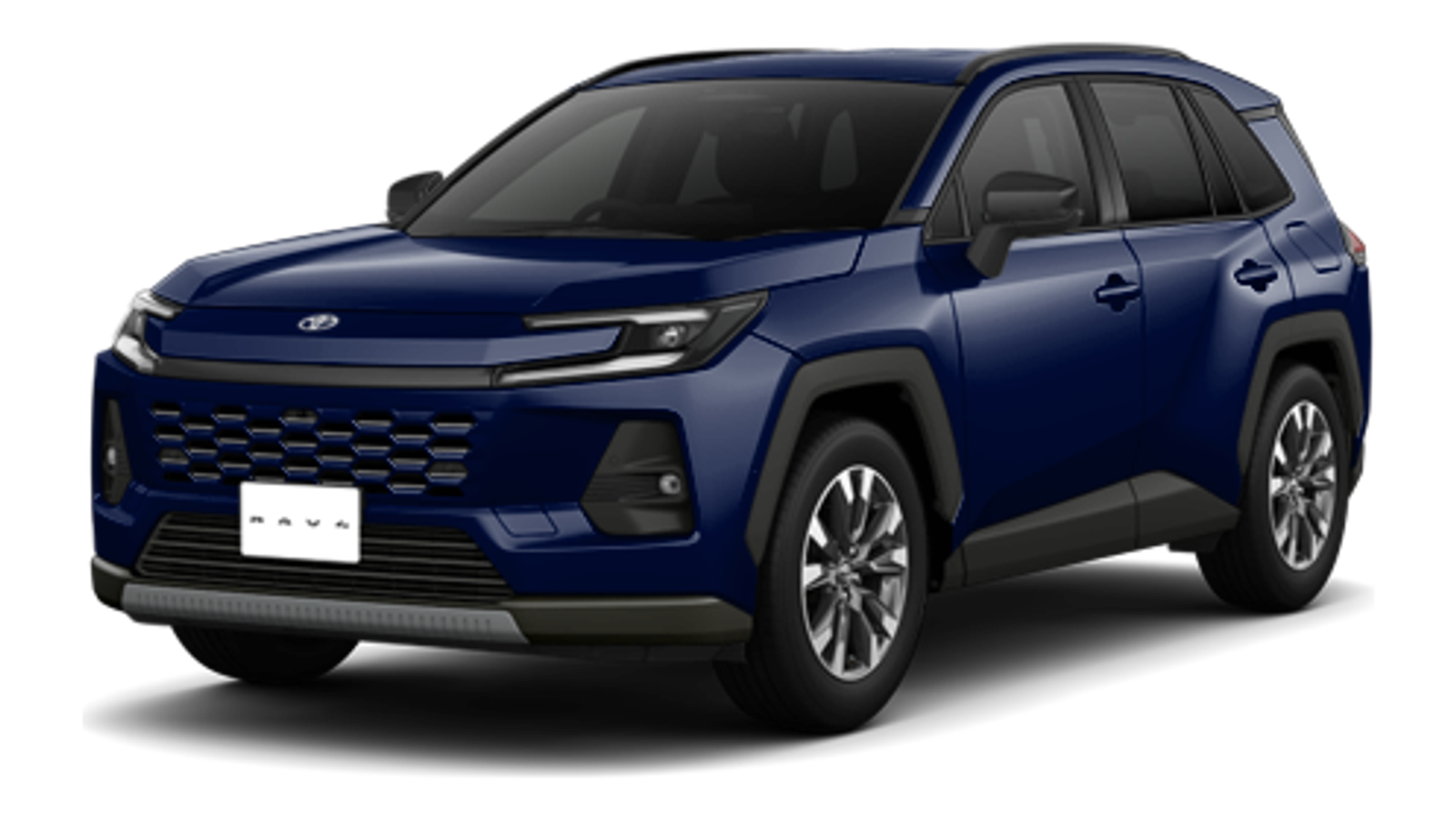
Worked Example: Importing a 2025 Toyota RAV4 to Cyprus
Here is the full landed cost of one car, a 2025 Toyota RAV4 shipped from Japan to Cyprus, worked out on 9 November 2026 with the customs rules in force that day. It lands at 52,788 EUR (about US$58,856), and duties and taxes come to 30.9% of its CIF value.
| Item | Share of CIF | Amount |
|---|---|---|
| Vehicle priceIPAS price for a car sourced in Japan | 31,212 EURUS$34,800 | |
| Shipping and insuranceJapan to Cyprus | 6,772 EURUS$7,550 | |
| CIF valueCost, insurance and freight: the customs value | 37,984 EURUS$42,350 | |
| Customs duties and taxes | ||
| Basic customs duty (10%)10% of CIF | 3,798 EURUS$4,235 | |
| GST/VAT (19%)19% of CIF plus the duties above20.9% of CIF | 7,938 EURUS$8,851 | |
| Total duties and taxes30.9% of CIF | 11,737 EURUS$13,086 | |
| Service and handling | ||
| Premium Import ServiceOptional end-to-end import management by IPAS | 1,466 EURUS$1,635 | |
| Destination handlingPort terminal and customs clearance handling | 1,601 EURUS$1,785 | |
| Total landed cost | 52,788 EURUS$58,856 | |
Documents Required for Import
The documentation requirements differ depending on whether the vehicle is coming from within the EU or from a third country.
For Intra-EU Vehicles
- T2L or T2LF Document, or the original registration document and plates of the other member state -- Proves EU status, so no customs duty is due
- Original number plates and original registration document from the EU member state
- Certificate of Conformity (CoC) -- Required for new vehicles; may need to be sourced separately for used vehicles
- Proof of VAT payment (if applicable for new vehicles)
- Valid ID and driving licence
- Contract of sale
- Proof of insurance
For Non-EU Vehicles (Third Country Origin)
- SAD (Single Administrative Document) -- The import customs declaration
- Purchase invoice showing the vehicle price, plus evidence of freight and insurance costs to Cyprus (for the CIF customs value)
- Bill of Lading or air waybill
- EC Certificate of Conformity (CoC) -- Required by Customs for new vehicles
- Original registration certificate from the country of export -- Required by Customs for used vehicles
- Proof of origin (REX invoice declaration, EUR.1, statement on origin or A.TR) -- If claiming 0% duty
- Packing list
- Passport copy or valid ID
- Proof of insurance
For Transfer of Normal Residence
- Form Ap. 2 -- Application for relief from duty and VAT, submitted to any Customs District Office
- Form C.104O -- Lodged with the import declaration once relief is approved
- Proof of previous normal residence abroad
- Evidence of vehicle ownership and use
RTD Registration Documents (after customs clearance)
- Form TOM 6 -- Registration form, completed and signed by a technician at the local Motor Vehicle Inspectorate office
- Form TEL 72A -- Customs notification to the RTD, where necessary
- Invoice or packing list for the vehicle, with stamp duty attached
- Type approval from the RTD for vehicles without a Certificate of Conformity
- MOT certificate (IKTEO or KEMO) and emissions test certificate (form TOM 119) for used vehicles
- SVA approval (form TOM 139B) for LHD vehicles
- Foreign registration certificate (translated unless in Greek or English), for used vehicles
- Valid insurance certificate
Customs Clearance Timeline
| Stage | Duration | Description |
|---|---|---|
| Sea transit to Limassol | 6-10 days | From Northern Europe; longer from Asia or the Americas |
| Document verification | 1-3 days | Customs review of the SAD, invoice, transport and origin documents |
| Duty and VAT payment | Same day to 2 days | Payment at the District Customs Office |
| Vehicle release | Upon payment | Vehicle cleared for collection from port |
| Type approval / SVA | Varies | Needed for vehicles without an EU CoC and for LHD vehicles |
| RTD registration | After clearance | Registration, €150 fee and first road tax disc |
Total estimated clearance: 3-7 business days (with complete documentation)
Factors That Can Cause Delays
- Incomplete documentation (most common cause)
- Missing Certificate of Conformity (CoC), which can be difficult to obtain for some older or non-standard vehicles
- Missing or invalid proof of origin, which means the 10% rate is charged instead of 0%
- Discrepancy between declared value and customs valuation
- Vehicles requiring individual approval because they are not EU type-approved
- Port congestion during peak holiday shipping periods
Homologation and Vehicle Approval
Cyprus accepts EU Whole Vehicle Type Approval under EU Regulation 2018/858, so a vehicle with a valid EU Certificate of Conformity does not need individual testing.
EU Type-Approved Vehicles
Vehicles with a valid EU Certificate of Conformity (CoC) are accepted without additional testing. This covers virtually all vehicles manufactured for the European market by major brands. The CoC confirms compliance with EU safety, emissions, and construction standards.
Non-EU Type-Approved Vehicles
Vehicles without EU type approval, including US-spec cars and Japanese domestic-market cars without an EU CoC, require:
- Individual approval -- The RTD issues type approval for vehicles without a CoC, following submission of the required approvals for the vehicle category
- CO2 emissions figure -- Needed to set the annual circulation tax; EU registration keys off WLTP CO2 values
- MOT and emissions tests -- At an authorised testing centre (IKTEO) or the RTD's Motor Vehicle Inspectorate testing centre (KEMO)
Non-EU-spec vehicles often need modifications such as ECE-pattern headlights, side marker lights and km/h speedometers to pass individual approval.
LHD Vehicle Modifications
LHD vehicles need Single Vehicle Approval (form TOM 139B). Typical adaptations include:
- Headlight modification to an RHD-type beam pattern to avoid dazzling oncoming traffic
- Side mirrors on both sides plus an interior passenger compartment mirror
- Special rear badge indicating the vehicle is LHD
Complete these before inspection and RTD registration.
Emissions Standards
As an EU member, Cyprus enforces EU emissions standards. New vehicles must comply with the current EU type-approval emissions standard (Euro 6). Used vehicles are assessed based on the standards applicable at their date of manufacture.
Registration Procedures and Costs
After customs clearance, vehicles must be registered with the Road Transport Department (RTD) before they can be licensed for road tax. New passenger cars (category M1) are registered online by the motor vehicle importer, and used M1 cars from a third country must be registered online by an authorised importer.
Registration Steps
- Submit Form TOM 6 -- With the customs notification (TEL 72A) and supporting documents to the RTD
- Type Approval or SVA -- For vehicles without an EU CoC and for LHD vehicles
- MOT and Emissions Tests -- For used vehicles, at an IKTEO or KEMO testing centre
- Pay the Registration Fee -- A flat €150
- Pay Annual Road Tax (Circulation Licence) -- The first disc runs to June or December
- Receive Licence Plates and Registration Certificate -- Issued by the RTD upon completion
Ongoing Costs
- Annual Road Tax: charged per g/km of CO2, lowest for cars at or under 120 g/km
- Periodic MOT: a valid MOT certificate is needed to renew road tax
- Insurance: Third-party liability insurance is mandatory at all times
Cost Advantage for Low-Emission Vehicles
Cars emitting up to 120 g/km CO2, including BEVs, pay the lowest annual circulation tax rate. Because Cyprus has no car excise and only a flat €150 registration fee, the main cost difference between a petrol car and an EV at import is the purchase price itself, plus any countervailing duty on a new Chinese-made EV.
Frequently Asked Questions
How much does it cost to import a car to Cyprus?
For a non-EU car with a CIF value of €25,000, customs duty is €2,500 (10%) and VAT is €5,225 (19% of €27,500), so customs charges total €7,725 and the customs-stage cost is €32,725. A Japanese or Korean-built car with valid origin proof pays no duty and €4,750 VAT. After customs, add the €150 registration fee and the first annual circulation tax. Use CarImport.AI for exact calculations.
What is the age limit for importing a used car to Cyprus?
EU law sets no maximum age, but the Road Transport Department applies its own restrictions to registering used cars from outside the EU, and a used passenger car from a third country must be registered through an authorised importer. Confirm with the RTD before shipping. EU-registered used cars face no customs duty and can be driven for up to 6 months before Cypriot registration. Cars over 30 years old can be registered as vintage vehicles with a FIVA certificate.
Can I import a left-hand drive vehicle to Cyprus?
Yes. Cyprus allows LHD vehicles to be registered after Single Vehicle Approval (form TOM 139B). Typical adaptations are RHD-pattern headlights, mirrors on both sides plus an interior mirror, and a rear badge showing the car is LHD. No full RHD conversion is required.
Do Japanese vehicles enter Cyprus duty-free?
Yes, if they were built in Japan. Under the EU-Japan Economic Partnership Agreement, Japanese-origin vehicles enter the EU, including Cyprus, at 0% customs duty when the invoice carries an origin declaration from a REX-registered exporter. Only 19% VAT applies at customs. A Japanese-brand car built elsewhere, such as in the USA, pays the 10% rate. Japanese domestic-market cars without an EU CoC also need individual approval before registration.
Is there excise or registration tax on cars in Cyprus?
No excise. Cyprus abolished excise duty on motor vehicles from 22 March 2019, so the only charges at customs are duty and VAT. At registration you pay a flat €150 fee, and each year you pay a CO2-based circulation tax.
What EV incentives are available in Cyprus?
Cyprus's Electromobility Promotion Scheme paid grants of up to €9,000 for a new private BEV and up to €20,000 for some social categories, but its calls have closed and the 2026 budget included no new scheme. A targeted scheme is reported for 2027. EVs pay the same 10% duty and 19% VAT as other cars from outside the EU, and low-emission cars pay the lowest annual circulation tax rate.
How long does customs clearance take at Limassol?
With complete documentation, customs clearance typically takes 3-7 business days. Vehicles without an EU Certificate of Conformity, or LHD vehicles needing Single Vehicle Approval, take longer before they can be registered with the RTD.
Are there additional duties on Chinese electric vehicles?
Yes. Since 30 October 2024, new battery electric cars made in China pay an EU countervailing duty of 7.8% to 35.3% depending on the producer, on top of the 10% customs duty: 17.8% combined for Tesla Shanghai, 27.0% for BYD, 28.8% for Geely Group and 45.3% for SAIC and non-cooperating producers. VAT at 19% is then charged on CIF plus both duties. Used BEVs are not covered.
Can I import a vehicle from India to Cyprus?
Yes. India has no trade agreement with the EU covering vehicles, so Indian-built cars pay 10% customs duty plus 19% VAT on CIF + duty, followed by the €150 registration fee. RHD vehicles from India suit Cyprus's left-hand traffic. Indian-market cars without an EU Certificate of Conformity need individual approval before registration. Use CarImport.AI to calculate the exact landed cost.
Ready to Import?
Importing a vehicle to Cyprus combines the benefits of EU membership with the RHD standard inherited from British rule. The tax structure is simple: EU-origin cars pay no duty (and used ones no VAT), non-EU cars pay 10% duty plus 19% VAT, and Japanese and Korean-built cars pay VAT only. With no excise and a flat €150 registration fee, the border bill is predictable. Whether you are importing a new Japanese SUV duty-free under the EU-Japan EPA, a used European sedan from Germany, or a fuel-efficient Indian hatchback, accurate cost estimates and proper documentation are essential.
IPAS provides two tools to help you plan and execute your vehicle import to Cyprus:
CarImport.AI -- Source a vehicle through IPAS and calculate the full landed cost to Cyprus, including EU customs duty, any countervailing duty, VAT, and shipping. Get exact duty rates for your specific vehicle and origin country.
IPAS EXPRESS Pro Car Shipping -- Already have a vehicle? Get instant shipping quotes to Limassol, including sea freight, container options, and port handling costs.
Ready to Import Your Vehicle?
Two tools, two use cases. Pick the one that fits your needs.
Source a vehicle through IPAS and calculate the full landed cost — customs duties, shipping, and compliance — to destinations across the world.
Calculate Landed CostIPAS Express
Already have a vehicle? Get instant shipping quotes — sea freight, air freight, or RoRo — for one car or multiple vehicles worldwide.
Get Shipping Quote