

Introduction
A new petrol or diesel car up to 3,000 cc pays exactly 35% of its CIF value in Fiji border taxes: 5% fiscal duty and 15% import excise duty, both on CIF, then 12.5% VAT on the total. Hybrids pay 29.375%, plug-in hybrids 18.125% and battery EVs 12.5%. The car must be right-hand drive.
That makes Fiji one of the most predictable markets IPAS calculates for. On a new car, the rate does not move with value, with emissions or with the country the car came from. What moves it is how the car is propelled. Petrol and diesel sit at the top, and every step towards electrification takes points off. Above 3,000 cc a flat FJD 10,000 Luxury Vehicle Levy is added to petrol, diesel and conventional hybrid cars, and that is the only place engine size changes the bill on a new car.
Three things catch buyers out. First, a used car costs more at the Fiji border than a new one. Used petrol and diesel cars pay 15% fiscal duty, not 5%, or a fixed dollar amount where that is higher, so the rate starts at 46.25% and rises as the car gets cheaper. Second, electric vehicles are no longer tax-free. Since 26 June 2026 they pay 12.5% import VAT, and most guides online still describe the old position. Third, no trade agreement lowers the duty on an ordinary passenger car, whether it comes from India, Japan, China or the European Union.
Every figure in this guide is drawn from the Customs Tariff Act 1986 as amended up to the Customs Tariff (Budget Amendment) Act 2026, the Value Added Tax Act 1991 and the Customs Regulations 1986. It has been checked against the Fiji Revenue and Customs Service's own published vehicle-by-vehicle landing-cost lists for January to June 2026.
Quick Facts
| Detail | Information |
|---|---|
| Customs Authority | Fiji Revenue and Customs Service (FRCS) |
| Registration Authority | Land Transport Authority (LTA) |
| Traffic Side | Left-hand traffic (drive on the left) |
| Steering Requirement | Right-hand drive. The LTA must not register a left-hand-drive vehicle (Land Transport (Vehicles Registration and Construction) Regulations 2000 reg.8(3)); diplomatic vehicles are the only exception |
| Customs value | CIF: transaction value plus freight, insurance and handling to Fiji |
| Fiscal duty | 5% on new petrol, diesel and hybrid cars; free on new plug-in hybrids and EVs; 15% or a fixed FJD amount, whichever is higher, on used petrol and diesel cars |
| Import excise duty | 15% petrol and diesel · 10% hybrid · 5% plug-in hybrid · free for EVs (new cars, from 26 June 2026). Charged on CIF, alongside fiscal duty |
| VAT | 12.5%, on CIF + fiscal duty + import excise duty |
| Luxury Vehicle Levy | Flat FJD 10,000 per car above 3,000 cc (petrol, diesel and non-plug-in hybrid). Not charged on plug-in hybrids, EVs or HS 8704 goods vehicles. Not included in the VAT base |
| Total, new petrol or diesel car ≤ 3,000 cc | 35.000% of CIF, at any value |
| Total, new hybrid ≤ 3,000 cc | 29.375% of CIF |
| Total, new plug-in hybrid | 18.125% of CIF, any engine size |
| Total, battery electric (new or used) | 12.500% of CIF |
| Total, used petrol or diesel car | 46.250% of CIF where the 15% rate applies; higher on cheaper cars |
| Age limit, used cars | Petrol and diesel: 8 years from year of manufacture (2018 models and newer in 2026). Hybrids: 5 years (2021 and newer). Battery EVs: no limit |
| Import licence | Required for used vehicles, before shipment. Not required for new vehicles or for any battery EV |
| New vehicles | Manufacturer's Euro 4 compliance certificate required (new battery EVs exempt) |
| Written-off vehicles | Absolutely prohibited, including insurance write-offs |
| Trade agreements | None lowers the duty on an ordinary passenger car |
| Main Seaports | Suva, Lautoka |
| Currency | Fijian dollar (FJD), managed against a basket of currencies; not pegged to the US dollar |
Types of Cars That Can Be Imported
New vehicles — the simple case
A new vehicle needs no import licence. The only gate is documentary: the importer must give FRCS "a Euro 4 compliance certificate issued by the manufacturer". Euro 4 is a 2005 European emissions standard. Every current-production car from every market IPAS sources from already exceeds it, so this is paperwork, not a barrier. New battery EVs don't need the certificate at all.
What "new" means in Fiji — registration, not mileage
Fiji's tariff defines a used or reconditioned vehicle as one "registered at any time, for any purpose", including a car used as a dealer demonstrator. There is no mileage test and no time test.
This cuts both ways:
- An unregistered car with delivery mileage on the odometer is new. FRCS's own landing-cost list records cars at 10 km as new.
- A pre-registered car is used even at 5 km. That covers a German Tageszulassung, a UK pre-registration and any ex-demonstrator. It moves the car onto the used tariff line, with higher duty, and brings it inside the used-vehicle age limit and licence requirement.
If you are buying "nearly new" stock for Fiji, check whether it has ever been registered before you price it.
Used vehicles — age limits by propulsion
| Used vehicle | Age limit (from year of manufacture) | Import licence |
|---|---|---|
| Petrol or diesel car, SUV or twin-cab pickup | 8 years — 2018 models and newer in 2026 | Required |
| Hybrid or plug-in hybrid car, or hybrid twin-cab | 5 years — 2021 models and newer in 2026 | Required |
| Goods vehicle, bus of 16+ seats, LPG, CNG or solar vehicle | No age limit (Euro 4 still required) | Required |
| Pure battery electric vehicle | No age limit | Not required |
Age is worked out by subtracting the year of manufacture from the year the licence is applied for. The cut-off years move forward by one every 1 January. From 1 January 2027 the minimum will be 2019 for petrol and diesel and 2022 for hybrids.
Note that the hybrid limit is tighter than the petrol limit, not looser. Note also that a double-cab pickup is caught by the 8-year (or 5-year hybrid) limit even though it is taxed as a goods vehicle, because the rule names "dual purpose motor vehicles" expressly.
Older and high-value vehicles
A vehicle that fails the age or Euro 4 test can still be licensed if it is a high-end, luxury, vintage or antique passenger car with a customs value of at least FJD 250,000. The threshold was FJD 500,000 until 1 August 2026. This is a licensing gate only. It changes no tax rate.
Steering — right-hand drive
Fiji drives on the left. The LTA "must not register a vehicle ... in which the centre of the steering wheel is to the left of the centre of the vehicle". The only exception is vehicles owned by diplomatic personnel. FRCS states the practical position simply: left-hand-drive vehicles are prohibited unless approved by the LTA.
Conversion is not a clean way around this. Any change to steering needs the LTA's prior approval, and the converted vehicle must still meet the registration rule. Source a factory right-hand-drive vehicle.
Written-off vehicles
The import of written-off vehicles is absolutely prohibited. FRCS applies this to insurance write-offs as well as statutory ones, with no exceptions.
Origin
No country-of-origin ban applies to motor vehicles in Fiji.
Cars You Can Import to Fiji
Each card is a full landed-cost calculation: the car's price, shipping, every duty and tax, and handling, worked out on 9 November 2026 with the rules in force that day. All are right-hand drive to suit Fiji's roads. Tap a car to see its full breakdown, or open it to change the trim, colour or port.
More cars you can import to Fiji
New cars IPAS sources to order that meet Fiji's import rules. Prices are ex works, before shipping and duty. Open a car to work out its full landed cost.
 RHDBackorder2026
Mercedes-Benz AMG EQE SUV
SUV · 2 VariantsElectricFrom $148,200Ex Works, UK RHDBackorder2026
Mercedes-Benz AMG GLS
SUV · 2 VariantsHybridFrom $186,500Ex Works, UK RHDBackorder2026
Mercedes-Benz EQE SUV
SUV · 9 VariantsElectricFrom $102,500Ex Works, UK RHDBackorder2026
Toyota Land Cruiser 250
SUV · 7 VariantsPetrol · DieselFrom $41,600Ex Works, Japan RHDBackorder2026
Lexus GX 550
SUV · 2 VariantsPetrolFrom $82,600Ex Works, Japan RHDBackorder2026
Lexus RZ
SUV · 3 VariantsElectricFrom $54,600Ex Works, Japan RHDBackorder2026
Honda City
Sedan · 8 VariantsPetrol · HybridFrom $10,800Ex Works, India RHDBackorder2026
Tata Curvv
SUV · 22 VariantsPetrol · DieselFrom $8,900Ex Works, India RHDBackorder2026
Porsche Cayenne
SUV · 12 VariantsPetrol · Plug-in Hybrid · ElectricFrom $117,700Ex Works, UK RHDBackorder2026
Chevrolet Corvette Stingray Convertible
Convertible · 1 VariantPetrolFrom $139,400Ex Works, NZ RHDBackorder2026
Jeep Compass
SUV · 17 VariantsDieselFrom $16,200Ex Works, India RHDBackorder2026
Mahindra XUV 3XO
SUV · 29 VariantsPetrol · DieselFrom $8,500Ex Works, India RHDBackorder2026
Mahindra Thar Roxx
SUV · 22 VariantsPetrol · DieselFrom $11,300Ex Works, India RHDBackorder2026
Mahindra XUV 7XO
SUV · 27 VariantsPetrol · DieselFrom $12,600Ex Works, India RHDBackorder2026
Hyundai Bayon
SUV · 11 VariantsPetrolFrom $9,100Ex Works, India RHDBackorder2026
Citroen eC3 X
Hatchback · 3 VariantsElectricFrom $14,400Ex Works, India
Ports Supporting Vehicle Import
| Port | Location | Role |
|---|---|---|
| Suva | South coast of Viti Levu | Capital and principal container port |
| Lautoka | West coast of Viti Levu | Second commercial port, closer to Nadi |
| Levuka and Malau | Ovalau and Vanua Levu | Minor ports |
Fiji is an archipelago with no land border, so vehicles arrive by sea or, rarely, by air. No rule directs vehicles to a particular port, and the port of entry changes no tax.
Restrictions on Vehicle Import for Individuals
- Used vehicles need a Motor Vehicle Import Licence before shipment. It is valid for one month and cannot be transferred. A vehicle shipped without one can be re-exported, detained, seized or warehoused at the importer's expense. FRCS charges no fee to process the licence.
- Personal importers should check with the LTA before importing, as FRCS advises. FRCS guidance also says businesses that resell vehicles need an Authorised Motor Vehicle Dealer licence, and that other importers should ask the LTA how many vehicles an individual or business may import and register.
- Right-hand drive only, and no written-off vehicles.
- Age limits apply to used petrol, diesel and hybrid cars, as set out above.
Who this guide does not cover. Fiji has several person-based concessions with their own rules. These include duty-free treatment of one used vehicle per family for migrants, work-permit holders and returning residents, where the vehicle must have been owned and used for at least 12 months. They also include reduced rates for approved taxi operators holding an LTA permit, and diplomatic imports. None of them is available on a commercial purchase. They are often the reason a buyer has heard a much lower figure than the one below.
Duty Structure Overview
Fiji charges three taxes under the Customs Tariff Act 1986, plus one levy under the Customs Regulations 1986:
- Fiscal duty, on the CIF value.
- Import excise duty, also on the CIF value. It sits alongside fiscal duty and is not charged on CIF plus fiscal duty.
- Luxury Vehicle Levy, a flat FJD 10,000 per vehicle on named tariff lines above 3,000 cc.
- VAT at 12.5%, on CIF + fiscal duty + import excise duty. The levy is not in this base.
Step by step
| Step | Charge | Base | Rate |
|---|---|---|---|
| 1 | Customs value | Invoice + freight + insurance + handling to Fiji, converted to FJD at the selling rate when the goods are entered | — |
| 2 | Fiscal duty | CIF | Free, 5%, 15%, or a fixed FJD amount (the higher of the two where both are listed) |
| 3 | Import excise duty | CIF | Free, 5%, 10% or 15%, by propulsion and condition |
| 4 | Luxury Vehicle Levy | Per vehicle | FJD 10,000 above 3,000 cc on petrol, diesel and non-plug-in hybrid cars; otherwise nil |
| 5 | VAT | CIF + fiscal duty + import excise duty | 12.5% |
The rate ladder for new passenger cars
| Propulsion | Fiscal duty | Import excise | VAT base | Total, % of CIF |
|---|---|---|---|---|
| Petrol or diesel | 5% | 15% | 1.20 × CIF | 35.000% |
| Hybrid (not plug-in) | 5% | 10% | 1.15 × CIF | 29.375% |
| Plug-in hybrid | Free | 5% | 1.05 × CIF | 18.125% |
| Battery electric | Free | Free | 1.00 × CIF | 12.500% |
| LPG, CNG or solar (concession code 129(a)) | Free | Free | 1.00 × CIF | 12.500% |
| Other, including hydrogen fuel cell | 15% | 15% | 1.30 × CIF | 46.250% |
Add a flat FJD 10,000 to the petrol, diesel and hybrid rows above 3,000 cc. Petrol and diesel cars pay identical rates in every engine band; there is no diesel surcharge.
Two common errors
Charging the levy VAT. Two provisions seem to disagree on whether the Luxury Vehicle Levy belongs in the VAT base. The specific one, VAT Act 1991 s.14(2)(c), names only the customs value, fiscal duty and import excise duty. FRCS's own figures agree: in all 40 levy-paying vehicles in its January to June 2026 lists, VAT was charged without the levy. Adding it overstates every affected bill by exactly FJD 1,250.
Reading the VAT rate off the tariff. The VAT column in the tariff schedule has not kept up with the VAT Act. Most vehicle lines still print 15%, and some older prints show 9%. The rate in force is 12.5%, reduced from 15% on 1 August 2025. The tariff column tells you only whether VAT applies at all.
Worked example 1 — New petrol SUV, 1,987 cc, from Thailand, CIF FJD 41,911
The highest-volume band in Fiji. The CIF is taken from a new Mitsubishi Destinator in FRCS's April–June 2026 landing-cost list.
| Charge | Calculation | Amount (FJD) |
|---|---|---|
| Customs value (CIF) | — | 41,911.00 |
| Fiscal duty at 5% | 41,911 × 0.05 | 2,095.55 |
| Import excise duty at 15% | 41,911 × 0.15 — on CIF, not CIF + fiscal | 6,286.65 |
| Luxury Vehicle Levy | 1,987 cc — not applicable | 0.00 |
| VAT at 12.5% | (41,911 + 2,095.55 + 6,286.65) × 0.125 | 6,286.65 |
| Total border tax | 14,668.85 (35.000% of CIF) | |
| Total landed | 56,579.85 |
FRCS recorded this vehicle at FJD 2,096 fiscal duty, FJD 6,287 excise and FJD 6,287 VAT. FRCS rounds each line to the nearest dollar.
Worked example 2 — New diesel Toyota Land Cruiser 300, 3,346 cc, from Japan, CIF FJD 130,000
Above 3,000 cc, so the levy applies.
| Charge | Calculation | Amount (FJD) |
|---|---|---|
| Customs value (CIF) | — | 130,000.00 |
| Fiscal duty at 5% | 130,000 × 0.05 | 6,500.00 |
| Import excise duty at 15% | 130,000 × 0.15 | 19,500.00 |
| Luxury Vehicle Levy | flat, above 3,000 cc | 10,000.00 |
| VAT at 12.5% | (130,000 + 6,500 + 19,500) × 0.125 — levy excluded | 19,500.00 |
| Total border tax | 55,500.00 (42.692% of CIF) | |
| Total landed | 185,500.00 |
Because the levy is a fixed sum, its share falls as the price rises. On a cheaper car above 3,000 cc it weighs much more.
Worked example 3 — Used petrol Toyota Corolla, 1,798 cc, 2019 model from Japan, CIF FJD 14,000
A used car, where the fixed-amount fiscal duty takes over.
| Charge | Calculation | Amount (FJD) |
|---|---|---|
| Customs value (CIF) | — | 14,000.00 |
| Fiscal duty | 15% would be 2,100; the FJD 5,000 fixed amount is higher, so it applies | 5,000.00 |
| Import excise duty at 15% | 14,000 × 0.15 | 2,100.00 |
| Luxury Vehicle Levy | not applicable | 0.00 |
| VAT at 12.5% | (14,000 + 5,000 + 2,100) × 0.125 | 2,637.50 |
| Total border tax | 9,737.50 (69.554% of CIF) | |
| Total landed | 23,737.50 |
A 2019 model is within the 8-year limit in 2026, so it is admissible with an import licence. A new car of the same size would pay 35%.
These figures show the structure. Get the exact figure for your vehicle, engine size, condition and CIF using CarImport.AI.

Calculate your exact import duty to Fiji
Get a vehicle-specific duty and full landed-cost breakdown — HS classification, every tax, levy and FTA, plus shipping — calculated for your exact make, model and specs.
- Vehicle-specific HS code
- All duties, taxes & FTAs
- Shipping + est. landed cost
Why used cars cost more
Every used petrol and diesel line reads "15% or FJD X per unit, whichever is the greater". Customs Tariff Act 1986 s.7 makes the higher figure apply. So a used car never pays less than 46.25% of CIF (15% fiscal + 15% excise + 12.5% VAT on 1.30 × CIF), and below the break-even value it pays more:
| Used petrol car, engine size | Fixed fiscal duty | Fixed amount applies below CIF of |
|---|---|---|
| Up to 1,000 cc | FJD 2,750 | FJD 18,333 |
| 1,001–1,500 cc | FJD 3,875 | FJD 25,833 |
| 1,501–2,500 cc | FJD 5,000 | FJD 33,333 |
| 2,501–3,000 cc | FJD 6,750 | FJD 45,000 |
| Over 3,000 cc | FJD 8,125, plus the FJD 10,000 levy | FJD 54,167 |
Used diesel cars follow the same amounts in their equivalent bands. Used conventional hybrids pay a pure fixed fiscal duty with no percentage alternative: FJD 2,000 up to 1,500 cc, FJD 2,250 for 1,501–2,500 cc, FJD 2,500 for 2,501–3,000 cc and FJD 4,250 above, with 15% import excise on top.
The 3,000 cc line
A petrol car of exactly 3,000 cc pays no levy. At 3,001 cc it pays FJD 10,000. The band runs "exceeding 2,500 cc but not exceeding 3,000 cc", so 3,000 cc sits in the lower band.
Worked Example: Importing a 2026 Toyota Urban Cruiser Hyryder to Fiji
Here is the full landed cost of one car, a 2026 Toyota Urban Cruiser Hyryder shipped from India to Fiji, worked out on 9 November 2026 with the customs rules in force that day. It lands at 64,942 FJD (about US$28,757), and duties and taxes come to 35% of its CIF value.
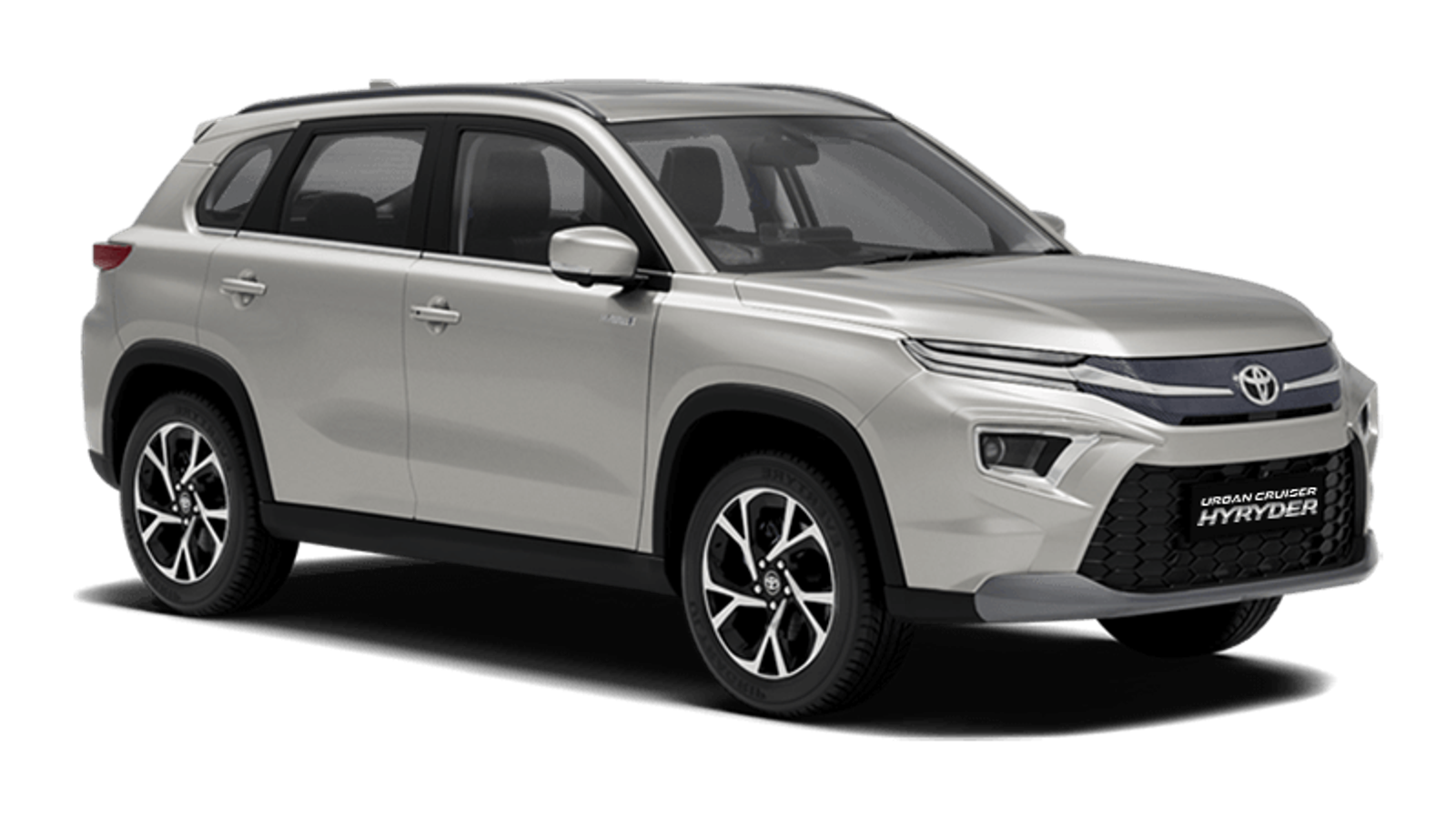
| Item | Share of CIF | Amount |
|---|---|---|
| Vehicle priceIPAS price for a car sourced in India | 23,035 FJDUS$10,200 | |
| Shipping and insuranceIndia to Fiji | 20,636 FJDUS$9,138 | |
| CIF valueCost, insurance and freight: the customs value | 43,671 FJDUS$19,338 | |
| Customs duties and taxes | ||
| Basic customs duty (5%)5% of CIF | 2,184 FJDUS$967 | |
| Additional duty (15%)15% of CIF | 6,551 FJDUS$2,901 | |
| GST/VAT (12.5%)12.5% of CIF plus the duties above15% of CIF | 6,551 FJDUS$2,901 | |
| Total duties and taxes35% of CIF | 15,286 FJDUS$6,769 | |
| Service and handling | ||
| Premium Import ServiceOptional end-to-end import management by IPAS | 1,739 FJDUS$770 | |
| Destination handlingPort terminal and customs clearance handling | 4,246 FJDUS$1,880 | |
| Total landed cost | 64,942 FJDUS$28,757 | |
Pickups and Goods Vehicles
Fiji's tariff settles the double-cab question in its own definitions. A twin-cab or extended-cab pickup with four or more seats is a dual purpose vehicle inside HS 8704, the goods-vehicle heading, not a passenger car. A single cab with three seats or fewer is an "other goods vehicle". A wagon body on a pickup chassis, such as a Fortuner, Prado, MU-X or Everest, is a passenger car under HS 8703.
| New vehicle | Fiscal | Excise | Total, % of CIF |
|---|---|---|---|
| Diesel double cab, gross vehicle weight up to 3,000 kg | 5% | 5% | 23.750% |
| Diesel double cab, 3,001–5,000 kg | 5% | Free | 18.125% |
| Petrol double cab, up to 5,000 kg | 5% | Free | 18.125% |
| Single-cab work pickup (3 seats or fewer) | Free | Free | 12.500% |
| Hybrid or electric goods vehicle | Free | Free | 12.500% |
No HS 8704 vehicle pays the Luxury Vehicle Levy, whatever its engine size.
The 3-tonne weight line — diesel only
A 2023 amendment raised import excise to 5% on exactly sixteen tariff lines: the diesel dual purpose vehicles of up to 3 tonnes gross vehicle weight. The heavier diesel block and every petrol line were left at Free. The result: two identical diesel double cabs can pay different rates purely because of the weight plate. Mainstream diesel double cabs plate between about 2,900 and 3,300 kg, so the line runs straight through the segment. Exactly 3,000 kg falls in the higher-tax band. Read the gross vehicle weight from the manufacturer's plate, not a brochure estimate.
| New diesel double cab, CIF FJD 44,000 | GVW 2,910 kg (e.g. Mitsubishi Triton 2.4) | GVW 3,230 kg (e.g. Ford Ranger 2.0 Bi-Turbo) |
|---|---|---|
| Fiscal duty at 5% | 2,200.00 | 2,200.00 |
| Import excise duty | 5% — 2,200.00 | Free — 0.00 |
| VAT at 12.5% | 6,050.00 | 5,775.00 |
| Total border tax | 10,450.00 (23.750%) | 7,975.00 (18.125%) |
Free Trade Agreements
Fiji's tariff has no preferential column, and no Fiji instrument currently lowers the duty on a vehicle for any origin. One concession code covers "goods traded under international trade agreements" at a rate "as determined by the Minister". No determination has been published, so it cannot be applied.
| Origin | Duty treatment on a passenger car |
|---|---|
| India | Standard rate — Fiji and India have no trade agreement |
| Japan, Thailand, South Korea, UAE, US, Canada, Mexico | Standard rate — no agreement |
| China | Standard rate — the November 2025 framework agreement is an agreement to negotiate and grants no tariff cut |
| Australia, New Zealand | Standard rate — SPARTECA is one-way, giving Fijian exports access to those markets, not the reverse |
| EU (Germany, Belgium) and UK | Standard rate — Fiji excluded mainstream passenger cars from the Pacific–EU and Pacific–UK interim Economic Partnership Agreements for all time |
The EU and UK position is worth a closer look. Under the interim Economic Partnership Agreement, Fiji placed the mainstream car lines in a basket marked "excluded" for every year of the schedule. These cover petrol cars of 1,001–3,000 cc and diesel cars up to 2,500 cc. So 5% fiscal duty on a German or UK car is the correct treaty outcome. FRCS assessed a new German-built VW Tiguan at exactly 5% in its April–June 2026 list.
For EU and UK pickups, light goods vehicles, petrol cars of 1,000 cc or less or above 3,000 cc, and diesel cars above 2,500 cc, the same schedule provided for 0% from 1 January 2023. No Fiji instrument puts that 0% into effect, and Fiji's own Trade Information Portal shows the standard rate. This is unresolved. IPAS quotes the standard 5%, because a quote that proves too high is recoverable and one that proves too low is a surprise bill at the port. Anyone hoping to claim 0% should get a EUR.1 movement certificate and an FRCS advance ruling before shipping.
The Pacific agreements, MSGTA and PICTA, leave vehicles eligible in principle. In practice they are never relevant, because no member country manufactures cars.
Electric and Hybrid Vehicles
Battery EVs — 12.5%, and no longer free
Until 26 June 2026 a battery electric car entered Fiji free of every border charge. The 2026 Budget Amendment Act added 12.5% import VAT to the electric lines from that date. Fiscal duty and import excise stay free. A battery EV now pays exactly 12.5% of CIF, whatever its price, battery size, power or origin.
| New battery EV (e.g. BYD Atto 3 class) from China, CIF FJD 56,520 | Amount (FJD) |
|---|---|
| Fiscal duty | Free — 0.00 |
| Import excise duty | Free — 0.00 |
| Luxury Vehicle Levy | Not applicable — 0.00 |
| VAT at 12.5% | 7,065.00 |
| Total border tax | 7,065.00 (12.500% of CIF) |
FRCS's April–June 2026 list includes electric vehicles showing no duty or VAT at all. Those were entered before 26 June and should not be used to estimate a current import.
Battery EVs are also the most permissive branch on admissibility. A new EV needs no Euro 4 certificate. A used EV has no age limit and needs no import licence; FRCS states that both new and used electric vehicles do not require one. The lowest-taxed vehicles in Fiji are also the easiest to bring in.
Plug-in hybrids — the cheapest combustion option
A new plug-in hybrid pays free fiscal duty and 5% import excise, giving 18.125% of CIF at any engine size, and it never pays the Luxury Vehicle Levy. Used plug-in hybrids pay 10% excise, 23.75% in total. Before 26 June 2026 plug-in hybrids paid no import excise at all.
| New plug-in hybrid SUV, 1,998 cc (e.g. BYD Sealion 6 DM-i class) from China, CIF FJD 72,000 | Amount (FJD) |
|---|---|
| Fiscal duty | Free — 0.00 |
| Import excise duty at 5% | 3,600.00 |
| VAT at 12.5% | (72,000 + 3,600) × 0.125 = 9,450.00 |
| Total border tax | 13,050.00 (18.125% of CIF) |
The charge port is the whole test. If the traction battery can be charged from an external source, the car is a plug-in hybrid. If it cannot, it is a conventional hybrid at 29.375%.
Conventional hybrids — 29.375%
A new non-plug-in hybrid pays 5% fiscal duty, the same as petrol, and 10% import excise instead of 15%. Above 3,000 cc the FJD 10,000 levy applies. Nissan e-POWER models count as hybrids, not EVs, because they carry a petrol engine.
| New Toyota Corolla Hybrid 1.8, 1,797 cc, from Japan, CIF FJD 34,000 | Amount (FJD) |
|---|---|
| Fiscal duty at 5% | 1,700.00 |
| Import excise duty at 10% | 3,400.00 |
| VAT at 12.5% | (34,000 + 1,700 + 3,400) × 0.125 = 4,887.50 |
| Total border tax | 9,987.50 (29.375% of CIF) |
Mild hybrids and fuel cells — unresolved
Fiji's tariff does not say when a 48-volt system counts as a hybrid. Unless the manufacturer designates the car a hybrid, IPAS treats it as petrol or diesel at 35%. Hydrogen fuel-cell cars are also unresolved; IPAS uses the higher "other" line at 46.25% and recommends an FRCS ruling before shipping. Fiji has no hydrogen refuelling network, so this is rarely relevant.
Components That Do Not Exist in Fiji
Fiji does not charge a CO2 or emissions tax, a value-based luxury tax, an age surcharge, a separate engine-size tax beyond the tariff bands, or a classic-car rate. Despite its name, the Luxury Vehicle Levy depends on engine size alone: an FJD 400,000 EV pays nothing, while a 3.5-litre petrol car pays the full FJD 10,000.
The Environment and Climate Adaptation Levy no longer applies to imported goods. It was repealed from 1 April 2022, though older guides still list it.
FRCS does charge a fee for each customs entry lodged, plus an FJD 115 late fee if the entry is not collected within four working days. The base fee is not published, so it is not included in the figures here.
Documents Required for Import
For every vehicle
- Commercial invoice
- Bill of lading
- Packing list
- Customs entry (SAD form), lodged through FRCS's ASYCUDA World system
- FRCS customs registration (TIN record) for first-time importers
- New vehicles: the manufacturer's Euro 4 compliance certificate (not needed for a new battery EV)
Additionally, for used vehicles: the Motor Vehicle Import Licence, obtained before shipping
FRCS lists these documents for the licence application:
- Application letter, plus an authorisation letter if an agent is acting for the importer
- Applicant's ID
- Deregistration documents or export certificate for the vehicle
- JEVIC inspection report for vehicles from Japan, Australia or New Zealand
- Technical Letter for vehicles from Singapore
- Certificate of compliance with Euro 4 standards
Used vehicles also need an import verification and inspection certificate, which records the odometer reading, seals it in the origin country and confirms decontamination.
Customs Clearance Timeline
| Stage | What happens | Timing set by FRCS |
|---|---|---|
| Before shipping | Used vehicles: import licence issued. New: Euro 4 certificate in hand | Licence valid one month |
| Before arrival | The carrier registers the cargo manifest in ASYCUDA World | 48 hours before arrival at a seaport |
| Arrival notice | The carrier or forwarder notifies you or your customs agent | Three days before arrival |
| Customs entry | You or your agent lodge the SAD; ASYCUDA calculates duty, excise, levy and VAT | — |
| Payment | Duties and taxes paid in person, by pre-payment account or bank transfer | Collect within four working days or an FJD 115 late fee applies |
| Risk lanes | Green (release), yellow (document review), blue (post-audit checks), red (physical inspection) | — |
| Border agencies | All imports need Biosecurity Authority of Fiji clearance | — |
| Release | The cargo release order is issued and emailed | — |
Most avoidable delay comes from work that should be done before shipping: confirming whether the car is new or used under Fiji's registration test, securing the licence for a used car, and checking the gross vehicle weight on a diesel double cab.
Homologation and Vehicle Approval
The technical gates set by Fiji law are:
- Steering: right-hand drive. The LTA cannot register a left-hand-drive vehicle, and steering modifications need its prior approval.
- Emissions: Euro 4. New vehicles need the manufacturer's certificate (except new battery EVs). Used vehicles must be Euro 4 compliant to get an import licence.
- Pre-shipment inspection for used vehicles: a JEVIC report from Japan, Australia or New Zealand, or a Technical Letter from Singapore, with the odometer read and sealed and the vehicle decontaminated in the origin country.
- Manufacture date: the registration certificate must record the date or year of manufacture, which fixes the vehicle's age for Fiji purposes.
Cargo vans and panel vans need FRCS's prior approval for seating changes. Any change that alters the tariff classification also changes the duty.
Registration Procedures and Costs
Registration with the Land Transport Authority comes after customs clearance. Its charges are separate from the border calculation and are not added to the VAT base:
- LTA registration fees and road user levies
- Compulsory third-party insurance
- Wharfage, storage, demurrage and customs-agent fees
FRCS advises personal importers to confirm the LTA's registration requirements before importing. Businesses that resell vehicles are expected to hold an Authorised Motor Vehicle Dealer licence; IPAS could not locate the regulation that creates this licence, so confirm the position with the LTA on any multi-vehicle order.
Recent Regulatory Changes (2022–2026)
- 25 February 2022 — licence before shipment. Used-vehicle import licences must be obtained before importation.
- 1 April 2022 — ECAL repealed on imports. The Environment and Climate Adaptation Levy no longer applies to imported goods.
- 16 July 2022 — Luxury Vehicle Levy introduced at a flat FJD 10,000 above 3,000 cc. The same package raised the fixed fiscal-duty amounts on used cars by FJD 1,000 per band, ended free fiscal duty on new hybrids (now 5%) and removed VAT from electric vehicles.
- 1 August 2023 — diesel double cabs up to 3 tonnes moved from free to 5% import excise. The electric car lines were simplified to new and used only, both free of fiscal duty and excise.
- 2025 — "used" redefined. The tariff now treats any vehicle that has ever been registered, or used as a demonstrator, as used, regardless of mileage.
- 1 August 2025 — VAT cut to 12.5% from 15%. New vehicles must carry a manufacturer's Euro 4 certificate, and the used-vehicle age limits were restated at 8 years (petrol and diesel) and 5 years (hybrids).
- 4 November 2025 — China–Fiji framework agreement signed. It opens negotiations only and grants no tariff cut.
- 1 January 2026 — age cut-offs advanced to 2018 models for used petrol and diesel and 2021 for used hybrids.
- 26 June 2026 — the 2026 Budget Amendment Act. Import excise rose from 10% to 15% on new petrol and diesel cars and from 5% to 15% on used ones. New hybrids now pay 10%, and plug-in hybrids pay 5% (new) and 10% (used), up from nothing. Electric vehicles became subject to 12.5% import VAT. The government's Budget summary described the new-car increase as "5% to 10%"; the Act itself, which governs, says 10% to 15%.
- 1 August 2026 — high-value licensing threshold halved from FJD 500,000 to FJD 250,000 for over-age luxury, vintage and antique cars.
- Coming: 1 January 2027. The minimum year model for used imports moves to 2019 for petrol and diesel and 2022 for hybrids.
Frequently Asked Questions
How much does it cost to import a car to Fiji?
For a new petrol or diesel car up to 3,000 cc, border taxes come to exactly 35% of the CIF value: 5% fiscal duty, 15% import excise and 12.5% VAT on the total. Hybrids pay 29.375%, plug-in hybrids 18.125% and battery EVs 12.5%. Above 3,000 cc, petrol, diesel and hybrid cars also pay a flat FJD 10,000 Luxury Vehicle Levy. Port, agent, registration and insurance costs come on top.
Are electric cars still tax-free in Fiji?
No. Since 26 June 2026 battery electric vehicles pay 12.5% import VAT. They still pay no fiscal duty, no import excise and no Luxury Vehicle Levy, so the total is exactly 12.5% of CIF. Some official and many unofficial pages still describe EVs as fully exempt; that is the pre-June 2026 position.
What is the age limit for importing a used car to Fiji?
Eight years from the year of manufacture for petrol and diesel cars and twin-cab pickups, so 2018 models and newer in 2026. Hybrids and plug-in hybrids are limited to five years, so 2021 and newer. Used battery EVs have no age limit and need no import licence. The cut-offs move forward one year every 1 January.
Is a used car cheaper to import than a new one?
No. In Fiji it is usually dearer. A used petrol or diesel car pays 15% fiscal duty instead of 5%, or a fixed amount from FJD 2,750 to FJD 8,125 if that is higher. That puts the total at 46.25% of CIF or more, against 35% for the same car new. A cheap used car can go well above that: a used 1.8-litre Corolla at CIF FJD 14,000 pays 69.554%.
Is a pre-registered or ex-demo car "new" in Fiji?
No. Fiji's tariff treats any vehicle that has been registered at any time, or used as a demonstrator, as used, whatever its mileage. A delivery-mileage car that has never been registered is new. A pre-registered car with 5 km on it is used and pays the used rates and the age rules.
Can I import a left-hand-drive car to Fiji?
In practice, no. The Land Transport Authority must not register a vehicle with the steering wheel to the left of centre, except for diplomatic vehicles, and FRCS treats left-hand drive as prohibited unless the LTA approves it. Conversion needs LTA prior approval and still has to satisfy the same rule, so source a factory right-hand-drive vehicle.
Do cars from India, the EU or China get lower duty in Fiji?
No. Fiji has no trade agreement with India, its arrangement with China grants no tariff cut, and it excluded mainstream passenger cars from its agreement with the EU and UK. Every ordinary passenger car pays the same rate whatever its origin. The one open question concerns EU and UK pickups and some large-engine cars, which a treaty schedule set at 0% from 2023. Fiji does not yet apply that rate, so IPAS quotes the standard 5%.
What is the Luxury Vehicle Levy?
A flat FJD 10,000 per vehicle on petrol, diesel and conventional hybrid passenger cars above 3,000 cc. It depends on engine size, not price. It does not apply to plug-in hybrids, battery EVs or pickups and goods vehicles under HS 8704. It is not included in the VAT calculation.
How are double-cab pickups taxed in Fiji?
As goods vehicles under HS 8704, not passenger cars. A new diesel double cab pays 23.75% of CIF if its gross vehicle weight is 3,000 kg or less, and 18.125% if it is heavier. A petrol double cab pays 18.125% at any weight up to 5 tonnes. No pickup pays the Luxury Vehicle Levy.
Ready to Import?
Fiji rewards getting three facts right before you buy. Propulsion sets the rate: 35% for petrol and diesel, falling to 12.5% for a battery EV. Registration history decides whether the car is new or used, and with it the duty, the age limit and the licence. Engine size matters only at the 3,000 cc line, and on a diesel double cab the weight plate matters at 3 tonnes.
Two gates decide whether the import is possible at all. The car must be right-hand drive, and a used car must be within the age limit, with its licence issued before it ships.
IPAS provides two tools to plan and execute your import:
CarImport.AI — Source a vehicle through IPAS and calculate the full landed cost to Fiji: fiscal duty, import excise, the Luxury Vehicle Levy where it applies, and 12.5% VAT, on the exact CIF for your vehicle.
IPAS EXPRESS — Already have a vehicle? Get instant shipping quotes to Suva or Lautoka, with transparent, itemised pricing and a stage-by-stage timeline.
Ready to Import Your Vehicle?
Two tools, two use cases. Pick the one that fits your needs.
Source a vehicle through IPAS and calculate the full landed cost — customs duties, shipping, and compliance — to destinations across the world.
Calculate Landed CostIPAS Express
Already have a vehicle? Get instant shipping quotes — sea freight, air freight, or RoRo — for one car or multiple vehicles worldwide.
Get Shipping Quote