
Introduction
Hong Kong charges no customs duty, excise or VAT on imported cars. The only border charge is an import declaration charge capped at HKD 200. The real cost is the First Registration Tax, paid at registration: 46% to 132% of taxable value on a private car, in marginal bands, and 15% on a pickup.
That makes Hong Kong one of the strangest vehicle markets IPAS calculates for. It is a free port with no customs tariff, yet it is also one of the most heavily taxed places in the world to put a car on the road. A private car with a taxable value of HKD 300,000 pays HKD 32 at the border and HKD 198,000 at registration. At HKD 1,000,000 the registration tax is larger than the car.
Three things follow from the free-port position, and each of them catches importers out. First, the HS code selects no rate. With no tariff, the Hong Kong Harmonized System code is a statistical entry on the trade declaration and nothing more. The rate is chosen by the vehicle's class under the Road Traffic Ordinance (Cap 374): private car, goods vehicle, van-type light goods vehicle, motor cycle, taxi, bus or special purpose vehicle. Getting the class right is most of the job.
Second, origin and free trade agreements make no difference. There is no duty for an agreement to reduce, so a car built in Japan, Germany, Thailand or the UK pays exactly the same.
Third, the electric private car concession ended on 31 March 2026. An electric private car registered today pays the full 46% / 86% / 115% / 132% ladder, the same as a petrol car of the same value. Most published guides and calculators still describe the old caps. Electric commercial vehicles go the other way: their registration tax is waived in full until 31 March 2028.
Before any of the tax, two practical gates decide whether a car is worth shipping at all: it must be right-hand drive, and it must meet Hong Kong's emission standard on the date it is first registered in Hong Kong.
Quick Facts
| Detail | Information |
|---|---|
| Customs authority | Customs and Excise Department (香港海關) — handles the import declaration and Import Return and assesses the taxable value |
| Registration authority | Transport Department (運輸署) — calculates and collects the First Registration Tax, examines and registers the vehicle |
| Emissions authority | Environmental Protection Department (環境保護署) — emission and noise approval, ideally before shipping |
| Traffic side | Left-hand traffic (drive on the left) |
| Steering requirement | Right-hand drive required in practice — the Transport Department will not accept an application to register a left-hand-drive vehicle "unless there are special circumstances" |
| Customs duty | 0% — Hong Kong is a free port (Basic Law Art 114); no motor vehicle is a dutiable commodity under Cap 109 |
| Excise duty | None on motor vehicles |
| VAT / GST | None — Hong Kong has no VAT, GST or sales tax |
| Import declaration charge | HKD 0.20 on the first HKD 46,000 of value, plus HKD 0.125 per further HKD 1,000 or part, capped at HKD 200 (Cap 60E s.8) |
| First Registration Tax — private car | 46% on the first HKD 150,000, 86% on the next HKD 150,000, 115% on the next HKD 200,000, 132% on the remainder — marginal bands (Cap 330 Schedule item 1) |
| First Registration Tax — goods vehicle, including pickups | 15% flat (Cap 330 Schedule item 8(a)) |
| First Registration Tax — van-type light goods vehicle | 35% / 65% / 85% banded up to 1.9 t permitted gross vehicle weight; 17% flat above 1.9 t |
| First Registration Tax — other classes | Motor cycles and tricycles 35%; taxis, light buses, buses and special purpose vehicles 3.7% |
| Taxable value | The declared value: purchase price + freight + insurance + brokerage or agency fees + any work to meet registration requirements, excluding origin-country taxes. In practice, CIF |
| Electric private cars | No concession since 1 April 2026 — full private-car ladder |
| Electric commercial vehicles | First Registration Tax waived in full until 31 March 2028 |
| Hybrids and plug-in hybrids | No concession — full private-car ladder |
| Free trade agreements | No effect on vehicle tax — there is no duty to reduce |
| Age limit | None. The gate is the emission standard at first registration in Hong Kong |
| Emission standards accepted | EU Euro 6, US California LEV III, or the Japanese standards |
| Older vehicles | Vehicles 30 years old or more may apply for a discretionary emission and noise exemption |
| Main seaport | Kwai Tsing Container Terminals, Port of Hong Kong |
| Currency | Hong Kong dollar (HKD), pegged to the US dollar within a 7.75–7.85 HKD/USD band |
Types of Cars That Can Be Imported
Steering — right-hand drive, in practice
Hong Kong drives on the left. The Transport Department's own guidelines state that "application for the registration and licensing of a left hand drive vehicle will not be accepted unless there are special circumstances."
A left-hand-drive car can physically clear customs, but you cannot count on registering it, and an unregistered car cannot be driven on a Hong Kong road. Treat Hong Kong as a right-hand-drive market. IPAS does not quote left-hand-drive vehicles for Hong Kong.
Conversion is not a workaround either, and here Hong Kong is unusual. The taxable value includes "the cost of all materials and work necessary to put the vehicle into the state necessary to meet first registration requirements" (Cap 330 s.4D(1)(b)(i)). A right-hand-drive conversion is exactly that kind of work, so its cost is added to the taxable value and taxed at the marginal private-car rate, up to 132%. Converting a car for Hong Kong does not just cost money. You then pay tax on that cost too. Source a car that was built right-hand drive.
Age — no limit, but the emission standard decides
Hong Kong sets no maximum age for an imported vehicle. No ordinance or departmental guideline restricts import by age, and the Hong Kong classification list even has dedicated "used" lines for motor cars. Claims that Hong Kong has a 5-, 6-, 7- or 10-year import limit are unfounded.
What excludes an older car is the emission standard, and it applies by the date of first registration in Hong Kong, not by the year the car was built. Under the Air Pollution Control (Vehicle Design Standards) (Emission) Regulations (Cap 311J s.7F):
- a petrol private car first registered on or after 1 September 2019, and
- a diesel private car first registered on or after 1 October 2017
must meet one of the standards in Schedule 17 Part 1:
| Accepted standard | Typical source market |
|---|---|
| European Union Euro 6 | European-specification cars |
| United States California LEV III | US-specification cars |
| Japanese motor vehicle emission standards | Japanese-specification cars |
Direct-injection petrol cars and all diesel cars must also meet the particulate standard in Cap 311J Schedule 18 Part 1(b).
This works in the importer's favour. A Japanese-market car certified to Japanese standards, or a US car certified to California LEV III, is accepted on its home certification without needing European type approval. The catch is the other way round: an older car that was never certified to any of these standards cannot be registered, whatever its age.
Vehicles 30 years old or more
A vehicle that is 30 years old or more at first registration may apply to the Director of Environmental Protection for exemption from the emission regulations and the Noise Control (Motor Vehicles) Regulation (Cap 400I), supported by noise and emission test reports. The exemption is discretionary and conditions may be attached.
Two older exemptions were terminated on 1 June 2022: the 20-year classic-vehicle exemption and the exemption for petrol vehicles imported for personal use. Guides that mention either one are describing rules that ended more than four years ago.
Origin
No origin restriction applies to motor vehicles. Because no customs duty exists, the country of manufacture changes nothing about the tax. Never pay extra for a certificate of origin for tax purposes in Hong Kong.
Cars You Can Import to Hong Kong
Each card is a full landed-cost calculation: the car's price, shipping, every duty and tax, and handling, worked out on 9 November 2026 with the rules in force that day. All are right-hand drive to suit Hong Kong's roads. Tap a car to see its full breakdown, or open it to change the trim, colour or port.
More cars you can import to Hong Kong
New cars IPAS sources to order that meet Hong Kong's import rules. Prices are ex works, before shipping and duty. Open a car to work out its full landed cost.
 RHDBackorder2026
Chevrolet Silverado 2500 HD
Pickup · 1 VariantDieselFrom $106,700Ex Works, NZ RHDBackorder2026
Toyota Hilux Travo Overland
Pickup · 4 VariantsDieselFrom $37,800Ex Works, Thailand RHDBackorder2026
Toyota Hilux Revo Standard Cab
Pickup · 6 VariantsDieselFrom $20,000Ex Works, Thailand RHDBackorder2025
Toyota RAV4
SUV · 2 VariantsHybridFrom $34,800Ex Works, Japan RHDBackorder2026
Mahindra Thar OG
SUV · 15 VariantsPetrol · DieselFrom $11,000Ex Works, India RHDBackorder2026
Mahindra Thar
SUV · 7 VariantsPetrol · DieselFrom $11,000Ex Works, India RHDBackorder2026
Jeep Meridian
SUV · 12 VariantsDieselFrom $21,000Ex Works, India RHDBackorder2026
Tata Aeris
Sedan · 18 VariantsPetrol · CNGFrom $6,300Ex Works, India RHDBackorder2026
Tata Tiago EV
Hatchback · 4 VariantsElectricFrom $8,500Ex Works, India RHDBackorder2026
Hyundai Bayon
SUV · 11 VariantsPetrolFrom $9,100Ex Works, India RHDBackorder2026
Hyundai Creta Electric
SUV · 18 VariantsElectricFrom $23,300Ex Works, India RHDBackorder2026
Hyundai Venue N Line
SUV · 6 VariantsPetrolFrom $11,400Ex Works, India RHDBackorder2026
Bentley Torcal
SUV · 3 VariantsElectricFrom $212,500Ex Works, UK RHDBackorder2026
Denza B5
SUV · 2 VariantsPlug-in HybridFrom $57,000Ex Works, China🇨🇳 RHDBackorder2026
Kia Sorento
SUV · 32 VariantsDiesel · HybridFrom $25,200Ex Works, India RHDBackorder2026
Honda Amaze
Sedan · 8 VariantsPetrolFrom $8,300Ex Works, India
Ports Supporting Vehicle Import
| Facility | Location | Role |
|---|---|---|
| Kwai Tsing Container Terminals | Kwai Chung–Tsing Yi basin, north-western Victoria Harbour | The Port of Hong Kong's container gateway: nine terminals with 24 berths along about 7.8 km of deep-water frontage |
| Hong Kong International Airport | Chek Lap Kok | Air-freighted vehicles: rare and expensive |
| Transport Department Vehicle Examination Complex | Tsing Yi, New Territories | Not a port, but every imported car goes there for its pre-registration examination |
Hong Kong is one of the world's major container hubs, so sea freight connects directly with most source markets. Because there is no customs duty, where the car lands has no effect on the tax.
Restrictions on Vehicle Import for Individuals
- No importer registration for personal use. A person importing a vehicle for their own use and not for sale does not need to register as a motor vehicle importer. Anyone importing or distributing vehicles as a business must register with Customs and Excise on Form CED335 within 30 days of starting business.
- The import declaration must be lodged within 14 days of importation.
- The Import Return (CED336) and Declaration Form (CED336A) must be filed within 30 days of importation. Failing to file on time, or filing a false or inaccurate return, is an offence carrying a fine of HKD 500,000 and 12 months' imprisonment.
- Right-hand drive is required in practice.
- The emission and noise standards apply at first registration. Get Environmental Protection Department approval or exemption before shipping.
- Electric and plug-in hybrid vehicles also need Transport Department Type Approval Section approval before import.
- A pickup needs a different licence. If you buy one for the 15% goods-vehicle rate, note that goods vehicles need a different driving-licence class from private cars and face operating restrictions that private cars do not.
- Proof of address and a verified e-contact (verified by one-time password) are required at registration. The Transport Department may suspend a licensing application until both are produced.
Two reliefs worth knowing. A disabled person whom the Commissioner for Transport accepts as fit to drive the vehicle pays no First Registration Tax on the first HKD 300,000 of taxable value, once in any five years. Above HKD 300,000, the balance is taxed at the band rates it would have attracted anyway. Separately, if a vehicle was in Hong Kong for no more than 3 months in total and its registration is cancelled because it has been permanently exported, the tax paid is refunded.
Duty Structure Overview
Hong Kong's vehicle tax comes in two parts, at two different moments, collected by two different departments. Keep them apart.
Part 1 — at the border: effectively nothing
| # | Charge | Rate | Amount |
|---|---|---|---|
| 1 | Customs duty | 0% | HKD 0 — no motor vehicle is dutiable under Cap 109 |
| 2 | Import declaration charge | Stepped, per HKD 1,000 of value | HKD 0.20 to HKD 200 |
That is the whole customs calculation for every vehicle, of every class, from every origin. It works out at about 0.01% of CIF. The HKD 200 cap applies once the declared value passes about HKD 1,644,000. In the Transport Department's words: "Vehicles, no matter what class it is, imported into Hong Kong are not subject to any Customs tax."
Part 2 — at registration: the First Registration Tax
The First Registration Tax (首次登記稅) is imposed by the Motor Vehicles (First Registration Tax) Ordinance, Cap 330. It is:
- triggered by first registration, not by importation (Cap 330 s.4F(1)), so it does not hold the car at customs;
- assessed on a value set by Customs and Excise, which issues a Notification of Motor Vehicle Provisional Taxable Value after you file the Import Return;
- calculated and collected by the Transport Department when you apply to register the car;
- owed by the person applying for first registration, meaning the buyer, not the shipper.
The formula is simple: First Registration Tax = taxable value × the rate for the vehicle's class.
Step 1 — the vehicle class picks the rate
| Vehicle class (Road Traffic Ordinance) | Typical vehicles | First Registration Tax |
|---|---|---|
| Private car: built solely for a driver, up to 7 passengers and their personal effects | Saloons, hatchbacks, SUVs, MPVs | 46% / 86% / 115% / 132%, marginal |
| Goods vehicle, not van-type: open cargo bed | Pickups (single, extended or double cab), flatbeds, tippers | 15% flat |
| Van-type light goods vehicle, ≤ 1.9 t permitted gross weight: fully enclosed integral body | Small panel vans, MPV-bodied 客貨車 | 35% / 65% / 85%, marginal |
| Van-type light goods vehicle, > 1.9 t | Larger panel vans | 17% flat |
| Motor cycle / motor tricycle | 35% flat | |
| Taxi, light bus, bus, special purpose vehicle | 3.7% flat |
Engine size, fuel type, emissions and origin play no part in the rate. Cylinder capacity changes the statistical HS code and the annual licence fee, but never the First Registration Tax.
Step 2 — the taxable value
For a car you import for your own use, with no Hong Kong published retail price attached, the taxable value is the declared value under Cap 330 s.4D(1)(b). Customs and Excise describes it as the "purchase price, insurance and freight charges, brokerage / agency fees and repair charges related to the purchase and importation of the motor vehicle". Any tax or fee paid to the government of the exporting country is excluded.
In practice that means taxable value = CIF, plus any brokerage or agency fee and any work done to meet Hong Kong registration requirements.
The declared value is not final, though. If Customs is not satisfied that it reflects market value, it may set another value, having regard to the vehicle's age and its retail price in the place of origin. Where a Hong Kong registered distributor sells the same model, an approved published retail price also sits in the Customs system and may be consulted in practice. Quote on CIF, but expect Customs to check it, and possibly to assess it higher.
Step 3 — apply the marginal bands
The private-car bands are marginal: each rate applies only to the slice of value inside its band. They are not a cliff, and one rate is never applied to the whole value.
| Taxable value (HKD) | First Registration Tax (HKD) | Tax as % of taxable value |
|---|---|---|
| 150,000 | 69,000 | 46.0% |
| 300,000 | 198,000 | 66.0% |
| 500,000 | 428,000 | 85.6% |
| 1,000,000 | 1,088,000 | 108.8% |
Above HKD 500,000 every extra dollar costs HKD 1.32, so the tax is HKD 428,000 + 132% of the value above HKD 500,000.
The marginal structure shows up clearly at a band boundary. A small petrol hatchback at HKD 149,000 pays HKD 68,540. The same car at HKD 151,000 pays HKD 69,860: HKD 2,000 more value adds only HKD 1,320 of tax (HKD 150,000 at 46% plus HKD 1,000 at 86%). Reading the bands as a cliff would charge 86% on the whole HKD 151,000.
Worked example 1 — Japanese-built 2.5-litre petrol saloon, new, right-hand drive, CIF HKD 300,000
The reference private car. Japanese origin makes no difference: no origin pays duty.
| Charge | Calculation | Amount (HKD) |
|---|---|---|
| CIF value | — | 300,000.00 |
| Customs duty | 0%, free port | 0.00 |
| Import declaration charge | 0.20 + 0.125 × 254, rounded up | 32.00 |
| Paid at the border | 32.00 (0.0107% of CIF) | |
| Taxable value | Declared value = CIF | 300,000.00 |
| First Registration Tax, band 1 | 150,000 × 46% | 69,000.00 |
| First Registration Tax, band 2 | 150,000 × 86% | 129,000.00 |
| Bands 3 and 4 | no value in these bands | 0.00 |
| First Registration Tax, paid at registration | 198,000.00 (66.0% of taxable value) | |
| Buyer's total across both stages | CIF + border charge + tax | 498,032.00 |
Worked example 2 — battery-electric SUV, new, right-hand drive, CIF HKD 300,000
The same value as Example 1, and the same answer, to the cent.
| Charge | Calculation | Amount (HKD) |
|---|---|---|
| CIF value | — | 300,000.00 |
| Paid at the border | Duty 0 + declaration charge | 32.00 |
| First Registration Tax | 150,000 × 46% + 150,000 × 86% | 198,000.00 |
| Electric-vehicle concession | ended 31 March 2026 | 0.00 |
| Buyer's total across both stages | 498,032.00 |
Under the superseded HKD 58,500 cap, this car would have paid HKD 139,500. Since 1 April 2026 it pays HKD 198,000.
Worked example 3 — Thai-built diesel double-cab pickup, new, right-hand drive, CIF HKD 300,000
The same value again, but the open cargo bed makes this a goods vehicle, not a private car.
| Charge | Calculation | Amount (HKD) |
|---|---|---|
| CIF value | — | 300,000.00 |
| Paid at the border | Duty 0 + declaration charge | 32.00 |
| First Registration Tax | 300,000 × 15%, goods vehicle (Cap 330 Schedule item 8(a)) | 45,000.00 |
| Buyer's total across both stages | 345,032.00 |
At the same CIF, the vehicle class alone changes the tax from HKD 198,000 to HKD 45,000.
Worked example 4 — German-built 2.0-litre diesel saloon, new, right-hand drive, CIF HKD 450,000
Reaches the third band. Diesel pays no extra First Registration Tax.
| Charge | Calculation | Amount (HKD) |
|---|---|---|
| CIF value | — | 450,000.00 |
| Paid at the border | Duty 0 + declaration charge | 50.70 |
| First Registration Tax, band 1 | 150,000 × 46% | 69,000.00 |
| First Registration Tax, band 2 | 150,000 × 86% | 129,000.00 |
| First Registration Tax, band 3 | 150,000 × 115% | 172,500.00 |
| First Registration Tax | 370,500.00 (82.3% of taxable value) | |
| Buyer's total across both stages | 820,550.70 |
Hong Kong's diesel penalty sits in the annual licence fee instead: an extra HKD 1,898 a year.
These figures show the structure. For your specific vehicle, origin and value, get the exact figure using CarImport.AI.

Calculate your exact import duty to Hong Kong
Get a vehicle-specific duty and full landed-cost breakdown — HS classification, every tax, levy and FTA, plus shipping — calculated for your exact make, model and specs.
- Vehicle-specific HS code
- All duties, taxes & FTAs
- Shipping + est. landed cost
In US dollars
At HKD 7.80 to the dollar, the private-car bands work out roughly as follows. The tax is about 46% of CIF up to a CIF of about USD 19,200. It reaches 66% at about USD 38,500, 85.6% at about USD 64,100 and 108.8% at about USD 128,200, then climbs towards the 132% top rate. A new 2.0-litre petrol car at CIF USD 30,000 (HKD 234,000) pays HKD 23.70 at the border and HKD 141,240 of First Registration Tax at registration. That is about 60.4% of CIF, or roughly USD 18,100.
Depreciation — narrow, and usually not available
Cap 330A allows depreciation of the taxable value, but only where the vehicle was registered in the importer's own name outside Hong Kong before import, with documents such as the overseas registration certificate to prove it. Where it applies:
| Vehicle | Rate | Method |
|---|---|---|
| Petrol-driven (including petrol hybrids) | 25% a year | Reducing balance, one-twelfth per month for part years |
| All others (diesel, battery-electric, diesel hybrids) | 20% a year | Reducing balance, one-twelfth per month for part years |
Two limits matter. The rate applies on the reducing balance, so three years of a petrol car removes 57.8125% of the purchase price, not 75%. And depreciation applies to the purchase price only, never to freight, insurance, brokerage or repairs. Take a petrol MPV bought for HKD 240,000, with HKD 20,000 of freight and insurance, and registered in the buyer's own name abroad for 24 months. Its taxable value is HKD 135,000 + HKD 20,000 = HKD 155,000, and the tax is HKD 73,300.
Buy the same car from a dealer abroad and depreciation is refused, because it was never registered in the buyer's own name. The full HKD 260,000 is taxed: HKD 163,600. A car bought from a dealer, whether new, delivery-mileage or used, is normally taxed on its full CIF. Depreciation is for people moving their own car to Hong Kong, not for cars bought abroad to import.
Worked Example: Importing a 2026 Denza D9 to Hong Kong
Here is the full landed cost of one car, a 2026 Denza D9 shipped from China to Hong Kong, worked out on 9 November 2026 with the customs rules in force that day. It lands at 658,024 HKD (about US$83,937), and duties and taxes come to 0% of its CIF value.
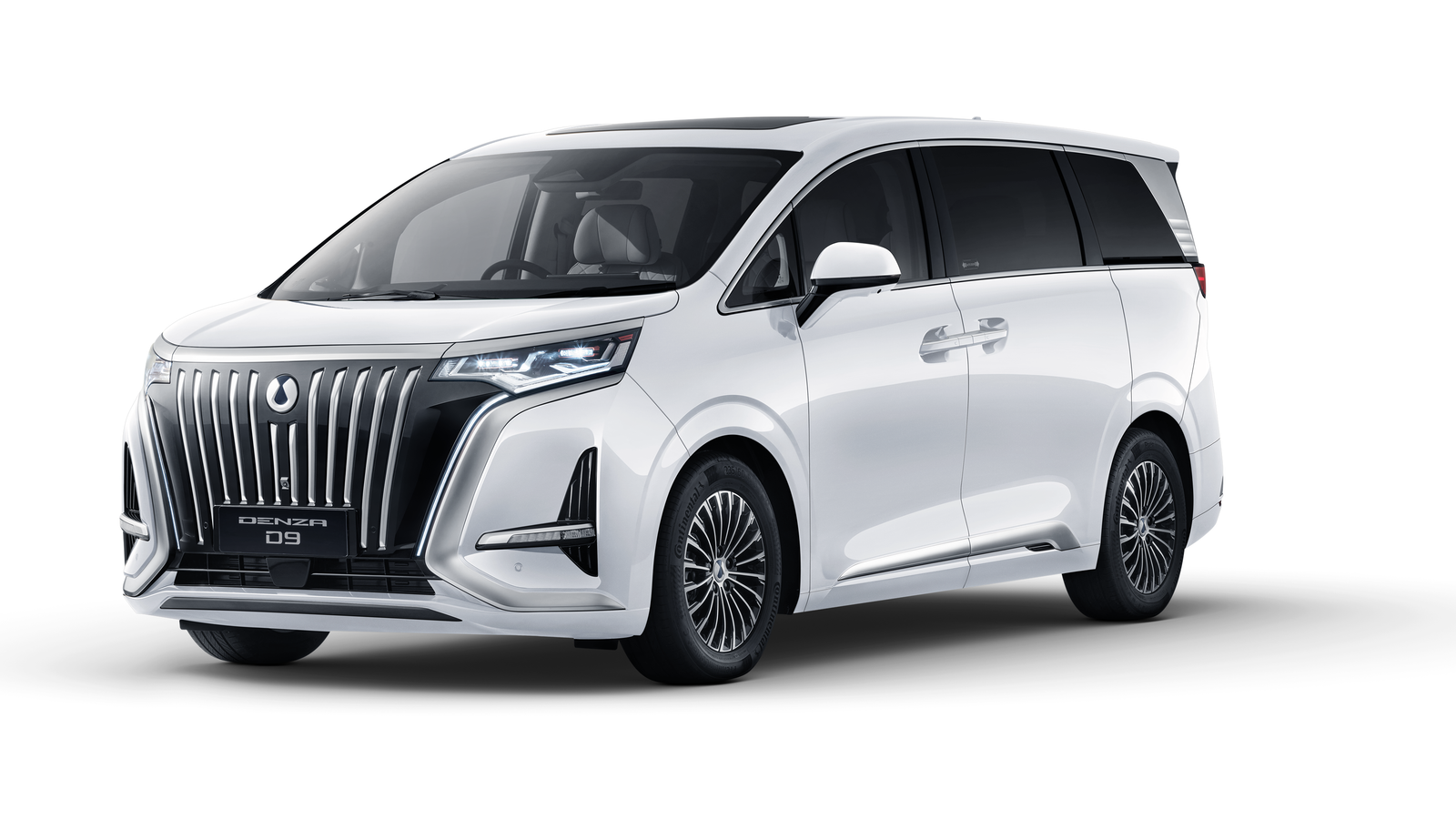
| Item | Share of CIF | Amount |
|---|---|---|
| Vehicle priceIPAS price for a car sourced in China | 596,586 HKDUS$76,100 | |
| Shipping and insuranceChina to Hong Kong | 28,959 HKDUS$3,694 | |
| CIF valueCost, insurance and freight: the customs value | 625,545 HKDUS$79,794 | |
| Customs duties and taxes | ||
| Basic customs duty (0%)0% of CIF | 0 HKDUS$0 | |
| Additional duty0% of CIF | 71 HKDUS$9 | |
| Total duties and taxes0% of CIF | 71 HKDUS$9 | |
| Service and handling | ||
| Premium Import ServiceOptional end-to-end import management by IPAS | 18,454 HKDUS$2,354 | |
| Destination handlingPort terminal and customs clearance handling | 13,954 HKDUS$1,780 | |
| Total landed cost | 658,024 HKDUS$83,937 | |
Electric and Hybrid Vehicles
Electric private cars — the concession has ended
This is the single most important change in Hong Kong vehicle tax for 2026. The 2026-27 Budget, announced on 25 February 2026, did not extend the First Registration Tax concessions for electric private cars, including the One-for-One Replacement Scheme, when they expired on 31 March 2026. An electric private car whose first-registration application was submitted on or after 1 April 2026 gets no concession.
Every figure below is now superseded and should not be applied to a car registering today:
| Superseded concession | Status |
|---|---|
| HKD 97,500 general cap | Replaced in 2024, then ended entirely |
| HKD 58,500 general cap | Ended 31 March 2026 |
| HKD 287,500 One-for-One Replacement cap | Superseded |
| HKD 172,500 One-for-One Replacement cap | Ended 31 March 2026 |
| HKD 500,000 taxable-value ceiling on the concession | Moot: the concession itself has ended |
| Statutory exemption for vehicles "propelled solely by electric power" (Cap 330 s.5(3)) | Expired 31 March 2017 |
A one-off transitional arrangement keeps the old concession only for electric private cars ordered on or before 25 February 2026, where the application is submitted by 24 February 2027 and the car is registered by 24 February 2027 or within five working days of approval, whichever is later. A car ordered today cannot meet the order-date condition. The published wording also mentions cars "arranged by the vehicle owners to be shipped to Hong Kong for their own use" without repeating the date. IPAS reads that limb as bounded by the same 25 February 2026 cut-off and quotes the full tax. The whole arrangement lapses after 24 February 2027.
Electric commercial vehicles — waived in full until 31 March 2028
The First Registration Tax on electric commercial vehicles, electric motor cycles and electric motor tricycles "will continue to be waived in full until 31 March 2028". Commercial vehicles here means goods vehicles, taxis, light buses, non-franchised buses and special purpose vehicles. An electric goods vehicle therefore pays HKD 0, against 15% for a diesel pickup and 17% for a diesel van over 1.9 tonnes. On a HKD 350,000 electric van over 1.9 t, that is a saving of HKD 59,500. It is now the largest vehicle-tax concession available in Hong Kong. Check the position before ordering any vehicle that will register after 31 March 2028.
Hybrids and plug-in hybrids — never concessionary
Hybrids and plug-in hybrids pay the full private-car ladder, exactly like petrol cars. Every Hong Kong electric-vehicle concession has been limited to vehicles propelled solely by electric power, and a car with a combustion engine does not qualify. A hybrid goods vehicle pays the full 15%.
Where the electric advantage still lives — the annual licence fee
| Vehicle | Annual licence fee (HKD) |
|---|---|
| Electric passenger vehicle, rated power ≤ 75 kW | 1,500 |
| Electric, > 75–125 kW | 2,000 |
| Electric, > 125–175 kW | 2,500 |
| Electric, > 175–225 kW | 3,000 |
| Electric, > 225 kW | 5,000 |
| Petrol private car, by cylinder capacity | 4,960 – 14,580 |
| Diesel private car | Same bands, plus 1,898 |
Extra approvals
Pure electric and plug-in hybrid vehicles need Transport Department Type Approval Section approval, supported by manufacturer documentation or international test reports, before import. A battery-electric car is outside the exhaust-emission regulations but still needs noise approval from the Environmental Protection Department. Hybrids and plug-in hybrids are combustion vehicles for emission purposes, so the full emission approval applies.
Commercial Vehicles and the Pickup Question
The vehicle class is the biggest single lever in Hong Kong vehicle tax, and pickups show it most clearly.
A private car is a vehicle "constructed or adapted for use solely for the carriage of a driver and not more than 7 passengers and their personal effects" (Cap 374 s.2). A van-type light goods vehicle has "a fully enclosed body which is an integral part of the vehicle" (Cap 330 s.2). A pickup's open cargo bed fails both tests. It is not built solely for people, and it is not fully enclosed. So it is a goods vehicle at 15%. That holds for single-cab, extended-cab and double-cab bodies alike: the test is the open bed, not the number of seats.
The difference is up to 117 percentage points: 15% against the private car's 132% top band. One caution: no published Transport Department ruling dealing specifically with double-cab pickups has been located. The 15% conclusion rests on the two statutory definitions, and the class the Transport Department assigns at registration is what counts.
| Body | Rate |
|---|---|
| Open cargo bed: pickup, flatbed, tipper, dropside | 15% |
| Fully enclosed van, ≤ 1.9 t permitted gross vehicle weight | 35% / 65% / 85%, marginal |
| Fully enclosed van, > 1.9 t | 17% |
Note the odd shape of the van rule: above 1.9 tonnes the heavier van pays less.
Environment-friendly commercial vehicles. For combustion goods vehicles holding an Environmental Protection Department Environment-friendly Commercial Vehicle Certificate, part of the tax is waived. The qualifying standards apply from 1 April 2026 to 31 March 2027:
| Class | Waiver | Cap per vehicle (HKD) |
|---|---|---|
| Van-type light goods vehicle ≤ 1.9 t | 30% | 8,500 |
| Van-type light goods vehicle > 1.9–5.5 t | 50% | 40,000 |
| Non-van light goods vehicle ≤ 5.5 t, including pickups | 50% | 29,000 |
| Medium goods vehicle > 5.5–24 t | 50% | 56,000 |
| Heavy goods vehicle > 24 t | 50% | 69,000 |
Taxis, light buses, non-franchised buses and special purpose vehicles receive a 100% waiver under the same scheme. The waiver applies only once the certificate has been issued.
Components That Do Not Exist in Hong Kong
It helps to know what Hong Kong does not charge. There is no customs duty, no excise duty on vehicles, and no VAT, GST or sales tax. No free-trade-agreement preference or certificate of origin changes the tax. The First Registration Tax has no engine-displacement band, no fuel-type or diesel differential, no propulsion dimension for hybrids, and no age surcharge.
The tax depends on just two things: the vehicle class and the taxable value. If a Hong Kong estimate includes a VAT line, an import-duty percentage or an origin-based rate, that line is wrong.
Documents Required for Import
For the Environmental Protection Department, before shipping
- Proof of emission compliance: manufacturer documentation or a test report from a recognised laboratory
- Noise compliance evidence
- For vehicles 30 years old or more, the exemption application with noise and emission test reports
For Customs and Excise, with the Import Return, within 30 days
- Import Return (CED336) and Declaration Form (CED336A)
- Sales invoice or payment receipt
- Bill of lading or airway bill, arrival notice or Hong Kong import manifest
- Certificate of Conformity for a new car, or the foreign vehicle registration certificate for a used car
- Hong Kong identity card or passport (or company documents for a company)
- Invoices for freight, insurance, brokerage, agency, handling fees and any repair or modification, where applicable
- Authorisation letter, if an agent files on your behalf
- Translation by a consulate of any document not in Chinese or English
For the Notification of Provisional Taxable Value and registration
- Application for Registration and Licensing of a Vehicle (TD22), certified by a Transport Department vehicle examiner
- Certificate of Roadworthiness (TD89), issued after the vehicle examination, for a private car
- The Environmental Protection Department emission and noise compliance or exemption letter
- The Notification of Motor Vehicle Provisional Taxable Value, produced to the Transport Department
- Transport Department Type Approval Section approval, for pure electric and plug-in hybrid vehicles
- Proof of present address and a verified e-contact
Customs Clearance Timeline
| Stage | Who | Deadline / timing | Paid then |
|---|---|---|---|
| Emission and noise approval or exemption | Environmental Protection Department | Before shipping, ideally | — |
| Arrival and release | Customs and Excise | On arrival | Nothing: no duty exists |
| Import declaration | Importer → Customs | Within 14 days after importation | Declaration charge, max HKD 200 |
| Import Return CED336 + CED336A | Importer → Customs | Within 30 days of importation | — |
| Notification of Provisional Taxable Value | Customs and Excise | After assessment | — |
| Vehicle examination | Transport Department, Tsing Yi | After arrival, before registration | Examination fee |
| First registration (TD22) | Transport Department | Before the car may be used on the road | First Registration Tax, registration fee, licence fee, levy |
Hong Kong's clearance is not slow, and it is not where the money goes. The car clears customs and sits in Hong Kong while Customs assesses its value. The tax falls due at registration, typically weeks after the ship berths, and it is paid by the buyer rather than the shipper. Claims for depreciation take longer, because Customs may need to verify overseas registration documents with the issuing authority.
Vehicle Type Approval and Examination
Emission and noise approval comes first. The Environmental Protection Department approves a car against the emission regulations (Euro 6, California LEV III or Japanese standards) and the noise regulation. The Transport Department advises getting this before the car is shipped.
Type approval for electric vehicles. Pure electric and plug-in hybrid vehicles also need approval from the Transport Department's Type Approval Section before import, and the Transport Department publishes separate import guidelines for them.
The pre-registration examination takes place at the Transport Department Vehicle Examination Complex in Tsing Yi. Bring the Environmental Protection Department approval letter. The examiner checks that the car complies with the Road Traffic Ordinance and its regulations, including:
- vehicle construction under the Road Traffic (Construction and Maintenance of Vehicles) Regulations (Cap 374A);
- seat belts and anchorages marked to an approved standard (Cap 374F);
- safety glass, with window transparency that does not obscure the interior, under the current light-transmission rules (Cap 374H);
- an emission test, where necessary, for any vehicle with a combustion engine, including new cars imported for personal use.
A car that passes receives a Certificate of Roadworthiness. This is also the point at which the vehicle is classified under the Road Traffic Ordinance, which in turn decides the tax rate.
Registration Procedures and Costs
Submit Form TD22 to the Transport Department's Hong Kong Licensing Office with the supporting documents. Once they are verified, you pay the First Registration Tax and the registration fee to register the car, then the licence fee and the Traffic Accident Victims Assistance Fund levy to license it.
| Item | Amount (HKD) | Frequency |
|---|---|---|
| First Registration Tax | By class and taxable value, as above | One-off |
| Vehicle registration fee | 100 | One-off |
| Traffic Accident Victims Assistance Fund levy | 114 | Annual |
| Licence fee, private car ≤ 1,500 cc | 4,960 | Annual |
| Licence fee, private car > 1,500–2,500 cc | 7,384 | Annual |
| Licence fee, private car > 2,500–3,500 cc | 9,815 | Annual |
| Licence fee, private car > 3,500–4,500 cc | 12,246 | Annual |
| Licence fee, private car > 4,500 cc | 14,580 | Annual |
| Diesel private car surcharge | 1,898 | Annual, additional |
| Licence fee, electric passenger vehicle | 1,500 – 5,000 by rated power | Annual |
| Licence fee, goods vehicle (non-van) ≤ 1.9 t / > 1.9–5.5 t | 1,175 / 2,290 | Annual |
| Licence fee, van-type light goods vehicle ≤ 1.9 t | 2,115 | Annual |
| Vehicle examination fee | Per the Transport Department's published schedule | One-off |
These are ownership costs, separate from the First Registration Tax.
Recent Regulatory Changes (2022–2026)
- Background, 24 February 2021: the current private-car rates. From 11:00 that day the bands rose from 40% / 75% / 100% / 115% to today's 46% / 86% / 115% / 132%. Any source quoting "40% to 115%" describes the pre-2021 regime.
- 1 June 2022: classic and personal-use exemptions terminated. The Environmental Protection Department ended the 20-year classic-vehicle exemption and the exemption for petrol vehicles imported for personal use.
- 29 June 2022: the 30-year route. A new arrangement let vehicles 30 years old or more apply for discretionary emission and noise exemptions, with immediate effect.
- 2024: electric-car cap reduced. The HKD 97,500 general cap for electric private cars was replaced by a lower HKD 58,500 cap.
- 1 January 2026: new classification list. The 2026 Edition of the Hong Kong Imports and Exports Classification List took effect. Most car codes are split by new or used and by left- or right-hand drive. Battery-electric cars sit on a single line, 8703.80.00.
- 25 February 2026: the 2026-27 Budget. The government announced that the electric private car concessions, including One-for-One Replacement, would not be extended, and that the full waiver for electric commercial vehicles would continue.
- 31 March 2026: electric private car concession ended. From 1 April 2026, electric private cars pay the full private-car ladder.
- 1 April 2026: new environment-friendly commercial vehicle standards. The qualifying standards for the partial waiver on combustion commercial vehicles took effect, running to 31 March 2027.
- Coming up: the transitional arrangement for electric private cars ordered on or before 25 February 2026 lapses after 24 February 2027, and the full waiver for electric commercial vehicles expires on 31 March 2028 unless extended.
Frequently Asked Questions
How much does it cost to import a car to Hong Kong?
Almost nothing at the border, and a great deal at registration. Customs charges no duty, excise or VAT, only a declaration charge of at most HKD 200. The First Registration Tax on a private car is 46% of the first HKD 150,000 of taxable value, 86% of the next HKD 150,000, 115% of the next HKD 200,000 and 132% of the rest. That is 66% overall at HKD 300,000 and about 109% at HKD 1,000,000. A new car at CIF USD 30,000 pays about 60% of CIF.
Is there import duty or VAT on cars in Hong Kong?
No. Hong Kong is a free port under Article 114 of the Basic Law, the Dutiable Commodities Ordinance makes no motor vehicle dutiable, and Hong Kong has no VAT, GST or sales tax. The only border charge is the import declaration charge, capped at HKD 200. The large tax is the First Registration Tax, which is paid to the Transport Department when the car is first registered, not to customs.
Do electric cars still get a tax break in Hong Kong?
Not electric private cars. Their First Registration Tax concession, including the One-for-One Replacement Scheme, ended on 31 March 2026. A car whose registration application is submitted from 1 April 2026 pays the full ladder, exactly like a petrol car of the same value. The HKD 58,500 and HKD 172,500 caps no longer apply. Electric commercial vehicles, including electric vans and pickups, still have their tax waived in full until 31 March 2028.
Is there an age limit for importing a car to Hong Kong?
No. Hong Kong sets no maximum import age. What matters is the emission standard on the date the car is first registered in Hong Kong. Petrol private cars registered from 1 September 2019, and diesel private cars from 1 October 2017, must meet Euro 6, California LEV III or the Japanese standards. Vehicles 30 years old or more can apply for a discretionary exemption. The old 20-year classic exemption ended on 1 June 2022.
Can I import a left-hand-drive car to Hong Kong?
You can ship one, but you cannot count on registering it. The Transport Department will not accept an application to register a left-hand-drive vehicle unless there are special circumstances. Converting the car does not help: the conversion cost is added to the taxable value and taxed at up to 132%. Buy a car that was built right-hand drive.
Why does a pickup pay so much less than an SUV?
Because the vehicle class sets the rate, and an open cargo bed makes a pickup a goods vehicle. A private car must be built solely for people and their personal effects, and a van-type goods vehicle must have a fully enclosed body. A pickup is neither, so it pays a flat 15%. At HKD 300,000 that is HKD 45,000, against HKD 198,000 for a private car of the same value. The class the Transport Department assigns at registration governs, and a goods vehicle needs a different driving-licence class.
Does a free trade agreement or certificate of origin reduce the tax?
No. Hong Kong has agreements with the Mainland, ASEAN, Australia, New Zealand and others, but there is no customs duty on vehicles for any of them to reduce. The First Registration Tax is identical whether the car comes from Japan, Germany, Thailand or the UK.
Can I claim depreciation on a used car?
Only if it was registered in your own name outside Hong Kong before import, and you can prove it. Depreciation then runs at 25% a year for petrol cars and 20% for others, on a reducing balance, and applies only to the purchase price, never to freight or insurance. A car bought from a dealer abroad, used or new, gets no depreciation and is taxed on its full declared value.
Ready to Import?
In Hong Kong the sourcing decision is the tax decision. No origin, agreement or customs procedure changes what you pay. Only three things do: the vehicle class, the taxable value and, for commercial vehicles, whether the vehicle is electric. A private car's tax rises steeply with value under the marginal bands. A pickup pays a flat 15%. An electric goods vehicle pays nothing until 31 March 2028. An electric private car now pays exactly what a petrol one does.
Two gates come before any of that: the car should be right-hand drive, and it must meet Euro 6, California LEV III or the Japanese emission standards on the date it is registered in Hong Kong. Check both before you buy.
IPAS provides two tools to plan and execute your import:
CarImport.AI — Source a vehicle through IPAS and calculate the full cost to Hong Kong, with the border declaration charge and the First Registration Tax for your vehicle's class and value set out separately. Get an exact figure for your specific vehicle.
IPAS EXPRESS — Already have a vehicle? Get instant shipping quotes to Hong Kong, by sea freight or air, with transparent, itemised pricing and a stage-by-stage timeline.
Ready to Import Your Vehicle?
Two tools, two use cases. Pick the one that fits your needs.
Source a vehicle through IPAS and calculate the full landed cost — customs duties, shipping, and compliance — to destinations across the world.
Calculate Landed CostIPAS Express
Already have a vehicle? Get instant shipping quotes — sea freight, air freight, or RoRo — for one car or multiple vehicles worldwide.
Get Shipping Quote