
Introduction
Importing a car to India in 2026 costs about 79% to 194% of the CIF value in duty and tax for a new car, and up to 232.5% for a used one. Cars pay 70% Basic Customs Duty, a 0–67.5% AIDC cess and 5–40% IGST. The car must be right-hand drive, and used cars are capped at three years old.
The Indian government administers vehicle imports through a combination of the Directorate General of Foreign Trade (DGFT), the Central Board of Indirect Taxes and Customs (CBIC), and the Ministry of Road Transport and Highways (MoRTH). Customs clearance is handled electronically through the ICEGATE portal, while vehicle compliance testing falls under the purview of agencies such as ARAI (Pune), ICAT (Manesar), and VRDE (Ahmednagar). Two reforms reshaped the bill in 2025: the Union Budget cut Basic Customs Duty on CBU cars from 125% to 70% and added the Agriculture Infrastructure and Development Cess (AIDC), and GST 2.0 (from 22 September 2025) replaced the old 28% GST plus compensation cess with a single IGST rate — 40% for most cars, 18% for small cars and 5% for electric cars. The Union Budget 2026-27 made no change to vehicle duties.
Whether you are importing a brand-new luxury SUV, a nearly new car under three years old, bringing back your personal vehicle when you move home, or importing a vintage classic under the 2025 policy change, understanding India's layered duty structure, homologation requirements, and documentation demands is essential. This guide covers every step of the process.
Quick Facts
| Detail | Information |
|---|---|
| Steering | Right-Hand Drive (RHD) only — new and used; km/h speedometer and keep-left headlamps required |
| Basic Customs Duty (BCD) | 70% on every car (20% on goods vehicles, HS 8704) |
| AIDC (Agriculture Infrastructure and Development Cess) | New car: 40% if CIF is above US$40,000 or the engine is above 3,000 cc petrol / 2,500 cc diesel, otherwise 0% · Used car: 67.5% · Goods vehicle: 20% |
| Social Welfare Surcharge | Nil on all fully built cars and goods vehicles |
| IGST | 40% most cars · 18% small cars (≤1,200 cc petrol or ≤1,500 cc diesel AND ≤4,000 mm long) · 5% battery-electric and fuel-cell |
| GST Compensation Cess | Nil since 22 September 2025 |
| Total Duty and Tax | About 79–194% of CIF for new cars; 149–232.5% for used cars |
| Major Seaports | Nhava Sheva (JNPT), Mumbai, Chennai, Mundra (used cars: Mumbai only) |
| Major Air Cargo | Mumbai, Delhi, Chennai |
| Approval Body | ARAI, ICAT, VRDE (under MoRTH) |
| New Cars | Allowed — RHD, shipped from the country of manufacture, with CMVR type approval (or the high-value exemption) |
| Used Cars | Allowed if no more than 3 years old, RHD, pre-shipment tested; cleared at Mumbai only |
| Vintage Cars (50+ years) | Free to import by actual users; full used-car duty applies |
Types of Cars That Can Be Imported
India permits vehicle imports under narrowly defined categories, each with specific conditions and duty implications.
New CBU Vehicles (high-value, large-engine) New completely built-up vehicles with an FOB value of US$40,000 or more AND an engine above 3,000 cc (petrol) or 2,500 cc (diesel) are exempt from India's own CMVR type-approval testing. Instead, a type-approval or conformity-of-production certificate from an accredited international agency (or an EC type-approval certificate) is accepted at customs. This is the most straightforward pathway for importing luxury and premium vehicles. These cars pay the top new-car rate: 70% BCD, 40% AIDC and 40% IGST, a total of 194% of CIF.
Other New CBU Vehicles Every other new vehicle needs a valid CMVR certificate of compliance (rule 126) from ARAI, ICAT or another notified agency at the time of import. This testing process takes months and adds significant cost, making it impractical for most individual importers. Below US$40,000 CIF and below the engine triggers, AIDC is 0%, so the total is 138% of CIF (or 100.6% for a small car on 18% IGST, 78.5% for an electric car).
Used/Second-Hand Vehicles A used car (one sold, leased, loaned or registered anywhere before import) may be imported if it meets every condition in India's import policy:
- No more than 3 years old from the date of manufacture
- Right-hand drive, with a speedometer in km/h and headlamps set for keep-left traffic
- A pre-shipment certificate from a notified testing agency confirming it meets Indian motor vehicle rules and its original homologation, plus testing on arrival before clearance
- Roadworthy for at least 5 more years, with service support in India
- Cleared only through the customs port at Mumbai
Used cars pay 67.5% AIDC instead of 40% or 0%, so the total is 232.5% of CIF for most cars (180.25% for a small car on 18% IGST). That is 38.5 points more than the same car new.
Vintage/Classic Vehicles (50+ Years) DGFT Notification No. 58/2024-25 (7 February 2025) made cars classed as "vintage motor vehicles" under rule 81A of the Central Motor Vehicles Rules free to import by actual users. Under those rules a vintage vehicle is one more than 50 years old from its first registration. If the car will be driven on public roads, it must also meet the vintage-registration conditions in Chapter IIIA of the Central Motor Vehicles Rules. There is no duty concession for age: a vintage car pays the full used-car rate.
Transfer of Residence and Other Special Categories India's import policy lifts the age and certification conditions — but not the RHD requirement — for a short list of importers who pay full customs duty. The main one is an individual coming to India for permanent settlement after at least two years' continuous stay abroad, who has owned the car abroad for at least one year. The list also covers legal heirs of deceased relatives abroad, resident Indians awarded a car at an international event, physically handicapped persons (specially adapted vehicles), Indian companies with foreign equity, branches of foreign firms, registered charitable institutions, honorary consuls and accredited foreign journalists.
Cars You Can Import to India
Each card is a full landed-cost calculation: the car's price, shipping, every duty and tax, and handling, worked out on 9 November 2026 with the rules in force that day. All are right-hand drive to suit India's roads, converted where the car is only built left-hand drive. Tap a car to see its full breakdown, or open it to change the trim, colour or port.
More cars you can import to India
New cars IPAS sources to order that meet India's import rules. Prices are ex works, before shipping and duty. Cars marked C-RHD are built left-hand drive and converted to right-hand drive before shipping; the calculator adds the conversion. Open a car to work out its full landed cost.
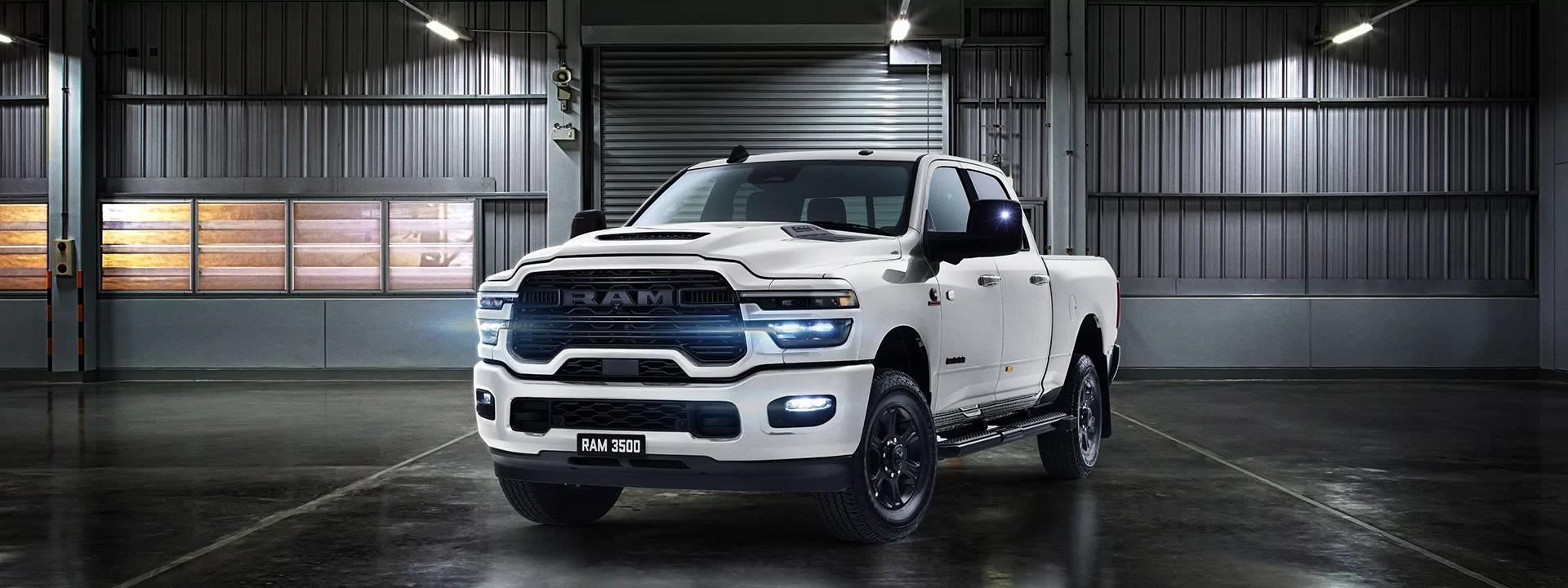 RHDBackorder2026
Ram 3500
Pickup · 1 VariantDieselFrom $115,000Ex Works, NZ RHDBackorder2026
Mitsubishi Pajero
SUV · 2 VariantsDieselFrom $47,200Ex Works, NZ RHDBackorder2026
Lexus RX
SUV · 7 VariantsHybridFrom $46,200Ex Works, Japan RHDBackorder2026
Lexus RZ
SUV · 3 VariantsElectricFrom $54,600Ex Works, Japan RHDBackorder2026
Mercedes-Benz AMG GLS
SUV · 2 VariantsHybridFrom $186,500Ex Works, UK RHDBackorder2026
Mercedes-Benz GLS
SUV · 3 VariantsDieselFrom $131,000Ex Works, UK RHDBackorder2026
Mercedes-Benz EQS Saloon
Sedan · 9 VariantsElectricFrom $121,900Ex Works, UK LHD/C-RHDBackorder2025
Dodge Charger Daytona
Coupe · 2 VariantsElectricFrom $71,500Ex Works, USA LHD/C-RHDBackorder2026
Ford Super Duty F-450 DRW
Pickup · 5 VariantsDieselFrom $73,600Ex Works, USA LHD/C-RHDBackorder2025
Ford Bronco
SUV · 3 VariantsPetrolFrom $62,500Ex Works, USA LHD/C-RHDBackorder2025
Ford F-150
Pickup · 19 VariantsPetrol · HybridFrom $46,600Ex Works, USA LHD/C-RHDBackorder2025
Lincoln Navigator
SUV · 3 VariantsPetrolFrom $119,900Ex Works, USA RHDBackorder2026
Toyota Hilux Travo
Pickup · 11 VariantsDieselFrom $27,100Ex Works, Thailand RHDBackorder2026
Toyota bZ4X
SUV · 3 VariantsElectricFrom $36,500Ex Works, Japan LHD/C-RHDBackorder2026
Chevrolet Suburban
SUV · 15 VariantsPetrol · DieselFrom $79,800Ex Works, USA LHD/C-RHDBackorder2026
Cadillac Escalade ESV
SUV · 11 VariantsPetrolFrom $112,900Ex Works, USA
Seaports and Airports
Vehicle imports into India are only permitted through designated customs ports — importing through any other port is prohibited. New vehicles may use any of the 18 ports, airports and ICDs below. Used vehicles may be cleared only at the customs port at Mumbai.
Designated Seaports (11)
| Port | Location | Notes |
|---|---|---|
| Nhava Sheva (JNPT) | Maharashtra | India's busiest container port; primary vehicle import hub |
| Mumbai Port | Maharashtra | Alternative to JNPT for Mumbai-bound imports; the only port for used vehicles |
| Chennai | Tamil Nadu | Major south India hub; strong Japan/Korea routes |
| Ennore (Kamarajar) | Tamil Nadu | Secondary Chennai port |
| Cochin | Kerala | South India alternative |
| Kolkata | West Bengal | East India hub |
| Visakhapatnam | Andhra Pradesh | East coast option |
| Krishnapatnam | Andhra Pradesh | Private port, growing capacity |
| Kattupalli | Tamil Nadu | Private port near Chennai |
| APM Terminals Pipavav | Gujarat | West coast container port |
| Mundra | Gujarat | Added in February 2024; major private port |
Designated Airports (3)
| Airport | Location |
|---|---|
| Mumbai Air Cargo Complex | Maharashtra |
| Delhi Air Cargo | Delhi NCR |
| Chennai Airport | Tamil Nadu |
Inland Container Depots (4)
| ICD | Location | Notes |
|---|---|---|
| ICD Tughlakabad | Delhi | Main Delhi NCR rail-linked depot |
| ICD Talegaon | Pune, Maharashtra | Near ARAI testing facility |
| ICD Faridabad | Haryana | Near Delhi NCR |
| ICD Garhi Harsaru | Gurugram, Haryana | Added in February 2024 |
Air freight is available for urgent or high-value shipments but costs substantially more than sea freight. Most vehicle imports arrive by sea in containers through JNPT or Chennai.
Restrictions for Individual Importers
India imposes strict conditions on private vehicle imports that are more onerous than most other countries.
Right-Hand Drive Only:
- Every imported car, new or used, must have right-hand steering and controls, a speedometer in km/h and keep-left headlamp photometry
- This rules out most left-hand-drive cars from North America and continental Europe unless properly converted before import
Quantity and Frequency Limits:
- Importers in the special categories (Transfer of Residence and the others listed above) may import one vehicle each; Indian companies with foreign equity and branches of foreign firms may import up to three
- A minimum 5-year gap is mandatory between successive vehicle imports
No-Sale Restriction:
- A 2-year no-sale restriction applies to vehicles imported under the special categories — the vehicle cannot be sold or transferred within 2 years of import
- This restriction is endorsed on the passport or registration documents by customs and by the Regional Transport Authority at registration
Transfer of Residence (ToR) Conditions:
- The importer must be coming to India for permanent settlement after at least two years' continuous stay abroad
- The car must have been in the importer's possession abroad for at least one year
- Full customs duty applies — there is no duty concession
Country of Manufacture Restriction:
- New vehicles must be imported from the country of manufacture — you cannot buy a Japanese-built car in the UAE and import it to India
- The European Union counts as a single market for this test, so a German-built car may be shipped from any EU member state
Used Vehicle Age Cap:
- Used vehicles must be no more than 3 years old from manufacture date
- They must be pre-shipment tested, roadworthy for 5 more years, and cleared at Mumbai
Vintage Vehicle Restrictions:
- Vintage cars (more than 50 years from first registration) are free to import by actual users; on public roads they must follow India's vintage-registration rules
Duty Structure Overview
India's vehicle import duties are among the highest globally. Two of the three taxes are calculated on the CIF value, and IGST is then charged on the CIF plus those duties.
| Component | New car, CIF ≤ US$40k, below engine triggers | New car, CIF > US$40k (or petrol > 3,000 cc / diesel > 2,500 cc) | Used car | New electric car (BEV) |
|---|---|---|---|---|
| Basic Customs Duty (BCD) | 70% | 70% | 70% | 70% |
| AIDC (on CIF) | Nil | 40% | 67.5% | Nil (≤ US$40k) / 40% (> US$40k) |
| Social Welfare Surcharge | Nil | Nil | Nil | Nil |
| IGST | 40% (18% small car) | 40% | 40% (18% small car) | 5% |
| GST Compensation Cess | Nil | Nil | Nil | Nil |
| Total duty and tax (% of CIF) | 138% (100.6% small car) | 194% | 232.5% (180.25% small car) | 78.5% / 120.5% |
A "small car" for the 18% IGST rate must meet both limits: engine ≤1,200 cc (petrol, LPG or CNG) or ≤1,500 cc (diesel), AND length ≤4,000 mm. Hybrids and plug-in hybrids follow the same petrol/diesel limits; they never get the 5% electric rate. Goods vehicles (HS 8704) pay 20% BCD + 20% AIDC + 18% IGST, a total of 65.2% of CIF.
How Duties Are Calculated (Cascade Method):
- Assessable value = CIF value (no 1% landing charge since 2017)
- BCD = CIF × 70%
- AIDC = CIF × 0%, 40% or 67.5% — charged on the CIF only, not on CIF + BCD
- Social Welfare Surcharge = Nil
- IGST = (CIF + BCD + AIDC) × 40%, 18% or 5%
- GST Compensation Cess = Nil
Worked example — new car, CIF US$50,000, 2.0-litre petrol SUV:
| Line | Calculation | Amount |
|---|---|---|
| CIF value | — | US$50,000 |
| BCD | 50,000 × 70% | US$35,000 |
| AIDC | 50,000 × 40% (CIF above US$40,000) | US$20,000 |
| IGST | (50,000 + 35,000 + 20,000) × 40% | US$42,000 |
| Total duty and tax | 194% of CIF | US$97,000 |
| Landed cost before port, registration and road tax | — | US$147,000 |
The US$40,000 threshold is a US-dollar test on the CIF value, converted at the CBIC-notified exchange rate on the day the bill of entry is filed. A car close to the line can cross it if the rupee moves.
Key 2025 Changes:
- BCD reduced from 125% to 70% for CBU cars, with the new AIDC introduced at the same time — net effective duty broadly unchanged
- Social Welfare Surcharge removed for fully built cars and goods vehicles
- GST 2.0 (22 September 2025): 40% IGST replaced 28% GST plus up to 22% compensation cess; small cars dropped to 18%
Electric Vehicle Advantage: Battery-electric and fuel-cell cars pay 5% IGST instead of 40%. They still pay 70% BCD, and 40% AIDC if the CIF is above US$40,000. Total: 78.5% of CIF at or below US$40,000, and 120.5% above it.
Get exact duty rates for your specific vehicle using CarImport.AI
Worked Example: Importing a 2026 GMC Hummer EV SUV to India
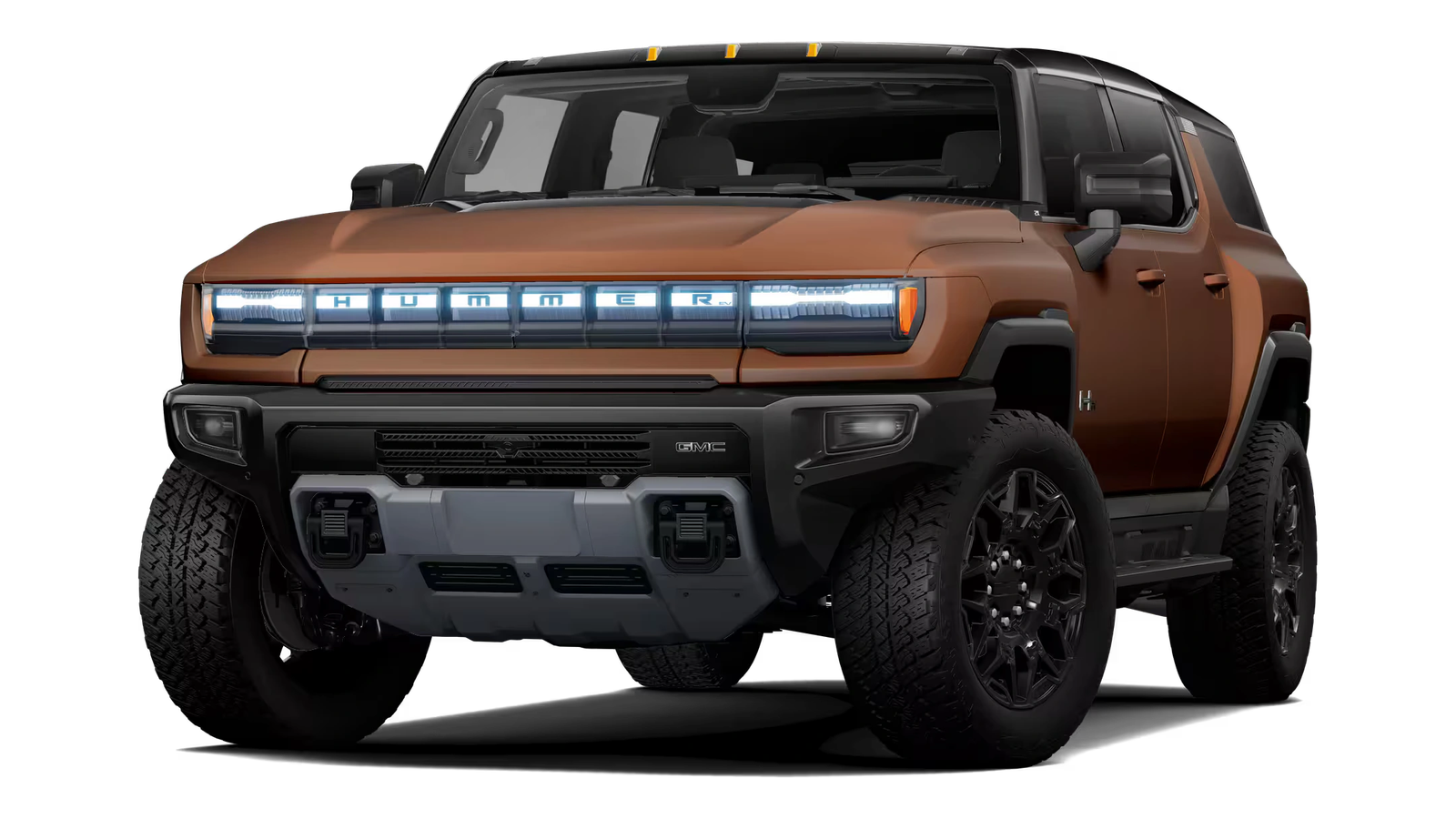
Here is the full landed cost of one car, a 2026 GMC Hummer EV SUV shipped from the USA to India, worked out on 9 November 2026 with the customs rules in force that day. It lands at 3,34,23,613 INR (about US$355,356), and duties and taxes come to 120.5% of its CIF value.
| Item | Share of CIF | Amount |
|---|---|---|
| Vehicle priceIPAS price for a car sourced in the USA | 95,93,783 INRUS$102,000 | |
| Right-hand-drive conversion | 31,97,928 INRUS$34,000 | |
| Shipping and insuranceUSA to India | 17,93,191 INRUS$19,065 | |
| CIF valueCost, insurance and freight: the customs value | 1,45,84,902 INRUS$155,065 | |
| Customs duties and taxes | ||
| Basic customs duty (70%)70% of CIF | 1,02,09,479 INRUS$108,546 | |
| Additional duty (40%)40% of CIF | 58,33,961 INRUS$62,026 | |
| GST/VAT (5%)5% of CIF plus the duties above10.5% of CIF | 15,31,431 INRUS$16,282 | |
| Total duties and taxes120.5% of CIF | 1,75,74,871 INRUS$186,854 | |
| Service and handling | ||
| Premium Import ServiceOptional end-to-end import management by IPAS | 9,48,750 INRUS$10,087 | |
| Destination handlingPort terminal and customs clearance handling | 3,15,090 INRUS$3,350 | |
| Total landed cost | 3,34,23,613 INRUS$355,356 | |
Documents Required for Import
The following documents are mandatory for customs clearance of an imported vehicle in India.
Customs Clearance Documents:
- Bill of Entry (filed electronically via ICEGATE portal)
- Commercial Invoice with CIF value breakdown
- Bill of Lading or Airway Bill
- Packing List
- Certificate of Origin
- Customs Bond (where required for ToR or conditional imports)
- IEC (Importer Exporter Code) — for commercial imports
Vehicle Documents:
- Foreign registration certificate or title document
- Roadworthiness certificate from the country of export
- CMVR certificate of compliance from ARAI, ICAT or VRDE — or, for exempt high-value cars, an accredited international or EC type-approval certificate with a notarised English translation
- Used vehicles: pre-shipment test certificates from a notified agency and a declaration of 5 years' remaining roadworthiness
Personal Import Documents:
- Transfer of Residence proof — passport showing at least two years' continuous stay abroad (if applicable)
- Valid Indian motor insurance certificate
- Proof of identity and Indian address
It is essential to engage a licensed Customs House Agent (CHA) for the import process. Any discrepancy in chassis or engine numbers against documentation will result in the vehicle being held in a bonded warehouse with escalating demurrage charges.
Customs Clearance Timeline
The end-to-end timeline for importing a vehicle to India is significantly longer than most countries due to testing and approval requirements.
| Stage | Duration | Details |
|---|---|---|
| Document preparation | ~2 weeks | Importer and CHA prepare all paperwork |
| Sea freight transit | 4–6 weeks | Depends on origin country |
| Customs examination and clearance | ~10 business days | Via ICEGATE; includes physical inspection |
| CMVR type approval testing (if required) | 30–60 days | At ARAI (Pune) or ICAT (Manesar) |
| RTO registration | ~15 days | At local Regional Transport Office |
Total Estimated Timeline: 3–5 months (from purchase abroad to road-ready registration)
Tips to Avoid Delays:
- Ensure all documents match exactly — any chassis/engine number discrepancy sends the vehicle into bonded warehouse
- Engage a reputable CHA with experience in vehicle imports
- If CMVR testing is required, factor in ARAI/ICAT queue times which can extend to 4–6 months
- Pre-arrange Indian motor insurance before the vehicle arrives
- Budget for port storage and demurrage charges in case of delays
Homologation / Type Approval (CMVR)
India requires CMVR (Central Motor Vehicles Rules) Type Approval under AIS-017 for all vehicles, governed by MoRTH. The process is administered by three authorized testing agencies.
Authorized Testing Agencies:
- ARAI (Automotive Research Association of India) — Pune
- ICAT (International Centre for Automotive Technology) — Manesar, Gurugram
- VRDE (Vehicle Research and Development Establishment) — Ahmednagar
What Is Tested:
- Crash safety (frontal, side, rear impact)
- BS6 Phase 2 emission compliance
- Noise and vibration standards
- Braking performance
- Lighting and signalling standards
- From 2025: WLTP (Worldwide Harmonised Light Vehicle Test Procedure) compliance
Exemption for High-Value Vehicles: New vehicles meeting ALL of the following criteria are exempt from CMVR type approval testing:
- FOB value ≥ US$40,000
- Engine capacity > 3,000cc (petrol) or > 2,500cc (diesel)
For these vehicles, a type-approval or conformity-of-production certificate from an accredited agency in the country of origin, or an EC type-approval certificate from an EU member state, must be presented at customs instead. All other vehicles must physically undergo ARAI/ICAT testing — a process taking months and costing several lakhs in fees. The exemption applies to the type-approval step only; it does not lower the duty.
Important: Vehicles marketed as "Euro 6 compliant" in their home market still require ARAI certification confirming BS6 equivalence. European or Japanese emission standards are not automatically accepted.
Registration Procedures and Costs
After customs clearance and type approval (if required), the vehicle must be registered with the local Regional Transport Office (RTO).
Registration Steps:
- Submit Form 20 (application for registration) and Form 22 (roadworthiness certificate from manufacturer/importer)
- Present customs clearance documents and CMVR type approval certificate
- Pay State Road Tax — the largest cost component
- Obtain HSRP (High Security Registration Plates) — mandatory for all new registrations
- RTO issues the Registration Certificate (RC), with the 2-year no-sale condition endorsed for special-category imports
- Vehicle receives a permanent Indian registration number
State Road Tax Rates (on CIF Value):
| State | Road Tax Rate | Notes |
|---|---|---|
| Maharashtra | ~11% | Mumbai, Pune |
| Delhi | 4–12% | Varies by engine capacity |
| Karnataka | 13–18% | Bangalore |
| Tamil Nadu | 10–15% | Chennai |
| Other states | 6–20% | Varies significantly |
Registration Fees:
- RC fee: approximately ₹600–₹1,500
- HSRP plates: ₹600–₹1,100
- Road tax: several lakhs for high-value imported vehicles (this is the major cost)
Recent Regulatory Changes (2025–2026)
Several significant changes have taken effect that importers should be aware of:
- India–UK CETA in force (15 July 2026): cars from the UK move at preferential rates only under a tariff-rate quota, and only UK manufacturers and their authorised dealers can apply for it. A private buyer pays the full standard rates. The quota rules are due for review when the 2027 round opens.
- No other trade deal lowers car duty for private importers: India's agreements with the UAE, Australia, Japan, Korea, ASEAN and EFTA give no preference a private importer can claim on cars, and an India–EU agreement is not in force.
- Union Budget 2026-27: no change to vehicle duties.
- GST 2.0 (22 September 2025): one IGST rate replaced GST plus compensation cess — 40% for most cars, 18% for small cars, 5% for electric cars; compensation cess on cars is now nil
- Vintage Vehicle Policy (February 2025): DGFT Notification No. 58/2024-25 replaced the old "built before 1950" rule. Cars classed as vintage under rule 81A of the Central Motor Vehicles Rules (more than 50 years since first registration) are free to import by actual users
- Union Budget 2025 Duty Restructuring: BCD reduced from 125% to 70% for CBU cars; new AIDC introduced (40% for new cars above US$40,000 or the engine triggers, 67.5% for used cars); Social Welfare Surcharge removed — net effective duty largely unchanged
- WLTP Testing Standards (2025): New Worldwide Harmonised test protocols introduced for type approval, replacing some older NEDC-based tests
- Mundra Port and ICD Garhi Harsaru (February 2024): Added to the list of designated new-vehicle import ports, taking the total to 18
- Delhi Non-BS6 Entry Ban (November 2025): Goods vehicles registered outside Delhi must be BS6 compliant or run on CNG/LNG/EV to enter the NCR
Emissions Compliance
India enforces stringent emissions standards that apply to all imported vehicles regardless of origin.
Bharat Stage VI (BS6):
- BS6 mandatory since 1 April 2020, with Phase 2 (real-driving emissions) since 1 April 2023 — there is no grandfather clause for older imported vehicles
- India's equivalent of Euro 6
- ARAI/ICAT physically tests emission compliance for vehicles that do not qualify for the high-value exemption
- European or Japanese "Euro 6" certified vehicles still require ARAI certification confirming BS6 equivalence
City-Level Restrictions:
- Delhi-NCR bans diesel vehicles older than 10 years and petrol vehicles older than 15 years from roads — this applies to imported vehicles once registered
- These age-based bans are enforced regardless of emission compliance
Electric Vehicle Incentives:
- Battery-electric and fuel-cell cars pay 5% IGST versus 40% for most petrol and diesel cars
- They still pay 70% BCD, plus 40% AIDC when the CIF is above US$40,000
- Zero-emission vehicles are exempt from city-level emission restrictions
Frequently Asked Questions
Q: Can I import a used car to India? A: Yes, if it is no more than three years old from the date of manufacture, right-hand drive with a km/h speedometer, tested by a notified agency before shipment, certified roadworthy for at least five more years, and cleared through the customs port at Mumbai. Used cars pay 70% BCD, 67.5% AIDC and 40% IGST — 232.5% of CIF in total (180.25% for a small car). Returning residents and the other special categories can import an older car on full duty, but it must still be right-hand drive.
Q: How much does it cost to import a car to India? A: For a new car, duty and tax run from about 79% of CIF (an electric car under US$40,000) to 194% (any car above US$40,000 CIF, or with a petrol engine above 3,000 cc or a diesel above 2,500 cc). A new car with a CIF value of US$50,000 pays US$35,000 BCD, US$20,000 AIDC and US$42,000 IGST — US$97,000 in total, for a landed cost of about US$147,000 before port charges, registration and state road tax.
Q: Is there a duty concession for returning Indians (NRIs)? A: No. The Transfer of Residence route lets a returning resident import one car without meeting the age and certification conditions, but full customs duty applies. You must be moving to India for permanent settlement after at least two years' continuous stay abroad, and have owned the car abroad for at least one year. The car must be right-hand drive, and a 2-year no-sale condition applies.
Q: Can I import an electric vehicle with lower duties? A: Yes. Battery-electric and fuel-cell cars pay 5% IGST instead of 40%. They still pay 70% BCD, and 40% AIDC when the CIF is above US$40,000. The total is 78.5% of CIF at or below US$40,000 and 120.5% above it, against 138–194% for a comparable petrol or diesel car. Hybrids and plug-in hybrids do not get the 5% rate.
Q: Do I need CMVR type approval for every imported vehicle? A: No. New vehicles with an FOB value of US$40,000 or above and an engine above 3,000cc (petrol) or 2,500cc (diesel) are exempt from Indian testing, provided you present an accredited international or EC type-approval certificate at customs. All other new vehicles need a CMVR certificate from ARAI, ICAT or another notified agency, which takes months.
Q: Can I import a vintage/classic car? A: Yes. Since DGFT Notification No. 58/2024-25 (February 2025), cars classed as vintage motor vehicles under rule 81A of the Central Motor Vehicles Rules — more than 50 years since first registration — are free to import by actual users. To drive one on public roads, it must follow India's vintage-registration rules. There is no duty discount for age: a vintage car pays the used-car rate of 232.5% of CIF.
Q: Can I sell my imported car in India? A: Cars imported under the special categories, including Transfer of Residence, carry a 2-year no-sale condition, endorsed on your passport or registration documents. Violation of this condition attracts customs penalties.
Q: Which port should I use for importing a car to India? A: For a new car, JNPT (Nhava Sheva) near Mumbai is the most commonly used port for vehicle imports, with the best infrastructure and CHA network. Chennai is preferred for vehicles arriving from Japan and South Korea. Mundra (Gujarat) was added as a designated port in 2024 and is a good option for western India. A used car can only be cleared at the customs port at Mumbai.
Ready to Import?
Importing a vehicle to India requires careful planning, substantial budget allocation, and meticulous documentation. With duty and tax of up to 194% of CIF on a new car and 232.5% on a used one, it is among the most expensive countries in the world to import a car. However, for those who need a specific vehicle unavailable domestically — or returning residents bringing their personal car — the process is well-defined and achievable with professional support.
Calculate your exact landed cost: Use CarImport.AI for an instant, accurate breakdown of all duties, taxes, and shipping costs for your specific vehicle and origin country.
Calculate Your Import Cost on CarImport.AI
Need shipping to India? Use IPAS EXPRESS Pro Car Shipping to get competitive sea freight and air freight quotes to JNPT, Chennai, Mumbai, or any designated Indian port.
Sources: CBIC Notification No. 45/2025-Customs; Notification No. 11/2021-Customs as amended by 06/2025-Customs (AIDC); Notification No. 09/2025-Integrated Tax (Rate) (GST 2.0); Notification No. 02/2025-Compensation Cess (Rate); DGFT ITC(HS) 2022 Schedule I, Chapter 87 import policy conditions; DGFT Notification No. 58/2024-25 (vintage vehicles); DGFT Notification No. 59/2023 (ports); DGFT Public Notice No. 22/2026-27 (India–UK CETA vehicle quota); Ministry of Road Transport and Highways (morth.nic.in); ARAI (araiindia.com).
Ready to Import Your Vehicle?
Two tools, two use cases. Pick the one that fits your needs.

Source a vehicle through IPAS and calculate the full landed cost — customs duties, shipping, and compliance — to destinations across the world.
Calculate Landed CostIPAS Express
Already have a vehicle? Get instant shipping quotes — sea freight, air freight, or RoRo — for one car or multiple vehicles worldwide.
Get Shipping Quote