
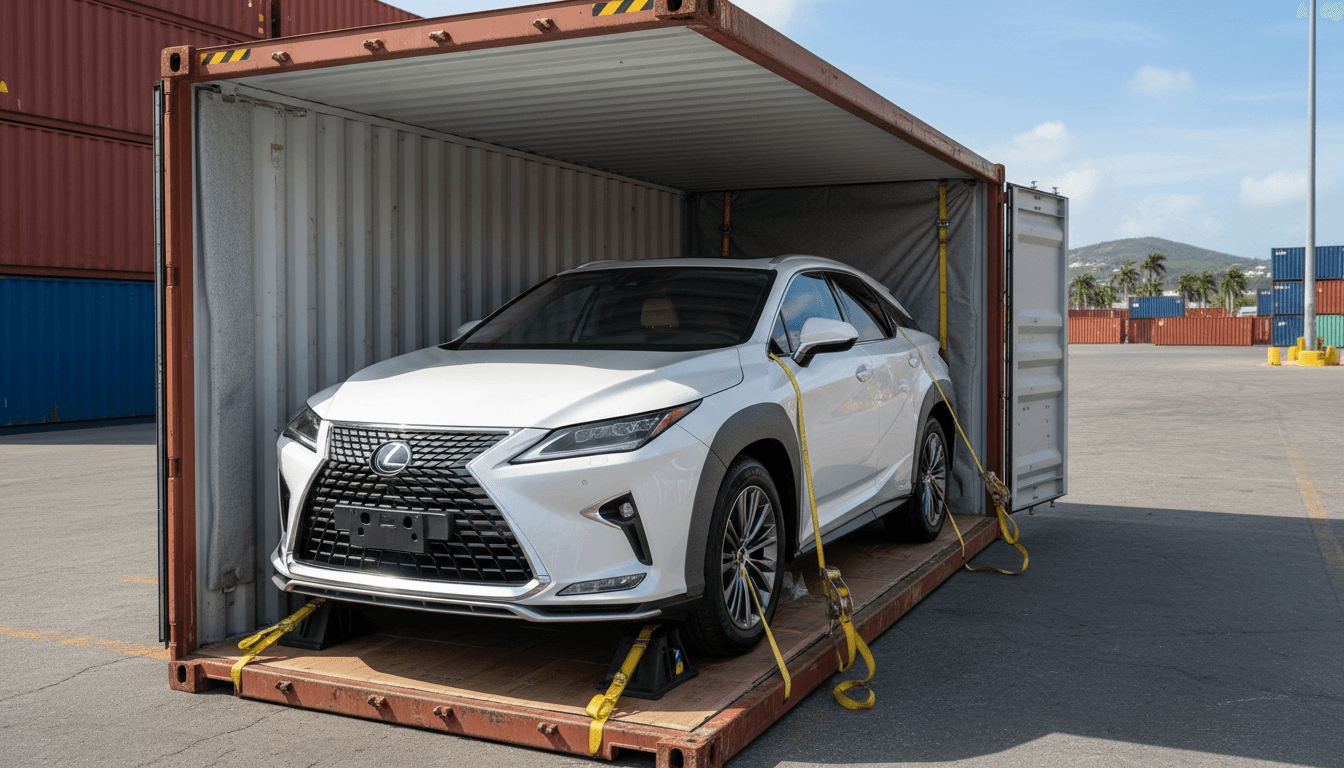
Introduction
Israel is one of the most heavily taxed vehicle markets in the developed world, and one of the most widely misreported. The headline that matters is not the customs duty — at 7% MFN, and zero from most of Israel's trading partners, duty is the smallest of the three border taxes. What dominates the bill is the purchase tax (מס קנייה), which starts at 83% for an ordinary passenger car and is charged not on the vehicle's value but on the value plus the duty. An 18% VAT then applies on top of everything.
The practical result is that a car imported from the European Union, paying zero customs duty, still lands at roughly 116% of its CIF value before adjustments. From Japan, with no trade agreement, that rises to about 131%. Real effective rates on this route run from around 18% at the very bottom of the range to well over 150% at the top.
Two features make Israel unlike anywhere else IPAS calculates for. First, gross vehicle weight, not HS heading, drives the rate. A double-cab pickup under 3,500 kg pays exactly the same 83% as a family saloon — Israel gives no commercial-vehicle concession to a light pickup. Cross 3,500 kg and you save eleven points of purchase tax plus two separate surcharges; cross 4,500 kg on a goods vehicle and both the duty and the purchase tax vanish entirely.
Second, the cascade contains four shekel-denominated adjustments — a luxury surcharge above a ILS 300,000 consumer price, a green bonus-malus running from a ILS 14,523 reduction to an ILS 8,690 surcharge, a safety-equipment reduction, and a hard ILS 22,000 cap on the electric-vehicle benefit. These are fixed amounts in shekels, not percentages, which means a quote produced in dollars and converted afterwards will simply be wrong.
Before any of that, though, comes the gate that ends most Israeli import plans: a vehicle must be under 24 months old from its date of manufacture, and it must be left-hand drive.
Quick Facts
| Detail | Information |
|---|---|
| Customs Authority | Israel Tax Authority — Customs Division |
| Tariff database | שער עולמי (Sha'ar Olami), shaarolami-query.customs.mof.gov.il |
| Registration Authority | Ministry of Transport and Road Safety |
| Traffic Side | Right-hand traffic (drive on the right) |
| Steering Requirement | RHD prohibited — Traffic Regulation 320(ח). Only exceptions: road-sweeping work vehicles and collector vehicles built up to 1960 |
| Customs Duty | 7% MFN; 0% from most FTA partners; 1.40% UAE; 4% Vietnam |
| Purchase Tax | 83% (GVW ≤ 3,500 kg), 72% (3,500–4,500 kg), 48% (battery-electric car), 35% (electric goods vehicle) — charged on CIF + duty |
| VAT | 18%, on CIF + duty + purchase tax |
| Total, EU/US/UK origin passenger car | ~115.9% of CIF before shekel adjustments |
| Total, MFN origin passenger car | ~131.1% of CIF before shekel adjustments |
| Goods vehicle over 4,500 kg GVW | 18.0% flat — every origin, every propulsion. The only true invariant |
| Luxury surcharge (Rule 4א) | Up to 20 additional points where consumer price exceeds ILS 300,000 |
| Green taxation (Rule 6) | Bonus-malus, ILS 14,523 reduction to ILS 8,690 surcharge. Group A only |
| Safety-equipment reduction (Rule 5) | Up to ILS 2,400 |
| Electric vehicle benefit | Capped at ILS 22,000 versus the equivalent petrol bill |
| Hybrids and PHEVs | No concession — taxed at 83%, same as petrol |
| Age limit | Under 24 months from manufacture at the moment of arrival |
| Quantity limit | Maximum 2 vehicles per individual per 12 months |
| Holding period | Must remain in the importer's own use for 12 months |
| Homologation | Model must appear on the Ministry of Transport personal-import model list; EU/UNECE or US FMVSS approval accepted |
| Collector vehicles | 30+ years, restricted road use, no tax concession |
| Main Seaports | Haifa, Ashdod |
| Currency | New Israeli Shekel (ILS, ₪) — free-floating, no peg |
Types of Cars That Can Be Imported
The 24-month bar — the rule that decides most imports
Every HS 8703 line carries an import-licence condition: at the moment the vehicle arrives in Israel, fewer than 24 months must have elapsed since its date of manufacture. Where the manufacture date is unknown, the clock runs from first registration abroad instead.
Three things about this catch people out:
- It is measured from manufacture, not first registration. A car built in January 2024 and first registered in December 2024 is barred from January 2026, not December 2026.
- It is an import bar, not a registration bar. A 25-month-old car is not "importable but awkward to register" — it cannot be brought in on this route at all.
- There is no relief anywhere in the 2-to-29-year band. A seven-year-old car is inadmissible as a personal import and is not old enough to be a collector vehicle. That entire range of the used market is closed.
Steering — right-hand drive is prohibited
Traffic Regulation 320(ח) bars a right-hand-drive vehicle from being imported or registered in Israel. There are exactly two exceptions: a work vehicle structurally designed to sweep roads, and a collector vehicle manufactured up to 1960. Note how narrow that second exception is — it is a 1960 cut-off, far stricter than the general 30-year collector definition.
No ordinary import qualifies. A modern RHD pickup, a JDM sports car or an RHD SUV is inadmissible regardless of age, value or origin. Pre-shipment conversion is not a workaround: there is no Israeli type-approval route for a converted unit, and a converted model would not appear on the personal-import list in any case.
The model list — a hard homologation gate
The model must appear on the Ministry of Transport's authorised list for personal import of M1 passenger vehicles, for the matching production year. The list is reissued annually, with applications for calendar year 2026 opening through the Mashlul system on 1 November 2025. A certified-laboratory approval is also required.
Israel accepts EU/UNECE type approval or US FMVSS. From 1 January 2026 it additionally admits EU-regulation electric vehicles in small series of up to 400 units per model.
The consequence is important for sourcing: a model certified to neither European nor American standards has no pathway at all. Japanese-domestic-only, Chinese-domestic-only and Indian-domestic-only models will not appear on the list and cannot be imported.
Collector vehicles
A collector vehicle (רכב אספנות) is 30 years or older with GVW up to 12 tonnes, registered as such under Traffic Regulation 281א, with restricted road use — no weekday driving between 07:00 and 09:00.
Crucially, a collector vehicle receives no purchase-tax concession whatsoever. Rule 4 has no classic group, so it pays the full Group A 83% and, being an older vehicle, will typically also attract a grade-15 green surcharge. The collector route solves admissibility, not cost.
Origin
No origin ban applies to motor vehicles. Chinese-origin vehicles are freely importable and hold a large share of the Israeli market — they simply pay MFN duty.
Cars You Can Import to Israel
Each card is a full landed-cost calculation: the car's price, shipping, every duty and tax, and handling, worked out on 9 November 2026 with the rules in force that day. All are left-hand drive to suit Israel's roads. Tap a car to see its full breakdown, or open it to change the trim, colour or port.
More cars you can import to Israel
New cars IPAS sources to order that meet Israel's import rules. Prices are ex works, before shipping and duty. Open a car to work out its full landed cost.
 LHDBackorder2026
Mercedes-Benz GLS
SUV · 2 VariantsDieselFrom $107,400Ex Works, Canada LHDBackorder2026
Mercedes-Benz G-Class
SUV · 8 VariantsDiesel · Hybrid · ElectricFrom $140,300Ex Works, Germany LHD/C-RHDBackorder2026
Ford Super Duty F-450 DRW
Pickup · 5 VariantsDieselFrom $73,600Ex Works, USA LHD/C-RHDBackorder2026
Toyota Tundra
Pickup · 10 VariantsPetrol · HybridFrom $49,500Ex Works, USA LHDBackorder2026
Toyota Land Cruiser
SUV · 2 VariantsHybridFrom $69,100Ex Works, USA LHDBackorder2027
Toyota Hilux Double Cab
Pickup · 3 VariantsPetrolFrom $40,300Ex Works, UAE LHD/C-RHDBackorder2025
Dodge Charger Daytona
Coupe · 2 VariantsElectricFrom $71,500Ex Works, USA LHDBackorder2026
Cadillac LYRIQ
SUV · 14 VariantsElectricFrom $71,000Ex Works, USA LHD/C-RHDBackorder2025
Lincoln Navigator
SUV · 3 VariantsPetrolFrom $119,900Ex Works, USA LHDBackorder2026
Denza D9
Van & MPV · 7 VariantsPlug-in Hybrid · ElectricFrom $52,300Ex Works, China🇨🇳 LHDBackorder2026
Chevrolet Corvette E-Ray Convertible
Convertible · 3 VariantsHybridFrom $138,000Ex Works, USA LHD/C-RHDBackorder2026
Chevrolet Suburban
SUV · 15 VariantsPetrol · DieselFrom $79,800Ex Works, USA LHDBackorder2025
Chevrolet Corvette E-Ray Coupe
Coupe · 3 VariantsHybridFrom $130,500Ex Works, USA LHDBackorder2026
Xiaomi YU7
SUV · 5 VariantsElectricFrom $37,100Ex Works, China🇨🇳 LHDBackorder2026
Lexus LX
SUV · 7 VariantsPetrol · HybridFrom $108,700Ex Works, Canada LHD/C-RHDBackorder2025
GMC Yukon
SUV · 5 VariantsPetrolFrom $81,500Ex Works, USA
Seaports and Airports Supporting Vehicle Import
| Facility | Location | Role |
|---|---|---|
| Port of Haifa | Haifa, northern coast | Major deepwater container and vehicle terminal |
| Port of Ashdod | Ashdod, southern coast | The other principal gateway; high vehicle throughput |
| Port of Eilat | Red Sea | Small southern port; limited vehicle role |
| Ben Gurion Airport | Tel Aviv | Air-freighted vehicles — rare and very expensive |
Haifa and Ashdod between them handle effectively all vehicle import volume. Both are well served by Mediterranean routes from Europe and by transshipment services from Asia and North America.
Restrictions on Vehicle Import for Individuals
- Maximum two vehicles per individual in any 12-month period, and the importer must hold a valid Israeli driving licence for the class of vehicle being imported.
- The vehicle must remain in the importer's own use for 12 months after import. It cannot be resold immediately.
- Right-hand drive is prohibited, with the two narrow exceptions above.
- The 24-month age bar applies at arrival.
- The model must be on the Ministry of Transport list and hold EU/UNECE or US approval.
Who this guide does not cover. Israel operates several privileged import classes with their own reliefs and their own age rules, and none of the figures here apply to them: new immigrants and returning residents (עולה חדש / תושב חוזר), who receive substantial purchase-tax relief; diplomatic and international-organisation imports; licensed taxis and tour-cluster vehicles, which sit at 8% or 0% purchase tax under conditional tariff lines requiring an operating licence; and disabled-person vehicles and ambulances. If you fall into one of those categories, the reliefs are real and often large — but they are governed by separate rules and you should take specific advice rather than working from the private-import figures below.
Duty Structure Overview
Israel levies exactly three taxes at the border, each charged on the running total of everything before it:
- Customs Duty — on CIF. 7% MFN, 0% from most FTA partners.
- Purchase Tax — on (CIF + duty). 83% for an ordinary car, with shekel adjustments.
- VAT at 18% — on (CIF + duty + purchase tax).
The single most common error
The purchase tax is frequently described as a parallel tax charged on CIF alone. It is not. Its base is CIF plus the customs duty, under section 4ב(א) of the Purchase Tax Law. Getting this wrong understates the bill on every MFN-origin import.
Everything runs in shekels
The cascade contains four separate shekel-denominated terms — the ILS 300,000 luxury threshold, the ILS 22,000 electric-vehicle cap, the ILS 50,000 electric-goods-vehicle cap, and the green and safety tables. Convert CIF into shekels first, run the whole cascade in shekels, and convert the final figure only if you need it in another currency. A calculation done in dollars and converted at the end will not produce the right answer.
Weight, not heading, drives the rate
| Gross vehicle weight | Purchase tax | Applicable rules |
|---|---|---|
| ≤ 3,500 kg (Group A) | 83% | Luxury surcharge, safety reduction, green taxation all apply |
| 3,500–4,500 kg (Group B) | 72% | Safety reduction only — no luxury surcharge, no green table |
| Over 4,500 kg, HS 8703 | Exempt | Duty still 7% MFN → 26.26% total |
| Over 4,500 kg, HS 8704 | Exempt | Duty also exempt → 18.0% flat, every origin |
A double-cab pickup under 3,500 kg pays exactly what a saloon pays — 83%, plus the green surcharge it will almost certainly attract as a large diesel, plus the luxury surcharge if it is expensive enough. Israel simply has no light-commercial concession.
The skeleton rates
Before any shekel adjustment, total landed cost divided by CIF equals (1 + duty) × (1 + purchase tax rate) × 1.18:
| Purchase tax rate | 0% duty (FTA) | 1.40% (UAE) | 4% (Vietnam) | 7% (MFN) |
|---|---|---|---|---|
| 83% — Group A car | 115.940% | 118.963% | 124.578% | 131.056% |
| 72% — Group B | 102.960% | 105.801% | 111.078% | 117.167% |
| 60% — motor-home | 88.800% | 91.443% | 96.352% | 102.016% |
| 48% — battery-electric car | 74.640% | 77.085% | 81.626% | 86.865% |
| 35% — electric goods vehicle | 59.300% | 61.530% | 65.672% | 70.451% |
| 0% — exempt, over 4,500 kg | 18.000% | 19.652% | 22.720% | 26.260% |
These are the skeleton figures. The four shekel adjustments then move the real answer off this frame in either direction.
Worked example 1 — EU-origin petrol hatchback, new, CIF ILS 90,000
Low enough to fall below the luxury threshold, and clean enough on emissions to earn a green reduction.
| Charge | Calculation | Amount (ILS) |
|---|---|---|
| Customs value (CIF) | — | 90,000 |
| Customs duty | 0% — EU origin | 0 |
| Purchase tax base | CIF + duty | 90,000 |
| Purchase tax at 83% | 90,000 × 0.83 | 74,700 |
| Luxury surcharge | consumer price below ILS 300,000 | 0 |
| Green reduction (grade 3) | −12,899 | |
| Safety-equipment reduction | level 8 | −2,400 |
| Net purchase tax | 59,401 | |
| VAT at 18% | (90,000 + 59,401) × 0.18 | 26,892 |
| Total border tax | 86,293 (95.9% of CIF) | |
| Total landed | 176,293 |
The green and safety reductions pull this well below the 115.9% skeleton.
Worked example 2 — Japanese-origin petrol SUV, new, CIF ILS 200,000
No trade agreement, expensive enough to trigger the luxury surcharge, and dirty enough to attract a green surcharge rather than a reduction.
| Charge | Calculation | Amount (ILS) |
|---|---|---|
| Customs value (CIF) | — | 200,000 |
| Customs duty at 7% | MFN — no Israel–Japan agreement | 14,000 |
| Purchase tax base | CIF + duty | 214,000 |
| Purchase tax at 83% | 214,000 × 0.83 | 177,620 |
| Luxury surcharge (Rule 4א) | consumer price ≈ ILS 554,500 | +19,645 |
| Green surcharge (grade 14) | high-emission SUV | +2,375 |
| Safety-equipment reduction | level 8 | −2,400 |
| Net purchase tax | 197,240 | |
| VAT at 18% | (214,000 + 197,240) × 0.18 | 74,023 |
| Total border tax | 285,264 (142.6% of CIF) | |
| Total landed | 485,264 |
Note that the tax exceeds the value of the car, and that the luxury surcharge alone adds more than the entire customs duty.
Worked example 3 — EU-origin battery EV, new, CIF ILS 200,000
| Charge | Calculation | Amount (ILS) |
|---|---|---|
| Customs value (CIF) | — | 200,000 |
| Customs duty | 0% — EU origin | 0 |
| Purchase tax base | 200,000 | |
| Purchase tax | Rule 4ב floor applies at this value | 138,447 |
| VAT at 18% | (200,000 + 138,447) × 0.18 | 60,920 |
| Total border tax | 199,367 (99.7% of CIF) | |
| Total landed | 399,367 |
An equivalent petrol SUV at the same CIF and origin would pay about ILS 251,700, or 125.9%. The EV saves roughly 26 points — real, but nothing like the 48%-versus-83% headline suggests. The next section explains why.
These figures show the structure, and Israel's structure is unusually sensitive to weight, emissions grade and value. Get the exact figure for your specific vehicle using CarImport.AI.

Calculate your exact import duty to Israel
Get a vehicle-specific duty and full landed-cost breakdown — HS classification, every tax, levy and FTA, plus shipping — calculated for your exact make, model and specs.
- Vehicle-specific HS code
- All duties, taxes & FTAs
- Shipping + est. landed cost
Free trade agreements — and their limits
The critical rule: a trade agreement reduces the customs duty only. The purchase tax and the VAT are Israeli internal taxes and are never reduced by any origin, under any agreement, ever. Because the purchase tax dominates the bill, moving duty from 7% to zero saves about 15 points of a 131-point total — welcome, but not transformative.
| Origin | Duty on HS 8703 / 8704 |
|---|---|
| United States | 0% (1985 Israel–US FTA) |
| European Union, any member | 0% |
| United Kingdom | 0% |
| Canada, EFTA, Türkiye, Mexico, Colombia, Ukraine, Guatemala, Panama | 0% |
| South Korea | 0% (KIFTA — vehicles fully liberalised) |
| Mercosur — Argentina, Brazil, Paraguay, Uruguay | 0% |
| United Arab Emirates | 1.40% — CEPA staging, not yet zero |
| Vietnam | 4% — staged, not yet zero |
| Japan | 7% MFN — no agreement exists |
| Thailand | 7% MFN — no agreement |
| India | 7% MFN — FTA under negotiation, not in force |
| China | 7% MFN — negotiations suspended |
The UAE cell is the one most often missed: it is 1.40%, neither 0% nor 7%.
A preference must be claimed with valid origin evidence — an EUR.1 or EUR-MED movement certificate, an approved-exporter invoice declaration, or a US Certificate of Origin. Without it, MFN 7% applies. Israeli practitioners put it bluntly: no European origin document, add 7% duty.
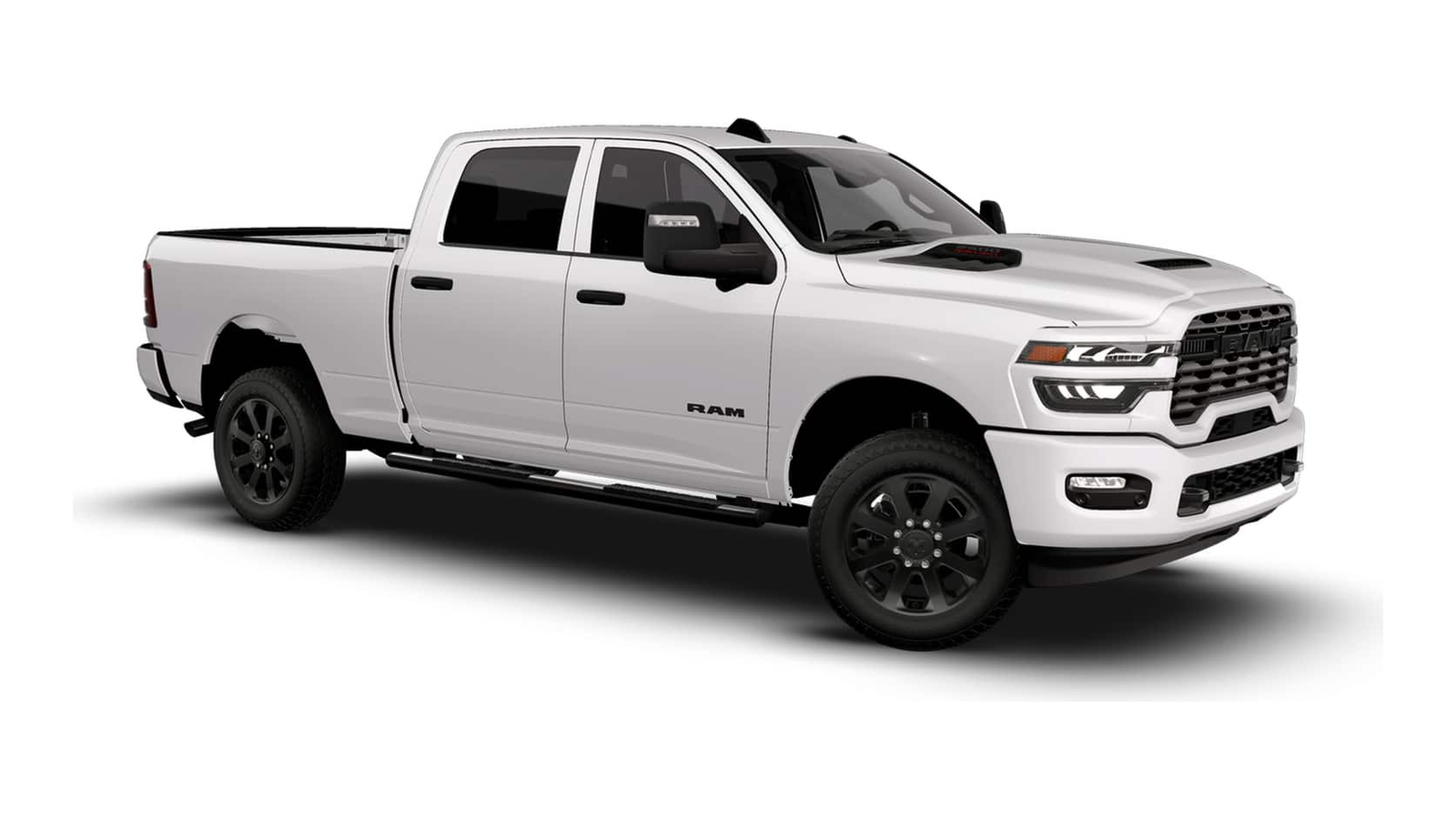
Worked Example: Importing a 2026 Ram 2500 to Israel
Here is the full landed cost of one car, a 2026 Ram 2500 shipped from the USA to Israel, worked out on 9 November 2026 with the customs rules in force that day. It lands at 376,666 ILS (about US$118,155), and duties and taxes come to 18% of its CIF value.
| Item | Share of CIF | Amount |
|---|---|---|
| Vehicle priceIPAS price for a car sourced in the USA | 286,592 ILSUS$89,900 | |
| Shipping and insuranceUSA to Israel | 18,534 ILSUS$5,814 | |
| CIF valueCost, insurance and freight: the customs value | 305,127 ILSUS$95,714 | |
| Customs duties and taxes | ||
| Basic customs duty (0%)0% of CIF | 0 ILSUS$0 | |
| GST/VAT (18%)18% of CIF | 54,924 ILSUS$17,229 | |
| Total duties and taxes18% of CIF | 54,924 ILSUS$17,229 | |
| Service and handling | ||
| Premium Import ServiceOptional end-to-end import management by IPAS | 10,622 ILSUS$3,332 | |
| Destination handlingPort terminal and customs clearance handling | 5,993 ILSUS$1,880 | |
| Total landed cost | 376,666 ILSUS$118,155 | |
Electric and Hybrid Vehicles
Hybrids and plug-in hybrids get nothing
This is the most commonly misreported fact about Israeli car tax. Conventional hybrids and plug-in hybrids have no group of their own in the purchase-tax rules. Tariff lines 8703.40, 8703.50, 8703.60 and 8703.70 all point to the standard Israeli Additional Rules, which places them in Group A at 83% — identical to a petrol car. Claims that hybrids pay 50% and plug-in hybrids 55%, or 45% and 25%, are simply wrong.
Only the battery-electric line, 8703.80, has a group of its own.
The battery-electric rate — and the clamp that limits it
A battery-electric passenger car sits in Group E2 at a headline 48%. But the 48% is not the whole rule. Rule 4ב clamps the benefit: the purchase tax on an electric car may not fall more than ILS 22,000 below what the equivalent petrol car would have paid.
That creates three zones, driven by the purchase-tax base:
| Purchase tax base (CIF + duty) | What actually binds |
|---|---|
| Below ILS 41,494 | A ceiling — the EV cannot pay more than the equivalent petrol bill |
| ILS 41,494 to ILS 104,351 | The 48% headline rate genuinely applies |
| Above ILS 104,351 | A floor — the benefit is capped at ILS 22,000 |
Above roughly ILS 104,000 of base — which covers most vehicles IPAS handles — the 48% headline is a decoy. The real rule becomes "83% less the green reduction, less the safety reduction, less ILS 22,000". That is why the worked example above saves 26 points rather than the 35 the headline rates imply, and the gap widens as the car gets more expensive.
An electric goods vehicle sits in Group F at 35%, with the identical structure but a more generous ILS 50,000 cap.
No VAT concession, no duty concession
There is no EV relief in the VAT — a battery-electric car pays 18% like everything else. And there is no electric duty concession either: line 8703.80.9000 is 7% MFN like the rest of Chapter 87. The entire electric benefit in Israel lives inside the purchase tax, and it is capped.
Rates change annually — check the year
The battery-electric package is set year by year and has moved repeatedly. Widely-circulating figures of 52% with a ILS 30,000 cap describe a package that was announced but not enacted at that level; 45% with a ILS 35,000 cap was the 2025 position and was superseded on 1 January 2026. The operative 2026 figures are 48% with a ILS 22,000 cap.
Green Taxation — a Bonus-Malus, Not a Discount
Israel's environmental signal sits entirely inside the purchase tax, as Rule 6 "green taxation". It applies only to Group A vehicles — passenger cars and light commercials under 3,500 kg at the 83% rate.
It is a bonus-malus, not a discount scheme. Grades 1 to 12 reduce the bill; grades 13 to 15 add to it.
| Pollution grade | Effect (ILS) |
|---|---|
| 1–2 (cleanest, includes all battery EVs) | reduction 14,523 |
| 3 | reduction 12,899 |
| 4 | reduction 10,624 |
| 5 | reduction 8,675 |
| 6 | reduction 7,048 |
| 7 | reduction 5,750 |
| 8 | reduction 4,449 |
| 9 | reduction 3,474 |
| 10 | reduction 2,179 |
| 11 | reduction 1,525 |
| 12 | reduction 227 |
| 13 | surcharge 750 |
| 14 | surcharge 2,375 |
| 15 | surcharge 3,349 to 8,690, rising with emissions |
The grade is set by the Ministry of Transport for each model, computed from WLTP emissions of CO2, NOx, particulates, hydrocarbons and carbon monoxide — not from CO2 alone. A large SUV or a diesel pickup will normally land in grade 14 or 15 and pay more, not less. Diesel vehicles fare notably worse than their CO2 figure alone would suggest, because of higher NOx and particulate emissions.
A reduction may never exceed the tax otherwise payable.
Note that widely-circulated green tables showing values such as −14,427, −12,892, +1,535 or +5,000 are from a draft that was not enacted. Every value in the operative table differs.
The Luxury Surcharge
Rule 4א adds up to 20 further percentage points of purchase tax on a vehicle under 3,500 kg GVW whose consumer price exceeds ILS 300,000. The consumer price is a derived figure — roughly the purchase-tax base grossed up by the tax rate, VAT and a statutory 20% profit allowance, then depreciated by 1.25% for each full month since first registration abroad.
In practice, for an ordinary Group A car the surcharge begins to bite at a CIF above roughly ILS 115,800 from an FTA origin, or ILS 108,200 at MFN. Most vehicles IPAS handles are above that line, so the surcharge is the norm rather than the exception on this route.
The rate rises from zero at the threshold and approaches, without ever reaching, 20 points. It applies to ordinary cars, to battery-electric cars and to electric goods vehicles — but not to anything above 3,500 kg GVW.
One caveat worth knowing: where the model has an Israeli franchised importer publishing an official price list, Israeli Customs uses that VAT-inclusive list price rather than the derived figure, and the list price is normally higher. For such models, treat a computed estimate as a conservative floor.
Components That Do Not Exist in Israel
It is as useful to know what Israel does not charge. There is no separate CO2 levy at the border, no per-cubic-centimetre or per-kilowatt excise, no engine-displacement tax, no age surcharge or used-vehicle uplift, no scrappage or recycling fee, no annual CO2 road tax, and no classic-vehicle purchase-tax concession.
The entire environmental signal is Rule 6 inside the purchase tax. The entire value signal is Rule 4א inside the purchase tax. If a cost estimate for Israel contains a line item outside duty, purchase tax and VAT, that line has been invented.
Documents Required for Import
- Commercial invoice showing the purchase price
- Bill of Lading (original or telex release)
- Packing list with make, model, year, VIN, engine capacity, GVW and colour
- Origin certificate — EUR.1 or EUR-MED movement certificate, approved-exporter invoice declaration, or US Certificate of Origin. Without it, 7% MFN duty applies
- Certificate of Title or equivalent ownership document
- Evidence of the manufacture date, to establish the 24-month position
- Personal import licence under the Personal Import Order
- Ministry of Transport model-list confirmation for the production year
- Certified-laboratory conformity approval (אישור מעבדה מוסמכת)
- EU/UNECE or US FMVSS type-approval documentation
- Israeli driving licence for the vehicle class
- Israeli identity documentation
- Compulsory third-party insurance, at registration
Customs Clearance Timeline
| Stage | Typical duration | Notes |
|---|---|---|
| Pre-shipment: model-list and licence checks | Weeks | Do this before buying — not after |
| Vessel arrival to discharge | 1–3 days | Haifa or Ashdod |
| Customs entry, valuation and assessment | 2–5 working days | Three-component cascade; a broker is essential |
| Duty, purchase tax and VAT payment | 1–2 days | |
| Certified-laboratory conformity test | 1–3 weeks | The main variable on a personal import |
| Registration and plates | 2–5 days | Insurance must be in place |
| Typical total after arrival | 3–6 weeks |
Israel's clearance is document-heavy rather than slow. Almost all avoidable delay comes from work that should have happened before shipping: confirming the model appears on the current list, securing the origin certificate, and verifying the manufacture date against the 24-month bar.
Homologation and Vehicle Approval
The Ministry of Transport operates a genuine gatekeeping list for personal imports. The model must appear on the authorised-authority notice for personal import of M1 passenger vehicles, matched to the vehicle's production year. The list is republished annually and applications run through the Mashlul system.
Israel accepts two international standards: EU/UNECE type approval and US FMVSS. Ministry procedure 018/2014 expressly contemplates personal imports built to European and American specification. From 1 January 2026 the framework additionally admits EU-regulation electric vehicles in small series of up to 400 units per model.
A certified-laboratory conformity test after arrival is mandatory on a personal import. It is a real technical inspection, not a formality.
The practical sourcing consequence bears repeating: a model approved to neither European nor American standards has no route into Israel. That closes off Japanese-domestic, Chinese-domestic and Indian-domestic specification vehicles.
Registration Procedures and Costs
Registration charges sit outside the border cascade. They are real costs, but they are not part of the duty calculation and must never be added into the VAT base:
- Annual licensing fee (אגרת רישוי), banded by pollution group and engine capacity
- First-registration fee (אגרת רישום ראשוני)
- Roadworthiness test (טסט)
- Compulsory third-party bodily-injury insurance — market-priced, not a tax
- Certified-laboratory conformity test, mandatory on a personal import
- Port, terminal, storage, customs-broker and agency fees
The annual licensing fee is banded by pollution group, so a high-emission vehicle that already paid a green surcharge at the border continues to pay more every year thereafter.
Recent Regulatory Changes (2022–2026)
- 2022 — collector steering exception. An amendment added the narrow right-hand-drive exception for collector vehicles manufactured up to 1960.
- 1 January 2022 — US duty to zero. Vehicles of US origin moved to 0% duty.
- 1 June 2023 — heavy goods vehicles duty-exempt. HS 8704 above 4,500 kg GVW became duty-exempt at MFN, making that category a flat 18% from every origin.
- 1 January 2025 — VAT raised to 18% from 17%.
- 1 January 2025 — broad FTA liberalisation. Vehicle lines moved to 0% duty for the EU, UK, Canada, EFTA, Türkiye, Mexico, Colombia, Ukraine, Guatemala, Panama, South Korea and Mercosur.
- 5 December 2025 — the 19% VAT proposal dropped. A rise to 19% had been proposed for 1 January 2026; the Cabinet-agreed 2026 budget held VAT at 18%. Any source quoting 19% for 2026 is describing a proposal that did not become law.
- 1 January 2026 — electric package reset to 48% purchase tax with a ILS 22,000 cap, superseding the 2025 package of 45% and ILS 35,000.
- 1 January 2026 — UAE and Vietnam staging. UAE-origin vehicles entered at 1.40% duty and Vietnamese at 4%, both staged rather than zero.
- 1 January 2026 — green score re-weighted. The external-cost coefficients behind the pollution grade are revised every two years; the 2026 revision increased the weight on CO2 and NOx.
Frequently Asked Questions
How much does it cost to import a car to Israel?
Far more than the customs duty suggests. Duty is 7% at most and zero from the EU, US, UK, Korea and many other partners — but the purchase tax of 83% on an ordinary car, charged on CIF plus duty, and 18% VAT on top of both, dominate the bill. An EU-origin passenger car lands at roughly 116% of CIF before adjustments; a Japanese-origin one at about 131%. Add the luxury surcharge on an expensive car and a green surcharge on a high-emission one and the total can exceed 150%.
What is the age limit for importing a car to Israel?
Under 24 months from the date of manufacture, measured at the moment the vehicle arrives. This is the strictest age rule of any market IPAS serves, and it is an import bar rather than a registration bar — an older vehicle simply cannot come in on this route. There is no relief between two and 29 years; only a genuine collector vehicle of 30 years or more has a pathway, and that carries no tax concession.
Do hybrids or plug-in hybrids get a tax break in Israel?
No. This is the most commonly misreported point about Israeli car tax. Hybrids and plug-in hybrids sit in the standard Group A at 83% purchase tax, exactly like a petrol car. Only battery-electric vehicles have a group of their own. Claims that hybrids pay 50% or plug-in hybrids 55% are incorrect.
Is a battery-electric car really taxed at 48%?
Only in a narrow band. The 48% headline applies where the purchase-tax base sits between roughly ILS 41,500 and ILS 104,350. Above that — which covers most vehicles of interest — a clamp takes over and limits the electric benefit to ILS 22,000 against the equivalent petrol bill. Above that threshold the real rule is "83% less the green and safety reductions, less ILS 22,000", so the saving is a fixed shekel amount rather than a proportional one, and it shrinks in percentage terms as the car gets more expensive. There is no EV concession in the duty or the VAT.
Can I import a right-hand-drive car to Israel?
No. Traffic Regulation 320(ח) prohibits importing or registering a right-hand-drive vehicle, with only two exceptions: road-sweeping work vehicles, and collector vehicles manufactured up to 1960. Conversion is not a pathway, because there is no Israeli type-approval route for a converted vehicle and the model would not appear on the personal-import list.
Does a free trade agreement make importing much cheaper?
Less than you would expect. An agreement reduces the customs duty only — the purchase tax and VAT are Israeli internal taxes and are never reduced by origin. Moving from 7% MFN to 0% saves about 15 points on a 131-point total. It is worth having, and worth securing the EUR.1 or equivalent certificate for, but it does not change the fundamental economics.
Why does gross vehicle weight matter so much?
Because it, rather than the HS heading, sets the purchase-tax rate. Under 3,500 kg you pay 83% plus the luxury and green adjustments. Between 3,500 and 4,500 kg you pay 72% with neither of those adjustments. Above 4,500 kg on a goods vehicle, both the duty and the purchase tax disappear entirely and you pay only 18% VAT — the one genuine invariant in the Israeli system. A light double-cab pickup gets no commercial concession at all and pays the full 83%, usually with a green surcharge on top.
What is the luxury surcharge and when does it apply?
Rule 4א adds up to 20 further points of purchase tax where a vehicle under 3,500 kg has a consumer price above ILS 300,000. In practice it starts to apply at a CIF of roughly ILS 115,800 from an FTA origin or ILS 108,200 at MFN — so for most imported vehicles it applies rather than not. It affects ordinary cars and electric cars alike, but nothing over 3,500 kg.
Ready to Import?
Israel is a market where the sourcing decision matters more than almost anywhere else, because so much of the cost is set before you look at the price. Weight decides the purchase-tax band. Emissions grade decides whether you receive a ILS 14,523 reduction or pay an ILS 8,690 surcharge. Value decides whether up to 20 further points of luxury surcharge apply. Origin decides only the smallest of the three taxes.
And before any of that, two gates decide whether the import is possible at all: the vehicle must be under 24 months old from manufacture, and it must be left-hand drive with a model that appears on the Ministry of Transport list. Check those first — a great deal on a three-year-old car, or on any right-hand-drive vehicle, is not a deal at all in Israel.
IPAS provides two tools to plan and execute your import:
CarImport.AI — Source a vehicle through IPAS and calculate the full landed cost to Israel, running the complete three-step cascade in shekels: customs duty, purchase tax with the luxury, green, safety and electric-vehicle adjustments, and 18% VAT. Get an exact figure for your specific vehicle, weight, emissions grade and origin.
IPAS EXPRESS — Already have a vehicle? Get instant shipping quotes to Haifa or Ashdod — sea freight, RoRo or air — with transparent, itemised pricing and a stage-by-stage timeline.
Ready to Import Your Vehicle?
Two tools, two use cases. Pick the one that fits your needs.
Source a vehicle through IPAS and calculate the full landed cost — customs duties, shipping, and compliance — to destinations across the world.
Calculate Landed CostIPAS Express
Already have a vehicle? Get instant shipping quotes — sea freight, air freight, or RoRo — for one car or multiple vehicles worldwide.
Get Shipping Quote