
Introduction
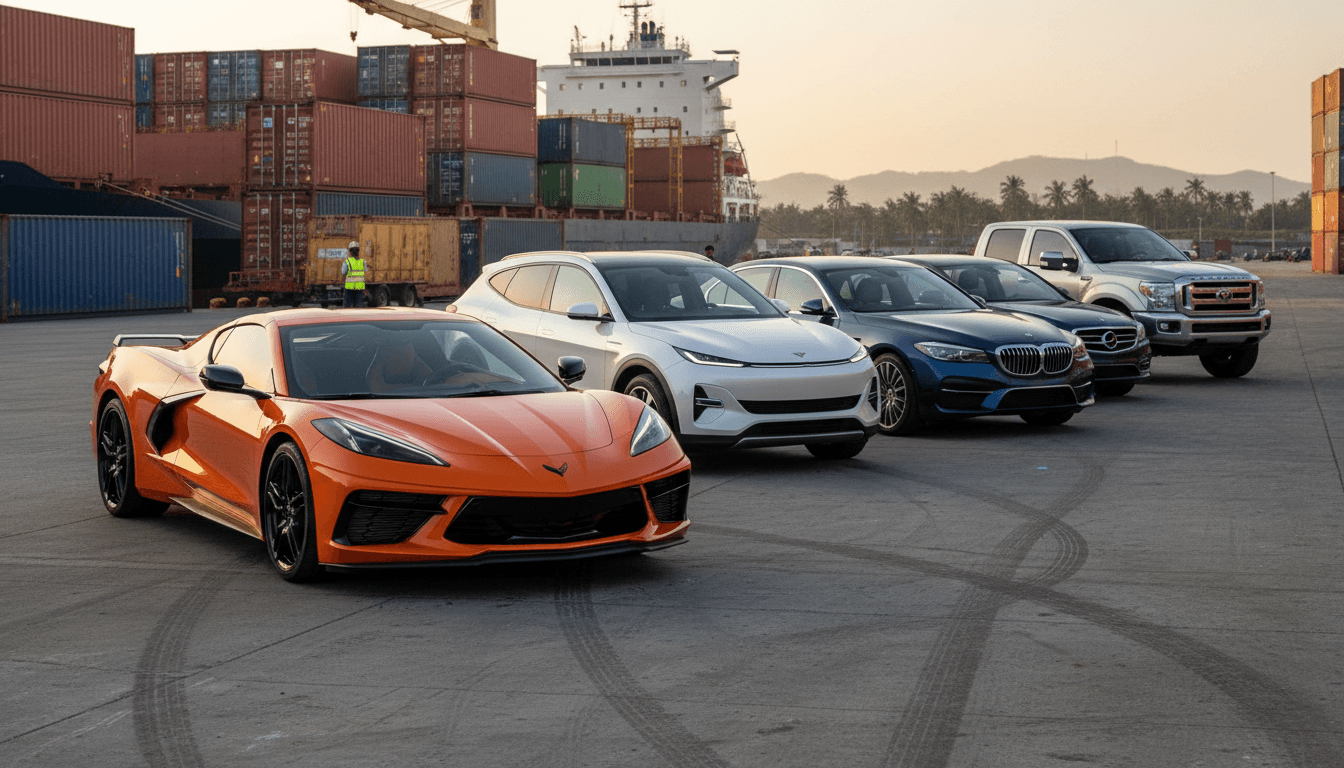
Côte d'Ivoire is West Africa's largest economy and the busiest vehicle gateway on the region's coast, with the Port of Abidjan serving not only Ivorian buyers but landlocked Mali, Burkina Faso and Niger beyond it.
Its import tax structure is refreshingly predictable. Five charges apply at the border — a 20% ECOWAS customs duty plus three small community levies, then 18% VAT on the duty-inclusive total — giving a total of 44.314% of CIF. What makes it genuinely simple is that this figure is identical for every vehicle. Petrol, diesel, hybrid, plug-in hybrid, battery-electric, passenger car or pickup: engine size, propulsion and value change nothing. There is no vehicle excise, no luxury tax and no displacement-based border charge.
The complexity is elsewhere, in two places.
First, age limits, and they are stricter than they look. Passenger cars are capped at five years, measured from the date of first registration abroad rather than the manufacture date — a distinction that quietly costs importers a year. Pickups and light goods vehicles get seven years, larger trucks and coaches ten.
Second, the paperwork must start before the vessel sails. The Bordereau de Suivi des Cargaisons — the cargo tracking note — is a statutory requirement that has to be established in the country of departure before shipment. It cannot be obtained retrospectively at Abidjan, and a shipment that arrives without one is a genuine problem rather than a formality.
One further thing worth knowing: Côte d'Ivoire drives on the right and right-hand-drive vehicles cannot be registered at all, which rules out Japanese-domestic, UK, Australian, Indian and South African right-hand-drive stock.
Quick Facts
| Detail | Information |
|---|---|
| Customs Authority | Direction Générale des Douanes — douanes.ci |
| Tax Authority | Direction Générale des Impôts — dgi.gouv.ci |
| Trade bloc | ECOWAS Common External Tariff, applied under the UEMOA Customs Code |
| Traffic Side | Right-hand traffic (drive on the right) |
| Steering Requirement | LHD required — RHD vehicles cannot be registered |
| Customs Duty | 20% of CIF (ECOWAS CET Band 3) |
| Redevance Statistique (RSTA) | 1% of CIF |
| Prélèvement Communautaire CEDEAO | 0.5% of CIF |
| Prélèvement Communautaire de Solidarité UEMOA | 0.8% of CIF |
| TVA (VAT) | 18% on (CIF + duty + all three levies) |
| Total border charges | 44.314% of CIF — identical for every vehicle |
| Vehicle excise / luxury tax / displacement tax | None |
| EV incentive for private imports | None — a battery EV pays the same 44.31% |
| Age limit — passenger cars | 5 years from first registration abroad |
| Age limit — pickups, light goods ≤5t, minibus 9–34 seats | 7 years |
| Age limit — coaches over 34 seats, goods vehicles 5–10t | 10 years |
| Cargo Tracking Note (BSC) | Statutory — must be obtained before the vessel sails |
| COSEC maritime levy | Approximately 0.4% of CIF |
| Pre-shipment inspection | BIVAC / Cotecna, where applicable |
| Main Ports | Abidjan, San-Pédro |
| Currency | West African CFA franc (XOF), fixed at 655.957 to the euro |
Types of Cars That Can Be Imported
Steering — left-hand drive only
Côte d'Ivoire drives on the right and requires left-hand-drive vehicles. A right-hand-drive vehicle cannot be registered — no carte grise will be issued — so it is inadmissible in practice regardless of its condition or value.
This shapes sourcing decisively. Japanese-domestic, UK, Australian, New Zealand, Indian and South African right-hand-drive stock is out. What works is the United States, Canada, Germany, Belgium, the UAE, South Korea, China, Mexico, and left-hand-drive export-specification units from Japan.
Age limits — and the trap in how they are measured
Décret n°2017-792 of 6 December 2017, effective from 1 July 2018, sets age limits by vehicle category:
| Category | HS | Maximum age |
|---|---|---|
| Passenger cars and taxis | 8703 | 5 years |
| Pickups, light goods vehicles up to 5 tonnes, minibuses of 9–34 seats | 8704.21 / 8704.31 | 7 years |
| Coaches over 34 seats | 8702 | 10 years |
| Goods vehicles of 5–10 tonnes | 8704.22 / 8704.32 | 10 years |
The critical detail is the measurement basis. Age runs from the date of first registration abroad — the première mise en circulation à l'étranger — not from the manufacture date.
That distinction costs importers a year more often than any other single misunderstanding in West African importing. A car manufactured in late 2020 but first registered in early 2021 is measured from 2021, which sounds generous. But the reverse case is the dangerous one: a car built in 2020 and registered in 2020 exhausts its five years earlier than an owner assuming manufacture-date measurement would expect. Check the first-registration date on the foreign registration document, not the VIN year.
The five-year limit on passenger cars is notably tighter than the seven-year allowance for pickups, which is one reason light commercial vehicles are so heavily represented in the Ivorian import mix.
Fuel type
Every propulsion type is admissible, and every one pays exactly the same rate. There is no differentiation at the border.
Cars You Can Import to Côte d'Ivoire
Each card is a full landed-cost calculation for Ivory Coast: the car's price, shipping, every duty and tax, and handling, worked out on 9 November 2026 with the rules in force that day. All are left-hand drive to suit Ivory Coast's roads. Tap a car to see its full breakdown, or open it to change the trim, colour or port.
More cars you can import to Côte d'Ivoire
New cars IPAS sources to order that meet Côte d'Ivoire's import rules. Prices are ex works, before shipping and duty. Open a car to work out its full landed cost.
 LHD/C-RHDBackorder2025
GMC Yukon XL
SUV · 11 VariantsPetrol · DieselFrom $88,200Ex Works, USA LHDBackorder2027
GMC Terrain
SUV · 4 VariantsPetrolFrom $36,500Ex Works, USA LHD/C-RHDBackorder2025
GMC Hummer EV Pickup
Pickup · 2 VariantsElectricFrom $115,900Ex Works, USA LHDBackorder2026
Lexus IS 350
Sedan · 4 VariantsPetrolFrom $49,800Ex Works, Canada LHDBackorder2025
Ford Mustang Fastback
Coupe · 4 VariantsPetrolFrom $55,900Ex Works, USA LHD/C-RHDBackorder2026
Ford Super Duty F-350
Pickup · 5 VariantsPetrolFrom $56,400Ex Works, USA LHD/C-RHDBackorder2026
Ford Super Duty F-450 DRW
Pickup · 5 VariantsDieselFrom $73,600Ex Works, USA LHDBackorder2026
Cadillac Escalade IQ
SUV · 4 VariantsElectricFrom $150,300Ex Works, USA LHD/C-RHDBackorder2027
Ram 1500 TRX SRT
Pickup · 1 VariantPetrolFrom $130,000Ex Works, USA LHD/C-RHDBackorder2026
Ram 3500
Pickup · 9 VariantsPetrol · DieselFrom $57,800Ex Works, USA LHDBackorder2026
Chevrolet Corvette E-Ray Convertible
Convertible · 3 VariantsHybridFrom $138,000Ex Works, USA LHDBackorder2026
Toyota Land Cruiser 78 Troop Carrier
SUV · 2 VariantsDieselFrom $54,200Ex Works, UAE LHDBackorder2026
Toyota Crown Signia
SUV · 2 VariantsHybridFrom $53,300Ex Works, USA LHDBackorder2027
Toyota Hilux Double Cab 2.8
Pickup · 2 VariantsDieselFrom $48,100Ex Works, UAE LHDBackorder2026
Denza D9
Van & MPV · 7 VariantsPlug-in Hybrid · ElectricFrom $52,300Ex Works, China🇨🇳 LHDBackorder2026
Jeep Grand Wagoneer
SUV · 7 VariantsPetrolFrom $76,800Ex Works, USA
Ports Supporting Vehicle Import
| Port | Role |
|---|---|
| Port of Abidjan | The principal gateway and one of West Africa's largest ports; handles the overwhelming majority of vehicle volume, and serves as the transit corridor for Mali, Burkina Faso and Niger |
| Port of San-Pédro | Second port, in the south-west; primarily bulk commodity focused but with vehicle capability |
Abidjan is the practical destination for nearly all vehicle imports. Its role as a transit hub for the landlocked Sahel states means high vehicle throughput and well-established roll-on/roll-off services from Europe, North America and Asia.
Duty Structure Overview
Five charges apply at the border, and the order of bases matters:
- Droit de Douane (customs duty) — 20% of CIF, under ECOWAS Common External Tariff Band 3. The same rate applies to HS 8703 and HS 8704.
- Redevance Statistique (RSTA) — 1% of CIF.
- Prélèvement Communautaire CEDEAO — 0.5% of CIF.
- Prélèvement Communautaire de Solidarité UEMOA (PCS) — 0.8% of CIF.
- TVA (VAT) — 18% on (CIF + duty + RSTA + PC + PCS).
The base rule that is most often got wrong
The customs duty and the three community levies are each computed on CIF alone. They are parallel components — they do not stack on one another. Only the TVA cascades, and its base is CIF plus all four preceding lines.
A calculation that runs RSTA, PC and PCS on a growing subtotal will overstate the bill.
Customs valuation
CIF is the transaction value plus international freight and marine insurance, converted to CFA francs. Euro invoices convert at the fixed and irrevocable peg of 655.957 XOF to the euro; dollar and other invoices convert at the BCEAO official periodic rate on the declaration date.
The cascade, worked
| Charge | Rate | Base |
|---|---|---|
| Droit de Douane | 20% | CIF |
| Redevance Statistique | 1% | CIF |
| Prélèvement Communautaire CEDEAO | 0.5% | CIF |
| Prélèvement Communautaire de Solidarité UEMOA | 0.8% | CIF |
| TVA | 18% | CIF + all four above |
| Total | 44.314% | of CIF |
Worked example — any vehicle, CIF US$20,000
| Charge | Calculation | Amount |
|---|---|---|
| Customs value (CIF) | — | $20,000.00 |
| Customs duty (20%) | $20,000 × 0.20 | $4,000.00 |
| Redevance Statistique (1%) | $20,000 × 0.01 | $200.00 |
| PC CEDEAO (0.5%) | $20,000 × 0.005 | $100.00 |
| PCS UEMOA (0.8%) | $20,000 × 0.008 | $160.00 |
| Subtotal | $24,460.00 | |
| TVA (18%) | $24,460 × 0.18 | $4,402.80 |
| Total border charges | $8,862.80 (44.314% of CIF) | |
| Landed cost | $28,862.80 |
This same 44.314% applies to a 1.0-litre petrol hatchback, a 5.0-litre V8 pickup and a battery-electric SUV alike. Notice how the headline 20% duty is less than half the total — the cascade of VAT over the duty-inclusive base does most of the work.
These figures show the structure. Get the exact landed cost for your specific vehicle and route using CarImport.AI.

Calculate your exact import duty to Côte d'Ivoire
Get a vehicle-specific duty and full landed-cost breakdown — HS classification, every tax, levy and FTA, plus shipping — calculated for your exact make, model and specs.
- Vehicle-specific HS code
- All duties, taxes & FTAs
- Shipping + est. landed cost
One narrow exemption
The PCS UEMOA levy of 0.8% is exempt for goods originating within the West African Economic and Monetary Union. In practice almost no imported vehicle qualifies, since WAEMU states are not vehicle manufacturers — but it is the one origin-sensitive line in the structure.
Worked Example: Importing a 2026 Nissan Patrol to Côte d'Ivoire
Here is the full landed cost of one car, a 2026 Nissan Patrol shipped from the UAE to Ivory Coast (one EU member, as an example), worked out on 9 November 2026 with the customs rules in force that day. It lands at 84,666,134 XOF (about US$143,886), and duties and taxes come to 62.1% of its CIF value.
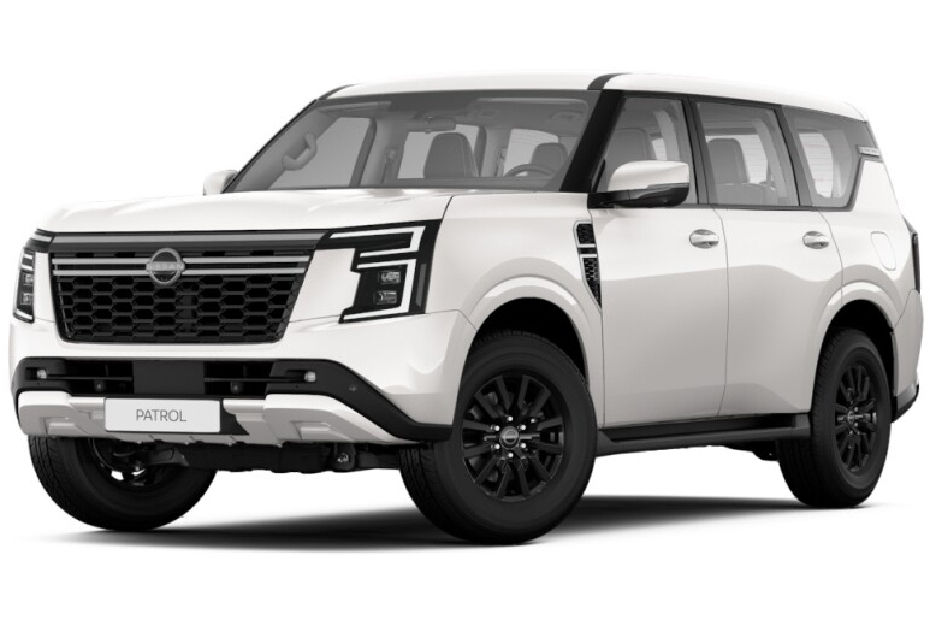
| Item | Share of CIF | Amount |
|---|---|---|
| Vehicle priceIPAS price for a car sourced in the UAE | 43,955,355 XOFUS$74,700 | |
| Shipping and insuranceUAE to Ivory Coast | 6,093,142 XOFUS$10,355 | |
| CIF valueCost, insurance and freight: the customs value | 50,048,497 XOFUS$85,055 | |
| Customs duties and taxes | ||
| Basic customs duty (20%)20% of CIF | 10,009,699 XOFUS$17,011 | |
| Additional duty (10%)Base or related charges differ from CIF; see the duty structure above17.6% of CIF | 8,821,081 XOFUS$14,991 | |
| GST/VAT (18%)Base or related charges differ from CIF; see the duty structure above24.5% of CIF | 12,263,368 XOFUS$20,841 | |
| Total duties and taxes62.1% of CIF | 31,094,148 XOFUS$52,843 | |
| Service and handling | ||
| Premium Import ServiceOptional end-to-end import management by IPAS | 2,393,713 XOFUS$4,068 | |
| Destination handlingPort terminal and customs clearance handling | 1,129,776 XOFUS$1,920 | |
| Total landed cost | 84,666,134 XOFUS$143,886 | |
Electric and Hybrid Vehicles
Côte d'Ivoire currently offers no import incentive for electric vehicles brought in privately. A battery EV under HS 8703.80 pays the full 20% duty and the complete cascade, arriving at exactly the same 44.31% as a petrol car.
The government has set a target of a 10% electric fleet by 2030, and import-tax reductions and subsidies have been discussed — but as of writing they have not been enacted and do not reach private importers.
There is one measure that exists and is frequently misread: a corporate income-tax deduction of 35% on fixed-asset investment in electric vehicles, subject to a minimum investment of XOF 100 million (XOF 25 million for SMEs). That is a corporate tax measure available to companies making qualifying capital investments. It is not a customs reduction and it does nothing for an individual importing a car.
If you are planning ahead, the annual Finance Law is where any change would appear, so it is worth checking the current position with your broker before assuming the position is unchanged.
Statutory Shipping Charges — Start These Before You Ship
These are not customs duties, but two of them are statutory obligations and one has a hard timing requirement that catches importers out.
Bordereau de Suivi des Cargaisons (BSC) — the cargo tracking note
Mandatory since 25 March 2013, the BSC must be established in the country of departure before the vessel sails. This is the single most important procedural point in an Ivorian import. It cannot be obtained retrospectively once the cargo is at sea or has arrived, and a shipment arriving without a valid BSC faces penalties and delays that far exceed the cost of the document itself.
The fee runs at roughly 0.4% to 1% of CIF. Confirm the current rate with your freight forwarder at booking — and, more importantly, confirm that they are actually raising it before departure. This is a routine step for forwarders experienced in West African trade and a routine omission for those who are not.
COSEC maritime levy
Approximately 0.4% of CIF, collected at destination.
Pre-shipment inspection
BIVAC or Cotecna inspection is statutory where applicable. Confirm whether your consignment falls in scope before shipping, as this is another requirement that operates at origin rather than destination.
Documents Required for Import
- Commercial invoice showing the purchase price, freight and insurance
- Bill of Lading (original or telex release)
- Packing list with make, model, year, VIN, engine capacity and fiscal power (cv)
- Bordereau de Suivi des Cargaisons (BSC) — obtained in the country of departure before sailing
- Certificate of Title or equivalent ownership document
- Foreign registration certificate showing the date of first registration — this is what the age limit is measured against
- Pre-shipment inspection certificate (BIVAC / Cotecna) where applicable
- Customs declaration
- Certificate of Origin — relevant only for a WAEMU-origin PCS exemption
- Importer identity documentation
- Ivorian motor insurance, at registration
Note which document controls the age test: the foreign registration certificate, not the VIN or the manufacturer's build plate. If the first-registration date is unclear or missing, resolve it before purchase.
Customs Clearance Timeline
| Stage | Typical duration | Notes |
|---|---|---|
| BSC issuance | Before departure | Must be complete before the vessel sails |
| Vessel arrival to discharge | 2–5 days | Abidjan |
| Customs declaration and assessment | 3–7 working days | Five charges, straightforward computation |
| Duty, levy and TVA payment, release | 1–3 days | |
| Visite Technique (roadworthiness) | 1–3 days | Required before registration |
| Carte grise issuance | 1–2 weeks | |
| Typical total | 2–5 weeks |
Abidjan is a busy port and clearance times vary with congestion. The predictable delays are documentary — a missing or invalid BSC, or a first-registration date that puts the vehicle outside its age band.
Registration and Ongoing Costs
These sit outside the border cascade and are paid at and after registration.
Carte Grise (first registration) — approximately XOF 25,000 for vehicles up to 12–16 fiscal horsepower, rising to around XOF 30,000 for vehicles of 16 cv and above.
Visite Technique — a mandatory roadworthiness inspection that must be passed before the carte grise is issued.
Vignette (annual motor vehicle tax) — under Loi n°2004-271, banded by fiscal power:
| Fiscal power (cv) | Annual vignette |
|---|---|
| Up to 4 cv | XOF 19,000 |
| 5–7 cv | XOF 35,000 |
| 8–11 cv | XOF 49,000 |
| 12–15 cv | XOF 96,000 |
| Over 15 cv | XOF 190,000 |
| Over 15 cv and under 2 years old | XOF 250,000 |
The vignette is where engine size finally matters in Côte d'Ivoire. The border tax ignores displacement entirely, but the annual ownership tax is banded by fiscal power and rises tenfold from the smallest to the largest band — with a further premium on large, near-new vehicles. A big-engined import that costs no more to land than a small one will cost substantially more to keep.
Frequently Asked Questions
How much does it cost to import a car to Côte d'Ivoire?
44.314% of the CIF value, and that figure is the same for every vehicle. It comprises a 20% ECOWAS customs duty, a 1% statistical royalty, a 0.5% ECOWAS community levy and a 0.8% UEMOA solidarity levy — all charged on CIF — plus 18% VAT on the total of all of those. A vehicle with a CIF of US$20,000 pays US$8,863. Add the cargo tracking note at roughly 0.4–1% of CIF, the COSEC levy at about 0.4%, and registration costs.
Does engine size or fuel type change the tax?
Not at the border. Petrol, diesel, hybrid, plug-in hybrid and battery-electric vehicles all pay 44.314%, and there is no displacement band, no excise and no luxury tax. Engine size does matter later: the annual vignette is banded by fiscal power and ranges from XOF 19,000 for a small car to XOF 250,000 for a large, near-new one.
What is the age limit for importing a car to Côte d'Ivoire?
Five years for passenger cars and taxis, seven years for pickups, light goods vehicles up to 5 tonnes and minibuses of 9–34 seats, and ten years for coaches over 34 seats and goods vehicles of 5–10 tonnes. Critically, age is measured from the date of first registration abroad, not the manufacture date — so the foreign registration certificate, not the VIN year, is what determines eligibility. This catches importers out regularly.
Can I import a right-hand-drive car?
No. Côte d'Ivoire drives on the right and a right-hand-drive vehicle cannot be registered — no carte grise will be issued. That rules out Japanese-domestic, UK, Australian, New Zealand, Indian and South African right-hand-drive stock. Source instead from the USA, Canada, Germany, Belgium, the UAE, South Korea, China, Mexico, or left-hand-drive export units from Japan.
Are electric vehicles cheaper to import?
No. A battery EV pays exactly the same 44.31% as a petrol car — there is no private import incentive in force. The government has a target of a 10% electric fleet by 2030 and has discussed import-tax reductions, but nothing has been enacted for private importers. A 35% corporate income-tax deduction exists for company fixed-asset investment in electric vehicles above XOF 100 million, but that is a corporate tax measure, not a customs reduction, and it does nothing for an individual.
What is the BSC and when do I need it?
The Bordereau de Suivi des Cargaisons is a statutory cargo tracking note, mandatory since March 2013, and it must be established in the country of departure before the vessel sails. This is the most important timing requirement in an Ivorian import. It cannot be obtained after the cargo has sailed, and arriving without one causes penalties and delays out of all proportion to the fee, which is around 0.4–1% of CIF. Confirm with your forwarder at booking that they are raising it before departure.
Why is the total so much higher than the 20% duty?
Because the VAT cascades. The 20% duty and the three community levies are each charged on CIF alone, giving 22.3% before VAT. The 18% VAT is then charged on CIF plus all four of those lines, which adds a further 22.01% of CIF. The duty is less than half of what you actually pay.
Do the small levies stack on each other?
No, and this is worth getting right. The customs duty, the statistical royalty, the ECOWAS levy and the UEMOA solidarity levy are all parallel — each is computed on CIF alone and none builds on another. Only the VAT cascades. A calculation that runs the small levies on a growing subtotal will overstate the bill.
Ready to Import?
Côte d'Ivoire is unusually easy to budget for and unusually easy to disqualify a vehicle in.
The money side needs almost no modelling: 44.314% of CIF, the same for every car, with no engine-size band, no excise and no propulsion differentiation to work around. Pick whatever vehicle suits you and the tax will be the same percentage.
The eligibility side needs real attention. Confirm the vehicle is left-hand drive. Then check the first registration date on the foreign registration document against the five-year limit for a car or seven for a pickup — measured from registration abroad, not from when it was built. That single distinction disqualifies more prospective Ivorian imports than anything else.
And get the cargo tracking note raised before the ship leaves. It is a small fee with a hard deadline and no retrospective remedy.
IPAS provides two tools to plan and execute your import:
CarImport.AI — Source a vehicle through IPAS and calculate the full landed cost to Côte d'Ivoire, including the 20% ECOWAS duty, the three community levies, 18% VAT and shipping.
IPAS EXPRESS — Already have a vehicle? Get instant shipping quotes to Abidjan or San-Pédro — sea freight, RoRo or container — with transparent, itemised pricing and a stage-by-stage timeline.
Ready to Import Your Vehicle?
Two tools, two use cases. Pick the one that fits your needs.
Source a vehicle through IPAS and calculate the full landed cost — customs duties, shipping, and compliance — to destinations across the world.
Calculate Landed CostIPAS Express
Already have a vehicle? Get instant shipping quotes — sea freight, air freight, or RoRo — for one car or multiple vehicles worldwide.
Get Shipping Quote