

Introduction
Importing a car to Jamaica in 2026 costs 20% Import Duty on most cars, 0-40% Special Consumption Tax, a 0.85% Environmental Protection Levy, fixed fees and 15% GCT — about 55-85% of CIF for petrol and diesel cars. Electric cars pay no GCT and 10% duty if three years old or less. The car age limit is six years.
Jamaica is the third-largest island in the Caribbean and one of the region's most dynamic vehicle import markets. With a population of approximately 2.8 million people and no domestic automobile manufacturing, the country depends entirely on imported vehicles to serve its transportation needs. The Jamaican car parc is dominated by Japanese-origin used vehicles — Toyotas, Hondas, Nissans, and Mazdas arriving through Kingston Wharves — but an increasing number of buyers are sourcing vehicles from the United States, the UK, and India to access models not available through conventional dealer networks.
Jamaica drives on the left side of the road, making right-hand drive (RHD) the standard steering configuration. IPAS treats RHD as required for vehicles imported to Jamaica. We have not found an outright left-hand-drive (LHD) ban in the Trade Board's motor vehicle import policy, so anyone planning to import an LHD vehicle should confirm the import permit conditions with the Trade Board before buying.
The island's import tax regime is administered by the Jamaica Customs Agency (JCA) and is structured around three main taxes applied in sequence: Import Duty, the Special Consumption Tax (charged ad valorem and shown as "SCTA" on the JCA tariff), and the General Consumption Tax (GCT), plus an Environmental Protection Levy and fixed customs fees. The combined tax burden ranges from about 12% for a new electric vehicle to over 110% for large-displacement limousines. Electric vehicles are the clear winners: three years old or less they pay 10% Import Duty, no SCT and no GCT, compared with roughly 40-85% for hybrids and conventional cars. From 1 October 2026 the Environmental Protection Levy rose to 0.85% of CIF.
This guide covers every step of the Jamaican vehicle import process: eligibility and age restrictions, the layered duty structure, required documents, customs clearance through Kingston Wharves, the Certificate of Fitness inspection, and full registration with the Tax Administration Jamaica (TAJ).
Quick Facts
| Detail | Information |
|---|---|
| Lead Agency | Jamaica Customs Agency (JCA) |
| Licensing Authority | Trade Board Limited (TBL) — Import Licences |
| Tax Collection | Tax Administration Jamaica (TAJ) |
| Registration & Fitness | Island Traffic Authority (ITA) |
| Steering | Left-hand traffic; RHD standard (IPAS treats RHD as required) |
| Import Duty | 20% for cars, SUVs, hybrids and pick-ups; 10% for trucks and vans; 30% for limousines; EVs 10% (3 years or less) or 30% (older) |
| Special Consumption Tax (SCT) | 0-40% of (CIF + Import Duty), by engine size, fuel type and pick-up weight; 0% for hybrids and EVs |
| General Consumption Tax (GCT) | 15% on (CIF + Duty + SCT + levy + fees); 0% (zero-rated) for electric vehicles |
| Environmental Protection Levy | 0.85% of CIF (from 1 October 2026) |
| Standards Compliance Fee | 0.3% of CIF |
| Customs Administrative Fee | JMD 63,250 (new) / JMD 66,125 (used) |
| Used Car Age Limit | 6 years for cars, SUVs and pick-ups up to 1,500 kg unladen; 10 years for heavier pick-ups and panel vans |
| EV Incentive | 0% GCT and 0% SCT; 10% Import Duty if 3 years old or less |
| Primary Seaport | Kingston (Newport West) — Kingston Wharves Limited |
| Secondary Seaport | Montego Bay Freeport |
| Customs Clearance | 5-10 business days (uncomplicated) |
| Currency | Jamaican Dollar (JMD); approximately 155 JMD = 1 USD |
| Total Tax Burden (typical) | About 12-14% for new EVs, 40-43% for hybrids, 55-85% for petrol and diesel cars |
Types of Cars That Can Be Imported
Jamaica permits the import of both new and used vehicles by individuals and licensed dealers, subject to age restrictions, licensing requirements, and a strict ban on damaged and salvaged vehicles. The duty rates are identical for new and used vehicles of the same category (except electric vehicles, where age changes the Import Duty), though the flat Customs Administrative Fee differs for new and used vehicles.
New Vehicles
Any individual or company holding a valid Import Licence from the Trade Board Limited (TBL) can import brand-new vehicles to Jamaica. New vehicles attract the standard duty structure and the lower Customs Administrative Fee of JMD 63,250, which applies to a vehicle declared new (unregistered, delivery mileage); any other vehicle pays JMD 66,125. No pre-shipment inspection certificate is required for genuinely new vehicles.
Used Vehicles
Used vehicles must comply with Jamaica's age restrictions, which vary by vehicle category. A Pre-Shipment Inspection Certificate (PSIC) from an authorised inspection agency in the country of export is mandatory for used vehicles imported by dealers and companies, and optional — but recommended — for individual importers. A PSIC is useful evidence of the vehicle's condition, mileage and age.
Age limits by vehicle category (from date of manufacture):
| Vehicle Category | Age Limit |
|---|---|
| Motorcycles | 5 years |
| Cars, station wagons, SUVs (up to 8 seats) | 6 years |
| Pick-ups, unladen weight up to 1,500 kg | 6 years |
| Pick-ups and small trucks, unladen 1,501-3,000 kg | 10 years |
| Panel vans and window vans | 10 years |
| Buses up to 8 seats | 6 years |
| Buses 9-14 seats | 10 years |
| Buses 15-20 seats | 12 years |
| Trucks, unladen 3,001-6,000 kg | 20 years |
Source: Trade Board Motor Vehicle Import Policy, as amended. Larger buses and heavier trucks have their own longer limits — check the Trade Board schedule for those categories.
Electric and Hybrid Vehicles
Jamaica offers favourable EV import terms. The duty structure by energy type is as follows:
- Electric vehicles 3 years old or less from manufacture: 10% Import Duty + 0% SCT + 0% GCT. With the levy and fixed fees, the total is typically about 12-14% of CIF — the lowest of any vehicle category in Jamaica.
- Electric vehicles over 3 years old: 30% Import Duty + 0% SCT + 0% GCT — typically about 32-35% of CIF. Still well below conventional vehicle rates.
- Hybrid and plug-in hybrid vehicles (all ages): 20% Import Duty + 0% SCT + 15% GCT — typically about 41-43% of CIF. Hybrids benefit from zero SCT but pay the standard GCT rate; a plug-in hybrid is not treated as an electric vehicle.
- Electric pick-ups and panel vans: 10% Import Duty (3 years or less) or 30% (older), 0% SCT, 0% GCT. Other electric goods vehicles pay 30% Import Duty.
GCT on electric vehicles is zero-rated under the General Consumption Tax Act (First Schedule, Part II, Group 11), for new and used vehicles alike. The three-year cliff moves only the Import Duty: a 2021 Nissan Leaf imported in 2026 pays 30% duty but still no GCT.
Damaged and Salvaged Vehicles
Damaged and salvaged vehicles are prohibited from importation into Jamaica, irrespective of the extent or cause of the damage (including flood and transit damage). Any vehicle arriving with a salvage or rebuilt designation on its title will be refused entry and must be re-exported at the importer's expense. This is one of the strictest salvage bans in the Caribbean.
Individual Import Limits
An individual may import one motor car and one light commercial vehicle (or two light commercial vehicles) once every three years. The import permit carries a one-year no-disposal condition, so the vehicle cannot be sold within a year of import. Licensed dealers are not subject to this limit.
Fuel Type Restrictions
Jamaica does not prohibit any fuel type. Gasoline (petrol), diesel, hybrid, battery electric (BEV), plug-in hybrid electric (PHEV), compressed natural gas (CNG), and liquefied petroleum gas (LPG) vehicles are all permitted. CNG and LPG cars are taxed on the petrol lines. However, the SCT rate varies significantly by fuel type and engine displacement, making certain categories considerably more expensive to import than others.
Cars You Can Import to Jamaica
Each card is a full landed-cost calculation: the car's price, shipping, every duty and tax, and handling, worked out on 9 November 2026 with the rules in force that day. All are right-hand drive to suit Jamaica's roads. Tap a car to see its full breakdown, or open it to change the trim, colour or port.
More cars you can import to Jamaica
New cars IPAS sources to order that meet Jamaica's import rules. Prices are ex works, before shipping and duty. Open a car to work out its full landed cost.
 RHDBackorder2026
Skoda Kushaq
SUV · 11 VariantsPetrolFrom $9,600Ex Works, India LHDBackorder2026
Infiniti QX80
SUV · 6 VariantsPetrolFrom $100,500Ex Works, USA LHDBackorder2026
Denza B8
SUV · 3 VariantsPlug-in HybridFrom $66,600Ex Works, China🇨🇳 LHDBackorder2026
Cadillac LYRIQ
SUV · 14 VariantsElectricFrom $71,000Ex Works, USA LHDBackorder2026
Toyota bZ
SUV · 5 VariantsElectricFrom $41,900Ex Works, USA LHDBackorder2026
Toyota Grand Highlander
SUV · 13 VariantsPetrol · HybridFrom $50,200Ex Works, USA LHDBackorder2026
Toyota Land Cruiser 76
SUV · 5 VariantsPetrolFrom $51,400Ex Works, UAE LHDBackorder2026
Dodge Charger 4-Door
Sedan · 6 VariantsPetrol · ElectricFrom $62,400Ex Works, USA LHDBackorder2026
Chevrolet Corvette ZR1 Coupe
Coupe · 2 VariantsPetrolFrom $202,000Ex Works, USA RHDBackorder2026
Hyundai i10 NIOS
Hatchback · 15 VariantsPetrol · CNGFrom $6,500Ex Works, India RHDBackorder2026
Hyundai Venue N Line
SUV · 6 VariantsPetrolFrom $11,400Ex Works, India RHDBackorder2026
Mercedes-Benz GLS
SUV · 3 VariantsDieselFrom $131,000Ex Works, UK LHDBackorder2026
Mercedes-Benz AMG GT 4-Door Coupe Electric
Sedan · 3 VariantsElectricFrom $128,800Ex Works, Germany RHDBackorder2026
Tata Altroz
Hatchback · 27 VariantsPetrolFrom $6,900Ex Works, India RHDBackorder2026
Force Motors Trax Cruiser
Van & MPV · 4 VariantsDieselFrom $13,200Ex Works, India RHDBackorder2026
Vinfast VF7
SUV · 5 VariantsElectricFrom $27,600Ex Works, India
Seaports and Airports Supporting Vehicle Import
Almost all vehicles enter Jamaica through the Port of Kingston. A secondary port at Montego Bay serves the western parishes but handles a smaller volume of vehicle imports.
Seaports
| Port | Code | City | Notes |
|---|---|---|---|
| Kingston (Newport West) | JMKIN | Kingston | Primary vehicle import hub; RoRo and container berths |
| Montego Bay Freeport | JMMBJ | Montego Bay | Secondary port for western parishes |
Kingston Wharves Limited (KWL)
Kingston Wharves Limited operates the Newport West terminal and is the primary handler of all vehicle imports to Jamaica. Key features include:
- Dedicated vehicle processing and storage areas with bonded warehouse facilities
- RoRo and container vessel berths capable of handling high-volume vehicle shipments
- Direct connection to the customs clearance workflow via the JSWIFT electronic customs portal
- Proximity to the JCA customs offices and TAJ payment centres
- Typical bonded storage allowance before clearance penalties apply
All customs declarations for vehicles arriving at Kingston are submitted electronically through the JSWIFT portal by a Licensed Customs Broker. Importers cannot self-submit customs entries — a broker is mandatory.
Montego Bay Freeport
The Montego Bay Freeport handles container and general cargo on the island's north coast. It processes a smaller volume of vehicle imports, primarily serving buyers in the western parishes (St. James, Trelawny, Hanover, Westmoreland). The same customs clearance procedures apply, though processing may be faster due to lower volumes.
Airports
Air freight for vehicles is possible through Norman Manley International Airport (Kingston) or Sangster International Airport (Montego Bay), but it is extremely rare and cost-prohibitive for standard vehicle imports. Air freight may be considered for high-value luxury vehicles, motorsport vehicles, or time-critical deliveries.
Shipping Routes to Jamaica
The most common shipping routes to Kingston include:
| Origin | Typical Transit Time | Method |
|---|---|---|
| Japan (Yokohama/Nagoya) | 35-45 days | RoRo or Container |
| United States (Miami/Jacksonville) | 3-5 days | RoRo or Container |
| UK (Southampton/Tilbury) | 14-18 days | Container |
| India (Mumbai/Chennai) | 30-40 days | Container |
| UAE (Jebel Ali) | 25-35 days | Container |
Restrictions on Vehicle Import
Import Licence Requirement
Every vehicle import to Jamaica requires an Import Licence (import permit) issued by the Trade Board Limited (TBL). This licence must be obtained before the vehicle is shipped. Applications are submitted to TBL with supporting documentation including the vehicle's title, invoice, and the importer's TRN. Failure to obtain the licence before shipment can result in the vehicle being held at port indefinitely or denied entry. Check the validity date on your permit and make sure the vehicle arrives and clears before it expires.
Individual Import Limits
As noted, an individual may import one motor car and one light commercial vehicle (or two light commercial vehicles) every three years, with a one-year no-disposal condition. Licensed motor vehicle dealers are exempt from this restriction. Public passenger vehicle operators may also import directly following a 2023-2024 policy amendment.
Age Restrictions
See the detailed age limit table in the "Types of Cars That Can Be Imported" section above. Vehicles exceeding the applicable age limit cannot be imported unless a special waiver is obtained, which is exceptionally rare and generally not available for passenger cars.
Salvage and Damage Ban
Jamaica prohibits damaged and salvaged vehicles irrespective of the extent or cause of damage — including salvage-title, rebuilt-title, flood-damaged, and cut-and-join vehicles.
Steering Configuration
Jamaica drives on the left (RHD standard), and most vehicles on the island are RHD. IPAS treats RHD as required for vehicles imported to Jamaica. We have not found an LHD prohibition in the Trade Board's motor vehicle import policy, so if you intend to import an LHD vehicle, confirm the permit conditions with the Trade Board first — and bear in mind the practical visibility challenges when overtaking on Jamaica's two-lane roads.
Duty Structure Overview
Jamaica's import tax structure applies a sequence of taxes and fees to the CIF value of the vehicle. The combined rate varies dramatically based on engine displacement, fuel type, and vehicle category — ranging from about 12% for a new electric vehicle to over 110% for a large-displacement limousine.
Key Tax Components
- Import Duty — Applied as a percentage of CIF value. Cars, SUVs, hybrids and pick-ups pay 20%; trucks, panel vans and other goods vehicles 10%; limousines 30%; electric vehicles 10% (3 years or less from manufacture) or 30% (older).
- Special Consumption Tax (SCT) — Charged on CIF + Import Duty. For cars it is set by engine capacity and fuel type; for pick-ups by unladen weight; hybrids and EVs pay 0%. The SCT is the primary mechanism creating differentiation between small and large vehicles.
- Environmental Protection Levy — 0.85% of CIF, under the Environmental Protection Levy Act, 2026, in force from 1 October 2026 (previously lower).
- Fixed fees — Standards Compliance Fee of 0.3% of CIF, Customs Administrative Fee of JMD 63,250 (new) or JMD 66,125 (used), and stamp duty of JMD 100.
- General Consumption Tax (GCT) — Jamaica's equivalent of VAT, applied at 15% on the full value including CIF, Import Duty, SCT, the levy and the fees. Electric vehicles are zero-rated (0%), new or used.
SCT rates by vehicle type:
| Vehicle | Import Duty | SCT (on CIF + Duty) | GCT |
|---|---|---|---|
| Petrol car/SUV up to 1,000 cc | 20% | 10% | 15% |
| Petrol car/SUV 1,001-2,000 cc | 20% | 20% | 15% |
| Petrol car/SUV over 2,000 cc | 20% | 30% | 15% |
| Diesel car/SUV up to 1,000 cc | 20% | 0% | 15% |
| Diesel car/SUV 1,001-2,200 cc | 20% | 10% | 15% |
| Diesel car/SUV over 2,200 cc | 20% | 20% | 15% |
| Hybrid or plug-in hybrid (any size) | 20% | 0% | 15% |
| Electric, 3 years or less | 10% | 0% | 0% |
| Electric, over 3 years | 30% | 0% | 0% |
| Diesel pick-up (up to 1,850 / 1,851-2,200 / over 2,200 kg unladen) | 20% | 0% / 10% / 30% | 15% |
| Petrol pick-up (same weight bands) | 20% | 0% / 20% / 40% | 15% |
| Petrol limousines over 2,000 cc | 30% | 30% (40% over 3,500 cc) | 15% |
Note that petrol SCT steps at 2,000 cc but diesel SCT steps at 2,200 cc. Pick-up-based SUVs such as the Fortuner, Everest and Prado are taxed as cars, not pick-ups.
Trade preferences: CARICOM-origin vehicles with a certificate of origin pay 0% Import Duty. No CARICOM preference applies to vehicles from Japan, the USA, the UK, India or other major sources, and a preference for UK- or EU-origin vehicles under the CARIFORUM agreements has not been confirmed for vehicles — budget for the full rate.
Worked Example
A used 2022 Toyota Corolla 1.8 petrol (1,798 cc) with a CIF of JMD 2,000,000:
| Component | Base | Rate | Amount (JMD) |
|---|---|---|---|
| Import Duty | CIF | 20% | 400,000 |
| SCT | CIF + Duty = 2,400,000 | 20% | 480,000 |
| Environmental Protection Levy | CIF | 0.85% | 17,000 |
| Standards Compliance Fee | CIF | 0.3% | 6,000 |
| Customs Administrative Fee (used) | flat | — | 66,125 |
| GCT | 2,969,125 | 15% | 445,369 |
| Stamp duty | flat | — | 100 |
| Total taxes | 1,414,594 (70.73% of CIF) |
A new BYD Atto 3 electric with a CIF of JMD 4,500,000 pays JMD 565,100 in total (12.56% of CIF): 10% duty, the levy and the fees, with no SCT and no GCT.
Aggregate Duty Ranges
| Vehicle Category | Typical Aggregate Tax (% of CIF) |
|---|---|
| Electric vehicles (3 years or less) | 12-14% |
| Electric vehicles (over 3 years) | 32-35% |
| Hybrid and plug-in hybrid vehicles | 41-43% |
| Diesel cars up to 1,000 cc | 41-43% |
| Petrol cars up to 1,000 cc / diesel cars 1,001-2,200 cc | 55-57% |
| Petrol cars 1,001-2,000 cc / diesel cars over 2,200 cc | 68-71% |
| Petrol cars over 2,000 cc | 82-85% |
| Pick-ups | about 41-98%, by unladen weight and fuel |
| Petrol limousines over 3,500 cc | 112-115% |
Ranges are for a CIF of roughly JMD 2-5 million; the flat fees weigh more heavily on cheaper vehicles. The duty calculation is sequential — each tax layer is calculated on a base that includes the previous layers. This cascading structure means the effective tax burden is higher than a simple sum of the individual rates.
Get exact duty rates for your specific vehicle using CarImport.AI

Calculate your exact import duty to Jamaica
Get a vehicle-specific duty and full landed-cost breakdown — HS classification, every tax, levy and FTA, plus shipping — calculated for your exact make, model and specs.
- Vehicle-specific HS code
- All duties, taxes & FTAs
- Shipping + est. landed cost
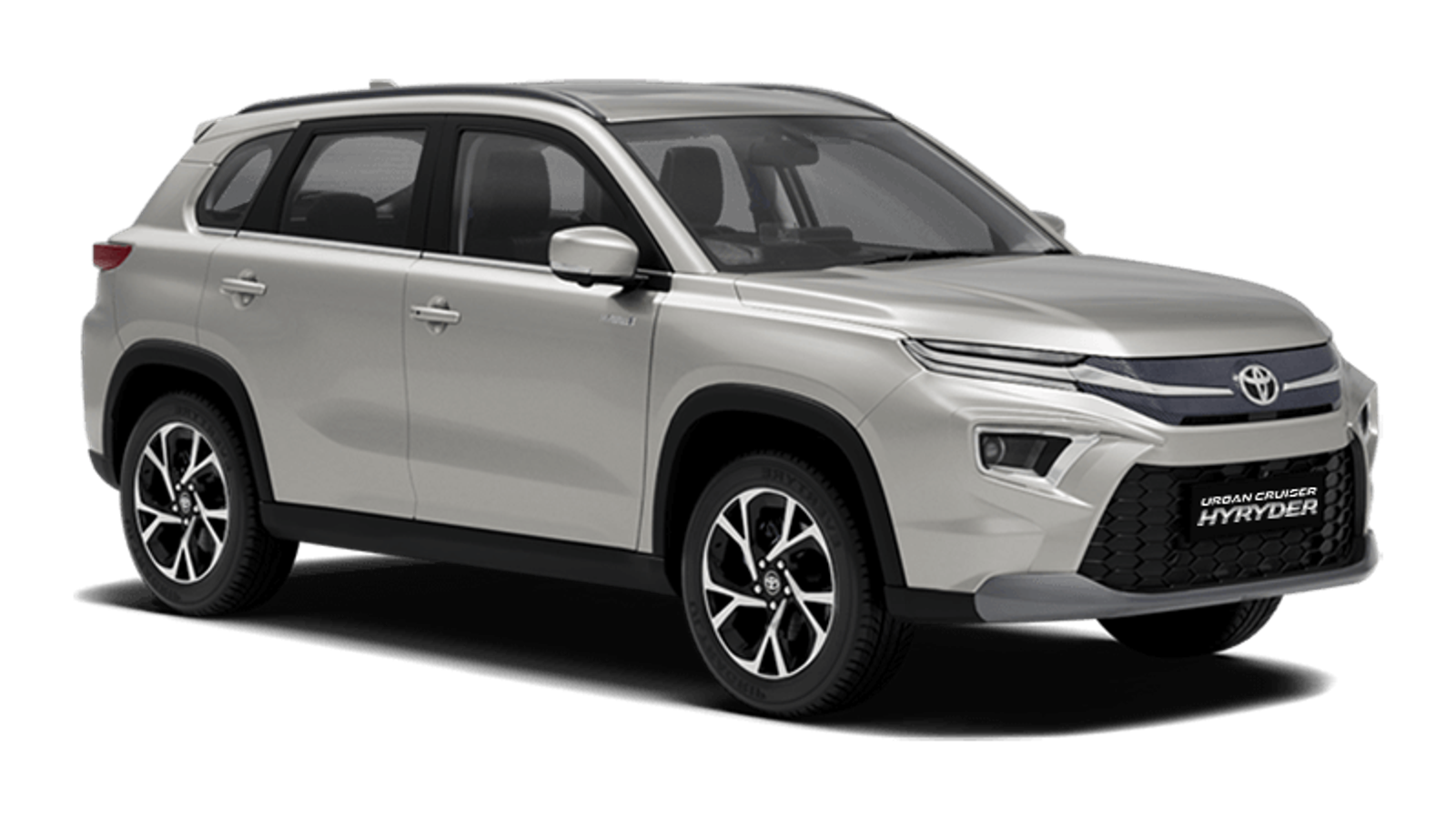
Worked Example: Importing a 2026 Toyota Urban Cruiser Hyryder to Jamaica
Here is the full landed cost of one car, a 2026 Toyota Urban Cruiser Hyryder shipped from India to Jamaica, worked out on 9 November 2026 with the customs rules in force that day. It lands at 6,715,876 JMD (about US$42,305), and duties and taxes come to 41% of its CIF value.
| Item | Share of CIF | Amount |
|---|---|---|
| Vehicle priceIPAS price for a car sourced in India | 2,460,610 JMDUS$15,500 | |
| Shipping and insuranceIndia to Jamaica | 1,974,520 JMDUS$12,438 | |
| CIF valueCost, insurance and freight: the customs value | 4,435,130 JMDUS$27,938 | |
| Customs duties and taxes | ||
| Basic customs duty (20%)20% of CIF | 887,089 JMDUS$5,588 | |
| Ad valorem excise (0.3%)Base or related charges differ from CIF; see the duty structure above1.7% of CIF | 76,676 JMDUS$483 | |
| CO₂ emissions levyest. 125 g/km0.8% of CIF | 37,624 JMDUS$237 | |
| GST/VAT (15%)15% of CIF plus the duties above18.4% of CIF | 815,494 JMDUS$5,137 | |
| Total duties and taxes41% of CIF | 1,816,882 JMDUS$11,445 | |
| Service and handling | ||
| Premium Import ServiceOptional end-to-end import management by IPAS | 184,466 JMDUS$1,162 | |
| Destination handlingPort terminal and customs clearance handling | 279,398 JMDUS$1,760 | |
| Total landed cost | 6,715,876 JMDUS$42,305 | |
Documents Required for Import
Importing a vehicle to Jamaica requires eight key documents, organised into three categories: pre-shipment, customs clearance, and post-clearance.
Pre-Shipment Documents
- Import Licence — Issued by Trade Board Limited (TBL). Must be obtained before the vehicle is shipped. Apply with vehicle title, commercial invoice, and your Taxpayer Registration Number (TRN).
- Title or Export Certificate — The original vehicle title or export certificate from the country of origin. Must clearly show the vehicle's VIN, year of manufacture, and ownership history. Salvage or rebuilt titles will result in automatic refusal of entry.
- Pre-Shipment Inspection Certificate (PSIC) — Mandatory for used vehicles imported by dealers and companies; optional but recommended for individuals. Obtained from an authorised inspection agency in the country of export before shipping, the PSIC verifies the vehicle's condition, mileage, and age.
Customs Clearance Documents
- Bill of Lading (B/L) — Issued by the shipping line or freight forwarder. The original bill of lading is required for vehicle release at Kingston Wharves.
- Commercial Invoice — Detailed invoice showing the vehicle's purchase price, description, VIN, and any additional costs. This forms the basis of the CIF valuation used by JCA for duty calculation.
- Tax Compliance Certificate (TCC) — Issued by TAJ, confirming the importer is current on all tax obligations. Required before customs clearance can proceed.
- Taxpayer Registration Number (TRN) — Every importer must have a valid TRN. This is Jamaica's universal taxpayer identifier and is required for all interactions with TAJ and JCA.
Customs Entry
- Special Declaration (Form C78 / Customs Entry) — The formal customs declaration, submitted electronically through the JSWIFT portal by a Licensed Customs Broker. Individuals cannot self-submit — engaging a licensed broker is mandatory. The C78 includes the vehicle details, CIF valuation, and calculated duty amounts for JCA assessment.
Important Notes on Documentation
- All documents must be originals or certified copies
- The JCA reserves the right to adjust the declared CIF value if it is deemed below the trade value of similar vehicles
- A Licensed Customs Broker must be engaged for all customs entries — this is not optional in Jamaica
- Document preparation should begin before shipping to avoid delays at port
Customs Clearance Timeline
The customs clearance process at Kingston Wharves follows a structured sequence. With complete documentation and no complications, the process typically takes 5-10 business days from vessel arrival to physical vehicle release.
| Stage | Duration | Description |
|---|---|---|
| Vessel arrival and port receipt | Same day | Vehicle unloaded at KWL and placed in bonded storage |
| Customs entry submission | 1-2 business days | C78 filed via JSWIFT by Licensed Customs Broker |
| JCA assessment and duty calculation | 1-3 business days | JCA reviews declaration, verifies CIF, calculates duties |
| Duty payment at TAJ | Same day | Payment made at TAJ office or via online portal |
| JCA release authorisation | 1-2 business days | Release order issued after payment confirmation |
| Physical vehicle release from KWL | Same day | Vehicle collected from Kingston Wharves |
Total estimated clearance: 5-10 business days with clean documentation
Factors That Can Cause Delays
- Incomplete or missing documentation (most common cause of delays)
- Missing or invalid Pre-Shipment Inspection Certificate (where required)
- CIF value dispute between the declared amount and JCA's assessed trade value
- Outstanding tax obligations preventing issuance of Tax Compliance Certificate
- An Import Licence that expires before the vehicle clears
- Port congestion during peak shipping periods (December-January)
- Missing bill of lading original
Bonded Storage
Vehicles are held in bonded storage at Kingston Wharves until customs clearance is completed. Storage fees accrue daily after an initial grace period. Importers should aim to complete clearance promptly to minimise storage costs.
Homologation and Vehicle Approval
Jamaica does not operate a full homologation or type-approval regime comparable to EU WVTA or Australian ADR. Instead, the country relies on a Certificate of Fitness (CoF) inspection system administered by the Island Traffic Authority (ITA).
Certificate of Fitness (CoF)
Every imported vehicle must obtain a Certificate of Fitness before it can be registered for road use. The CoF is Jamaica's roadworthiness certification, confirming that the vehicle meets minimum safety and mechanical standards.
CoF Inspection Process:
- Pay the CoF examination fee at TAJ (fee must be paid before attending the depot)
- Present the vehicle at an ITA examination depot (depots are located islandwide across all parishes)
- The vehicle undergoes a mechanical and safety inspection covering brakes, steering, lights, tyres, horn, mirrors, seatbelts, windscreen condition, and exhaust system
- If the vehicle passes, the CoF certificate is issued
CoF Fees (payable at TAJ):
| Vehicle Type | Fee |
|---|---|
| Private motor vehicle | JMD 4,500 |
| Commercial vehicle | JMD 5,400 |
| Motorcycle | JMD 4,500 |
Important (February 2025 update): ITA now mandates that importers print the TAJ online CoF receipt before attending the examination depot. Digital receipts displayed on a phone are not accepted — a physical printed receipt is required.
Emissions Testing
Jamaica does not formally test exhaust emissions at the point of entry or during the CoF inspection. There is no equivalent of a Euro 6 emissions standard or EPA compliance requirement. However, the Environmental Protection Levy (0.85% of CIF from 1 October 2026) is applied to all vehicle imports as a general environmental charge.
No Type-Approval Requirement
Unlike EU member states, Jamaica does not require an EU Certificate of Conformity, WVTA documentation, or any manufacturer-issued type-approval certificate. The CoF inspection is the sole roadworthiness gate for imported vehicles.
Registration Procedures and Costs
After obtaining the Certificate of Fitness, the vehicle must be registered with TAJ to receive licence plates and a registration certificate. The registration process involves several verification steps and associated fees.
Registration Steps
- Obtain Certificate of Fitness — From ITA examination depot (see Homologation section above)
- Obtain motor vehicle insurance — Mandatory third-party liability insurance at minimum. Insurance must be in force before registration can proceed.
- Submit registration documents to TAJ — Including CoF, insurance certificate, TRN, customs clearance documents (C78), and the original vehicle title
- Pay registration and verification fees — See fee schedule below
- Receive licence plates and registration certificate — Issued by TAJ upon completion of all payments and verifications
Verification and Registration Fees
Several verification procedures may be required during the registration process, each carrying its own fee:
| Service | Fee |
|---|---|
| Chassis Verification | JMD 7,000 |
| Custom Verification | JMD 7,000 |
| Verify Year of Manufacture | JMD 12,000 |
| Structural Integrity Verification | JMD 20,000 |
| Valuation Report | JMD 3,000 |
| Engravement (chassis/engine ID) | JMD 10,000 |
Not all verification services are required for every vehicle. The JCA or ITA will advise which verifications are necessary based on the vehicle's documentation and condition.
Annual Licence Renewal
Once registered, vehicles must maintain current road licence and insurance. Road licences are renewed annually through TAJ. Insurance must remain continuously in force — driving without valid insurance is a criminal offence in Jamaica.
Third-Party Motor Vehicle Insurance
Jamaica mandates minimum third-party liability insurance for all registered vehicles. Comprehensive insurance is available from local providers but is not legally required. Insurance premiums vary based on the vehicle's value, type, engine size, and the driver's history.
Frequently Asked Questions
How much does it cost to import a car to Jamaica?
The total import cost depends on the vehicle's CIF value, engine displacement, fuel type, and whether the vehicle is new or used. For a conventional petrol car of 1,001-2,000 cc, expect about 68-71% in cumulative taxes and fees on top of the CIF value — about JMD 1.41 million on a JMD 2 million car. A new electric vehicle three years old or less pays about 12-14%. A petrol car over 2,000 cc pays about 82-85%, and a large limousine over 110%. Use CarImport.AI to calculate the exact landed cost for your specific vehicle.
What is the age limit for importing a car to Jamaica?
Cars, station wagons and SUVs (up to 8 seats) must be no more than 6 years old from the date of manufacture, as must pick-ups up to 1,500 kg unladen. Heavier pick-ups and small trucks (1,501-3,000 kg unladen) and panel vans can be up to 10 years old, and larger commercial vehicles have progressively longer limits. Motorcycles have a 5-year limit. There are no age-limit exemptions for classic cars, collector vehicles, or EVs.
Can I import a left-hand drive vehicle to Jamaica?
Jamaica drives on the left and RHD is the standard. IPAS treats right-hand drive as required for vehicles imported to Jamaica. We have not found an LHD prohibition in the Trade Board's motor vehicle import policy, so if you want to import an LHD vehicle, confirm the import permit conditions with the Trade Board before you buy — and expect visibility challenges when overtaking on two-lane roads.
What are Jamaica's EV import incentives?
Electric vehicles (battery-electric and fuel-cell) are zero-rated for GCT and pay no SCT, new or used. Those 3 years old or less from manufacture pay 10% Import Duty — about 12-14% of CIF in total with the levy and fees — while older EVs pay 30% Import Duty, about 32-35% in total. Hybrids and plug-in hybrids pay 20% duty and 15% GCT with no SCT, about 41-43%. Conventional petrol and diesel cars pay roughly 55-85%.
Do I need a customs broker in Jamaica?
Yes, engaging a Licensed Customs Broker is mandatory. All customs entries (Form C78) must be submitted electronically through the JSWIFT portal by a licensed broker. Individuals cannot self-submit customs declarations. Your broker will also assist with CIF valuation, duty calculation, and document preparation.
Are salvage-title vehicles allowed into Jamaica?
No. Jamaica prohibits damaged and salvaged vehicles irrespective of the extent or cause of damage, including salvage-title, rebuilt-title, flood-damaged, and cut-and-join vehicles. Any vehicle arriving with a salvage designation will be refused entry and must be re-exported at the importer's expense.
How long does it take to clear a vehicle through customs in Jamaica?
With complete documentation, the process typically takes 5-10 business days from vessel arrival to physical vehicle release at Kingston Wharves. The main steps are: C78 submission via JSWIFT (1-2 days), JCA assessment (1-3 days), duty payment at TAJ (same day), and JCA release authorisation (1-2 days). Delays most commonly result from incomplete documentation or CIF value disputes.
Can I import more than one vehicle to Jamaica?
An individual may import one motor car and one light commercial vehicle (or two light commercial vehicles) every three years, and must keep each vehicle for at least a year. Licensed motor vehicle dealers are exempt from this restriction. Public passenger vehicle operators may also import directly. If you need to import multiple vehicles, consider applying for a dealer licence through the appropriate authorities.
Is there a related guide for other Caribbean countries?
Yes. For buyers exploring import options across the Caribbean, see our comprehensive guide to importing a car to Trinidad and Tobago, which covers Trinidad's duty structure, MVT calculation, age restrictions, and registration process.
Ready to Import?
Jamaica's vehicle import market offers genuine opportunities — from strong EV incentives (about 12-14% total tax for a new electric vehicle) to established shipping lanes from Japan, the USA, and the UK. Whether you are importing a fuel-efficient Japanese hybrid, a pick-up truck, or a brand-new electric SUV, accurate cost calculations and proper documentation are essential to avoiding delays and unexpected charges at Kingston Wharves.
IPAS provides two tools to plan and execute your vehicle import to Jamaica:
CarImport.AI — Source a vehicle through IPAS and calculate the full landed cost to Jamaica, including Import Duty, SCT, GCT, the Environmental Protection Levy, shipping, and all fees. Get exact duty rates for your specific vehicle, engine size, and fuel type.
IPAS EXPRESS Pro Car Shipping — Already have a vehicle? Get instant shipping quotes to Kingston or Montego Bay, including sea freight, container options, RoRo, and port handling costs.
Ready to Import Your Vehicle?
Two tools, two use cases. Pick the one that fits your needs.
Source a vehicle through IPAS and calculate the full landed cost — customs duties, shipping, and compliance — to destinations across the world.
Calculate Landed CostIPAS Express
Already have a vehicle? Get instant shipping quotes — sea freight, air freight, or RoRo — for one car or multiple vehicles worldwide.
Get Shipping Quote