
Introduction
Importing a car to Kazakhstan in 2026 costs 15% customs duty, 16% VAT on the duty-inclusive value, 100 KZT per cc excise above 3,000 cc, a 10% luxury excise from KZT 77.85 million, plus recycling and first-registration fees. Only left-hand-drive cars are allowed, and private individuals can import only cars at least three years old.
Kazakhstan is the largest economy in Central Asia and a founding member of the Eurasian Economic Union (EAEU), the customs and trade bloc it shares with Russia, Belarus, Armenia, and Kyrgyzstan. Because of that membership, vehicle imports into Kazakhstan are governed by a two-layer rulebook: EAEU law — most importantly Technical Regulation TR CU 018/2011, "On the Safety of Wheeled Vehicles" — sits on top of Kazakhstan's own national customs, tax, and registration regulations. Anyone planning to bring a car into the country has to satisfy both layers before the vehicle can be cleared and plated. Unlike Russia and Belarus, Kazakhstan does not tax private imports at the EAEU flat per-cc "unified rate": a private individual pays the same full cascade of duty, excise and VAT as a commercial importer.
The market itself is substantial and car-hungry. With a population of roughly 20 million spread across a vast territory and limited public transport outside the major cities, private vehicle ownership is high and demand for imported cars is strong. However, the regulatory environment has tightened sharply since late 2024. New rules now cap private individuals at one imported vehicle per year, bar individuals from importing cars younger than three years, restrict the categories an individual may import, mandate minimum emission and safety standards, and — critically for buyers used to Japanese auctions — prohibit right-hand-drive vehicles entirely.
This guide walks through every stage of importing a car to Kazakhstan in 2026: what you are allowed to bring in, the Caspian seaports and land crossings that handle vehicle traffic, the customs duty, VAT, excise and recycling-fee structure, the documents you will need, homologation and emissions compliance under EAEU rules, the customs clearance timeline, and the final registration process. Where useful, it flags the 2025–2026 regulatory changes that catch importers out.
Quick Facts
| Detail | Information |
|---|---|
| Customs Authority | State Revenue Committee, Ministry of Finance |
| Customs Platform | Keden national declaration system + eGov.kz |
| Registration Authority | "Government for Citizens" State Corporation (via eGov.kz) |
| Trade Bloc | Eurasian Economic Union (EAEU) |
| Traffic Side | Right-hand traffic (drive on the right) |
| Steering Requirement | Left-Hand Drive (LHD) only — RHD prohibited |
| Customs Duty (non-EAEU passenger car) | 15% of customs value (EAEU Common Customs Tariff); no FTA lowers this for cars from outside the EAEU |
| Customs Duty (EAEU-made vehicle) | 0% — only for vehicles manufactured inside the union; transit through Russia or Kyrgyzstan does not count |
| VAT | 16% from 1 January 2026 (raised from 12% under the new Tax Code) |
| Excise Tax (displacement) | 100 KZT per cc on the FULL displacement — engines above 3,000 cc only; BEVs exempt |
| Excise Tax (luxury) | 10% of customs value on a passenger car worth KZT 77,850,000 (18,000 MRP) or more — new from 1 January 2026 |
| Battery EV Customs Duty | 15% (standard EAEU line); a Kazakhstan-only 0% route (1 BEV per person per year, ring-fenced to Kazakhstan) may be available but must be confirmed |
| Recycling (Utilisation) Fee | 50 MRP × coefficient (engine size for cars, gross weight for light trucks); 0 for BEVs |
| First-Registration Fee | Age-banded: cars 0.25 MRP (up to 2 yr) / 50 MRP (2–3 yr) / 500 MRP (3 yr+); BEVs 0.25 / 25 / 250 MRP; pickups and vans (N1) up to 2,500 MRP |
| Customs Clearance Fee | Flat 6 MRP (25,950 KZT in 2026) |
| MRP (2026 index) | 4,325 KZT — the unit most fixed fees are expressed in |
| Minimum Emission Standard | Euro-4 or higher |
| Mandatory Safety Equipment | ABS, frontal airbag, ISOFIX child-seat mounts, daytime running lights |
| Individual Import Limit | One vehicle per year, for personal use only; the car must be at least 3 years old |
| Main Seaports | Aktau and Kuryk (Caspian Sea, RoRo) |
| Compliance Regime | TR CU 018/2011 (EAEU type approval / SBKTS) |
| Currency | Kazakhstani Tenge (KZT) |
Types of Cars That Can Be Imported
Since 20 October 2025, the categories an individual may import for personal use are tightly defined. Permitted categories are passenger cars (excluding special medical vehicles), motorcycles, mopeds and scooters, ATVs, snowmobiles and other off-road vehicles, passenger vehicles with up to 12 seats including the driver, and trucks up to 5 tonnes gross vehicle weight. Buses and heavier trucks can no longer be imported by private individuals at all — those categories are reserved for legal entities and registered entrepreneurs holding the appropriate EAEU safety documentation.
New Vehicles
Since 1 December 2024, a private individual cannot import a car younger than three years. Cars under three years old need a whole-vehicle type approval (OTTC) under TR CU 018/2011, and that approval can be obtained only by legal entities. In practice, a new car enters Kazakhstan through a company or registered importer; an individual imports cars aged three years or more through the single-vehicle SBKTS route. New cars imported by a legal entity pay full duty, VAT, and (where applicable) excise.
Used Vehicles
Used vehicles are permitted, but the path is narrower than it used to be. Used cars are cleared using a single-vehicle conformity certificate (SBKTS), which is VIN-specific and issued by an EAEU-accredited laboratory. Recent amendments now restrict the issuance of SBKTS for models that are not included in the EEC (Eurasian Economic Commission) registry, which effectively blocks the import of vehicles that fall outside the approved list. Buyers should confirm that the specific make, model, and model year can obtain conformity documentation before committing to a purchase.
Note the age squeeze for private buyers: the three-year minimum pushes an individual to a car aged three years or more, which is exactly where the first-registration fee for a passenger car jumps from 50 MRP to 500 MRP (2,162,500 KZT).
Steering — LHD Only
This is the single most important rule for prospective importers. Kazakhstan drives on the right and accepts only left-hand-drive vehicles for customs clearance and registration. The import and registration of right-hand-drive cars is prohibited, and Kazakhstan has separately banned the import of disassembled right-hand-drive "constructors" — a scheme previously used to circumvent the registration ban. Right-hand-drive vehicles from Japan, the UK, or other RHD markets are not a viable option for Kazakhstan.
Because Kazakhstan requires left-hand-drive vehicles, cars sourced from LHD markets such as the USA, Germany, the UAE, Belgium, and South Korea need no steering conversion — avoiding the cost and complexity that RHD destinations face.
Electric Vehicles
Battery-electric vehicles (HS 8703.80) remain the cheapest powertrain to import, but less so than before. The standard customs line carries 15% customs duty with full EAEU free-circulation rights. A Kazakhstan-only route at 0% customs duty may also be available — capped at one BEV per person per calendar year and "ring-fenced" to Kazakhstan, meaning the vehicle cannot later be moved into another EAEU state without paying the 15% duty difference. That 0% route has not been re-confirmed against its legal instrument, so IPAS quotes 15% by default and you should confirm the 0% option with customs before relying on it. Remember too that a new BEV is under three years old, so an individual cannot import one directly.
Either way, BEVs are exempt from excise and pay a 0 recycling fee. The first-registration fee is halved in the 2–3 year and 3-years-plus bands (25 and 250 MRP instead of 50 and 500); for a car up to two years old it is the same 0.25 MRP as any other car. Two concessions ended at the start of 2026: the EAEU 0%-duty EV quota for Kazakhstan (15,000 units) expired on 31 December 2025 and Kazakhstan is not part of the 2026 extension, and the 0% VAT break for EVs ended on 1 January 2026, so battery EVs now pay the standard 16% VAT.
Hybrids are treated very differently from BEVs. Both conventional hybrids (HEV) and plug-in hybrids (PHEV) are taxed exactly like an internal-combustion car of the same engine displacement — full 15% duty, full VAT, the full engine-based recycling fee, and excise if the engine exceeds 3,000 cc. PHEVs also get none of the BEV registration-fee discount. Do not assume "electrified" means "cheaper" — only pure battery EVs receive the concessions.
Cars You Can Import to Kazakhstan
Each card is a full landed-cost calculation: the car's price, shipping, every duty and tax, and handling, worked out on 9 November 2026 with the rules in force that day. All are left-hand drive to suit Kazakhstan's roads. Tap a car to see its full breakdown, or open it to change the trim, colour or port.
More cars you can import to Kazakhstan
New cars IPAS sources to order that meet Kazakhstan's import rules. Prices are ex works, before shipping and duty. Open a car to work out its full landed cost.
 LHDBackorder2026
Toyota Land Cruiser
SUV · 2 VariantsHybridFrom $69,100Ex Works, USA LHDBackorder2026
Toyota Crown Signia
SUV · 2 VariantsHybridFrom $53,300Ex Works, USA LHDBackorder2026
Toyota Land Cruiser 79 Double Cab
Pickup · 5 VariantsDieselFrom $59,100Ex Works, UAE LHDBackorder2026
Lexus RZ
SUV · 5 VariantsElectricFrom $52,600Ex Works, Canada LHDBackorder2026
Lexus LC 500
Coupe · 3 VariantsPetrolFrom $102,200Ex Works, Canada LHDBackorder2026
Lexus GX 550
SUV · 6 VariantsPetrolFrom $76,300Ex Works, Canada LHDBackorder2026
Chevrolet Corvette E-Ray Convertible
Convertible · 3 VariantsHybridFrom $138,000Ex Works, USA LHD/C-RHDBackorder2026
Chevrolet Silverado 1500
Pickup · 29 VariantsPetrol · DieselFrom $57,700Ex Works, USA LHD/C-RHDBackorder2026
Chevrolet Silverado 3500 HD DRW
Pickup · 8 VariantsPetrol · DieselFrom $65,800Ex Works, USA LHD/C-RHDBackorder2026
Ram 1500 RHO
Pickup · 1 VariantPetrolFrom $86,500Ex Works, USA LHD/C-RHDBackorder2027
Lincoln Navigator L
SUV · 6 VariantsPetrolFrom $111,600Ex Works, USA LHDBackorder2026
Nissan Patrol
SUV · 11 VariantsPetrolFrom $74,700Ex Works, UAE LHD/C-RHDBackorder2026
Cadillac Escalade ESV
SUV · 11 VariantsPetrolFrom $112,900Ex Works, USA LHDBackorder2026
Jeep Wrangler
SUV · 11 VariantsPetrolFrom $43,200Ex Works, USA LHD/C-RHDBackorder2025
Ford Bronco
SUV · 3 VariantsPetrolFrom $62,500Ex Works, USA LHDBackorder2026
Mercedes-Benz S-Class
Sedan · 2 VariantsHybridFrom $131,800Ex Works, Canada
Seaports, Border Crossings and Airports
Kazakhstan is landlocked with respect to the open ocean — its only maritime frontier is the Caspian Sea — so the logistics of getting a vehicle into the country differ from a typical coastal market. Most vehicles arrive overland by road or rail from neighbouring EAEU and non-EAEU states; a smaller share arrives by RoRo ferry across the Caspian.
Caspian Seaports
| Port | Location | Vehicle Handling |
|---|---|---|
| Aktau International Sea Commercial Port | Mangystau region (eastern Caspian) | RoRo ferries and general cargo, including vehicles; integrated with customs |
| Kuryk Ferry Complex | South of Aktau | Dedicated RoRo berths for motor vehicles; 24/7 customs and border control |
Aktau and Kuryk together form Kazakhstan's Caspian gateway, connected by ferry to Baku (Azerbaijan) and ports in Russia and Iran. They are the primary maritime route for vehicles arriving via the Trans-Caspian corridor.
Land Border Crossings
The majority of imported vehicles enter Kazakhstan by road or rail. All goods, including vehicles, must be declared and cleared at approved customs clearance points, which include the major road and rail border posts. Only vehicles actually manufactured inside the EAEU (proven by their electronic vehicle passport) are free of customs duty; a car made outside the union pays full duty even if it reaches Kazakhstan through Russia or Kyrgyzstan. The old Kyrgyzstan re-routing loophole is closed: Kazakhstan charges its own recycling and first-registration fees at first registration wherever in the EAEU the car was cleared.
Airports
International airports such as Almaty and Astana are also approved customs clearance points and can handle air-freighted vehicles. There are no vehicle-specific rules unique to air imports, but the cost generally makes air freight impractical for standard passenger cars.
Restrictions on Vehicle Import for Individuals
Kazakhstan applies a strict set of limits to private importers, and these have become noticeably tighter over the past two years.
- One vehicle per year. Since 1 December 2024, an individual may import only one vehicle per calendar year, and only for personal use. "Personal use" is explicitly defined as non-commercial — not linked to any business activity. Using a personally imported vehicle commercially can be treated as a regulatory violation.
- Category limits. After the October 2025 changes, individuals cannot import buses, heavy trucks or special-purpose vehicles. Only passenger cars, motorcycles, small passenger vehicles up to 12 seats, and light trucks up to 5 tonnes remain open to private importers. Commercial buses and heavier trucks are restricted to legal entities with recognised safety certificates.
- Minimum age of three years. Since 1 December 2024, an individual cannot import a vehicle younger than three years, because the type approval (OTTC) needed below that age is issued only to legal entities. Individuals import cars aged three years or more through the SBKTS route.
- Conformity-document availability. For used vehicles, the SBKTS single-vehicle conformity route is now closed for models outside the EEC registry. If conformity documentation cannot be obtained, the vehicle cannot be cleared or registered.
- RHD prohibition. Right-hand-drive vehicles cannot be imported or registered, and the import of disassembled RHD "constructors" is banned.
- Residency and identity. Customs clearance and registration require a valid Kazakhstani identity document; foreign nationals should confirm their eligibility and any residency requirements before importing.
Duty Structure Overview
Kazakhstan layers up to seven charges on an imported car. Four are percentage- or volume-based (Customs Duty, VAT, the displacement excise for big engines and the luxury excise for expensive cars); three are fixed amounts in tenge tied to the MRP "monthly calculation index" (the Customs Clearance Fee, the Recycling/Utilisation Fee, and the First-Registration Fee). The MRP for 2026 is 4,325 KZT. The figures below reflect Kazakhstan's customs rules as encoded in IPAS's calculator — the exact figure for your vehicle depends on its HS code, engine size, fuel type, age, vehicle category and customs value.
The customs value is the CIF price converted to tenge at the National Bank of Kazakhstan rate on the declaration date. Customs can raise it to a minimum set by its price-information directory if the declared price looks low.
The full charge cascade
| # | Charge | Rate | Base | Notes |
|---|---|---|---|---|
| 1 | Customs Clearance Fee | 6 MRP (25,950 KZT) | Flat | Independent line; not in the VAT base |
| 2 | Customs Duty | 15% | Customs (CIF) value | 0% for EAEU-made vehicles; 0% for BEVs only on the Kazakhstan-only route |
| 3 | Excise — displacement | 100 KZT per cc | Full engine displacement | Engines above 3,000 cc; cars, and pickups built on a passenger-car chassis; not BEVs |
| 4 | Excise — luxury | 10% | Customs value | Passenger cars worth KZT 77,850,000 (18,000 MRP) or more; stacks with line 3 |
| 5 | VAT | 16% | CIF + Duty + both excises | Raised from 12% on 1 January 2026 |
| 6 | Recycling (Utilisation) Fee | 50 MRP × coefficient | Engine size (gross weight for light trucks) | 0 for BEVs; does not depend on age |
| 7 | First-Registration Fee | 0.25 to 2,500 MRP | Vehicle category and age | Age counted including the year of manufacture |
VAT cascades on the running subtotal (CIF + Duty + Excise). The three fixed fees sit outside the VAT base and are paid in tenge.
Rates by vehicle type
| Vehicle type | HS code | Customs Duty | Excise | VAT |
|---|---|---|---|---|
| Petrol / diesel car ≤3,000 cc | 8703.2x / 8703.3x | 15% | None (luxury excise if KZT 77.85 Mn+) | 16% |
| Petrol / diesel car >3,000 cc | 8703.24 / 8703.33 | 15% | 100 KZT/cc (full displacement), plus luxury excise if KZT 77.85 Mn+ | 16% |
| Hybrid (HEV) and plug-in hybrid (PHEV) | 8703.40 / .50 / .60 / .70 | 15% | If >3,000 cc; luxury excise if KZT 77.85 Mn+ | 16% |
| Battery-electric (BEV) | 8703.80 | 15% (0% Kazakhstan-only route, if confirmed) | None on displacement; luxury excise if KZT 77.85 Mn+ | 16% |
| Goods vehicle / double-cab pickup | 8704 | 15% | 100 KZT/cc if >3,000 cc (under review); no luxury excise | 16% |
Double-cab pickups (Hilux, Ranger and the like) are classified under HS 8704 when the goods payload exceeds the passenger payload (68 kg per seat). That moves the recycling fee onto a gross-vehicle-weight scale and the first-registration fee onto the N1 (light commercial) schedule, which climbs to 2,500 MRP (10,812,500 KZT) at five years and older. HS 8704 vehicles are outside the luxury excise. Whether the displacement excise reaches a body-on-frame pickup over 3,000 cc is not yet settled, so IPAS charges it and marks it subject to confirmation. A pickup that fails the payload test is taxed as a passenger car under HS 8703.
Recycling (Utilisation) Fee — by engine size
The recycling fee is 50 MRP (216,250 KZT in 2026) multiplied by a coefficient. For petrol, diesel and hybrid cars the coefficient is set by engine displacement, and the vehicle's age makes no difference:
| Engine displacement | Coefficient | Fee (2026) | ≈ USD |
|---|---|---|---|
| ≤1,000 cc | 1.5 | 324,375 KZT | ~$630 |
| 1,001–2,000 cc | 3.5 | 756,875 KZT | ~$1,470 |
| 2,001–3,000 cc | 5.0 | 1,081,250 KZT | ~$2,100 |
| >3,000 cc | 11.5 | 2,486,875 KZT | ~$4,830 |
| Battery-electric (BEV) | 0 | 0 KZT | $0 |
| Light truck / pickup (N1), gross weight ≤2.5 t | 3.5 | 756,875 KZT | ~$1,470 |
| Light truck / pickup (N1), gross weight 2.5–3.5 t | 7.5 | 1,621,875 KZT | ~$3,150 |
(USD figures at roughly 515 KZT to the US dollar. Customs uses the National Bank of Kazakhstan rate on the declaration date.)
First-Registration Fee — by category and age
| Vehicle age | Passenger car (M1) | Battery EV (M1) | Pickup / van (N1) |
|---|---|---|---|
| Up to 2 years | 0.25 MRP — 1,081 KZT (~$2) | 0.25 MRP — 1,081 KZT (~$2) | 0.25 MRP — 1,081 KZT (~$2) |
| 2–3 years | 50 MRP — 216,250 KZT (~$420) | 25 MRP — 108,125 KZT (~$210) | 240 MRP — 1,038,000 KZT (~$2,015) |
| 3 years and older (cars) / 3–5 years (N1) | 500 MRP — 2,162,500 KZT (~$4,200) | 250 MRP — 1,081,250 KZT (~$2,100) | 350 MRP — 1,513,750 KZT (~$2,940) |
| 5 years and older (N1) | — | — | 2,500 MRP — 10,812,500 KZT (~$21,000) |
Age is counted including the year of manufacture. Note the steep jump for passenger cars over three years old — the age at which private individuals are allowed to import — and the very high N1 fee for pickups five years and older. The vehicle's category (M1 or N1) is the one stated on its conformity certificate.
Worked examples — who is importing?
Examples 1 to 3 are new cars, so they assume import by a legal entity: a private individual cannot import a car under three years old. Example 4 shows what an individual pays on a car aged three years or more.
Worked example 1 — Toyota Camry 2.5L petrol (2,487 cc), new, from the USA, CIF US$30,000
| Charge | Calculation | Amount |
|---|---|---|
| Customs Clearance Fee | 6 MRP | 25,950 KZT (~$50) |
| Customs Duty (15%) | $30,000 × 0.15 | $4,500 |
| Excise | engine ≤3,000 cc; value below luxury threshold | $0 |
| VAT (16%) | ($30,000 + $4,500) × 0.16 | $5,520 |
| Recycling Fee (coeff 5.0) | 50 MRP × 5.0 | 1,081,250 KZT (~$2,100) |
| First-Registration Fee (up to 2 yr) | 0.25 MRP | 1,081 KZT (~$2) |
| Indicative import charges | duty + VAT + fees | ≈ US$12,170 (~41% of CIF) |
Worked example 2 — Toyota Land Cruiser 4.0L petrol (3,956 cc), new, from the UAE, CIF US$70,000
| Charge | Calculation | Amount |
|---|---|---|
| Customs Duty (15%) | $70,000 × 0.15 | $10,500 |
| Excise (100 KZT/cc) | 3,956 cc × 100 KZT | 395,600 KZT (~$770) |
| Luxury excise | value below KZT 77,850,000 | $0 |
| VAT (16%) | ($70,000 + $10,500 + $770) × 0.16 | ~$13,000 |
| Recycling Fee (coeff 11.5) | 50 MRP × 11.5 | 2,486,875 KZT (~$4,830) |
| Clearance + Registration | 6 MRP + 0.25 MRP | ~$50 |
| Indicative import charges | ≈ US$29,150 (~42% of CIF) |
The big-engine premium is the excise (100 KZT on every cubic centimetre) plus the top recycling-fee band.
Worked example 3 — Tesla Model Y (BEV), new, from the USA, CIF US$50,000
| Charge | Standard EAEU line | Kazakhstan-only 0% route (if confirmed) |
|---|---|---|
| Customs Duty | 15% → $7,500 | 0% → $0 |
| Excise | $0 (electric, no engine) | $0 |
| VAT (16%) | ($50,000 + $7,500) × 0.16 = $9,200 | $50,000 × 0.16 = $8,000 |
| Recycling Fee | BEV coefficient 0 → $0 | $0 |
| Clearance + Registration (up to 2 yr) | 6 MRP + 0.25 MRP ≈ $50 | ≈ $50 |
| Indicative import charges | ≈ US$16,750 (~34% of CIF) | ≈ US$8,050 (~16% of CIF) |
Even on the standard line, a battery EV avoids the excise and the recycling fee. The 0% route would roughly halve the bill again, but it carries the one-per-year cap and the Kazakhstan-only ring-fence, and it is not yet confirmed — which is why IPAS quotes the 15% line by default.
Worked example 4 — used petrol SUV, 2.4L (2,400 cc), over 3 years old, imported by a private individual, customs value 12,000,000 KZT (~US$23,300)
| Charge | Calculation | Amount |
|---|---|---|
| Customs Clearance Fee | 6 MRP | 25,950 KZT |
| Customs Duty (15%) | 12,000,000 × 0.15 | 1,800,000 KZT |
| Excise | engine ≤3,000 cc | 0 |
| VAT (16%) | 13,800,000 × 0.16 | 2,208,000 KZT |
| Recycling Fee (coeff 5.0) | 50 MRP × 5.0 | 1,081,250 KZT |
| First-Registration Fee (3 yr+) | 500 MRP | 2,162,500 KZT |
| Indicative import charges | 7,277,700 KZT (~US$14,130, ~61% of customs value) |
On a cheaper used car the 500 MRP registration fee dominates — it is larger than the recycling fee and almost as large as the VAT.
Worked example 5 — the luxury excise: petrol SUV, 4.0L (4,000 cc), 3 years old, customs value 90,000,000 KZT (~US$174,800)
| Charge | Calculation | Amount |
|---|---|---|
| Customs Clearance Fee | 6 MRP | 25,950 KZT |
| Customs Duty (15%) | 90,000,000 × 0.15 | 13,500,000 KZT |
| Excise — displacement | 4,000 cc × 100 KZT | 400,000 KZT |
| Excise — luxury (10%) | 90,000,000 × 0.10 | 9,000,000 KZT |
| VAT (16%) | 112,900,000 × 0.16 | 18,064,000 KZT |
| Recycling Fee (coeff 11.5) | 50 MRP × 11.5 | 2,486,875 KZT |
| First-Registration Fee (3 yr+) | 500 MRP | 2,162,500 KZT |
| Indicative import charges | 45,639,325 KZT (~US$88,600, ~51% of customs value) |
Without the luxury excise the same car would pay 35,199,325 KZT (about 39%). The threshold of KZT 77,850,000 is roughly US$151,000 of customs value, so high-trim Land Cruisers, Escalades, G-Class and Range Rover models can cross it. The 10% applies to the whole value, not just the part above the threshold.
These figures use IPAS's Kazakhstan customs intelligence. Get the exact, up-to-the-day landed cost for your specific vehicle, engine size and origin using CarImport.AI.
EAEU-origin vehicles
A vehicle manufactured within the EAEU (for example, one built in Russia) enters Kazakhstan at 0% customs duty under the union's free-circulation rules. VAT, excise (if applicable) and the three fixed fees still apply. No free-trade agreement lowers the 15% duty on cars from outside the union.
Worked Example: Importing a 2026 Cadillac Escalade to Kazakhstan
Here is the full landed cost of one car, a 2026 Cadillac Escalade shipped from the USA to Kazakhstan, worked out on 9 November 2026 with the customs rules in force that day. It lands at 77,772,604 KZT (about US$173,559), and duties and taxes come to 39.7% of its CIF value.
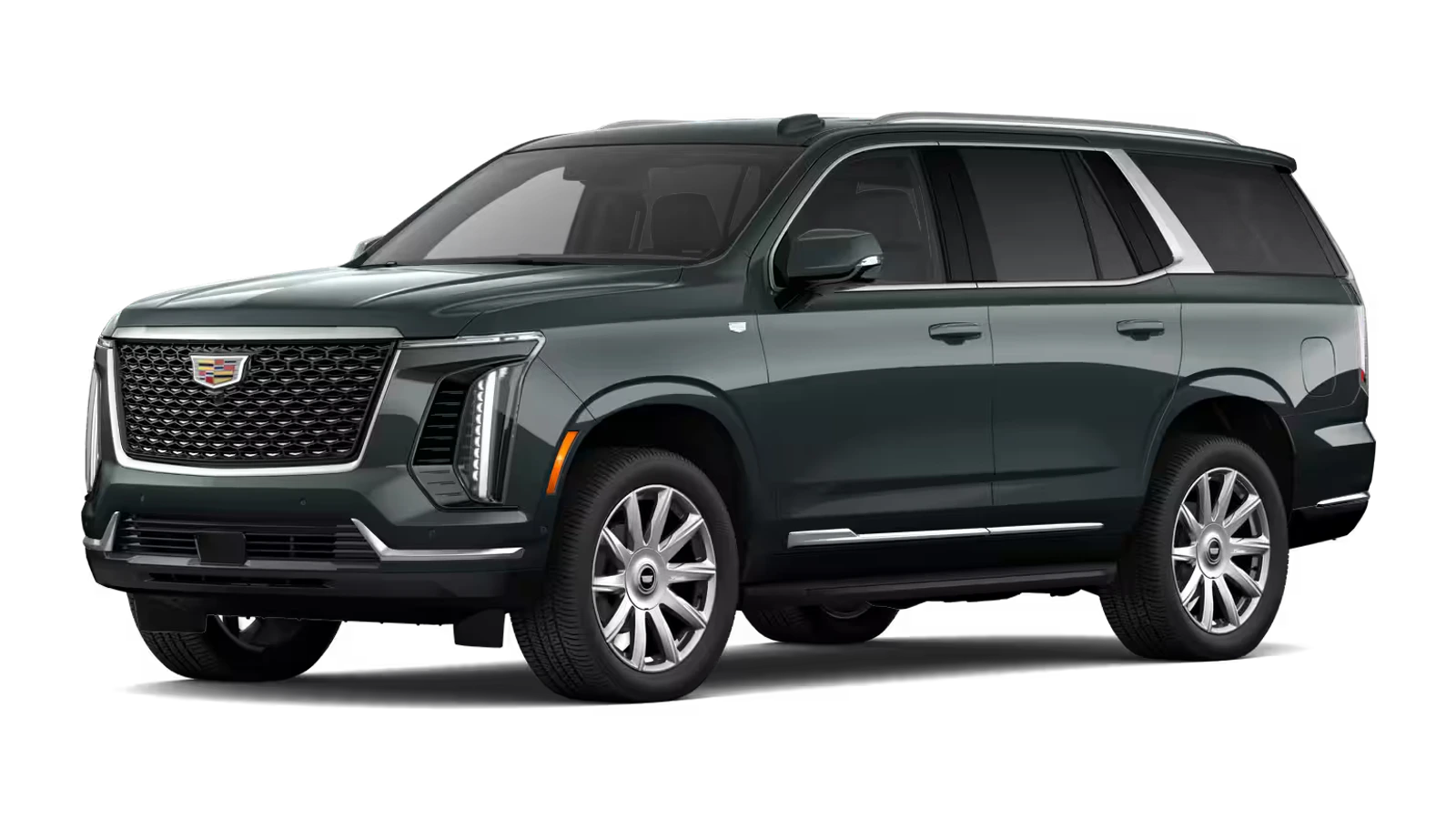
| Item | Share of CIF | Amount |
|---|---|---|
| Vehicle priceIPAS price for a car sourced in the USA | 48,977,844 KZTUS$109,300 | |
| Shipping and insuranceUSA to Kazakhstan | 2,622,757 KZTUS$5,853 | |
| CIF valueCost, insurance and freight: the customs value | 51,600,601 KZTUS$115,153 | |
| Customs duties and taxes | ||
| Basic customs duty (15%)15% of CIF | 7,740,112 KZTUS$17,273 | |
| Additional duty (0%)Base or related charges differ from CIF; see the duty structure above6.1% of CIF | 3,134,044 KZTUS$6,994 | |
| GST/VAT (16%)Base or related charges differ from CIF; see the duty structure above18.6% of CIF | 9,593,922 KZTUS$21,410 | |
| Total duties and taxes39.7% of CIF | 20,468,078 KZTUS$45,677 | |
| Service and handling | ||
| Premium Import ServiceOptional end-to-end import management by IPAS | 2,125,809 KZTUS$4,744 | |
| Destination handlingPort terminal and customs clearance handling | 3,578,116 KZTUS$7,985 | |
| Total landed cost | 77,772,604 KZTUS$173,559 | |
Documents Required for Import
All paperwork should be prepared before the vehicle is shipped. Customs clearance is filed through the Keden national platform (or at the customs post), and registration is handled separately afterwards.
Customs Clearance Documents
- Vehicle Customs Declaration (VCD) — submitted via the Keden platform or at the customs post
- Proof of ownership — sales contract, invoice, or bill of sale
- Technical documents — the vehicle passport / registration document from the origin country
- Certificate of conformity to TR CU 018/2011 (VTA coverage or an SBKTS, as applicable)
- Proof of payment (or security) for customs duties, taxes, and other charges
- Identity document of the importer
- Transport / shipping documents (bill of lading, CMR, or rail consignment note)
- Documents on the vehicle's origin
- Any documents confirming compliance with prohibitions and restrictions (technical and environmental standards, exemptions)
Documents Required for Registration (after clearance)
- Identity document
- Proof of payment of the registration fee and state duties (plates + registration certificate)
- Certificate confirming payment of the utilisation (recycling) fee
- Electronic Vehicle Passport (EVPS)
- Customs documents (for vehicles cleared from abroad)
- Prior registration documents, if any
- Certificate of compliance where design changes were made
- Vehicle inspection report
Customs Clearance Timeline
| Stage | Typical Duration | Notes |
|---|---|---|
| Arrival notification / short declaration | Within 24 hours of border crossing | Filed when the vehicle is placed into temporary storage |
| Full customs declaration | Within 30 days of arrival | Statutory deadline to file the complete declaration |
| Customs processing & risk control | From about 1 working day | Timing depends on document quality and risk-management checks |
| Duty, VAT, fee payment & release | Same day to 1 business day | Vehicle released once payment is confirmed |
| Registration & plate issuance | Often same day | Achievable when all documents are in order |
In practice, a vehicle with complete and accurate documentation can move from declaration to released-and-registered within a few working days. Delays usually trace back to missing conformity documents, valuation disputes, or incomplete paperwork rather than to the customs authority itself.
Homologation and Vehicle Approval
Every vehicle placed into circulation in Kazakhstan must comply with EAEU Technical Regulation TR CU 018/2011, "On the Safety of Wheeled Vehicles." Compliance is demonstrated through one of two conformity-assessment routes, and for many tariff codes a conformity document must be presented with the customs declaration.
Type Approval (VTA / OTTC) — Serial and New Imports
For vehicles imported as a series, the manufacturer or its authorised representative obtains an EAC type approval (VTA, also called OTTC) covering the model. Customs submission is then accompanied by proof that the specific vehicle falls within the approved type. Since December 2024, this route is open only to legal entities, which is why a vehicle under three years old cannot be imported by a private individual.
SBKTS — Single-Vehicle Conformity
For individual imports of used vehicles, Kazakhstan uses the Vehicle Design Safety Certificate (SBKTS). It is specific to one vehicle, issued by an EAEU-accredited laboratory, typically within 1–3 days, at a cost of roughly KZT 100,000–200,000. It also records the vehicle's category (M1 passenger car or N1 light commercial), which decides the first-registration fee band. Amendments now restrict SBKTS issuance for models that are not in the EEC registry — meaning vehicles outside the approved list can no longer be cleared or registered through this route. Confirm SBKTS availability for your exact model before purchase. A gas (LPG or CNG) installation must also be certified for the SBKTS.
Emissions and Safety Standards
- Euro-4 minimum. Customs clearance requires the vehicle to meet at least the Euro-4 emission standard.
- Mandatory safety equipment. Under Order No. 324 of 26 March 2015, vehicles must have ABS, a frontal airbag, ISOFIX child-seat mountings, and daytime running lights to be cleared and registered.
- Left-hand drive. The same framework restricts registration to left-hand-drive vehicles.
- Emergency-call system (ERA-GLONASS). Kazakhstan has deferred the mandatory emergency-call requirement to 31 December 2027, so it is not expected to be required for 2026 registration. At least one source advises fitting it before the SBKTS for used imports from outside the EAEU, so confirm with the certification laboratory.
A one-time legalisation procedure (Government Resolution No. 555 of 12 July 2023) created a path to assess and register certain vehicles imported before 1 September 2022. New imports do not use this route — they must meet the standards above directly.
Registration Procedures and Costs
Registration is handled through the eGov.kz portal and the specialised departments of the "Government for Citizens" State Corporation. The typical flow for a privately imported vehicle, after customs clearance, is:
- Obtain or confirm the Electronic Vehicle Passport (EVPS) via the national operator system.
- Pay the utilisation (recycling) fee into the Zhasyl Damu system and obtain the payment certificate.
- Submit the registration application online via eGov.kz or in person at a Citizens' Service Centre.
- Undergo vehicle inspection to obtain the inspection report.
- Pay the state duties and registration fee for the plates and registration certificate.
- Receive the licence plates and registration certificate.
Indicative Costs
The two large registration-stage charges are set by law in MRP and covered in the duty section above. The smaller document and plate amounts below were published during the 2023 legalisation programme and are subject to later indexation — they are not a current quote:
| Item | Indicative Amount |
|---|---|
| First-registration fee (2026) | 0.25 to 500 MRP for a passenger car (1,081 to 2,162,500 KZT); up to 2,500 MRP for a pickup or van — by category and age |
| Recycling fee (2026) | 0 to 2,486,875 KZT — by engine size or gross weight |
| Technical passport (2023 figure) | 4,313 KZT |
| Licence plates (2023 figure) | 9,660 KZT |
The recycling fee depends only on engine size (or gross weight for light trucks), not on age. For a car aged three years or more — the only age a private individual can import — the 500 MRP first-registration fee is usually the larger of the two. Confirm current figures via eGov.kz before budgeting.
Recent Regulatory Changes (2025–2026)
Kazakhstan has overhauled its vehicle-import rules over the past two years. The most important changes:
- 1 January 2026 — new Tax Code (Code No. 214-VIII). VAT rises from 12% to 16% on every vehicle import, and a new 10% luxury excise applies to passenger cars with a customs value of 18,000 MRP (KZT 77,850,000 in 2026) or more. It stacks with the 100 KZT/cc displacement excise, and both sit in the VAT base. The first-registration fee schedule now sits in Article 615 of the new Code, with separate bands for battery EVs and for N1 pickups and vans.
- 1 January 2026 — EV concessions narrowed. The 0% VAT break for electric vehicles ended, and the EAEU 0%-duty EV quota for Kazakhstan expired on 31 December 2025 without being extended for 2026. BEVs keep their excise and recycling-fee exemptions and a reduced registration fee.
- October 2025 — category ban. Private individuals can no longer import buses, heavy trucks or special-purpose vehicles. Individuals are limited to passenger cars, motorcycles, passenger vehicles up to 12 seats, and light trucks up to 5 tonnes; commercial buses and heavier trucks become the exclusive domain of legal entities.
- 1 December 2024 — one car per year + three-year minimum. Individuals may import only one vehicle per year for personal use, and cannot import a vehicle younger than three years, because the type approval needed below that age is issued only to legal entities. This closed the grey schemes that previously exploited the single-vehicle conformity certificate.
- Right-hand-drive crackdown. Kazakhstan banned the import of right-hand-drive cars and, separately, the import of disassembled right-hand-drive "constructors" (16 January 2024, extended through 2026) used to circumvent the registration prohibition.
- Under discussion. An outright ban on importing cars older than seven years has been announced but is not in force in 2026.
Frequently Asked Questions
Can I import a right-hand-drive car to Kazakhstan?
No. Kazakhstan drives on the right and prohibits the import and registration of right-hand-drive vehicles. The country has also banned the import of disassembled right-hand-drive "constructors." Only left-hand-drive vehicles can be cleared and registered, so RHD cars from Japan, the UK, or similar markets are not an option.
Can I import a new car to Kazakhstan as a private individual?
No. Since 1 December 2024 a private individual cannot import a car younger than three years, because the type approval needed for such cars is issued only to legal entities. New cars enter through a company or registered importer; individuals can import cars aged three years or more.
How many cars can an individual import per year?
One. Since 1 December 2024, a private individual may import only one vehicle per calendar year, strictly for personal (non-commercial) use, and it must be at least three years old.
How much are the import taxes on a car in Kazakhstan?
For a typical non-EAEU passenger car under 3,000 cc, expect 15% customs duty plus 16% VAT on the duty-inclusive value — about 33% of the customs value in percentage taxes — plus three fixed tenge fees: the customs clearance fee (25,950 KZT), the recycling fee (1,081,250 KZT for a 2,001–3,000 cc engine, ~US$2,100) and the first-registration fee (2,162,500 KZT, ~US$4,200, for a car three years or older). Engines above 3,000 cc add excise at 100 KZT per cc on the full displacement, and cars worth KZT 77.85 million or more add a 10% luxury excise. EAEU-made vehicles pay 0% customs duty. Use CarImport.AI for an exact, vehicle-specific calculation.
Is there a luxury car tax in Kazakhstan?
Yes, from 1 January 2026. A passenger car with a customs value of 18,000 MRP (KZT 77,850,000 in 2026, roughly US$151,000) or more pays a 10% excise on its whole customs value, on top of any displacement excise. The excise is also included in the VAT base. Pickups classified under HS 8704 are outside it.
What emission standard does my car need to meet?
At least Euro-4. The vehicle must also be equipped with ABS, a frontal airbag, ISOFIX child-seat mountings, and daytime running lights to be cleared and registered.
Are electric vehicles cheaper to import?
Yes, but by less than before. Battery EVs pay no excise and no recycling fee, and their first-registration fee is halved for cars two years and older. IPAS quotes the standard 15% customs duty; a Kazakhstan-only 0% route (one BEV per person per year, ring-fenced to Kazakhstan) may be available but should be confirmed with customs. Since 1 January 2026 battery EVs pay the standard 16% VAT, and the EAEU 0%-duty EV quota for Kazakhstan has expired. Conventional and plug-in hybrids do not get these concessions — they are taxed like petrol cars of the same engine size.
What is the recycling fee?
It is a mandatory utilisation fee paid into the Zhasyl Damu system at registration. It is 50 MRP multiplied by a coefficient set by engine size (or gross weight for light trucks) — from 324,375 KZT to 2,486,875 KZT for a passenger car — and it does not depend on the vehicle's age. Battery EVs pay nothing. A certificate confirming payment is required before the vehicle can be registered.
Which ports handle vehicles arriving by sea?
Aktau and Kuryk on the Caspian coast. Both handle RoRo vehicle traffic, with Kuryk operating dedicated RoRo berths and 24/7 customs and border control. Most vehicles, however, enter Kazakhstan overland by road or rail.
How long does customs clearance take?
A short arrival declaration is filed within 24 hours of crossing the border, and the full customs declaration must be filed within 30 days of arrival. With complete documentation, processing can take as little as one working day, and registration is often completed the same day.
Ready to Import?
Importing a car to Kazakhstan in 2026 means navigating EAEU technical rules, the left-hand-drive requirement, the one-vehicle-per-year limit and three-year minimum age for individuals, Euro-4 and safety equipment standards, and a tax stack of customs duty, 16% VAT, possible displacement and luxury excise, and the recycling and first-registration fees. The good news for IPAS buyers: because Kazakhstan needs left-hand-drive vehicles, cars sourced from LHD markets such as the USA, Germany, the UAE, and South Korea need no steering conversion.
IPAS provides two tools to plan and execute your import:
CarImport.AI — Source a vehicle through IPAS and calculate the full landed cost to Kazakhstan, including customs duty, VAT, excise, the recycling fee, and shipping. Get exact duty rates for your specific vehicle, origin country, and engine size.
IPAS EXPRESS Pro Car Shipping — Already have a vehicle? Get instant shipping quotes — sea freight to Aktau or Kuryk, or overland routing — with transparent, itemised pricing and a stage-by-stage timeline.
Ready to Import Your Vehicle?
Two tools, two use cases. Pick the one that fits your needs.

Source a vehicle through IPAS and calculate the full landed cost — customs duties, shipping, and compliance — to destinations across the world.
Calculate Landed CostIPAS Express
Already have a vehicle? Get instant shipping quotes — sea freight, air freight, or RoRo — for one car or multiple vehicles worldwide.
Get Shipping Quote