
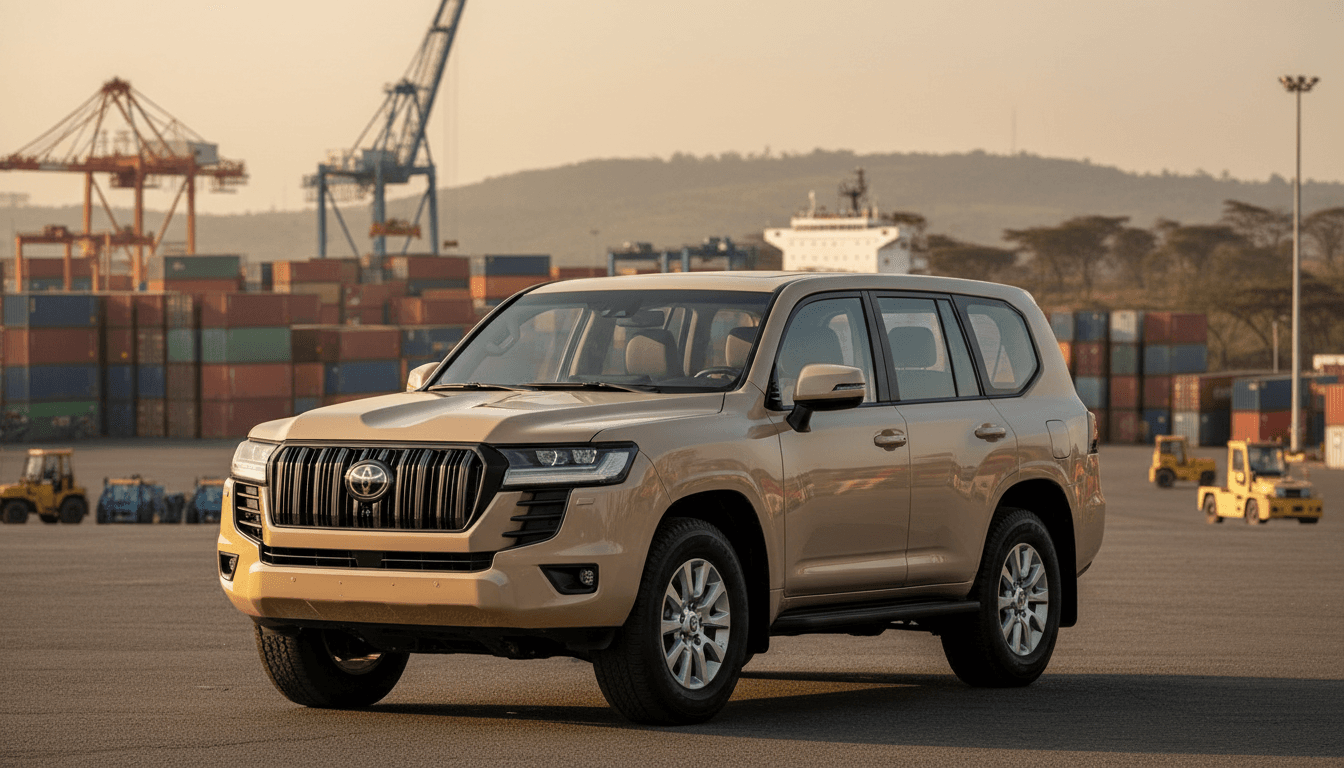
Introduction
Kuwait has the simplest vehicle import tax structure of any market IPAS calculates for. There is exactly one charge at the border: a 5% customs duty on the CIF value. That is the entire cascade. Kuwait has not implemented VAT — it signed the GCC VAT Framework Agreement but implementation remains postponed — and it levies no excise on cars, no luxury tax, no engine-displacement surcharge and no CO2 levy.
The result is a flat 5.00% effective rate on every imported vehicle, regardless of engine size, value or fuel type. A Kuwaiti importing a $200,000 sports car pays the same percentage as one importing a $15,000 hatchback. Alongside Qatar, Kuwait is the cheapest place in the Gulf to land a car — well below the UAE and Oman at 10.25%, Bahrain at 15.5% and Saudi Arabia at 20.75%.
Where Kuwait is not simple is on the question of who may import. Kuwait applies the strictest person-type gate in the region: only Kuwaiti nationals may import a vehicle directly in their own name. Expatriate residents — who make up the majority of Kuwait's population — cannot import a car directly at all. They must go through an employer or sponsor, with the vehicle registered under the sponsor's name. This is a harder restriction than Saudi Arabia's, and it is the first thing to establish before planning any import.
Add a five-year age ceiling and a left-hand-drive-only rule, and the picture is clear: Kuwait is inexpensive but narrow. This guide covers the cascade, the gates, and the two traps — the person-type rule and the widely-repeated but false claim that Kuwait exempts electric vehicles from duty.
Quick Facts
| Detail | Information |
|---|---|
| Trade Bloc | GCC Customs Union |
| Customs Authority | Kuwait General Administration of Customs |
| Registration Authority | Ministry of Interior — General Traffic Department |
| Traffic Side | Right-hand traffic (drive on the right) |
| Steering Requirement | LHD only — RHD vehicles prohibited for private registration |
| Customs Duty | 5% of CIF (GCC Common External Tariff) |
| VAT | None — Kuwait has not implemented VAT as of 2026 |
| Excise / Selective Tax | None on motor vehicles |
| Luxury / CO2 / displacement surcharge | None |
| Total import charges | 5.00% of CIF — the joint-lowest in the GCC |
| GCC-manufactured origin | 0% duty, giving a 0.00% effective rate |
| Electric Vehicles | No exemption — BEV, PHEV and hybrid all pay the standard 5% |
| Who may import | Kuwaiti nationals only, directly. Expatriates must import via an employer or sponsor |
| Vehicle Age Limit | 5 years from model year (private cars and light commercial) |
| Heavy trucks | Approximately 10 years |
| Classic / vintage vehicles | 30+ years banned — no heritage exemption |
| HS code requirement | 12-digit HS code mandatory on all shipments since 1 January 2025 |
| Main Seaports | Shuwaikh, Shuaiba |
| Airport | Kuwait International Airport |
| Currency | Kuwaiti Dinar (KWD) |
Types of Cars That Can Be Imported
New and Used Vehicles
Both are permitted, subject to the age ceiling. New cars have no age constraint at all.
Age — a 5-year ceiling
Private passenger cars and light commercial vehicles (HS 8703 and light HS 8704) may not be more than five years old measured from the model year. Heavy trucks are allowed up to roughly ten years.
Unusually, Kuwait offers no heritage exemption. Classic and vintage vehicles of 30 years and older are banned outright rather than being granted a special pathway. This is stricter than the UAE, which registers 30-year-old cars on brown plates, and stricter than Oman, which admits 50-year-old classics. If you are looking to bring a collector car into the Gulf, Kuwait is not the destination.
The five-year rule is enforced through customs and General Traffic Department practice rather than a widely-published statutory article, so confirm the current cut-off with your broker before purchase.
Steering — LHD only
Kuwait drives on the right and prohibits right-hand-drive vehicles for private registration. Japanese-domestic, UK, Singapore, Australian and other RHD stock cannot be imported for normal road use. All practical IPAS source markets for Kuwait — the USA, Germany, South Korea and the Gulf — supply left-hand-drive cars, so no conversion cost arises.
Condition
Salvage, flood-damaged and structurally compromised vehicles are not acceptable for registration.
Fuel Type
Every propulsion type is admissible and every one pays the same 5%. Petrol, diesel, hybrid, plug-in hybrid and battery-electric vehicles are treated identically.
Cars You Can Import to Kuwait
Each card is a full landed-cost calculation: the car's price, shipping, every duty and tax, and handling, worked out on 9 November 2026 with the rules in force that day. All are left-hand drive to suit Kuwait's roads. Tap a car to see its full breakdown, or open it to change the trim, colour or port.
More cars you can import to Kuwait
New cars IPAS sources to order that meet Kuwait's import rules. Prices are ex works, before shipping and duty. Open a car to work out its full landed cost.
 LHD/C-RHDBackorder2026
GMC Sierra 3500HD
Pickup · 5 VariantsPetrol · DieselFrom $85,900Ex Works, USA LHD/C-RHDBackorder2025
Lincoln Navigator L
SUV · 3 VariantsPetrolFrom $122,900Ex Works, USA LHD/C-RHDBackorder2025
Chevrolet Silverado 3500 HD
Pickup · 10 VariantsPetrol · DieselFrom $46,400Ex Works, USA LHDBackorder2026
Chevrolet Colorado
Pickup · 7 VariantsPetrolFrom $41,400Ex Works, USA LHDBackorder2025
Chevrolet Corvette Stingray Convertible
Convertible · 3 VariantsPetrolFrom $94,800Ex Works, USA LHDBackorder2026
Toyota RAV4 Prime
SUV · 4 VariantsPlug-in HybridFrom $49,800Ex Works, USA LHDBackorder2026
Toyota Sequoia
SUV · 8 VariantsHybridFrom $77,800Ex Works, USA LHDBackorder2026
Toyota Land Cruiser 79 Double Cab
Pickup · 5 VariantsDieselFrom $59,100Ex Works, UAE LHDBackorder2026
Denza N9
SUV · 6 VariantsPlug-in HybridFrom $61,900Ex Works, China🇨🇳 LHDBackorder2026
Dodge Charger 4-Door
Sedan · 6 VariantsPetrol · ElectricFrom $62,400Ex Works, USA LHDBackorder2026
Mercedes-Benz GLS
SUV · 2 VariantsDieselFrom $107,400Ex Works, Canada LHDBackorder2026
Cadillac LYRIQ
SUV · 14 VariantsElectricFrom $71,000Ex Works, USA LHDBackorder2026
Cadillac Escalade IQ
SUV · 4 VariantsElectricFrom $150,300Ex Works, USA LHDBackorder2026
Cadillac CELESTIQ
Sedan · 1 VariantElectricFrom $434,800Ex Works, USA LHD/C-RHDBackorder2025
Ford F-150
Pickup · 19 VariantsPetrol · HybridFrom $46,600Ex Works, USA LHD/C-RHDBackorder2025
Ford F-150 Lightning
Pickup · 6 VariantsElectricFrom $76,000Ex Works, USA
Seaports and Airports Supporting Vehicle Import
| Facility | Location | Role |
|---|---|---|
| Shuwaikh Port | Kuwait City | The principal general-cargo and vehicle-handling port, close to the city |
| Shuaiba Port | South of Kuwait City | Deepwater industrial port; container and heavy cargo |
| Kuwait International Airport | Farwaniya | Air-freighted vehicles — rare and reserved for high-value or urgent shipments |
Most vehicle volume arrives at Shuwaikh. Because Kuwait sits at the head of the Gulf, many sailings from Asia, Europe and North America transship through Jebel Ali or another regional hub before a feeder leg into Kuwait — worth confirming when comparing freight quotes, as it affects both transit time and total cost.
Restrictions on Vehicle Import for Individuals
- Only Kuwaiti nationals may import directly. This is the defining restriction. An expatriate resident cannot import a vehicle in their own name, no matter how long they have lived in Kuwait. The route for expatriates is through an employer or sponsor, with the vehicle registered under the sponsor's name — which carries obvious practical and ownership consequences that should be resolved in writing before any money moves.
- Right-hand-drive vehicles are prohibited for private registration, with no conversion pathway.
- The five-year age limit applies to private cars, with no classic or heritage exemption.
- A valid 12-digit HS code is mandatory. Since 1 January 2025 Kuwait has required a valid 12-digit HS code on all shipments. An incorrect or truncated code causes clearance delays, so make sure your broker files at full depth.
- FTA preference is never automatic. Apply a rate below 5% only where a ratified agreement is in force, the official tariff schedule confirms preference for the vehicle's HS line, and you hold a valid certificate of origin.
Duty Structure Overview
Kuwait's cascade has a single component:
- Customs Duty at 5% of the CIF value.
There is no second step. Kuwait has not implemented VAT, levies no excise or selective tax on motor vehicles, and imposes no luxury tax, engine-displacement surcharge or CO2 levy.
Customs valuation
Duty is assessed on the CIF value — purchase price plus international freight and insurance to the Kuwaiti port — not on FOB. Freight and insurance are inside the dutiable base, so a more expensive shipping route slightly increases the duty as well as the freight bill.
The cascade, worked
| Charge | Rate | Base |
|---|---|---|
| Customs Duty | 5% | CIF |
| VAT | none | — |
| Excise / luxury / displacement | none | — |
| Total | 5.00% | of CIF |
Worked example 1 — New Toyota Land Cruiser 300, 3.5L petrol, from the USA, CIF KWD 15,000
| Charge | Calculation | Amount |
|---|---|---|
| Customs value (CIF) | — | KWD 15,000 |
| Customs duty (5%) | 15,000 × 0.05 | KWD 750 |
| VAT | none | KWD 0 |
| Total import charges | KWD 750 (5.00% of CIF) | |
| Landed cost | KWD 15,750 |
Worked example 2 — New battery EV from the USA, CIF KWD 12,000
| Charge | Calculation | Amount |
|---|---|---|
| Customs duty (5%) | 12,000 × 0.05 | KWD 600 |
| Total import charges | KWD 600 (5.00% of CIF) | |
| Landed cost | KWD 12,600 |
An EV pays exactly the same 5% as the Land Cruiser. There is no powertrain-based concession in Kuwait — see the next section.
Worked example 3 — GCC-manufactured vehicle with a valid GCC Certificate of Origin, CIF KWD 20,000
| Charge | Calculation | Amount |
|---|---|---|
| Customs duty | 0% (intra-GCC origin) | KWD 0 |
| VAT | none | KWD 0 |
| Total import charges | KWD 0 (0.00% of CIF) |
Because Kuwait has no VAT, a genuinely GCC-manufactured vehicle enters entirely free of border tax — the only true zero in the Gulf.
These figures show the structure. Get the exact duty and full landed cost for your specific vehicle and route using CarImport.AI.

Calculate your exact import duty to Kuwait
Get a vehicle-specific duty and full landed-cost breakdown — HS classification, every tax, levy and FTA, plus shipping — calculated for your exact make, model and specs.
- Vehicle-specific HS code
- All duties, taxes & FTAs
- Shipping + est. landed cost
Free trade agreements
| Agreement | Status | Effect on vehicles |
|---|---|---|
| GCC Customs Union | In force | 0% for vehicles manufactured in a GCC state with ≥40% local value-add and a valid GCC Certificate of Origin |
| GAFTA (Greater Arab Free Trade Area) | In force | Possible preference for Arab-League-origin vehicles; rarely relevant in practice |
| GCC–Singapore FTA | In force | Vehicle line rates unverified — assume 5% |
| GCC–EFTA FTA | In force | Vehicle line rates unverified — assume 5% |
| GCC–Korea, GCC–UK, GCC–China | Not in force | 5% applies |
| USA, Japan, EU, India, Australia, Thailand | No agreement | 5% applies |
The critical distinction is manufacture versus re-export. A Japanese-built Toyota shipped to Kuwait from Dubai or Dammam does not acquire GCC origin. It remains Japanese-origin and pays the 5%. Only a vehicle genuinely manufactured in a GCC member state, with the origin certificate to prove it, reaches zero.
Since the MFN rate is only 5% to begin with, the practical stakes of an FTA claim in Kuwait are modest — far smaller than in a market like India or Sri Lanka.
Worked Example: Importing a 2026 Cadillac Escalade to Kuwait
Here is the full landed cost of one car, a 2026 Cadillac Escalade shipped from the USA to Kuwait, worked out on 9 November 2026 with the customs rules in force that day. It lands at 39,887 KWD (about US$128,708), and duties and taxes come to 5% of its CIF value.
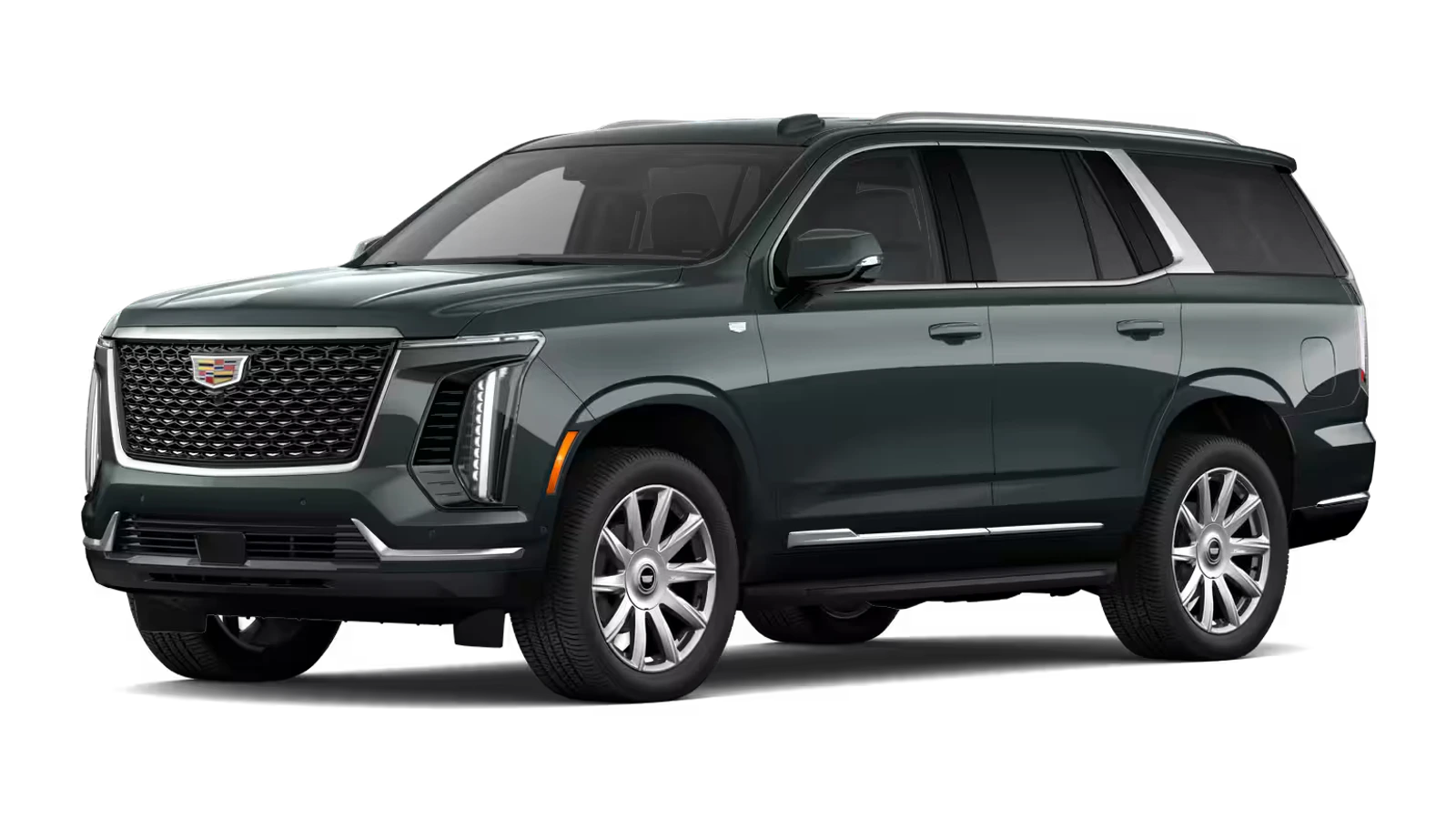
| Item | Share of CIF | Amount |
|---|---|---|
| Vehicle priceIPAS price for a car sourced in the USA | 33,872 KWDUS$109,300 | |
| Shipping and insuranceUSA to Kuwait | 2,528 KWDUS$8,157 | |
| CIF valueCost, insurance and freight: the customs value | 36,400 KWDUS$117,457 | |
| Customs duties and taxes | ||
| Basic customs duty (5%)5% of CIF | 1,820 KWDUS$5,873 | |
| Total duties and taxes5% of CIF | 1,820 KWDUS$5,873 | |
| Service and handling | ||
| Premium Import ServiceOptional end-to-end import management by IPAS | 1,127 KWDUS$3,638 | |
| Destination handlingPort terminal and customs clearance handling | 539 KWDUS$1,740 | |
| Total landed cost | 39,887 KWDUS$128,708 | |
Electric and Hybrid Vehicles
Kuwait offers no customs duty exemption or reduction for electric vehicles. Battery-electric, plug-in hybrid and conventional hybrid vehicles all pay the standard 5% MFN duty, exactly like a petrol or diesel car.
This needs stating plainly because a claim of a "0% EV customs exemption in Kuwait, confirmed January 2025" has circulated and is not supported by any verified instrument. No Kuwaiti border EV incentive comparable to Oman's "Triple Zero" scheme exists. Anyone budgeting an EV import on the assumption of a zero rate is building in a 5% error.
Because Kuwait has no VAT, the absolute cost of that error is small — 5% of CIF rather than the much larger gaps such a mistake creates in higher-tax markets. But the principle holds: quote the EV at the same 5% as everything else.
Kuwait's genuine EV story is about infrastructure and running costs rather than border tax. With no VAT and a flat 5% duty, the country is already one of the cheapest places in the world to land an electric car — it simply does not need a powertrain concession to be attractive.
Pickup Trucks
Kuwait follows the GCC pattern, in which pickups with an open cargo bed are treated as goods vehicles under HS 8704 rather than passenger cars under HS 8703. As in the rest of the Gulf, the tariff impact is neutral — both headings carry the same 5% rate and there is no VAT to differentiate them.
What the classification affects is the registration category and the associated Traffic Department treatment: commercial versus private plates, and the insurance class that follows. Unlike Saudi Arabia, Kuwait does not bar residents from importing HS 8704 vehicles on person-type grounds — but the overarching nationals-only import rule still applies.
Documents Required for Import
- Commercial invoice showing the purchase price
- Bill of Lading (original or telex release)
- Packing list with make, model, year, VIN, engine capacity and colour
- Certificate of Origin — mandatory for any GCC or FTA preference claim
- Certificate of Title or equivalent ownership document
- Previous-country registration certificate
- Customs declaration carrying a valid 12-digit HS code
- Civil ID and passport of the Kuwaiti importer
- For an expatriate import: sponsor or employer authorisation, and the sponsor's documentation as the registering party
- Kuwaiti motor insurance certificate, required at registration
Customs Clearance Timeline
| Stage | Typical duration | Notes |
|---|---|---|
| Vessel arrival to discharge | 1–3 days | Shuwaikh or Shuaiba |
| Customs declaration and duty assessment | 1–3 working days | Requires a valid 12-digit HS code |
| Duty payment and customs release | 1 day | |
| Technical inspection | 1–2 days | General Traffic Department |
| Registration and plate issuance | 1–3 days | Insurance must be in place |
| Typical total | 1–2 weeks | With complete documents and the importer's status resolved |
The most common cause of delay is not the tax — with a single 5% component, assessment is trivial — but paperwork: an invalid HS code, or an expatriate importer discovering at the port that the vehicle must be registered in a sponsor's name.
Homologation and Vehicle Approval
Kuwait follows GCC standards, so a vehicle built to Gulf specification is the smoothest path. US-specification vehicles are common and widely accepted in the market.
There is no mandatory pre-shipment inspection of the kind Kenya and Nigeria operate. Compliance is verified after arrival through the General Traffic Department's technical inspection, which checks VIN and chassis numbers against the documents and examines lighting, brakes, tyres and modifications. Excessive window tint above the permitted limit is a common inspection failure across the Gulf and is worth checking before shipping.
Registration Procedures and Costs
Registration is handled by the Ministry of Interior's General Traffic Department:
- Clear customs and obtain release documentation showing duty paid.
- Arrange Kuwaiti motor insurance — registration cannot proceed without it.
- Present the vehicle for technical inspection at an approved centre.
- Submit the registration application with customs clearance, ownership documents, the inspection certificate, insurance and the importer's Civil ID.
- Pay fees and receive plates.
Port and terminal handling, inspection and scanning, registration and customs-broker fees are fixed administrative amounts rather than percentage taxes, and typically total in the region of KWD 200–400. These sit outside the duty cascade and should be itemised separately from the 5% — there is no ad-valorem "customs service fee" in Kuwait and no automatic investment-authority charge on a standard vehicle import.
Recent Regulatory Changes (2025–2026)
- 1 January 2025 — 12-digit HS codes mandatory. Kuwait now requires a valid 12-digit HS code on all shipments. An invalid or truncated code causes clearance delays.
- 1 January 2025 — GCC Integrated Customs Tariff. The unified GCC tariff took effect across all six member states on HS 2022 nomenclature.
- VAT remains unimplemented. Kuwait signed the GCC VAT Framework Agreement but has not enacted VAT as of 2026. A 5% rate has been discussed; until an Official Gazette law with an effective date is published, there is no VAT at the border. If VAT is introduced, the effective rate would rise from 5.00% to roughly 10.25%, matching the UAE and Oman.
Frequently Asked Questions
How much does it cost to import a car to Kuwait?
Import tax is a flat 5% of the CIF value and nothing else — no VAT, no excise, no luxury tax, no engine-size surcharge. A car with a CIF of KWD 15,000 pays KWD 750. Alongside Qatar, that is the lowest effective rate in the GCC. On top of the duty, budget shipping, port handling, inspection, registration and broker fees, which typically total KWD 200–400 as fixed administrative amounts.
Can an expatriate resident import a car into Kuwait?
Not directly. Only Kuwaiti nationals may import a vehicle in their own name. An expatriate must import through an employer or sponsor, and the vehicle is registered under the sponsor's name. This is the strictest person-type gate in the region and it should be resolved — in writing, with clear agreement on ownership and disposal — before committing to a purchase.
Are electric cars exempt from duty in Kuwait?
No. Battery-electric, plug-in hybrid and hybrid vehicles all pay the standard 5% customs duty, the same as petrol and diesel cars. A claim of a Kuwaiti "0% EV exemption confirmed in January 2025" has circulated but is not supported by any verified instrument, and Kuwait has nothing equivalent to Oman's Triple Zero scheme. Because there is no VAT, the total on an EV is still just 5%.
Does Kuwait charge VAT on imported cars?
No. Kuwait signed the GCC VAT Framework Agreement but has not implemented VAT as of 2026, so there is no VAT at the border. This is why Kuwait's effective rate is 5.00% while the UAE and Oman, which apply 5% VAT on top of 5% duty, come to 10.25%. If Kuwait enacts VAT in future the effective rate would rise accordingly.
What is the age limit for importing a used car to Kuwait?
Five years from the model year for private passenger cars and light commercial vehicles; roughly ten years for heavy trucks. Kuwait grants no heritage exemption — vehicles 30 years and older are banned outright rather than given a classic-car pathway, which differs from the UAE and Oman.
Can I import a right-hand-drive car to Kuwait?
No. Kuwait drives on the right and prohibits right-hand-drive vehicles for private registration, with no approved conversion pathway. Japanese-domestic, UK, Singapore and Australian RHD stock is not admissible for road use.
Will a car bought in Dubai get the 0% GCC rate?
Only if it was genuinely manufactured in a GCC state. Buying or transshipping a vehicle through the UAE does not confer GCC origin — a Japanese-built Land Cruiser bought in Dubai remains Japanese-origin and pays the 5%. The zero rate requires GCC manufacture with at least 40% local value-add and a valid GCC Certificate of Origin. When it does apply, the vehicle enters completely free of border tax, because there is no VAT to follow.
Ready to Import?
Kuwait is the cheapest tax jurisdiction in the Gulf for a vehicle import and one of the cheapest anywhere — a single 5% duty, no VAT, no excise, no luxury tax. On price alone there is very little to plan around.
What needs planning is eligibility. Establish three things before you buy: whether you can import in your own name or need a sponsor, whether the vehicle falls inside the five-year window, and that it is left-hand drive. Those gates, not the tax, are what determine whether a Kuwait import works.
IPAS provides two tools to plan and execute your import:
CarImport.AI — Source a vehicle through IPAS and calculate the full landed cost to Kuwait, including the 5% customs duty and shipping. Get exact figures for your specific vehicle and origin, and see whether a GCC-origin claim is available to you.
IPAS EXPRESS — Already have a vehicle? Get instant shipping quotes to Shuwaikh or Shuaiba — sea freight, RoRo or air — with transparent, itemised pricing and a stage-by-stage timeline.
Ready to Import Your Vehicle?
Two tools, two use cases. Pick the one that fits your needs.
Source a vehicle through IPAS and calculate the full landed cost — customs duties, shipping, and compliance — to destinations across the world.
Calculate Landed CostIPAS Express
Already have a vehicle? Get instant shipping quotes — sea freight, air freight, or RoRo — for one car or multiple vehicles worldwide.
Get Shipping Quote