
Introduction
Mongolia is an unusual import market in three ways that matter a great deal to anyone planning a purchase.
First, it accepts both left-hand-drive and right-hand-drive vehicles. Mongolia drives on the right, so left-hand drive is the standard, but right-hand-drive cars imported from Japan make up a very large share of the national fleet and are perfectly legal to register. There is no ban, no surcharge and no phase-out — and, crucially, no need to budget a steering conversion.
Second, there is no maximum age limit. A vehicle of any age can be imported. Mongolia does not block old cars; it taxes them, through an excise that climbs steeply with age.
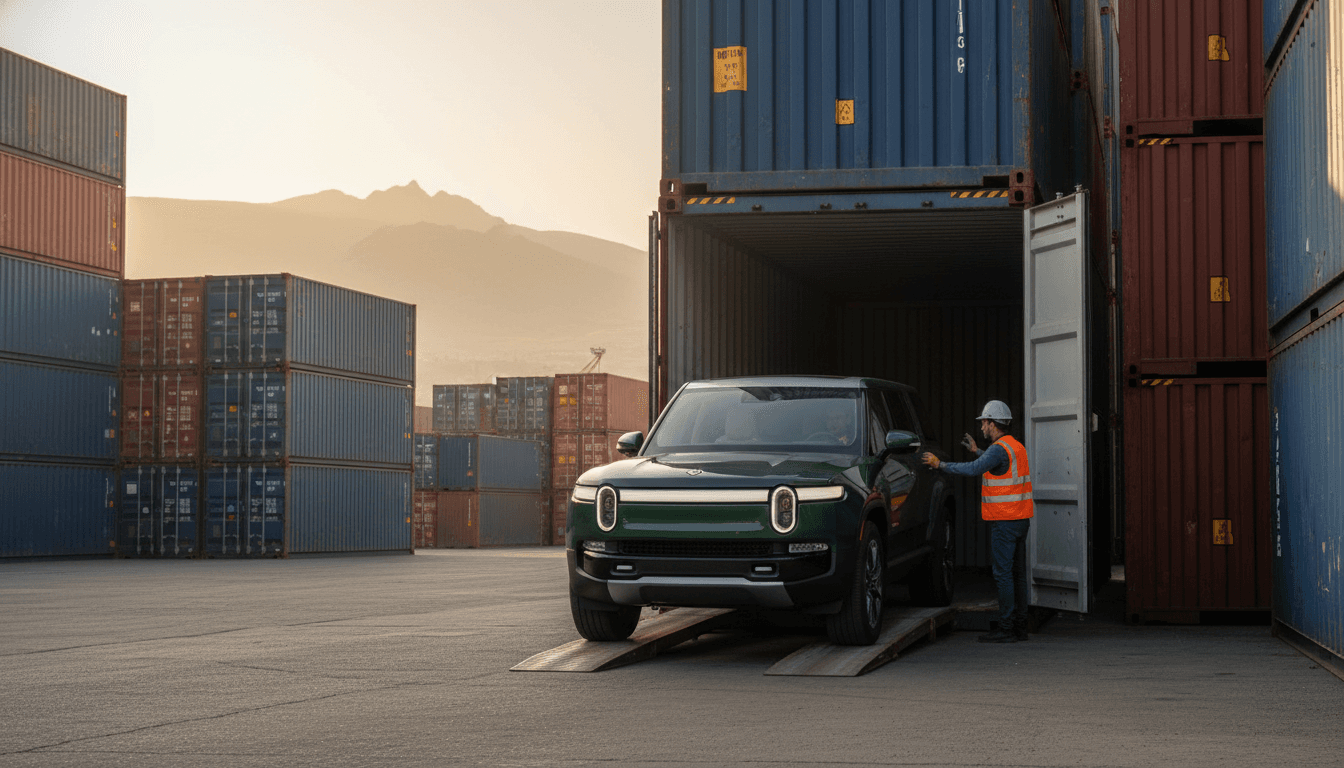
Third, Mongolia is landlocked and has no seaport. Vehicles arrive by rail through Tianjin in China. That single fact shapes the entire logistics plan and the freight cost.
The tax structure itself is a three-step cascade: 5% customs duty, then an excise tax that is a fixed amount in tugrik rather than a percentage, then 10% VAT on the running total. That excise is the component that decides everything. It is read from a table by engine displacement and vehicle age, and it rises sharply on both axes — from MNT 750,000 for a small, nearly-new car to tens of millions for a large, old one. Because it is a fixed sum rather than a rate, it barely registers on an expensive new car and can dominate the bill on a cheap old one.
Japan gets special treatment: under the Japan–Mongolia Economic Partnership Agreement, Japanese-origin vehicles enter at 0% duty with a valid certificate of origin. Combined with Mongolia's acceptance of right-hand drive, that makes Japan by far the most natural sourcing market.
Quick Facts
| Detail | Information |
|---|---|
| Customs Authority | Customs General Administration — customs.gov.mn |
| Tax Authority | Mongolian Tax Administration — mta.gov.mn |
| Traffic Side | Right-hand traffic (drive on the right) |
| Steering Requirement | Both LHD and RHD are legal to import and register — no conversion needed |
| Customs Duty | 5% of CIF (MFN); 0% for Japan-origin under the Japan–Mongolia EPA |
| Excise Tax | A fixed MNT amount by engine displacement × vehicle age. Passenger cars only |
| VAT | 10% on (CIF + duty + excise) |
| Total — goods vehicle (HS 8704, no excise) | 15.50% of CIF |
| Total — passenger car | 15.50% plus the fixed excise, so the effective rate falls as value rises |
| Excise range | MNT 750,000 to approximately MNT 65,975,000 |
| Electric vehicles | Full duty and VAT; excise is a discretionary reduction, currently applied at zero |
| Hybrids and PHEVs | Full duty and VAT; excise at 50% of the equivalent petrol cell |
| Vehicle Age Limit | None — any age is admissible, but excise rises steeply with age |
| Pre-1996 vehicles | Require an ozone (CFC) inspection — documentation, not tax |
| Luxury / recycling / environmental fee at import | None |
| Pickup Classification | HS 8704 by IPAS convention — no passenger-car excise |
| Seaport | None — Mongolia is landlocked |
| Import route | By rail via Tianjin Port, China |
| Currency | Mongolian Tugrik (MNT, ₮) — approximately 3,572 to the US dollar |
Types of Cars That Can Be Imported
Steering — both configurations are legal
This is Mongolia's most distinctive feature among IPAS destinations. Although Mongolia drives on the right and left-hand drive is the standard configuration, right-hand-drive vehicles are legal to import and register. A very large proportion of the used fleet is right-hand drive, imported second-hand from Japan.
There is no ban, no penalty rate and no announced phase-out. Some sources note an import-licence nuance around right-hand-drive vehicles, which is worth confirming per shipment, but the fundamental position is that both configurations work.
For an importer this is significant: it opens the entire Japanese used market without the steering conversion cost that a right-hand-drive vehicle would incur going to a left-hand-drive-only market. There is no conversion line item in a Mongolian import.
Age — no limit, but a steep tax gradient
Mongolia imposes no maximum-age import ban. Vehicles of any age are admissible.
What Mongolia does instead is tax age heavily through the excise, which is banded across four brackets: 0–3 years, 4–6 years, 7–9 years and 10 years and over. The jump at the ten-year mark is dramatic — for a small car the excise rises from MNT 3,350,000 in the 7–9 band to MNT 10,000,000 once past ten years, roughly a threefold increase.
The practical consequence is that a cheap, old car can attract excise approaching or exceeding its own value, while an expensive new car barely notices the same charge. This inverts the usual intuition that older equals cheaper.
Vehicles manufactured before 1996 additionally require an ozone (CFC) inspection, confirming the air-conditioning system does not use banned refrigerants. This is a documentation requirement rather than a tax.
Fuel type
All fuel types are admissible. Petrol and diesel passenger cars use the same excise table — the vehicle excise is fuel-agnostic and depends only on displacement and age. Electric and hybrid vehicles receive reduced excise, covered below.
Cars You Can Import to Mongolia
Each card is a full landed-cost calculation: the car's price, shipping, every duty and tax, and handling, worked out on 9 November 2026 with the rules in force that day. All are left-hand drive to suit Mongolia's roads. Tap a car to see its full breakdown, or open it to change the trim, colour or port.
More cars you can import to Mongolia
New cars IPAS sources to order that meet Mongolia's import rules. Prices are ex works, before shipping and duty. Open a car to work out its full landed cost.
 LHDBackorder2025
Chevrolet Corvette Stingray Convertible
Convertible · 3 VariantsPetrolFrom $94,800Ex Works, USA RHDBackorder2026
Porsche Cayenne
SUV · 12 VariantsPetrol · Plug-in Hybrid · ElectricFrom $117,700Ex Works, UK RHDBackorder2026
Kia Syros
SUV · 17 VariantsPetrol · DieselFrom $9,000Ex Works, India RHDBackorder2026
Kia Carens Clavis
SUV · 37 VariantsPetrol · DieselFrom $10,100Ex Works, India RHDBackorder2026
Kia Sonet
SUV · 26 VariantsPetrol · DieselFrom $8,100Ex Works, India LHDBackorder2026
Lexus RZ
SUV · 5 VariantsElectricFrom $52,600Ex Works, Canada LHD/C-RHDBackorder2025
Ford F-150
Pickup · 19 VariantsPetrol · HybridFrom $46,600Ex Works, USA LHD/C-RHDBackorder2025
Ford F-150 Lightning
Pickup · 6 VariantsElectricFrom $76,000Ex Works, USA RHDBackorder2026
Ford Mustang Convertible
Convertible · 1 VariantPetrolFrom $95,400Ex Works, UK RHDBackorder2026
Hyundai Alcazar (Creta Grand)
SUV · 9 VariantsPetrol · DieselFrom $14,000Ex Works, India LHDBackorder2026
Cadillac CELESTIQ
Sedan · 1 VariantElectricFrom $434,800Ex Works, USA RHDBackorder2026
Force Motors Trax Cruiser
Van & MPV · 4 VariantsDieselFrom $13,200Ex Works, India RHDBackorder2026
Skoda Kodiaq
SUV · 3 VariantsPetrolFrom $32,700Ex Works, India RHDBackorder2026
Mercedes-Benz S-Class
Sedan · 12 VariantsHybrid · Plug-in HybridFrom $134,000Ex Works, UK RHDBackorder2026
Mercedes-Benz E-Class
Sedan · 23 VariantsPetrol · Diesel · Plug-in HybridFrom $76,200Ex Works, UK RHDBackorder2026
Mahindra Thar
SUV · 7 VariantsPetrol · DieselFrom $11,000Ex Works, India
Logistics — a Landlocked Market
Mongolia has no seaport. Every imported vehicle arrives overland, and the dominant route is by rail via Tianjin Port in China.
That has several consequences worth planning around:
- Freight is quoted as a combined sea-plus-rail movement, and the rail leg is a meaningful share of the total.
- Transit time is longer than a direct port delivery, and involves a transshipment and a border crossing.
- CIF for customs purposes includes the full cost of getting the vehicle to Mongolia, so the longer logistics chain also slightly increases the duty and VAT base.
- Sourcing from Japan, Korea or China is logistically simpler and cheaper than from Europe or North America, reinforcing the Japanese sourcing advantage that the EPA already creates.
Ulaanbaatar is the destination for most vehicles and the location of the main customs and registration infrastructure.
Restrictions on Vehicle Import for Individuals
Mongolia's regime is among the most permissive IPAS deals with. There is no age cap, no steering-side restriction, no nationals-only rule and no quantity limit of the kind Qatar or Israel apply.
The constraints that do exist are:
- The ozone inspection for vehicles built before 1996.
- Origin documentation if you want the Japan EPA zero rate — without a valid certificate of origin, the 5% MFN duty applies even to a genuinely Japanese car.
- Classification scrutiny on passenger-configured double-cab pickups, which can be reassessed into the passenger-car heading and pick up the excise. See below.
Duty Structure Overview
Mongolia applies three border charges in this order:
- Customs Duty — 5% of CIF, or 0% for Japan-origin vehicles under the EPA.
- Excise Tax — a fixed amount in tugrik, read from a table by engine displacement and vehicle age. Passenger cars (HS 8703) only.
- VAT — 10% on (CIF + duty + excise), cascading.
A small customs service and declaration fee of around MNT 7,000 also applies, which is immaterial.
There is no import-stage recycling fee, environmental or pollution fee, road tax or luxury tax. An annual vehicle tax and an annual air-pollution tax do exist, but they are post-registration domestic charges rather than part of the landed cost.
The excise is the whole story
The excise on passenger cars is a specific amount in tugrik per vehicle, not a percentage of value. It is read from a two-dimensional table:
| Engine capacity | 0–3 years | 4–6 years | 7–9 years | 10+ years |
|---|---|---|---|---|
| Up to 1,500cc | 750,000 | 1,600,000 | 3,350,000 | 10,000,000 |
| 1,501–2,500cc | 2,300,000 | 3,200,000 | 5,000,000 | 11,700,000 |
| 2,501–3,500cc | 3,050,000 | 4,000,000 | 6,700,000 | 13,350,000 |
| 3,501–4,500cc | ~6,000,000 | ~8,000,000 | ~15,000,000 | ~30,000,000 |
| 4,501cc and over | ~10,000,000 | ~15,000,000 | ~30,000,000 | ~65,975,000 |
Figures in the two largest engine bands are best estimates anchored to the published top-of-range figure and should be confirmed with Mongolian Customs before committing to a large-engined vehicle. The three smaller bands are read from the official customs table.
Two properties of this design matter:
- It rises on both axes. A bigger engine costs more, and an older car costs more, and the two compound.
- Because it is a fixed sum, its effective percentage falls as the vehicle's value rises. On a MNT 150,000,000 SUV, a MNT 3,050,000 excise is 2% of value. On a MNT 18,000,000 old sedan, a MNT 11,700,000 excise is 65% of value.
Any source quoting the Mongolian vehicle excise as a US dollar figure is using outdated information — the current law is denominated in tugrik and includes the age dimension.
Worked example 1 — Japanese-origin hybrid, 1,800cc, 5 years old, CIF USD 10,000 (MNT 35,716,000)
| Charge | Calculation | Amount (MNT) |
|---|---|---|
| Customs value (CIF) | — | 35,716,000 |
| Customs duty | 0% — Japan–Mongolia EPA | 0 |
| Excise | 1,501–2,500cc, 4–6 years = 3,200,000; hybrid at 50% | 1,600,000 |
| VAT (10%) | (35,716,000 + 0 + 1,600,000) × 0.10 | 3,731,600 |
| Total border taxes | 5,331,600 (≈ USD 1,493, 14.9% of CIF) |
The EPA removes the duty and the hybrid concession halves the excise. This combination — Japanese origin, right-hand drive accepted, hybrid excise relief — is why Japanese used hybrids are so heavily represented in the Mongolian fleet.
Worked example 2 — US-origin petrol SUV, 3,400cc, 2 years old, CIF USD 40,000 (MNT 142,864,000)
| Charge | Calculation | Amount (MNT) |
|---|---|---|
| Customs duty (5%) | 142,864,000 × 0.05 | 7,143,200 |
| Excise | 2,501–3,500cc, 0–3 years | 3,050,000 |
| VAT (10%) | (142,864,000 + 7,143,200 + 3,050,000) × 0.10 | 15,305,720 |
| Total border taxes | 25,498,920 (≈ USD 7,139, 17.9% of CIF) |
On a valuable new vehicle the fixed excise is almost incidental — barely 2% of CIF.
Worked example 3 — Japanese-origin petrol sedan, 2,000cc, 12 years old, CIF USD 5,000 (MNT 17,858,000)
| Charge | Calculation | Amount (MNT) |
|---|---|---|
| Customs duty | 0% — Japan EPA | 0 |
| Excise | 1,501–2,500cc, 10+ years | 11,700,000 |
| VAT (10%) | (17,858,000 + 0 + 11,700,000) × 0.10 | 2,955,800 |
| Total border taxes | 14,655,800 (≈ USD 4,103, 82.1% of CIF) |
Here the excise alone is more than double the duty-and-VAT combined and approaches the value of the car. This is the trap in Mongolia: the cheapest cars carry the highest effective tax rate, because a fixed charge falls hardest on a low base.
Worked example 4 — German battery EV, CIF USD 35,000 (MNT 125,006,000)
| Charge | Calculation | Amount (MNT) |
|---|---|---|
| Customs duty (5%) | 125,006,000 × 0.05 | 6,250,300 |
| Excise | discretionary reduction, currently applied at zero | 0 |
| VAT (10%) | (125,006,000 + 6,250,300) × 0.10 | 13,125,630 |
| Total border taxes | 19,375,930 (≈ USD 5,425, 15.5% of CIF) |
These figures show the structure. The excise depends on your vehicle's exact displacement and age band — get the precise figure using CarImport.AI.

Calculate your exact import duty to Mongolia
Get a vehicle-specific duty and full landed-cost breakdown — HS classification, every tax, levy and FTA, plus shipping — calculated for your exact make, model and specs.
- Vehicle-specific HS code
- All duties, taxes & FTAs
- Shipping + est. landed cost
Free trade agreements
| Origin | Duty | Basis |
|---|---|---|
| Japan | 0% | Japan–Mongolia EPA, in force since 2016. Certificate of Origin required |
| United States, Canada, Germany and the EU, Australia, South Korea, China, Thailand, India | 5% | No in-force vehicle-line preference |
The Japan EPA is the only confirmed vehicle preference, and it is valuable — but it requires a valid certificate of origin at clearance. A Japanese-built car arriving without one pays the 5% MFN rate like any other. Confirm the exact origin document form per shipment.
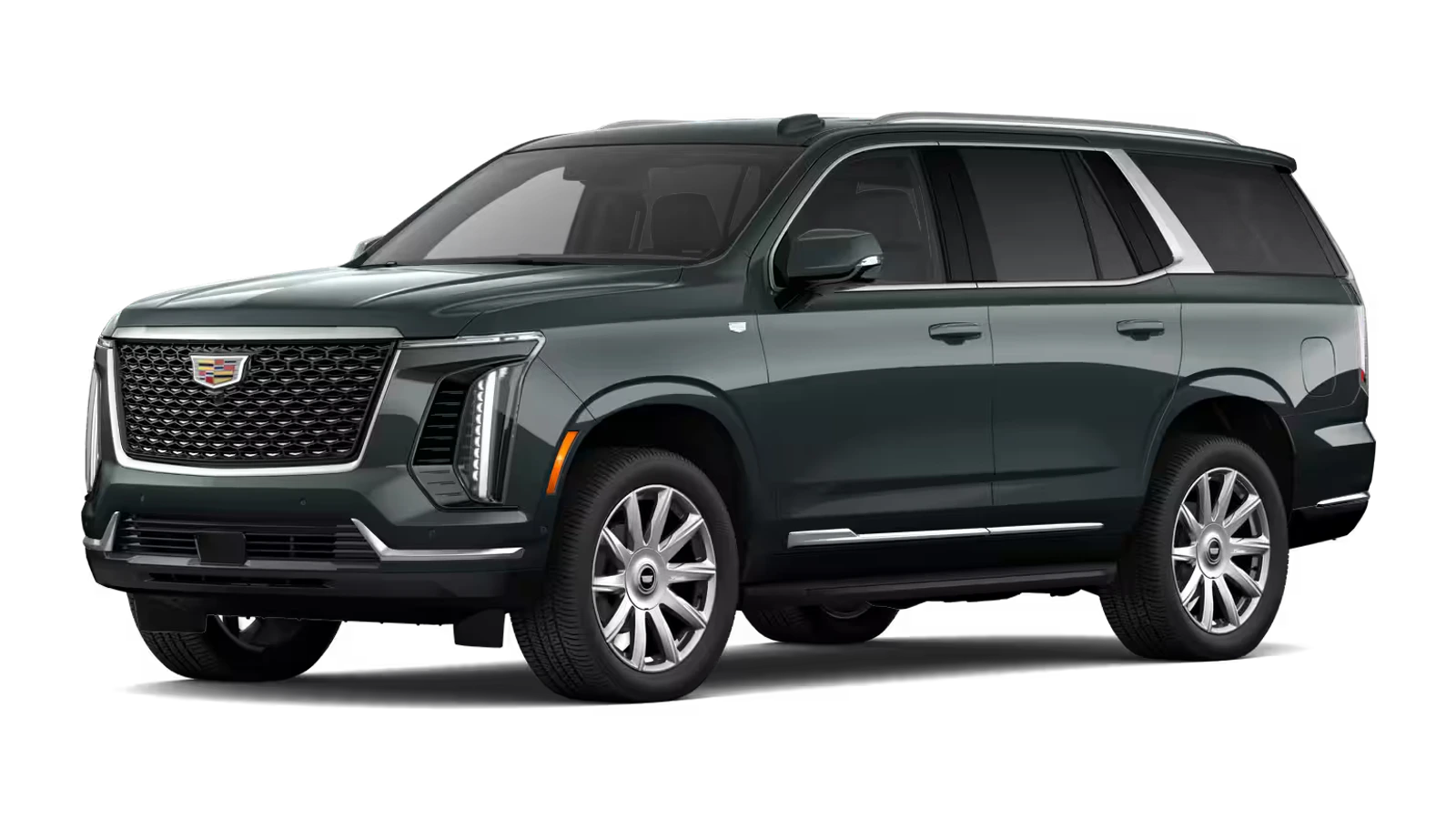
Worked Example: Importing a 2026 Cadillac Escalade to Mongolia
Here is the full landed cost of one car, a 2026 Cadillac Escalade shipped from the USA to Mongolia, worked out on 9 November 2026 with the customs rules in force that day. It lands at 536,773,744 MNT (about US$149,743), and duties and taxes come to 23.7% of its CIF value.
| Item | Share of CIF | Amount |
|---|---|---|
| Vehicle priceIPAS price for a car sourced in the USA | 391,800,420 MNTUS$109,300 | |
| Shipping and insuranceUSA to Mongolia | 17,209,824 MNTUS$4,801 | |
| CIF valueCost, insurance and freight: the customs value | 409,010,244 MNTUS$114,101 | |
| Customs duties and taxes | ||
| Basic customs duty (5%)5% of CIF | 20,450,333 MNTUS$5,705 | |
| Additional duty (33%)Base or related charges differ from CIF; see the duty structure above7.4% of CIF | 30,383,352 MNTUS$8,476 | |
| GST/VAT (10%)10% of CIF plus the duties above11.2% of CIF | 45,983,676 MNTUS$12,828 | |
| Total duties and taxes23.7% of CIF | 96,817,361 MNTUS$27,009 | |
| Service and handling | ||
| Premium Import ServiceOptional end-to-end import management by IPAS | 14,922,828 MNTUS$4,163 | |
| Destination handlingPort terminal and customs clearance handling | 16,023,311 MNTUS$4,470 | |
| Total landed cost | 536,773,744 MNTUS$149,743 | |
Electric and Hybrid Vehicles
Mongolia's treatment of electrified vehicles changed materially in June 2017 and is frequently reported using the pre-2017 position.
What changed
Before June 2017, electric, hybrid and gas vehicles enjoyed an automatic full excise exemption. The 2017 amendment to the Law on Excise Tax removed that automatic exemption and replaced it with a discretionary power: the Government may set their excise anywhere between 0% and 50% of the standard passenger-car rate.
The current position
- Battery-electric vehicles pay the full 5% customs duty and full 10% VAT. There is no duty or VAT exemption. The excise is a discretionary reduction, and in practice is currently applied at zero, consistent with Mongolia's active promotion of electric vehicles. Treat this as a discretionary reduction rather than a permanent statutory exemption — it can be changed without primary legislation.
- Hybrids and plug-in hybrids pay the full duty and VAT, with excise at 50% of the equivalent petrol vehicle's displacement-and-age cell.
Why the hybrid concession matters so much here
Because the excise is the dominant component on an older or cheaper car, halving it is worth far more in Mongolia than a 50% excise reduction would be in a percentage-based system. On a ten-year-old 2,000cc car, the difference between the full MNT 11,700,000 and the halved MNT 5,850,000 is about USD 1,640 — on a car worth USD 5,000.
Combined with the Japan EPA and the acceptance of right-hand drive, this is precisely why used Japanese hybrids are the dominant import into Mongolia.
No VAT relief
VAT applies at 10% to all vehicles regardless of fuel type. Electric and hybrid vehicles get no VAT exemption.
Pickup Trucks
Pickups — both single-cab and double-cab — are classified under HS 8704 as goods vehicles by IPAS convention. That matters more in Mongolia than in most markets, because the passenger-car excise is tied to HS 8703. A vehicle classified under HS 8704 pays only the 5% duty and 10% VAT, for a clean 15.50% effective rate, and no excise at all.
There is a genuine risk to flag. Mongolian Customs formally applies the WCO principal-use test: a double-cab is classified under HS 8703 if the weight allocated to passengers exceeds that allocated to cargo, and HS 8704 otherwise. A passenger-oriented, well-equipped double-cab could therefore be reassessed into the passenger heading — at which point the displacement-and-age excise applies, and on a large-engined pickup that is a significant sum.
For a high-value or passenger-configured double-cab, verify the classification with Customs before shipping rather than assuming HS 8704.
Documents Required for Import
- Commercial invoice showing the purchase price
- Bill of Lading and rail waybill covering the Tianjin leg
- Packing list with make, model, year, VIN, engine displacement and colour
- Certificate of Origin — essential for the Japan EPA zero rate
- Certificate of Title or equivalent ownership document
- Export certificate or deregistration document from the origin country
- Evidence of the manufacture year, to establish the excise age band
- Ozone (CFC) inspection certificate for vehicles manufactured before 1996
- Mongolian customs declaration
- Importer identity documentation
- Motor insurance, at registration
Customs Clearance Timeline
| Stage | Typical duration | Notes |
|---|---|---|
| Sea leg to Tianjin | Varies by origin | Japan and Korea are short; Europe and North America much longer |
| Transshipment and rail to Mongolia | 1–3 weeks | The distinctive leg of a Mongolian import |
| Border crossing and customs declaration | 3–7 working days | Excise band verified against manufacture year and displacement |
| Duty, excise and VAT payment, release | 1–2 days | |
| Technical inspection and registration | 3–7 days | |
| Typical total after arrival at Tianjin | 3–5 weeks |
Most of the elapsed time is logistics rather than bureaucracy. The customs assessment itself is straightforward once the displacement and manufacture year are established — those two data points determine the excise, which is the only variable component.
Registration and Ongoing Costs
Registration is handled through Mongolian road transport authorities and requires the customs release documentation, ownership documents, technical inspection and insurance.
Two annual charges apply after registration and sit outside the landed cost:
- Annual vehicle tax, banded by vehicle characteristics.
- Annual air-pollution / automobile tax, reflecting Ulaanbaatar's significant air-quality challenges.
Neither is part of the import cascade, but both should be modelled into total cost of ownership, particularly for older and larger-engined vehicles which are targeted by the pollution charge for the same reasons they are targeted by the import excise.
Frequently Asked Questions
How much does it cost to import a car to Mongolia?
It depends heavily on the vehicle's age and engine size, because the excise is a fixed tugrik amount rather than a percentage. The duty-and-VAT component is a predictable 15.5% of CIF. On top of that sits the excise: MNT 750,000 for a small, nearly-new car up to tens of millions for a large, old one. On an expensive new vehicle the total lands near 16–18% of CIF; on a cheap old one it can exceed 80%.
Can I import a right-hand-drive car to Mongolia?
Yes. This is one of Mongolia's defining features as an import market. Although Mongolia drives on the right, right-hand-drive vehicles are legal to import and register, and a very large share of the national fleet is right-hand-drive Japanese stock. There is no ban, no surcharge and no phase-out, and no steering conversion is required — which removes a cost that would apply in most other right-side-driving markets.
Is there an age limit for importing a car to Mongolia?
No. Vehicles of any age can be imported. Mongolia controls old vehicles through taxation rather than prohibition: the excise is banded by age, and the step up at ten years is steep — for a small car it roughly triples. Vehicles built before 1996 also need an ozone inspection certificate, which is a documentation requirement rather than a tax.
Why is my cheap old car so expensive to import?
Because the excise is a fixed amount, not a percentage. A ten-year-old 2,000cc car attracts MNT 11,700,000 in excise regardless of whether it cost USD 5,000 or USD 25,000 — so on the cheaper car that single charge can approach or exceed the vehicle's value. This inverts the usual assumption that an older car is a cheaper import. In Mongolia, newer and smaller-engined vehicles carry a much lower effective tax rate.
Do electric vehicles avoid tax in Mongolia?
Partly. Battery EVs pay the full 5% customs duty and full 10% VAT — there is no exemption on either. What they do receive is relief from the excise, which is currently applied at zero. Importantly, this is a discretionary government reduction rather than a statutory exemption: before June 2017 electric and hybrid vehicles had an automatic full exemption, but that was removed and replaced with a discretionary range of 0% to 50% of the standard rate. It can change without new primary legislation.
Do hybrids get a discount?
Yes — the excise is charged at 50% of the equivalent petrol vehicle's displacement-and-age cell, while duty and VAT apply in full. Because the excise dominates on older and cheaper vehicles, this concession is worth considerably more than a 50% reduction would be in a percentage-based system, which is a large part of why used Japanese hybrids are so common in Mongolia.
Does Mongolia have a port?
No. Mongolia is landlocked and has no seaport. Vehicles arrive overland, and the standard route is by rail via Tianjin Port in China. Freight quotes should cover the combined sea and rail movement, and the rail leg is a meaningful part of both the cost and the transit time. This is also part of why Japanese, Korean and Chinese sourcing is logistically favoured over European or North American.
Is it cheaper to buy from Japan?
Usually, and for three separate reasons that compound. The Japan–Mongolia Economic Partnership Agreement removes the 5% customs duty entirely for Japanese-origin vehicles with a valid certificate of origin. Right-hand-drive vehicles are legal in Mongolia, so no conversion cost arises. And the sea leg to Tianjin is short. Do make sure the certificate of origin is in hand at clearance — without it, a Japanese car pays the 5% MFN rate like any other.
Ready to Import?
Mongolia rewards a specific kind of sourcing decision. Because the excise is a fixed tugrik amount that rises with both engine size and age, the effective tax rate is lowest on newer, smaller-engined and higher-value vehicles — and highest on exactly the cheap, old, large-engined cars that look most attractive on a purchase price alone.
Work the two variables that actually move the number. Age band: staying under ten years avoids the steepest step in the table. And origin: Japanese vehicles come in at 0% duty under the EPA, arrive on the shortest logistics leg, and can be right-hand drive without penalty — three advantages that stack.
Then remember the practicalities: this is a rail import via Tianjin, not a port delivery, and a pre-1996 vehicle needs an ozone certificate.
IPAS provides two tools to plan and execute your import:
CarImport.AI — Source a vehicle through IPAS and calculate the full landed cost to Mongolia, including the 5% duty or Japan EPA zero rate, the exact excise for your displacement and age band, and 10% VAT.
IPAS EXPRESS — Already have a vehicle? Get instant shipping quotes covering the sea leg to Tianjin and the rail movement into Mongolia, with transparent, itemised pricing and a stage-by-stage timeline.
Ready to Import Your Vehicle?
Two tools, two use cases. Pick the one that fits your needs.
Source a vehicle through IPAS and calculate the full landed cost — customs duties, shipping, and compliance — to destinations across the world.
Calculate Landed CostIPAS Express
Already have a vehicle? Get instant shipping quotes — sea freight, air freight, or RoRo — for one car or multiple vehicles worldwide.
Get Shipping Quote