
Introduction
Importing a car to Seychelles in 2026 means 0% customs duty, excise of 50–100% of CIF on petrol and diesel cars by engine size, a flat environmental levy of SCR 70,000–175,000 and 15% VAT. Battery electric cars pay only the 15% VAT. Every vehicle needs written prior government approval, and right-hand drive is the norm.
Seychelles is one of the most distinctive vehicle import markets in the world. As a small Indian Ocean archipelago with no domestic automobile manufacturing, the country depends entirely on imports — yet controls who can import what more tightly than almost any other nation. The Seychelles Revenue Commission (SRC) administers all customs and excise taxation, while the Seychelles Licensing Authority (SLA) handles vehicle registration.
The defining feature of the Seychelles import regime is approval. Under the Customs Management (Prohibited and Restricted Goods) Regulations 2023, every motor vehicle — new or used — is a restricted good that needs the written prior approval of the Department of Transport and the Ministry responsible for Finance and Trade. Used and left-hand drive vehicles need the same approval. The regulations set no age limit, but in practice approvals for used vehicles are aimed at returning residents and returning students, and SRC guidance says a returning resident's vehicle should be no more than 3 years old.
The current tax schedules took effect on 1 January 2024: the Excise Tax (Rates) Regulations 2023 (S.I. 110 of 2023) and the environmental levy amendment of the same date (S.I. 112 of 2023). Since 1 January 2025, the environmental levy has been excluded from the VAT base. Battery electric vehicles carry no excise and no levy, making them by far the cheapest vehicles to import.
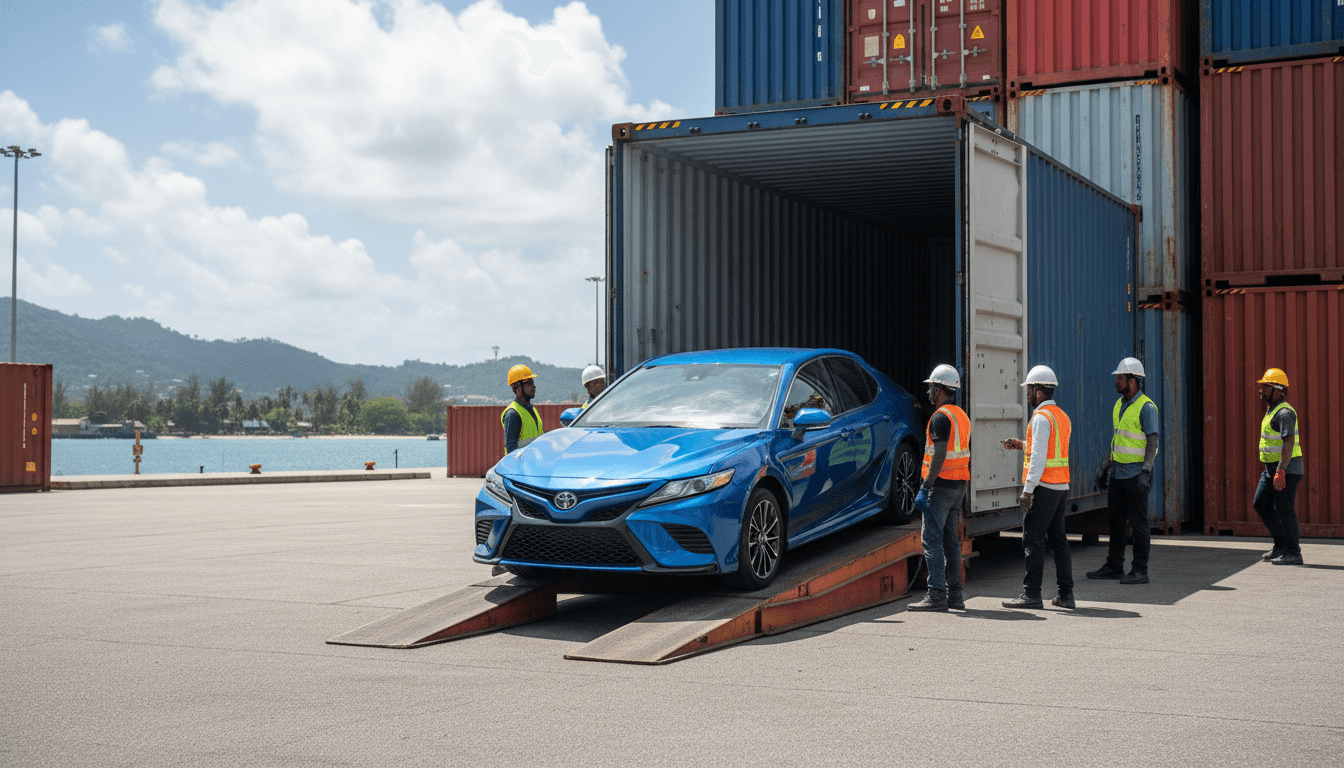
Port Victoria on Mahe is the sole international seaport, and all customs processing runs through the ASYCUDA World electronic system. A licensed customs clearing agent is strongly recommended for navigating the process.
This guide covers the complete import process: the excise and levy structure, approval rules, required documentation, customs clearance at Port Victoria, Vehicle Testing Station (VTS) homologation, and SLA registration — all updated for 2026.
Quick Facts
| Detail | Information |
|---|---|
| Lead Agency | Seychelles Revenue Commission (SRC) |
| Registration Body | Seychelles Licensing Authority (SLA) |
| Customs System | ASYCUDA World |
| Steering | Right-Hand Drive (RHD) — LHD requires written prior approval |
| Customs Duty (Trade Tax) | 0% on all cars and goods vehicles, every origin |
| Primary Tax Instruments | Excise Tax (% of CIF) + flat Environmental Levy + VAT |
| VAT | 15% (on CIF + Trade Tax + Excise; the levy is not included) |
| Environmental Levy | Flat SCR 70,000 / 100,000 / 175,000 for ordinary petrol and diesel cars by engine size; SCR 40,000 for twin cabs and goods vehicles; none for EVs and plug-in hybrids |
| Approval | Written prior approval of the Department of Transport and the Ministry responsible for Finance and Trade for every motor vehicle |
| Age Limit | None in the regulations; SRC guidance: returning residents' used vehicles no more than 3 years old |
| Main Port | Port Victoria, Mahe |
| Currency | Seychellois Rupee (SCR) |
| Total Tax Burden (typical) | About 100-175% of CIF for petrol and diesel cars; 15% for battery EVs |
| Trade Agreements | Duty is already 0% for every origin, so FTAs make no difference |
Types of Cars That Can Be Imported
Seychelles has one of the most restrictive import eligibility frameworks in the world. The rules differ dramatically based on who is importing, not just what is being imported.
New Vehicles
Any individual or business can apply to import a brand-new vehicle to Seychelles. The written prior approval of the Department of Transport and the Ministry responsible for Finance and Trade (the import permit) is mandatory. The vehicle pays excise tax, the environmental levy and VAT; customs duty is 0%. New vehicles face no age restriction.
Used Vehicles
Second-hand vehicles are restricted goods: they can only be imported with the same written prior approval, and the authorities decide each application. The 2023 regulations set no age limit and do not list who qualifies; those conditions are applied by the approving authority. In practice, approvals for used vehicles go mainly to returning residents and returning students, so an ordinary buyer should plan on importing a new vehicle.
Used Vehicles — Returning Residents
According to SRC guidance, Seychellois citizens who have lived abroad continuously for 12 or more months may import one used vehicle. The vehicle should be no more than 3 years old from first registration and cannot be resold for 2 years after import. Documentation requirements include a passport copy with entry and exit stamps confirming the 12-month absence. The vehicle must be right-hand drive. This guidance is not written into the regulations, so confirm the conditions with the Department of Transport before you buy.
Used Vehicles — Returning Students
Students who have studied abroad for 9 or more months and hold a certification letter from the Ministry of Education may import one vehicle under the same terms as returning residents. The vehicle should be no more than 3 years old and is subject to the 2-year resale restriction.
Vehicle Categories for Excise Tax
Seychelles sets excise by national tariff line, and the main groups are:
- Ordinary petrol and diesel cars (including SUVs and pickup-based SUVs such as the Fortuner): 50%, 75% or 100% by engine size, plus a flat levy of SCR 70,000, 100,000 or 175,000
- Twin-cab (double-cab) pickups: classified as passenger vehicles in Seychelles, with a flat 40% excise and SCR 40,000 levy at every engine size
- Full hybrids (can run on the electric motor alone and have a battery of 100 volts or more): 10% to 75% excise, with a lower levy
- Other hybrids, including mild hybrids: 12.5% up to 1,600cc, then the same rates as ordinary cars
- Plug-in hybrids: 5% to 20% excise, no levy
- Battery electric and fuel-cell cars: no excise and no levy
Electric Vehicles
Battery electric vehicles (and hydrogen fuel-cell cars, whose only propulsion motor is electric) are classified under HS 8703.80, which has no line in the excise schedule and no line in the levy schedule. They pay 0% customs duty, 0% excise, no environmental levy and 15% VAT on CIF — exactly 15% of CIF in total, the cheapest way to import a car to Seychelles.
Concessions and Exemptions
- Registered fishermen and farmers may apply for excise tax concessions on qualifying vehicles
- Religious organisations may apply for excise tax remission
- Licensed motor vehicle dealers face specific used-vehicle restrictions separate from the general public rules
Restricted Vehicles (Approval Required)
- Every motor vehicle, new or used, without the written prior approval of the Department of Transport and the Ministry responsible for Finance and Trade
- Used vehicles, unless the approval specifically covers them
- Left-hand drive vehicles, unless the approval specifically covers them
Cars You Can Import to Seychelles
Each card is a full landed-cost calculation: the car's price, shipping, every duty and tax, and handling, worked out on 9 November 2026 with the rules in force that day. All are right-hand drive to suit Seychelles's roads. Tap a car to see its full breakdown, or open it to change the trim, colour or port.
More cars you can import to Seychelles
New cars IPAS sources to order that meet Seychelles's import rules. Prices are ex works, before shipping and duty. Cars marked C-RHD are built left-hand drive and converted to right-hand drive before shipping; the calculator adds the conversion. Open a car to work out its full landed cost.
 LHD/C-RHDBackorder2026
Chevrolet Silverado 1500
Pickup · 29 VariantsPetrol · DieselFrom $57,700Ex Works, USA RHDBackorder2025
Chevrolet Corvette Z06 Coupe
Coupe · 1 VariantPetrolFrom $190,000Ex Works, NZ RHDBackorder2026
Mahindra Thar OG
SUV · 15 VariantsPetrol · DieselFrom $11,000Ex Works, India RHDBackorder2026
Toyota Glanza
Hatchback · 13 VariantsPetrol · CNGFrom $7,800Ex Works, India RHDBackorder2026
Toyota Hilux Travo-e
Pickup · 1 VariantElectricFrom $51,100Ex Works, Thailand RHDBackorder2026
Toyota Land Cruiser 250
SUV · 7 VariantsPetrol · DieselFrom $41,600Ex Works, Japan RHDBackorder2026
Kia Sorento
SUV · 32 VariantsDiesel · HybridFrom $25,200Ex Works, India RHDBackorder2026
Kia Seltos
SUV · 40 VariantsPetrol · DieselFrom $9,900Ex Works, India RHDBackorder2026
Lexus ES
Sedan · 7 VariantsElectricFrom $54,600Ex Works, Japan RHDBackorder2026
Lexus GX 550
SUV · 2 VariantsPetrolFrom $82,600Ex Works, Japan RHDBackorder2026
Volvo XC90
SUV · 1 VariantHybridFrom $79,100Ex Works, India RHDBackorder2026
Volvo XC60
SUV · 1 VariantHybridFrom $57,200Ex Works, India RHDBackorder2026
Jeep Compass
SUV · 17 VariantsDieselFrom $16,200Ex Works, India LHD/C-RHDBackorder2026
GMC Sierra EV
Pickup · 7 VariantsElectricFrom $89,400Ex Works, USA LHD/C-RHDBackorder2026
GMC Yukon
SUV · 5 VariantsPetrolFrom $83,500Ex Works, USA RHDBackorder2026
Volkswagen Taigun
SUV · 11 VariantsPetrolFrom $11,800Ex Works, India
Seaports and Airports
All vehicle imports to Seychelles arrive through a single international seaport. The archipelago's geographic position in the western Indian Ocean limits shipping options compared to continental destinations, but several major shipping lines service the route.
Seaports
| Port | Code | Location | Notes |
|---|---|---|---|
| Port Victoria | SCPOV | Mahe (Main Island) | Sole international seaport; handles container and RoRo service |
Port Details
Port Victoria is the only commercial seaport in Seychelles and handles 100% of the country's vehicle imports. The port accommodates both Roll-on/Roll-off (RoRo) vessels and container ships, served by several international shipping lines. All customs clearance is processed electronically through the SRC's ASYCUDA World system.
Port Victoria is a relatively small port by international standards, which means vessel scheduling can be less frequent than at major continental hubs. Importers should plan for potential wait times between vessel arrivals when calculating their shipping timeline.
Shipping Routes to Port Victoria
Common origin routes and approximate transit times:
| Origin | Typical Transit | Notes |
|---|---|---|
| UK (Southampton/Tilbury) | 20-59 days | Wide range due to transshipment; RHD vehicles |
| India (Mumbai/Chennai) | 10-18 days | Growing source market; direct services available |
| UAE (Jebel Ali) | 8-14 days | Re-export hub, common transshipment point |
| South Africa (Durban) | 7-12 days | Major RHD source market |
| Japan (Yokohama/Nagoya) | 18-28 days | RHD vehicles; via transshipment hub |
| Singapore | 10-16 days | RHD regional hub |
Airports
Air freight is technically available for vehicle imports through Seychelles International Airport (SEZ) on Mahe, but this is extremely rare for standard vehicle imports due to cost. The same customs duties and excise taxes apply regardless of transport mode. Air freight may be considered for high-value luxury vehicles where speed of delivery justifies the premium.
Restrictions on Vehicle Import
Seychelles enforces several strict restrictions that importers must understand before committing to a purchase.
Prior Approval for Every Vehicle
Under the Customs Management (Prohibited and Restricted Goods) Regulations 2023 (S.I. 87 of 2023), all motor vehicles of headings 87.01 to 87.05 are restricted goods. Every import — new, used or commercial — needs the written prior approval of the Department of Transport and the Ministry responsible for Finance and Trade, obtained before the vehicle is shipped. The authorities review each application individually. Motor vehicles are restricted, not prohibited: once approval is held, the taxes are calculated normally.
Used Vehicles in Practice
Second-hand vehicles need the same approval, and in practice it is granted mainly to returning residents and returning students. Ordinary buyers should plan to import a new vehicle.
Age Limit (Guidance, Not Law)
The 2023 regulations set no age limit. SRC guidance says vehicles imported by returning residents should be no more than 3 years old from first registration. For reference:
- Kenya requires used vehicles to be under 8 years old
- Mauritius allows used cars between 18 months and 4 years old
- Australia has no age limit for used vehicles
Treat 3 years as the practical limit for a qualifying used import and confirm it with the Department of Transport before buying.
Right-Hand Drive Requirement
Seychelles drives on the left side of the road, and RHD is the standard configuration. Left-hand drive vehicles are restricted goods: they can be imported only with the written prior approval of the Department of Transport and the Ministry responsible for Finance and Trade (golf carts and approved off-road vehicles are excepted). SRC guidance says imported vehicles must be RHD, and returning residents importing used vehicles are expected to bring RHD vehicles.
Environmental Levy
Most vehicles pay a flat environmental levy in addition to excise and VAT. It is a fixed rupee amount, not a percentage, and since 1 January 2025 it is not part of the VAT base:
- Ordinary petrol and diesel cars: SCR 70,000 (up to 1,600cc), SCR 100,000 (1,601-2,000cc), SCR 175,000 (over 2,000cc)
- Twin-cab pickups (non-plug-in): SCR 40,000
- Full hybrids: none up to 1,600cc, then SCR 50,000, 75,000 or 100,000
- Other hybrids: none up to 1,600cc, then SCR 100,000 or 175,000
- Goods vehicles: SCR 40,000 (SCR 10,000 if refrigerated or insulated)
- Plug-in hybrids and battery EVs: none
Trade Agreements
Seychelles' customs duty (Trade Tax) on cars and goods vehicles is 0% in the general column and in every preferential column (COMESA, EU and UK, SADC and AfCFTA). Excise, levy and VAT do not depend on origin, so a car from South Africa, India, Japan or the UK pays exactly the same taxes.
2-Year Resale Restriction
Vehicles imported under the returning resident or returning student arrangements cannot be resold for 2 years after import. This prevents the arrangement from being used as a commercial import channel.
Duty Structure Overview
Seychelles charges four items on an imported vehicle: Trade Tax (customs duty, 0%), Excise Tax as a percentage of CIF, a flat Environmental Levy, and 15% VAT on CIF plus excise. The levy is not part of the VAT base.
Calculation Sequence:
CIF Value --> Trade Tax (0%) --> Excise Tax (% of CIF) --> VAT (15% of CIF + Trade Tax + Excise) --> plus flat Environmental Levy --> Total Landed Cost
Duty Components
| Component | Rate Range | Applied On | Notes |
|---|---|---|---|
| Trade Tax (customs duty) | 0% | CIF Value | Every car and goods-vehicle line, every origin |
| Excise Tax (ordinary petrol/diesel cars) | 50-100% | CIF Value | 50% up to 1,600cc, 75% 1,601-2,000cc, 100% over 2,000cc |
| Excise Tax (twin-cab pickups) | 40% | CIF Value | Flat rate, all engine sizes (non-hybrid) |
| Excise Tax (full hybrids) | 10-75% | CIF Value | 10% up to 1,600cc, 50% to 2,000cc, 75% above |
| Excise Tax (plug-in hybrids) | 5-20% | CIF Value | By engine size |
| Excise Tax (battery EVs) | 0% | — | No excise line |
| Excise Tax (goods vehicles, HS 8704) | 25% | CIF Value | Hybrid goods vehicles up to 5 tonnes 10-12.5%; electric 0% |
| VAT | 15% | CIF + Trade Tax + Excise | Levy excluded from the base |
| Environmental Levy | SCR 0-175,000 | Fixed amount | See the list above |
Car Excise and Levy by Engine Size (S.I. 110 and S.I. 112 of 2023, in force 1 January 2024)
| Engine Capacity | Ordinary Petrol/Diesel | Full Hybrid | Other Hybrid | Plug-in Hybrid |
|---|---|---|---|---|
| Up to 1,600cc | 50% + SCR 70,000 | 10% + SCR 0 | 12.5% + SCR 0 | 5% + SCR 0 |
| 1,601-2,000cc | 75% + SCR 100,000 | 50% + SCR 50,000 | 75% + SCR 100,000 | 10% + SCR 0 |
| 2,001-2,500cc | 100% + SCR 175,000 | 75% + SCR 75,000 | 100% + SCR 175,000 | 15% + SCR 0 |
| Over 2,500cc | 100% + SCR 175,000 | 75% + SCR 100,000 | 100% + SCR 175,000 | 20% + SCR 0 |
Band edges are "not exceeding": a 1,600cc car is in the lowest band and a 1,601cc car in the next. The plug-in hybrid schedule starts above 1,500cc, so the 5% rate is applied to smaller plug-ins as well until SRC rules otherwise.
Ordinary Cars and SUVs
Seychelles does not tax SUVs separately: an SUV pays the same rate as a saloon of the same engine size. Large-displacement vehicles above 2,000cc face the highest burden — 100% excise plus SCR 175,000 — making full-size petrol and diesel SUVs particularly costly to import.
Twin-Cab Pickup Trucks
Twin-cab pickups such as the Hilux, Ranger and D-Max double cab sit on dedicated passenger-vehicle lines with a flat 40% excise and SCR 40,000 levy, regardless of engine size. Single-cab and extra-cab pickups are goods vehicles at 25% excise plus SCR 40,000.
Full Hybrid Vehicles
A full hybrid must be able to run on its electric motor alone and have a battery operating capacity of 100 volts or more. Hybrids that fail either test — including 12V and 48V mild hybrids — are taxed as "other" hybrids, which pay the ordinary-car rates above 1,600cc.
Total Tax Burden
Because the levy is a flat amount, the effective rate on an ordinary car is higher on a cheaper car of the same engine size. Examples at the CIF values shown:
| Vehicle | CIF (SCR) | Total Taxes (SCR) | Total Tax on CIF |
|---|---|---|---|
| Petrol 1,498cc compact SUV | 220,000 | 229,500 | 104.32% |
| Petrol 1,999cc SUV | 360,000 | 464,500 | 129.03% |
| Petrol 2,494cc SUV | 400,000 | 695,000 | 173.75% |
| Diesel 2,755cc Land Cruiser Prado | 600,000 | 955,000 | 159.17% |
| Diesel twin-cab pickup | 450,000 | 314,500 | 69.89% |
| Full hybrid 1,798cc | 400,000 | 340,000 | 85.00% |
| Plug-in hybrid 1,987cc | 500,000 | 132,500 | 26.50% |
| Battery electric | 400,000 | 60,000 | 15.00% |
Worked Example — petrol 1,498cc compact SUV, CIF SCR 220,000
| Component | Base | Rate | Amount (SCR) |
|---|---|---|---|
| Trade Tax | CIF | 0% | 0 |
| Excise Tax | CIF | 50% | 110,000 |
| Environmental Levy | Flat | — | 70,000 |
| VAT | CIF + excise (330,000) | 15% | 49,500 |
| Total taxes | 229,500 (104.32% of CIF) |
Get exact duty rates for your specific vehicle using CarImport.AI

Calculate your exact import duty to Seychelles
Get a vehicle-specific duty and full landed-cost breakdown — HS classification, every tax, levy and FTA, plus shipping — calculated for your exact make, model and specs.
- Vehicle-specific HS code
- All duties, taxes & FTAs
- Shipping + est. landed cost
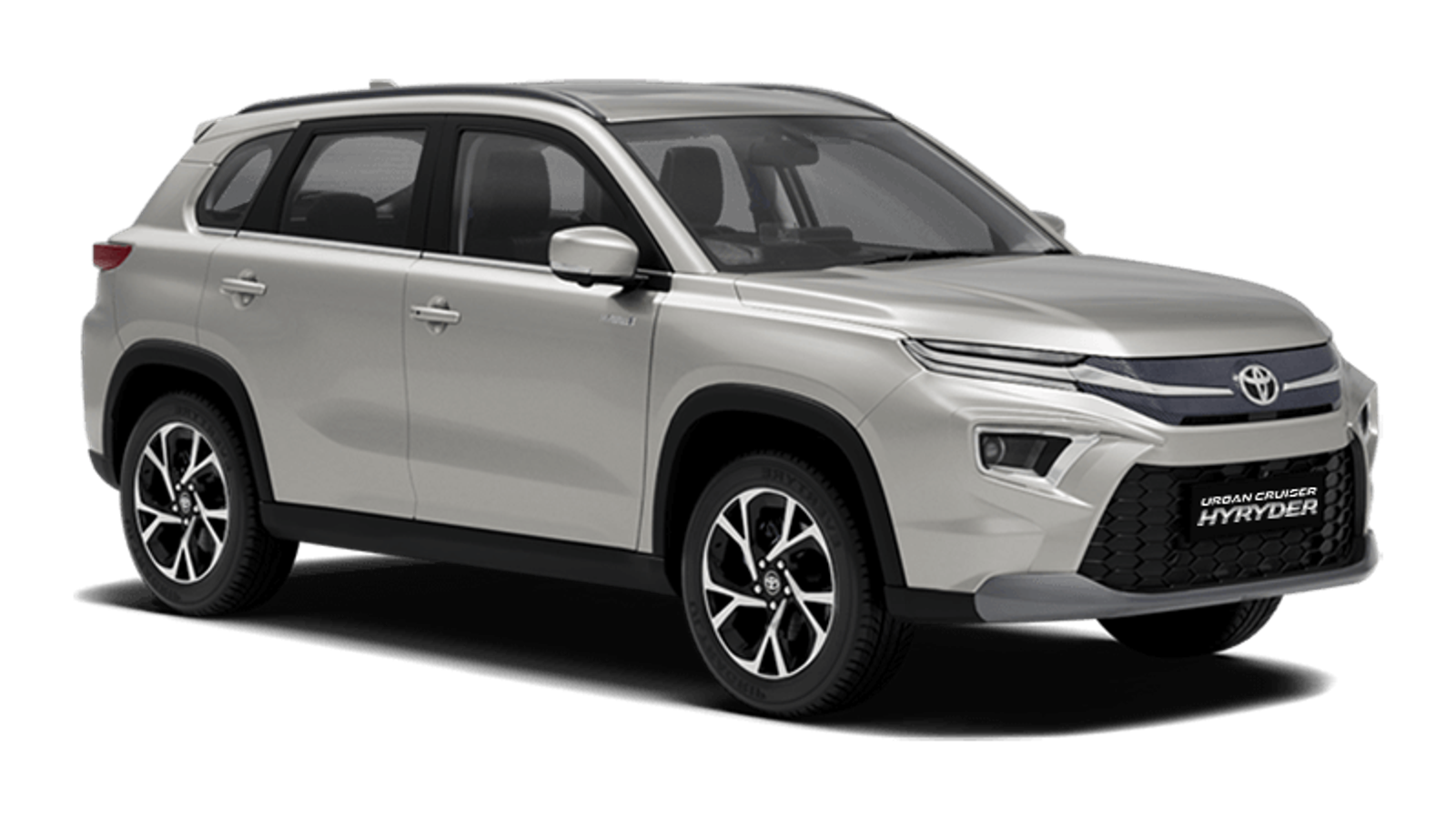
Worked Example: Importing a 2026 Toyota Urban Cruiser Hyryder to Seychelles
Here is the full landed cost of one car, a 2026 Toyota Urban Cruiser Hyryder shipped from India to the Seychelles, worked out on 9 November 2026 with the customs rules in force that day. It lands at 508,230 SCR (about US$34,964), and duties and taxes come to 26.5% of its CIF value.
| Item | Share of CIF | Amount |
|---|---|---|
| Vehicle priceIPAS price for a car sourced in India | 225,305 SCRUS$15,500 | |
| Shipping and insuranceIndia to Seychelles | 145,184 SCRUS$9,988 | |
| CIF valueCost, insurance and freight: the customs value | 370,488 SCRUS$25,488 | |
| Customs duties and taxes | ||
| Basic customs duty (0%)0% of CIF | 0 SCRUS$0 | |
| Additional duty (10%)10% of CIF | 37,052 SCRUS$2,549 | |
| GST/VAT (15%)15% of CIF plus the duties above16.5% of CIF | 61,138 SCRUS$4,206 | |
| Total duties and taxes26.5% of CIF | 98,189 SCRUS$6,755 | |
| Service and handling | ||
| Premium Import ServiceOptional end-to-end import management by IPAS | 13,824 SCRUS$951 | |
| Destination handlingPort terminal and customs clearance handling | 25,728 SCRUS$1,770 | |
| Total landed cost | 508,230 SCRUS$34,964 | |
Documents Required
Documentation requirements vary depending on whether the vehicle is new or used, and whether the importer is a returning resident or student. All customs declarations are processed electronically through the SRC's ASYCUDA World system.
For All Imported Vehicles
- Bill of Entry (BOE) — filed in duplicate via ASYCUDA World
- Commercial Invoice or Purchase Receipt showing transaction value
- Original Bill of Lading or Telex Release
- Packing List
- Import Permit — the written prior approval of the Department of Transport and the Ministry responsible for Finance and Trade (mandatory for ALL motor vehicles)
Additional Documents for Used Vehicles (Returning Residents)
- Passport copy showing most recent entry and exit stamps confirming 12+ months abroad
- Proof of Ownership of the vehicle
- Copy of valid Driving Licence
Additional Documents for Used Vehicles (Returning Students)
- Letter from the Ministry of Education certifying study abroad for 9+ months
- Passport copy with relevant entry/exit stamps
Additional Documents for LHD Vehicles
- Written prior approval covering the left-hand drive vehicle, from the Department of Transport and the Ministry responsible for Finance and Trade
Important Notes on Documentation
- The approval must be obtained before the vehicle is shipped to Seychelles — the Department of Transport will not issue retrospective permits
- All documents must accurately reflect the vehicle's chassis number, make, model, year, and specifications
- A licensed customs clearing agent is strongly recommended for ASYCUDA World submissions — the electronic system requires familiarity with SRC classification codes
- Incomplete or inconsistent documentation is the most common cause of clearance delays at Port Victoria
Customs Clearance Timeline
| Stage | Duration | Details |
|---|---|---|
| Import permit application | Varies | Must be obtained before shipping; apply well in advance |
| Arrange shipping and documentation | 1-2 weeks | Invoice, B/L, packing list preparation |
| Sea freight transit | 1-8 weeks | Depends on origin (South Africa shortest, UK longest) |
| Port discharge at Port Victoria | 1-2 days | Vehicle unloaded and placed in customs area |
| ASYCUDA World declaration and SRC assessment | 2-5 working days | Electronic submission, duty calculation, payment |
| Duty payment and customs release | 1-3 days | Payment via SRC channels, release order issued |
| VTS inspection | 1-3 days | Physical vehicle examination |
| SLA registration | 2-5 working days | After all inspections and documentation complete |
Total Estimated Timeline: 4-12 weeks (from shipping to registration, excluding import permit lead time)
Direct Delivery Option
For time-sensitive consignments, Seychelles offers a Direct Delivery (Urgent Release) facility that can expedite the port clearance process. This is subject to SRC approval and typically requires all documentation to be complete and duties pre-calculated before vessel arrival.
Tips to Avoid Delays
- Apply for the import permit early — the Department of Transport reviews each application individually and processing times can vary
- Ensure all documentation is complete and consistent before the vessel arrives
- Use a licensed customs clearing agent for ASYCUDA World submissions
- If importing from the UK, allow for the wide transit time range (20-59 days) when planning your timeline
- Have all duty payments ready before customs assessment to avoid storage charges at Port Victoria
Homologation and Vehicle Approval
Seychelles does not operate a formal pre-import type-approval scheme equivalent to EU Whole Vehicle Type Approval, Australia's RAWS system, or Kenya's PVOC pre-export inspection programme. Instead, the country relies on post-arrival physical inspection.
Vehicle Testing Station (VTS)
After customs clearance at Port Victoria, all imported vehicles must be presented to an authorised Vehicle Testing Station for physical inspection. A VTS-authorised Vehicle Examiner conducts the inspection and stamps/signs the Vehicle Registration Application Form upon passing. This VTS clearance is a mandatory prerequisite for SLA registration — no vehicle can be registered without it.
The VTS inspection typically covers:
- Vehicle identification (chassis and engine number verification)
- Roadworthiness (brakes, tyres, suspension, lights, mirrors, seat belts)
- Steering configuration (RHD confirmation, or verification of the LHD approval)
- Emissions and exhaust condition
- General safety equipment and condition
No Pre-Export Inspection Requirement
Unlike Kenya (which requires PVOC/KEBS pre-export inspection at the country of origin) or Nigeria (which mandates JEVIC/BVQI terminal inspection), Seychelles does not require a formal pre-shipment inspection programme. The primary inspection occurs after arrival at the VTS.
However, obtaining a voluntary pre-departure inspection from a reputable agency in the origin country is recommended. Discovering a roadworthiness issue after the vehicle has shipped to Seychelles — with no practical option to return it — is an expensive mistake.
Seychelles Bureau of Standards (SBS)
The SBS may require conformity certificates for specific vehicle components. This is not a universal requirement but applies to certain classifications. Importers should check with SBS whether their vehicle type requires additional component-level certification.
Registration Procedures and Costs
After customs clearance and VTS inspection, the vehicle must be registered with the Seychelles Licensing Authority (SLA). The SLA office is located at Orion Mall in Victoria, Mahe.
Registration Steps
- Complete customs clearance at Port Victoria — receive the Bill of Entry
- Present the vehicle to an authorised Vehicle Testing Station — receive the VTS-stamped Vehicle Registration Application Form
- Submit to SLA at Orion Mall with all required documents:
- VTS-stamped and examiner-signed Vehicle Registration Application Form
- Import Permit copy
- Bill of Entry (proof of customs clearance)
- Proof of Purchase / Commercial Invoice
- Pay Registration Fee: SCR 100 plus applicable levy per HS code
- SLA allocates a registration number automatically via their computerised system
- Registration mark issued: all vehicles in Seychelles carry the "S" prefix (e.g., S12345)
Custom Plate Reservation
Vehicle owners may reserve a custom registration plate number for SCR 2,000 (non-refundable). The reservation is valid for 2 years from the date of payment.
Post-Registration Requirements
- Third-party motor insurance is mandatory before driving on public roads
- Vehicle registration documents must be carried in the vehicle at all times
- Annual roadworthiness inspections apply for vehicles above a certain age
- Transfer of ownership must be notified to SLA with updated documentation
Frequently Asked Questions
Q: Can I import a used car to Seychelles as a private individual? A: Only with the written prior approval of the Department of Transport and the Ministry responsible for Finance and Trade, which the 2023 regulations require for every second-hand vehicle. In practice, approvals for used vehicles go mainly to returning Seychellois residents who have lived abroad for 12+ months and returning students who have studied abroad for 9+ months (one vehicle, RHD, no resale for 2 years). An ordinary buyer should plan on importing a new vehicle.
Q: What is the age limit for used vehicle imports to Seychelles? A: The regulations set no age limit; any age condition is applied by the approving authority. SRC guidance says a returning resident's vehicle should be no more than 3 years old from first registration, which in 2026 means a vehicle first registered in 2023 or later. Confirm the current condition with the Department of Transport before buying.
Q: Can I import a left-hand drive vehicle to Seychelles? A: Only with written prior approval from the Department of Transport and the Ministry responsible for Finance and Trade, because left-hand drive vehicles are restricted goods. Standard personal-use vehicles are right-hand drive, and SRC guidance expects returning residents to bring RHD vehicles. LHD imports are uncommon and should not be assumed to be straightforward.
Q: What are the excise rates on cars in Seychelles? A: Under the Excise Tax (Rates) Regulations 2023, in force since 1 January 2024, ordinary petrol and diesel cars pay 50% of CIF up to 1,600cc, 75% from 1,601cc to 2,000cc and 100% above 2,000cc. Twin-cab pickups pay a flat 40%, full hybrids 10-75%, plug-in hybrids 5-20%, and battery EVs nothing. Customs duty is 0%, and 15% VAT and the flat environmental levy are added on top.
Q: How does the Environmental Levy work? A: The Environmental Levy is a fixed Seychellois Rupee amount — not a percentage — set by vehicle type and engine size. Ordinary petrol and diesel cars pay SCR 70,000 up to 1,600cc, SCR 100,000 from 1,601cc to 2,000cc and SCR 175,000 above that; twin cabs and goods vehicles pay SCR 40,000. Plug-in hybrids and battery EVs pay nothing. Since 1 January 2025 the levy is not included in the VAT base.
Q: Do hybrid vehicles get a tax benefit in Seychelles? A: Yes, if they qualify. A full hybrid — one that can run on its electric motor alone and has a battery of 100 volts or more — pays 10% excise and no levy up to 1,600cc, and 50% plus SCR 50,000 from 1,601cc to 2,000cc. Mild hybrids and other hybrids that fail either test pay 12.5% up to 1,600cc and the ordinary-car rates above that. Plug-in hybrids are taxed most lightly of all, at 5-20% with no levy.
Q: How long does the entire import process take? A: From shipping departure to completed registration, expect 4-12 weeks depending on the origin country. Sea transit from South Africa takes 7-12 days, while UK shipments can take 20-59 days. Customs clearance at Port Victoria takes 2-5 working days with complete documentation, VTS inspection takes 1-3 days, and SLA registration takes 2-5 working days. The import permit should be obtained well before shipping begins.
Q: Does importing from a SADC or EU country reduce the duty? A: No, because there is no duty to reduce. Seychelles' customs duty on cars and goods vehicles is 0% in the general column and in every preferential column, including SADC, COMESA, EU and UK, and AfCFTA. Excise, levy and VAT apply the same way whatever the origin.
Ready to Import a Car to Seychelles?
Importing a vehicle to Seychelles requires careful planning. The prior-approval rule for every vehicle, the practical limits on used imports, and an excise and levy structure that depends on engine size and powertrain mean your total landed cost can range from 15% of CIF for an EV to well over 100% for a petrol or diesel car. Accurate duty calculation is essential before committing to a purchase.
For buyers also considering other Indian Ocean island markets, see our Mauritius import guide for a comparison of the two regulatory frameworks — Mauritius also charges 0% customs duty, but it has no environmental levy, taxes electric cars at 15-25% excise, and allows used car imports by authorised dealers within an 18-month to 4-year age window.
Calculate your exact import cost
Use CarImport.AI to get a complete, itemised breakdown of customs duty, excise tax, VAT, Environmental Levy, shipping costs, and all fees for your specific vehicle to Seychelles. No estimates, no guesswork — just accurate numbers based on your vehicle's specifications and Seychelles tariff schedules.
Calculate Your Import Cost on CarImport.AI
Already have a vehicle?
Use IPAS EXPRESS Pro Car Shipping to get competitive sea freight quotes to Port Victoria, with transparent pricing and stage-by-stage timelines for your specific route.
Sources: Seychelles Revenue Commission (src.gov.sc); Seychelles Licensing Authority (sla.gov.sc); Department of Transport; Excise Tax (Rates) Regulations 2023 (S.I. 110 of 2023); Environment Protection (Environmental Levies) (Amendment) Regulations 2023 (S.I. 112 of 2023); Customs Management (Tariff and Classification of Goods) Regulations 2022 (S.I. 113 of 2022) and S.I. 7 of 2024; Customs Management (Prohibited and Restricted Goods) Regulations 2023 (S.I. 87 of 2023); Value Added Tax Act 2010 as amended by Act 16 of 2024; ASYCUDA World customs processing system.
Ready to Import Your Vehicle?
Two tools, two use cases. Pick the one that fits your needs.
Source a vehicle through IPAS and calculate the full landed cost — customs duties, shipping, and compliance — to destinations across the world.
Calculate Landed CostIPAS Express
Already have a vehicle? Get instant shipping quotes — sea freight, air freight, or RoRo — for one car or multiple vehicles worldwide.
Get Shipping Quote