
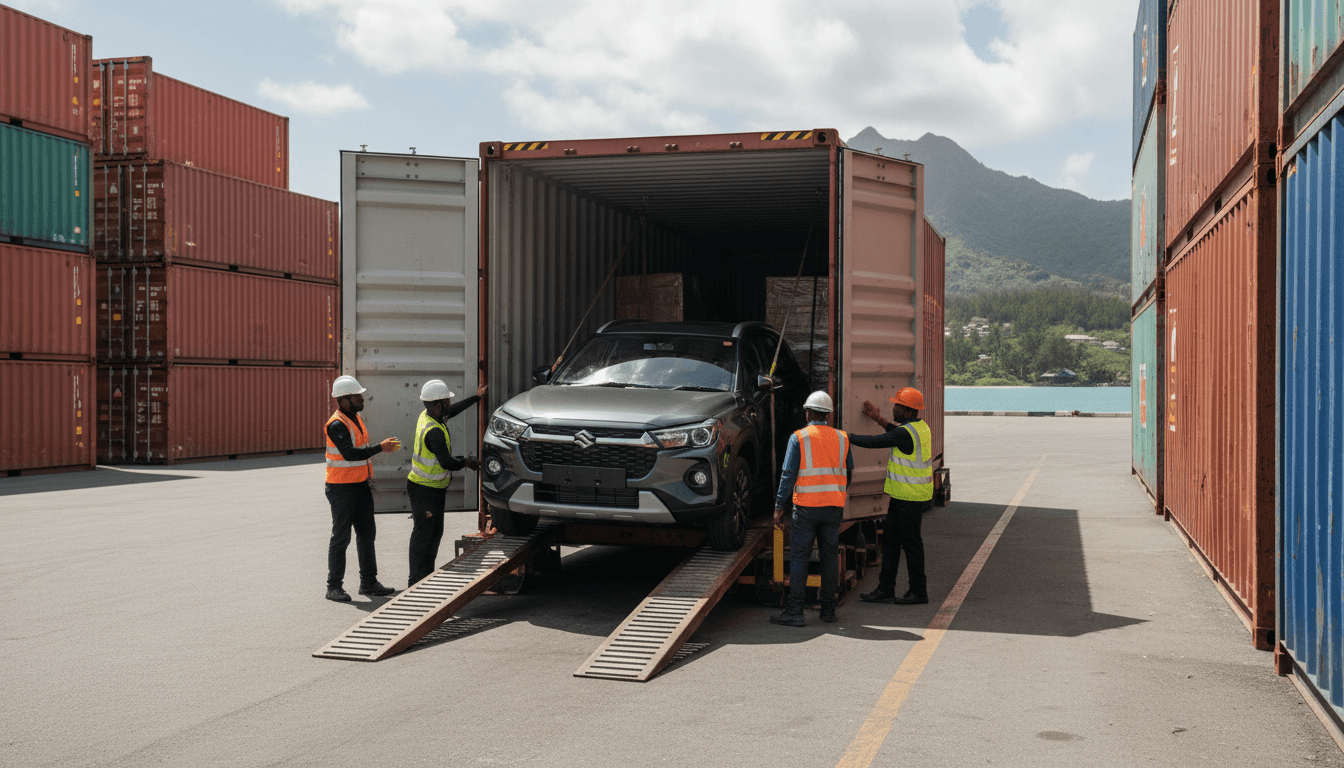
Introduction
Importing a car to Mauritius in 2026 means 0% customs duty but heavy excise: 45–100% of CIF for petrol and diesel cars by engine size, 25–75% for hybrids, 15–25% for electric cars, plus 15% VAT. Totals run about 32–130% of CIF. Cars must be right-hand drive; used cars must be 18 months to 4 years old.
Mauritius is one of the most tightly regulated vehicle import markets in the Indian Ocean region. As a small island nation with no domestic automobile manufacturing, the country depends entirely on imports to supply its vehicle fleet. The Mauritius Revenue Authority (MRA) administers the customs and excise regime, while the National Land Transport Authority (NLTA) oversees vehicle registration and roadworthiness standards.
What distinguishes Mauritius from larger import markets is its excise-driven taxation model. Customs duty on cars and pickups is 0% for every origin, so Excise Duty is the principal fiscal instrument on motor vehicles. For internal combustion engine (ICE) vehicles, excise rates escalate sharply with engine displacement — from 0% for micro-cars of 550cc or less to 100% for vehicles above 2,000cc. This banded approach means a compact sedan and a full-size SUV face radically different tax burdens, even when their purchase prices are similar.
The current excise schedule was set by the Finance Act 2025 and has applied since 6 June 2025. Battery electric vehicles (BEVs) pay excise based on the power of the electric motor — 15% up to 180 kW and 25% above — and the 50% Motor Vehicle Licence (MVL) fee discount for EVs and hybrids was removed. Mauritius's CO2 levy and rebate scheme has been suspended since 2016, so it adds nothing to the cost. For anyone planning a vehicle import to Mauritius in 2026, understanding this landscape is essential.
Mauritius also enforces a strict age window for used vehicle imports. The Consumer Protection (Control of Imports) Regulations require used motorcars to be between 18 months and 4 years old from first registration at the date of shipment — one of the narrowest age windows in the world — and only authorised dealers and certain listed individual importers may bring in second-hand vehicles at all. New vehicles face no age restriction but still pay full excise and VAT. All vehicles must be right-hand drive (RHD); left-hand drive vehicles cannot be imported or registered for road use.
This guide covers the complete import process: duty structure, age restrictions, required documentation, customs clearance at Port Louis, NLTA homologation, and registration procedures — all updated for 2026 regulations.
Quick Facts
| Detail | Information |
|---|---|
| Lead Agency | Mauritius Revenue Authority (MRA) |
| Registration Body | National Land Transport Authority (NLTA) |
| Customs System | TradeNet (electronic declaration) |
| Steering | Right-Hand Drive (RHD) only |
| Customs Duty | 0% on all cars and pickups, for every origin |
| Primary Tax Instrument | Excise Duty on CIF (engine-size banded for ICE and hybrids, power-banded for BEV, cab-type for pickups) |
| VAT | 15% (on CIF + Customs Duty + Excise) |
| CO2 Levy | None — suspended since 2016 |
| Age Limit (Used Motorcars) | 18 months to 4 years from first registration |
| Age Limit (Dual-Purpose, incl. 2x4/4x4 Double-Cab Pickups) | 18 months to 3 years |
| Age Limit (Vans) | Not more than 4 years |
| Age Limit (Lorries) | Not more than 6 years |
| Age Limit (Motor Buses) | Not more than 3 years |
| New Vehicles | No age restriction |
| Main Port | Port Louis Harbour |
| Import Permit (Used) | Required from Ministry of Commerce (apply 4-6 months in advance) |
| Currency | Mauritian Rupee (MUR) |
| Total Tax Burden (typical ICE) | About 67-130% of CIF depending on engine size |
Types of Cars That Can Be Imported
Mauritius permits the import of both new and used vehicles, but the regulatory requirements differ substantially between the two categories. All vehicles must be right-hand drive regardless of origin.
New Vehicles
New vehicles can be freely imported without an import permit. There is no age restriction for brand-new units. New vehicles pay 0% customs duty, the excise rate for their category, and 15% VAT. No special concessions exist for new vehicles beyond the standard tariff classification, and excise rates are the same for new and second-hand vehicles.
Used Vehicles
Used vehicle imports require an import permit issued by the Ministry of Commerce. This permit must be applied for well in advance — the typical processing timeline is 4 to 6 months. Since July 2020, only an authorised dealer or an "individual importer" listed in the regulations (for example a returning resident, a foreigner taking up employment or residence, or a Mauritian receiving a family member's car as a gift with no transfer of funds) may import a second-hand vehicle. The age window, measured from first registration at the date of shipment, is among the strictest in the world:
- Motorcars (including sports vehicles, crossovers and jeep-type vehicles) must be between 18 months and 4 years old
- Dual-purpose vehicles, including 2x4 and 4x4 double-cab pickups, must be between 18 months and 3 years old
- Vans (goods vehicles or those carrying 7 persons or fewer) must be not more than 4 years old
- Lorries and other goods vehicles must be not more than 6 years old; motor buses not more than 3 years
Used vehicles must also have been first registered no later than the year after they were built, have their original chassis, carry no bull bar, and come with a deregistration certificate and an export certificate from the exporting country.
The 18-month minimum means very recently manufactured used cars are also excluded — Mauritius does not want near-new grey imports undercutting authorised dealer networks.
The age limits do not apply to the first vehicle imported by an individual importer for personal use, but these exceptions are narrow and require specific documentation.
Hybrid Vehicles
Mauritius distinguishes between three categories of hybrid: Mild Hybrid, Full Hybrid, and Plug-in Hybrid Electric Vehicle (PHEV). Mild and full hybrids share one excise table (25%, 35%, 55% and 75% by engine size), and PHEVs have a lower one (15%, 25%, 35% and 55%), compared with 45%, 55%, 75% and 100% for an equivalent petrol or diesel car.
Electric Vehicles
Battery electric vehicles are taxed on the power rating of the electric motor rather than engine size. Under the excise schedule in force since 6 June 2025:
- BEVs with motor output up to 180 kW face 15% excise duty
- BEVs with motor output above 180 kW face 25% excise duty
- The 50% MVL fee discount for EVs and hybrids has been removed
- First-time registration fees increased by 30% for all new vehicles
With 15% VAT on top, a BEV pays about 32% of CIF (up to 180 kW) or about 44% (above 180 kW) — still far below an ICE car, but no longer close to tax-free. Buyers planning EV imports should factor in these costs when comparing against ICE alternatives.
Prohibited Vehicles
- Left-hand drive vehicles (no exceptions for private individuals)
- Used motorcars outside the 18-month to 4-year age window (18 months to 3 years for double-cab pickups)
- Second-hand vehicles imported by anyone other than an authorised dealer or listed individual importer
- Vehicles failing to meet Mauritius Standards Bureau (MSB) conformity requirements
Cars You Can Import to Mauritius
Each card is a full landed-cost calculation: the car's price, shipping, every duty and tax, and handling, worked out on 9 November 2026 with the rules in force that day. All are right-hand drive to suit Mauritius's roads. Tap a car to see its full breakdown, or open it to change the trim, colour or port.
More cars you can import to Mauritius
New cars IPAS sources to order that meet Mauritius's import rules. Prices are ex works, before shipping and duty. Cars marked C-RHD are built left-hand drive and converted to right-hand drive before shipping; the calculator adds the conversion. Open a car to work out its full landed cost.
 RHDBackorder2026
Mercedes-Benz GLS
SUV · 3 VariantsDieselFrom $131,000Ex Works, UK RHDBackorder2024
Lexus LX 600
SUV · 5 VariantsPetrolFrom $100,200Ex Works, Japan RHDBackorder2026
BMW M5
Sedan · 2 VariantsPlug-in HybridFrom $146,700Ex Works, UK LHD/C-RHDBackorder2026
GMC Sierra 3500HD
Pickup · 5 VariantsPetrol · DieselFrom $85,900Ex Works, USA RHDBackorder2026
Suzuki Celerio
Hatchback · 8 VariantsPetrol · CNGFrom $5,700Ex Works, India RHDBackorder2026
Suzuki Swift
Hatchback · 14 VariantsPetrol · CNGFrom $6,700Ex Works, India RHDBackorder2026
Mahindra BE 6 Sporteq
SUV · 20 VariantsElectricFrom $23,400Ex Works, India LHD/C-RHDBackorder2025
Chevrolet Silverado EV
Pickup · 3 VariantsElectricFrom $102,200Ex Works, USA RHDBackorder2027
Nissan Patrol
SUV · 6 VariantsPetrolFrom $72,000Ex Works, Australia RHDBackorder2026
Nissan Tekton
SUV · 12 VariantsPetrolFrom $9,400Ex Works, India RHDBackorder2026
Toyota Hilux Revo Z Edition
Pickup · 8 VariantsDieselFrom $22,900Ex Works, Thailand RHDBackorder2026
Toyota Crown Sport
SUV · 5 VariantsHybrid · Plug-in HybridFrom $41,600Ex Works, Japan LHD/C-RHDBackorder2025
Ford F-150
Pickup · 19 VariantsPetrol · HybridFrom $46,600Ex Works, USA LHD/C-RHDBackorder2026
Cadillac Escalade
SUV · 11 VariantsPetrolFrom $109,300Ex Works, USA RHDBackorder2026
Renault Triber
Van & MPV · 18 VariantsPetrol · CNGFrom $6,700Ex Works, India RHDBackorder2026
Porsche Cayenne Coupe
Coupe · 13 VariantsPetrol · Plug-in Hybrid · ElectricFrom $123,600Ex Works, UK
Seaports and Airports
All vehicle imports to Mauritius arrive through a single major port. The island's geographic isolation in the Indian Ocean means shipping routes are limited compared to continental destinations.
Seaports
| Port | Code | Location | Notes |
|---|---|---|---|
| Port Louis Harbour | MUPLU | Port Louis | Sole major seaport; handles RoRo and container shipping |
Port Details
Port Louis Harbour is the only commercial seaport in Mauritius and handles 100% of the country's vehicle imports. The port accommodates both Roll-on/Roll-off (RoRo) vessels and container ships. All customs clearance is processed electronically through the MRA's TradeNet system.
The port operates modern container handling facilities and has dedicated areas for vehicle discharge and inspection. After customs release, vehicles are transported to NLTA Vehicle Examination Stations for homologation checks before registration.
Shipping Routes to Port Louis
Common origin routes and approximate transit times:
| Origin | Typical Transit | Notes |
|---|---|---|
| Japan (Yokohama/Nagoya) | 3-4 weeks | Major source for used RHD vehicles |
| UK (Southampton/Tilbury) | 4-5 weeks | RHD vehicles, direct or via transshipment |
| India (Mumbai/Chennai) | 1-2 weeks | Short route, growing source market |
| South Africa (Durban) | 5-7 days | Closest major origin port |
| UAE (Jebel Ali) | 2-3 weeks | Re-export hub, mixed origins |
| Singapore | 2-3 weeks | RHD hub for Japanese and regional vehicles |
Airports
Air freight is available for high-value or urgent vehicle imports through Sir Seewoosagur Ramgoolam International Airport (MRU), but this is rarely used for standard vehicle imports due to cost. The same customs and excise duties apply regardless of transport mode.
Restrictions on Vehicle Import
Mauritius enforces several strict restrictions that importers must understand before committing to a purchase.
Right-Hand Drive Only
Mauritius drives on the left side of the road and requires all vehicles to be right-hand drive; the import regulations make RHD a condition for every category of second-hand vehicle. Left-hand drive vehicles cannot be imported, converted, or registered for road use. There are no conversion exceptions for private individuals. This eliminates direct imports from LHD-only markets like the United States, continental Europe, and most of South America without prior RHD conversion.
Strict Age Window (18 Months to 4 Years)
The age restriction for used motorcars is one of the most unusual in the world. Most countries set a maximum age only — for example, Kenya requires vehicles to be under 8 years old, and Australia has no age limit. Mauritius sets both a minimum (18 months) and a maximum (4 years) from first registration, measured at the date of shipment. For double-cab pickups and other dual-purpose vehicles the maximum is 3 years.
This means:
- A 2024-registered vehicle can be imported in 2026 (2 years old — within the window)
- A 2025-registered vehicle cannot be imported in 2026 if it is less than 18 months old at shipment
- A 2021-registered vehicle cannot be imported in 2026 (5 years old — exceeds the maximum)
The practical effect is that, for a shipment in mid-2026, a car must have been first registered between mid-2022 and the end of 2024. This narrow window limits the used vehicle market considerably and keeps values relatively high.
Import Permit for Used Vehicles
Used vehicles require an import permit from the Ministry of Commerce, and only authorised dealers and listed individual importers may apply. The application process takes 4 to 6 months, so buyers must plan well ahead of their intended import date. A permit issued after the vehicle has already arrived costs a fee of Rs 60,000 (waived for individual importers). New vehicles do not require an import permit.
CO2 Levy (Suspended)
The CO2 levy and rebate on motor cars under section 3C of the Excise Act has been suspended since 30 July 2016 and is still suspended in 2026. No CO2 levy is added and no CO2 rebate is granted.
Registration Fee Increase
From July 2025, first-time vehicle registration fees increased by 30% for all vehicle categories. This applies to both new and used imports.
Duty Structure Overview
Mauritius uses a simple two-layer tax structure administered by the MRA: excise on the CIF value, then VAT on CIF plus excise. Customs duty is 0% on every car and pickup line, in the general tariff and in every preferential column, so the vehicle's origin never changes the bill.
Calculation Sequence:
CIF Value --> Customs Duty (0%) --> Excise Duty (on CIF) --> VAT (15% on CIF + Duty + Excise)
Duty Components
| Component | Rate Range | Applied On | Notes |
|---|---|---|---|
| Customs Duty | 0% | CIF Value | All 87.03 and 87.04 lines, every origin |
| Excise Duty (ICE) | 0-100% | CIF Value | Banded by engine displacement |
| Excise Duty (Hybrid) | 0-75% | CIF Value | Mild and full hybrid table; PHEV table 0-55% |
| Excise Duty (BEV) | 15-25% | CIF Value | Banded by motor power (kW) |
| Excise Duty (Pickups) | 5-30% | CIF Value | By powertrain and single or double cab |
| VAT | 15% | CIF + Customs + Excise | Flat rate on cumulative base |
| CO2 Levy | None | — | Suspended since 2016 |
Car Excise Rates (Excise Act First Schedule, in force since 6 June 2025)
| Engine Capacity | Petrol or Diesel | Mild or Full Hybrid | Plug-in Hybrid |
|---|---|---|---|
| Up to 550cc | 0% | 0% | 0% |
| 551-1,000cc | 45% | 25% | 15% |
| 1,001-1,600cc | 55% | 35% | 25% |
| 1,601-2,000cc | 75% | 55% | 35% |
| Over 2,000cc | 100% | 75% | 55% |
Engine displacement determines the excise rate for conventional petrol and diesel vehicles, and petrol and diesel share one table. Rates escalate sharply above 2,000cc, making large-displacement vehicles like V8 SUVs extremely expensive to import. Pickup-based SUVs with an enclosed passenger body, such as the Fortuner and Everest, are taxed as cars.
BEV Excise
Electric vehicles are taxed based on the power rating of the electric motor rather than engine displacement:
- Up to 180 kW: 15% excise
- Above 180 kW: 25% excise
This power-based banding means high-performance EVs (such as the Tesla Model 3 Performance or dual-motor performance variants) face higher duties than standard-range models like the Nissan Leaf.
Pickup Excise
Pickups (open load bed, g.v.w. up to 5 tonnes) are not taxed on the car table. A petrol or diesel pickup pays 10% with a single cab and 30% with a double cab; mild-hybrid and hybrid pickups pay 5% or 20%; plug-in hybrid pickups 5% or 15%; electric pickups 5% (single cab) or 10-15% (double cab).
Total Tax Burden
Because customs duty is zero, the total is simply excise plus 15% VAT on CIF plus excise:
| Vehicle Example | Excise | Total Tax on CIF |
|---|---|---|
| Toyota Yaris 1.5 petrol (1,496cc) | 55% | 78.25% |
| Toyota Corolla 1.8 petrol (1,798cc) | 75% | 101.25% |
| Land Cruiser Prado 2.8 diesel (2,755cc) | 100% | 130% |
| Toyota Aqua 1.5 hybrid | 35% | 55.25% |
| RAV4 plug-in hybrid (2,487cc) | 55% | 78.25% |
| Nissan Leaf (110 kW) | 15% | 32.25% |
| Tesla Model 3 Performance (over 180 kW) | 25% | 43.75% |
| Toyota Hilux 2.8 diesel double cab | 30% | 49.5% |
For ICE cars that means about 67% (551-1,000cc) to 130% (over 2,000cc) of CIF. For EVs, the total is about 32-44% of CIF depending on motor power.
Worked Example — Toyota Corolla 1.8 petrol, CIF MUR 800,000
| Component | Base | Rate | Amount (MUR) |
|---|---|---|---|
| Customs Duty | CIF | 0% | 0 |
| Excise Duty | CIF | 75% | 600,000 |
| VAT | CIF + duty + excise (1,400,000) | 15% | 210,000 |
| Total taxes | 810,000 (101.25% of CIF) |
For a second-hand vehicle, MRA's published valuation method starts from the FOB value of identical vehicles previously imported, less 9% for the first month of use and 1% per month after that, up to 50%. The prescribing regulation has not been confirmed, so estimates here use the declared CIF without depreciation.
Get exact duty rates for your specific vehicle using CarImport.AI

Calculate your exact import duty to Mauritius
Get a vehicle-specific duty and full landed-cost breakdown — HS classification, every tax, levy and FTA, plus shipping — calculated for your exact make, model and specs.
- Vehicle-specific HS code
- All duties, taxes & FTAs
- Shipping + est. landed cost
Worked Example: Importing a 2026 Toyota Urban Cruiser Hyryder to Mauritius
Here is the full landed cost of one car, a 2026 Toyota Urban Cruiser Hyryder shipped from India to Mauritius, worked out on 9 November 2026 with the customs rules in force that day. It lands at 1,788,735 MUR (about US$38,042), and duties and taxes come to 55.2% of its CIF value.
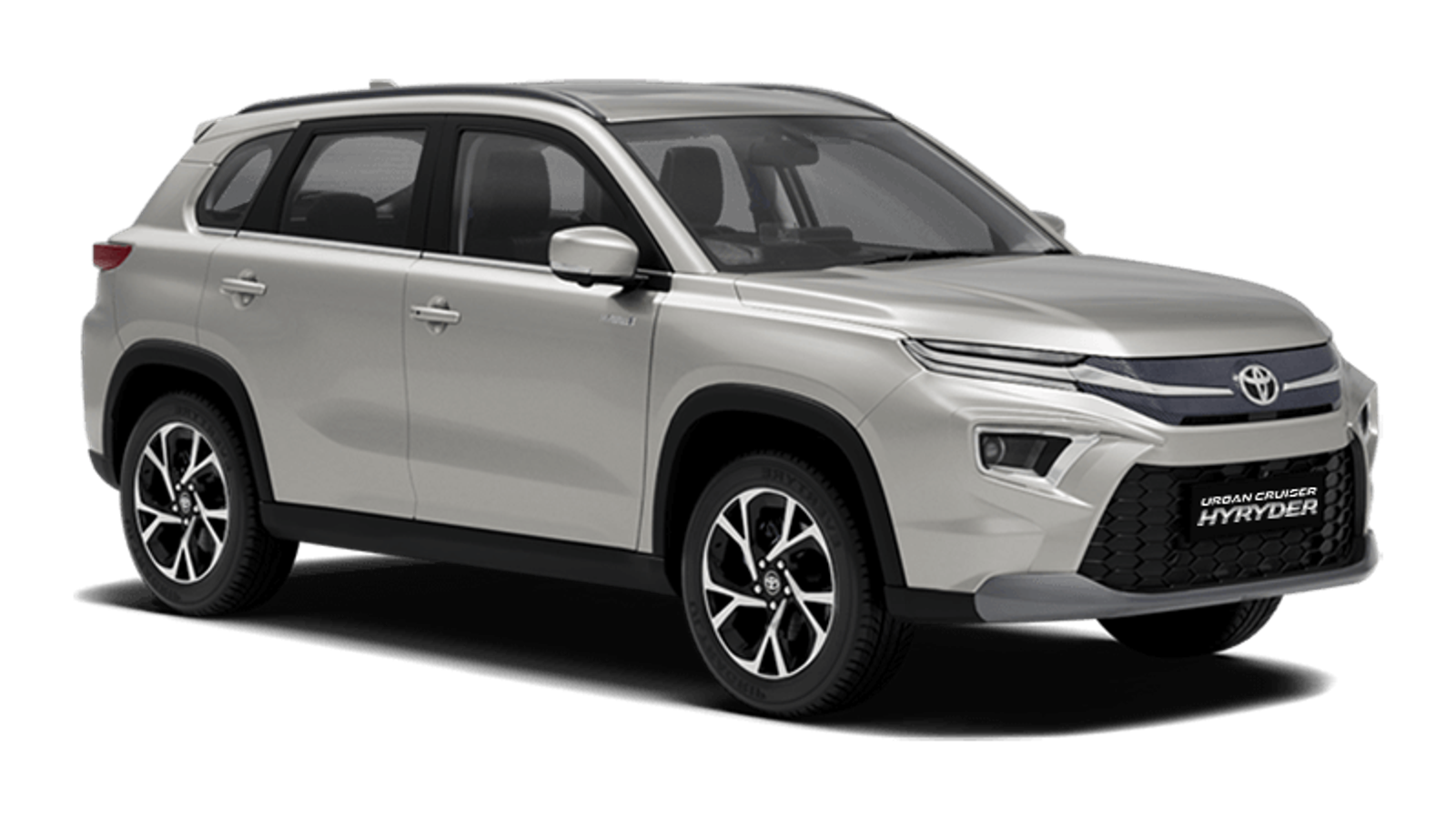
| Item | Share of CIF | Amount |
|---|---|---|
| Vehicle priceIPAS price for a car sourced in India | 728,810 MURUS$15,500 | |
| Shipping and insuranceIndia to Mauritius | 337,980 MURUS$7,188 | |
| CIF valueCost, insurance and freight: the customs value | 1,066,790 MURUS$22,688 | |
| Customs duties and taxes | ||
| Basic customs duty (0%)0% of CIF | 0 MURUS$0 | |
| Additional duty (35%)35% of CIF | 373,386 MURUS$7,941 | |
| GST/VAT (15%)15% of CIF plus the duties above20.2% of CIF | 216,010 MURUS$4,594 | |
| Total duties and taxes55.2% of CIF | 589,396 MURUS$12,535 | |
| Service and handling | ||
| Premium Import ServiceOptional end-to-end import management by IPAS | 48,854 MURUS$1,039 | |
| Destination handlingPort terminal and customs clearance handling | 83,696 MURUS$1,780 | |
| Total landed cost | 1,788,735 MURUS$38,042 | |
Documents Required
The documentation requirements differ between new and used vehicle imports. All customs declarations are processed electronically through the MRA TradeNet system.
For All Imported Vehicles
- Bill of Entry (Customs Declaration) — submitted via TradeNet
- Commercial Invoice or Purchase Invoice showing CIF value
- Original Bill of Lading, Telex Release, or Air Waybill (2 copies)
- Marine Insurance Certificate
- Packing List
- CO2 Emission Certificate (for motor cars)
- NIC copy (for individuals) or Certificate of Incorporation + Business Registration Number (for companies)
Additional Documents for Used Vehicles
- Import Permit from Ministry of Commerce (must be obtained 4-6 months in advance)
- Deregistration Certificate and Export Certificate or permit from the official vehicle registration body in the exporting country
- A document from the exporting country's authorities showing the vehicle is not stolen
Additional Documents for Japan-Origin Vehicles
- Pro-forma Invoice
- Japanese deregistration certificate (export certificate)
- Signed declaration
- Certified true copy of the original Auction Sheet in English, showing the auction house, date, lot number and a grade of at least 3.5 out of 5
- TAN Certificate
Important Notes on Documentation
- The Bill of Entry must be submitted within 30 days of the vehicle's arrival at Port Louis
- Duty exemption claims must be supported by documentation filed within 15 days of customs clearance
- All documents must accurately reflect the vehicle's chassis number, make, model, year, and specifications
- Incomplete documentation is the single most common cause of clearance delays at Port Louis
Customs Clearance Timeline
| Stage | Duration | Details |
|---|---|---|
| Import permit application (used only) | 4-6 months | Must be obtained before shipping |
| Arrange shipping and documentation | 1-2 weeks | Marine insurance, invoice, B/L preparation |
| Sea freight transit | 5 days to 5 weeks | Depends on origin (South Africa shortest, Japan/UK longest) |
| Port discharge at Port Louis | 1-2 days | Vehicle unloaded and placed in customs area |
| TradeNet declaration and MRA assessment | 2-5 days | Electronic submission, duty calculation, payment |
| Duty payment and customs release | 1-3 days | Payment via MRA channels, release order issued |
| Vehicle examination (NLTA VES) | 1-3 days | Physical inspection at Vehicle Examination Station |
| NLTA registration | 3-5 working days | After all inspections and documentation complete |
Total Estimated Timeline: 3-10 weeks (from shipping to registration, excluding the import permit lead time for used vehicles)
Tips to Avoid Delays
- Apply for the import permit immediately if importing a used vehicle — the 4-6 month processing time is the single biggest bottleneck
- Ensure the CO2 emission certificate is obtained before shipping, as vehicles cannot clear customs without it
- Use a licensed customs broker for TradeNet submission — the electronic system requires familiarity with MRA classification codes
- Verify that the vehicle falls within the 18-month to 4-year age window (3 years for double-cab pickups) at the date of shipment before committing to purchase
- Submit the Bill of Entry within 30 days of arrival to avoid storage penalties
Homologation and Vehicle Approval
Mauritius does not operate a formal type-approval homologation scheme equivalent to EU Whole Vehicle Type Approval or Australia's RAWS system. Instead, it relies on physical examination at government-operated inspection stations.
Vehicle Examination Stations (VES)
After customs clearance, all imported vehicles must be presented to an NLTA Vehicle Examination Station for physical inspection. The VES checks:
- Vehicle identification (chassis and engine number verification)
- Roadworthiness (brakes, tyres, suspension, lights, mirrors, seat belts)
- Steering configuration (RHD confirmation)
- Emissions compliance
- General condition and safety equipment
Upon passing the VES inspection, the vehicle receives a Particulars of Motor Vehicle Form — this document is mandatory for registration and cannot be substituted.
Mauritius Standards Bureau (MSB)
The MSB may require conformity certificates for certain vehicle categories. This is not a universal requirement but applies to specific classifications. Importers should check with the MSB whether their vehicle type requires additional certification.
No Pre-Shipment Inspection Requirement
Unlike Kenya (which requires PVOC pre-export inspection) or Nigeria (which requires JEVIC/BVQI), Mauritius does not mandate a formal pre-shipment inspection programme. The primary inspection occurs after arrival at the VES. However, obtaining a pre-departure inspection from a reputable agency in the origin country is strongly recommended to avoid discovering issues after the vehicle has already shipped.
A new decentralised NLTA registration centre in Phoenix was expected to open in late 2025, which should reduce processing times for inspections and registration in the central part of the island.
Registration Procedures and Costs
After customs clearance and VES inspection, the vehicle must be registered with the NLTA. The registration process follows a specific sequence.
Registration Steps
- Complete customs clearance at Port Louis — pay all duties and taxes via MRA
- Obtain the original Bill of Entry as proof of customs clearance
- Present the vehicle to a Vehicle Examination Station — receive the Particulars of Motor Vehicle Form
- Register the deed of sale with the Registrar — obtain a Payment Receipt
- Report to NLTA with all required documents:
- Deed of sale and payment receipt
- Particulars of Motor Vehicle Form (from VES)
- Original Bill of Entry
- NIC or BRN
- Import Permit (for used vehicles)
- Pay Road Tax (Motor Vehicle Licence / MVL) — now exclusively online via the MauPass system
- NLTA issues the Registration Book and number plates
Road Tax (MVL) Fees
Annual road tax ranges from Rs 200 to Rs 4,000 depending on vehicle type and size. As of July 2025, the 50% MVL fee discount previously available for EVs and hybrids has been removed — all vehicles now pay the standard rate.
Registration Fee Changes (July 2025)
First-time registration fees increased by 30% across all vehicle categories from July 2025. This increase applies equally to new and used vehicle imports and is a notable addition to the total landed cost.
Post-Registration Requirements
- Third-party motor insurance is mandatory before driving on public roads
- The Registration Book must be carried in the vehicle at all times
- Annual fitness inspections are required for vehicles above a certain age
- Transfer of ownership requires an updated deed of sale and NLTA notification
MauPass Digital System
Mauritius has fully digitised its road tax payment system through MauPass. Vehicle owners must create a MauPass account to pay MVL fees, and the system is the sole channel for road tax transactions. Physical payment at NLTA offices is no longer accepted for MVL.
Frequently Asked Questions
Q: What is the age limit for importing a used car to Mauritius? A: Used motorcars must be between 18 months and 4 years old from first registration at the date of shipment; dual-purpose vehicles, including double-cab pickups, between 18 months and 3 years. This is one of the strictest age windows globally — both too-new and too-old vehicles are rejected. For a shipment in mid-2026, that means a car first registered between mid-2022 and the end of 2024.
Q: Do I need an import permit to bring a car to Mauritius? A: For used vehicles, yes. An import permit from the Ministry of Commerce is mandatory and takes 4 to 6 months to process, and only authorised dealers and listed individual importers (such as returning residents) may import second-hand vehicles. New vehicles do not require an import permit. Apply for the permit as early as possible — it is the single biggest lead-time bottleneck in the process.
Q: How much excise do electric cars pay in Mauritius? A: Battery electric vehicles pay 15% excise if the electric motor is rated up to 180 kW and 25% above that, under the schedule in force since 6 June 2025. With 15% VAT on top, that is about 32% or 44% of CIF. The 50% MVL discount for EVs and hybrids was also removed. An EV is still far cheaper to import than an equivalent petrol car, which pays 45-100% excise.
Q: Can I import a left-hand drive vehicle to Mauritius? A: No. Mauritius drives on the left and requires right-hand drive for all vehicles. LHD vehicles cannot be imported, converted locally, or registered. This applies to all vehicle categories without exception for private individuals.
Q: How do hybrid vehicles compare to ICE vehicles for import duty in Mauritius? A: Hybrids receive lower excise rates than equivalent ICE vehicles in the same engine displacement bracket. Mild and full hybrids pay 25%, 35%, 55% or 75% by engine size, and plug-in hybrids pay 15%, 25%, 35% or 55%, against 45%, 55%, 75% or 100% for petrol and diesel cars. A 1.5-litre Toyota Aqua hybrid, for example, pays about 55% of CIF in total, against about 78% for a 1.5-litre petrol car.
Q: Is there a CO2 levy on imported cars in Mauritius? A: No. The CO2 levy and rebate scheme under section 3C of the Excise Act has been suspended since 30 July 2016 and remains suspended in 2026, so no CO2 levy is charged and no rebate is given. The total tax is excise plus 15% VAT.
Q: How long does it take to import a car to Mauritius? A: For new vehicles, expect 4-10 weeks from shipping to registration. For used vehicles, add the 4-6 month import permit processing time before you can ship. Sea transit from Japan takes 3-4 weeks, from the UK 4-5 weeks, and from South Africa as little as 5-7 days. Customs clearance at Port Louis typically takes 3-8 days with complete documentation.
Q: What happens if my vehicle is outside the age window? A: Vehicles that do not meet the 18-month to 4-year age requirement for motorcars (or the respective limits for double-cab pickups, vans, lorries and buses) will be refused clearance by MRA. The importer must arrange re-export at their own expense. There is no appeal process for age limit violations on standard private vehicle imports — the only exception is the first vehicle imported by a listed individual importer for personal use.
Ready to Import a Car to Mauritius?
Importing a vehicle to Mauritius requires careful planning — especially around the strict age window, the import permit rules for used vehicles, and the excise schedule in force since June 2025. The excise-driven taxation system means your import cost depends heavily on engine displacement (for ICE and hybrids) or motor power (for BEV), making accurate duty calculation essential before committing to a purchase.
Calculate your exact import cost
Use CarImport.AI to get a complete, itemised breakdown of customs duty, excise duty, VAT, shipping costs, and all fees for your specific vehicle to Mauritius. No estimates, no guesswork — just accurate numbers based on your vehicle's specifications and Mauritian tariff schedules.
Calculate Your Import Cost on CarImport.AI
Already have a vehicle?
Use IPAS EXPRESS Pro Car Shipping to get competitive sea freight quotes to Port Louis, with transparent pricing and stage-by-stage timelines for your specific route.
Sources: Mauritius Revenue Authority (mra.mu); Excise Act 1994 First Schedule as substituted by the Finance Act 2025; Customs Tariff Act 1969 (MRA Integrated Tariff, October 2026); VAT Act 1998; National Land Transport Authority (nlta.mu); Consumer Protection (Control of Imports) Regulations 2017 (as amended to 2026); Mauritius Standards Bureau (msb.intnet.mu).
Ready to Import Your Vehicle?
Two tools, two use cases. Pick the one that fits your needs.
Source a vehicle through IPAS and calculate the full landed cost — customs duties, shipping, and compliance — to destinations across the world.
Calculate Landed CostIPAS Express
Already have a vehicle? Get instant shipping quotes — sea freight, air freight, or RoRo — for one car or multiple vehicles worldwide.
Get Shipping Quote