
Introduction
South Korea is one of the most FTA-connected economies on earth, and for vehicle importers that single fact dominates everything else. The MFN customs duty on a passenger car is 8% — but for vehicles originating in the European Union, the United States, the United Kingdom, Canada, Australia or New Zealand, the rate is zero, provided you can prove origin. The difference between holding a valid certificate of origin and not holding one is roughly nine percentage points of landed cost.
Beyond duty, Korea runs a four-step border cascade that catches people out: customs duty, then an Individual Consumption Tax on the duty-inclusive value, then an Education Tax calculated as 30% of that consumption tax, then 10% VAT on everything accumulated. The Education Tax is small but mandatory, and it is the single most commonly omitted line in third-party estimates of Korean import cost.
Put together, a European or American car with proper origin documentation lands at about 17.15% of CIF. The same car without origin proof, or from a country with no agreement, lands at about 26.5%.
Korea also offers genuinely valuable electric-vehicle relief — but not in the form most sources describe. It is not a reduced tax rate. It is a fixed-won exemption cap applied against the consumption tax: up to ₩3,000,000 for a battery EV and ₩4,000,000 for a hydrogen fuel-cell vehicle. On a moderately priced EV that can wipe out the consumption tax and the Education Tax entirely, taking the total burden down to just the 10% VAT.
Two persistent myths are worth killing at the outset. Japanese vehicles are not prohibited from import into Korea — no such rule exists. And the 15% figure attached to Korea–US car trade is a cap on Korean exports to the United States; it has nothing to do with importing an American car into Korea, which is duty-free.
Quick Facts
| Detail | Information |
|---|---|
| Customs Authority | Korea Customs Service (관세청) — customs.go.kr |
| Safety Certification | Korea Transportation Safety Authority (TS) — KMVSS |
| Emissions Certification | Ministry of Environment / NIER |
| Traffic Side | Right-hand traffic (drive on the right) |
| Steering Requirement | LHD required — RHD effectively non-registrable |
| Customs Duty — MFN | 8% for passenger cars (HS 8703); 10% for goods vehicles (HS 8704) |
| Customs Duty — FTA origin | 0% for EU, US, UK, Canada, Australia, New Zealand with valid origin proof |
| Individual Consumption Tax (ICT) | 5% on (CIF + duty) |
| Education Tax | 30% of the ICT amount — mandatory, frequently omitted |
| VAT | 10% on (CIF + duty + ICT + Education Tax) |
| Total — FTA origin passenger car | ≈ 17.15% of CIF |
| Total — MFN origin passenger car | ≈ 26.52% of CIF |
| Total — goods vehicle at MFN | ≈ 28.85% of CIF |
| Electric vehicle relief | Fixed ICT exemption cap — BEV ₩3,000,000, FCEV ₩4,000,000, HEV/PHEV ₩1,000,000 |
| Vehicle Age Limit | None at customs — the real limit is passing safety and emissions certification |
| Classic / vintage concession | None — Korea has no 25-year rule |
| Japanese-origin vehicles | Not prohibited — freely importable |
| Pickup Classification | Double-cab pickups → HS 8703 (passenger) — opposite to the Gulf and Japan |
| Acquisition Tax | 7% — a post-customs local registration tax, not part of the border cascade |
| Main Seaports | Busan, Incheon, Pyeongtaek, Ulsan, Gwangyang |
| Currency | South Korean Won (KRW) — managed float, no peg |
Types of Cars That Can Be Imported
No customs age limit
Korea imposes no age cap at the border. The effective constraint is downstream: the vehicle must pass individual KMVSS safety certification and Ministry of Environment emissions certification before it can be registered. An older vehicle will struggle with emissions certification long before customs raises an objection.
There is no classic or vintage concession. Korea has nothing resembling the American 25-year rule, and a 30-year-old car is still classified under HS 8703 or 8704 at standard rates. Collector's-piece treatment under HS 9705 exists in principle but the criteria are strict and it is not a general pathway for old cars.
Steering — LHD required
Korea drives on the right and standard vehicles are left-hand drive. Right-hand-drive vehicles are effectively non-registrable for normal private road use, so treat RHD as inadmissible. Every practical IPAS source market for Korea — the USA, Germany, the wider EU — supplies LHD vehicles.
Origin — no national prohibitions
There is no prohibition on Japanese vehicles, or on vehicles of any other national origin. Periodic consumer boycotts of Japanese brands are sentiment, not customs law, and have no bearing on admissibility. A legacy claim that Japanese cars are banned from Korea circulates widely and is simply false.
Condition
There is no formal cargo ban on salvage, flood or total-loss vehicles, but they cannot pass safety and emissions certification and therefore cannot be registered. Treat them as effectively inadmissible.
Who can import
Anyone — individual or company. There is no general residency requirement to import a vehicle into Korea. A claim that importers need one to two years of Korean residency circulates and is wrong; it conflates general eligibility with the optional relocation exemption described below.
Cars You Can Import to South Korea
Each card is a full landed-cost calculation: the car's price, shipping, every duty and tax, and handling, worked out on 9 November 2026 with the rules in force that day. All are left-hand drive to suit South Korea's roads. Tap a car to see its full breakdown, or open it to change the trim, colour or port.
More cars you can import to South Korea
New cars IPAS sources to order that meet South Korea's import rules. Prices are ex works, before shipping and duty. Open a car to work out its full landed cost.
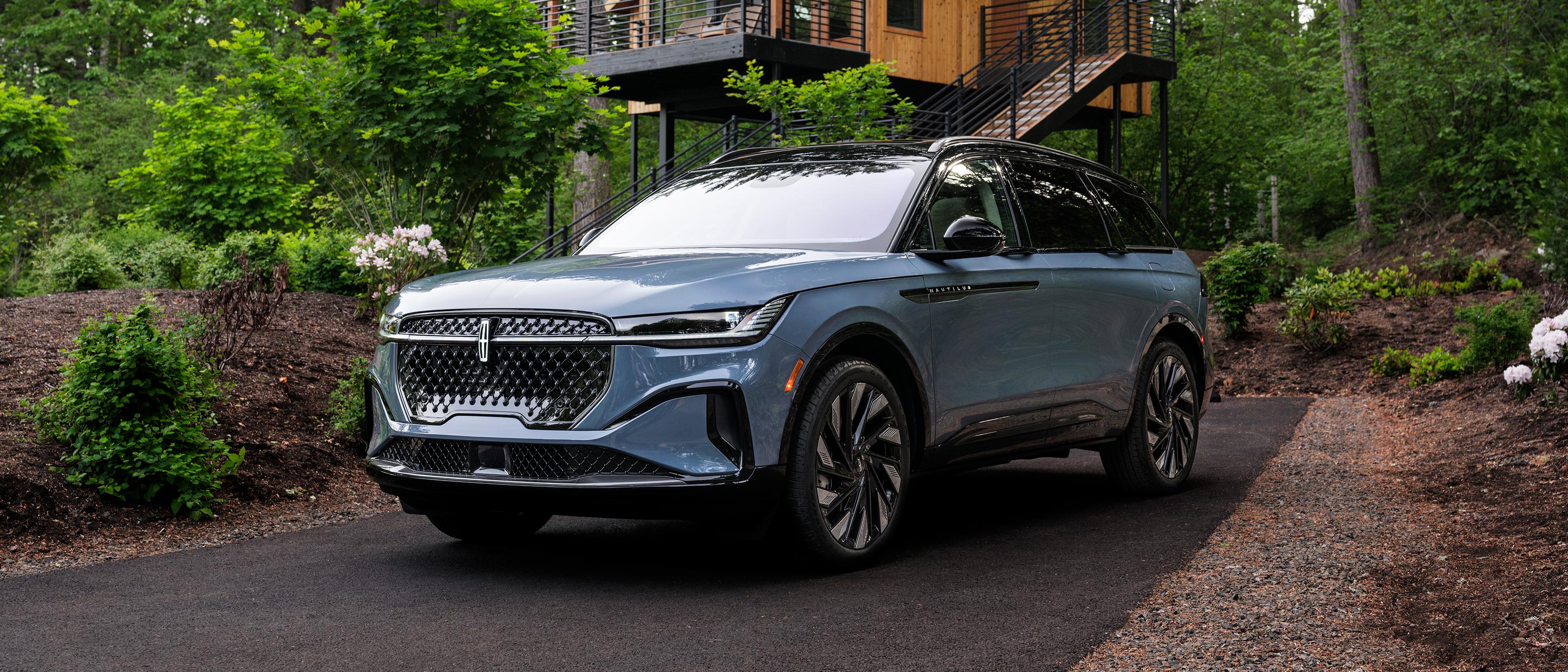 LHDBackorder2026
Lincoln Nautilus
SUV · 6 VariantsPetrol · HybridFrom $67,200Ex Works, USA LHD/C-RHDBackorder2025
Lincoln Navigator
SUV · 3 VariantsPetrolFrom $119,900Ex Works, USA LHDBackorder2025
Ford Mustang Fastback
Coupe · 4 VariantsPetrolFrom $55,900Ex Works, USA LHD/C-RHDBackorder2025
Ford Super Duty F-250
Pickup · 10 VariantsPetrol · DieselFrom $54,400Ex Works, USA LHDBackorder2025
Ford Ranger
Pickup · 3 VariantsPetrolFrom $44,900Ex Works, USA LHDBackorder2026
Toyota Land Cruiser 78 Troop Carrier
SUV · 2 VariantsDieselFrom $54,200Ex Works, UAE LHDBackorder2026
Toyota bZ
SUV · 5 VariantsElectricFrom $41,900Ex Works, USA LHDBackorder2026
Toyota RAV4 Prime
SUV · 4 VariantsPlug-in HybridFrom $49,800Ex Works, USA LHDBackorder2026
Chevrolet Corvette Stingray Coupe
Coupe · 3 VariantsPetrolFrom $87,000Ex Works, USA LHD/C-RHDBackorder2025
Chevrolet Silverado 2500 HD
Pickup · 15 VariantsPetrol · DieselFrom $64,600Ex Works, USA LHDBackorder2026
Zeekr 009
Van & MPV · 4 VariantsElectricFrom $69,800Ex Works, China🇨🇳 LHDBackorder2026
Mercedes-Benz G-Class
SUV · 8 VariantsDiesel · Hybrid · ElectricFrom $140,300Ex Works, Germany LHDBackorder2026
Mercedes-Benz GLS
SUV · 2 VariantsDieselFrom $107,400Ex Works, Canada LHDBackorder2026
Lexus RZ
SUV · 5 VariantsElectricFrom $52,600Ex Works, Canada LHDBackorder2026
Jeep Grand Wagoneer
SUV · 7 VariantsPetrolFrom $76,800Ex Works, USA LHDBackorder2026
Infiniti QX80
SUV · 6 VariantsPetrolFrom $100,500Ex Works, USA
Seaports Supporting Vehicle Import
| Port | Location | Role |
|---|---|---|
| Port of Busan | Busan | Korea's largest port and principal container gateway; among the busiest in the world |
| Pyeongtaek | Gyeonggi | The dedicated automotive port — the main vehicle-handling terminal |
| Incheon | Incheon | Serves the Seoul metropolitan area |
| Ulsan | Ulsan | Industrial and automotive port |
| Gwangyang | Jeollanam-do | Deepwater container port |
Pyeongtaek is Korea's vehicle port and handles the bulk of car imports and exports. Busan offers the widest range of sailings and is often the better routing from more distant origins.
Restrictions on Vehicle Import for Individuals
- Right-hand-drive vehicles are effectively inadmissible for private road registration.
- KMVSS safety certification and MoE emissions certification are both required before registration. They run in parallel and neither is a customs matter.
- Salvage and flood-damaged vehicles cannot be certified and therefore cannot be registered.
- FTA preference requires valid origin documentation at clearance. Without it, MFN applies regardless of where the car physically shipped from.
The relocation exemption — optional, not a precondition
A person relocating their domicile to Korea, whether a returning national or a relocating foreign resident, may import one vehicle exempt from duty and taxes as relocation household goods. The conditions are prior ownership and use abroad (commonly at least three months), import within about six months of relocation, and a resale restriction of around two years.
This is an optional route, not a gate. Anyone may import a vehicle normally by paying the full duties and taxes. If you qualify for the relocation exemption it is very valuable — it removes the entire cascade, not just the duty — but it is not a requirement and its absence does not block an import.
Duty Structure Overview
Korea applies a four-step cascade at the border, in this exact order:
- Customs Duty = CIF × duty rate
- Individual Consumption Tax (ICT) = (CIF + duty) × 5%, less any eco-friendly exemption
- Education Tax = 30% of the ICT amount
- VAT = (CIF + duty + ICT + Education Tax) × 10%
Do not omit the Education Tax. It is a mandatory border tax collected in the customs clearance chain, calculated on the consumption tax rather than on the vehicle value. On an FTA-origin car it adds about 1.5% of CIF — small in isolation, but it is the line most often missing from third-party estimates.
Acquisition Tax is not a border tax. Korea's 7% Acquisition Tax on non-commercial passenger cars is a local registration tax paid to the local government after clearance. It is a real and substantial cost, but it does not belong in the import cascade. See the registration section below.
A note on the consumption tax rate
The statutory ICT rate is 5%. A temporary general reduction to 3.5% for passenger cars applied through 30 June 2026 and reverted to 5% on 1 July 2026. That reduction was a general stimulus measure for all passenger cars, not an EV incentive, and it has now lapsed. The operative rate is 5%.
Customs duty by origin
| Origin | Agreement | Duty on qualifying HS 8703 |
|---|---|---|
| European Union (incl. Germany, Belgium) | Korea–EU FTA (2011) | 0% |
| United States | KORUS (2012) | 0% |
| United Kingdom | Korea–UK FTA (2021) | 0% |
| Canada | CKFTA (2015) | 0% |
| Australia | KAFTA (2014) | 0% |
| New Zealand | KNZFTA (2015) | 0% |
| China | Korea–China FTA (2015) | Mostly 0%; some auto lines remain sensitive |
| India | Korea–India CEPA (2010) | Above zero for CBUs — often around 4%, some at 8% |
| Thailand / ASEAN | Korea–ASEAN FTA, RCEP | Many lines still 5–8% — autos are sensitive |
| Japan | RCEP (2022) | Reduced but often above zero; assume 8% unless a line confirms otherwise |
| UAE | Korea–UAE CEPA — not in force | 8% MFN |
| Mexico | No agreement | 8% MFN |
Two conditions must both hold for a preferential rate: the vehicle must satisfy the agreement's rules of origin, and a valid certificate of origin or approved-exporter declaration must be presented at clearance. Absent valid origin proof, Korea applies 8% MFN on passenger cars and 10% on goods vehicles regardless of where the vehicle physically shipped from.
In practice, a new vehicle sourced directly from an OEM in an FTA partner country will carry the manufacturer's origin documentation, so zero is the expected rate for qualifying EU, US, UK, Canadian, Australian and New Zealand vehicles.
Worked example 1 — German petrol saloon with EU origin proof, CIF ₩60,000,000
| Charge | Calculation | Amount (KRW) |
|---|---|---|
| Customs value (CIF) | — | 60,000,000 |
| Customs duty | 0% — Korea–EU FTA | 0 |
| Individual Consumption Tax | 60,000,000 × 5% | 3,000,000 |
| Education Tax | 3,000,000 × 30% | 900,000 |
| VAT | (60,000,000 + 3,000,000 + 900,000) × 10% | 6,390,000 |
| Total border taxes | 10,290,000 (17.15% of CIF) | |
| Landed cost | 70,290,000 |
Worked example 2 — The same car without valid origin documentation, CIF ₩60,000,000
| Charge | Calculation | Amount (KRW) |
|---|---|---|
| Customs duty | 8% MFN | 4,800,000 |
| Individual Consumption Tax | (60,000,000 + 4,800,000) × 5% | 3,240,000 |
| Education Tax | 3,240,000 × 30% | 972,000 |
| VAT | 69,012,000 × 10% | 6,901,200 |
| Total border taxes | 15,913,200 (26.52% of CIF) |
The missing certificate costs ₩5.6 million on this car. Origin documentation is the single most valuable piece of paper in a Korean import.
Worked example 3 — Battery EV from the EU, CIF ₩50,000,000
| Charge | Calculation | Amount (KRW) |
|---|---|---|
| Customs duty | 0% — Korea–EU FTA | 0 |
| ICT computed | 50,000,000 × 5% | 2,500,000 |
| Less eco-friendly exemption | capped at ₩3,000,000 — fully absorbs it | −2,500,000 |
| ICT payable | 0 | |
| Education Tax | 30% of ₩0 | 0 |
| VAT | 50,000,000 × 10% | 5,000,000 |
| Total border taxes | 5,000,000 (10.00% of CIF) |
Because the exemption is a fixed amount rather than a rate, it eliminates the consumption tax entirely on a moderately priced EV — and with it the Education Tax, which is calculated on the ICT. Only VAT remains.
Worked example 4 — Battery EV from the EU, CIF ₩80,000,000
| Charge | Calculation | Amount (KRW) |
|---|---|---|
| ICT computed | 80,000,000 × 5% | 4,000,000 |
| Less exemption cap | −3,000,000 | −3,000,000 |
| ICT payable | 1,000,000 | |
| Education Tax | 1,000,000 × 30% | 300,000 |
| VAT | (80,000,000 + 1,000,000 + 300,000) × 10% | 8,130,000 |
| Total border taxes | 9,430,000 (11.79% of CIF) |
On a more expensive EV the cap is exhausted and the residual consumption tax reappears — which is why the benefit shrinks in percentage terms as the vehicle gets dearer.
These figures show the structure. Get the exact duty and full landed cost for your specific vehicle, origin and documentation position using CarImport.AI.

Calculate your exact import duty to South Korea
Get a vehicle-specific duty and full landed-cost breakdown — HS classification, every tax, levy and FTA, plus shipping — calculated for your exact make, model and specs.
- Vehicle-specific HS code
- All duties, taxes & FTAs
- Shipping + est. landed cost
Effective rate quick reference
| Scenario | Effective rate on CIF |
|---|---|
| Petrol or diesel, FTA origin with documentation | ≈ 17.15% |
| Petrol or diesel, MFN origin or no origin proof | ≈ 26.52% |
| Battery EV, FTA origin, consumption tax fully exempted | ≈ 10.00% |
| Goods vehicle (HS 8704), MFN origin | ≈ 28.85% |
Worked Example: Importing a 2026 Ford Bronco to South Korea
Here is the full landed cost of one car, a 2026 Ford Bronco shipped from the USA to South Korea, worked out on 9 November 2026 with the customs rules in force that day. It lands at 89,844,514 KRW (about US$65,987), and duties and taxes come to 17.1% of its CIF value.
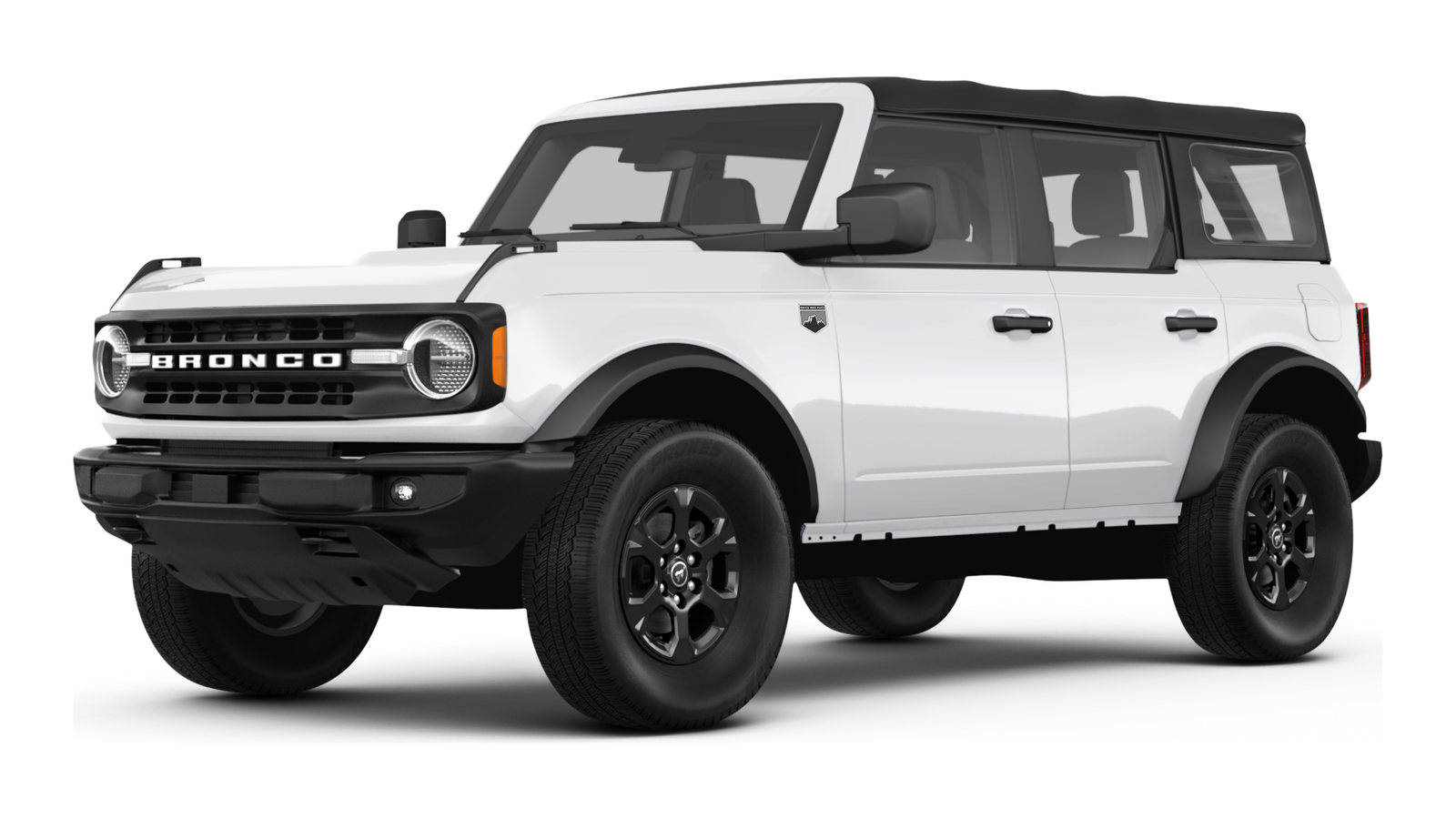
| Item | Share of CIF | Amount |
|---|---|---|
| Vehicle priceIPAS price for a car sourced in the USA | 66,171,267 KRWUS$48,600 | |
| Shipping and insuranceUSA to South Korea | 6,370,686 KRWUS$4,679 | |
| CIF valueCost, insurance and freight: the customs value | 72,541,953 KRWUS$53,279 | |
| Customs duties and taxes | ||
| Basic customs duty (0%)0% of CIF | 0 KRWUS$0 | |
| Additional duty (5%)Base or related charges differ from CIF; see the duty structure above6.5% of CIF | 4,715,043 KRWUS$3,463 | |
| GST/VAT (10%)10% of CIF plus the duties above10.6% of CIF | 7,725,427 KRWUS$5,674 | |
| Total duties and taxes17.1% of CIF | 12,440,470 KRWUS$9,137 | |
| Service and handling | ||
| Premium Import ServiceOptional end-to-end import management by IPAS | 2,506,611 KRWUS$1,841 | |
| Destination handlingPort terminal and customs clearance handling | 2,355,479 KRWUS$1,730 | |
| Total landed cost | 89,844,514 KRWUS$65,987 | |
Electric and Hybrid Vehicles
Korea's eco-friendly relief is real and worth planning around — but it works differently from how it is usually described.
It is a fixed-won cap, not a rate cut
The relief applies as a maximum reduction amount against the computed Individual Consumption Tax. If the computed ICT is less than or equal to the cap, the tax falls to zero; if it exceeds the cap, you pay the difference.
| Vehicle type | HS | ICT exemption cap |
|---|---|---|
| Battery-electric (BEV) | 8703.80 | up to ₩3,000,000 |
| Hydrogen fuel-cell (FCEV) | 8703.90 | up to ₩4,000,000 |
| Hybrid (HEV) | 8703.40 / .50 | up to ₩1,000,000 |
| Plug-in hybrid (PHEV) | 8703.60 / .70 | up to approximately ₩1,000,000 |
A common error is to describe Korea's EV incentive as a "3.5% consumption tax rate". It is not a rate at all. The consequence of the difference is significant: on a cheaper EV the entire consumption tax — and therefore the entire Education Tax — is wiped out, while on an expensive one the cap is a fixed sum that matters proportionally less.
No VAT relief
VAT applies at 10% to electric vehicles exactly as to everything else. There is no vehicle VAT exemption in Korea.
Acquisition Tax relief exists too, but separately
At the registration stage, eco-friendly vehicles also receive Acquisition Tax reductions — up to ₩1,400,000 for a battery EV and up to ₩400,000 for a hybrid. This is a local tax matter and sits outside the border cascade, but it is worth adding to your total cost of acquisition.
Sunset dates
Both the consumption tax and acquisition tax eco-friendly reliefs run on statutory sunset dates that have been extended repeatedly. They should be treated as active for 2026 imports, but confirm the current position with your broker if you are planning well ahead.
Pickup Trucks — Korea Classifies Them as Passenger Vehicles
This is where Korea diverges sharply from most of Asia and the Gulf.
Korea applies the WCO principal-design test, and a double-cab pickup with a passenger-comfort cabin classifies under HS 8703 as a passenger vehicle. Only a single-cab or extended-cab pickup where cargo carriage predominates goes to HS 8704.
That is the opposite of Japan, the UAE, Qatar, Bahrain, Thailand, the UK and most of the v4 corpus, all of which route every pickup to HS 8704 on the body-style test.
Unlike those markets, the classification is not rate-neutral in Korea. HS 8703 carries 8% MFN while HS 8704 carries 10%, and the two headings sit in different consumption tax and registration categories. Getting the classification right matters to the bill, not just to the paperwork.
Documents Required for Import
- Commercial invoice showing the purchase price
- Bill of Lading (original or telex release)
- Packing list with make, model, year, VIN, engine capacity and colour
- Certificate of Origin or approved-exporter origin declaration — this is the document that determines whether you pay 0% or 8%
- Certificate of Title or equivalent ownership document
- Export certificate or deregistration document from the origin country
- Korea Customs import declaration
- KMVSS safety certification application and technical documentation
- Ministry of Environment emissions certification application
- Korean identity or business registration documentation
- Compulsory motor insurance, at registration
Customs Clearance Timeline
| Stage | Typical duration | Notes |
|---|---|---|
| Vessel arrival to discharge | 1–3 days | Pyeongtaek or Busan |
| Customs declaration and assessment | 2–5 working days | Four-tax cascade; origin proof reviewed here |
| Duty and tax payment, release | 1–2 days | |
| KMVSS safety certification | 2–6 weeks | Individual certification through TS |
| Emissions certification (MoE / NIER) | 2–6 weeks | Runs in parallel with safety |
| Registration and plates | 2–5 days | Acquisition Tax paid here |
| Typical total | 4–10 weeks | Certification is the dominant variable |
Customs itself is efficient. The timeline is driven by the two individual certification processes, which run in parallel but each take several weeks. Origin documentation problems, by contrast, do not delay clearance — they simply make it more expensive, because the MFN rate applies instead.
Homologation and Vehicle Approval
Two separate certifications are required before registration, and neither is a customs matter:
- KMVSS safety certification, administered by the Korea Transportation Safety Authority. For an individually imported vehicle this is a single-vehicle certification examining lighting, brakes, glazing, restraints and structural compliance against Korean Motor Vehicle Safety Standards.
- Emissions certification, administered by the Ministry of Environment through the National Institute of Environmental Research. Korean emissions standards are strict, and this is usually the harder of the two for an older or non-European vehicle.
Foreign certification is informative but not sufficient. Vehicles already built to European or American standards generally have an easier path, but they still require individual Korean certification.
Registration and Post-Customs Costs
These are real costs but they sit outside the border cascade — do not add them to the import tax total:
Acquisition Tax (취득세) — 7% of acquisition value for a non-commercial passenger car, lower for small and commercial vehicles. Paid to the local government at registration. Eco-friendly vehicles receive reductions of up to ₩1,400,000 for a battery EV and up to ₩400,000 for a hybrid.
Annual Automobile Tax (자동차세) — banded by engine displacement, with an education surtax of 30% of the automobile tax on top.
Compulsory liability insurance and standard registration fees complete the picture.
Note that the 7% Acquisition Tax is a substantial addition — on a ₩60,000,000 car it is ₩4,200,000, comparable to the entire consumption tax. Any total-cost plan for Korea must include it even though it is not an import tax.
Recent Regulatory Changes (2021–2026)
- 2021 — KORUS fully phased. All US industrial goods, including vehicles, reached duty-free treatment.
- 2021 — Korea–UK FTA entered into force as the continuity agreement after Brexit.
- 1 January 2022 — RCEP entered into force, creating the first tariff link between Korea and Japan on vehicles. Rates are staged and many auto lines remain above zero.
- November 2025 — US–Korea trade arrangement. Capped the US tariff on Korean-built cars exported to the United States at 15%, down from 25%. This is an outbound measure and does not affect Korea's inbound duty on American vehicles, which remains 0% under KORUS.
- Through 30 June 2026 — temporary consumption tax cut. The Individual Consumption Tax on passenger cars was temporarily reduced to 3.5% as a general stimulus measure.
- 1 July 2026 — consumption tax reverted to 5%. The temporary cut lapsed. The 5% rate is now operative.
Frequently Asked Questions
How much does it cost to import a car to South Korea?
It depends almost entirely on origin documentation. With a valid certificate of origin from an FTA partner such as the EU, US, UK, Canada, Australia or New Zealand, duty is zero and the total border tax is about 17.15% of CIF. Without it, 8% MFN duty applies and the total rises to about 26.52%. On top of that, budget the 7% Acquisition Tax at registration, which is a local tax rather than an import charge.
What is the Education Tax and do I really have to pay it?
Yes. It is a mandatory border tax equal to 30% of the Individual Consumption Tax, collected as part of the customs clearance chain. It is not large — roughly 1.5% of CIF on an FTA-origin car — but it is genuinely payable and it is the single most commonly omitted line in third-party estimates of Korean import cost. Note that if an EV exemption reduces the consumption tax to zero, the Education Tax also falls to zero, since it is calculated on the tax rather than the vehicle.
Are Japanese cars banned from being imported into Korea?
No. There is no prohibition on Japanese vehicles or on vehicles of any other national origin. Periodic consumer boycotts of Japanese brands are a matter of sentiment, not customs law. Japanese-origin vehicles do face a practical disadvantage, but it is a tariff one: RCEP rates on autos are staged and many lines remain above zero, so a Japanese car will often pay closer to the 8% MFN rate than the zero available from Europe or America.
Do American cars pay 15% duty in Korea?
No — they pay 0% under KORUS, provided origin documentation is in order. The 15% figure comes from the November 2025 US–Korea arrangement, which caps the tariff the United States charges on Korean-built cars exported to America. It is an outbound measure in the opposite direction and has no application to importing a US vehicle into Korea.
How does the electric vehicle incentive work?
As a fixed-won exemption cap applied against the Individual Consumption Tax — up to ₩3,000,000 for a battery EV, ₩4,000,000 for a hydrogen fuel-cell vehicle and ₩1,000,000 for a hybrid or plug-in hybrid. It is not a reduced tax rate, which is how it is frequently but wrongly described. On a moderately priced EV the cap absorbs the whole consumption tax and the Education Tax with it, leaving only 10% VAT. On an expensive EV the cap is exhausted and a residual consumption tax reappears. Separate Acquisition Tax reductions apply at registration.
Is there an age limit on importing a used car to Korea?
Not at customs. The real constraint is certification: the vehicle must pass individual KMVSS safety certification and Ministry of Environment emissions certification before it can be registered, and older vehicles typically fail on emissions. Korea has no classic or vintage tariff concession and nothing resembling the American 25-year rule.
Do I need to be a Korean resident to import a car?
No. Anyone, individual or company, may import a vehicle by paying the duties and taxes normally. There is no general residency requirement. A separate, optional relocation exemption lets someone moving their domicile to Korea bring one vehicle in free of duty and taxes, subject to prior ownership abroad, import within about six months of relocation, and a resale restriction of around two years — but that is a benefit available to some importers, not a condition imposed on all of them.
Are pickups treated as commercial vehicles in Korea?
Not double-cabs. Korea applies the principal-design test, so a double-cab pickup with a passenger-comfort cabin classifies as a passenger vehicle under HS 8703. Only single-cab and extended-cab pickups where cargo carriage predominates go to HS 8704. This is the opposite of Japan, the Gulf states and most of Asia, and unlike in those markets the distinction changes the duty rate — 8% for HS 8703 against 10% for HS 8704.
Ready to Import?
For Korea, the paperwork is the price. A German or American car arriving with a proper certificate of origin pays about 17% in border taxes; the identical car arriving without one pays about 27%. Nothing else you can control moves the number that much — so secure the origin documentation before the vehicle ships, not after it lands.
After that, plan for time rather than tax. KMVSS safety certification and Ministry of Environment emissions certification each take several weeks and run in parallel, and they are where an import into Korea actually gets delayed. And remember the two lines people forget: the Education Tax at the border, and the 7% Acquisition Tax at registration.
IPAS provides two tools to plan and execute your import:
CarImport.AI — Source a vehicle through IPAS and calculate the full landed cost to South Korea, running the complete four-step cascade: customs duty, Individual Consumption Tax with any eco-friendly exemption, Education Tax and VAT. Get exact figures for your specific vehicle and origin.
IPAS EXPRESS — Already have a vehicle? Get instant shipping quotes to Pyeongtaek, Busan or Incheon — sea freight, RoRo or air — with transparent, itemised pricing and a stage-by-stage timeline.
Ready to Import Your Vehicle?
Two tools, two use cases. Pick the one that fits your needs.
Source a vehicle through IPAS and calculate the full landed cost — customs duties, shipping, and compliance — to destinations across the world.
Calculate Landed CostIPAS Express
Already have a vehicle? Get instant shipping quotes — sea freight, air freight, or RoRo — for one car or multiple vehicles worldwide.
Get Shipping Quote