
Introduction
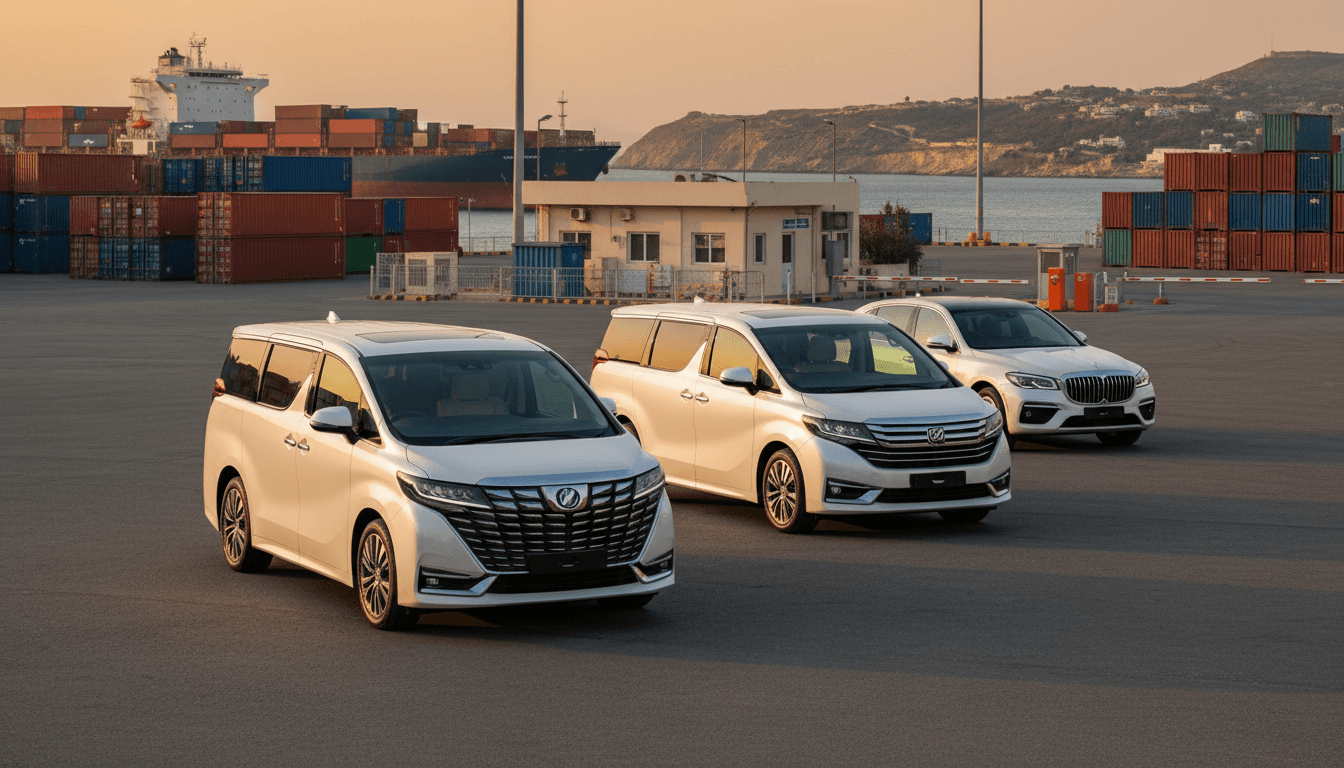
The European Union is a single customs territory of 27 member states, and that changes the shape of a vehicle import in a way no individual country does. A car from outside the EU clears customs once, at its first EU port of entry, and after release for free circulation it moves between all 27 states with no further customs obligation. You do not clear customs again crossing from Rotterdam into Germany, or from Spain into France.
The customs-stage bill is simple and has two parts. Customs duty at 10% under the Common External Tariff — the same rate whether the car is petrol, diesel, hybrid or electric — falling to 0% for vehicles originating in Japan, South Korea, Türkiye, and the UK where rules of origin are met. Then VAT, charged at the standard rate of the destination member state on the CIF value plus that duty.
Because VAT rates run from 17% in Luxembourg to 27% in Hungary, the destination you register in moves the total by ten percentage points. A US-built SUV lands at about 30.9% of CIF registering in Germany, and about 39.7% registering in Hungary. Origin sets the duty; destination sets the VAT.
There is one substantial complication, and it is unique to the EU among the markets IPAS covers: a countervailing duty on Chinese-built battery-electric cars, running from 17.0% to 35.3% depending on the manufacturer, stacked on top of the 10% tariff and cascading into the VAT base. A Chinese-built EV can land at 74% of CIF where a Japanese petrol car lands at 21%.
Finally, a warning about scope. The figures in this guide are customs-stage only. Member states levy their own one-time registration taxes at first registration — Denmark's Registreringsafgift, the Netherlands' BPM, France's Malus écologique, Ireland's VRT and others — and these are frequently far larger than the customs bill. They are covered separately below, but they are not part of what you pay at the border.
Quick Facts
| Detail | Information |
|---|---|
| Customs territory | 27 member states, cleared once at first port of entry |
| Members | AT, BE, BG, HR, CY, CZ, DK, EE, FI, FR, DE, GR, HU, IE, IT, LV, LT, LU, MT, NL, PL, PT, RO, SK, SI, ES, SE |
| Legal framework | Union Customs Code, Regulation (EU) 952/2013 |
| Customs Duty (Common External Tariff) | 10% on HS 8703 — uniform across petrol, diesel, hybrid and electric |
| 0% duty origins | Japan, South Korea, Türkiye (with A.TR), United Kingdom (if rules of origin met) |
| United States | No FTA — 10% |
| China | 10%, plus a countervailing duty of 17.0%–35.3% on battery-electric cars |
| Russia and Belarus | Import ban — not importable under sanctions |
| VAT | Standard rate of the destination member state, on (CIF + duty + any CVD) |
| VAT range | 17% (Luxembourg) to 27% (Hungary) |
| Total — Japanese car into Germany | ≈ 19% of CIF |
| Total — US car into Germany | ≈ 30.9% of CIF |
| Total — US car into Hungary | ≈ 39.7% of CIF |
| Vehicle Age Limit | None EU-wide — barriers are at member-state level |
| Type approval | Regulation (EU) 2018/858 — whole vehicle type approval or Individual Vehicle Approval |
| Registration taxes | Member-state, post-customs, often larger than the customs bill |
| Outside the EU VAT area | Canary Islands (IGIC), Ceuta and Melilla (IPSI) |
Cars You Can Import to the EU
Each card is a full landed-cost calculation for Germany: the car's price, shipping, every duty and tax, and handling, worked out on 9 November 2026 with the rules in force that day. All are left-hand drive to suit Germany's roads. Tap a car to see its full breakdown, or open it to change the trim, colour or port.
More cars you can import to the EU
New cars IPAS sources to order that meet the EU's import rules. Prices are ex works, before shipping and duty. Open a car to work out its full landed cost.
 LHD/C-RHDBackorder2026
Ram 2500
Pickup · 16 VariantsPetrol · DieselFrom $56,200Ex Works, USA LHDBackorder2026
Denza B8
SUV · 3 VariantsPlug-in HybridFrom $66,600Ex Works, China🇨🇳 LHDBackorder2026
Denza D9
Van & MPV · 7 VariantsPlug-in Hybrid · ElectricFrom $52,300Ex Works, China🇨🇳 LHDBackorder2026
Jeep Grand Cherokee
SUV · 12 VariantsPetrolFrom $46,700Ex Works, USA LHD/C-RHDBackorder2026
GMC Yukon
SUV · 5 VariantsPetrolFrom $83,500Ex Works, USA LHD/C-RHDBackorder2025
GMC Yukon
SUV · 5 VariantsPetrolFrom $81,500Ex Works, USA LHDBackorder2026
Mercedes-Benz Maybach GLS
SUV · 1 VariantHybridFrom $203,600Ex Works, Canada LHDBackorder2026
Zeekr 009
Van & MPV · 4 VariantsElectricFrom $69,800Ex Works, China🇨🇳 LHD/C-RHDBackorder2025
Dodge Charger Daytona
Coupe · 2 VariantsElectricFrom $71,500Ex Works, USA LHDBackorder2026
Lexus IS 350
Sedan · 4 VariantsPetrolFrom $49,800Ex Works, Canada LHD/C-RHDBackorder2025
Chevrolet Suburban
SUV · 14 VariantsPetrol · DieselFrom $81,700Ex Works, USA LHDBackorder2026
Chevrolet Corvette E-Ray Convertible
Convertible · 3 VariantsHybridFrom $138,000Ex Works, USA LHDBackorder2026
Toyota Land Cruiser 76
SUV · 5 VariantsPetrolFrom $51,400Ex Works, UAE LHDBackorder2026
Toyota Crown Signia
SUV · 2 VariantsHybridFrom $53,300Ex Works, USA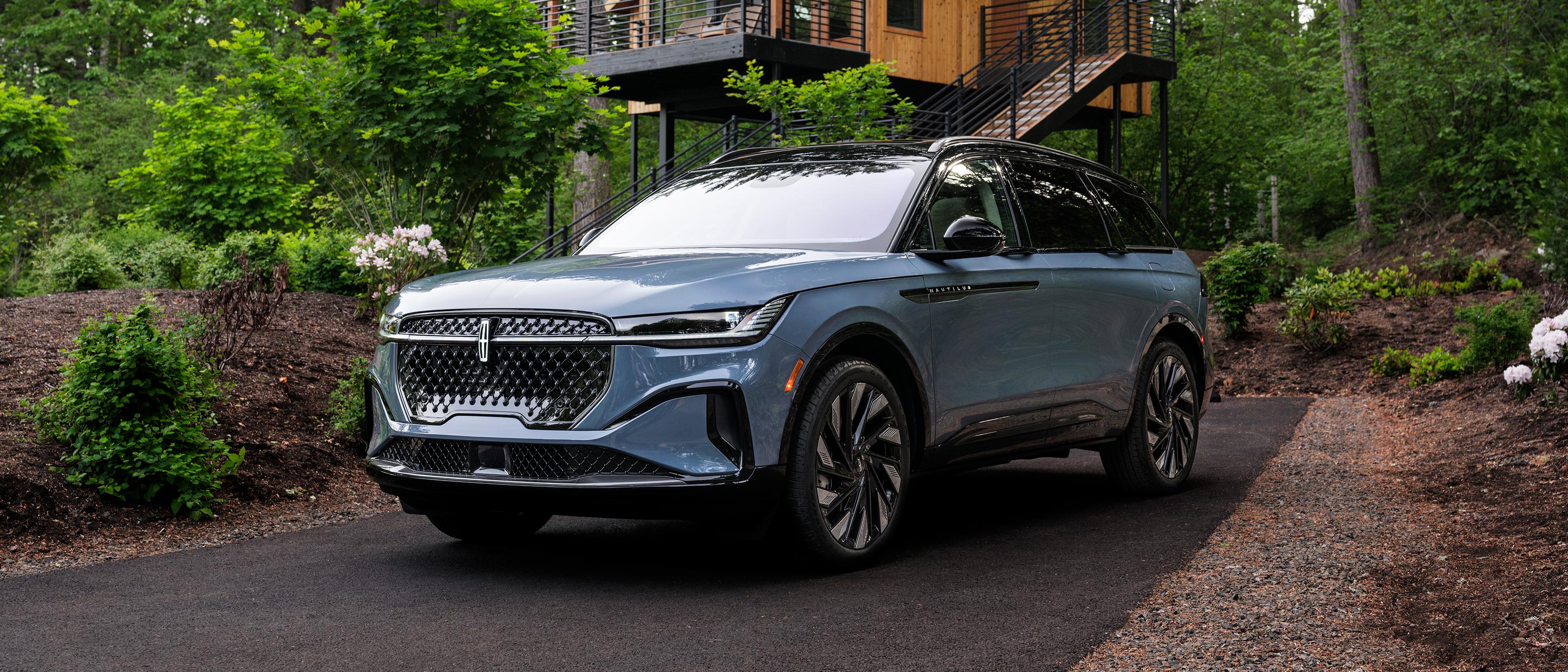 LHDBackorder2026
Lincoln Nautilus
SUV · 6 VariantsPetrol · HybridFrom $67,200Ex Works, USA LHDBackorder2026
Cadillac CT5
Sedan · 7 VariantsPetrolFrom $59,000Ex Works, USA
How the Customs Union Works
A non-EU vehicle is placed in free circulation once, at whichever EU port it first enters. From that point it is treated as EU goods and moves freely across all 27 member states without further customs duty.
That means the customs-stage calculation depends on exactly two inputs:
- The country of origin of the vehicle — which determines whether the 10% Common External Tariff applies or a preferential rate, and whether a trade-defence surcharge is triggered.
- The destination member state — which determines the VAT rate and where VAT is legally collected.
The port of entry does not affect duty or VAT. It affects logistics, which national customs administration processes your declaration, and local practice on individual vehicle approval — but not the tax.
VAT is owed at the destination's rate under the destination principle for new means of transport. For this purpose a vehicle counts as "new" if it is less than six months old or has covered less than 6,000 km, and for such vehicles the destination state's rate applies even if the car first landed elsewhere.
Duty Structure Overview
The customs-stage cascade is:
- Customs Duty = CIF × rate — 10% under the Common External Tariff, or the preferential rate if origin qualifies and is documented.
- Countervailing duty, where applicable — currently only on Chinese-origin battery-electric cars.
- VAT = (CIF + duty + CVD) × the destination member state's standard rate.
The VAT base includes the customs duty, under Article 85 of the VAT Directive: the taxable amount on importation is the customs value plus customs duties and other import-stage taxes, excluding VAT itself.
The Common External Tariff
The headline rate for passenger cars under HS 8703 is 10%, and it is uniform — petrol, diesel, hybrid, plug-in hybrid and battery-electric vehicles all pay the same. The EU does not use its tariff to differentiate by powertrain.
Standard VAT rates by member state
| Member state | VAT | Member state | VAT |
|---|---|---|---|
| Luxembourg | 17% | Slovenia | 22% |
| Malta | 18% | Ireland | 23% |
| Cyprus | 19% | Poland | 23% |
| Germany | 19% | Portugal | 23% (mainland) |
| Austria | 20% | Slovakia | 23% |
| Bulgaria | 20% | Estonia | 24% |
| France | 20% | Greece | 24% |
| Belgium | 21% | Croatia | 25% |
| Czech Republic | 21% | Denmark | 25% |
| Latvia | 21% | Sweden | 25% |
| Lithuania | 21% | Finland | 25.5% |
| Netherlands | 21% | Hungary | 27% |
| Romania | 21% | ||
| Spain | 21% | ||
| Italy | 22% |
Four of these have moved recently and older guidance is frequently stale: Finland rose to 25.5% from 24% in September 2024, Slovakia to 23% from 20% in January 2025, Estonia to 24% from 22% in July 2025, and Romania to 21% from 19% during 2025–2026.
No reduced VAT rate applies to motor cars in any member state. Portugal applies 22% in Madeira and 18% in the Azores.
Worked example 1 — US-built petrol SUV, CIF €50,000, registering in Germany
| Charge | Calculation | Amount |
|---|---|---|
| Customs value (CIF) | — | €50,000 |
| Customs duty (10%) | €50,000 × 0.10 | €5,000 |
| VAT base | CIF + duty | €55,000 |
| VAT (19%, Germany) | €55,000 × 0.19 | €10,450 |
| Total customs-stage tax | €15,450 (30.9% of CIF) |
Worked example 2 — The same car registering in Hungary
| Charge | Calculation | Amount |
|---|---|---|
| Customs duty (10%) | €5,000 | |
| VAT (27%, Hungary) | €55,000 × 0.27 | €14,850 |
| Total customs-stage tax | €19,850 (39.7% of CIF) |
The identical car, identical origin — €4,400 more because of where it is registered.
Worked example 3 — Japanese-built car, CIF €40,000, registering in the Netherlands
| Charge | Calculation | Amount |
|---|---|---|
| Customs duty | 0% — EU–Japan EPA | €0 |
| VAT (21%, Netherlands) | €40,000 × 0.21 | €8,400 |
| Total customs-stage tax | €8,400 (21.0% of CIF) |
Worked example 4 — Chinese-built battery EV (SAIC group), CIF €35,000, registering in France
| Charge | Calculation | Amount |
|---|---|---|
| Customs duty (10%) | €35,000 × 0.10 | €3,500 |
| Countervailing duty (35.3%) | €35,000 × 0.353 | €12,355 |
| VAT base | CIF + duty + CVD | €50,855 |
| VAT (20%, France) | €50,855 × 0.20 | €10,171 |
| Total customs-stage tax | €26,026 (74.4% of CIF) |
These figures are customs-stage only. Member-state registration taxes come on top and are often larger. Get an exact figure for your vehicle, origin and destination using CarImport.AI.

Calculate your exact import duty to the EU
Get a vehicle-specific duty and full landed-cost breakdown — HS classification, every tax, levy and FTA, plus shipping — calculated for your exact make, model and specs.
- Vehicle-specific HS code
- All duties, taxes & FTAs
- Shipping + est. landed cost
Worked Example: Importing a 2025 Ford Mustang Fastback to the EU
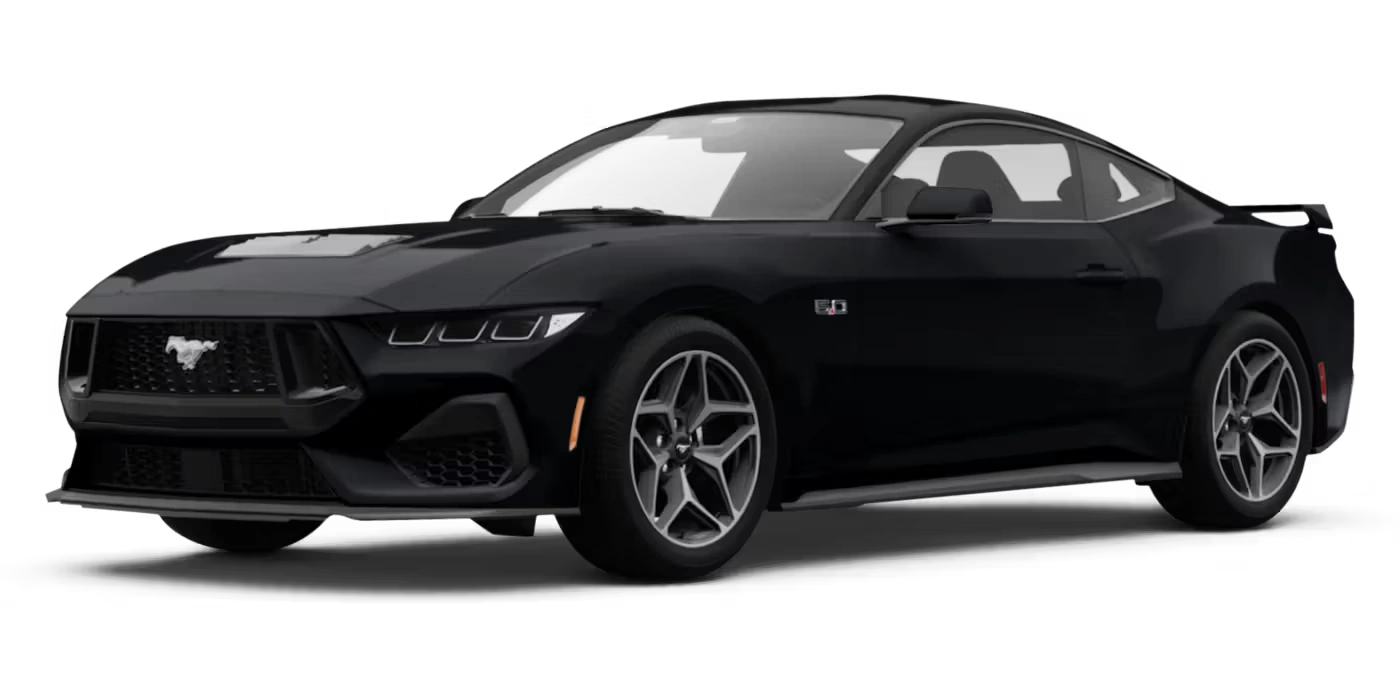
Here is the full landed cost of one car, a 2025 Ford Mustang Fastback shipped from the USA to Germany (one EU member, as an example), worked out on 9 November 2026 with the customs rules in force that day. It lands at 75,081 EUR (about US$83,712), and duties and taxes come to 30.9% of its CIF value.
| Item | Share of CIF | Amount |
|---|---|---|
| Vehicle priceIPAS price for a car sourced in the USA | 50,137 EURUS$55,900 | |
| Shipping and insuranceUSA to Germany | 4,300 EURUS$4,794 | |
| CIF valueCost, insurance and freight: the customs value | 54,436 EURUS$60,694 | |
| Customs duties and taxes | ||
| Basic customs duty (10%)10% of CIF | 5,443 EURUS$6,069 | |
| GST/VAT (19%)19% of CIF plus the duties above20.9% of CIF | 11,377 EURUS$12,685 | |
| Total duties and taxes30.9% of CIF | 16,820 EURUS$18,754 | |
| Service and handling | ||
| Premium Import ServiceOptional end-to-end import management by IPAS | 2,102 EURUS$2,344 | |
| Destination handlingPort terminal and customs clearance handling | 1,722 EURUS$1,920 | |
| Total landed cost | 75,081 EURUS$83,712 | |
Free Trade Agreements
The EU has more than forty trade agreements, but the number that deliver a clean 0% on private CBU passenger cars is small. Default to 10% unless one of the four below applies and you hold valid origin evidence.
| Origin | Status | Duty on HS 8703 / 8704 |
|---|---|---|
| Japan | EU–Japan EPA | 0% — the eight-year phase-out for passenger cars is complete |
| South Korea | EU–Korea FTA | 0% — fully implemented since 2015 |
| Türkiye | EU–Türkiye Customs Union | 0% for goods in free circulation, with an A.TR certificate |
| United Kingdom | EU–UK Trade and Cooperation Agreement | 0% if rules of origin are met, otherwise 10% |
| United States | No agreement | 10% |
| China | No agreement | 10%, plus CVD on battery-electric cars |
| Mexico | 2000 agreement in force; modernised text not ratified | Effectively 10% |
| Canada | CETA, provisional | Automotive lines not clearly confirmed — assume 10% |
| UAE, Australia, New Zealand, India, South Africa, Brazil | Various | Assume 10% unless verified |
| Russia, Belarus | Sanctioned | Import ban — not importable |
The UK rules-of-origin trap
A UK-built car is not automatically duty-free. It must satisfy the TCA's rules of origin, which turn on how much of its content originates in the UK or EU. A UK-assembled vehicle with a high proportion of content from elsewhere can fail and attract the full 10%.
There is a transitional arrangement for electric and plug-in hybrid vehicles running to 31 December 2026, which applies more lenient origin rules to battery content. After that date the standard rules apply, which is a genuine cliff-edge worth planning around for a UK-sourced EV.
Russia and Belarus
Vehicles of Russian or Belarusian origin are subject to an EU-wide import ban under the sanctions regime. This is an admissibility bar, not a tariff question — no duty figure exists because the vehicle cannot be imported.
The Chinese Electric Vehicle Countervailing Duty
This is the EU's most consequential trade-defence measure for vehicle importers, and it has no equivalent in any other market IPAS covers.
Under Regulation (EU) 2024/2754, in force from 30 October 2024 to 29 October 2029, new battery-electric passenger cars originating in China attract a producer-specific countervailing duty on top of the 10% Common External Tariff:
| Producer group | CVD rate | Effective duty (10% + CVD) |
|---|---|---|
| Tesla Shanghai | 7.8% | 17.8% |
| BYD Group | 17.0% | 27.0% |
| Geely Group | 18.8% | 28.8% |
| Other cooperating producers | 20.7% | 30.7% |
| SAIC Group | 35.3% | 45.3% |
| All other producers | 35.3% | 45.3% |
Three things to note.
The duty is producer-specific, so the same body style can attract 17.8% or 45.3% depending on who built it. Identifying the manufacturing group correctly is essential.
It applies to battery-electric cars only — a Chinese-built petrol or hybrid vehicle pays the standard 10%.
It cascades into the VAT base, so the effective cost is higher than the headline rate suggests. On a SAIC-built EV into France, the 35.3% CVD adds €12,355 of duty and a further €2,471 of VAT charged on that duty.
Some producers operate under price undertakings under Decision (EU) 2026/328, and compliant imports under a registered undertaking may be exempt. In practice this is relevant to manufacturer channel imports rather than private ones, so a private import should assume the producer-group rate applies unless you hold specific undertaking-exempt evidence.
Age Rules and Used Vehicles
There is no EU-wide maximum age. A one-year-old import and a twenty-year-old one are treated identically for customs valuation and duty purposes — both pay 10% and the destination VAT rate. This distinguishes the EU sharply from Bahrain's five-year limit, Israel's 24-month bar, or the seven-to-fifteen-year limits common across Africa.
The barriers to older vehicles are real but they sit at member-state level and take three forms.
Low emission zones. Many European cities restrict entry by Euro emissions standard — Germany's Umweltzone green sticker, France's Crit'Air vignette and the Paris ZFE, Milan's Area C, Spain's DGT environmental labels, and the Dutch milieuzones. A fifteen-year-old Euro 4 vehicle can legally be imported and registered, and then find itself barred from the centre of the city where its owner lives. Anyone importing a vehicle older than about ten years should check the specific zone rules for their destination city before committing.
Registration tax penalties. Member-state registration taxes are largely CO2-based and fall heavily on older, less efficient vehicles. A car emitting 250 g/km can attract tens of thousands of euros in Denmark, France, the Netherlands or Ireland — enough to make an otherwise cheap import economically pointless.
Technical inspection. Every member state requires periodic roadworthiness testing — TÜV in Germany, CT in France, ITV in Spain, APK in the Netherlands, NCT in Ireland. A vehicle that cannot pass cannot be registered.
Vehicles of 30 years and older benefit from classic and historic vehicle concessions in most member states, which typically ease both emissions-zone access and registration tax. The specifics vary by state.
Registration Taxes — Post-Customs, and Often Larger
This is the single most important thing to understand about EU vehicle costs, and the reason a customs-stage figure can badly mislead.
After the vehicle clears customs, the destination member state levies its own one-time registration tax at first registration. These are not customs charges, they are not collected at the border, and they vary enormously:
| State | Tax |
|---|---|
| Denmark | Registreringsafgift — among the highest in the world, historically well over 100% |
| Netherlands | BPM, CO2-based |
| France | Malus écologique, steeply CO2-based |
| Ireland | Vehicle Registration Tax (VRT) |
| Portugal | Imposto Sobre Veículos (ISV) |
| Spain | IEDMT |
| Austria | NoVA |
| Finland | Autovero |
| Sweden | Bonus-malus |
| Italy | IPT, plus Superbollo on high-power vehicles |
| Croatia, Greece, Hungary, Malta, Slovenia | One-off registration taxes |
Several states also levy annual ownership taxes — Germany's Kfz-Steuer, Italy's Superbollo above 185 kW, and circulation taxes in Luxembourg, Latvia, Lithuania, Cyprus and Austria.
In a high-tax state, the registration tax can exceed the vehicle's purchase price and dwarf the customs bill entirely. A car that looks cheap to import into Denmark may be prohibitively expensive to register there, while the same car into Germany or Poland is straightforward. Choose the destination member state deliberately — it is the largest single lever available in an EU import.
Note that Germany's Kfz-Steuer includes a ten-year exemption for battery-electric vehicles, one of several EV incentives operating at member-state rather than EU level.
Type Approval and Homologation
Vehicle approval operates under Regulation (EU) 2018/858, which provides two routes:
- Whole Vehicle Type Approval — the model is approved EU-wide, and an individual car of that type registers straightforwardly. This covers vehicles built to European specification.
- Individual Vehicle Approval (IVA) — for a vehicle that does not hold EU type approval, typically a US, Japanese-domestic or other non-European specification car. Each vehicle is inspected and approved individually by the national authority — the KBA in Germany, RDW in the Netherlands, and equivalents elsewhere, often working through technical services such as TÜV or DEKRA.
The IVA route is where a US-specification import needs work. Typical modification items include headlights and beam pattern, side marker and indicator compliance, rear fog lamps, speedometer units, and emissions equipment. Costs and timelines vary considerably by member state, and practice differs — some national authorities are notably more accustomed to processing American vehicles than others.
This is one area where the port of entry and destination state genuinely matter, even though the tax does not depend on them.
Documents Required for Import
- Commercial invoice showing the purchase price
- Bill of Lading (original or telex release)
- Packing list with make, model, year, VIN, engine capacity and CO2 emissions
- Origin documentation — EUR.1 or EUR-MED movement certificate, approved-exporter invoice declaration, or A.TR certificate for Türkiye. Without it, 10% applies
- Certificate of Title or equivalent ownership document
- Export certificate or deregistration document from the origin country
- Single Administrative Document (SAD) customs declaration
- Certificate of Conformity (CoC) where the vehicle holds EU type approval, or IVA application documentation where it does not
- Emissions and CO2 data — required for member-state registration tax assessment
- Proof of identity and address in the destination member state
Customs Clearance Timeline
| Stage | Typical duration | Notes |
|---|---|---|
| Vessel arrival to discharge | 1–3 days | Zeebrugge, Bremerhaven, Antwerp, Rotterdam and others |
| Customs declaration and duty assessment | 1–5 working days | Origin documentation reviewed here |
| Duty, CVD and VAT payment, release for free circulation | 1–2 days | |
| Transport to destination member state | Days | No further customs formality |
| Type approval / IVA where required | 2 weeks – 3 months | The dominant variable for non-European specification vehicles |
| Registration tax assessment and registration | 1–4 weeks | Varies substantially by state |
| Typical total | 3 weeks – 4 months |
Customs clearance is efficient across the major EU vehicle ports. What takes time is Individual Vehicle Approval for a non-European-specification car, and registration in states with complex tax assessment.
Special Territories
Several territories of member states sit outside the EU VAT area and are handled separately:
| Territory | Member state | Regime |
|---|---|---|
| Canary Islands | Spain | Outside EU VAT — uses IGIC, standard rate 7% |
| Ceuta and Melilla | Spain | Outside EU VAT — uses IPSI |
| Madeira | Portugal | Within EU VAT, reduced regional rate 22% |
| Azores | Portugal | Within EU VAT, reduced regional rate 18% |
Vehicle imports into the Canaries, Ceuta and Melilla follow their own rules and should not be calculated using mainland Spanish figures — the IGIC standard rate of 7% is dramatically lower than Spain's 21% VAT.
Recent Regulatory Changes (2024–2026)
- 1 September 2024 — Finland raised VAT to 25.5% from 24%.
- 30 October 2024 — Chinese BEV countervailing duty entered force under Regulation (EU) 2024/2754, running to 29 October 2029, at producer-specific rates from 7.8% to 35.3%.
- 1 January 2025 — Slovakia raised VAT to 23% from 20%.
- 1 July 2025 — Estonia raised VAT to 24% from 22%.
- 2025–2026 — Romania raised VAT to 21% from 19%.
- 2026 — price undertaking decision. Decision (EU) 2026/328 provides a CVD exemption route for compliant imports under registered price undertakings — in practice relevant to manufacturer channels rather than private imports.
- 31 December 2026 — UK electric vehicle rules-of-origin transition ends. The more lenient transitional origin rules for EVs and plug-in hybrids under the EU–UK TCA expire, after which standard rules apply.
Frequently Asked Questions
How much does it cost to import a car into the EU?
At the customs stage, 10% duty plus the destination state's VAT on the duty-inclusive value. For a US-built car that comes to about 30.9% of CIF registering in Germany, or 39.7% in Hungary. For a Japanese or Korean car the duty is zero, so it is just the VAT — around 19–21% depending on the state. On top of that, the destination member state charges its own registration tax at first registration, which in high-tax states can exceed the vehicle's value.
Do I have to clear customs again when I move the car between EU countries?
No. A vehicle is cleared once, at its first EU port of entry, and after release for free circulation it moves across all 27 member states with no further customs duty. What does follow the destination is VAT — it is owed at the rate of the state where the vehicle is registered, not where it landed.
Which EU country is cheapest to import into?
At the customs stage, Luxembourg at 17% VAT, then Malta at 18% and Germany and Cyprus at 19%. But the customs stage is often the smaller number. Member-state registration taxes vary far more dramatically — Denmark's Registreringsafgift and the Dutch BPM can exceed the vehicle's purchase price, while other states charge comparatively little. Choose the destination on total cost including registration tax, not on VAT rate alone.
Are electric vehicles cheaper to import into the EU?
Not at the tariff. The 10% Common External Tariff is uniform across petrol, diesel, hybrid and electric — the EU does not differentiate by powertrain at the border. EV incentives exist, but at member-state level: Germany exempts battery EVs from the annual Kfz-Steuer for ten years, and CO2-based registration taxes in France, the Netherlands, Denmark and elsewhere fall much more lightly on an EV. And note the reverse case: a Chinese-built EV attracts a countervailing duty of up to 35.3% on top of the tariff.
Why is a Chinese electric car so expensive to import?
Because of the countervailing duty under Regulation (EU) 2024/2754, in force from October 2024 to October 2029. It applies only to Chinese-origin battery-electric passenger cars and is producer-specific: 7.8% for Tesla Shanghai, 17.0% for BYD, 18.8% for Geely, 20.7% for other cooperating producers and 35.3% for SAIC and everyone else. It stacks on the 10% tariff and cascades into the VAT base, so a SAIC-built EV can land at around 74% of CIF. A Chinese-built petrol or hybrid car is unaffected and pays the standard 10%.
Do UK cars enter the EU duty-free?
Only if they satisfy the TCA's rules of origin, which depend on how much of the vehicle's content originates in the UK or EU. A UK-assembled car with substantial content from elsewhere can fail and pay the full 10%. There is a transitional arrangement for electric and plug-in hybrid vehicles with more lenient battery-content rules, but it expires on 31 December 2026 — a genuine cliff-edge if you are planning a UK-sourced EV.
Is there an age limit for importing a car into the EU?
Not EU-wide. A twenty-year-old car pays the same duty and VAT as a one-year-old one. The barriers are at member-state level: low emission zones that exclude older Euro standards from city centres, CO2-based registration taxes that penalise inefficient vehicles heavily, and national technical inspection. Vehicles of 30 years and older generally qualify for classic-vehicle concessions that ease both. If you are importing something older than about ten years, check the emissions-zone rules for the city you actually intend to drive in.
What is Individual Vehicle Approval and will I need it?
You need it if your vehicle does not hold EU whole-vehicle type approval — which covers most US-specification, Japanese-domestic and other non-European cars. Under Regulation (EU) 2018/858, the national authority inspects and approves the vehicle individually. Typical modification work includes headlights and beam pattern, side markers, rear fog lamps and speedometer units. Timelines and costs vary by member state, and some national authorities are considerably more experienced with American vehicles than others.
Can I import a Russian car into the EU?
No. Vehicles of Russian or Belarusian origin are banned under the EU sanctions regime. This is an admissibility bar rather than a tariff matter — there is no duty rate because the import is prohibited.
Ready to Import?
The EU rewards two decisions made early. Origin sets your duty: Japanese, Korean and Turkish vehicles enter at zero, UK vehicles at zero if they meet rules of origin, and everything else at 10% — with Chinese electric cars carrying a substantial countervailing duty on top. Destination sets your VAT and, far more importantly, your registration tax.
That second point is the one most often underestimated. The customs-stage difference between registering in Luxembourg and Hungary is ten percentage points of VAT. The registration-tax difference between Denmark and Germany can be larger than the car. Anyone with genuine flexibility about where they register should look at that before anything else.
Then think about specification. A European-specification vehicle with a Certificate of Conformity registers straightforwardly anywhere in the union. A US-specification car needs Individual Vehicle Approval, and that is where an EU import consumes time and money.
IPAS provides two tools to plan and execute your import:
CarImport.AI — Source a vehicle through IPAS and calculate the full landed cost into any EU member state, including the Common External Tariff, any applicable countervailing duty, and the destination state's VAT. Get exact figures for your specific vehicle, origin and destination.
IPAS EXPRESS — Already have a vehicle? Get instant shipping quotes to Zeebrugge, Bremerhaven, Antwerp, Rotterdam or any other EU port — sea freight, RoRo or air — with transparent, itemised pricing and a stage-by-stage timeline.
Ready to Import Your Vehicle?
Two tools, two use cases. Pick the one that fits your needs.
Source a vehicle through IPAS and calculate the full landed cost — customs duties, shipping, and compliance — to destinations across the world.
Calculate Landed CostIPAS Express
Already have a vehicle? Get instant shipping quotes — sea freight, air freight, or RoRo — for one car or multiple vehicles worldwide.
Get Shipping Quote