
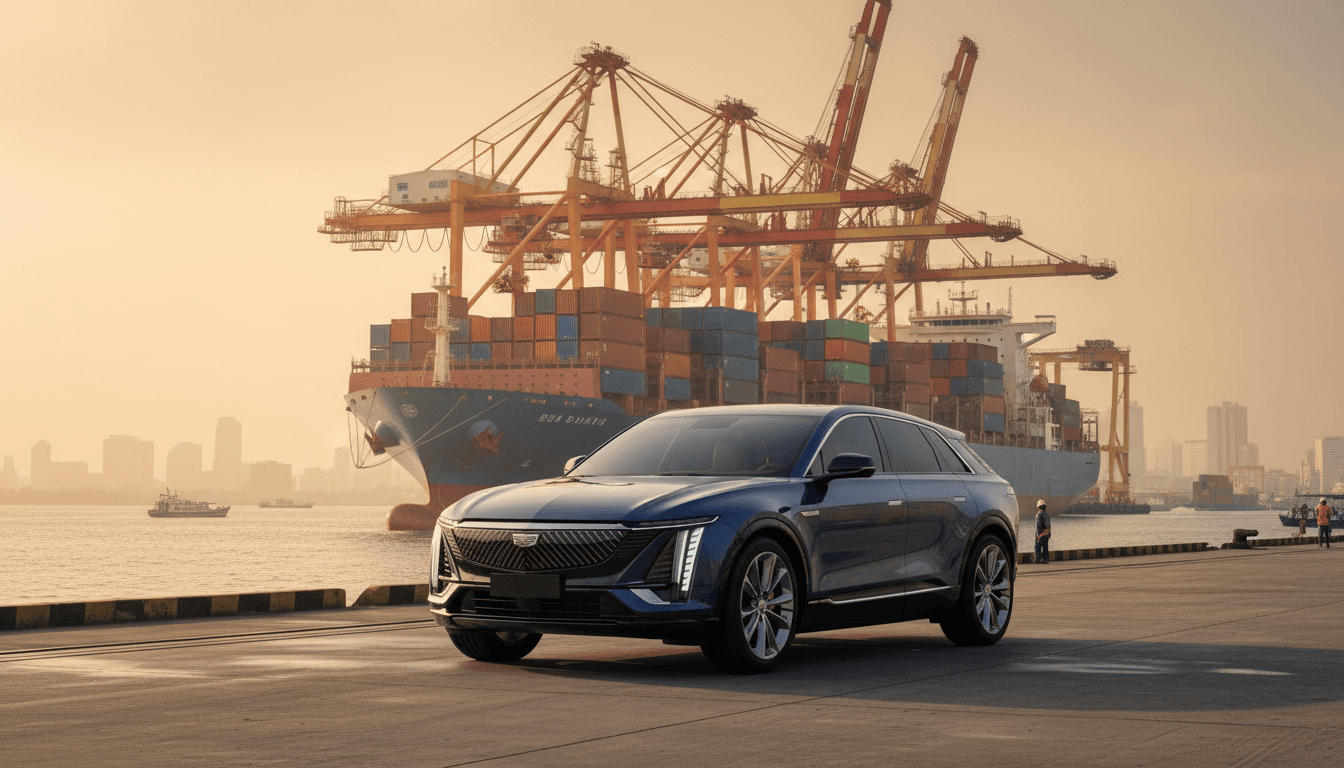
Introduction
Importing a new car to the Philippines costs 30% customs duty (20% from Japan with a Form JP, 0% from ASEAN or Korea), TRAIN excise of 4–50% on the whole landed value, and 12% VAT. Electric cars and hybrids pay 0% duty from any origin until 2028. Used imports are banned and only left-hand drive vehicles are allowed.
The Philippines sells over 400,000 new vehicles a year. Despite strong local assembly operations by Toyota, Mitsubishi, and Nissan, the country imports a significant share of its vehicles as completely built-up units (CBUs) — particularly from Thailand, Indonesia, Japan, South Korea, and China.
The Philippine import regime is administered by three primary agencies: the Bureau of Customs (BOC) handles customs valuation, duty assessment, and cargo release; the Bureau of Internal Revenue (BIR) manages excise tax and VAT through the electronic Authority to Release Imported Goods (e-ATRIG) system; and the Land Transportation Office (LTO) handles vehicle registration, inspection, and plate issuance. Understanding how these agencies interact is essential for a smooth import experience.
The Philippines applies a layered tax structure — Basic Customs Duty, Excise Tax (cliff brackets under the TRAIN Law, charged on the whole landed value), and 12% VAT — that adds about 15% of CIF for a battery-electric car and more than 100% of CIF for a luxury petrol car. Free Trade Agreements with ASEAN, Japan and South Korea reduce or eliminate customs duty for vehicles from those origins; the China agreement does not zero-rate cars across the board. This guide covers every step of the process, from eligibility checks and the used vehicle ban through customs clearance, duty payment, and LTO registration.
Quick Facts
| Detail | Information |
|---|---|
| Lead Agency | Bureau of Customs (BOC) |
| Tax Authority | Bureau of Internal Revenue (BIR) — excise tax and VAT via e-ATRIG |
| Registration Body | Land Transportation Office (LTO) |
| Steering | Left-Hand Drive (LHD) only — RHD banned under RA 8506 |
| Basic Customs Duty (MFN) | 30% of CIF for passenger cars (HS 8703); 15-20% for pickups and goods vehicles (HS 8704) |
| Basic Customs Duty (ASEAN) | 0% under ATIGA (Thailand, Indonesia, etc.) with Form D |
| Basic Customs Duty (Japan / Korea) | Japan 20% under PJEPA with Form JP; Korea 0% for petrol and diesel cars under the PH-Korea FTA |
| Excise Tax | 4/10/20/50% cliff brackets (TRAIN Law) on the whole landed value (CIF + duty + import charges) |
| VAT | 12% on (CIF + Duty + Excise + import charges) |
| Used Vehicle Imports | Banned under EO 156 — narrow exceptions only |
| BEV/HEV/PHEV Customs Duty | 0% from any origin until 2028 (EO 12, extended by EO 62) |
| BEV Excise Tax | 0% (fully exempt) |
| HEV/PHEV Excise Tax | 50% of the applicable bracket rate |
| Main Ports | Port of Batangas (CBU gateway), Port of Manila, MICP |
| Customs Clearance | 3-4 working days with complete documents |
| Total Tax Burden (typical) | About 15% of CIF for BEVs; about 25% for hybrids; about 40% for an ASEAN-built pickup; 64-78% for a mid-range petrol car; over 100% above the PHP 4 million excise bracket |
Types of Cars That Can Be Imported
The Philippines draws a sharp line between new and used vehicle imports. Understanding this distinction is critical before planning any import.
New Vehicles
Importation of brand-new CBU passenger cars and commercial vehicles is fully liberalised. Any individual, dealer, or company can import new vehicles subject to normal customs, excise, emission, and registration requirements. There is no requirement to be a returning resident, diplomat, or registered importer to bring in a new car — though accredited importers and CAMPI/AVID dealer members benefit from streamlined processing under BOC CMO 35-2010 and CMO 55-2010.
All new vehicles must meet Euro 4 emission standards (enforced since January 2018 under DENR Administrative Order 2015-04) and must be left-hand drive.
Used Vehicles — Effectively Banned
Executive Order 156 (2002), strengthened by EO 877-A (2010), bans the importation of all types of used motor vehicles and used parts/components. The Supreme Court has repeatedly upheld this ban as legitimate industrial policy.
Narrow exceptions exist for:
- Returning residents and immigrants under the No-Dollar Importation (NDI) program — must be LHD, GVW not exceeding 3 tons, registered in the importer's name for at least 6 months, and cannot be resold for 3 years
- Diplomatic corps and international organisations with DTI Certificate of Authority to Import (CAI)
- Used trucks (GVW 2.5 tons and above), buses (GVW 6 tons and above), and special-purpose vehicles — regulated but allowed with prior CAI and IAC-UTE authorisation
- Donated vehicles to local government units under strict conditions
Electric Vehicles and Hybrids
The Philippines actively promotes EV adoption through the Electric Vehicle Industry Development Act (RA 11697, known as EVIDA), Executive Order 12 (2023) and Executive Order 62 (2024), which extended and widened the zero tariff to 2028. Battery Electric Vehicles (BEVs) pay 0% customs duty until 2028 and are exempt from excise tax. Hybrid Electric Vehicles (HEVs) and Plug-in Hybrids (PHEVs) pay 0% customs duty until 2028 and 50% of the applicable excise bracket rate. The 0% duty applies from any origin and needs no certificate of origin, so a Japanese hybrid pays 0%, not the 20% Japan rate. VAT at 12% still applies to every electrified vehicle.
Two points to watch: the 0% duty is scheduled to end in 2028, when electrified cars would revert to the normal 30% rate unless it is renewed; and a 48V mild hybrid that cannot move on electric power alone may not count as a hybrid for excise, so IPAS quotes it at the full excise rate.
Pickup Trucks — Recent Change
Starting 1 July 2025, pickup trucks are no longer exempt from excise tax under the Capital Markets Efficiency Promotion Act (CMEPA, RA 12214), implemented by BIR Revenue Regulations 18-2025. They now follow the same 4/10/20/50% excise bracket schedule as other automobiles, on top of 15-20% customs duty (0% for ASEAN-built pickups with Form D). Purely electric pickups remain exempt; hybrid pickups pay 50% of the rate. Pickup-based SUVs with an enclosed passenger compartment (Fortuner, Everest, MU-X, Montero Sport) are passenger cars and pay the 30% car duty rate.
Cars You Can Import to the Philippines
Each card is a full landed-cost calculation: the car's price, shipping, every duty and tax, and handling, worked out on 9 November 2026 with the rules in force that day. All are left-hand drive to suit the Philippines's roads. Tap a car to see its full breakdown, or open it to change the trim, colour or port.
More cars you can import to the Philippines
New cars IPAS sources to order that meet the Philippines's import rules. Prices are ex works, before shipping and duty. Open a car to work out its full landed cost.
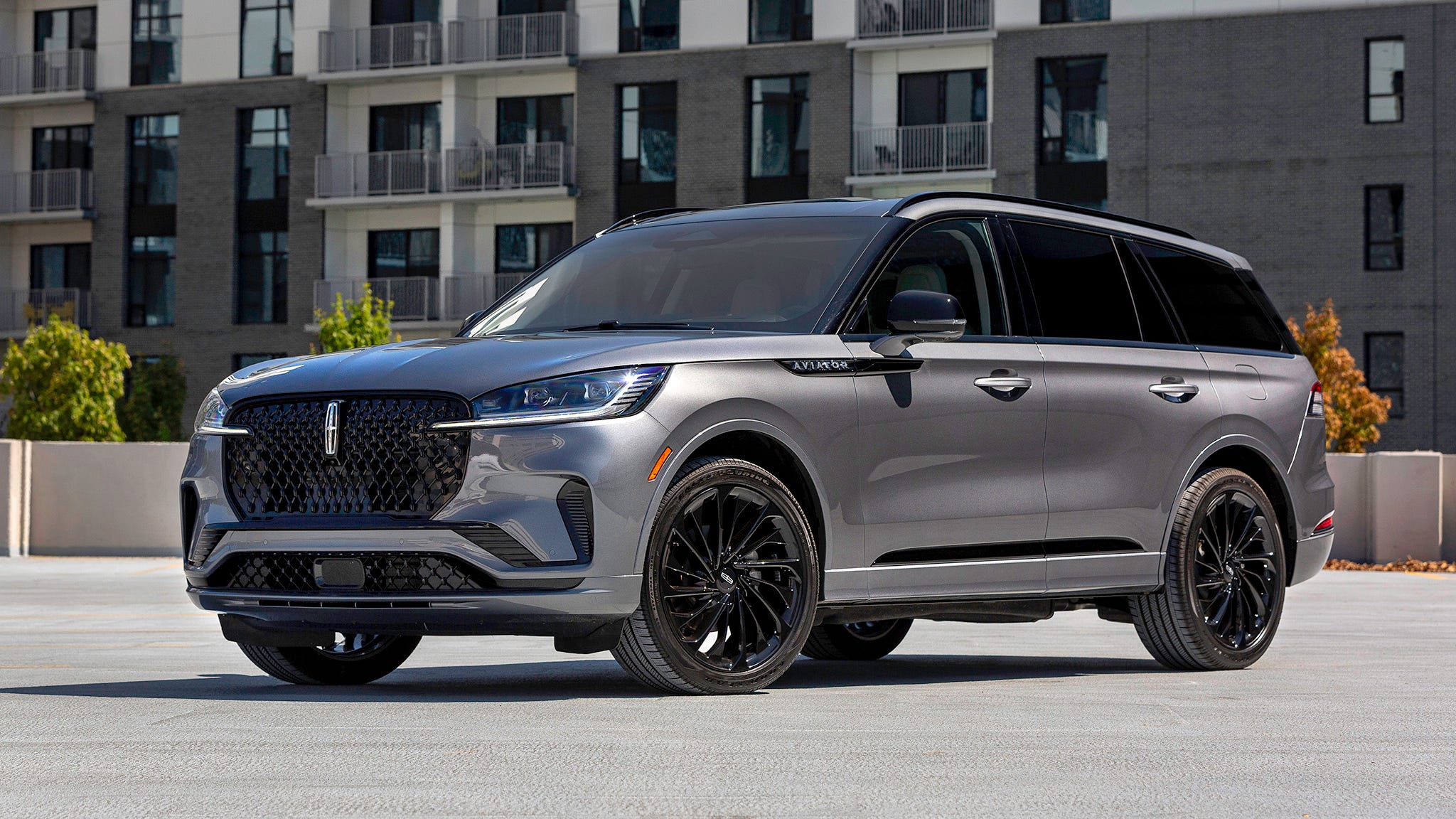 LHDBackorder2026
Lincoln Aviator
SUV · 5 VariantsPetrolFrom $70,300Ex Works, USA LHDBackorder2026
Mercedes-Benz GLS
SUV · 2 VariantsDieselFrom $107,400Ex Works, Canada LHDBackorder2026
Cadillac LYRIQ
SUV · 14 VariantsElectricFrom $71,000Ex Works, USA LHDBackorder2026
Cadillac OPTIQ
SUV · 9 VariantsElectricFrom $61,100Ex Works, USA LHD/C-RHDBackorder2026
Ram 1500 RHO
Pickup · 1 VariantPetrolFrom $86,500Ex Works, USA LHD/C-RHDBackorder2026
Ram 2500
Pickup · 16 VariantsPetrol · DieselFrom $56,200Ex Works, USA LHDBackorder2026
Zeekr 8X
SUV · 7 VariantsPlug-in HybridFrom $56,600Ex Works, China🇨🇳 LHD/C-RHDBackorder2026
Chevrolet Silverado EV
Pickup · 8 VariantsElectricFrom $77,900Ex Works, USA LHDBackorder2025
Chevrolet Corvette Stingray Convertible
Convertible · 3 VariantsPetrolFrom $94,800Ex Works, USA LHDBackorder2026
Chevrolet Corvette E-Ray Convertible
Convertible · 3 VariantsHybridFrom $138,000Ex Works, USA LHDBackorder2026
Dodge Charger 4-Door
Sedan · 6 VariantsPetrol · ElectricFrom $62,400Ex Works, USA LHDBackorder2026
Jeep Grand Cherokee
SUV · 12 VariantsPetrolFrom $46,700Ex Works, USA LHDBackorder2025
Ford Ranger
Pickup · 3 VariantsPetrolFrom $44,900Ex Works, USA LHDBackorder2026
Toyota Land Cruiser
SUV · 2 VariantsHybridFrom $69,100Ex Works, USA LHDBackorder2026
Toyota Land Cruiser 71
SUV · 2 VariantsPetrolFrom $55,100Ex Works, UAE LHDBackorder2026
Lexus RZ
SUV · 5 VariantsElectricFrom $52,600Ex Works, Canada
Seaports and Airports Supporting Vehicle Import
| Port | Code | Type | Notes |
|---|---|---|---|
| Port of Batangas | PHBTG | Sea | Preferred CBU gateway — handles 70,000+ deliveries annually. RoRo-capable. |
| Port of Manila | PHMNL | Sea | General cargo and container terminal |
| Manila International Container Port (MICP) | PHMNL | Sea | Major container facility in Tondo, Manila |
| Port of Cebu | PHCEB | Sea | Regional hub for Visayas vehicle imports |
| Port of Subic | PHSFS | Sea | Freeport zone — restricted for used vehicle entry into customs territory |
| Ninoy Aquino International Airport | MNL | Air | Limited vehicle air freight capability |
The Port of Batangas is explicitly described by Asian Terminals Inc. as the country's preferred gateway for CBU imports, serving as the staging ground for major car brands including Toyota, Mitsubishi, and BYD. Recent large-scale EV shipments (including BYD RoRo vessels carrying over 1,500 vehicles) have also used Batangas.
Restrictions on Vehicle Import for Individuals
Private Individuals (New Vehicles)
Any individual can import a brand-new vehicle for personal use. There are no quantity restrictions, though the importer must:
- File an Import Entry and Internal Revenue Declaration (IEIRD) with the BOC
- Obtain an electronic Authority to Release Imported Goods (e-ATRIG) from BIR for excise and VAT processing
- Pay all applicable duties, excise taxes, and VAT before release
Private Individuals (Used Vehicles)
Private individuals cannot import used vehicles for commercial purposes. The only pathway is the No-Dollar Importation (NDI) program for returning residents/immigrants, which requires:
- DTI-FTEB Certificate of Authority to Import (CAI)
- Vehicle must be LHD and GVW not exceeding 3 tons
- Registered in the importer's name for at least 6 months before application
- Certificate of Emission Compliance from country of origin (authenticated/apostilled)
- 3-year non-resale restriction after importation
Right-Hand Drive Ban
Under RA 8506 (1998), it is unlawful to import, register, use, or operate any right-hand drive vehicle on Philippine roads. Violations carry imprisonment of approximately 2 years 4 months to 4 years 2 months, plus a PHP 50,000 fine. The only exceptions are vintage vehicles manufactured on or before 31 December 1970 (under RA 11698), vehicles used exclusively in legally sanctioned motorsports events, and off-road special-purpose vehicles.
Duty Structure Overview
The Philippines applies a three-layer tax structure on imported vehicles: Basic Customs Duty, Excise Tax, and VAT. The total burden varies dramatically based on the vehicle's origin country (FTA eligibility), fuel type, and selling price.
Layer 1: Basic Customs Duty (on CIF Value)
The MFN rate for most CBU passenger cars is 30% (15-20% for pickups and goods vehicles). Free Trade Agreements can reduce this or eliminate it — ASEAN-origin vehicles enter at 0%, Korean petrol and diesel cars at 0% under the Philippines-Korea FTA (in force since 31 December 2024), and Japanese cars at 20% under PJEPA. Electrified cars pay 0% from any origin until 2028.
US-made cars pay the 30% MFN rate. A 0% rate for US automobiles was announced with the July 2025 US-Philippines trade deal, but no executive order putting it into effect had been issued as of August 2026. If one is issued, US-origin duty would fall by 30 points of CIF.
Layer 2: Excise Tax (TRAIN Law Brackets)
The automobile excise follows the bracket system set by the TRAIN Law (RA 10963). For a car imported for the buyer's own use (not for resale), BIR Revenue Regulations 5-2018 set the base as the total landed value: CIF plus customs duty plus import charges (brokerage, wharfage, arrastre and fees). Cars imported for resale are taxed on the importer's selling price instead.
| Excise Base (PHP) | Excise Rate |
|---|---|
| Up to PHP 600,000 | 4% |
| PHP 600,001 to PHP 1,000,000 | 10% |
| PHP 1,000,001 to PHP 4,000,000 | 20% |
| Over PHP 4,000,000 | 50% |
These are cliff brackets, not marginal ones: the whole base is taxed at the bracket rate. A car with a base of PHP 999,999 pays about PHP 100,000 of excise; at PHP 1,000,001 it pays about PHP 200,000. The brackets were set in 2018 and are not indexed for inflation, so price rises push more cars into higher brackets each year.
BEVs are fully exempt (0%). HEVs and PHEVs pay 50% of the applicable rate — for example 10% instead of 20% in the PHP 1-4 million bracket, not a flat 50%.
Layer 3: VAT
A flat 12% VAT applies on the cumulative value of CIF + customs duty + excise tax + import charges.
Worked Examples
Calculated with the customs cascade IPAS uses. CIF is in PHP; import charges are an illustrative PHP 50,000 (real broker charges vary and matter near a bracket threshold).
| Vehicle (origin) | CIF (PHP) | Duty | Excise | VAT | Total landed (PHP) | Tax as % of CIF |
|---|---|---|---|---|---|---|
| Toyota Camry 2.5 petrol (Japan, Form JP) | 2,200,000 | 440,000 (20%) | 538,000 (20%) | 387,360 | 3,615,360 | 64% |
| Same car, no Form JP | 2,200,000 | 660,000 (30%) | 582,000 (20%) | 419,040 | 3,911,040 | 78% |
| Toyota Camry 2.5 hybrid (Japan) | 2,400,000 | 0 (EO 62) | 245,000 (10%) | 323,400 | 3,018,400 | 26% |
| BYD Atto 3 BEV (China) | 1,800,000 | 0 (EO 62) | 0 | 222,000 | 2,072,000 | 15% |
| Toyota Hilux 2.8 diesel pickup (Thailand, Form D) | 1,500,000 | 0 (ATIGA) | 310,000 (20%) | 223,200 | 2,083,200 | 39% |
| Toyota Land Cruiser 300 3.5 petrol (Japan, Form JP) | 5,500,000 | 1,100,000 (20%) | 3,325,000 (50%) | 1,197,000 | 11,172,000 | 103% |
Totals include the PHP 50,000 import charges. Tax percentages count duty, excise, VAT and charges against CIF.
Get exact duty rates for your specific vehicle using CarImport.AI

Calculate your exact import duty to the Philippines
Get a vehicle-specific duty and full landed-cost breakdown — HS classification, every tax, levy and FTA, plus shipping — calculated for your exact make, model and specs.
- Vehicle-specific HS code
- All duties, taxes & FTAs
- Shipping + est. landed cost
FTA Preferential Rates Summary
| Origin | Typical CBU Car Duty | Agreement |
|---|---|---|
| Any origin — BEV, HEV, PHEV | 0% until 2028 | EO 12 / EO 62 — no certificate of origin needed |
| Thailand / Indonesia / Malaysia | 0% | ATIGA (ASEAN FTA) — requires Form D, 40% ASEAN content |
| Japan | 20% | PJEPA — requires Form JP. A 0% rate above 3,000 cc has been reported but not confirmed; IPAS quotes 20% |
| South Korea | 0% (petrol and diesel cars) | Philippines-Korea FTA (EO 80, in force 31 December 2024) — proof of origin under EO 80 |
| China | Schedule rate per HS line; not zero across the board | ACFTA — requires Form E; IPAS quotes 30% where the line rate is unconfirmed |
| India / Australia / New Zealand | Schedule rate per HS line | AIFTA (Form AI) / AANZFTA (Form AANZ) |
| USA / EU / UK / UAE | 30% | MFN rate (no FTA in force; announced US 0% not yet implemented) |
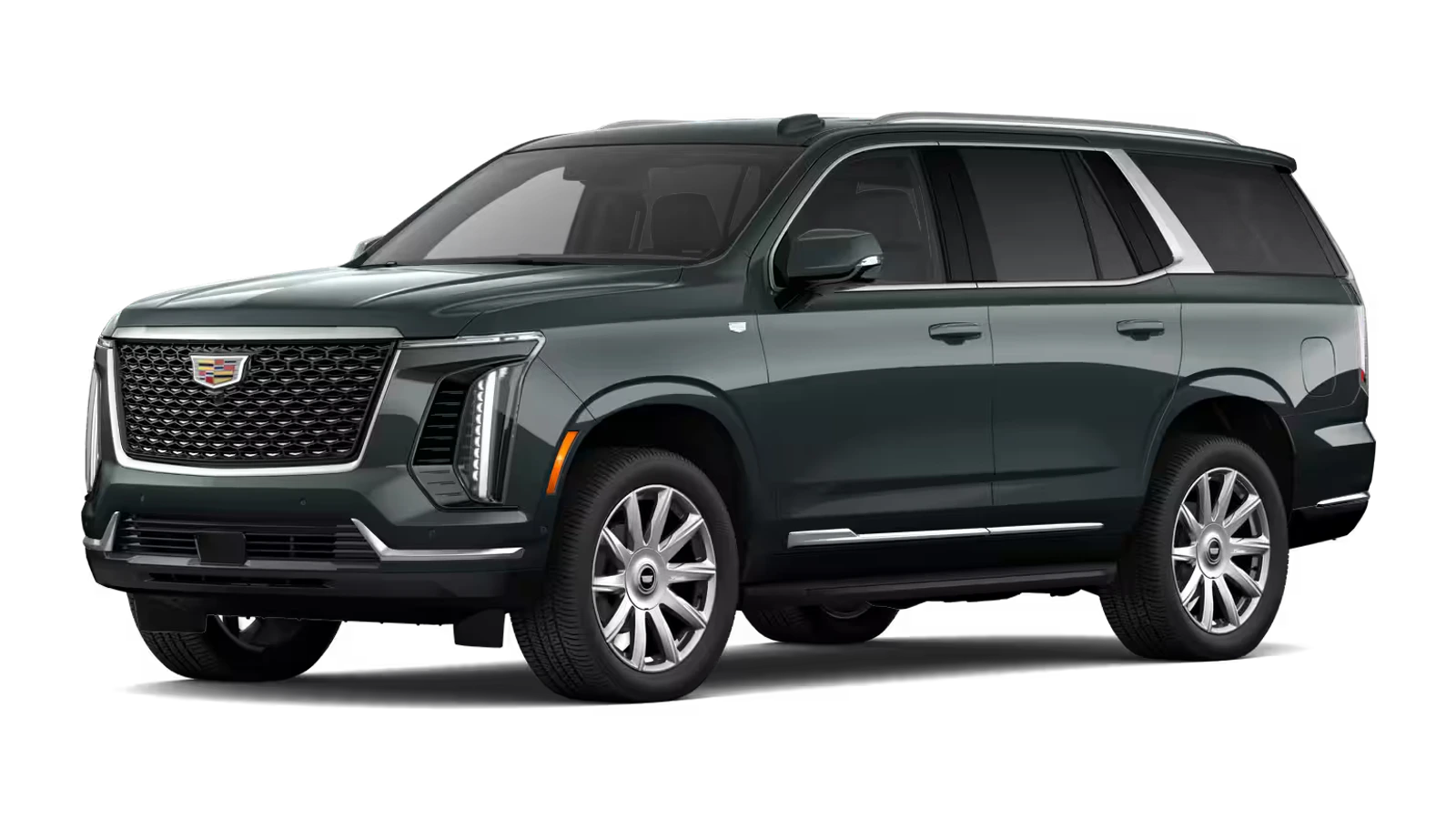
Worked Example: Importing a 2026 Cadillac Escalade to the Philippines
Here is the full landed cost of one car, a 2026 Cadillac Escalade shipped from the USA to the Philippines, worked out on 9 November 2026 with the customs rules in force that day. It lands at 16,464,905 PHP (about US$260,924), and duties and taxes come to 118.9% of its CIF value.
| Item | Share of CIF | Amount |
|---|---|---|
| Vehicle priceIPAS price for a car sourced in the USA | 6,897,081 PHPUS$109,300 | |
| Shipping and insuranceUSA to Philippines | 363,028 PHPUS$5,753 | |
| CIF valueCost, insurance and freight: the customs value | 7,260,109 PHPUS$115,053 | |
| Customs duties and taxes | ||
| Basic customs duty (30%)30% of CIF | 2,178,039 PHPUS$34,516 | |
| Additional duty (50%)Base or related charges differ from CIF; see the duty structure above65.3% of CIF | 4,744,094 PHPUS$75,181 | |
| GST/VAT (12%)12% of CIF plus the duties above23.5% of CIF | 1,707,864 PHPUS$27,065 | |
| Total duties and taxes118.9% of CIF | 8,629,997 PHPUS$136,762 | |
| Service and handling | ||
| Premium Import ServiceOptional end-to-end import management by IPAS | 468,787 PHPUS$7,429 | |
| Destination handlingPort terminal and customs clearance handling | 106,012 PHPUS$1,680 | |
| Total landed cost | 16,464,905 PHPUS$260,924 | |
Documents Required for Import
Customs Clearance Documents
- Bill of Lading (original)
- Commercial Invoice showing CIF value (insurance and freight itemised)
- Packing List (for container shipments)
- Import Entry and Internal Revenue Declaration (IEIRD) — filed electronically with BOC
- BOC Car Evaluation System printout / valuation
- Electronic Authority to Release Imported Goods (e-ATRIG) from BIR — processed under RMO 14-2014 and RR 2-2016
- Certificate of Origin / Form D (ASEAN), proof of origin under EO 80 (Korea), Form JP (Japan), Form E (China) — if claiming preferential duty rates
Additional Documents for Used Vehicles (Where Permitted)
- Certificate of Authority to Import (CAI) from DTI-FTEB
- Certificate of Emission Compliance from country of origin (authenticated/apostilled)
- Certificate of Roadworthiness (for used trucks and buses)
- IAC-UTE authorisation (for used trucks and buses)
LTO Registration Documents
- Certificate of Payment (CP) from BOC and Tax Payment Clearance
- Certificate of Stock Reported (CSR)
- Sales/commercial invoice from importer
- PNP-HPG Motor Vehicle Clearance
- Insurance Certificate of Cover (third-party liability)
- Motor Vehicle Inspection Report (MVIR)
- DENR Certificate of Conformity (Euro 4)
- Tax Identification Number (TIN)
Customs Clearance Timeline
| Stage | Typical Duration | Notes |
|---|---|---|
| Vessel arrival and cargo discharge | 1-2 days | Port of Batangas or Manila |
| Lodgment of entry and IEIRD filing | 1 day | Electronic filing with BOC |
| Documentary and physical inspection | 1-2 days | If selected for inspection |
| e-ATRIG processing (BIR coordination) | 1-2 days | For excise tax and VAT clearance |
| Duty and tax payment | 1 day | Payment to BOC cashier |
| Release order and Certificate of Payment | 1 day | Issued by district collector |
| Total (clean documents) | 3-4 working days | Complex cases may take longer |
Used trucks, buses, and CAI-regulated imports can take substantially longer due to extra agency clearances, IAC-UTE authorisation, and additional inspections.
Homologation and Vehicle Approval
Emission Standards — Euro 4 Mandatory
Under the Clean Air Act (RA 8749) and DENR Administrative Order 2015-04, all new vehicles for initial registration must meet Euro 4 emission standards. Since 1 January 2018, DENR stopped accepting Euro 2 Certificates of Conformity (COC) for LTO registration, meaning non-Euro-4 new vehicles can no longer be registered.
Imported vehicles must present a DENR Certificate of Conformity confirming Euro 4 compliance before LTO will process registration.
Used Vehicle Emission Requirements
Used trucks and buses imported under the regulated programs must present Certificates of Roadworthiness and Emission Compliance from authorised inspection centres abroad, authenticated by the Philippine embassy in the country of origin.
EV and Hybrid Classification
Under EVIDA (RA 11697), the Department of Energy (DOE) classifies vehicles as BEV, HEV, or PHEV for excise tax purposes. BIR Revenue Regulation 1-2025 transferred this classification authority back to DOE, which maintains the official Electric Vehicle Recognition List used by BIR to determine excise exemption (BEV) or the 50% reduced rate (HEV/PHEV). The tax code (NIRC s.149) defines a hybrid as electric power combined with petrol or diesel "with or without provision for off-vehicle charging", which is why plug-in hybrids take the hybrid rate rather than the BEV exemption.
Safety Standards
The Land Transportation and Traffic Code (RA 4136) and various LTO Memorandum Circulars set roadworthiness requirements including lighting, braking, seatbelt compliance (RA 8750), and general construction standards. All imported vehicles undergo Motor Vehicle Inspection before LTO registration.
Registration Procedures and Costs
Step 1: Stock Reporting
The importer or accredited dealer submits a Certificate of Stock Reported (CSR) request to LTO with:
- Current LTO accreditation as Manufacturer/Assembler/Importer/Dealer (MAID)
- BOC Certificate of Payment and Tax Clearance (with supporting documents)
- Vehicle photographs and stencil data
Step 2: Sales Reporting
CSR and sales invoice are submitted to the LTO regional office.
Step 3: Initial Registration
The vehicle owner applies at the LTO district office near the port of entry with all required documents (CP, CSR, sales invoice, PNP-HPG clearance, DENR COC, MVIR, insurance, TIN). The vehicle undergoes inspection and emission testing, with data cross-checked against the LTO MAIDRS system.
Step 4: OR/CR Issuance
LTO issues the Official Receipt (OR) and Certificate of Registration (CR), with licence plates issued once available.
Key Costs
| Fee | Amount | Notes |
|---|---|---|
| Motor Vehicle User's Charge (MVUC) | PHP 1,600 - 14,000+ | Based on vehicle type and gross weight (RA 8794) |
| Registration and miscellaneous LTO fees | PHP 2,000 - 5,000 | Plates, stickers, inspection, computer fees |
| PNP-HPG clearance | PHP 150 | Motor vehicle clearance |
| Insurance (TPL) | PHP 600 - 2,000+ | Third-party liability minimum |
Brand-new vehicles registered for the first time typically get three years of initial registration; thereafter, owners renew annually with MVUC and LTO fees.
EV Registration Incentives
Under EVIDA, BEVs receive a 30% discount on MVUC and registration/inspection fees, and HEVs receive a 15% discount, for eight years from EVIDA's effectivity (until approximately 2030).
Frequently Asked Questions
Can I import a used car to the Philippines?
Generally no. Executive Order 156 (2002), upheld by the Supreme Court, bans used vehicle imports. The only exceptions are returning residents under the No-Dollar Importation program (strict conditions apply), diplomatic imports, and regulated used trucks/buses with prior government authorisation.
How much does it cost to import a car to the Philippines?
Total taxes range from about 15% of CIF for a battery-electric car to more than 100% for a petrol car whose landed value passes PHP 4 million. A mid-range petrol car pays 30% duty (20% from Japan with a Form JP), 20% excise on CIF plus duty, and 12% VAT — about 64-78% of CIF in total. Use CarImport.AI for your exact calculation.
Can I import a right-hand drive vehicle?
No. RA 8506 bans the import, registration, and use of RHD vehicles. Violations carry imprisonment and a PHP 50,000 fine. The only exceptions are pre-1971 vintage vehicles, motorsport vehicles, and off-road special-purpose vehicles.
Are electric vehicles cheaper to import?
Yes, significantly. Under EO 12 and EO 62, BEVs, hybrids and plug-in hybrids pay 0% customs duty from any origin until 2028. BEVs are also exempt from excise, so only 12% VAT (plus import charges) applies — about 15% of CIF. Hybrids and plug-in hybrids pay 50% of the normal excise bracket rate.
What is the TRAIN Law excise tax on cars?
For a car imported for your own use, the excise is charged on the total landed value (CIF + duty + import charges): 4% up to PHP 600,000; 10% from PHP 600,001 to PHP 1,000,000; 20% from PHP 1,000,001 to PHP 4,000,000; and 50% above PHP 4,000,000. The rate applies to the whole value, not just the part above each threshold. BEVs are exempt; hybrids pay half rates.
Do cars from Thailand enter duty-free?
Yes. Under ATIGA (ASEAN Free Trade Area), vehicles from ASEAN member states like Thailand and Indonesia enter the Philippines at 0% customs duty, provided they meet the 40% ASEAN content requirement and are accompanied by a valid Form D Certificate of Origin.
How long does customs clearance take?
With complete and correct documents, customs clearance typically takes 3-4 working days. This includes entry filing, inspection (if selected), e-ATRIG processing with BIR, duty payment, and release order issuance.
Are pickup trucks still excise-exempt?
No. Starting 1 July 2025, the CMEPA (RA 12214) removed the excise exemption for pickups. They now follow the same 4/10/20/50% bracket schedule as other automobiles. Electric pickups remain exempt; hybrid pickups pay 50% rates.
Ready to Import Your Vehicle?
The Philippines offers competitive import conditions — especially for ASEAN-origin vehicles at 0% duty, and for electric cars and hybrids at 0% duty until 2028 (with BEVs also exempt from excise). Whether you are sourcing a new vehicle from Thailand, Japan, or the United States, understanding the layered tax structure and FTA opportunities can save you thousands of dollars.
Two tools to get you started:
CarImport.AI — Calculate the exact landed cost of importing any vehicle to the Philippines. Get a complete breakdown of customs duty, excise tax, VAT, and shipping costs tailored to your specific vehicle and origin country. Calculate your landed cost
IPAS EXPRESS Pro Car Shipping — Already have a vehicle? Get instant shipping quotes for sea freight or air freight to Manila, Batangas, or Cebu. Compare container and RoRo options with real-time pricing. Get a shipping quote
Ready to Import Your Vehicle?
Two tools, two use cases. Pick the one that fits your needs.
Source a vehicle through IPAS and calculate the full landed cost — customs duties, shipping, and compliance — to destinations across the world.
Calculate Landed CostIPAS Express
Already have a vehicle? Get instant shipping quotes — sea freight, air freight, or RoRo — for one car or multiple vehicles worldwide.
Get Shipping Quote