
Introduction
A new car imported to Ghana in 2026 pays about 30% to 48% of its CIF value in taxes. Import duty is 5%, 10% or 20% depending on fuel and engine size, four small levies apply to CIF, and VAT 15% plus NHIL and GETFund at 2.5% each sit on top. A new 1.8–2.0 L petrol car pays 36.14%.
Ghana is one of West Africa's largest vehicle import markets. With rising middle-class demand and no domestic car manufacturing at scale, the country imports tens of thousands of vehicles every year, mainly from the United States, Europe, Japan, Korea and the UAE. Ghana's ECOWAS membership and its electronic customs system, the Integrated Customs Management System (ICUMS), make it a gateway for vehicle imports into the wider West African region.
The Ghana Revenue Authority (GRA) administers customs assessment and duty collection through ICUMS, which runs on the UNIPASS-Ghana platform. The Driver and Vehicle Licensing Authority (DVLA) handles registration, licensing and roadworthiness certification. The Ghana Standards Authority (GSA) oversees vehicle conformity assessment and emissions compliance under GS 4510:2022. Knowing how these three agencies interact is essential for a smooth import.
Ghana's tax structure is set by the Customs Act 2015 (Act 891), the Ghana Customs Tariff (based on the ECOWAS Common External Tariff) and the VAT Act 2025 (Act 1151). It has one import duty set by tariff line, an overage penalty for vehicles more than 10 years old, four levies on CIF (ECOWAS, AU, EXIM and the Special Import Levy) and three consumption taxes (VAT, NHIL and GETFund) on a duty-inclusive base. For a new vehicle the total is 30.14% of CIF on a 5% line (small engines and all pickups), 36.14% on a 10% line (most family cars) and 48.14% on a 20% line (large engines, and every hybrid and electric car). The COVID-19 Health Recovery Levy was abolished from 1 January 2026. This guide covers every step from pre-shipment preparation through clearance at Tema, duty payment via ICUMS and DVLA registration.
Quick Facts
| Detail | Information |
|---|---|
| Lead Agency | Ghana Revenue Authority (GRA) — Customs Division |
| Customs System | ICUMS / UNIPASS-Ghana |
| Standards Body | Ghana Standards Authority (GSA) |
| Registration Body | Driver and Vehicle Licensing Authority (DVLA) |
| Governing Law | Customs Act 2015 (Act 891); VAT Act 2025 (Act 1151) |
| Steering | Left-hand drive (LHD); right-hand drive only with the Minister's approval |
| Import Duty | 5% / 10% / 20% by tariff line (fuel and engine size); hybrid, plug-in hybrid and electric cars 20%; pickups and goods vehicles (HS 8704) 5% |
| VAT | 15% on CIF + import duty + overage penalty + ECOWAS, AU, EXIM and Special Import levies |
| NHIL | 2.5% on the same base as VAT |
| GETFund Levy | 2.5% on the same base as VAT |
| ECOWAS Levy | 0.5% of CIF |
| AU Levy | 0.2% of CIF |
| EXIM Levy | 0.75% of CIF |
| Special Import Levy | 2% of CIF (extended to 31 December 2028) |
| Import Excise | 0% on all cars and pickups |
| COVID-19 Levy | Abolished from 1 January 2026 |
| Examination Fee | 1% of CIF, listed by GRA for used vehicles only |
| Age Limit | No ban; overage penalty on CIF for vehicles more than 10 years from year of manufacture |
| Main Port | Port of Tema |
| Customs Clearance | 5-14 working days (with clean paperwork via ICUMS) |
| Currency | Ghanaian Cedi (GHS) — about GHS 11.7 per USD in October 2026 |
| Total Tax Burden | New vehicle: 30.14% (5% line), 36.14% (10% line) or 48.14% (20% line) of CIF |
Types of Cars That Can Be Imported
Ghana permits the import of both new and used vehicles, subject to the overage penalty and GSA conformity requirements. Ghana drives on the right: a right-hand drive vehicle may not be imported without the Minister's approval (Customs Act 2015, Act 891, s.58(1)(a), as substituted by the Customs (Amendment) Act 2020, Act 1014).
New Vehicles New vehicles from any origin can be imported to Ghana provided they are left-hand drive and the vehicle model has been GSA-homologated (certified) for the Ghanaian market. New vehicle importers and assemblers must register with GSA. The 1% Examination Fee does not apply to new vehicles.
Used Vehicles Used vehicles up to 10 years from the year of manufacture pay no overage penalty. For 2026 imports, that means vehicles manufactured in 2016 or later. Used vehicle importers must be registered with GSA, and each vehicle requires a Certificate of Conformity from an approved third-party inspection body under GS 4510:2022.
Overage Penalties (Vehicles Exceeding 10 Years)
Vehicles older than 10 years are not banned but pay an overage penalty on CIF on top of all standard duties (Act 891 s.57 and Schedule). Because the penalty also enters the VAT base, each point of penalty adds 1.2 points to the total tax burden.
| Vehicle Age (from year of manufacture) | Overage Penalty on CIF (motor cars) | Added to Total Tax Burden |
|---|---|---|
| Up to 10 years | 0% (no penalty) | 0 points |
| Over 10, up to 12 years | 5% | +6 points |
| Over 12, up to 15 years | 20% | +24 points |
| Over 15, up to 25 years | 50% | +60 points |
| Over 25, up to 35 years | 70% | +84 points |
| Over 35 years | 100% | +120 points |
Buses, coaches and vans pay a lower scale (2.5% over 10 years, 10% over 12, 20% over 15, 50% over 20 years), and trucks and lorries another (5% over 10 years, 10% over 12, 30% over 22). The Schedule does not name pickups, so IPAS applies the motor-car scale to them as the cautious reading. Ambulances, hearses and special-purpose vehicles (HS 8705) are not liable.
A 13-year-old 1.8 L petrol car therefore pays 60.14% of CIF instead of 36.14%.
Electric and Hybrid Vehicles You may still read about a 0% import duty waiver for electric vehicles. GRA's current tariff database shows 20% import duty on a new fully built battery electric car, and the same 20% on every hybrid and plug-in hybrid line, whatever the engine size. No relief for a privately imported finished EV was found in the instruments IPAS has checked, so an EV or hybrid currently pays 48.14% of CIF — more than a 1.8 L petrol car. The exemption schedules are under review; IPAS will update this guide if a private-import relief is confirmed.
Prohibited Vehicles
- Right-hand drive (RHD) vehicles — not importable without the Minister's approval
- Salvaged vehicles — any vehicle wrecked, destroyed or damaged by collision, fire, water or any other occurrence that does not have a clean title (Act 891 s.58(1)(b))
- Vehicles assembled from imported spare parts
- Vehicles without speedometers calibrated in km/h
Cars You Can Import to Ghana
Each card is a full landed-cost calculation: the car's price, shipping, every duty and tax, and handling, worked out on 9 November 2026 with the rules in force that day. All are left-hand drive to suit Ghana's roads. Tap a car to see its full breakdown, or open it to change the trim, colour or port.
More cars you can import to Ghana
New cars IPAS sources to order that meet Ghana's import rules. Prices are ex works, before shipping and duty. Open a car to work out its full landed cost.
 LHDBackorder2026
Toyota bZ
SUV · 5 VariantsElectricFrom $41,900Ex Works, USA LHDBackorder2026
Toyota Sequoia
SUV · 8 VariantsHybridFrom $77,800Ex Works, USA LHDBackorder2026
Toyota Land Cruiser 78 Troop Carrier
SUV · 2 VariantsDieselFrom $54,200Ex Works, UAE LHDBackorder2026
Chevrolet Corvette ZR1 Coupe
Coupe · 2 VariantsPetrolFrom $202,000Ex Works, USA LHDBackorder2026
Chevrolet Colorado
Pickup · 7 VariantsPetrolFrom $41,400Ex Works, USA LHDBackorder2026
Lexus IS 350
Sedan · 4 VariantsPetrolFrom $49,800Ex Works, Canada LHDBackorder2026
Lexus RZ
SUV · 5 VariantsElectricFrom $52,600Ex Works, Canada LHDBackorder2026
Lexus LC 500
Coupe · 3 VariantsPetrolFrom $102,200Ex Works, Canada LHDBackorder2026
Denza B8
SUV · 3 VariantsPlug-in HybridFrom $66,600Ex Works, China🇨🇳 LHDBackorder2026
Denza D9
Van & MPV · 7 VariantsPlug-in Hybrid · ElectricFrom $52,300Ex Works, China🇨🇳 LHDBackorder2026
Denza Z9GT
Sedan · 6 VariantsPlug-in Hybrid · ElectricFrom $42,800Ex Works, China🇨🇳 LHDBackorder2026
Zeekr 8X
SUV · 7 VariantsPlug-in HybridFrom $56,600Ex Works, China🇨🇳 LHD/C-RHDBackorder2025
Ford F-150 Lightning
Pickup · 6 VariantsElectricFrom $76,000Ex Works, USA LHDBackorder2027
Mercedes-Benz AMG G-Class
SUV · 2 VariantsHybridFrom $201,700Ex Works, Germany LHD/C-RHDBackorder2026
Ram 1500 RHO
Pickup · 1 VariantPetrolFrom $86,500Ex Works, USA LHDBackorder2026
Infiniti QX60
SUV · 6 VariantsPetrolFrom $61,900Ex Works, USA
Seaports and Airports Supporting Vehicle Import
Ghana has two main seaports and one international airport that handle vehicle imports. The Port of Tema is the primary entry point for the vast majority of vehicle imports.
Seaports
| Port | Code | Location | Facilities |
|---|---|---|---|
| Port of Tema | GHTEM | Tema (Greater Accra) | Main vehicle import port; container terminal, RoRo berths; 127+ hectares |
| Port of Takoradi | GHTKO | Sekondi-Takoradi (Western Region) | Secondary port; handles containers and general cargo |
Port of Tema is Ghana's largest and busiest port, located approximately 25 km east of Accra. It handles over 80% of Ghana's total trade volume and is the default entry point for vehicle imports. The port has dedicated RoRo berths, a modern container terminal operated by MPS (Meridian Port Services), and bonded warehousing facilities. Customs clearance through ICUMS is fully integrated at Tema. The port recently underwent a major expansion increasing capacity to 127+ hectares.
Port of Takoradi primarily serves the western region and handles cocoa, manganese, and oil industry cargo. It can receive container and general cargo shipments including vehicles but has slower processing times than Tema for vehicle imports.
Land Borders Ghana also processes vehicle imports through land border crossing points connected to ICUMS, including Aflao (bordering Togo) and Paga (bordering Burkina Faso). This is relevant for vehicles purchased from neighbouring ECOWAS countries.
Airport
| Airport | Code | Location | Notes |
|---|---|---|---|
| Kotoka International Airport | ACC | Accra | Air freight for urgent vehicle delivery |
Restrictions on Vehicle Import
Steering Requirement Ghana drives on the right side of the road. Under the Customs Act 2015 (Act 891) s.58(1)(a), as substituted by Act 1014 in 2020, a right-hand drive vehicle may not be imported without the Minister's approval. Plan on a left-hand drive vehicle: source LHD vehicles from the USA, Europe, Korea, China or the UAE.
Age Limit Ghana has no age ban in force. Vehicles up to 10 years from the year of manufacture pay no penalty; older vehicles pay the overage penalty of 5% to 100% of CIF set out in the Customs Act 2015 Schedule (see the table above). For 2026 imports, vehicles manufactured in 2016 or later avoid the penalty.
Enacted but not yet in force: the Customs (Amendment) Act 2020 (Act 1014) would ban the import of cars and light goods vehicles (up to 5 tonnes) more than 10 years old and raise their import duty to 35%. Both measures start only on a date the Minister sets by Legislative Instrument, and as of October 2026 no such instrument has been made — GRA's tariff still shows the 5%/10%/20% rates. If the instrument is made, both changes would apply from its stated date.
GSA Conformity (Used Vehicles) Under GS 4510:2022, all used vehicles imported into Ghana require a Certificate of Conformity from an approved third-party inspection body. This covers safety characteristics including brakes, lights, tyres, steering, emissions, and structural integrity for vehicle categories M1 (passenger cars), M2 (minibuses), and N1 (pickups/vans).
GSA Homologation (New Vehicles) Since January 2023, all new vehicle models (categories M1, M2, N1) must be GSA-homologated before importation. Un-homologated new vehicle models are prohibited from entry. Contact: auto@gsa.gov.gh.
Import Licensing Private individuals can import vehicles for personal use with a valid TIN and GhanaCard. Commercial importers (dealers) must be registered with the Registrar General's Department, hold a valid TIN, and be registered with GSA for used vehicle imports.
Duty Structure Overview
Ghana's import taxes follow a fixed order. Import duty and four small levies are charged on CIF. VAT, NHIL and GETFund are then charged together on one base: CIF plus the import duty, any overage penalty and the four levies (VAT Act 2025, Act 1151, s.45(1)). Since 1 January 2026, NHIL and GETFund are no longer added into the VAT base; all three are charged side by side at a combined 20%.
Import Duty by Tariff Line
| Vehicle Category | HS Code | Import Duty Rate |
|---|---|---|
| Petrol, up to 1,000 cc | 8703.21 | 5% |
| Petrol, 1,001-3,000 cc | 8703.22 / 8703.23 | 10% |
| Petrol, over 3,000 cc | 8703.24 | 20% |
| Diesel, up to 1,500 cc | 8703.31 | 5% |
| Diesel, 1,501-2,500 cc | 8703.32 | 10% |
| Diesel, over 2,500 cc | 8703.33 | 20% |
| Hybrid (HEV) and plug-in hybrid (PHEV), any engine size | 8703.40 / .50 / .60 / .70 | 20% |
| Battery electric (BEV) | 8703.80 | 20% |
| Pickups and goods vehicles, all weights and fuels | 8704 | 5% |
Note that the petrol and diesel ladders differ: a diesel moves to 10% above 1,500 cc and to 20% above 2,500 cc. An open-bed pickup (Hilux, Ranger, D-Max, Navara) is HS 8704 at 5%; a pickup-based SUV with an enclosed body (Fortuner, Everest, MU-X) is a passenger car under HS 8703.
Total Tax Burden by Category (new vehicle, no overage)
| Category | Import Duty | Levies on CIF | VAT + NHIL + GETFund | Total Tax Burden |
|---|---|---|---|---|
| Small engine, or any pickup | 5% | 3.45% | 20% of the duty-inclusive base | 30.14% |
| Mid-size engine (most family cars and SUVs) | 10% | 3.45% | 20% of the duty-inclusive base | 36.14% |
| Large engine, hybrid, plug-in hybrid or electric | 20% | 3.45% | 20% of the duty-inclusive base | 48.14% |
The Levies and Consumption Taxes
| Charge | Rate | Base |
|---|---|---|
| ECOWAS Community Levy | 0.5% | CIF |
| AU Import Levy | 0.2% | CIF |
| EXIM Levy | 0.75% | CIF |
| Special Import Levy | 2.0% | CIF |
| Levies on CIF, total | 3.45% | |
| VAT | 15% | CIF + duty + overage + levies |
| NHIL (National Health Insurance Levy) | 2.5% | Same base as VAT |
| GETFund Levy | 2.5% | Same base as VAT |
| Import excise | 0% | — |
Import excise is 0% on every car and pickup line, and no processing fee is charged on vehicles. GRA also lists a 1% of CIF examination fee on used vehicles; budget for it on a used import.
Worked Example: New 2.0 L Petrol Car, CIF USD 30,000
| Component | Base | Rate | Amount (USD) |
|---|---|---|---|
| Import Duty (HS 8703.23) | CIF | 10% | 3,000 |
| ECOWAS Levy | CIF | 0.5% | 150 |
| AU Import Levy | CIF | 0.2% | 60 |
| EXIM Levy | CIF | 0.75% | 225 |
| Special Import Levy | CIF | 2% | 600 |
| Consumption-tax base | CIF + duty + levies | — | 34,035 |
| VAT | Base | 15% | 5,105 |
| NHIL | Base | 2.5% | 851 |
| GETFund Levy | Base | 2.5% | 851 |
| Total taxes | 10,842 (36.14% of CIF) |
The same car with a 3.5 L engine, or as a hybrid or EV, would pay 20% duty and USD 14,442 (48.14%). A new double-cab pickup at the same CIF pays USD 9,042 (30.14%).
What changed in 2026
- The COVID-19 Health Recovery Levy was abolished from 1 January 2026.
- From 1 January 2026, under the VAT Act 2025, NHIL and GETFund are charged on the same base as VAT instead of being added into it first.
- The Special Import Levy (2% of CIF) has been extended to 31 December 2028.
- The 35% duty and the over-10-year ban in Act 1014 remain enacted but not in force (see Restrictions above).
Ghana sets tax changes in its annual budget, presented in November and effective in January, so check again for 2027 imports.
Get exact duty calculations for your specific vehicle using CarImport.AI

Calculate your exact import duty to Ghana
Get a vehicle-specific duty and full landed-cost breakdown — HS classification, every tax, levy and FTA, plus shipping — calculated for your exact make, model and specs.
- Vehicle-specific HS code
- All duties, taxes & FTAs
- Shipping + est. landed cost
Worked Example: Importing a 2026 Nissan Patrol to Ghana
Here is the full landed cost of one car, a 2026 Nissan Patrol shipped from the UAE to Ghana, worked out on 9 November 2026 with the customs rules in force that day. It lands at 1,552,717 GHS (about US$132,995), and duties and taxes come to 48.1% of its CIF value.
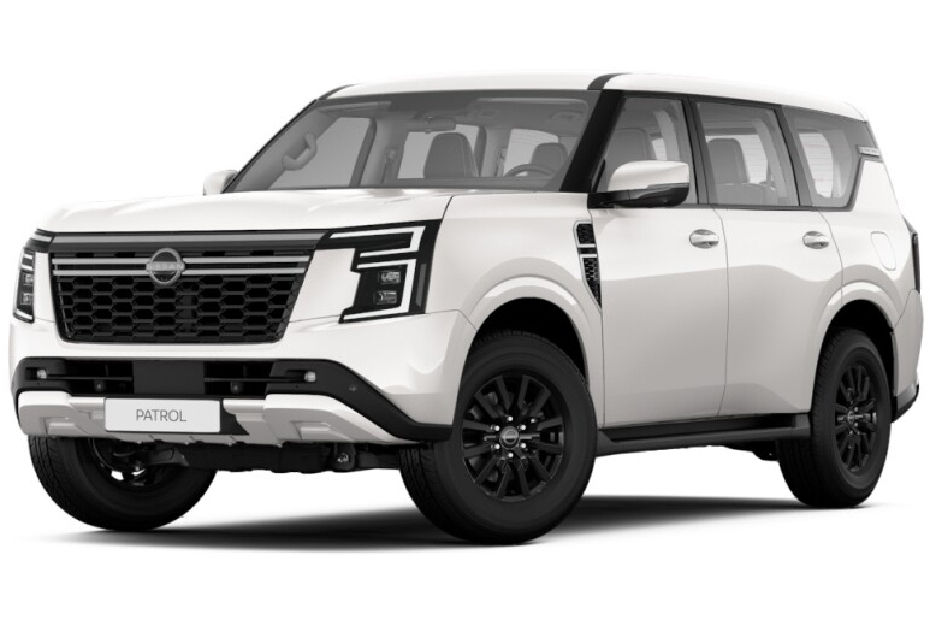
| Item | Share of CIF | Amount |
|---|---|---|
| Vehicle priceIPAS price for a car sourced in the UAE | 872,123 GHSUS$74,700 | |
| Shipping and insuranceUAE to Ghana | 132,593 GHSUS$11,357 | |
| CIF valueCost, insurance and freight: the customs value | 1,004,715 GHSUS$86,057 | |
| Customs duties and taxes | ||
| Basic customs duty (20%)20% of CIF | 200,938 GHSUS$17,211 | |
| Additional duty (2%)Base or related charges differ from CIF; see the duty structure above3.5% of CIF | 34,663 GHSUS$2,969 | |
| GST/VAT (15%)Base or related charges differ from CIF; see the duty structure above24.7% of CIF | 248,059 GHSUS$21,247 | |
| Total duties and taxes48.1% of CIF | 483,660 GHSUS$41,427 | |
| Service and handling | ||
| Premium Import ServiceOptional end-to-end import management by IPAS | 43,910 GHSUS$3,761 | |
| Destination handlingPort terminal and customs clearance handling | 20,431 GHSUS$1,750 | |
| Total landed cost | 1,552,717 GHSUS$132,995 | |
Documents Required for Import
For Customs Clearance (GRA via ICUMS)
- Original Bill of Lading or Air Waybill
- Attested Commercial Invoice (notarised, showing vehicle details and purchase price)
- Packing List
- Import Declaration Form (IDF) — Ministry of Trade authorisation
- Original Vehicle Title (clean, lien-free)
- Validated Cargo Tracking Note (CTN) — shipping compliance pre-departure
- Tax Clearance Certificate (TCC) from GRA
- Taxpayer Identification Number (TIN) / GhanaCard PIN
- Chassis Number / VIN documentation
- Marine cargo insurance certificate
- GSA Certificate of Conformity (used vehicles — under GS 4510:2022)
- GSA Homologation Certificate (new vehicle models)
For DVLA Registration
- GRA Customs Clearance Certificate (Bill of Entry) and duty payment receipts
- Original Vehicle Title from origin country
- Proof of purchase
- TIN / GhanaCard PIN
- Biometric data capture (at DVLA office)
- Valid motor insurance certificate (third-party minimum)
- Completed DVLA registration application
Customs Clearance Timeline
| Stage | Duration | Details |
|---|---|---|
| Pre-shipment preparation | 3-5 days | Gather documents, arrange shipping, obtain marine insurance, CTN |
| IDF application | 2-3 days | Submit via ICUMS before vessel arrival |
| Sea freight transit | 2-6 weeks | India 3-4 weeks, USA 4-5 weeks, Europe 2-3 weeks |
| Port discharge and cargo submission | 2-3 days | Upload vehicle model, year and make via UNIPASS-Ghana |
| Document verification and risk assessment | 2-4 days | ICUMS auto-assigns risk channel (Green/Yellow/Red) |
| Valuation and duty calculation | 1-3 days | Used vehicles are valued from the first purchase price, depreciated by age, plus freight and insurance |
| Physical examination (if assigned) | 1-3 days | Chassis number check, condition verification, specification matching |
| Duty payment | 1-2 days | Electronic payment via banks or mobile money |
| Port release | 1-2 days | Delivery Order issued after full payment confirmed |
| DVLA registration | 5-7 working days | Vehicle inspection, biometric capture, VRC and plates issued |
Total Estimated Timeline: 5-12 weeks (from shipping to registration)
Important: Vehicles must be cleared within 60 days of arrival at port or risk transfer to the Uncleared Cargo List (UCL), incurring additional storage charges and penalties.
Tips to Avoid Delays:
- Submit your IDF and ICUMS declaration before the vessel arrives to enable pre-arrival processing
- Ensure the Bill of Lading accurately lists the chassis number, consignee name, and correct vehicle description
- Obtain the Cargo Tracking Note (CTN) before shipping — vessels without valid CTN face delays
- Appoint a licensed customs broker for faster ICUMS navigation
- For used vehicles, arrange GSA-approved third-party inspection and Certificate of Conformity before shipping
Homologation and Vehicle Approval
Ghana Standards Authority (GSA) Requirements
Since January 2023, GSA mandates conformity assessment for all imported vehicles:
New Vehicles — Homologation
- All new vehicle models (categories M1 passenger cars, M2 minibuses, N1 pickups/vans) must be GSA-homologated before importation
- Importers and assemblers must register with GSA
- Un-homologated new vehicle models are prohibited from entry
- Contact: auto@gsa.gov.gh
Used Vehicles — GS 4510:2022 Conformity
- All used vehicles require a Certificate of Conformity from an approved third-party inspection body
- GS 4510:2022 covers safety and emissions for categories M1/M2/M3/N1/N2/N3
- Inspection covers: brakes, tyres, steering, suspension, lights, emissions, structural integrity, chassis number verification
- U.S. ITA has published guidance on these requirements for American exporters
DVLA Roadworthiness Inspection After customs clearance, all imported vehicles must pass a DVLA roadworthiness inspection at an authorised Vehicle Testing Station before registration plates are issued. This includes:
- Brake efficiency testing
- Steering and suspension checks
- Tyre condition and tread depth
- Light and signal functionality
- Exhaust emissions testing
- Chassis and engine number verification
Registration Procedures and Costs
After customs clearance and roadworthiness certification, registration at the Driver and Vehicle Licensing Authority (DVLA) follows a two-phase digital process launched in January 2025.
Phase 1 — Vehicle Inspection:
- Present vehicle at authorised Vehicle Testing Station or DVLA office
- Officials inspect vehicle and verify specifications against customs documents
Phase 2 — Digital Registration:
- Submit customs documents (Bill of Entry), proof of purchase, TIN/GhanaCard PIN at DVLA
- Biometric data captured digitally
- Receive Vehicle Registration Smart Card (VRC) and Certificate of Title
- Number plates issued with year suffix ("-26" for 2026 registrations)
Registration Costs (2025-2026)
| Component | Cost |
|---|---|
| Full registration (VRC + Certificate of Title) | GHS 288.55 (~USD 25) |
| Digital onboarding fee (biometric verification) | GHS 25 (~USD 2) |
| Number plates | GHS 154 (~USD 13) |
| Roadworthiness inspection | GHS 100-300 (~USD 9-26) |
| Third-party motor insurance (annual) | GHS 300-800 (~USD 26-69) |
Total Registration Cost: approximately GHS 870-1,570 (about USD 75-135)
DVLA offers Premium (expedited) and Regular service tiers. A new digital licence plate system is pending amendments to LI 2180 (Road Traffic Regulations, 2012).
Frequently Asked Questions
Q: How much does it cost to import a car to Ghana? A: For a new vehicle, total import taxes are 30.14% of CIF on a 5% duty line (petrol up to 1,000 cc, diesel up to 1,500 cc, any pickup), 36.14% on a 10% line (most family cars) and 48.14% on a 20% line (large engines, hybrids and EVs). A mid-size petrol car (1,501-3,000 cc) with a CIF value of USD 15,000 pays about USD 5,421 in duty, levies and VAT, for a landed cost of about USD 20,421 before registration fees. Used cars more than 10 years old add an overage penalty. Use CarImport.AI for your exact calculation.
Q: Can I import a right-hand drive car to Ghana? A: Not without the Minister's approval. Under the Customs Act 2015 (Act 891) s.58(1)(a), as substituted in 2020, a right-hand drive vehicle may not be imported without ministerial approval, so plan on a left-hand drive car. Source LHD vehicles from the USA, Europe, Korea, China or the UAE.
Q: Is there an age limit for imported cars in Ghana? A: There is no ban in force, but cars more than 10 years from the year of manufacture pay an overage penalty on CIF: 5% for over 10 up to 12 years, 20% for over 12 up to 15 years, 50% for over 15 up to 25 years, 70% for over 25 up to 35 years and 100% beyond. For 2026, cars manufactured in 2016 or later avoid it. A ban on cars over 10 years old has been enacted (Act 1014) but will only start once a Legislative Instrument sets the date.
Q: What is ICUMS and do I need to use it? A: ICUMS (Integrated Customs Management System), operating on the UNIPASS-Ghana platform, is Ghana's electronic customs portal. All import declarations, duty assessments, and payments are processed through ICUMS. Your customs broker will handle submissions on your behalf, but you need a valid TIN to be registered in the system.
Q: Are electric vehicles cheaper to import to Ghana? A: Not at present. GRA's tariff shows 20% import duty on a new battery electric car and on every hybrid and plug-in hybrid, regardless of engine size, and no relief for a privately imported finished EV has been confirmed. An EV therefore pays about 48.14% of CIF, compared with 36.14% for a new 1.8–2.0 L petrol car. The older reports of a 0% EV duty waiver are not reflected in the current tariff.
Q: Is Ghana's 35% import duty in force? A: No. The Customs (Amendment) Act 2020 (Act 1014) sets a 35% duty on cars and on goods vehicles up to 5 tonnes, but it only starts on a date fixed by a Legislative Instrument, and none had been made as of October 2026. The current rates are 5%, 10% or 20% for cars and 5% for pickups.
Q: Which port should I ship to in Ghana? A: Port of Tema is the recommended entry point for nearly all vehicle imports. It handles over 80% of Ghana's trade volume, has dedicated RoRo berths, a modern container terminal, and fully integrated ICUMS processing. Port of Takoradi is an alternative for the western region but has slower processing.
Q: Do I need GSA certification to import a vehicle? A: For new vehicles, the vehicle model must be GSA-homologated before importation (since January 2023). For used vehicles, you need a Certificate of Conformity from an approved third-party inspection body under GS 4510:2022. Importers of used vehicles must also be registered with GSA.
Q: What happens if my vehicle is not cleared within 60 days? A: Vehicles not cleared within 60 days of arrival at port are transferred to the Uncleared Cargo List (UCL), incurring additional storage charges, penalties, and potential auctioning. Always arrange customs clearance documentation before shipping to avoid this.
Start Your Ghana Import
Importing a vehicle to Ghana is manageable once you understand the duty bands, the LHD requirement, the overage penalty and the ICUMS customs process. With the right documentation, GSA conformity certification, and a competent customs broker, the entire process from shipping to DVLA registration can be completed in 5-12 weeks.
Ready to calculate your exact landed cost? Use CarImport.AI for an instant, accurate breakdown of all customs duties, levies, VAT, shipping costs, and fees for your specific vehicle to Ghana.
Calculate Your Import Cost on CarImport.AI
Already own a vehicle and need shipping? Use IPAS EXPRESS Pro Car Shipping to get competitive sea freight and air freight quotes to Tema or any Ghanaian port.
Sources: Ghana Revenue Authority (gra.gov.gh) — Customs tariff database, Vehicle Importation and VAT notices; Customs Act 2015 (Act 891) and Customs (Amendment) Act 2020 (Act 1014); Value Added Tax Act 2025 (Act 1151); Ghana EXIM Bank Act 2016 (Act 911); Special Import Levy Act 2013 (Act 861) as amended; African Union Import Levy Act 2017 (Act 952); ECOWAS Protocol A/P1/7/96; Ghana Standards Authority (gsa.gov.gh) — Vehicle Conformity Assessment; Driver and Vehicle Licensing Authority (dvla.gov.gh); ICUMS/UNIPASS Portal (unipassghana.com); U.S. ITA Market Intelligence on GS 4510:2022.
Ready to Import Your Vehicle?
Two tools, two use cases. Pick the one that fits your needs.
Source a vehicle through IPAS and calculate the full landed cost — customs duties, shipping, and compliance — to destinations across the world.
Calculate Landed CostIPAS Express
Already have a vehicle? Get instant shipping quotes — sea freight, air freight, or RoRo — for one car or multiple vehicles worldwide.
Get Shipping Quote