
Introduction
Sri Lanka's vehicle import taxes total about 125–400% of CIF in 2026. Every car pays 45% customs duty (30% plus a 50% surcharge on the duty, to 31 December 2026), a fixed excise per cc or kW, 18% VAT, 2.5% SSCL and, above a threshold, Luxury Tax. A new 2.0-litre petrol car at USD 30,000 CIF pays about 313%.
Sri Lanka reopened to vehicle imports on 1 February 2025 after a suspension of almost five years, imposed in 2020 and extended through the 2022 foreign exchange crisis. The suspension was lifted under the Imports and Exports (Control) Regulations No. 02 of 2025 (Gazette Extraordinary No. 2421/44) as the economy stabilised under an IMF-backed recovery programme. The reopening came with a duty structure designed to manage foreign currency outflows while generating substantial government revenue.
The result is one of the most complex and expensive vehicle import regimes in the world. Customs duty comes first, with a surcharge charged on the duty itself. A fixed Excise (Special Provisions) Duty follows, per cc, per kW or per vehicle — on many cars it is larger than the CIF value. VAT and the Social Security Contribution Levy (SSCL) are then charged on a base that includes the duty, surcharge and excise. A separate Luxury Tax applies to the part of the CIF above a threshold. For a mid-range 1.5-litre petrol car total taxes are typically 200% to 240% of CIF. A large petrol or diesel car can pass 350–400%. Small electric cars and hybrids pay much less.
This guide covers the complete 2026 import process — from the current duty instruments (Revenue Protection Order No. 01/2026, the surcharge order in Gazette Extraordinary No. 2501/88, the Luxury Tax schedule in Gazette Extraordinary No. 2421/41 and the SSCL (Amendment) Act No. 10 of 2026), through customs clearance via the ASYCUDA World system, to registration with the Department of Motor Traffic (DMT).
Quick Facts
| Detail | Information |
|---|---|
| Lead Agency | Sri Lanka Customs (SLC) |
| Vehicle Registration | Department of Motor Traffic (DMT) |
| Standards Body | Sri Lanka Standards Institution (SLSI) |
| Steering | Right-Hand Drive (RHD) required |
| Age Limit | Cars 3 years, goods vehicles up to 5 tonnes 4 years (date of manufacture to Bill of Lading date) |
| Customs Import Duty (CID) | 30% of CIF on all cars and on goods vehicles up to 5 tonnes |
| Surcharge | 50% of CID (15% of CIF), to 31 December 2026 unless extended |
| Excise Duty | Fixed per cc (Rs 2,450–14,500), per kW for EVs, or per vehicle for pickups |
| Luxury Tax | 60–120% of the CIF above Rs 5.0–6.0 million (cars only) |
| VAT | 18% of (CIF + 10% + duty + surcharge + excise) |
| Social Security Contribution Levy (SSCL) | 2.5% of the same base as VAT, since 1 May 2026 |
| Main Ports | Colombo (container), Hambantota (RoRo) |
| Customs System | ASYCUDA World / ASYHUB digital platform |
| Total Tax Burden (typical) | About 125–400% of CIF depending on vehicle type |
Types of Cars That Can Be Imported
Sri Lanka permits imports of both new and used vehicles, but with strict age restrictions and a duty structure that favours hybrids and small electric vehicles.
New Vehicles
New vehicles can be imported without restriction on type, provided they meet Sri Lanka's emission standards for imported vehicles and are right-hand drive. New vehicles attract the full duty structure. Most new vehicle imports come from Japan, India, Thailand, and the UK.
Used Vehicles
Used cars must be no more than 3 years old, counted from the date of manufacture to the date of the Bill of Lading. Goods vehicles up to 5 tonnes may be up to 4 years old. A car built in October 2023 and shipped on 20 October 2026 is already too old. This is one of the strictest age limits globally. Used vehicles must also pass a pre-shipment inspection (PSI) conducted by an authorised agency.
Electric Vehicles (EVs)
Battery electric vehicles pay the same 30% customs duty and 50% surcharge as petrol cars. Their advantage is in the excise and the Luxury Tax. Excise is charged per kW of motor power: for a new car up to one year old, Rs 18,100–36,200 per kW up to 200 kW, but Rs 96,600 per kW above 200 kW. The Luxury Tax is 60% of the CIF above Rs 6.0 million. A modest EV is the cheapest category to import relative to its value. A very powerful one is not.
Hybrid Vehicles
Petrol hybrids (HEVs) and plug-in hybrids (PHEVs) pay the same customs duty as petrol cars, an excise roughly 2–29% lower per cc than the equivalent petrol band, and a Luxury Tax of 80% above Rs 5.5 million (diesel hybrids 90%). A self-charging hybrid such as a Honda e:HEV or Toyota hybrid is classified as a hybrid (HS 8703.40), not as a petrol car.
Diesel Vehicles
Diesel cars attract higher excise rates than equivalent petrol cars (for example Rs 6,950 per cc at 1,500–1,600 cc, against Rs 5,150) and the highest Luxury Tax rate: 120% of the CIF above Rs 5.0 million.
Pickups
Pickups are goods vehicles (HS 8704) in Sri Lanka and pay no Luxury Tax. A bonneted double cab (Toyota Hilux, Ford Ranger, Isuzu D-Max and similar) falls on tariff line 8704.21.91 (diesel) or 8704.31.91 (petrol). It pays a flat excise of Rs 6,036,300 per vehicle. This is IPAS's reading of the tariff text; Sri Lanka Customs has not issued a ruling for a double cab.
Vehicles NOT Permitted
- Left-hand drive vehicles (they need an RHD conversion before shipping)
- Cars older than 3 years, or goods vehicles up to 5 tonnes older than 4 years, from date of manufacture
- Vehicles that do not meet Sri Lanka's emission standards for imported vehicles
- Auto-trishaws older than 2 years, and two-stroke trishaws
Cars You Can Import to Sri Lanka
Each card is a full landed-cost calculation: the car's price, shipping, every duty and tax, and handling, worked out on 9 November 2026 with the rules in force that day. All are right-hand drive to suit Sri Lanka's roads. Tap a car to see its full breakdown, or open it to change the trim, colour or port.
More cars you can import to Sri Lanka
New cars IPAS sources to order that meet Sri Lanka's import rules. Prices are ex works, before shipping and duty. Cars marked C-RHD are built left-hand drive and converted to right-hand drive before shipping; the calculator adds the conversion. Open a car to work out its full landed cost.
 RHDBackorder2026
Vinfast VF7
SUV · 5 VariantsElectricFrom $27,600Ex Works, India RHDBackorder2026
Mercedes-Benz EQE Saloon
Sedan · 7 VariantsElectricFrom $92,400Ex Works, UK RHDBackorder2026
Toyota Land Cruiser 300
SUV · 9 VariantsPetrol · DieselFrom $40,700Ex Works, Japan RHDBackorder2026
Toyota bZ4X
SUV · 3 VariantsElectricFrom $36,500Ex Works, Japan RHDBackorder2026
Toyota Fortuner Legender
SUV · 3 VariantsDiesel · HybridFrom $37,200Ex Works, India RHDBackorder2026
Jeep Meridian
SUV · 12 VariantsDieselFrom $21,000Ex Works, India RHDBackorder2026
Hyundai Venue
SUV · 13 VariantsPetrol · DieselFrom $8,700Ex Works, India RHDBackorder2026
MG Hector Tomahawk EV
SUV · 4 VariantsElectricFrom $23,400Ex Works, India RHDBackorder2026
Suzuki Brezza
SUV · 19 VariantsPetrolFrom $7,800Ex Works, India RHDBackorder2026
Suzuki Ignis
SUV · 11 VariantsPetrolFrom $6,300Ex Works, India RHDBackorder2026
Zeekr 009
Van & MPV · 3 VariantsElectricFrom $77,600Ex Works, China🇨🇳 LHD/C-RHDBackorder2025
Chevrolet Suburban
SUV · 14 VariantsPetrol · DieselFrom $81,700Ex Works, USA RHDBackorder2026
Rolls-Royce Spectre
Coupe · 2 VariantsElectricFrom $389,800Ex Works, UK RHDBackorder2026
Tata Altroz
Hatchback · 27 VariantsPetrolFrom $6,900Ex Works, India RHDBackorder2026
Volkswagen Tayron
SUV · 2 VariantsPetrolFrom $36,500Ex Works, India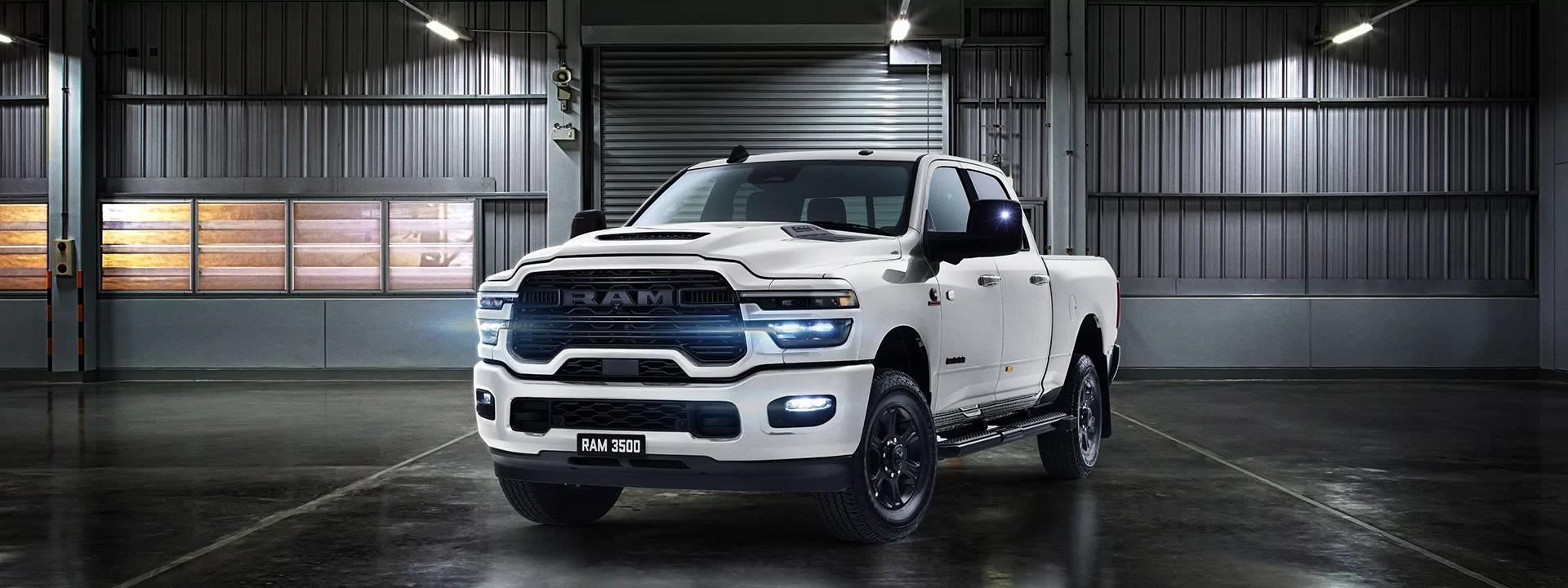 RHDBackorder2026
Ram 3500
Pickup · 1 VariantDieselFrom $115,000Ex Works, NZ
Seaports and Airports Supporting Vehicle Import
| Port/Facility | Code | Type | Location | Notes |
|---|---|---|---|---|
| Port of Colombo (JCT) | LKCMB | Seaport | Colombo | Main container terminal for vehicles shipped in containers |
| South Asia Gateway Terminal (SAGT) | LKCMB | Seaport | Colombo | Alternative terminal within Colombo port complex |
| Colombo International Container Terminal (CICT) | LKCMB | Seaport | Colombo | China Merchants-operated deep-water terminal |
| Hambantota International Port | LKHAM | Seaport | Hambantota | Main roll-on/roll-off (RoRo) vehicle port, with a dedicated customs inspection bay |
| Bandaranaike International Airport (BIA) | LKCMB-AIR | Airport | Katunayake | Air freight for high-value vehicles; rare for standard imports |
Hambantota International Port delivered 167,569 vehicles between March 2025 and September 2026, according to the port operator. It clears vehicles within 24 hours of complete documentation and gives imported vehicles 10 days of free storage. Colombo handles vehicles shipped in containers. Air freight is extremely rare for vehicles due to cost and is only used for ultra-high-value or time-sensitive shipments.
Restrictions on Vehicle Import for Individuals
Sri Lanka's import regulations draw a clear line between registered vehicle importers and everyone else:
Foreign Currency Requirements
All vehicle imports must be paid for using legitimate foreign currency sources. The Central Bank of Sri Lanka (CBSL) requires documentary proof of foreign exchange — either through export earnings, worker remittances, or approved bank loans. Licensed banks report every letter of credit opened for a vehicle import to the Controller General of Imports and Exports.
Import Licence
Cars and light goods vehicles were taken off the import-suspension list in February 2025 without an import-licence requirement. Only some buses, goods auto-trishaws and special-purpose vehicles were placed on the Import Control Licence list (Gazette 2421/44, Schedule B).
Pre-Shipment Inspection (PSI)
Used vehicles require a PSI certificate from an authorised inspection company (such as SGS, Bureau Veritas, or COTECNA) confirming the vehicle's condition, age, mileage, and compliance with emission standards. This must be completed in the country of export.
Quantity Limits
Anyone who is not a vehicle importer registered with the DMT — including every private individual — may import one vehicle in any 12 months, counted from the date of the customs declaration. Registered importers, government bodies and diplomatic missions are not limited.
Registration Deadline
The vehicle must be registered with the DMT within 90 days of the customs declaration. Late registration costs 3% of CIF per month (part months count as a full month), capped at 45% of CIF, and is never waived.
Concessionary Permits
Vehicles cannot be cleared under a concessionary-duty vehicle permit (Regulation 8 of Regulations No. 02 of 2025), so returning residents pay the same duties as everyone else. Diplomatic imports are duty-exempt under the Diplomatic Privileges Act.
Duty Structure Overview
Sri Lanka's vehicle import duty structure is among the most complex in the world. Duty and the surcharge come first. The excise is a fixed amount for the tariff line. VAT and SSCL are charged on a base that includes all three. The Luxury Tax runs separately on the CIF alone.
The Six Taxes on an Imported Car:
- Customs Import Duty (CID): 30% of CIF on every car and on goods vehicles up to 5 tonnes (Revenue Protection Order No. 01/2026, from 1 April 2026)
- Surcharge: 50% of the CID amount (not CIF — a tax on a tax), equal to 15% of CIF (Gazette Extraordinary No. 2501/88, 15 August–31 December 2026)
- Excise (Special Provisions) Duty: a fixed rupee amount per cc, per kW or per vehicle, set for each tariff line
- VAT: 18% of (CIF + 10% of CIF + CID + surcharge + excise)
- Social Security Contribution Levy (SSCL): 2.5% of the same base as VAT, charged on vehicle imports since 1 May 2026 (SSCL (Amendment) Act No. 10 of 2026). SSCL is not in the VAT base
- Luxury Tax: 60–120% of the amount by which the CIF exceeds the threshold for the fuel type. It is not part of the VAT or SSCL base
Get exact duty rates for your specific vehicle using CarImport.AI. Sri Lanka's excise bands mean that a few cc or kW across a band boundary can change the total by millions of rupees.
The surcharge end date: the current surcharge order runs to 31 December 2026. If it is not extended, customs duty falls from 45% to 30% of CIF from 1 January 2027 — on the reference car below, the total would drop from about 313% to about 295% of CIF. The surcharge has been renewed each time it lapsed since February 2025, so IPAS keeps it in every quote until a gazette ends it.
Why Sri Lanka's System Is Uniquely Complex:
Unlike countries with flat-rate duties (e.g., the UAE's 5% duty), Sri Lanka's layered structure means each layer amplifies the next. The surcharge is 50% of CID (not CIF), and VAT and SSCL are charged on top of the duty, surcharge and excise. Excise — the largest single component for most cars — is a fixed amount per cc, so its share of CIF is highest on cheap cars with large engines. The Luxury Tax adds 60–120% on the portion of CIF above Rs 5.0–6.0 million (about USD 15,000–18,000), which captures most imported cars.
Worked example — new 2.0-litre petrol car, CIF USD 30,000:
| Line | Base | Amount (Rs) |
|---|---|---|
| CIF value (1,998 cc petrol, HS 8703.23.59) | USD 30,000 at Rs 330.72 | 9,921,489 |
| Customs duty | 30% of CIF | 2,976,447 |
| Surcharge | 50% of the duty | 1,488,223 |
| Excise | Rs 7,700 × 1,998 cc | 15,384,600 |
| VAT | 18% of 30,762,908 (CIF + 10% + duty + surcharge + excise) | 5,537,323 |
| SSCL | 2.5% of the same base | 769,073 |
| Luxury Tax | 100% of (CIF − Rs 5,000,000) | 4,921,489 |
| Total taxes | 31,077,155 (313% of CIF) |
Approximate Total Tax by Vehicle (new vehicles, CIF in USD at Rs 330.72):
| Vehicle Type | Engine/Motor | CIF (USD) | Approx. Total Tax (% of CIF) |
|---|---|---|---|
| Electric | 80 kW | 30,000 | 124% |
| Electric | 150 kW | 30,000 | 166% |
| Electric | 250 kW | 40,000 | 330% |
| Petrol | 998 cc | 15,000 | 136% |
| Petrol | 1,498 cc | 20,000 | 223% |
| Petrol | 1,998 cc | 30,000 | 313% |
| Petrol | 2,494 cc | 40,000 | 331% |
| Petrol | 2,998 cc | 60,000 | 349% |
| Diesel | 1,598 cc | 35,000 | 261% |
| Diesel | 2,755 cc | 50,000 | 402% |
| Petrol hybrid | 1,498 cc | 25,000 | 179% |
| Petrol hybrid | 1,798 cc | 30,000 | 250% |
| Double-cab pickup (diesel) | Any | 35,000 | 140% |
Electric excise rates assume a vehicle not more than one year old; an older electric car pays a higher rate per kW.

Calculate your exact import duty to Sri Lanka
Get a vehicle-specific duty and full landed-cost breakdown — HS classification, every tax, levy and FTA, plus shipping — calculated for your exact make, model and specs.
- Vehicle-specific HS code
- All duties, taxes & FTAs
- Shipping + est. landed cost
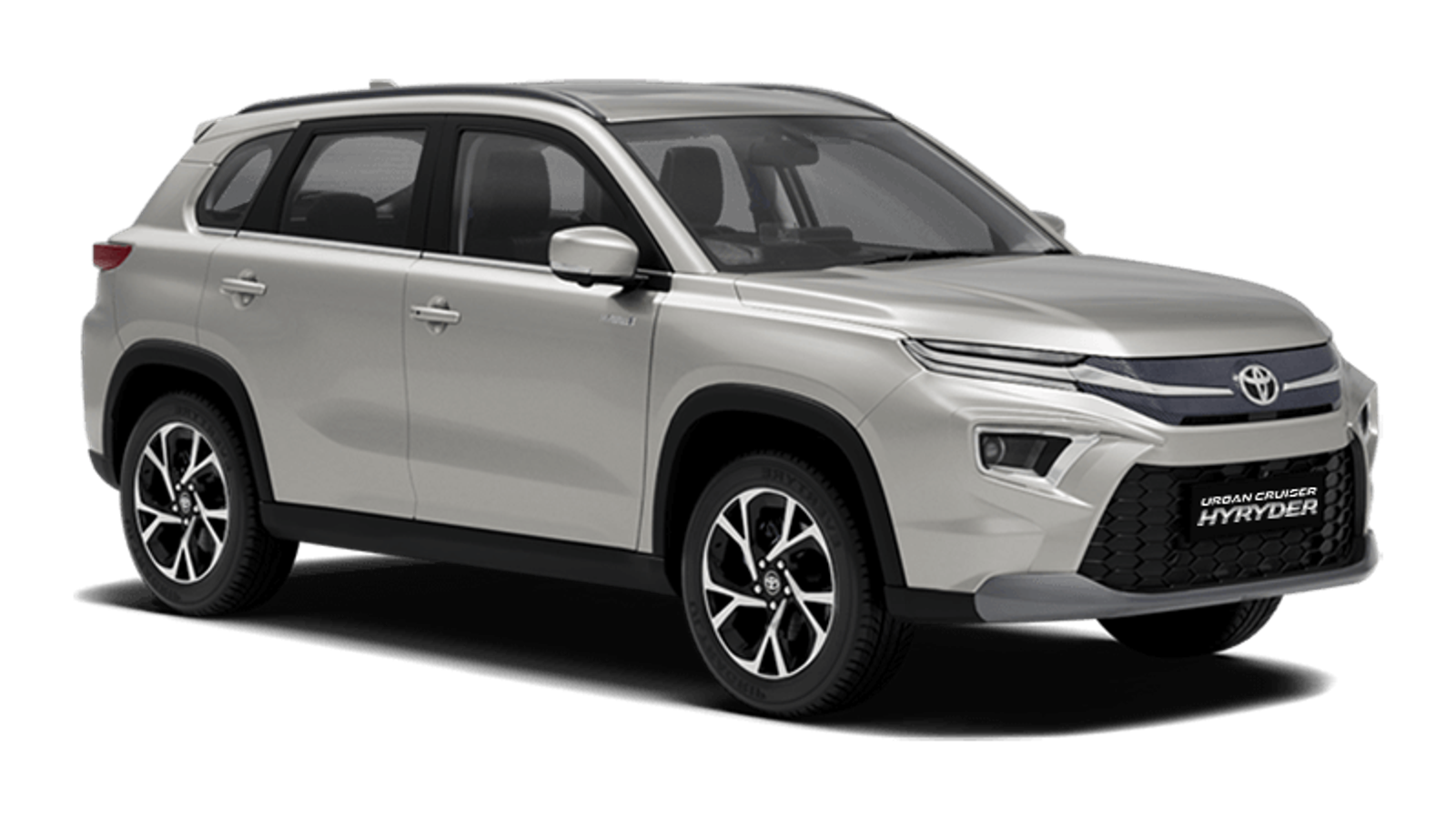
Worked Example: Importing a 2026 Toyota Urban Cruiser Hyryder to Sri Lanka
Here is the full landed cost of one car, a 2026 Toyota Urban Cruiser Hyryder shipped from India to Sri Lanka, worked out on 9 November 2026 with the customs rules in force that day. It lands at 1,99,41,900 LKR (about US$59,990), and duties and taxes come to 183.9% of its CIF value.
| Item | Share of CIF | Amount |
|---|---|---|
| Vehicle priceIPAS price for a car sourced in India | 51,52,516 LKRUS$15,500 | |
| Shipping and insuranceIndia to Sri Lanka | 14,58,661 LKRUS$4,388 | |
| CIF valueCost, insurance and freight: the customs value | 66,11,177 LKRUS$19,888 | |
| Customs duties and taxes | ||
| Basic customs duty (30%)30% of CIF | 19,83,220 LKRUS$5,966 | |
| Additional duty (50%)Base or related charges differ from CIF; see the duty structure above112% of CIF | 74,05,662 LKRUS$22,278 | |
| GST/VAT (18%)Base or related charges differ from CIF; see the duty structure above41.9% of CIF | 27,69,727 LKRUS$8,332 | |
| Total duties and taxes183.9% of CIF | 1,21,58,609 LKRUS$36,576 | |
| Service and handling | ||
| Premium Import ServiceOptional end-to-end import management by IPAS | 5,53,812 LKRUS$1,666 | |
| Destination handlingPort terminal and customs clearance handling | 6,18,302 LKRUS$1,860 | |
| Total landed cost | 1,99,41,900 LKRUS$59,990 | |
Documents Required for Import
Pre-Shipment Documents
- Form C (Customs Declaration) — completed via ASYCUDA World
- Letter of Credit (LC) or Telegraphic Transfer (TT) proof of payment
- Central Bank of Sri Lanka (CBSL) foreign exchange approval
- Pre-Shipment Inspection (PSI) certificate (used vehicles only)
- Bill of Lading or Airway Bill (original)
- Commercial invoice from seller (with FOB/CIF breakdown)
- Packing list
Vehicle-Specific Documents
- Certificate of Origin (preferential rate claims under FTAs)
- Manufacturer's Certificate or Export Inspection Certificate showing the month and year of manufacture (this sets the vehicle's age)
- De-registration certificate from country of export
- Emission compliance certificate
- Vehicle identification number (VIN) verification document
- Insurance certificate (marine cargo insurance)
Post-Clearance Documents
- Customs assessment notice and duty payment receipts
- Excise duty payment receipt (separate from customs)
- Affidavit confirming your Taxpayer Identification Number (TIN), for DMT registration
- Revenue Licence application (DMT)
- Vehicle fitness certificate (from DMT-authorised testing centre)
- Insurance policy (local Sri Lankan motor insurance)
All documents must be originals or certified copies. Sri Lanka Customs does not accept scanned or photocopied documents for vehicle clearance. The transition to ASYHUB digital platform (2025-2026) is gradually enabling electronic document submission for some steps.
Customs Clearance Timeline
| Stage | Duration | Details |
|---|---|---|
| CBSL foreign exchange approval | 3-5 business days | Required for all vehicle imports |
| Pre-Shipment Inspection (if used) | 2-5 business days | Must be completed before shipping |
| Shipping (sea freight) | 7-21 days | Depends on origin: Japan 7-10 days, UK 18-21 days, USA 25-30 days |
| Port arrival to customs lodgement | 1-3 business days | Document submission via ASYCUDA World |
| Customs assessment and valuation | 1-7 business days | Hambantota clears within 24 hours of complete documents; physical inspection may be required |
| Duty payment processing | 1-2 business days | CID + Surcharge + Excise + VAT + SSCL + Luxury Tax |
| Release order and port collection | 1-2 business days | After all duties cleared |
| DMT registration | 5-10 business days | Must be completed within 90 days of the customs declaration |
| Total (typical) | 25-55 business days | From payment arrangements to road-legal registration |
Delays are common during peak import periods. The February 2025 reopening created a backlog that took several months to clear. Plan for the upper end of these estimates.
Homologation and Vehicle Approval
Sri Lanka does not have a formal type-approval system comparable to European WVTA or Australian ADR compliance. However, several compliance requirements must be met:
Emission Standards
All imported vehicles must meet Sri Lanka's vehicular exhaust emission standards for imports. This is verified through the manufacturer's emission compliance certificate and/or the PSI report. A new vehicle built to current Euro 6 rules meets them; vehicles that do not comply are rejected at customs.
Right-Hand Drive (RHD) Requirement
Sri Lanka drives on the left, and imported vehicles must be right-hand drive. A left-hand-drive vehicle must be converted to RHD before it is shipped.
Vehicle Examination
The DMT conducts a vehicle examination as part of the registration process. This includes:
- Brake system test
- Emission test (using Sri Lankan standards)
- Lighting and electrical systems check
- Chassis and body condition inspection
- VIN verification against import documents
Roadworthiness Certificate
Used vehicles must obtain a roadworthiness certificate from a DMT-authorised vehicle testing centre before registration. New vehicles with full manufacturer compliance documentation are typically exempted.
No UNECE/WP.29 Mutual Recognition
Sri Lanka is not a signatory to the 1958 or 1998 UNECE agreements, meaning type approvals from other countries (e.g., ADRs from Australia, FMVSS from the USA) are not automatically recognised. Each vehicle is assessed individually.
Registration Procedures and Costs
Once customs clearance is complete, the vehicle must be registered with the Department of Motor Traffic (DMT) within 90 days of the customs declaration:
Step 1: Vehicle Examination (DMT)
Book an appointment at the nearest DMT vehicle testing centre. The vehicle will be inspected for roadworthiness and VIN verification. Cost: approximately LKR 5,000-10,000.
Step 2: Registration Application
Submit the following to the DMT Provincial Office:
- Customs release documents (original)
- All duty payment receipts
- Affidavit confirming your Taxpayer Identification Number (TIN)
- Vehicle examination pass certificate
- Personal identification (NIC or passport)
- Proof of address
- Insurance certificate (valid local motor insurance)
Step 3: Revenue Licence
The annual Revenue Licence is required before the vehicle can be driven on public roads. The cost varies by engine capacity:
| Engine Capacity | Annual Revenue Licence (approx.) |
|---|---|
| Under 1,000cc | LKR 5,000-8,000 |
| 1,000-1,500cc | LKR 10,000-15,000 |
| 1,500-2,000cc | LKR 18,000-25,000 |
| Over 2,000cc | LKR 30,000-50,000 |
| Electric vehicles | LKR 5,000-10,000 (concessionary) |
Step 4: Number Plates
DMT issues registration number plates upon completion. Processing typically takes 5-7 business days. The vehicle receives a registration book (vehicle certificate) which must be carried at all times.
Total Registration Costs (excluding duties):
Registration, examination, licence, and number plates typically cost LKR 25,000-75,000 (approximately USD 80-250) depending on vehicle class and engine capacity. Registering after the 90-day deadline adds a late fee of 3% of CIF per month, up to 45% of CIF.
Frequently Asked Questions
Can I import a left-hand drive vehicle to Sri Lanka?
Not as it is. Sri Lanka drives on the left and is a right-hand-drive market. If you own an LHD vehicle, it must be converted to RHD by a professional converter before shipping.
What is the maximum age for importing a used vehicle?
3 years for a car, counted from the date of manufacture (the 15th of the month on the Manufacturer's Certificate or Export Inspection Certificate) to the Bill of Lading date. Goods vehicles up to 5 tonnes may be 4 years old, and goods vehicles over 5 tonnes up to 10 years. Older vehicles cannot be imported, and one imported in breach of the rules must be re-exported within 90 days.
Why are Sri Lanka's import duties so high?
Sri Lanka uses vehicle import duties as a major revenue source and a tool to manage foreign exchange outflows. The layered structure (CID + Surcharge + Excise + VAT + SSCL + Luxury Tax) was kept in place after the 2022 economic crisis to balance reopening imports with fiscal sustainability. In 2026 the general customs duty rose from 20% to 30% (from 1 April), and SSCL started applying to vehicles (from 1 May). The government also uses differential rates to favour hybrids, EVs and smaller-engine vehicles.
Are electric vehicles cheaper to import?
Usually, yes. A new USD 30,000 EV with a 150 kW motor pays about 166% of CIF in taxes, against about 313% for a 2.0-litre petrol car at the same CIF — a saving of nearly 150 points of CIF. EVs pay the same customs duty and surcharge; the saving comes from the per-kW excise and the 60% Luxury Tax above Rs 6.0 million. EVs over 200 kW pay a much higher excise rate per kW and can cost as much to import as large petrol cars. Sri Lanka's charging infrastructure is still developing, with most public chargers concentrated in Colombo and along major highways.
What is the luxury tax threshold?
It depends on the fuel. Petrol and diesel cars pay on the CIF above Rs 5.0 million (about USD 15,100), at 100% (petrol) or 120% (diesel) of the excess. Hybrids and plug-in hybrids pay above Rs 5.5 million at 80% (diesel hybrids 90%). Electric cars pay above Rs 6.0 million at 60%. Pickups and other goods vehicles pay no Luxury Tax. Most imported cars from developed markets exceed the threshold.
Can I claim FTA concessions?
Sri Lanka has Free Trade Agreements with India (ISFTA), Pakistan (PSFTA), and Singapore (SLSFTA), plus participation in SAFTA and APTA regional agreements. The tariff prints a Singapore preferential rate on car lines (20% for petrol and diesel, 10% for hybrids and EVs). The 50% surcharge applies to preferential duty too. Other agreement columns have not been verified, so IPAS quotes the general 30% duty for every origin. Always verify current FTA applicability with Sri Lanka Customs before relying on preferential rates.
What happens if my vehicle fails the DMT examination?
The vehicle must be repaired to meet the required standards and re-examined. There is no limit on re-examination attempts, but the vehicle cannot be registered or driven on public roads until it passes. Storage charges at the port or bonded warehouse continue to accrue during this period. Keep the 90-day registration deadline in mind: late registration costs 3% of CIF per month.
Is the SSCL (2.5%) confirmed for 2026?
Yes. The SSCL (Amendment) Act No. 10 of 2026 ended the motor-vehicle exemption from 1 May 2026, and the 2026 tariff prints 2.5% against vehicle lines. It is charged on CIF + 10% + duty + surcharge + excise (the same base as VAT), but it is not itself part of the VAT base.
Is the 50% surcharge permanent?
No. The current surcharge order (Gazette Extraordinary No. 2501/88) runs from 15 August to 31 December 2026. Unless it is extended, customs duty falls from 45% to 30% of CIF from 1 January 2027. It has been renewed each time it lapsed since February 2025, so IPAS keeps it in every quote until a gazette ends it.
Ready to Import?
Sri Lanka's vehicle import process is among the most complex and expensive globally, but with the right preparation and accurate cost calculations, it is entirely manageable. The key is knowing your exact duty obligation before committing to a purchase — and that is where IPAS tools come in.
Calculate Your Full Import Cost
Use CarImport.AI to get vehicle-specific duty calculations for Sri Lanka. Enter any vehicle — new or used, petrol, diesel, hybrid, or electric — and get the complete duty breakdown including CID, surcharge, excise duty, VAT, SSCL and Luxury Tax.
Get a Shipping Quote
Already have a vehicle ready to ship? Use IPAS EXPRESS Pro Car Shipping to get instant shipping quotes from any origin to Colombo — sea freight (container or RoRo) or air freight, with full cost breakdowns including insurance, terminal handling, and port charges.
Ready to Import Your Vehicle?
Two tools, two use cases. Pick the one that fits your needs.
Source a vehicle through IPAS and calculate the full landed cost — customs duties, shipping, and compliance — to destinations across the world.
Calculate Landed CostIPAS Express
Already have a vehicle? Get instant shipping quotes — sea freight, air freight, or RoRo — for one car or multiple vehicles worldwide.
Get Shipping Quote