
Introduction
Importing a new car to Botswana from outside SACU typically costs 58% to 90% of its CIF value in taxes: 25% customs duty (18% for EU or UK-built cars), ad valorem excise up to 30% and 14% VAT. South African-built cars pay only 14% VAT. There is no age limit; only right-hand drive cars can be registered.
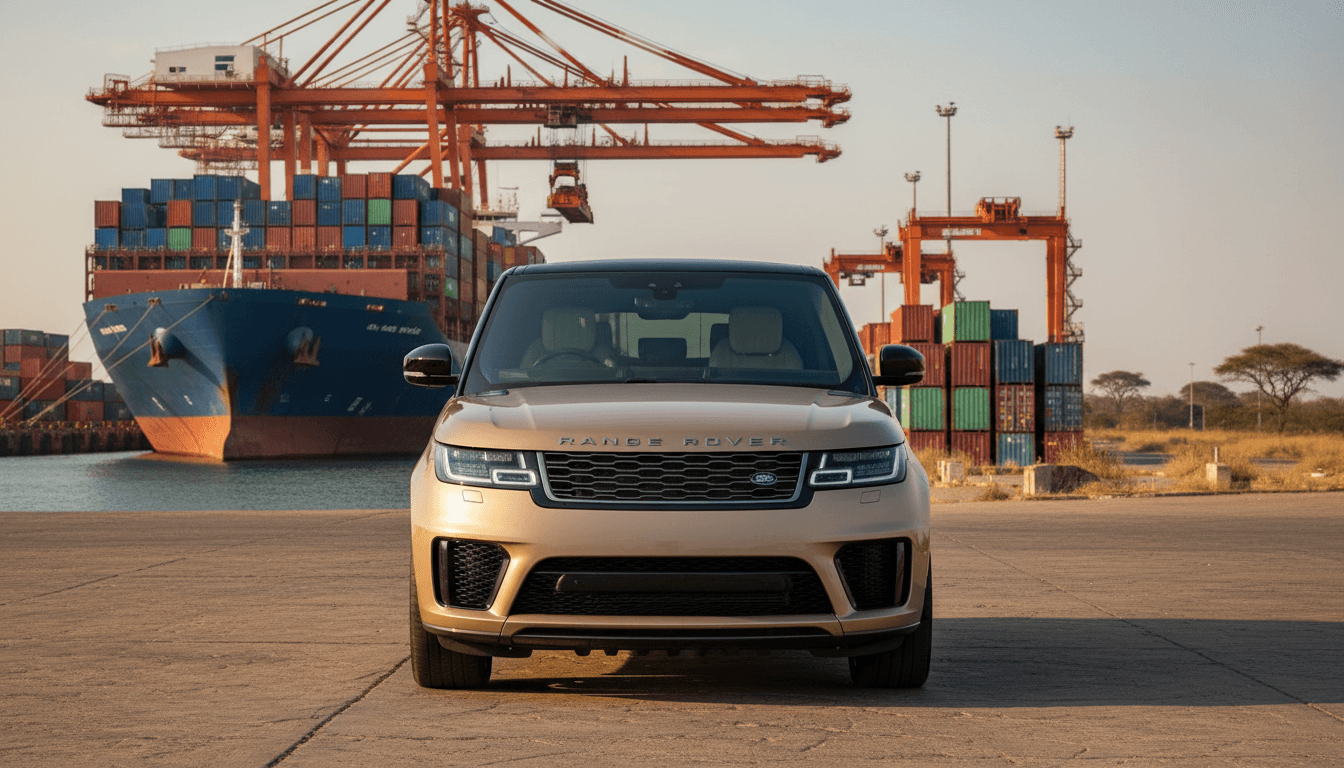
Botswana is a landlocked country in southern Africa with a population of approximately 2.4 million people and one of the continent's most stable and prosperous economies. Known for its strong governance, diamond-driven wealth, and a growing middle class, Botswana has a significant appetite for imported vehicles. There is no domestic automobile manufacturing, so every vehicle in the country — from sedans and SUVs to pickup trucks and heavy commercial vehicles — is imported.
The vehicle import regime is administered by the Botswana Unified Revenue Service (BURS), which applies the Southern African Customs Union (SACU) common external tariff and the common SACU excise schedule. A passenger car from outside SACU pays 25% customs duty, an ad valorem excise duty that rises with the vehicle's value up to 30%, and 14% VAT — together typically 58% to 90% of CIF value. Vehicles in free circulation within the SACU bloc — built in South Africa, Namibia, Lesotho or Eswatini, or duty-paid when they first entered SACU — enter Botswana at 0% customs duty and pay only the 14% VAT.
Botswana drives on the left side of the road. A left-hand drive vehicle is not refused at customs, but it cannot be road-registered. There is no age limit on imported used vehicles, though vehicles three years and older must pass a roadworthiness test before registration. As a landlocked nation, all vehicle imports transit through neighbouring countries, with the Port of Durban in South Africa serving as the primary sea entry point. This guide covers every step from eligibility and duty estimation through border clearance, registration, and the transit corridor from Durban to Gaborone.
Quick Facts
| Detail | Information |
|---|---|
| Customs Authority | Botswana Unified Revenue Service (BURS) |
| Registration Authority | Department of Road Transport and Safety (DRTS) |
| Traffic Side | Left-hand traffic |
| Steering Requirement | Right-Hand Drive (RHD) for registration; LHD cannot be road-registered |
| Customs Value | FOB (international freight and insurance excluded) |
| Customs Duty (non-SACU) | 25% on cars and light pickups; 18% for EU/UK-built cars with proof of origin (battery EVs stay at 25%); 20% on heavier goods vehicles |
| Ad Valorem Excise (non-SACU) | ((0.00003 x B) - 0.75)%, from 0% up to a 30% cap; B = customs value x 1.15 + customs duty |
| Customs Duty (SACU free circulation) | 0%; excise already in the South African price |
| VAT | 14% on CIF + duty + excise (14% on CIF for SACU vehicles) |
| Used Vehicle Age Limit | None |
| Roadworthiness Test | Mandatory for vehicles 3 years and older |
| Transit Port | Port of Durban, South Africa (primary) |
| Alternative Transit | Port of Walvis Bay, Namibia |
| Key Border Posts | Tlokweng Gate, Pioneer Gate, Ramatlabama |
| Customs System | BURS electronic filing (SAD 500) |
| Clearance Deadline | 14 days from border entry |
| Currency | Botswana Pula (BWP) |
| Total Tax Burden (non-SACU) | About 58-90% of CIF for new cars |
| Total Tax Burden (SACU) | 14% of CIF (VAT only) |
Types of Cars That Can Be Imported
BURS states that Botswana does not currently impose restrictions on the importation or exportation of motor vehicles. Both new and used vehicles may be imported by individuals and companies from any origin country, subject to duty payments, steering requirements, and registration rules.
New Vehicles
New vehicles from any country can be imported freely. A vehicle from outside SACU pays 25% customs duty, the ad valorem excise and 14% VAT. A vehicle built in South Africa and in free circulation pays 0% duty and 14% VAT only. That makes South African-built models such as the Toyota Hilux, Fortuner and Corolla Cross, Ford Ranger and Everest, Volkswagen Polo and Amarok, BMW X3, Isuzu D-Max and Nissan Navara much cheaper to import than the same models built in Japan, Thailand or Europe.
Used Vehicles
Used vehicles are permitted with no age limit. Both recent and older used vehicles may be imported. However:
- Vehicles 3 years and older from the date of manufacture must pass a roadworthiness test at a DRTS testing station before registration
- A used vehicle is valued under the WTO valuation methods (Customs Act Cap. 50:02 s.336(1), as substituted in 2026); BURS may reject a declared value that is not supported
- A Certificate of Title and Registration confirming at least one year of ownership is required for used vehicles from some origins (notably Japan)
- BURS has heightened enforcement against undervaluation and false declarations on used vehicle imports, particularly from China and Singapore
Electric Vehicles
Battery EVs, hybrids and plug-in hybrids pay the same 25% customs duty and the same ad valorem excise as a petrol car of the same value. There is no EV duty reduction in the SACU tariff, and claims of a cut "from 40% to 25%" have no basis: no passenger-car line carries 40%. The EU/UK preference does not reach battery EVs either; a German- or UK-built EV pays 25%. SACU-origin EVs in free circulation pay 0% duty.
Commercial Vehicles
Light goods vehicles — single-cab and double-cab pickups and panel vans with a vehicle mass up to 2,000 kg or a G.V.M. up to 3,500 kg — pay 25% duty (18% EU/UK) and the ad valorem excise, just like a car. Heavier goods vehicles pay 20% duty (12% EU/UK) and no excise. SACU-origin commercial vehicles in free circulation enter at 0% duty.
Steering Requirement
Botswana drives on the left. Customs entry of a left-hand drive vehicle is not refused, but an LHD vehicle cannot be road-registered. There are no published provisions for LHD-to-RHD conversion approval, so LHD vehicles from continental Europe, the USA, or other LHD markets are effectively unusable on Botswana's public roads.
Cars You Can Import to Botswana
Each card is a full landed-cost calculation: the car's price, shipping, every duty and tax, and handling, worked out on 9 November 2026 with the rules in force that day. All are right-hand drive to suit Botswana's roads. Tap a car to see its full breakdown, or open it to change the trim, colour or port.
More cars you can import to Botswana
New cars IPAS sources to order that meet Botswana's import rules. Prices are ex works, before shipping and duty. Cars marked C-RHD are built left-hand drive and converted to right-hand drive before shipping; the calculator adds the conversion. Open a car to work out its full landed cost.
 RHDBackorder2025
Toyota Tundra
Pickup · 2 VariantsHybridFrom $118,500Ex Works, Australia RHDBackorder2026
Toyota Hilux Revo Z Edition
Pickup · 8 VariantsDieselFrom $22,900Ex Works, Thailand RHDBackorder2026
Toyota Rumion
Van & MPV · 8 VariantsPetrol · CNGFrom $9,000Ex Works, India RHDBackorder2026
Tata Nexon
SUV · 49 VariantsPetrol · Diesel · CNGFrom $8,100Ex Works, India RHDBackorder2026
Tata Harrier EV
SUV · 16 VariantsElectricFrom $26,000Ex Works, India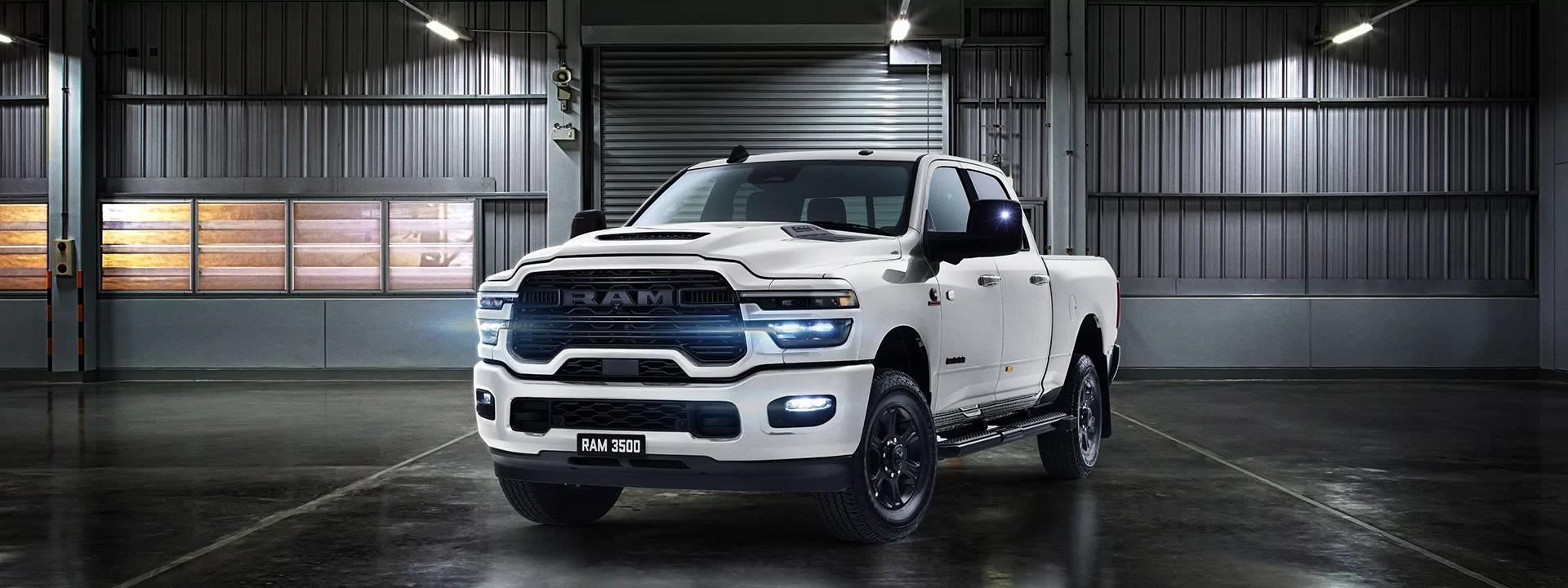 RHDBackorder2026
Ram 3500
Pickup · 1 VariantDieselFrom $115,000Ex Works, NZ RHDBackorder2025
Ram 1500
Pickup · 6 VariantsPetrol · HybridFrom $70,800Ex Works, NZ RHDBackorder2026
BMW 7 Series M Models
Sedan · 7 VariantsPlug-in Hybrid · ElectricFrom $155,200Ex Works, UK RHDBackorder2026
Chevrolet Corvette E-Ray Coupe
Coupe · 1 VariantHybridFrom $168,900Ex Works, NZ RHDBackorder2026
Chevrolet Silverado 1500
Pickup · 2 VariantsPetrolFrom $89,100Ex Works, NZ LHD/C-RHDBackorder2026
Cadillac Escalade ESV
SUV · 11 VariantsPetrolFrom $112,900Ex Works, USA RHDBackorder2026
Jeep Wrangler
SUV · 3 VariantsPetrolFrom $54,600Ex Works, India RHDBackorder2026
Denza D9
Van & MPV · 2 VariantsElectricFrom $76,100Ex Works, China🇨🇳 RHDBackorder2026
Mercedes-Benz Maybach GLS
SUV · 1 VariantHybridFrom $219,900Ex Works, UK RHDBackorder2027
Nissan Patrol
SUV · 6 VariantsPetrolFrom $72,000Ex Works, Australia RHDBackorder2026
Honda Prelude
Coupe · 2 VariantsHybridFrom $49,400Ex Works, Japan
Entry Points and Transit Ports
Botswana is entirely landlocked, so all vehicle imports arrive overland after entering Africa through a coastal port in a neighbouring country. The two primary transit corridors are via South Africa (Port of Durban) and Namibia (Port of Walvis Bay).
Transit Seaports (Neighbouring Countries)
| Port | Country | Distance to Gaborone | Primary Use |
|---|---|---|---|
| Port of Durban | South Africa | ~1,600 km | Primary transit port for RoRo and container shipments |
| Port of Walvis Bay | Namibia | ~1,800 km | Alternative for vehicles from Europe and the Americas |
The Port of Durban handles the vast majority of vehicle imports destined for Botswana. Vehicles arrive by container or RoRo, clear South African transit customs, and are transported overland to the Botswana border. A vehicle built outside SACU that transits Durban or Walvis Bay to Botswana is still a non-SACU import and pays Botswana's duty and excise.
Key Border Posts (Botswana Entry)
| Border Post | Neighbouring Country | Operating Hours | Primary Use |
|---|---|---|---|
| Tlokweng Gate / Kopfontein | South Africa | 06:00-00:00 | Main commercial and vehicle imports |
| Pioneer Gate / Skilpadshek | South Africa | 06:00-00:00 | Commercial freight |
| Ramatlabama | South Africa | 06:00-22:00 | Vehicles and cargo |
| Martin's Drift | South Africa | Varies | Commercial trucks |
| Kazungula Road | Zimbabwe | 06:00-18:00 | Transit route |
Significant congestion has been reported at Tlokweng Gate, Pioneer Gate, and Martin's Drift border posts. Working with an accredited BURS clearing agent is strongly advised to avoid delays.
Airports
| Airport | Code | City | Notes |
|---|---|---|---|
| Sir Seretse Khama International Airport | GBE | Gaborone | Air freight available for urgent shipments |
| Francistown International Airport | FRW | Francistown | Secondary air freight option |
Air freight is available but rarely used for standard vehicle imports due to cost.
Restrictions on Vehicle Import
Steering Side
A left-hand drive vehicle cannot be road-registered in Botswana, so in practice only RHD vehicles are imported for domestic use. Customs entry itself is not refused.
14-Day Clearance Rule
Vehicles must be fully cleared through BURS customs within 14 days of entering Botswana. Failure to clear within this period may result in penalties, storage charges, or vehicle seizure.
Temporary Import
Foreign-registered vehicles may remain in Botswana for no more than 14 days without paying customs duty and VAT. Beyond this period, full duties must be paid.
Residency Requirement
Only Botswana residents can clear vehicles through customs. A residence permit is required for the BURS clearance process.
Enforcement Alerts
BURS has issued public notices regarding non-compliance in used vehicle imports, including undervaluation, false declarations of origin and specifications, and non-declaration. Vehicles found in violation have been impounded, with 36 vehicles from China and Singapore remaining in BURS custody since 2019 as of the latest parliamentary confirmation.
Duty Structure Overview
A vehicle from outside SACU pays three taxes in sequence: customs duty, ad valorem excise duty and VAT. For a new passenger car the total is typically 58% to 90% of CIF value. Engine size does not change the general duty rate; the excise rises with the vehicle's value. There is no CO2 or environmental levy in Botswana.
Customs Value Is FOB
Since 1 July 2026, the Customs (Amendment) Act No. 16 of 2026 has set the rule in the Customs Act Cap. 50:02 (s.334(3)): international transport, loading and handling, and insurance are deducted from the price, so the customs value is FOB. IPAS's calculator works from the CIF figure when freight and insurance are not itemised separately, which slightly overstates the duty and excise, so the estimate errs on the safe side.
Key Tax Components (non-SACU vehicles)
- Customs Duty — 25% of the customs value for passenger cars of every engine size and propulsion type, and for light pickups and vans (vehicle mass up to 2,000 kg or G.V.M. up to 3,500 kg). Heavier goods vehicles pay 20%.
- Ad Valorem Excise Duty — rate = ((0.00003 x B) - 0.75)%, where B = customs value x 1.15 + customs duty (Customs Act s.335A). The rate is 0% when B is BWP 25,000 or less and reaches the 30% maximum at B of BWP 1,025,000. The excise is the rate multiplied by B. It applies to every passenger car (petrol, diesel, hybrid and electric) and to light single-cab and double-cab pickups and panel vans, but not to heavier goods vehicles.
- VAT — 14% (VAT Act Cap. 50:03 s.7(1)) on CIF + customs duty + excise.
Calculation Sequence
- Determine the customs value (FOB; CIF where freight and insurance are not itemised)
- Customs Duty = customs value x 25%
- B = customs value x 1.15 + Customs Duty; excise rate = (0.00003 x B - 0.75)%, capped at 30%
- Ad Valorem Excise = B x excise rate
- VAT = (CIF + Customs Duty + Excise) x 14%
- Total Landed Cost = CIF + Customs Duty + Excise + VAT
Example (new petrol car from Japan, CIF USD 30,000 = BWP 417,204)
| Component | Calculation | Amount (BWP) | Approx. USD |
|---|---|---|---|
| CIF Value / customs value | Base | 417,204 | $30,000 |
| Customs Duty (25%) | 417,204 x 0.25 | 104,301 | $7,500 |
| Excise base B | 417,204 x 1.15 + 104,301 | 584,086 | — |
| Ad Valorem Excise (16.773%) | 584,086 x 16.773% | 97,969 | $7,045 |
| VAT (14%) | (417,204 + 104,301 + 97,969) x 0.14 | 86,726 | $6,236 |
| Total Taxes | Duty + Excise + VAT | 288,996 | $20,781 |
| Total Tax Burden | 288,996 / 417,204 | 69.3% of CIF |
USD figures converted at about BWP 13.91 per USD (October 2026).
Typical Tax Burden by Vehicle
| Vehicle (new) | HS Code | CIF (BWP) | Total Taxes (% of CIF) |
|---|---|---|---|
| Toyota Hilux 2.4 single cab, Thailand | 8704.21.83 | 298,540 | 61.3% |
| Toyota Hilux 2.8 double cab, Japan | 8704.21.81 | 380,000 | 66.8% |
| Toyota Corolla 1.8 Hybrid, Japan | 8703.40.90 | 420,000 | 69.5% |
| BMW 320i, built in Germany (EU rate 18%) | 8703.23.90 | 700,000 | 75.7% |
| Volkswagen ID.4 EV, built in Germany (25%) | 8703.80.90 | 542,800 | 77.7% |
| Nissan Leaf EV, Japan | 8703.80.90 | 600,000 | 81.5% |
| Toyota Land Cruiser 300 3.4 petrol, Japan | 8703.24.90 | 1,400,000 | 90.4% |
| Toyota Hilux 2.4 single cab, South Africa-built | 8704.21.83 | 280,000 | 14.0% |
| Isuzu N-series truck, G.V.M. 7.5 t, Japan | 8704.22.90 | 650,000 | 36.8% |
SACU-Origin Vehicles
A vehicle in free circulation in SACU pays 0% customs duty and 14% VAT on CIF. The ad valorem excise is not charged again at the Botswana border: for a South African-built car it was levied in South Africa and is already in the price. This makes South African-built vehicles — Toyota Hilux, Ford Ranger, VW Polo, BMW X3 — much cheaper to import into Botswana than the same models built in Japan, Thailand, Europe or the USA.
Which Vehicles Count as SACU
The 0% rate depends on free circulation, not on the brand or the model name. A vehicle qualifies if it was built in South Africa, Namibia, Lesotho or Eswatini, or if it was imported into SACU and duty was paid at its first entry (shown on the SAD 500). A Japan- or Thailand-built Hilux shipped to Botswana is a non-SACU import, even though the same model is built in South Africa. Check the VIN manufacturer code and the export documents: Toyota South Africa VINs begin AHT, Toyota Japan JT and Toyota Thailand MR0.
Trade Preferences
- EU and UK — 18% duty instead of 25% on petrol, diesel and hybrid cars and light pickups (12% on heavier goods vehicles; free on cars of 1,000 cm³ or less); battery EVs stay at 25%. The vehicle must be built in the EU or UK and carry a EUR.1 or origin declaration.
- EFTA (Switzerland, Norway, Iceland, Liechtenstein) — 25% on cars (free at 1,000 cm³ or less), 20% on light goods vehicles.
- SADC — duty-free with a SADC certificate of origin.
A preference lowers the customs duty only; the ad valorem excise and VAT still apply. Vehicles from Japan, Korea, China, Thailand, India, the USA, Canada, Australia, New Zealand, the UAE and Mexico pay the general rate.
Recent Change: Customs (Amendment) Act 2026
The Customs (Amendment) Act No. 16 of 2026 came into force on 1 July 2026. It wrote the FOB customs value (s.334(3)) and the ad valorem excise base (s.335A) into Botswana's Customs Act and substituted the Customs Act Schedules. Duty and excise rates continue to follow the common SACU schedules.
Get exact duty rates for your specific vehicle using CarImport.AI

Calculate your exact import duty to Botswana
Get a vehicle-specific duty and full landed-cost breakdown — HS classification, every tax, levy and FTA, plus shipping — calculated for your exact make, model and specs.
- Vehicle-specific HS code
- All duties, taxes & FTAs
- Shipping + est. landed cost
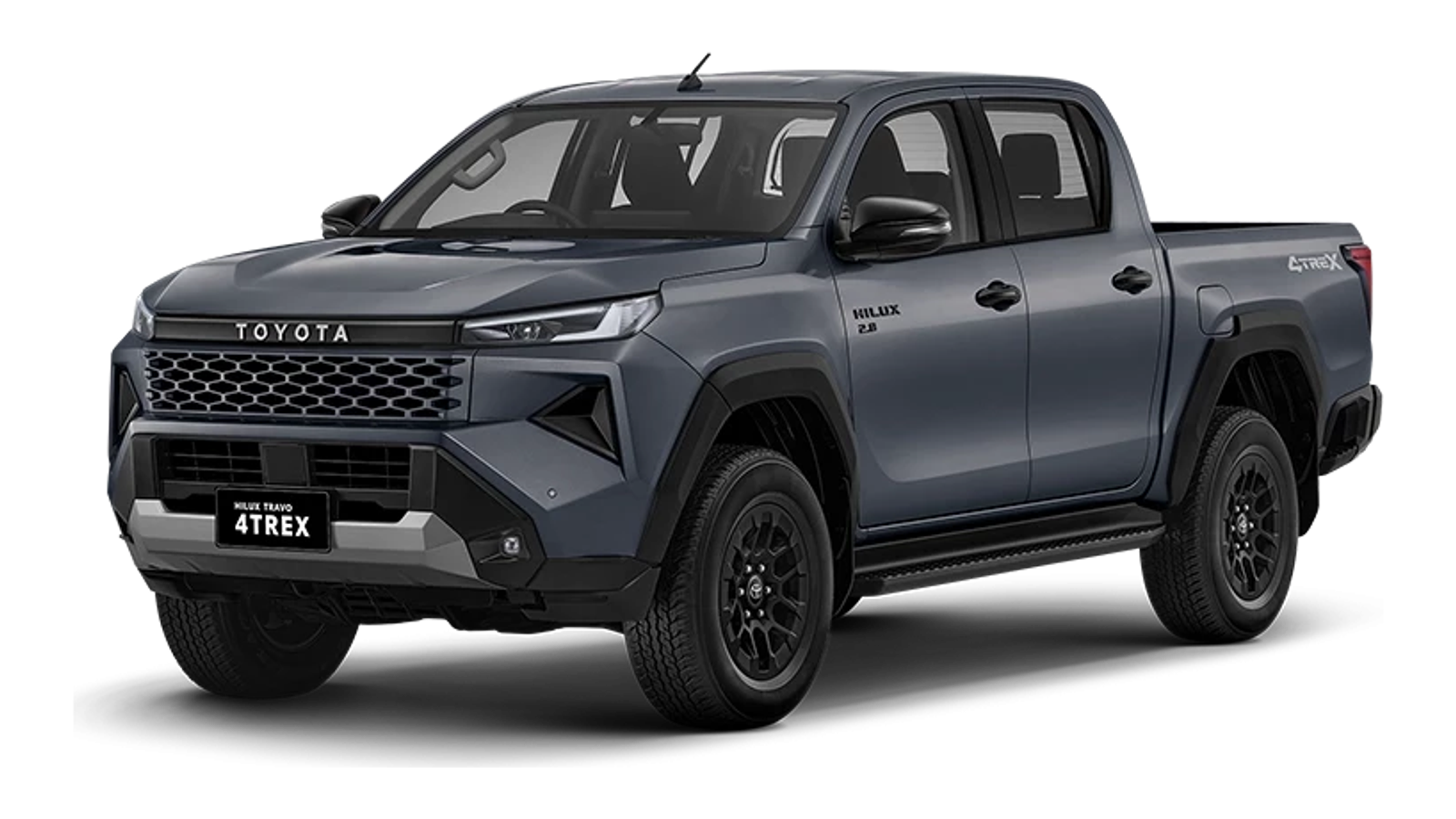
Worked Example: Importing a 2026 Toyota Hilux Travo to Botswana
Here is the full landed cost of one car, a 2026 Toyota Hilux Travo shipped from Thailand to Botswana, worked out on 9 November 2026 with the customs rules in force that day. It lands at 933,275 BWP (about US$67,010), and duties and taxes come to 74.1% of its CIF value.
| Item | Share of CIF | Amount |
|---|---|---|
| Vehicle priceIPAS price for a car sourced in Thailand | 377,433 BWPUS$27,100 | |
| Shipping and insuranceThailand to Botswana | 111,210 BWPUS$7,985 | |
| CIF valueCost, insurance and freight: the customs value | 488,643 BWPUS$35,085 | |
| Customs duties and taxes | ||
| Basic customs duty (25%)25% of CIF | 122,157 BWPUS$8,771 | |
| Additional duty (19.773%)Base or related charges differ from CIF; see the duty structure above27.7% of CIF | 135,263 BWPUS$9,712 | |
| GST/VAT (14%)14% of CIF plus the duties above21.4% of CIF | 104,456 BWPUS$7,500 | |
| Total duties and taxes74.1% of CIF | 361,876 BWPUS$25,983 | |
| Service and handling | ||
| Premium Import ServiceOptional end-to-end import management by IPAS | 25,097 BWPUS$1,802 | |
| Destination handlingPort terminal and customs clearance handling | 57,659 BWPUS$4,140 | |
| Total landed cost | 933,275 BWPUS$67,010 | |
Documents Required for Import
BURS requires a comprehensive set of documents for vehicle customs clearance. All documents should be prepared before the vehicle is shipped.
Core Customs Documents
- SAD 500 (Customs Declaration Form) -- Mandatory for all imports; filed electronically with BURS
- CE 109 (Customs Clearance Certificate) -- Issued by BURS upon duty payment; required for vehicle registration
- IC.2 Application Form -- Import control form
- Duplicate CE101 Forms -- Customs entry documentation
Vehicle-Specific Documents
- Police Clearance Certificate -- From both the exporting country's police and the Botswana Police Service (CID). This confirms the vehicle is not stolen
- Customs Clearance Documents from Export Country -- Proof the vehicle was legally exported
- Purchase Invoice or Valuation Certificate -- Original purchase invoice; if unavailable, a valuation from a local vehicle retailer or garage
- Certificate of Title and Registration -- Confirming vehicle ownership history (minimum 1 year for used vehicles from Japan and similar origins)
- EUR.1 or origin declaration -- Only if claiming the EU/UK preferential rate
- First-entry SAD 500 or South African manufacturer's documents -- To prove SACU free circulation for the 0% rate
Importer Documents
- Residence Permit -- Required for customs clearance (only Botswana residents can clear vehicles)
- Trader Identification Number (TIN) -- Required for electronic BURS clearance
- Import Permit -- From the Department of International Trade (for certain vehicle categories)
Insurance and Levies
- Third-party motor insurance -- Mandatory; can be obtained at the border (approximately BWP 50 for temporary cover)
- National Road Safety Fund levy (BWP 40) and road transport permit -- Charged on foreign-registered vehicles entering Botswana temporarily, not a tax on a permanently imported vehicle
Customs Clearance Timeline
| Stage | Duration | Description |
|---|---|---|
| Transit: Origin port to Durban (sea) | 2-5 weeks | Varies by origin (Japan ~24-34 days, UK ~3 weeks, India ~2-3 weeks) |
| Port clearance at Durban (SA transit) | 3-7 business days | Transit customs processing under in-bond procedure |
| Overland transit: Durban to Botswana border | 1-2 days | ~1,600 km by road transporter |
| BURS customs declaration (SAD 500) | Must file within 14 days of entry | Electronic filing through BURS |
| BURS document review and inspection | 2-5 business days | Document verification and possible physical inspection |
| Duty payment and vehicle release | Same day to 1 business day | Vehicle released upon confirmed payment |
Total estimated time (from Durban to registered): 4-8 weeks
Factors That Can Cause Delays
- Incomplete or inconsistent documentation (most common cause)
- Border post congestion (Tlokweng Gate and Pioneer Gate are frequently congested)
- BURS's November 2024 electronic in-transit cargo clearing system has caused significant backlogs
- Discrepancy between declared value and BURS valuation
- Missing police clearance certificates
- Public holidays or extended weekends
Homologation and Vehicle Approval
Botswana does not maintain a comprehensive domestic type-approval or homologation regime. The primary compliance checks are practical rather than certification-based.
Roadworthiness Certificate
Mandatory for all vehicles 3 years and older from the date of manufacture. The test is conducted at a DRTS (Department of Road Transport and Safety) vehicle testing station and covers brakes, steering, lights, tyres, emissions (basic visual check), body and chassis integrity, and general roadworthiness.
South African Standards Acceptance
Given SACU integration, vehicles already compliant with South African NRCS (National Regulator for Compulsory Specifications) standards are generally accepted without additional testing. For used vehicles transiting through South Africa, an NRCS Letter of Authority (IE462 form) may be required.
Emissions Testing
Botswana currently has no mandatory emissions testing regime for imported vehicles. Basic visual checks may be conducted during the roadworthiness inspection, but there are no Euro-standard or equivalent requirements enforced at the border.
No Formal Homologation
Unlike markets such as Australia or the EU that require formal type-approval certificates, Botswana relies on the roadworthiness inspection as its primary compliance mechanism. Modified or non-standard vehicles may face additional scrutiny.
Registration Procedures and Costs
After customs clearance, vehicles must be registered with the Department of Road Transport and Safety (DRTS) before they can be driven on public roads.
Registration Steps
- Obtain CE 109 -- Customs clearance certificate from BURS confirming all duties have been paid
- Obtain Police Clearance -- Certificate from CID confirming the vehicle is not stolen and has no outstanding flags
- Roadworthiness Test -- For vehicles 3 years and older, obtain a roadworthiness certificate from a DRTS testing station
- Complete RV 1 Form -- Download and complete the Vehicle Registration Form from the DRTS
- Submit to DRTS -- Present all documents at the nearest DRTS office (operating hours: 07:30-16:30, Monday to Friday)
- Pay Registration Fee -- Based on vehicle weight as per the gazetted schedule, plus a BWP 50 levy
- Receive Registration -- Vehicle registration booklet and licence plates issued
Costs
- Registration fee: Based on vehicle weight (gazetted schedule)
- Mandatory levy: BWP 50 per registration
- Annual vehicle licence renewal: Mandatory (ideally renewed 3 months before expiry)
- Border road charges (National Road Safety Fund BWP 40, road permit): apply to foreign-registered vehicles entering temporarily, not to the registration of an imported vehicle
Important Notes
- All import taxes (customs duty, ad valorem excise and VAT) are collected at the BURS stage. No additional import taxes are levied at DRTS registration.
- Only Botswana residents with a valid residence permit can register vehicles.
- The roadworthiness test is waived for vehicles less than 3 years old from the date of manufacture.
Frequently Asked Questions
How much does it cost to import a car to Botswana?
For a new car from outside SACU, total taxes are typically 58% to 90% of CIF value: 25% customs duty, ad valorem excise of up to 30% and 14% VAT. A petrol car from Japan with a CIF value of USD 30,000 pays about USD 20,800 (69% of CIF), bringing the total to around USD 50,800. A South African-built car in free circulation pays only 14% VAT, or USD 4,200 on the same value. Use CarImport.AI for exact calculations specific to your vehicle.
Is there an age limit for importing used vehicles to Botswana?
No. Botswana has no age limit on imported used vehicles. Both recent and older used vehicles may be imported. However, vehicles 3 years and older must pass a roadworthiness test at a DRTS testing station before they can be registered.
Can I import a left-hand drive vehicle to Botswana?
Customs will not refuse it, but a left-hand drive vehicle cannot be road-registered in Botswana, which drives on the left. There are no published provisions for LHD-to-RHD conversion, so LHD vehicles are effectively unusable on public roads.
Does Botswana charge excise duty on imported cars?
Yes. Every passenger car and every light pickup or van from outside SACU pays the ad valorem excise: ((0.00003 x B) - 0.75)%, capped at 30%, where B is the customs value plus 15% plus the customs duty. Hybrids and EVs are not exempt. Heavier goods vehicles and SACU-built vehicles in free circulation are not charged it at the border.
What is the SACU advantage for vehicle imports?
Vehicles in free circulation in SACU (built in South Africa, Namibia, Lesotho or Eswatini, or duty-paid at first SACU entry) enter Botswana at 0% customs duty and without the excise, paying only 14% VAT. On a USD 30,000 car that is about USD 4,200 in tax instead of about USD 20,800 for the same car built in Japan.
How do vehicles reach Botswana from overseas?
Since Botswana is landlocked, vehicles shipped by sea arrive at the Port of Durban in South Africa (or Walvis Bay in Namibia). They clear South African transit customs under an in-bond procedure, are loaded onto road transporters, and driven approximately 1,600 km to the Botswana border. The overland transit takes 1-2 days.
Do I need a police clearance certificate?
Yes. Botswana requires police clearance from both the exporting country and the Botswana Police Service (CID). This confirms the vehicle is not stolen and has no outstanding law enforcement flags. This is a mandatory requirement that must be obtained before the vehicle can be registered.
What is the 14-day clearance rule?
All imported vehicles must be fully cleared through BURS customs within 14 days of entering Botswana. Failure to clear within this period may result in penalties, additional storage charges, or vehicle seizure by BURS.
Can I import a vehicle from India to Botswana?
Yes. India manufactures RHD vehicles that suit Botswana's left-hand traffic. Brands such as Tata Motors, Mahindra, Maruti Suzuki, and Hyundai India produce a range of SUVs, sedans, and pickup trucks in RHD configuration. Vehicles from India pay the general 25% customs duty, the ad valorem excise and 14% VAT. Use CarImport.AI to calculate the exact landed cost for any specific vehicle.
Ready to Import?
Importing a vehicle to Botswana involves navigating the SACU common external tariff and excise, arranging transit through a neighbouring country's port (typically Durban), clearing Botswana border customs within 14 days, and completing registration with the DRTS. There is no age limit and no CO2 levy, but the ad valorem excise makes higher-value cars from outside SACU much more expensive, and the landlocked geography adds transit logistics and costs that must be factored into the total budget.
IPAS provides two powerful tools to help you plan and execute your vehicle import to Botswana:
CarImport.AI -- Source a vehicle through IPAS and calculate the full landed cost to Botswana, including customs duty, ad valorem excise, VAT, shipping, and transit costs. Get exact duty rates for your specific vehicle, origin country, and shipping method.
IPAS EXPRESS Pro Car Shipping -- Already have a vehicle? Get instant shipping quotes including sea freight to Durban and overland transit to Botswana, with container and RoRo options.
Ready to Import Your Vehicle?
Two tools, two use cases. Pick the one that fits your needs.
Source a vehicle through IPAS and calculate the full landed cost — customs duties, shipping, and compliance — to destinations across the world.
Calculate Landed CostIPAS Express
Already have a vehicle? Get instant shipping quotes — sea freight, air freight, or RoRo — for one car or multiple vehicles worldwide.
Get Shipping Quote