
Introduction
Importing a new car to Cameroon costs about 59% of its CIF value in taxes if the engine is 2,500 cc or smaller, and about 79% above 2,500 cc. That covers 30% customs duty, excise by engine size and age, small levies and 19.25% VAT. New electric cars pay about 29% until 31 December 2026. Cameroon requires left-hand drive.
Cameroon sits at the crossroads of Central and West Africa, with a population exceeding 28 million and a rapidly growing urban middle class concentrated in Douala, Yaounde, Bafoussam, and Bamenda. The country is the economic engine of the CEMAC (Central African Economic and Monetary Community) bloc, and its vehicle import regime follows the CEMAC customs tariff, which places passenger cars in the highest 30% duty band. From 1 January 2026 the 2026 Finance Law replaced the CEMAC external tariff with the harmonised CEEAC-CEMAC tariff; its vehicle chapter has not yet been published in a form IPAS could check, so the 30% rate from the previous tariff is still applied and is under review.
Despite a large and ageing national vehicle fleet -- official estimates put the average vehicle age at 18 years, with 92% of vehicles on Cameroonian roads older than 15 years -- Cameroon remains one of the most accessible Central African markets for vehicle imports. There is currently no outright statutory age ban on vehicle imports, though the 2026 Finance Law sets an excise grid by engine size and age that makes importing older vehicles increasingly expensive. A "National Vehicle Fleet Rejuvenation Programme" with scrappage incentives was announced by the Transport Ministry in late 2025, and a proposed 10-year age cap remains under discussion but has not yet been enacted.
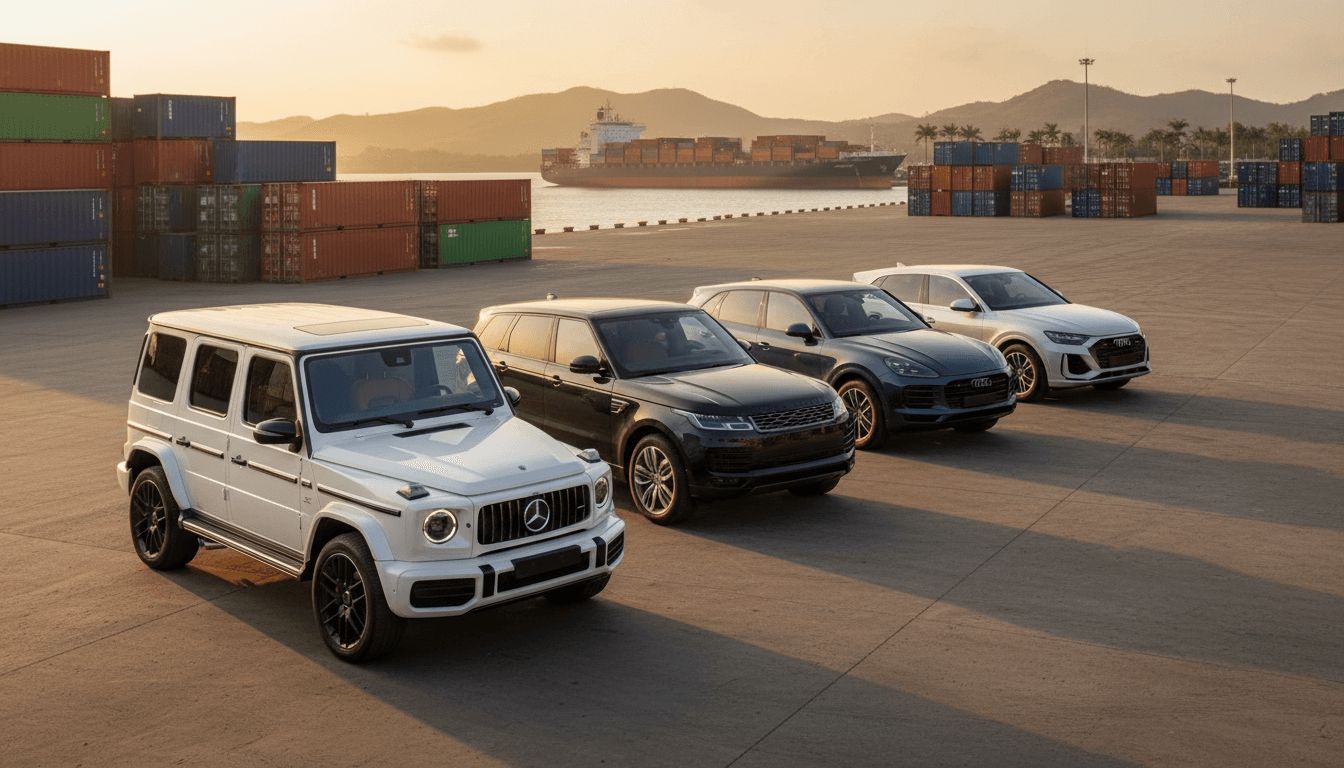
The import process is administered through three principal channels: the Direction Generale des Douanes (DGD) handles customs assessment and duty collection via the CAMCIS electronic platform; the Agence des Normes et de la Qualite (ANOR) oversees vehicle conformity through the mandatory PECAE pre-shipment inspection programme (primarily executed by SGS); and the e-GUCE Single Window platform consolidates all trade documentation into a unified electronic workflow. The vast majority of vehicles enter through the Port of Douala, specifically Port 7 and the dedicated Parc Auto inspection and storage zone.
Cameroon's 2025-2026 regulatory changes have also introduced significant incentives for battery electric vehicles -- no excise duty at any age, plus a 50% reduction in the taxable value of new BEVs for 24 months from January 2025. On that reading the 50% reduction ends on 31 December 2026 unless the 2027 Finance Law extends it. Until then Cameroon is one of the most EV-friendly import destinations in the CEMAC region.
One critical distinction from East and Southern African markets: Cameroon drives on the right and requires left-hand drive (LHD) vehicles. Right-hand drive imports are restricted and should not be shipped. This is important for buyers sourcing vehicles from Japan, the UK, or other RHD-origin markets.
This guide covers every step of the Cameroon vehicle import process, from eligibility and pre-shipment inspection through customs clearance at Douala, duty payment via CAMCIS, and Carte Grise registration with the Ministry of Transport.
For neighbouring markets, see our guides to importing a car to Nigeria and importing a car to Senegal.
Quick Facts
| Detail | Information |
|---|---|
| Customs Authority | Direction Generale des Douanes (DGD) via CAMCIS platform |
| Standards Body | Agence des Normes et de la Qualite (ANOR) -- PECAE programme |
| Registration Body | Ministry of Transport (Carte Grise issuance) |
| Tariff Framework | CEMAC tariff rates (harmonised CEEAC-CEMAC tariff in force from 1 January 2026; vehicle rates under review) |
| Steering | Left-Hand Drive (LHD) required -- RHD restricted |
| Customs Duty (Passenger Cars) | 30% of CIF (pickups and goods vehicles also charged 30% while under review) |
| VAT | 19.25% (17.5% plus 10% municipal surcharge) on CIF + duty + excise + waste levy |
| Excise, cars up to 2,500 cc | 0% up to 12 years old; 12.5% over 12 to 20 years; 25% over 20 years |
| Excise, cars over 2,500 cc | 12.5% up to 15 years old; 25% over 15 years |
| Excise, goods vehicles (HS 8704) | 0% up to 15 years old; 12.5% over 15 to 20 years; 25% over 20 years |
| Excise surcharge | 5% municipal surcharge on any excise due |
| Other levies | 1% waste-removal excise, 1% TCI, 0.05% OHADA levy, 1% IT fee |
| BEV Excise | 0% at any age; new BEVs also taxed on 50% of CIF until 31 December 2026 |
| Used Vehicle Verification Tax | XAF 29,813 (~$48) flat fee from July 2025 |
| Primary Port | Port of Douala (Port 7 / Parc Auto) |
| Pre-Shipment Inspection | PECAE mandatory (SGS primary inspector) |
| Customs Clearance | 10-20 days from vessel arrival at Douala |
| Total Tax Burden (new car) | 58.63% of CIF up to 2,500 cc; 78.97% over 2,500 cc; 29.31% for a new BEV |
| Currency | Central African CFA Franc (XAF) |
Types of Cars That Can Be Imported
Cameroon permits the import of both new and used vehicles, but the cost structure varies significantly based on engine size, vehicle age and fuel type. The 2026 Finance Law sets an excise grid by engine displacement and age that creates clear financial incentives to import newer, smaller and electric vehicles.
New Vehicles
New passenger cars attract the 30% customs duty, the small levies and VAT. Excise depends on engine size: a new car of 2,500 cc or less pays no excise (58.63% of CIF in total), while a new car over 2,500 cc pays 12.5% excise plus the 5% surcharge on it (78.97% in total). New vehicles require a PECAE pre-shipment conformity evaluation before loading at the origin port, and must meet Euro 4 equivalent emissions standards. There is no age restriction on genuinely new vehicles. New battery electric vehicles pay no excise and are taxed on 50% of their CIF value -- about 29% of CIF in total, half the cost of an equivalent petrol car.
Used Vehicles (0-12 Years)
Used vehicles under 12 years old are imported under the same duty and VAT structure as new vehicles, with the addition of the Import Verification Tax (XAF 29,813, approximately $48) introduced in July 2025. Excise follows the same grid as for new cars: 0% for a car of 2,500 cc or less, 12.5% for a car over 2,500 cc (charged on CIF plus customs duty, plus a 5% surcharge on the excise). Used vehicles must also pass the PECAE inspection, and SGS will verify physical condition, VIN integrity, engine specifications, emissions compliance, and -- critically -- that the vehicle is left-hand drive.
Used Vehicles (12-20 Years)
A car of 2,500 cc or less aged over 12 and up to 20 years pays 12.5% excise (78.97% of CIF in total). A car over 2,500 cc aged over 15 years already pays the top 25% rate (99.32% of CIF in total). The economic case also weakens as older vehicles typically have higher CIF valuations relative to condition (customs may apply minimum reference values) and face closer scrutiny during PECAE inspection. The Import Verification Tax also applies.
Used Vehicles (Over 20 Years)
Vehicles older than 20 years face the 25% excise rate (plus the 5% surcharge on it) on top of customs duty and VAT -- about 99% of CIF in total. Combined with the other duty layers, the total tax burden makes importing vehicles of this age economically unviable for most buyers. While not technically banned, the cost structure effectively discourages it.
Electric Vehicles (New)
New battery electric vehicles represent the most cost-effective import category in Cameroon. They pay no excise, and the 2025 Finance Law cuts the taxable value of a new BEV by 50% for 24 months, so every duty, levy and VAT line is charged on half the CIF. The total comes to about 29% of CIF, against about 59% for a comparable petrol car. The 50% reduction is read as ending on 31 December 2026; from 1 January 2027 a new BEV would be taxed on its full CIF (about 59%) unless the 2027 Finance Law extends it. The PECAE inspection still applies, but EV-specific emissions testing is simplified.
Electric Vehicles (Used)
Used battery electric vehicles also pay no excise at any age, but the 50% taxable value reduction applies only to BEVs imported new. A used BEV is taxed on its full CIF, about 58.63% in total -- the same as a new petrol car of 2,500 cc or less. The Import Verification Tax (XAF 29,813) applies to all used vehicle imports including EVs.
Hybrids
Hybrid vehicles (HEV, PHEV) get no powertrain relief: they are taxed like petrol or diesel cars of the same engine size and age. A new hybrid of 2,500 cc or less (such as a Prius 1.8 or RAV4 PHEV 2.5) pays no excise because of its size (58.63% of CIF), while a new hybrid over 2,500 cc pays 12.5% excise (78.97%).
Pickups
How a double-cab pickup is classified decides its excise. Until the customs authority confirms otherwise, a passenger-configured double cab (Hilux, Ranger double cab) is treated as a passenger car (HS 8703): a new Hilux 2.8 double cab pays 12.5% excise because its engine is over 2,500 cc (78.97% of CIF). A single-cab goods pickup or truck (HS 8704) pays no excise up to 15 years old (58.63%). Pickup-based SUVs such as the Fortuner, Everest and MU-X are passenger cars.
Prohibited and Restricted Categories
- Right-hand drive (RHD) vehicles -- restricted; LHD required
- Salvage, written-off, or reconstructed vehicles -- banned (SGS will reject during PECAE)
- Vehicles older than 20 years -- not banned but economically unviable (25% excise, about 99% of CIF in total)
- Vehicles that do not meet Euro 4 equivalent emissions standards
Cars You Can Import to Cameroon
Each card is a full landed-cost calculation: the car's price, shipping, every duty and tax, and handling, worked out on 9 November 2026 with the rules in force that day. All are left-hand drive to suit Cameroon's roads. Tap a car to see its full breakdown, or open it to change the trim, colour or port.
More cars you can import to Cameroon
New cars IPAS sources to order that meet Cameroon's import rules. Prices are ex works, before shipping and duty. Open a car to work out its full landed cost.
 LHD/C-RHDBackorder2025
Lincoln Navigator L
SUV · 3 VariantsPetrolFrom $122,900Ex Works, USA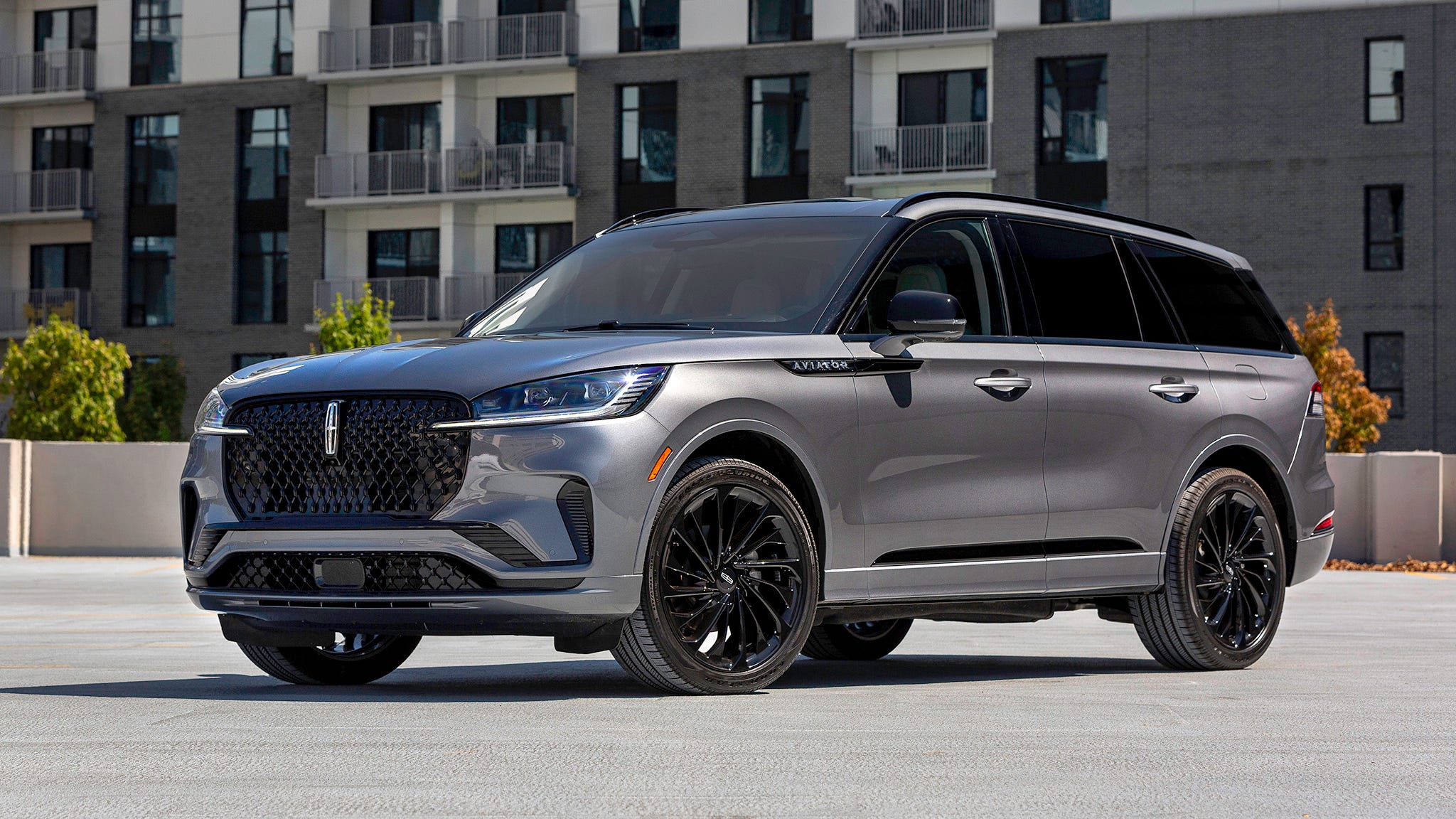 LHDBackorder2026
Lincoln Aviator
SUV · 5 VariantsPetrolFrom $70,300Ex Works, USA LHDBackorder2026
Lexus LC 500
Coupe · 3 VariantsPetrolFrom $102,200Ex Works, Canada LHDBackorder2026
Lexus ES
Sedan · 12 VariantsHybrid · ElectricFrom $52,500Ex Works, Canada LHD/C-RHDBackorder2026
Chevrolet Silverado 1500
Pickup · 29 VariantsPetrol · DieselFrom $57,700Ex Works, USA LHD/C-RHDBackorder2025
GMC Sierra 2500HD
Pickup · 6 VariantsPetrol · DieselFrom $90,000Ex Works, USA LHDBackorder2027
GMC Terrain
SUV · 4 VariantsPetrolFrom $36,500Ex Works, USA LHD/C-RHDBackorder2026
GMC Hummer EV SUV
SUV · 3 VariantsElectricFrom $102,000Ex Works, USA LHDBackorder2026
Mercedes-Benz G-Class
SUV · 8 VariantsDiesel · Hybrid · ElectricFrom $140,300Ex Works, Germany LHD/C-RHDBackorder2026
Ford Super Duty F-350 DRW
Pickup · 18 VariantsPetrol · DieselFrom $61,400Ex Works, USA LHDBackorder2025
Ford Mustang Fastback
Coupe · 4 VariantsPetrolFrom $55,900Ex Works, USA LHDBackorder2026
Toyota Hilux Double Cab 2.8
Pickup · 2 VariantsDieselFrom $49,900Ex Works, UAE LHDBackorder2026
Toyota Corolla Cross
SUV · 9 VariantsPetrol · HybridFrom $30,000Ex Works, USA LHDBackorder2026
Denza N9
SUV · 6 VariantsPlug-in HybridFrom $61,900Ex Works, China🇨🇳 LHDBackorder2026
Cadillac Escalade IQ
SUV · 4 VariantsElectricFrom $150,300Ex Works, USA LHD/C-RHDBackorder2027
Ram 1500 TRX SRT
Pickup · 1 VariantPetrolFrom $130,000Ex Works, USA
Seaports and Airports
Cameroon's vehicle import infrastructure is concentrated at the Port of Douala, the country's largest and most established commercial port. All import procedures are consolidated through the e-GUCE (Guichet Unique des Operations du Commerce Exterieur) Single Window platform.
Seaports
| Port | Location | Notes |
|---|---|---|
| Port of Douala (Port 7) | Douala | Primary vehicle import gateway; dedicated customs clearance for vehicles |
| Parc Auto (Douala) | Douala | Dedicated vehicle inspection, storage, and release zone within the port complex |
| Port of Kribi | Kribi | Deep-water port, growing capacity; handles some vehicle cargo |
Port of Douala is the dominant entry point for vehicle imports. Port 7 is the main customs clearance area for vehicles, and the Parc Auto is a dedicated zone where vehicles are stored, inspected, and released after duty payment. The vast majority of vehicles entering Cameroon -- whether from Europe, Asia, the Americas, or other African markets -- clear through this facility.
Kribi Deep-Water Port is Cameroon's newer port facility, located approximately 150 km south of Douala. It has growing capacity and handles some vehicle cargo, but Douala remains the primary choice for most importers due to established infrastructure, customs familiarity, and proximity to the main demand centres.
Land Borders
Some vehicles enter Cameroon overland from Nigeria via the Ekok/Idenao corridor, particularly from the Lagos vehicle market. These imports are subject to the same customs duties and PECAE requirements, though enforcement and documentation standards at land borders can vary.
Transit Times (Indicative)
| Origin | Route | Transit Time |
|---|---|---|
| Europe (Antwerp, Hamburg, Le Havre) | Sea freight to Douala | 20-30 days |
| Asia (Japan, South Korea, China) | Sea freight to Douala | 30-45 days |
| USA (East Coast) | Sea freight to Douala | 25-35 days |
| USA (West Coast) | Sea freight to Douala | 35-50 days |
| Nigeria (Lagos) | Overland | 3-7 days |
Get real-time shipping quotes for your specific vehicle and origin using IPAS EXPRESS Pro Car Shipping.
Restrictions and Requirements
Cameroon enforces several non-negotiable requirements that importers must understand before committing to a vehicle purchase and shipment.
Steering Requirement -- LHD Only
Cameroon drives on the right and requires left-hand drive (LHD) vehicles for import and registration. Right-hand drive imports are restricted and risk rejection during the PECAE pre-shipment inspection or at customs clearance in Douala. Treat this as a hard restriction.
Buyers sourcing vehicles from Japan, the UK, Australia, or other RHD markets must ensure the vehicle has been converted to LHD before shipment, or source an LHD-specification vehicle from those markets where available.
PECAE Pre-Shipment Inspection -- Mandatory
Every vehicle imported into Cameroon must undergo a PECAE (Programme d'Evaluation de la Conformite avant Embarquement) inspection before loading at the origin port. This programme is administered by ANOR and primarily executed by SGS as the accredited inspection body.
The PECAE inspection covers:
- Physical condition and roadworthiness
- VIN (Vehicle Identification Number) verification
- Engine capacity and specifications
- Emissions compliance (Euro 4 equivalent minimum)
- LHD verification (RHD vehicles are rejected)
- Age verification against documentation
- Completeness (no missing major components)
Failure to obtain a PECAE certificate before shipment means the vehicle will require a destination inspection at Douala -- at the importer's expense -- with a higher risk of rejection or additional penalties.
BESC/ECTN Cargo Tracking -- Required Before Loading
A BESC (Bordereau Electronique de Suivi des Cargaisons) or ECTN (Electronic Cargo Tracking Note) certificate is mandatory for all cargo entering Cameroon by sea. This must be obtained before the vessel departs the origin port. Without a valid BESC/ECTN, the shipment will face delays, additional fees, or refusal of entry at Douala.
Age-Based Excise Escalation
While there is no outright age ban, the excise grid in the 2026 Finance Law creates strong economic disincentives for importing older vehicles. The rate depends on engine size and age together:
| Vehicle | Age | Excise |
|---|---|---|
| Passenger car up to 2,500 cc | 0 to 12 years | 0% |
| Passenger car up to 2,500 cc | Over 12 to 20 years | 12.5% |
| Passenger car up to 2,500 cc | Over 20 years | 25% |
| Passenger car over 2,500 cc | 0 to 15 years | 12.5% |
| Passenger car over 2,500 cc | Over 15 years | 25% |
| Goods vehicle (HS 8704), any engine | 0 to 15 years | 0% |
| Goods vehicle (HS 8704), any engine | Over 15 to 20 years | 12.5% |
| Goods vehicle (HS 8704), any engine | Over 20 years | 25% |
| Battery electric or CNG/LNG vehicle | Any | 0% |
Excise is charged on CIF plus customs duty, and a 5% municipal surcharge is added to any excise due (so 12.5% becomes 13.125% and 25% becomes 26.25%).
The Transport Ministry's proposed 10-year age cap as part of the 2026 "National Vehicle Fleet Rejuvenation Programme" has not yet been enacted but remains under active discussion.
Emissions Standards
Vehicles must meet Euro 4 equivalent emissions standards. This is verified during the PECAE pre-shipment inspection. Vehicles that fail emissions testing will not receive the PECAE certificate and cannot be shipped.
Duty Structure Overview
Cameroon's import duty framework follows the CEMAC customs tariff, with every line charged on the taxable value (valeur imposable), which is the CIF value -- or half the CIF value for a new battery electric vehicle until 31 December 2026.
The cascade, in order
- Customs duty -- 30% of the taxable value for passenger cars (HS 8703). Pickups and goods vehicles (HS 8704) are also charged 30% as the conservative figure: the former CEMAC tariff set 20% on most light goods vehicles, but it was replaced on 1 January 2026 by the harmonised CEEAC-CEMAC tariff, whose vehicle rates are under review.
- Excise (droit d'accises) -- 0%, 12.5% or 25% of (taxable value + customs duty), from the engine-size and age grid above.
- Municipal surcharge on excise -- 5% of the excise (zero when no excise is due).
- Waste-removal excise (droit d'accises special) -- 1% of (taxable value + customs duty), charged on every vehicle, including excise-free ones.
- Community Integration Tax (TCI) -- 1% of the taxable value.
- OHADA levy -- 0.05% of the taxable value.
- IT fee (redevance informatique) -- 1% of the taxable value.
- VAT -- 19.25% (17.5% plus the 10% municipal surcharge) on taxable value + customs duty + excise + surcharge on excise + waste-removal excise. The TCI, OHADA levy and IT fee are not in the VAT base.
Used vehicles also pay the flat Import Verification Tax of XAF 29,813 (approximately $48).
Worked Example: New Petrol Car up to 2,500 cc, CIF $25,000
| Component | Base | Rate | Amount (USD) |
|---|---|---|---|
| CIF / taxable value | -- | -- | $25,000 |
| Customs duty | $25,000 | 30% | $7,500 |
| Excise | $32,500 | 0% | $0 |
| Waste-removal excise | $32,500 | 1% | $325 |
| TCI | $25,000 | 1% | $250 |
| OHADA levy | $25,000 | 0.05% | $13 |
| IT fee | $25,000 | 1% | $250 |
| VAT | $32,825 | 19.25% | $6,319 |
| Total duties and taxes | $14,656 (58.63%) | ||
| Landed cost before port and clearing fees | $39,656 |
Effective rates at a glance (new vehicles unless stated)
| Vehicle | Excise | Total taxes, % of CIF | On a $25,000 CIF |
|---|---|---|---|
| Petrol, diesel or hybrid car up to 2,500 cc | 0% | 58.63% | $14,656 |
| Car over 2,500 cc (e.g. Land Cruiser, Prado 2.8, Fortuner 2.8) | 12.5% + 5% surcharge | 78.97% | $19,743 |
| Double-cab pickup over 2,500 cc (e.g. Hilux 2.8), treated as HS 8703 | 12.5% + 5% surcharge | 78.97% | $19,743 |
| Single-cab goods pickup or truck (HS 8704) | 0% | 58.63% | $14,656 |
| Battery electric car, imported new | 0%, taxed on 50% of CIF | 29.31% | $7,328 |
| Used battery electric car | 0% | 58.63% | $14,656 |
| Used car over 2,500 cc and over 15 years, or up to 2,500 cc and over 20 years | 25% + 5% surcharge | 99.32% | $24,830 |
Origin and trade agreements
No preference is applied to vehicles from the usual sourcing markets (Japan, the UK, Europe, the USA, Korea, China, Thailand, India, the UAE and others): they pay the full 30% duty. The EU-Cameroon Economic Partnership Agreement's vehicle schedule is under review, so EU-origin cars are also quoted at the full rate.
Get exact duty rates for your specific vehicle using CarImport.AI. The calculator applies the customs duty, the engine-size and age excise grid, the community levies and VAT -- tailored to your vehicle's engine, age, fuel type, and CIF value.

Calculate your exact import duty to Cameroon
Get a vehicle-specific duty and full landed-cost breakdown — HS classification, every tax, levy and FTA, plus shipping — calculated for your exact make, model and specs.
- Vehicle-specific HS code
- All duties, taxes & FTAs
- Shipping + est. landed cost
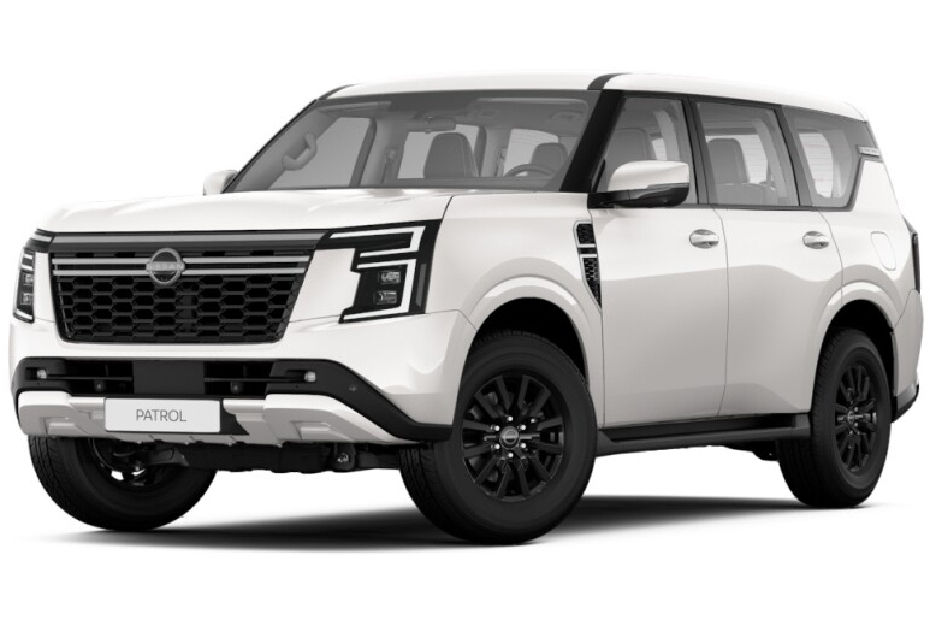
Worked Example: Importing a 2026 Nissan Patrol to Cameroon
Here is the full landed cost of one car, a 2026 Nissan Patrol shipped from the UAE to Cameroon, worked out on 9 November 2026 with the customs rules in force that day. It lands at 93,463,678 XAF (about US$158,837), and duties and taxes come to 79% of its CIF value.
| Item | Share of CIF | Amount |
|---|---|---|
| Vehicle priceIPAS price for a car sourced in the UAE | 43,955,355 XAFUS$74,700 | |
| Shipping and insuranceUAE to Cameroon | 6,240,248 XAFUS$10,605 | |
| CIF valueCost, insurance and freight: the customs value | 50,195,603 XAFUS$85,305 | |
| Customs duties and taxes | ||
| Basic customs duty (30%)30% of CIF | 15,058,975 XAFUS$25,592 | |
| Additional duty (12.5%)Base or related charges differ from CIF; see the duty structure above20.4% of CIF | 10,246,246 XAFUS$17,413 | |
| GST/VAT (19.25%)Base or related charges differ from CIF; see the duty structure above28.6% of CIF | 14,335,801 XAFUS$24,363 | |
| Total duties and taxes79% of CIF | 39,641,022 XAFUS$67,368 | |
| Service and handling | ||
| Premium Import ServiceOptional end-to-end import management by IPAS | 2,650,267 XAFUS$4,504 | |
| Destination handlingPort terminal and customs clearance handling | 976,786 XAFUS$1,660 | |
| Total landed cost | 93,463,678 XAFUS$158,837 | |
Documents Required
Cameroon requires an extensive set of documents for vehicle import clearance. These are processed through the e-GUCE Single Window platform and verified at multiple stages -- from pre-shipment inspection through customs clearance and registration.
Commercial and Shipping Documents
| Document | Details |
|---|---|
| Original Bill of Lading | Must match consignee details in customs declaration |
| Commercial Invoice | Must include make, model, year, engine specification, VIN, and purchase price |
| Packing List | Itemised contents if shipping in a container with other goods |
| BESC/ECTN Certificate | Mandatory cargo tracking document -- must be obtained before vessel departure |
| Marine Insurance Certificate | Proof of coverage for the sea transit |
Ownership and Identity Documents
| Document | Details |
|---|---|
| Original Title or Logbook | Proof of ownership from the departure country |
| Manufacturer's Certificate of Origin | Required for new vehicles |
| Passport or National ID | Importer identification |
| Taxpayer Card (NIU) | Must be registered in both the tax (DGI) and customs (DGD) systems |
Conformity and Inspection Documents
| Document | Details |
|---|---|
| PECAE Certificate | Pre-shipment conformity evaluation from ANOR-accredited body (SGS primary) |
| Certificate of Conformity (CoC) | Manufacturer's declaration of compliance with standards |
| Vehicle Roadworthiness Certificate | Issued by the departure country's transport authority |
Additional Documents
| Document | Details |
|---|---|
| Non-Sale Certificate | Required for personal (non-commercial) imports |
| Cargo Control Reference (CCR) | Original customs reference for cargo tracking |
| Import Verification Tax Receipt | Payment receipt for used vehicles (from July 2025) |
All documents must be originals or certified copies. Discrepancies between the commercial invoice, bill of lading, and PECAE certificate -- particularly regarding VIN, engine specifications, or declared value -- will trigger additional scrutiny, delays, and potential penalties.
Customs Clearance Timeline
The Cameroon customs clearance process involves multiple stages, from pre-shipment preparation through final vehicle release at the Parc Auto in Douala.
Pre-Shipment Phase
| Stage | Duration | Details |
|---|---|---|
| PECAE inspection booking and completion | 3-7 days | SGS inspection at origin port/facility |
| BESC/ECTN certificate issuance | 2-5 days | Must be obtained before vessel departure |
| Documentation preparation | 1-3 days | Compile all commercial, ownership, and conformity documents |
Transit Phase
| Origin | Transit Duration |
|---|---|
| Europe to Douala | 20-30 days |
| Asia to Douala | 30-45 days |
| USA (East Coast) to Douala | 25-35 days |
Port Clearance Phase (Douala)
| Stage | Duration | Details |
|---|---|---|
| Port unloading and Parc Auto intake | 3-7 days | Vehicle moved to dedicated inspection zone |
| CAMCIS declaration and duty assessment | 2-5 days | Electronic customs declaration and valuation |
| Tax payment (DGD) | 1-3 days | Payment of all duties, excise, and VAT |
| ANOR clearance certificate | 1-3 days | Final conformity verification |
| Vehicle release from Parc Auto | 1-2 days | Physical release upon payment confirmation |
Total Timeline
| Phase | Duration |
|---|---|
| Pre-shipment preparation | 5-15 days |
| Sea transit (varies by origin) | 20-50 days |
| Port clearance at Douala | 10-20 days |
| Total (origin to release) | 35-85 days |
Clean documentation, a valid PECAE certificate, and pre-arrangement of tax payment via the CAMCIS platform will keep clearance at the lower end of these ranges. Discrepancies or missing documents can extend the process significantly and incur Parc Auto storage charges.
Homologation and Vehicle Standards
Cameroon's vehicle standards enforcement is administered by ANOR (Agence des Normes et de la Qualite) through the PECAE programme, which was restated and reinforced in June 2025.
PECAE Programme
The PECAE (Programme d'Evaluation de la Conformite avant Embarquement) is the cornerstone of Cameroon's vehicle import compliance system. It requires that every imported vehicle undergo a pre-shipment inspection at the origin before loading onto the vessel.
Primary Inspection Body: SGS is the main ANOR-accredited inspector for the PECAE programme. SGS operates inspection facilities at major vehicle export hubs worldwide.
Inspection Scope:
- Physical condition assessment (bodywork, structural integrity, tyres, glass)
- VIN verification against documentation
- Engine capacity and specification verification
- Emissions compliance (Euro 4 equivalent minimum standard)
- Left-hand drive verification (RHD vehicles are rejected)
- Age verification against title/registration documents
- Completeness check (no missing major mechanical or safety components)
Emissions Standards
Cameroon requires a minimum of Euro 4 equivalent emissions compliance. This is verified during the PECAE inspection using the vehicle's original emissions certification or through on-site testing. Vehicles that do not meet this standard will not receive the PECAE certificate.
Consequence of Missing PECAE
If a vehicle arrives at Douala without a valid PECAE certificate, a destination inspection will be required at the importer's expense. This adds cost, time, and risk -- destination inspections have a higher rejection rate, and rejected vehicles must be re-exported at the importer's cost.
Key Contacts
- ANOR: www.anor.cm -- Programme management and accreditation
- SGS Cameroon: Local SGS office for PECAE bookings
- e-GUCE: www.guce.cm -- Single Window for all trade documentation
Registration (Carte Grise)
Once a vehicle clears customs at Douala and all duties are paid, the next step is obtaining the Carte Grise (vehicle registration card) from the Ministry of Transport. A September 2025 reform introduced an online registration modality via the CNCC (Centre National de la Carte Grise) portal.
Registration Process
Step 1: Obtain Customs Clearance Certificate The DGD issues a customs clearance certificate via the CAMCIS/e-GUCE platform upon payment of all duties, excise, and VAT. This document is required for registration.
Step 2: Declare and Pay Registration Stamp Duty Registration stamp duty is declared and paid through the DGI (Direction Generale des Impots) teledeclaration platform. Online payment is now mandatory for this step.
Step 3: Pay Stamp Duty on Carte Grise The Carte Grise stamp duty is calculated at XAF 3,000 per fiscal horsepower (CV -- chevaux fiscaux). The fiscal horsepower rating is determined by the vehicle's engine capacity and specifications.
Step 4: Pay Registration Fees Registration fees are assessed at 5% of the vehicle's assessed value (as determined by customs).
Step 5: Axle Tax (if applicable) Used commercial vehicles exceeding 3 tonnes payload are subject to an axle tax. This does not typically apply to passenger cars.
Step 6: Page Stamp Duty A page stamp duty of XAF 1,000 per page applies to the Carte Grise document.
Step 7: Submit to Ministry of Transport The complete file -- customs clearance certificate, duty payment receipts, insurance certificate, and identity documents -- is submitted to the Ministry of Transport for number plate issuance.
Step 8: Obtain Insurance Mandatory third-party liability insurance must be obtained from a CIMA (Conference Interafricaine des Marches d'Assurances) framework-compliant insurer before the vehicle can legally operate on Cameroonian roads.
Registration Costs (Summary)
| Fee | Amount |
|---|---|
| Carte Grise stamp duty | XAF 3,000 per fiscal CV |
| Registration fee | 5% of assessed value |
| Page stamp duty | XAF 1,000 per page |
| Third-party insurance | Varies by vehicle and insurer |
Online Registration (September 2025)
The CNCC portal launched in September 2025 for used vehicle registration, streamlining the process by allowing online document submission, status tracking, and appointment scheduling. New vehicle registration through the online system is also being phased in.
Frequently Asked Questions
Q: Can I import a right-hand drive vehicle to Cameroon? A: No. Cameroon drives on the right and requires left-hand drive (LHD) vehicles; RHD imports are restricted and risk rejection during the PECAE pre-shipment inspection or at customs in Douala. If sourcing from Japan, the UK, or Australia, make sure the vehicle is LHD specification.
Q: Is there an age limit on vehicle imports to Cameroon? A: There is no outright statutory age ban as of 2026. Instead, the 2026 Finance Law sets excise by engine size and age: a car of 2,500 cc or less pays 0% up to 12 years old, 12.5% over 12 to 20 years and 25% over 20 years; a car over 2,500 cc pays 12.5% up to 15 years old and 25% beyond. The Transport Ministry has announced a "National Vehicle Fleet Rejuvenation Programme" with a proposed 10-year age cap, but this has not yet been enacted. In practice, the top 25% excise brings total taxes to about 99% of CIF, which makes importing very old vehicles economically unviable.
Q: What are the EV import incentives in Cameroon? A: Battery electric vehicles pay no excise at any age. Since January 2025, new BEVs are also taxed on only 50% of their CIF value, which brings total taxes to about 29% of CIF instead of about 59%. The 50% reduction runs for 24 months and is read as ending on 31 December 2026 unless the 2027 Finance Law extends it. Used BEVs get the excise exemption but not the 50% reduction (about 59% of CIF). Hybrids get neither.
Q: What is the PECAE inspection and is it mandatory? A: Yes, the PECAE (Programme d'Evaluation de la Conformite avant Embarquement) is mandatory for all vehicle imports into Cameroon. It is a pre-shipment inspection conducted by SGS (or another ANOR-accredited body) at the origin port. The inspection covers physical condition, VIN verification, engine specs, emissions compliance, LHD verification, and age. Without a valid PECAE certificate, your vehicle will require a more expensive destination inspection at Douala with a higher risk of rejection.
Q: How does the CEMAC CET affect vehicle import duty? A: Passenger cars (HS 8703) pay the top 30% customs duty band of the CEMAC tariff. From 1 January 2026 the harmonised CEEAC-CEMAC tariff replaced the CEMAC tariff; until its vehicle rates are confirmed, 30% is applied to cars and, conservatively, to pickups and goods vehicles. On top come excise (by engine size and age), a 1% waste-removal excise, the 1% Community Integration Tax (TCI), the 0.05% OHADA levy, a 1% IT fee and 19.25% VAT -- 58.63% of CIF for a new car up to 2,500 cc and 78.97% above.
Get your exact duty breakdown using CarImport.AI.
Q: How long does customs clearance take at Douala? A: Once your vehicle arrives at the Port of Douala, expect 10-20 days for the full clearance process. This includes port unloading and Parc Auto intake (3-7 days), CAMCIS declaration and duty assessment (2-5 days), tax payment (1-3 days), ANOR clearance (1-3 days), and physical vehicle release (1-2 days). Clean documentation and a valid PECAE certificate will keep you at the lower end. Missing documents or valuation disputes can extend this significantly.
Q: What is the BESC/ECTN and do I need one? A: The BESC (Bordereau Electronique de Suivi des Cargaisons) -- also referred to as the ECTN (Electronic Cargo Tracking Note) -- is a mandatory cargo tracking document for all goods shipped by sea to Cameroon. It must be obtained before the vessel departs the origin port. Shipping without a valid BESC/ECTN will cause delays, additional fees, and potentially refusal of entry at Douala. Your freight forwarder or shipping agent can arrange this.
Q: Can I import a used hybrid vehicle to Cameroon? A: Yes, hybrid vehicles (HEV, PHEV) can be imported. They are taxed like petrol or diesel cars of the same engine size and age and do not get the battery-EV relief: a hybrid of 2,500 cc or less pays no excise up to 12 years old, then 12.5% to 20 years. The PECAE inspection and all other requirements apply normally.
Ready to Import a Vehicle to Cameroon?
Cameroon's CEMAC-based duty structure, PECAE inspection requirements, and age-based excise brackets create a complex but navigable import process. Whether you are importing a new EV before the 50% taxable-value reduction is due to end on 31 December 2026 or sourcing a used LHD vehicle from Europe or the USA, the key to a smooth import is accurate cost calculation, proper documentation, and advance planning.
Two tools to get started:
CarImport.AI -- Calculate the exact landed cost of importing any vehicle to Cameroon. Get a complete breakdown of customs duty, excise by engine size and age, community levies, VAT, and all associated charges tailored to your specific vehicle, origin country, and CIF value. Calculate your landed cost
IPAS EXPRESS Pro Car Shipping -- Already have a vehicle? Get instant shipping quotes for sea freight to Douala or Kribi, with transparent, itemized pricing covering freight, terminal handling, insurance, and all port costs. Get a shipping quote
Ready to Import Your Vehicle?
Two tools, two use cases. Pick the one that fits your needs.
Source a vehicle through IPAS and calculate the full landed cost — customs duties, shipping, and compliance — to destinations across the world.
Calculate Landed CostIPAS Express
Already have a vehicle? Get instant shipping quotes — sea freight, air freight, or RoRo — for one car or multiple vehicles worldwide.
Get Shipping Quote