
Introduction
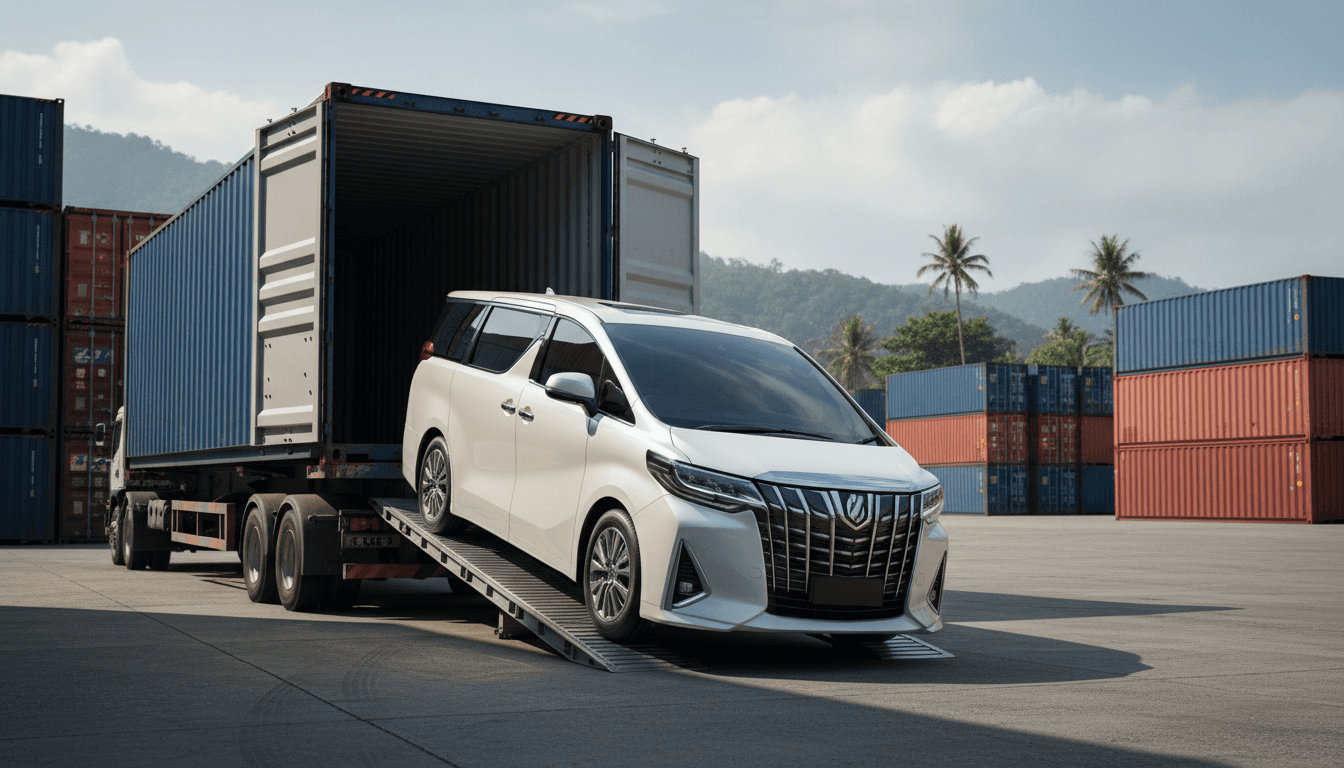
Importing a car into Bangladesh costs roughly 65% to over 1,000% of its CIF value in border taxes, set almost entirely by engine size. A new 1,601–2,000 cc petrol car pays 225.7% of CIF. At 2,001 cc it pays 467%. Cars must be right-hand drive, and used cars no more than five years old.
Bangladesh taxes cars harder than any other market IPAS calculates for, and the reason is one tax: Supplementary Duty (SD). Customs duty is a flat 25% on almost every built-up car. The Supplementary Duty on top of it runs from 45% on a small car to 500% on anything over 3,000 cc. It is charged on the duty-inclusive value, and VAT and Advance Tax are then charged on that.
The result is a tariff made of cliffs. A 2,000 cc car and a 2,001 cc car can look identical on paper and differ by more than 240 percentage points of CIF. The difference between a 1,498 cc and a 1,598 cc car can be nothing, while the difference between a 1,598 cc petrol and a 1,598 cc diesel is 24 points. For that reason the cubic-centimetre figure on the registration document is the single most important number in any Bangladeshi import.
The tariff also rewards electrification, though not through any exemption. Hybrids, plug-in hybrids and battery-electric cars each have their own, much shallower Supplementary Duty ladder. A brand-new plug-in hybrid of 1,800 cc or less is the cheapest passenger car to land in Bangladesh, at 74.2% of CIF. The equivalent petrol car pays 225.7%.
Three gates come before any of that. The car must be right-hand drive. A used car must be no more than five years old at shipment and must ship from its country of manufacture. And since 24 August 2026, a used electric vehicle cannot be imported at all.
Quick Facts
| Detail | Information |
|---|---|
| Customs Authority | National Board of Revenue (NBR), Bangladesh Customs |
| Governing tariff | Bangladesh Customs Tariff FY 2026-27 (First Schedule to the Customs Act 2023) |
| Fiscal year | 1 July – 30 June. Rates reset each June in the Finance Act, and SROs amend them in between |
| Registration Authority | Bangladesh Road Transport Authority (BRTA) |
| Traffic Side | Left-hand traffic (drive on the left) |
| Steering Requirement | Right-hand drive required, under Road Transport Act 2018 section 40(2) |
| Customs value | Assessable Value = CIF + 1% landing charge. Every tax runs on this, not on CIF |
| Customs Duty | 25% on nearly every built-up car and double-cab pickup |
| Regulatory Duty | 5% general rate. 25% on cars over 4,000 cc, 20% on double-cab pickups of 2,001–3,000 cc, and 0% on brand-new plug-in hybrids of 1,800 cc or less |
| Supplementary Duty | 45% to 500% on petrol and diesel cars, banded by engine size, and charged on value + duty |
| VAT | 15% |
| Advance Tax | 7.5%, on the same base as VAT (not charged on the VAT) |
| Advance Income Tax | 5% of Assessable Value |
| Total, petrol car up to 1,200 cc | 137.3% of CIF |
| Total, petrol car 1,201–1,600 cc | 161.4% of CIF |
| Total, petrol or diesel car 1,601–2,000 cc | 225.7% of CIF |
| Total, petrol or diesel car 2,001–3,000 cc | 467.0% of CIF |
| Total, car over 4,000 cc | 1,017.6% of CIF |
| Total, hybrid up to 1,800 cc | 97.1% of CIF |
| Total, brand-new plug-in hybrid up to 1,800 cc | 74.2% of CIF, the cheapest passenger-car line |
| Total, battery EV worth up to USD 25,000 | 64.9% of CIF |
| Total, double-cab pickup 2,001–3,000 cc | 191.1% of CIF |
| Free trade agreements | None reduces duty on a built-up car or pickup. Every origin pays the same rate |
| Age limit, used vehicles | 5 years at shipment. In 2026 the oldest admissible chassis year is 2021 |
| Age limit, brand-new vehicles | None |
| Used electric vehicles | Prohibited at any age since 24 August 2026 |
| Used vehicle origin | Must ship from the country of manufacture |
| Main Seaports | Mongla, Chattogram (Chittagong) |
| Currency | Bangladeshi Taka (BDT), managed float. Indicative rate BDT 122.80 per USD (Bangladesh Bank, 3 September 2026) |
Types of Cars That Can Be Imported
Steering: right-hand drive only
Bangladesh drives on the left. Section 40(2) of the Road Transport Act 2018 requires motor vehicles driven in Bangladesh to have right-side steering, with an exception, notified in the Gazette, only for special-purpose vehicles. A left-hand-drive private car cannot lawfully be driven or registered.
A completed right-hand-drive conversion is not prohibited. Registration of a converted car depends on BRTA inspection and approval, so treat it as possible rather than guaranteed. For most buyers the practical answer is to source a factory right-hand-drive vehicle from Japan, Thailand, India, the UK or another right-hand-drive market.
Brand-new cars: no age limit
A brand-new vehicle has no age limit. A never-registered car from a previous model year is still admissible as new.
"Brand new" has a precise meaning here, and it is broader than most buyers expect. Under SRO No. 218-AIN/2017/56/Customs, a vehicle counts as used or reconditioned only if at least 365 days passed between its first registration and the cancellation of that registration, and it has been driven at least 1,000 km. A car that fails either test, such as a delivery-mileage or briefly registered unit, is assessed as brand new on its invoice.
Used and reconditioned cars: the five-year rule
The Import Policy Order 2026-2029 (SRO No. 308-Ain/2026) carries forward the familiar conditions for used vehicles:
- No more than 5 years old at the date of shipment. Age runs from 1 January of the year after the chassis manufacture year recorded in the chassis book. A 2021 chassis shipped in September 2026 is 4.67 years old and admissible. A 2020 chassis shipped then is 5.67 years old and barred.
- Shipped from the country of manufacture. A Japanese-built used car must ship from Japan, not through a third country. The one exception is a car personally used in another country, which may ship from there if its registration certificate and registration-cancellation certificate from that country are filed with Customs.
- Certified age. The age, model and chassis number must be certified by JAAI (the Japan Auto Appraisal Institute) or the origin country's recognised automobile association. No used vehicle may come from a country that publishes no chassis book.
Used electric vehicles: prohibited
Paragraph 32(1) of the Import Policy Order 2026-2029 provides that old or used electric vehicles may not be imported, and Appendix-1 puts "all kinds of old/used electric vehicles" on the prohibited list. This covers any used vehicle propelled only by an electric motor: battery-electric cars, electric goods vehicles and electric buses. A vehicle imported in breach is liable to confiscation and sale as scrap.
A brand-new battery-electric car is unaffected and is fully importable.
Whether the ban also reaches a used plug-in hybrid is not settled, because the Order does not define "electric vehicle". The tariff still prints reconditioned plug-in hybrid lines. IPAS quotes a used plug-in hybrid with admissibility marked conditional. If you are considering one, get written confirmation from the Chief Controller of Imports and Exports or Bangladesh Customs before it ships. A used conventional hybrid, which cannot be plugged in, is not affected and remains importable.
Cars You Can Import to Bangladesh
Each card is a full landed-cost calculation: the car's price, shipping, every duty and tax, and handling, worked out on 9 November 2026 with the rules in force that day. All are right-hand drive to suit Bangladesh's roads. Tap a car to see its full breakdown, or open it to change the trim, colour or port.
More cars you can import to Bangladesh
New cars IPAS sources to order that meet Bangladesh's import rules. Prices are ex works, before shipping and duty. Cars marked C-RHD are built left-hand drive and converted to right-hand drive before shipping; the calculator adds the conversion. Open a car to work out its full landed cost.
 RHDBackorder2026
Suzuki Brezza
SUV · 19 VariantsPetrolFrom $7,800Ex Works, India RHDBackorder2026
Suzuki Baleno
Hatchback · 13 VariantsPetrol · CNGFrom $6,900Ex Works, India RHDBackorder2026
BMW M4 Convertible
Convertible · 2 VariantsPetrolFrom $128,100Ex Works, UK RHDBackorder2026
Hyundai i10 NIOS
Hatchback · 15 VariantsPetrol · CNGFrom $6,500Ex Works, India RHDBackorder2026
Hyundai Exter
SUV · 19 VariantsPetrol · CNGFrom $6,700Ex Works, India LHD/C-RHDBackorder2025
Chevrolet Silverado EV
Pickup · 3 VariantsElectricFrom $102,200Ex Works, USA RHDBackorder2026
Skoda Kushaq
SUV · 11 VariantsPetrolFrom $9,600Ex Works, India RHDBackorder2026
Kia Seltos
SUV · 40 VariantsPetrol · DieselFrom $9,900Ex Works, India RHDBackorder2026
Mercedes-Benz Maybach GLS
SUV · 1 VariantHybridFrom $219,900Ex Works, UK RHDBackorder2026
Mercedes-Benz AMG E-Class
Sedan · 2 VariantsPlug-in HybridFrom $122,300Ex Works, UK RHDBackorder2026
Mercedes-Benz G-Class
SUV · 5 VariantsDiesel · Hybrid · ElectricFrom $172,000Ex Works, UK RHDBackorder2026
Lexus ES
Sedan · 7 VariantsElectricFrom $54,600Ex Works, Japan RHDBackorder2026
Toyota Rumion
Van & MPV · 8 VariantsPetrol · CNGFrom $9,000Ex Works, India LHD/C-RHDBackorder2027
Lincoln Navigator L
SUV · 6 VariantsPetrolFrom $111,600Ex Works, USA RHDBackorder2027
Nissan Patrol
SUV · 6 VariantsPetrolFrom $72,000Ex Works, Australia LHD/C-RHDBackorder2026
GMC Hummer EV Pickup
Pickup · 3 VariantsElectricFrom $115,900Ex Works, USA
Seaports Supporting Vehicle Import
| Port | UN/LOCODE | Role |
|---|---|---|
| Port of Mongla | BDMGL | Preferred gateway for IPAS. Shorter road leg to Dhaka, handles the majority of reconditioned car imports, and runs conventional container operations |
| Port of Chattogram (Chittagong) | BDCGP | Bangladesh's principal container port. Handles built-up and used vehicles routinely |
No Bangladeshi law requires cars to enter through a particular port, and both are lawful. The choice comes down to sailing frequency, transit time and the road leg to the buyer. The port changes no tax rate: every duty and tax is identical at Mongla and Chattogram.
Restrictions on Vehicle Import for Individuals
- Right-hand drive is required, with the conversion caveat above.
- Used vehicles: five years maximum at shipment, shipped from the country of manufacture, with certified age.
- No used electric vehicles, at any age.
- No returning-resident or expatriate concession has been verified for a motor car. Plan on paying the full rates.
- Advance Tax and Advance Income Tax are real costs for an individual. A VAT-registered business can offset Advance Tax against its output VAT, and Advance Income Tax can be adjusted against income tax. A private person importing one car for their own use normally recovers neither.
Who this guide does not cover. Diplomatic and privileged-person imports, CKD and SKD kits for local assembly, and project-specific exemptions follow separate rules. None of the figures below apply to them.
Duty Structure Overview
Bangladesh levies six taxes at the border, on top of a valuation step. The order and the base of each one matter as much as the rates:
- Landing charge: 1% of CIF is added to reach the Assessable Value (AV). This is a valuation step, not a tax.
- Customs Duty (CD): on AV. 25% on nearly every built-up car.
- Regulatory Duty (RD): on AV alone, not on AV plus duty. 5% general rate.
- Supplementary Duty (SD): on (AV + CD + RD). 0% to 500% by tariff line.
- VAT at 15%: on (AV + CD + RD + SD).
- Advance Tax (AT) at 7.5%: on the same base as VAT. It is not charged on the VAT itself.
- Advance Income Tax (AIT) at 5%: on AV alone.
The single most common error
NBR publishes a "Total Tax Incidence" (TTI) for every tariff line, for example 223.50% for a 1,601–2,000 cc car. That figure is a percentage of Assessable Value, not of CIF. To turn it into a percentage of CIF you multiply by 1.01. Applying a published TTI straight to CIF understates the bill by 1% of the whole tax charge, which on a 2,001–3,000 cc car is about 4.6 points of CIF. All percentages in this guide are of CIF.
The second most common error: leaving out Advance Tax
One public view of the Bangladesh tariff shows "AT 0.00" on every line. That column is simply unpopulated. The NBR Operative Tariff, NBR's own Duty Calculator and NBR's published TTI all include Advance Tax at 7.5%, and it is collected at the border. On a 1,500 cc car, dropping it understates the bill by about 15.8 points of CIF.
The Supplementary Duty ladder: petrol and diesel cars
| Engine size | Customs Duty | Regulatory Duty | Supplementary Duty | Total, % of CIF |
|---|---|---|---|---|
| Up to 1,000 cc | 25% | 5% | 45% | 137.272% |
| 1,001–1,200 cc | 25% | 5% | 45% | 137.272% |
| 1,201–1,500 cc | 25% | 5% | 60% | 161.398% |
| 1,501–1,600 cc, petrol | 25% | 5% | 60% | 161.398% |
| 1,501–1,600 cc, diesel | 25% | 5% | 45% | 137.272% |
| 1,601–2,000 cc | 25% | 5% | 100% | 225.735% |
| 2,001–3,000 cc | 25% | 5% | 250% | 466.999% |
| 3,001–4,000 cc | 25% | 5% | 500% | 869.105% |
| Over 4,000 cc | 25% | 25% | 500% | 1,017.575% |
VAT 15%, Advance Tax 7.5% and Advance Income Tax 5% apply to every line. The rates are the same for brand-new and reconditioned cars of the same band. Condition changes only how the value is set (see below).
Bands are upper-inclusive. A 2,000 cc engine is in the 1,601–2,000 cc band, and 2,001 cc starts the next. That boundary is the largest single cliff in the tariff, at 238.9 points of Assessable Value for one cubic centimetre. Never round a displacement figure near 2,000 cc. Take it from the registration or homologation document.
Worked example 1: Indian-built 1.5-litre petrol hatchback, brand new, CIF USD 10,000
Origin India. SAFTA does not reach built-up cars, so the full rates apply.
| Charge | Calculation | Amount (USD) |
|---|---|---|
| CIF | — | 10,000 |
| Landing charge | 1% of CIF | 100 |
| Assessable Value (AV) | CIF + landing charge | 10,100 |
| Customs Duty | 25% × 10,100 | 2,525 |
| Regulatory Duty | 5% × 10,100 | 505 |
| Supplementary Duty | 60% × (10,100 + 2,525 + 505) = 60% × 13,130 | 7,878 |
| VAT | 15% × (13,130 + 7,878) = 15% × 21,008 | 3,151 |
| Advance Tax | 7.5% × 21,008 | 1,576 |
| Advance Income Tax | 5% × 10,100 | 505 |
| Total border tax | 16,140 (161.4% of CIF) | |
| Total landed at the port | 26,140 |
Worked example 2: Japanese-built 2.0-litre petrol car, 1,986 cc, brand new, CIF USD 30,000
| Charge | Calculation | Amount (USD) |
|---|---|---|
| CIF | — | 30,000 |
| Landing charge | 1% of CIF | 300 |
| Assessable Value (AV) | 30,300 | |
| Customs Duty | 25% × 30,300 | 7,575 |
| Regulatory Duty | 5% × 30,300 | 1,515 |
| Supplementary Duty | 100% × (30,300 + 7,575 + 1,515) = 100% × 39,390 | 39,390 |
| VAT | 15% × (39,390 + 39,390) = 15% × 78,780 | 11,817 |
| Advance Tax | 7.5% × 78,780 | 5,909 |
| Advance Income Tax | 5% × 30,300 | 1,515 |
| Total border tax | 67,721 (225.7% of CIF) | |
| Total landed at the port | 97,721 |
The Supplementary Duty alone, at USD 39,390, is larger than the car's CIF value.
Worked example 3: the same car with a 2,487 cc engine, CIF USD 30,000
Identical price, identical origin, half a litre more engine.
| Charge | Calculation | Amount (USD) |
|---|---|---|
| Assessable Value (AV) | 30,000 × 1.01 | 30,300 |
| Customs Duty | 25% | 7,575 |
| Regulatory Duty | 5% | 1,515 |
| Supplementary Duty | 250% × 39,390 | 98,475 |
| VAT | 15% × (39,390 + 98,475) = 15% × 137,865 | 20,680 |
| Advance Tax | 7.5% × 137,865 | 10,340 |
| Advance Income Tax | 5% × 30,300 | 1,515 |
| Total border tax | 140,100 (467.0% of CIF) | |
| Total landed at the port | 170,100 |
Crossing 2,000 cc more than doubles the tax: USD 72,379 more on the same CIF.
Worked example 4: Japanese-built plug-in hybrid, 1,798 cc, brand new, CIF USD 40,000
The brand-new plug-in hybrid line of 1,800 cc or less carries 0% Regulatory Duty and only 10% Supplementary Duty.
| Charge | Calculation | Amount (USD) |
|---|---|---|
| CIF | — | 40,000 |
| Assessable Value (AV) | 40,000 × 1.01 | 40,400 |
| Customs Duty | 25% × 40,400 | 10,100 |
| Regulatory Duty | 0%, brand new only | 0 |
| Supplementary Duty | 10% × (40,400 + 10,100) = 10% × 50,500 | 5,050 |
| VAT | 15% × (50,500 + 5,050) = 15% × 55,550 | 8,333 |
| Advance Tax | 7.5% × 55,550 | 4,166 |
| Advance Income Tax | 5% × 40,400 | 2,020 |
| Total border tax | 29,669 (74.2% of CIF) | |
| Total landed at the port | 69,669 |
On a CIF one-third higher than example 2, this car pays well under half the tax.
All duty is assessed in Taka at the exchange rate Customs applies on the day of assessment. Every component is a percentage, so the dollar arithmetic above gives the same proportions. The one exception is battery-electric cars, whose bands are set in dollars (see below).
These figures show the structure. In Bangladesh a few cubic centimetres, the seat count or the cab style can move the bill by hundreds of points. Get the exact figure for your specific vehicle using CarImport.AI.

Calculate your exact import duty to Bangladesh
Get a vehicle-specific duty and full landed-cost breakdown — HS classification, every tax, levy and FTA, plus shipping — calculated for your exact make, model and specs.
- Vehicle-specific HS code
- All duties, taxes & FTAs
- Shipping + est. landed cost
Free trade agreements: none applies
No trade agreement reduces the duty on a built-up car or pickup entering Bangladesh, and origin does not change the rate. A Japanese, Indian, Chinese, Thai, Korean, British, German or Emirati car pays exactly the same.
| Agreement | Status for HS 8703 / 8704 |
|---|---|
| SAFTA (South Asia, including India) | Motor vehicles are on Bangladesh's sensitive list. Full rates |
| APTA (Asia-Pacific Trade Agreement) | No chapter 87 entry in Bangladesh's schedule. Full rates |
| D-8 Preferential Trade Agreement | No chapter 87 entry in Bangladesh's schedule. Full rates |
| BIMSTEC | Framework only. Tariff schedules not operative |
| Japan–Bangladesh EPA | Under negotiation, not in force |
Even if a preference arrived, it would cut only the 25% Customs Duty. Regulatory Duty, Supplementary Duty, VAT, Advance Tax and Advance Income Tax would all remain. Origin matters in Bangladesh for admissibility (a used car must ship from its country of manufacture) and for shipping cost, not for tax.
Worked Example: Importing a 2025 Toyota RAV4 to Bangladesh
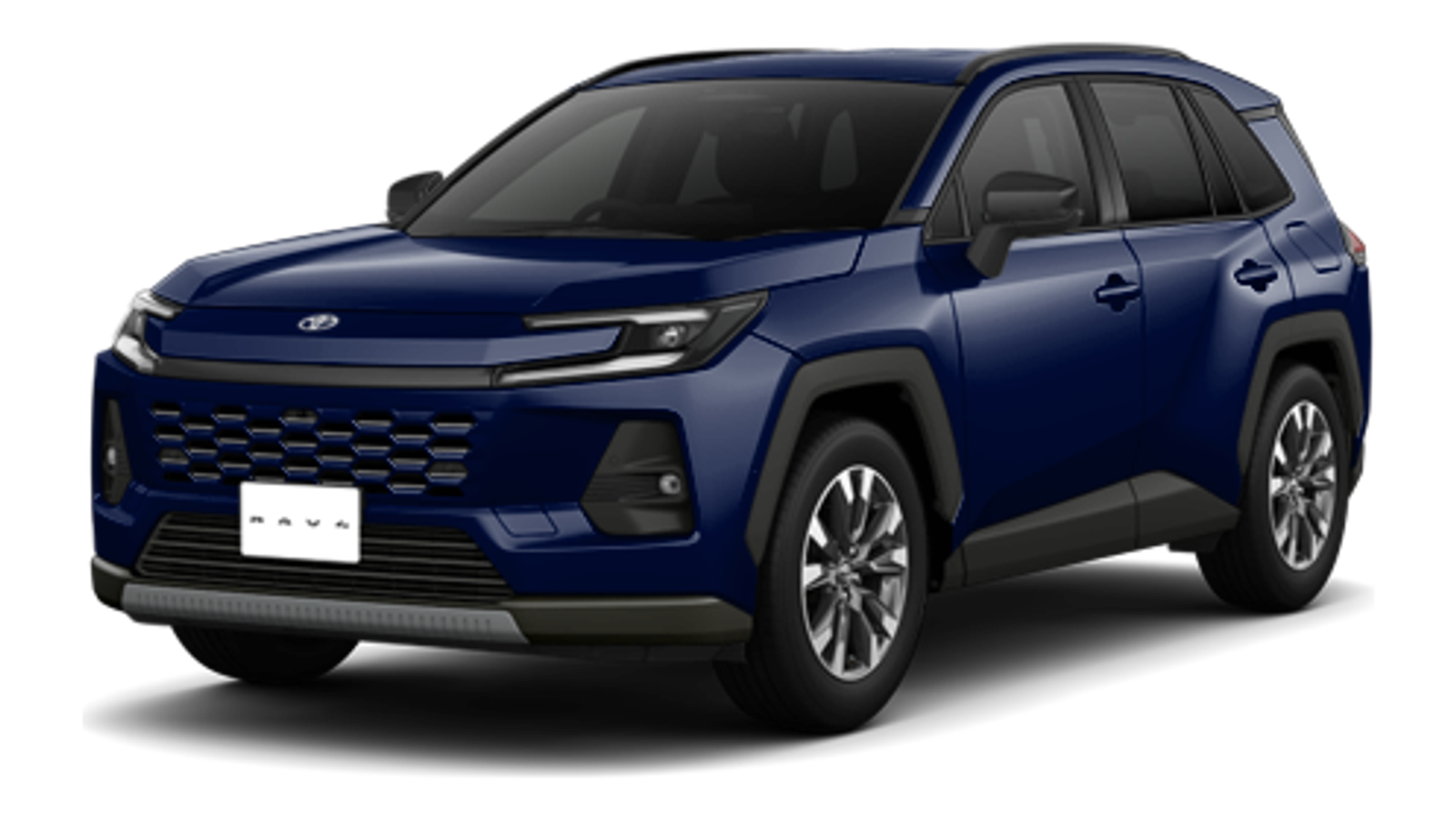
Here is the full landed cost of one car, a 2025 Toyota RAV4 shipped from Japan to Bangladesh, worked out on 9 November 2026 with the customs rules in force that day. It lands at 1,44,09,008 BDT (about US$115,883), and duties and taxes come to 161.4% of its CIF value.
| Item | Share of CIF | Amount |
|---|---|---|
| Vehicle priceIPAS price for a car sourced in Japan | 43,27,067 BDTUS$34,800 | |
| Shipping and insuranceJapan to Bangladesh | 9,44,992 BDTUS$7,600 | |
| CIF valueCost, insurance and freight: the customs value | 52,72,058 BDTUS$42,400 | |
| Customs duties and taxes | ||
| Basic customs duty (25%)25.3% of CIF | 13,31,195 BDTUS$10,706 | |
| Additional duty (60%)Base or related charges differ from CIF; see the duty structure above88.9% of CIF | 46,85,791 BDTUS$37,685 | |
| GST/VAT (15%)Base or related charges differ from CIF; see the duty structure above47.3% of CIF | 24,92,042 BDTUS$20,042 | |
| Total duties and taxes161.4% of CIF | 85,09,028 BDTUS$68,433 | |
| Service and handling | ||
| Premium Import ServiceOptional end-to-end import management by IPAS | 4,06,595 BDTUS$3,270 | |
| Destination handlingPort terminal and customs clearance handling | 2,21,327 BDTUS$1,780 | |
| Total landed cost | 1,44,09,008 BDTUS$115,883 | |
Reconditioned Cars: How Customs Values Them
Japan is the dominant origin for cars imported into Bangladesh, and for a used or reconditioned car the invoice is not the final word on value. SRO No. 218-AIN/2017/56/Customs sets a minimum value:
- From Japan: the average value of all code models of the vehicle in the current Japanese Yellow Book.
- From any other country: the average in the current Glass's Guide, Automobiles Magazine or an internationally recognised equivalent.
That reference value is then depreciated by age:
| Age of the vehicle | Depreciation allowed |
|---|---|
| Up to 1 year | 0% |
| Over 1, up to 2 years | 15% |
| Over 2, up to 3 years | 25% |
| Over 3, up to 4 years | 35% |
| Over 4, up to 5 years | 40% |
Age for depreciation runs, like the admissibility age, from 1 January of the year after the chassis manufacture year, up to the date of shipment.
The SRO sets a floor, not a fixed value. If your declared value is higher than the depreciated minimum, duty is charged on the declared value and you get no depreciation benefit. If it is lower, Customs uses the minimum. Any quote built on an auction price alone may therefore come in low. The final assessment can rise if the Yellow Book minimum is higher.
The tax rates on a reconditioned car are the same as on a new car of the same engine band. The 1,800 cc plug-in hybrid is the one exception: its reconditioned line keeps the 5% Regulatory Duty, so it pays 81.0% of CIF against 74.2% brand new.
Pickups, Microbuses and Seat Count
The pickup fork: up to 273 points
A double-cab pickup with at least four doors and an open cargo bed is classified as a goods vehicle (HS 8704), not a passenger car. That does not remove Supplementary Duty. The pickup simply moves to its own, much gentler ladder:
| Vehicle | Total, % of CIF |
|---|---|
| Double-cab pickup, up to 1,600 cc | 137.272% |
| Double-cab pickup, 1,601–2,000 cc | 161.398% |
| Double-cab pickup, 2,001–3,000 cc (Regulatory Duty 20%) | 191.092% |
| Double-cab pickup, 3,001–4,000 cc | 627.841% |
| Double-cab pickup, over 4,000 cc | 869.105% |
| Single-cab, extra-cab or chassis-cab goods vehicle, up to 5 tonnes GVW | 64.893%, with 0% Supplementary Duty |
A 2.8-litre diesel double-cab pays 191.1%, against 467.0% for an SUV of the same engine. An SUV is a passenger car however large or truck-like its frame, so a Land Cruiser, Prado, Fortuner or Pajero takes the car ladder.
Note the 3,000 cc cliff on pickups: 2,999 cc pays 191.1% and 3,001 cc pays 627.8%. Also note that the 2,001–3,000 cc band carries a 20% Regulatory Duty, four times the general rate, by specific notification.
A separate tariff line for used or reconditioned pickups carries only 10% Customs Duty and no Regulatory or Supplementary Duty (40.1% of CIF). How it applies to a used double-cab is ambiguous, so IPAS quotes a used double-cab on the double-cab line and recommends an NBR Advance Ruling before shipment.
Seats decide the heading
| Seats, including the driver | How it is taxed |
|---|---|
| 10 or more | A passenger van or minibus (HS 87.02). Petrol 81.0%, diesel 97.1%, hybrid or electric 64.9% of CIF, for up to 15 seats |
| Exactly 9 | The "microbus" line of HS 8703, often much cheaper than the car line at the same engine size |
| 8 or fewer | The ordinary motor-car line |
"Microbus" has no customs definition in Bangladesh. In trade practice, 7- and 8-seat MPVs are sometimes cleared on the microbus line. IPAS quotes them on the car line, which is never cheaper and usually dearer, rather than risk an under-quote. The microbus line may apply, and an NBR Advance Ruling before shipment will settle it. The microbus line is not a general discount: in some bands it is identical to the car line.
Electric and Hybrid Vehicles
Bangladesh's electrification relief is built into the tariff ladder itself. There is no exemption instrument for a privately imported car. Every hybrid, plug-in hybrid and electric car still pays 25% Customs Duty, 15% VAT, 7.5% Advance Tax and 5% Advance Income Tax. What changes is the Supplementary Duty, and for one line the Regulatory Duty.
The four propulsion types compared at 1,800 cc or less
| Propulsion, 1,800 cc or less | Total, % of CIF |
|---|---|
| Plug-in hybrid, brand new | 74.172% |
| Plug-in hybrid, reconditioned | 80.977% |
| Conventional (non-plug-in) hybrid | 97.061% |
| Pure petrol or diesel, 1,601–2,000 cc | 225.735% |
Hybrids
A hybrid qualifies only if its electric motor can propel the car. A conventional hybrid takes HS 8703.40 (petrol) or 8703.50 (diesel), and a plug-in takes 8703.60 or 8703.70. A 48-volt mild hybrid whose motor only assists is not a hybrid for tariff purposes. It goes on the petrol or diesel ladder, which on a 1,500 cc car is 64 points dearer.
| Engine size | Conventional hybrid | Plug-in hybrid |
|---|---|---|
| Up to 1,800 cc | 97.061% | 74.172% new / 80.977% reconditioned |
| 1,801–2,000 cc | 137.272% | 97.061% |
| 2,001–2,500 cc | 161.398% | 161.398% |
| 2,501–3,000 cc | 225.735% | 225.735% |
| 3,001–4,000 cc | 306.156% | 306.156% |
| Over 4,000 cc | 627.841% | 627.841% |
One open question affects petrol conventional hybrids of 1,601–1,800 cc. The tariff's descriptions for the up-to-1,800 cc line and the next line overlap across that range. IPAS quotes the conservative 137.3% and tells the customer the 97.1% line may apply. An NBR Advance Ruling before shipment is worth obtaining. This is under review.
Battery-electric cars: banded on dollar value
A battery-electric car has no engine size, so Bangladesh bands it on its customs value in US dollars:
| Customs value | Supplementary Duty | Total, % of CIF |
|---|---|---|
| Up to USD 25,000 | 0% | 64.893% |
| USD 25,001–50,000 | 10% | 80.977% |
| USD 50,001–100,000 | 45% | 137.272% |
| USD 100,001–200,000 | 60% | 161.398% |
| Over USD 200,000 | 100% | 225.735% |
The thresholds are written in dollars in the tariff, and Customs converts the Taka value at the rate on the day of assessment. A car priced within a few per cent of a band edge can move across it. The USD 50,000 edge is the largest step, at about 56 points.
Even the top electric band, 225.7%, is less than half the rate for a 2,001 cc petrol car. Battery capacity and motor power play no part.
What is not an EV concession
The 2026 electric-vehicle SROs (SRO No. 163-AIN/2026/18/Customs and SRO No. 164-AIN/2026/19/Customs of 8 June 2026, amended on 11 August 2026) cap duty on inputs for local manufacture and assembly. They do not reach a completely built-up car imported by a private person. Claims that Bangladesh has made electric car imports tax-free refer to those instruments.
And remember the admissibility gate: a used battery-electric car cannot be imported at any age. The electric ladder above applies to brand-new cars only.
Components That Do Not Exist in Bangladesh
The six components above are the complete border charge. There is no per-cc or per-kilowatt specific tax, no CO2 or emissions levy at import, no luxury surcharge, no development or infrastructure surcharge on imports (Bangladesh's 0.25% infrastructure surcharge is an export levy), no classic-car or age concession, and no free-trade preference on cars.
If a Bangladeshi cost estimate contains a line beyond Customs Duty, Regulatory Duty, Supplementary Duty, VAT, Advance Tax and Advance Income Tax, the extra line is not a border tax. Registration fees, the annual advance tax on vehicle ownership and port charges are real costs, but they come later and sit outside the duty calculation.
Documents Required for Import
- Commercial invoice showing the transaction price
- Bill of Lading
- Evidence of freight and insurance cost. Where actual freight cannot be established, Customs takes it at 20% of FOB, and insurance at 1% of the cost-and-freight value
- For used vehicles: the Registration Cancellation Certificate from the country of export
- For used vehicles from Japan: a JAAI certificate of the vehicle's age, model and chassis number. From other countries, the equivalent certificate from the recognised automobile association
- Evidence of the chassis manufacture year, which sets both the five-year limit and the depreciation band
- If the car was used outside its country of manufacture: its registration certificate and registration-cancellation certificate from the country of use
- Importer's Taxpayer Identification Number (TIN). Whether an importer without one pays more than 5% Advance Income Tax is unverified
- Written confirmation from the Chief Controller of Imports and Exports or Bangladesh Customs, if importing a reconditioned plug-in hybrid
Customs Clearance Process
| Stage | What happens |
|---|---|
| Before purchase | Confirm right-hand drive, exact engine displacement, seat count, body type and, for a used car, the chassis year against the five-year limit |
| Before shipment | Secure the JAAI or equivalent age certificate and the export cancellation certificate. Seek an NBR Advance Ruling where the classification is borderline |
| Arrival | Discharge at Mongla or Chattogram |
| Assessment | Customs sets the Assessable Value. For a used car this is the higher of the declared value and the Yellow Book minimum |
| Payment | All six components are paid before release, including Advance Tax and Advance Income Tax |
| Release and registration | The vehicle is released from the port and registered with BRTA |
Most avoidable cost and delay in Bangladesh comes from classification. An engine size rounded the wrong way around 2,000 cc, a 7-seat MPV assumed to be a microbus, or a mild hybrid declared as a hybrid can each change the bill by tens or hundreds of points. Settle these before shipping, not at the port.
Registration and Ongoing Costs
Registration is handled by the Bangladesh Road Transport Authority (BRTA). Registration charges sit outside the border cascade and must not be added into the duty calculation:
- BRTA registration fee and number plates
- Fixed annual advance tax on vehicle ownership, a Taka amount set by engine capacity under the Income Tax Act 2023 and payable at registration and fitness renewal. It is separate from the 5% Advance Income Tax paid at the border
- Port, terminal, demurrage and clearing-agent charges
- Bank charges on the letter of credit
A right-hand-drive conversion, where one has been done, needs BRTA inspection and approval before registration.
Recent Regulatory Changes (2022–2026)
- 2023: new Customs and Income Tax Acts. The Customs Act 2023 (Act No. 57 of 2023) replaced the Customs Act 1969 as the basis of the tariff. The Income Tax Act 2023 now governs Advance Income Tax, under section 120.
- 29 May 2024: Regulatory Duty at 3%. SRO No. 201-AIN/2024/53/Customs set the general Regulatory Duty at 3% for that fiscal year.
- 2025: valuation provision amended. The Finance Ordinance 2025 substituted the customs-value provisions of the Customs Act 2023 (section 27).
- 8 June 2026: Regulatory Duty reset to 5%. SRO No. 177-AIN/2026/32/Customs replaced the 2024 notification. It set 5% as the general rate, named 25% for cars over 4,000 cc and 20% for double-cab pickups of 2,001–3,000 cc, and withdrew Regulatory Duty from brand-new plug-in hybrids of 1,800 cc or less. Any source quoting 3% is a year out of date.
- 8 June and 11 August 2026: local EV industry concessions. SROs 163 and 164 of 2026, amended by SRO 245, cap duty on inputs for local EV manufacture and assembly. They do not apply to built-up cars.
- 1 July 2026: the 1,201–1,600 cc band raised. The FY 2026-27 budget lifted Supplementary Duty on 1,201–1,600 cc cars from 45% to 60%. That range includes the 1,201–1,500 cc band, the most common in Bangladesh's imports, which now lands at 161.4% of CIF. The printed tariff of 11 June 2026 still shows 45% for the 1,501–1,600 cc petrol line, but the live NBR tariff and Duty Calculator show 60%, and 60% is operative.
- 24 August 2026: Import Policy Order 2026-2029. SRO No. 308-Ain/2026 took effect immediately. It prohibits old or used electric vehicles and carries forward the five-year age limit and the country-of-manufacture rule for used vehicles. Whether the ban reaches used plug-in hybrids is not defined in the Order and remains under review.
- LDC graduation. Bangladesh's graduation from least-developed-country status was scheduled for 24 November 2026, and a three-year deferral has been requested. Graduation affects preferences on Bangladesh's exports. It changes no import duty on cars.
Frequently Asked Questions
How much does it cost to import a car to Bangladesh?
Border taxes alone range from about 65% of CIF for a low-value battery EV to over 1,000% for a car above 4,000 cc, and engine size sets almost all of it. Typical figures are 161.4% of CIF for a 1,201–1,600 cc petrol car, 225.7% for 1,601–2,000 cc and 467.0% for 2,001–3,000 cc. Every percentage runs on CIF plus a 1% landing charge, and includes VAT, Advance Tax and Advance Income Tax.
What is the age limit for importing a used car to Bangladesh?
Five years at the date of shipment, counted from 1 January of the year after the chassis manufacture year. In 2026 the oldest admissible chassis year is 2021. A brand-new car has no age limit. A used car must also ship from its country of manufacture and carry a certified age, such as a JAAI certificate for Japanese cars.
Can I import a used electric car to Bangladesh?
No. Since 24 August 2026, the Import Policy Order 2026-2029 prohibits old or used electric vehicles at any age, and a car imported in breach can be confiscated and sold as scrap. Brand-new electric cars are unaffected. Whether the ban covers used plug-in hybrids is not yet settled, so get written confirmation from the Chief Controller of Imports and Exports or Bangladesh Customs before shipping one.
Why does a 2,001 cc car cost so much more than a 2,000 cc car?
Because Supplementary Duty jumps from 100% to 250% at that line, and VAT and Advance Tax are charged on top of it. The total goes from 225.7% to 467.0% of CIF. On a USD 30,000 car that is over USD 72,000 of extra tax for one cubic centimetre. Bands are upper-inclusive, so 2,000 cc exactly is still in the lower band.
Are hybrids cheaper to import into Bangladesh?
Much cheaper, as long as the electric motor can actually drive the car. A conventional hybrid of 1,800 cc or less pays 97.1% of CIF, and a brand-new plug-in hybrid of the same size pays 74.2%, against 225.7% for a 1,601–2,000 cc petrol car. A 48-volt mild hybrid does not qualify and is taxed as petrol.
Are electric cars tax-free in Bangladesh?
No. A battery-electric car still pays 25% Customs Duty, 5% Regulatory Duty, 15% VAT, 7.5% Advance Tax and 5% Advance Income Tax. What it saves is Supplementary Duty, which is banded on the car's dollar value: 0% up to USD 25,000, for a total of 64.9% of CIF, rising to 225.7% above USD 200,000. The 2026 EV notifications apply to local manufacturers and assemblers, not to built-up imports.
Does SAFTA or any trade agreement reduce duty on cars from India or Japan?
No. Motor vehicles are on Bangladesh's SAFTA sensitive list, APTA and D-8 schedules contain no car lines, and the Japan–Bangladesh EPA is not in force. Every origin pays the same rates.
Can I import a left-hand-drive car to Bangladesh?
Not for private use. The Road Transport Act 2018 requires right-side steering, and a left-hand-drive private car cannot be registered. A completed right-hand-drive conversion is not prohibited, but registration depends on BRTA inspection and approval.
Should I ship to Chattogram or Mongla?
Either is lawful, and the taxes are identical at both. Mongla has a shorter road leg to Dhaka and handles most reconditioned car imports. Chattogram is the country's main container port. The choice comes down to sailing schedule and inland delivery.
How does Bangladesh Customs value a reconditioned car?
On the higher of your declared value and a minimum value. For a Japanese car the minimum is the Yellow Book average for the model, depreciated by 0% to 40% depending on age up to five years. For other origins Customs uses Glass's Guide or an equivalent. A low auction invoice will not lower the duty below that minimum.
Can I get the Advance Tax and Advance Income Tax back?
Usually not, as a private individual. Advance Tax can be offset against output VAT by a VAT-registered business, and Advance Income Tax can be adjusted against income tax liability. A person importing one car for their own use normally has nothing to offset them against, so treat both as part of the cost.
Ready to Import?
In Bangladesh the vehicle's specification, not the purchase price, decides what you pay. Engine size alone can move the bill from 137% to over 1,000% of CIF, and the 2,000 cc line is the one to watch. After engine size come propulsion (a plug-in hybrid of 1,800 cc or less is the cheapest passenger car to land), body type (a double-cab pickup rather than an SUV) and seat count.
Before any of that, check the gates. The car must be right-hand drive. A used car must be no more than five years old at shipment and ship from its country of manufacture. A used electric car cannot come in at all.
IPAS provides two tools to plan and execute your import:
CarImport.AI: source a vehicle through IPAS and calculate the full landed cost to Bangladesh. It runs the complete cascade on Assessable Value: Customs Duty, Regulatory Duty, Supplementary Duty at the correct engine or value band, VAT, Advance Tax and Advance Income Tax. Get an exact figure for your specific vehicle, engine size, condition and seat count.
IPAS EXPRESS: already have a vehicle? Get instant shipping quotes to Mongla or Chattogram, with transparent, itemised pricing and a stage-by-stage timeline.
Ready to Import Your Vehicle?
Two tools, two use cases. Pick the one that fits your needs.
Source a vehicle through IPAS and calculate the full landed cost — customs duties, shipping, and compliance — to destinations across the world.
Calculate Landed CostIPAS Express
Already have a vehicle? Get instant shipping quotes — sea freight, air freight, or RoRo — for one car or multiple vehicles worldwide.
Get Shipping Quote