
Introduction
Importing a car to Barbados in 2026 costs 45% customs duty, 46.95-120% Excise Tax on CIF plus duty, an Environmental Levy and 17.5% VAT — typically 150-275% of CIF for petrol or diesel cars. EVs pay 10% duty with no excise or VAT until 31 March 2029. Used cars must be under 4 years and 50,000 km.
Barbados is a small island nation in the eastern Caribbean, renowned for its stable economy, strong rule of law, and deep trade links with the UK, North America, and the wider Caribbean Community (CARICOM). With a population of approximately 290,000 and a well-maintained road network, the country has a mature automotive market that depends almost entirely on imported vehicles. There is no domestic automobile manufacturing in Barbados, meaning every car, truck, and bus on the island arrives from overseas.
The vehicle import regime in Barbados is administered by the Barbados Customs and Excise Department, with duties collected under the CARICOM Common External Tariff (CET). The layered tax structure includes a 45% customs duty on vehicles that do not qualify for a trade preference, an Excise Tax banded by engine capacity and value that can reach 120%, an Environmental Levy, and 17.5% VAT applied on the cumulative value. Vehicles of EU or UK origin can enter at 0% customs duty under the CARIFORUM economic partnership agreements, and electric vehicles benefit from a tax holiday. Despite these high duties, Barbados maintains a steady flow of vehicle imports from Japan, the UK, and the United States.
Barbados drives on the left side of the road and uses right-hand drive (RHD) vehicles, making it well suited for vehicles sourced from Japan, the UK, and India. Used vehicles must be no more than 4 years old with no more than 50,000 km on the odometer. This guide covers every step from eligibility and duty estimation through customs clearance and registration with the Barbados Licensing Authority.
Quick Facts
| Detail | Information |
|---|---|
| Customs Authority | Barbados Customs and Excise Department |
| Licensing Authority | Barbados Licensing Authority (BLA) |
| Revenue Authority | Barbados Revenue Authority (BRA) |
| Traffic Side | Left-hand traffic |
| Steering Requirement | Right-Hand Drive (RHD); LHD not normally importable for private use |
| Customs Duty | 45% of CIF (CARICOM CET national rate); 0% for CARICOM, EU or UK origin with proof of origin |
| Excise Tax | 46.95% to 120% of (CIF + duty), by engine capacity and value; 62.77-80.16% for light goods vehicles |
| VAT | 17.5% on (CIF + duty + Environmental Levy + excise) |
| Environmental Levy | BBD 300 (new) / BBD 4,000 (used) per vehicle |
| EV Tax Holiday | 10% duty, 0% excise, 0% VAT to 31 March 2029 (announced in the 2026 Budget) |
| Used Vehicle Age Limit | Under 4 years from manufacture, max 50,000 km |
| Main Port | Port of Bridgetown (BBBGI) |
| Main Airport | Grantley Adams International Airport (BGI) |
| Customs System | ASYCUDA World |
| Customs Clearance | Approximately 4 business days (minimum) |
| Currency | Barbados Dollar (BBD), pegged at BBD 2 = USD 1 |
| Total Tax Burden (typical) | About 150-275% of CIF for petrol/diesel cars; about 10% for EVs |
Types of Cars That Can Be Imported
Barbados permits the import of both new and used vehicles from any origin country, subject to age restrictions, mileage limits, and the standard CARICOM duty framework. The same customs duty rate applies to both new and used vehicles, but used vehicles attract a much higher Environmental Levy.
New Vehicles
New vehicles can be imported freely from any country. All duties and taxes apply based on the CIF value, with no additional restrictions beyond the standard customs requirements. New vehicles sourced from Japan, the UK, and India are particularly well suited due to their RHD configuration matching Barbados's left-hand traffic system.
Used Vehicles
Used vehicles must meet two conditions at the time of import:
- Maximum age: 4 years from date of manufacture
- Maximum odometer reading: 50,000 km
These restrictions apply to standard importers. Returning Barbadian nationals (citizens granted Returning National status after at least 5 years' continuous residence abroad) may bring in one vehicle older than 4 years, provided they owned it abroad for at least 4 years. Returning nationals and diplomats have their own concessions, which are outside the scope of this guide.
Vintage and Classic Vehicles
Barbados Customs provides separate classification criteria for vintage, antique, and classic vehicles. These are permitted with appropriate documentation and may receive different duty treatment depending on their HS code classification.
Electric Vehicles
Barbados has an EV tax holiday, first introduced in 2022. The 2026 Budget (16 March 2026) extended it to 31 March 2029 and replaced the previous 0% customs duty with a 10% duty. During the holiday a qualifying battery electric vehicle pays:
- 10% customs duty on CIF (0% if of EU or UK origin with proof of origin, or CARICOM origin)
- 0% Excise Tax
- 0% VAT
- The Environmental Levy, which is never waived
The extension and the 10% rate were announced in the Budget; the enacting statutory instrument has not yet been confirmed, so treat the terms as announced rather than final.
Hybrid and Plug-In Hybrid Vehicles
Self-charging hybrids (Toyota Hybrid Synergy Drive, Honda e:HEV and similar) are not in the EV holiday. They pay the full 45% duty, the standard excise band for their engine capacity, and 17.5% VAT. Plug-in hybrids were included in the holiday under the 2023 Budget; the 2026 Budget summary refers only to EVs, so PHEV coverage after the extension is not yet confirmed. Fuel-cell and solar vehicles were also listed in the 2023 Budget, with the same open question.
CNG and LPG Vehicles
Gas-powered vehicles are permitted. The 2023 Budget listed natural gas (CNG) vehicles in the holiday class, but whether that carries into the 2026 extension is not confirmed — check the treatment with Barbados Customs before shipping.
Steering Configuration
Barbados drives on the left and is an RHD market. Left-hand drive (LHD) vehicles are not normally importable for private use. Buy RHD.
Cars You Can Import to Barbados
Each card is a full landed-cost calculation: the car's price, shipping, every duty and tax, and handling, worked out on 9 November 2026 with the rules in force that day. All are right-hand drive to suit Barbados's roads. Tap a car to see its full breakdown, or open it to change the trim, colour or port.
More cars you can import to Barbados
New cars IPAS sources to order that meet Barbados's import rules. Prices are ex works, before shipping and duty. Cars marked C-RHD are built left-hand drive and converted to right-hand drive before shipping; the calculator adds the conversion. Open a car to work out its full landed cost.
 RHDBackorder2026
BMW M4
Coupe · 2 VariantsPetrolFrom $123,600Ex Works, UK RHDBackorder2026
BMW 7 Series M Models
Sedan · 7 VariantsPlug-in Hybrid · ElectricFrom $155,200Ex Works, UK RHDBackorder2026
BMW M3 Touring
Hatchback · 2 VariantsPetrolFrom $124,100Ex Works, UK LHD/C-RHDBackorder2025
GMC Yukon
SUV · 5 VariantsPetrolFrom $81,500Ex Works, USA RHDBackorder2026
Kia Carens Clavis
SUV · 37 VariantsPetrol · DieselFrom $10,100Ex Works, India LHD/C-RHDBackorder2025
Chevrolet Silverado EV
Pickup · 3 VariantsElectricFrom $102,200Ex Works, USA RHDBackorder2026
Chevrolet Silverado 1500
Pickup · 2 VariantsPetrolFrom $89,100Ex Works, NZ RHDBackorder2026
Mercedes-Benz AMG GT 4-Door Coupe Electric
Coupe · 3 VariantsElectricFrom $134,700Ex Works, UK RHDBackorder2026
Mercedes-Benz EQE SUV
SUV · 9 VariantsElectricFrom $102,500Ex Works, UK RHDBackorder2026
Skoda Kylaq
SUV · 9 VariantsPetrolFrom $10,400Ex Works, India RHDBackorder2026
Hyundai Verna
Sedan · 12 VariantsPetrolFrom $9,900Ex Works, India RHDBackorder2026
Hyundai i10 NIOS
Hatchback · 15 VariantsPetrol · CNGFrom $6,500Ex Works, India RHDBackorder2026
Rolls-Royce Spectre
Coupe · 2 VariantsElectricFrom $389,800Ex Works, UK RHDBackorder2026
Force Motors Urbania
Van & MPV · 3 VariantsDieselFrom $28,100Ex Works, India RHDBackorder2026
Citroen eC3 X
Hatchback · 3 VariantsElectricFrom $14,400Ex Works, India RHDBackorder2026
Honda Elevate
SUV · 11 VariantsPetrolFrom $10,700Ex Works, India
Seaports and Airports Supporting Vehicle Import
Barbados is a single-island nation with one primary seaport. All vehicle imports by sea are processed through Bridgetown.
Seaports
| Port | Code | City | Notes |
|---|---|---|---|
| Port of Bridgetown | BBBGI | Bridgetown | Primary and only major seaport; handles all vehicle imports |
The Port of Bridgetown (Deep Water Harbour) is the sole gateway for all vehicle imports to Barbados. Located on the southwestern coast, it handles the entirety of the island's international trade. Key features include:
- Container terminal with modern handling equipment
- RoRo (Roll-on/Roll-off) capable berths
- Customs offices on site managed through the ASYCUDA World system
- Bonded storage areas for vehicles awaiting clearance
- Regular shipping services from North America, Europe, and Asia
Airports
| Airport | Code | City | Notes |
|---|---|---|---|
| Grantley Adams International Airport | BGI | Bridgetown | Air freight available for urgent or high-value shipments |
Air freight is available but is rarely used for standard vehicle imports due to cost. It is typically reserved for luxury vehicles, specialty cars, or time-sensitive deliveries where the 5-10x cost premium over sea freight is justified.
Restrictions on Vehicle Import
Barbados imposes several restrictions and procedural requirements that importers must understand before shipping a vehicle.
Age and Mileage Restrictions
Standard importers are limited to vehicles no more than 4 years old from the date of manufacture with an odometer reading of 50,000 km or less. This is one of the stricter age limits in the Caribbean region.
Steering
RHD is required in practice: LHD vehicles are not normally importable by private buyers.
Importer Eligibility
The importer must be 18 or over, hold a Barbados import licence (issued by the Customs Comptroller on application), and present a Tax Identification Number (TIN).
Returning National Exemptions
Returning nationals (at least 5 years' continuous residence abroad) may bring in one personal vehicle older than 4 years if they owned it abroad for at least 4 years, and may qualify for duty concessions. Proof of citizenship and the qualifying overseas residence period is required.
Diplomatic Exemptions
Diplomatic personnel import under their own concessions.
Consignee Presence Required
Unlike many countries where a clearing agent can handle the entire process, Barbados Customs requires the consignee (the person importing the vehicle) to be physically present for both the customs interview and the vehicle examination. This is an important logistical consideration for overseas buyers.
No Specific Diesel or Fuel-Type Bans
Barbados does not prohibit the import of diesel vehicles. All fuel types are permitted under the standard duty framework, with battery electric vehicles receiving the holiday treatment described above.
Duty Structure Overview
Barbados applies a layered tax system where each subsequent charge is calculated on a value that includes prior charges. The total tax burden varies significantly based on engine capacity and the vehicle's value.
Key Tax Components
- Customs Duty (CARICOM CET) -- 45% of CIF value for cars and light goods vehicles. Vehicles originating within CARICOM attract 0% duty with a CARICOM Certificate of Origin. EU-origin vehicles (CARIFORUM-EU EPA) and UK-origin vehicles (CARIFORUM-UK EPA, in force since 1 January 2021) also attract 0% duty with an EUR.1 movement certificate or approved-exporter invoice declaration, provided they are shipped directly to Barbados (not via the US or another third country). All other origins, including Japan, the USA, India, China, Korea and Thailand, pay 45%.
- Excise Tax -- Applied on the chargeable value, which is CIF + customs duty (the Environmental Levy is not included). The rate depends on engine capacity and on whether the chargeable value is above BBD 45,000 (see the table below).
- Environmental Levy -- A fixed charge per vehicle under the Environmental Levy Act, Cap. 70: BBD 300 for new vehicles and BBD 4,000 for used motor cars. Some secondary sources quote BBD 1,500 (new) and BBD 2,000 (used); the statute's figures are used here pending confirmation from the Barbados Revenue Authority. The levy is never waived, even for EVs.
- VAT -- 17.5% applied on the cumulative value (CIF + Customs Duty + Environmental Levy + Excise Tax).
Excise Tax Bands
| Engine Capacity | Chargeable Value up to BBD 45,000 | Chargeable Value over BBD 45,000 |
|---|---|---|
| Up to 1,500 cc | 46.95% | 64.35% |
| 1,501 to 1,599 cc | 46.95% | 93.73% |
| 1,600 to 1,799 cc | 76.34% | 93.73% |
| 1,800 to 2,000 cc | 76.34% | 120% |
| Over 2,000 cc | 76.34% | 120% |
| Goods vehicles up to 5 t GVW | 62.77% | 80.16% |
| Goods vehicles over 5 t GVW | 10% | 10% |
Because the threshold is tested after duty, any car with a CIF above about BBD 31,000 (USD 15,500) has a chargeable value above BBD 45,000 at 45% duty — so most cars fall in the right-hand column. For hybrids, the petrol or diesel engine's capacity sets the band. Near a band boundary, a few cc can change the bill by tens of percentage points, so always use the exact declared engine capacity.
Double-cab pickups (Hilux, Ranger, D-Max and similar) are a grey area: no published Barbados Customs ruling settles whether a privately imported double cab is a passenger car or a goods vehicle. IPAS quotes them as passenger cars — the higher outcome — unless Customs accepts the goods-vehicle classification.
Calculation Sequence
- Determine CIF Value (vehicle price + freight + insurance), converted at BBD 2.00 per USD
- Customs Duty = CIF x 45% (or 10% for an EV in the holiday, 0% for qualifying EU/UK/CARICOM origin)
- Chargeable Value = CIF + Customs Duty
- Excise Tax = Chargeable Value x applicable excise rate (0% for an EV in the holiday)
- Environmental Levy = Fixed amount (BBD 300 new or BBD 4,000 used)
- VAT = (CIF + Customs Duty + Environmental Levy + Excise Tax) x 17.5% (0% for an EV in the holiday)
- Total Landed Cost = CIF + all duties, taxes, and levies
Worked Examples (new vehicles)
| Honda Civic 1.5T petrol (1,498 cc), Japan | Toyota Corolla 1.8 Hybrid (1,798 cc), Japan | Nissan Leaf BEV, Japan | |
|---|---|---|---|
| CIF | BBD 50,000 (USD 25,000) | BBD 48,000 (USD 24,000) | BBD 70,000 (USD 35,000) |
| Customs Duty | 45% = BBD 22,500 | 45% = BBD 21,600 | 10% = BBD 7,000 |
| Environmental Levy | BBD 300 | BBD 300 | BBD 300 |
| Excise Tax | 64.35% x 72,500 = BBD 46,653.75 | 93.73% x 69,600 = BBD 65,236.08 | 0% (holiday) |
| VAT 17.5% | BBD 20,904.41 | BBD 23,648.81 | 0% (holiday) |
| Total taxes | BBD 90,358.16 | BBD 110,784.89 | BBD 7,300 |
| Effective rate | 180.72% of CIF | 230.80% of CIF | 10.43% of CIF |
The same Leaf outside the holiday would pay about 275% of CIF — the holiday is the single biggest saving in the Barbados system. A German- or UK-built EV with proof of origin pays 0% duty during the holiday, so only the Environmental Levy is due.
CARICOM-Origin Vehicles
Vehicles manufactured within a CARICOM member state qualify for 0% customs duty under the Caribbean Single Market and Economy (CSME) free trade provisions. However, since there is no significant CARICOM automobile manufacturing base, virtually all vehicles imported to Barbados come from outside CARICOM — the practical preferences are the EU and UK agreements described above.
Get exact duty rates for your specific vehicle using CarImport.AI

Calculate your exact import duty to Barbados
Get a vehicle-specific duty and full landed-cost breakdown — HS classification, every tax, levy and FTA, plus shipping — calculated for your exact make, model and specs.
- Vehicle-specific HS code
- All duties, taxes & FTAs
- Shipping + est. landed cost
Worked Example: Importing a 2026 Toyota Urban Cruiser Hyryder to Barbados
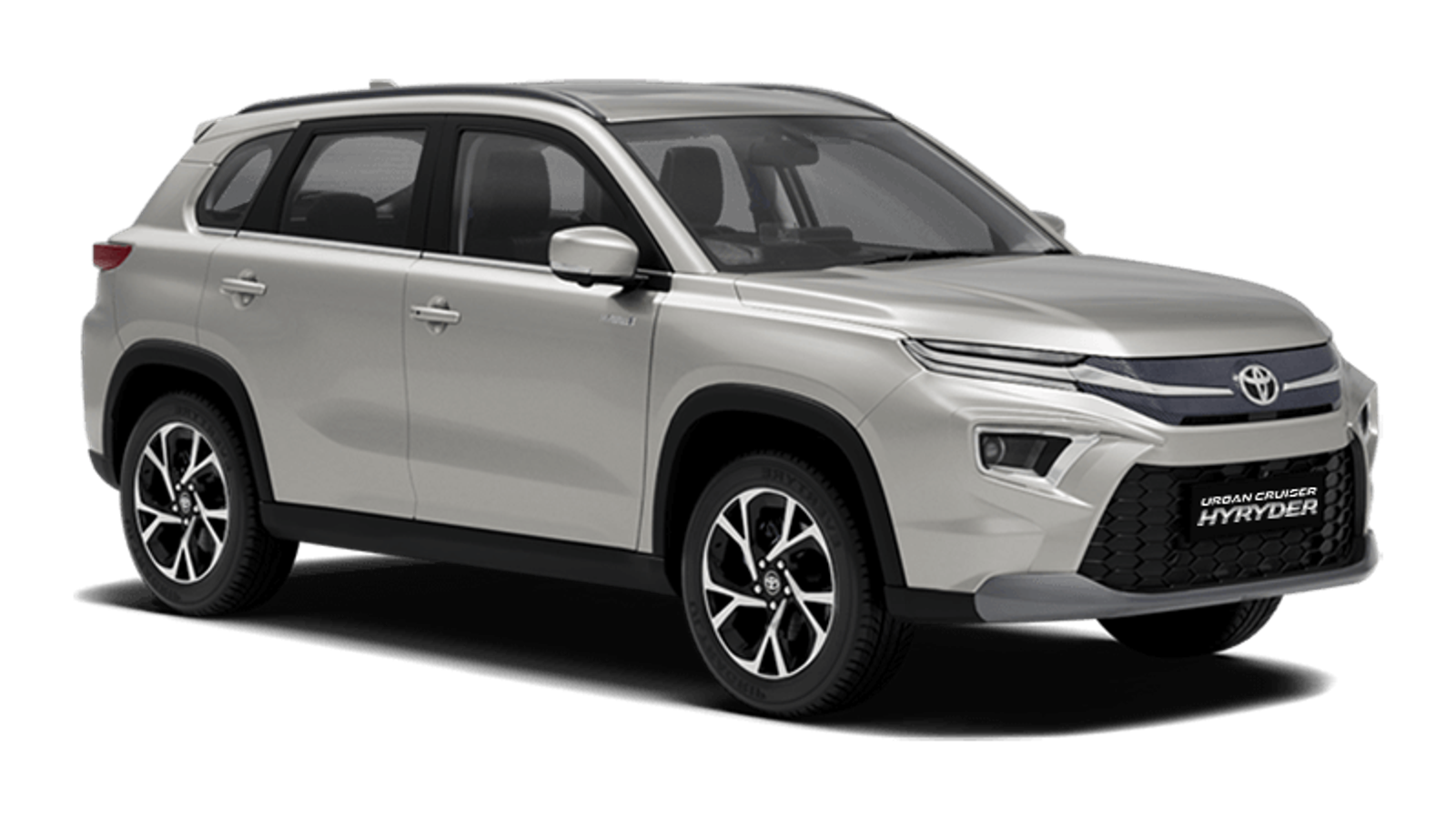
Here is the full landed cost of one car, a 2026 Toyota Urban Cruiser Hyryder shipped from India to Barbados, worked out on 9 November 2026 with the customs rules in force that day. It lands at 117,354 BBD (about US$58,677), and duties and taxes come to 105.2% of its CIF value.
| Item | Share of CIF | Amount |
|---|---|---|
| Vehicle priceIPAS price for a car sourced in India | 31,000 BBDUS$15,500 | |
| Shipping and insuranceIndia to Barbados | 22,876 BBDUS$11,438 | |
| CIF valueCost, insurance and freight: the customs value | 53,876 BBDUS$26,938 | |
| Customs duties and taxes | ||
| Basic customs duty (45%)45% of CIF | 24,244 BBDUS$12,122 | |
| Ad valorem excise (20%)20% of CIF plus the duties above29.1% of CIF | 15,684 BBDUS$7,842 | |
| CO₂ emissions levyest. 125 g/km0.6% of CIF | 300 BBDUS$150 | |
| GST/VAT (17.5%)17.5% of CIF plus the duties above30.6% of CIF | 16,468 BBDUS$8,234 | |
| Total duties and taxes105.2% of CIF | 56,696 BBDUS$28,348 | |
| Service and handling | ||
| Premium Import ServiceOptional end-to-end import management by IPAS | 3,262 BBDUS$1,631 | |
| Destination handlingPort terminal and customs clearance handling | 3,520 BBDUS$1,760 | |
| Total landed cost | 117,354 BBDUS$58,677 | |
Documents Required for Import
Barbados Customs requires a comprehensive set of documents for vehicle import clearance. All documents should be prepared before the vehicle is shipped.
Shipping Documents
- Bill of Lading (original) -- The shipping receipt and title document issued by the carrier
- Packing List / Shipping Manifest -- Itemised description of cargo
Commercial Documents
- Commercial Invoice -- Showing the CIF value, vehicle specifications, VIN, and seller details
- Proof of Purchase / Payment Receipts
Vehicle Documents
- Vehicle Title / Certificate of Ownership -- Original from the country of origin
- Deregistration Certificate / Export Certificate -- Proof the vehicle has been legally exported from the origin country
- Vehicle Registration Certificate -- From the country of origin (for used vehicles)
- EUR.1 Movement Certificate or approved-exporter invoice declaration -- Only if claiming 0% duty for an EU- or UK-origin vehicle
Importer Documents
- Passport copy (identification of the consignee)
- Tax Identification Number (TIN)
- Import licence (issued by the Customs Comptroller on application)
Customs Declaration
- Customs Declaration Form C63 -- Prepared and submitted through the ASYCUDA World system at the Barbados Customs Department
Post-Import Registration Documents (Barbados Licensing Authority)
- Customs Declaration Form C63 (stamped by Customs)
- Insurance Certificate or Cover Note from a Barbados insurer
- Weight Certificate
- Examiner's Certificate (roadworthiness examination)
Customs Clearance Timeline
The customs clearance process in Barbados is managed through the ASYCUDA World automated system. With complete documentation and the consignee present, the process typically takes approximately 4 business days.
| Stage | Duration | Description |
|---|---|---|
| Vessel arrival at Bridgetown | Day 1 | Vehicle arrives at Port of Bridgetown |
| Customs interview | Day 1-2 | Consignee must be present for customs interview |
| Physical examination | Day 2-3 | Vehicle inspection at the consignee's residence or designated location |
| Duty assessment and payment | Day 3-4 | ASYCUDA system calculates duties; payment processed |
| Duty statement and release | Day 4 | Computer-printed duty statement on Form C63; vehicle released |
Total estimated clearance: approximately 4 business days (minimum)
Important Notes
- The consignee must be physically present for both the customs interview and the vehicle examination. This cannot be delegated to a third party in most cases.
- After payment, the ASYCUDA World system generates a detailed duty statement. One copy serves as the release receipt.
- Delays can occur if documentation is incomplete, if the declared value is disputed, or if additional inspections are required.
Homologation and Vehicle Approval
Barbados does not maintain a formal pre-import type-approval or homologation inspection regime. The primary compliance check occurs at the post-import registration stage through the Barbados Licensing Authority.
Pre-Import Requirements
- No formal homologation certificate is required before import
- No mandatory pre-shipment inspection (PSI) programme
- No emissions testing required at the import stage
Post-Import Requirements
- A Weight Certificate must be obtained (typically from the port or an authorised facility)
- An Examiner's Certificate must be obtained from the BLA, which serves as a functional roadworthiness inspection covering brakes, steering, lights, tyres, and general vehicle condition
- These documents are required for registration, not for customs clearance
Standards
Barbados follows general CARICOM vehicle standards but does not have a separate national vehicle type-approval authority. The Examiner's Certificate at the BLA registration stage is the primary safety and compliance gate.
Registration Procedures and Costs
After customs clearance, vehicles must be registered with the Barbados Licensing Authority (BLA) before they can be driven on public roads.
Registration Steps
- Obtain Customs Clearance -- Receive the stamped Form C63 and all customs receipts from the Barbados Customs Department
- Obtain Insurance -- Purchase a motor vehicle insurance policy from a Barbados-licensed insurer. Third-party liability insurance is the legal minimum
- Obtain Weight Certificate -- Get the vehicle weighed at the port or an authorised facility
- Obtain Examiner's Certificate -- Present the vehicle for examination at the BLA to verify roadworthiness
- Submit Registration Application -- Submit all documents to the BLA (online submission is available through the BLA portal at bla.gov.bb)
- Pay Registration Fees -- Registration fees are based on vehicle weight as per the gazetted schedule
- Receive Number Plates and Registration Certificate -- Upon approval, the BLA issues licence plates and a registration booklet
Costs
- Registration fee: Based on vehicle weight (gazetted schedule)
- Insurance: Varies by vehicle type and coverage level; third-party liability is mandatory
- Examiner's Certificate fee: Nominal fee payable at BLA
Important Notes
- All duties are collected at the customs stage. No additional import taxes are levied at BLA registration.
- Vehicles must be registered before driving on any public road in Barbados.
- The BLA portal offers online document submission, streamlining the registration process.
Frequently Asked Questions
How much does it cost to import a car to Barbados?
The total cost depends on the vehicle's CIF value, engine capacity, origin and whether it is new or used. Barbados has one of the higher duty regimes in the Caribbean: a petrol or diesel car typically pays about 150% to 275% of its CIF in duty, excise, levy and VAT. For a new car with a CIF value of USD 20,000 from Japan, expect total taxes of roughly USD 36,000 (1.5-litre engine) to USD 55,000 (2.0-litre engine), bringing the landed cost to approximately USD 56,000-75,000. A new EV at the same CIF pays about USD 2,150 during the holiday. Use CarImport.AI for exact calculations specific to your vehicle.
What is the age limit for importing a used car to Barbados?
Used vehicles must be no more than 4 years old from the date of manufacture and must have no more than 50,000 km on the odometer. For vehicles imported in 2026, this means the vehicle must have been manufactured in 2022 or later. Returning Barbadian nationals may bring in one older vehicle they have owned abroad for at least 4 years.
Does Barbados accept right-hand drive vehicles?
Yes. Barbados drives on the left side of the road and RHD vehicles are required in practice. Vehicles from Japan, the UK, India, and other RHD markets are ideal for import. LHD vehicles are not normally importable for private use.
What is the CARICOM CET rate for vehicles?
Barbados applies 45% customs duty on CIF to passenger cars (HS 8703) and goods vehicles (HS 8704). Vehicles originating within CARICOM attract 0% duty, and EU- or UK-origin vehicles can also enter at 0% duty under the CARIFORUM economic partnership agreements with an EUR.1 certificate and direct shipment. Excise Tax and VAT still apply at the normal rates.
Are there any incentives for importing electric or alternative-fuel vehicles?
Yes. Battery electric vehicles are in a tax holiday to 31 March 2029 (announced in the 2026 Budget): 10% customs duty, 0% excise and 0% VAT, plus the Environmental Levy. That typically means about 10% of CIF in total, against roughly 275% for the same car outside the holiday. Self-charging hybrids are not included and pay the full cascade; plug-in hybrid, fuel-cell, solar and CNG coverage after the 2026 extension is not yet confirmed.
Do I need to be physically present for customs clearance?
Yes. Barbados Customs requires the consignee to be present for both the customs interview and the physical examination of the vehicle. This is an important consideration if you are importing from overseas and may need to plan travel to Barbados around the vessel's arrival date.
How long does the entire import process take?
From vessel arrival at the Port of Bridgetown to registration with the BLA, the process typically takes 1-2 weeks assuming all documentation is complete. Customs clearance itself takes approximately 4 business days, followed by the BLA registration process which takes several additional days.
Can I import a vehicle from India to Barbados?
Yes. India manufactures RHD vehicles that are well suited for Barbados's left-hand traffic system. Indian manufacturers such as Maruti Suzuki, Tata Motors, Mahindra, and Hyundai produce fuel-efficient vehicles that can be exported to Barbados. India has no trade agreement with Barbados, so the full 45% customs duty, excise and VAT apply. Use CarImport.AI to calculate the exact landed cost for any specific vehicle.
Ready to Import?
Importing a vehicle to Barbados involves navigating the CARICOM Common External Tariff, a two-way excise matrix tied to engine capacity and value, the EV holiday, and a registration process through the Barbados Licensing Authority. Whether you are importing a new vehicle from Japan, a UK-built car that may qualify for 0% duty, or an electric vehicle under the holiday, accurate cost estimates and proper documentation are essential for a smooth process.
IPAS provides two tools to help you plan and execute your vehicle import to Barbados:
CarImport.AI -- Source a vehicle through IPAS and calculate the full landed cost to Barbados, including customs duties, excise tax, environmental levy, VAT, and shipping. Get exact duty rates for your specific vehicle, engine type, and origin country.
IPAS EXPRESS Pro Car Shipping -- Already have a vehicle? Get instant shipping quotes to Bridgetown, including sea freight, container options, and port handling costs.
Ready to Import Your Vehicle?
Two tools, two use cases. Pick the one that fits your needs.
Source a vehicle through IPAS and calculate the full landed cost — customs duties, shipping, and compliance — to destinations across the world.
Calculate Landed CostIPAS Express
Already have a vehicle? Get instant shipping quotes — sea freight, air freight, or RoRo — for one car or multiple vehicles worldwide.
Get Shipping Quote