
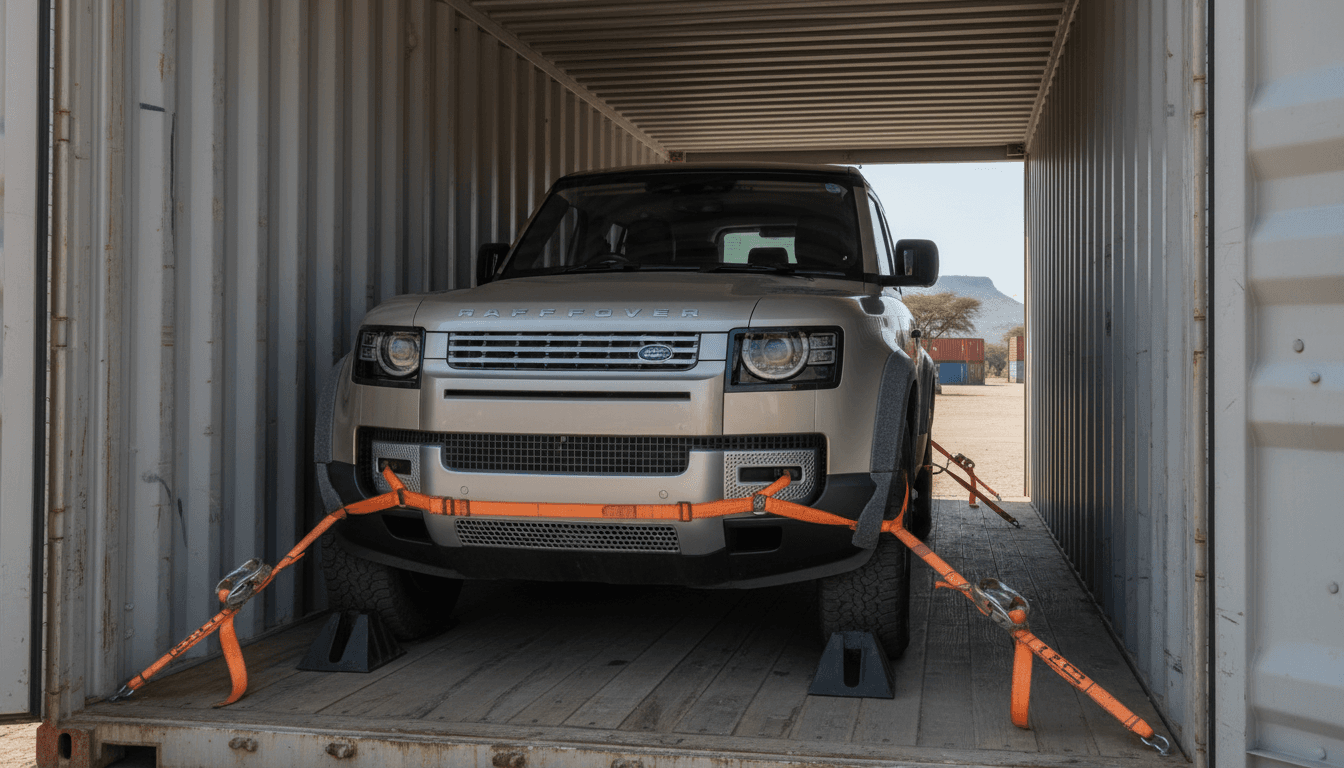
Introduction
New Zealand has the simplest border tax of any market IPAS serves: 0% customs duty on every car, pickup and commercial vehicle, followed by 15% GST. That is the entire customs cascade. A vehicle with a landed value of NZ$40,000 pays NZ$6,000 at the border and nothing else in duty.
But New Zealand puts its real price signal somewhere else entirely — in the Clean Car Standard, a CO2 charge administered by NZTA rather than Customs, calculated on grams of carbon dioxide over a weight-adjusted target rather than on the vehicle's value. For a thirsty petrol SUV or a large diesel ute, the CCS charge routinely runs into thousands of dollars and is by far the largest single regulatory line on the import. For a hybrid or an efficient small car, it is often zero.
That structure inverts the usual planning question. In most markets you ask where the car came from and what it cost. In New Zealand you ask what it weighs and what its WLTP CO2 figure is.
Two further rules shape what is worth bringing in. Right-hand drive is required for vehicles under 20 years old — a left-hand-drive car needs either conversion or a Special Interest Vehicle permit, of which only 500 are issued nationwide each year with roughly a 23% approval rate. And the 20-year mark is a genuine threshold in New Zealand law: crossing it exempts a vehicle from the frontal impact standard, from in-service emissions standards, and from the steering restriction. It does not exempt it from the Clean Car Standard, which is a common and expensive misunderstanding.
Quick Facts
| Detail | Information |
|---|---|
| Customs Authority | NZ Customs Service — customs.govt.nz |
| Transport Authority | NZTA / Waka Kotahi |
| Biosecurity | Ministry for Primary Industries (MPI) |
| Traffic Side | Left-hand traffic (drive on the left) |
| Steering Requirement | RHD required under 20 years old; LHD needs conversion or an SIV permit. LHD permitted without permit at 20+ years |
| Customs Duty | 0% on all HS 8703 and HS 8704 — cars, pickups and commercial vehicles |
| Buses (HS 8702) | 5% MFN |
| Motorhomes | 10% MFN, reducible to 0% under most FTAs |
| GST | 15% on (price paid + freight + insurance + duty) |
| Total border charges | 15% of CIF for cars and pickups |
| Clean Car Standard | NZTA charge on CO2 over a weight-adjusted target — not a customs duty |
| CCS rate — new vehicle | NZ$54 per gram over target (Pay As You Go) |
| CCS rate — used vehicle | NZ$27 per gram over target (Pay As You Go) |
| CCS — 40+ year vehicles | Not exempt |
| Vehicle Age Limit | None, but standards compliance tightens under 20 years |
| Frontal impact standard | Required at 20 years old or less; exempt above |
| Emissions standard at registration | Required at 20 years old or less; exempt above |
| Electronic Stability Control | Mandatory for MA-class passenger vehicles, except SIVs |
| Depreciation allowance | Available where the importer owned and used the vehicle overseas for 90+ days |
| Entry Certification | NZ$400–600 typical |
| Main Ports | Auckland, Tauranga, Wellington, Lyttelton, Napier |
| Currency | New Zealand Dollar (NZD) |
Types of Cars That Can Be Imported
Steering — the 20-year rule
New Zealand drives on the left and right-hand drive is the standard configuration.
- Under 20 years old: right-hand drive is required. A left-hand-drive vehicle needs either physical conversion to right-hand drive or a Category A Special Interest Vehicle permit. Those permits are capped at 500 per year nationwide with an approval rate of roughly 23%, and require the vehicle to meet three of four SIV criteria — historic value, production under 20,000 units per year, coupe or convertible body, or high performance. The permit fee itself is trivial at around NZ$23.20; the constraint is availability, not cost.
- 20 years and older: left-hand drive is permissible without any permit.
This makes New Zealand unusually accessible for older American and European classics, and unusually restrictive for modern left-hand-drive vehicles.
Age — no limit, but three thresholds at 20 years
There is no maximum age for import. What changes with age is the compliance burden, and three separate exemptions all switch on at the 20-year mark:
| At 20 years and older | Effect |
|---|---|
| Steering | LHD permitted without an SIV permit |
| Frontal impact protection standard | Exempt |
| In-service emissions standard | Exempt |
What does not change at 20 years — or at 40 — is the Clean Car Standard. A claim that vehicles over 40 years old are CCS-exempt circulates widely and is wrong. The 20-year and 40-year thresholds in New Zealand law apply to emissions and frontal-impact standards at registration, not to the CCS.
The only genuine CCS exclusion is for Special Interest Vehicles.
Electronic Stability Control
ESC is mandatory for MA-class passenger vehicles, which covers most cars, with an exception for Special Interest Vehicles. An older or specialist vehicle without ESC will not pass entry certification unless it qualifies as an SIV.
Biosecurity
New Zealand takes biosecurity extremely seriously and vehicles are a known pathway. Imported vehicles must arrive clean — free of soil, plant material and insect contamination — and seasonal measures apply for the brown marmorated stink bug on vehicles shipped from affected countries during the northern-hemisphere risk season. A vehicle that fails inspection is cleaned or fumigated at the importer's cost, with delay attached.
Cars You Can Import to New Zealand
Each card is a full landed-cost calculation: the car's price, shipping, every duty and tax, and handling, worked out on 9 November 2026 with the rules in force that day. All are right-hand drive to suit New Zealand's roads. Tap a car to see its full breakdown, or open it to change the trim, colour or port.
More cars you can import to New Zealand
New cars IPAS sources to order that meet New Zealand's import rules. Prices are ex works, before shipping and duty. Cars marked C-RHD are built left-hand drive and converted to right-hand drive before shipping; the calculator adds the conversion. Open a car to work out its full landed cost.
 RHDBackorder2026
Tata Sierra
SUV · 24 VariantsPetrol · DieselFrom $10,300Ex Works, India RHDBackorder2026
Tata Harrier EV
SUV · 16 VariantsElectricFrom $26,000Ex Works, India LHD/C-RHDBackorder2025
GMC Yukon XL
SUV · 11 VariantsPetrol · DieselFrom $88,200Ex Works, USA LHD/C-RHDBackorder2026
GMC Yukon
SUV · 5 VariantsPetrolFrom $83,500Ex Works, USA RHDBackorder2026
Citroen eC3 X
Hatchback · 3 VariantsElectricFrom $14,400Ex Works, India RHDBackorder2026
Toyota Fortuner Legender
SUV · 3 VariantsDiesel · HybridFrom $37,200Ex Works, India RHDBackorder2026
Toyota Hilux
Pickup · 3 VariantsDieselFrom $28,800Ex Works, India RHDBackorder2026
Toyota Innova Hycross
SUV · 15 VariantsPetrol · HybridFrom $17,600Ex Works, India RHDBackorder2026
Lexus ES
Sedan · 7 VariantsElectricFrom $54,600Ex Works, Japan RHDBackorder2026
Lexus RZ
SUV · 3 VariantsElectricFrom $54,600Ex Works, Japan RHDBackorder2026
Skoda Kylaq
SUV · 9 VariantsPetrolFrom $10,400Ex Works, India RHDBackorder2027
Mercedes-Benz AMG G-Class
SUV · 4 VariantsHybridFrom $224,800Ex Works, UK LHD/C-RHDBackorder2025
Chevrolet Silverado EV
Pickup · 3 VariantsElectricFrom $102,200Ex Works, USA LHD/C-RHDBackorder2027
Lincoln Navigator
SUV · 6 VariantsPetrolFrom $108,000Ex Works, USA RHDBackorder2026
Suzuki Brezza
SUV · 19 VariantsPetrolFrom $7,800Ex Works, India LHD/C-RHDBackorder2026
Cadillac Escalade
SUV · 11 VariantsPetrolFrom $109,300Ex Works, USA
Ports Supporting Vehicle Import
| Port | Location | Role |
|---|---|---|
| Ports of Auckland | Auckland | The largest vehicle-handling port, serving the main population centre |
| Port of Tauranga | Bay of Plenty | New Zealand's largest port by volume; major vehicle terminal |
| CentrePort Wellington | Wellington | Serves the lower North Island |
| Lyttelton | Christchurch | Principal South Island gateway |
| Napier | Hawke's Bay | Regional port with vehicle capability |
Auckland and Tauranga handle the large majority of vehicle imports, most of which arrive from Japan on dedicated car carriers.
Duty Structure Overview
A single-base valuation
New Zealand uses a single valuation base. This is worth stating clearly because a dual "FOB for duty, CIF for GST" description appears in older guidance and is incorrect.
- Customs Duty base = transaction value — the price paid or payable, converted to New Zealand dollars.
- GST base = price paid + international freight + insurance + import duty, as a running subtotal.
NZ Customs puts it plainly: GST is calculated on what you paid for the item, plus international freight, postage and insurance, plus any import duty.
Every car and pickup line is duty-free
| HS Code | Description | MFN Duty |
|---|---|---|
| 8703.21–8703.24 | Petrol cars, all displacement bands | 0% |
| 8703.31–8703.33 | Diesel cars, all displacement bands | 0% |
| 8703.40 / .50 | Hybrid cars | 0% |
| 8703.60 / .70 | Plug-in hybrid cars | 0% |
| 8703.80 | Battery-electric cars | 0% |
| 8703.90 | Fuel-cell and other | 0% |
| 8704.21–8704.23 | Diesel goods vehicles, all weight bands | 0% |
| 8704.31 / .32 | Petrol goods vehicles | 0% |
| 8704.41 / .51 / .60 | Hybrid and electric goods vehicles | 0% |
| 8711 | Motorcycles | 0% |
| 8702 | Buses | 5% |
| Motorhomes | HS 8704 / 8706 chassis-cab | 10% |
Note the correction here: all HS 8704 subheadings are 0%, including light commercials under 5 tonnes. Older guidance claiming 5% on light commercial vehicles does not reflect the current Working Tariff Document.
The two exceptions that carry real duty are buses at 5% and motorhomes at 10%. For those, and only for those, New Zealand's trade agreements matter — most reduce the motorhome rate to zero. For cars and pickups, FTAs are entirely cosmetic, since both the MFN and preferential rates are already zero.
The cascade, worked
| Charge | Rate | Base |
|---|---|---|
| Customs Duty | 0% | Transaction value |
| GST | 15% | Price paid + freight + insurance + duty |
| Total | 15% | of CIF |
Worked example — Japanese used SUV, transaction value NZ$25,000, freight and insurance NZ$2,000
| Charge | Calculation | Amount (NZ$) |
|---|---|---|
| Transaction value | — | 25,000 |
| Freight and insurance | — | 2,000 |
| Customs duty | 0% | 0 |
| GST (15%) | (25,000 + 2,000 + 0) × 0.15 | 4,050 |
| Total border charges | 4,050 | |
| Border landed cost | 31,050 |
That is the customs bill in full. The Clean Car Standard charge comes next, and for this vehicle it may well exceed it.
This is the border figure. The CCS charge below is often larger — get a full picture for your specific vehicle using CarImport.AI.

Calculate your exact import duty to New Zealand
Get a vehicle-specific duty and full landed-cost breakdown — HS classification, every tax, levy and FTA, plus shipping — calculated for your exact make, model and specs.
- Vehicle-specific HS code
- All duties, taxes & FTAs
- Shipping + est. landed cost
Depreciation on used vehicles
NZ Customs allows a depreciation deduction against the value used for duty and GST where the importer has personally owned and used the vehicle overseas for at least 90 days before shipment. Because duty is already zero on cars, the practical effect is to reduce the GST payable.
Customs does not publish a public depreciation table, and conflicting schedules circulate. The mechanism is real and worth pursuing — legacy reporting suggests the deduction can reach around 75% of purchase price for ownership of four years or more — but obtain the depreciated valuation worksheet from your licensed customs broker or directly from NZ Customs at entry rather than relying on a published percentage.
You will need documentary support: bill of sale, registration history in the original country, insurance records and proof of your own residence abroad for the relevant period.
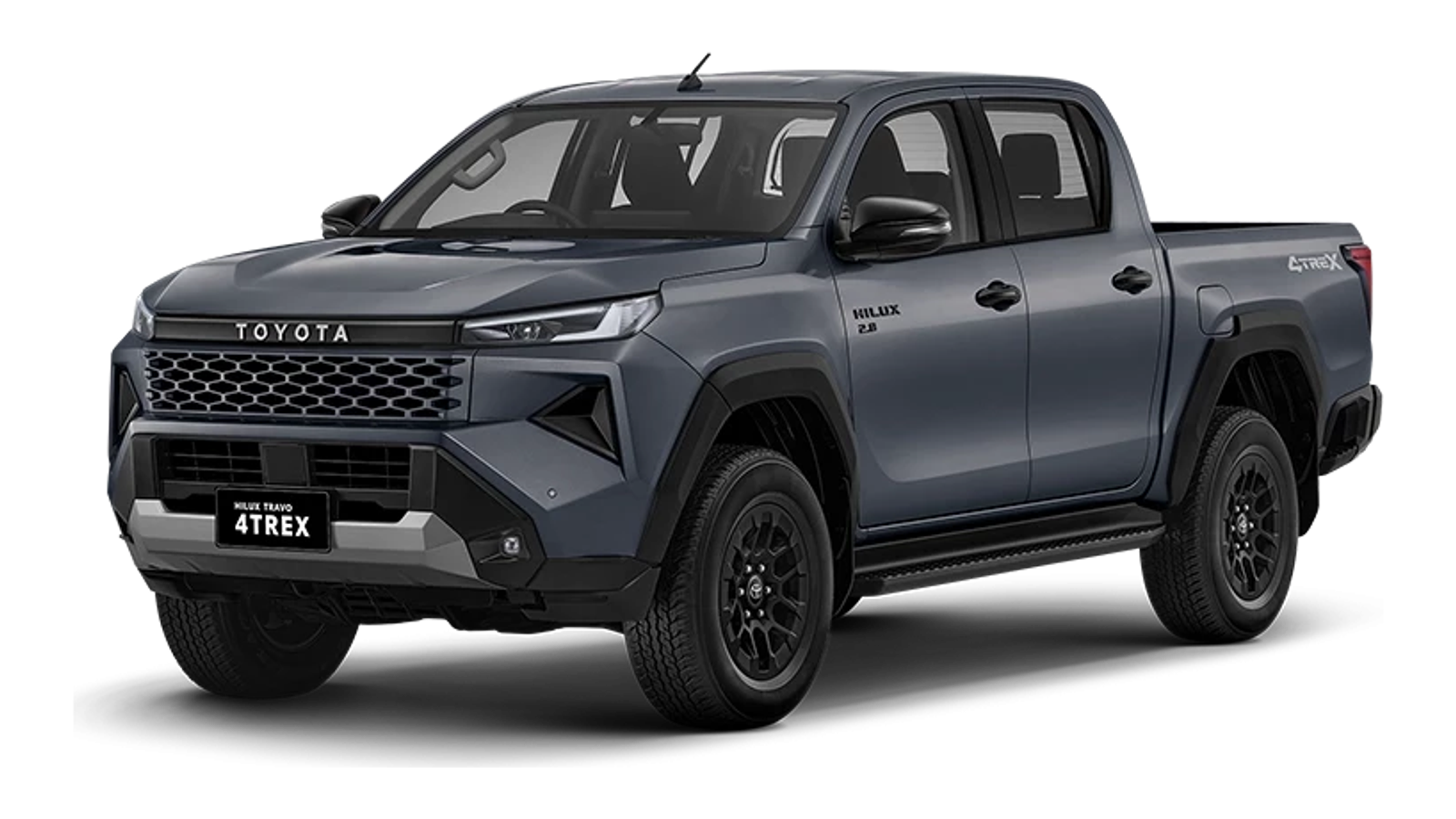
Worked Example: Importing a 2026 Toyota Hilux Travo to New Zealand
Here is the full landed cost of one car, a 2026 Toyota Hilux Travo shipped from Thailand to New Zealand, worked out on 9 November 2026 with the customs rules in force that day. It lands at 71,841 NZD (about US$39,925), and duties and taxes come to 15% of its CIF value.
| Item | Share of CIF | Amount |
|---|---|---|
| Vehicle priceIPAS price for a car sourced in Thailand | 48,764 NZDUS$27,100 | |
| Shipping and insuranceThailand to New Zealand | 9,060 NZDUS$5,035 | |
| CIF valueCost, insurance and freight: the customs value | 57,824 NZDUS$32,135 | |
| Customs duties and taxes | ||
| Basic customs duty (0%)0% of CIF | 0 NZDUS$0 | |
| GST/VAT (15%)15% of CIF | 8,673 NZDUS$4,820 | |
| Total duties and taxes15% of CIF | 8,673 NZDUS$4,820 | |
| Service and handling | ||
| Premium Import ServiceOptional end-to-end import management by IPAS | 1,961 NZDUS$1,090 | |
| Destination handlingPort terminal and customs clearance handling | 3,383 NZDUS$1,880 | |
| Total landed cost | 71,841 NZDUS$39,925 | |
The Clean Car Standard — the Largest Line for Most Imports
The CCS is administered by NZTA under the Vehicle Efficiency and Emissions Data Rule. It is not a customs duty, it is not calculated on value, and it is paid to NZTA when the vehicle is registered for road use rather than at the border.
How it is calculated
Each vehicle has a weight-adjusted CO2 target. If its actual CO2 emissions exceed that target, you pay per gram of the excess:
Weight-adjusted target = fleet target + slope × (vehicle tare weight − mean fleet weight)
| Vehicle type | Fleet target | Slope | Mean fleet weight |
|---|---|---|---|
| Type A — passenger (HS 8703) | 108 g/km | 0.0343 | 1,482 kg |
| Type B — commercial (HS 8704) | 207 g/km | 0.0526 | 2,098 kg |
The rates
| Scheme | New vehicles | Used vehicles |
|---|---|---|
| Pay As You Go (default for private importers) | NZ$54 per gram | NZ$27 per gram |
| Fleet Average (enrolled dealer fleets only) | NZ$67.50 per gram | NZ$33.75 per gram |
A private importer pays Pay As You Go by default — the Fleet Average rates apply only to bulk dealers who have opted into fleet enrolment.
Note that these are the operative rates. Figures of NZ$15 per gram for new and NZ$7.50 for used appear in older material; those were the original 2022 introductory rates and have not applied since 2023.
Worked CCS example 1 — used petrol SUV, 1,500 kg tare, 150 g/km WLTP
- Weight-adjusted target = 108 + 0.0343 × (1,500 − 1,482) = 108.6 g/km
- Excess = 150 − 108.6 = 41.4 g/km
- CCS charge = 41.4 × NZ$27 = NZ$1,118
Worked CCS example 2 — the same vehicle imported new
- CCS charge = 41.4 × NZ$54 = NZ$2,236
Worked CCS example 3 — used hybrid, 1,500 kg tare, 90 g/km WLTP
- Weight-adjusted target = 108.6 g/km; the vehicle is below target
- CCS charge = NZ$0
Worked CCS example 4 — used diesel ute, 2,000 kg tare, 230 g/km WLTP
- Weight-adjusted target = 207 + 0.0526 × (2,000 − 2,098) = 201.9 g/km
- Excess = 230 − 201.9 = 28.1 g/km
- CCS charge = 28.1 × NZ$27 = NZ$759
Notice how the commercial target is far more generous — 207 g/km against 108 for a passenger vehicle — which is why a heavy diesel ute can face a smaller CCS charge than a mid-size petrol SUV.
The CO2 figure must be 3pWLTP
The CCS uses three-position WLTP CO2 data. It does not use NEDC, JC08 or the Japanese 10-15 mode. For used Japanese imports the CO2 figure is drawn from the NZTA Fuelsaver and MVR fleet databases.
Tare weight adjustments by origin
Because tare weight is reported differently in different markets, the rule applies standard adjustments:
| Origin | Adjustment |
|---|---|
| UK or EU | MIRO − 75 kg |
| Australia | tare + 30 kg |
| USA | tare − 68 kg |
| Japan | tare − 25 kg |
Since a heavier vehicle gets a more generous target, these adjustments genuinely move the charge.
Exemptions are narrow
Special Interest Vehicles are excluded from the CCS by NZTA. Vintage and classic vehicles are not — a 40-year exemption does not exist. The Returning Resident and Immigrants' Vehicle concessions, which do relieve duty and GST, do not exempt a vehicle from the CCS either.
Entry Fees and Certification
The import entry levy changed on 1 April 2026
The Import Entry Transaction Fee was revoked on 1 April 2026 and replaced by a new levy regime covering Customs administrative cost recovery plus the MPI Biosecurity System Entry Levy. Older guidance citing an IETF of NZ$53.44 plus BSEL of NZ$46.40 plus a CCS administration fee of NZ$22.46 describes the pre-April-2026 position.
The exact amounts under the replacement regime are not reliably published, so confirm them with NZ Customs or your broker at entry rather than budgeting a fixed figure.
Other entry-stage costs
| Item | Typical cost |
|---|---|
| NZTA Entry Certification (required for every first-time NZ registration) | NZ$400–600 |
| Warrant of Fitness | NZ$60–90 |
| Registration and plates | NZ$200–400 |
| SIV permit (left-hand-drive vehicles only) | around NZ$23.20 |
Documents Required for Import
- Commercial invoice or purchase agreement showing the price paid
- Bill of Lading (original or telex release)
- Packing list with make, model, year, VIN, engine capacity and tare weight
- WLTP CO2 data — required for the Clean Car Standard assessment
- Certificate of Title or export certificate from the origin country — for Japanese imports, the deregistration certificate
- Odometer verification documentation
- Evidence of ownership and overseas use for at least 90 days, if claiming depreciation
- Biosecurity declaration; BMSB treatment certificate where seasonal requirements apply
- SIV permit, for a left-hand-drive vehicle under 20 years old
- Proof of overseas residence, if claiming the Returning Resident concession
Customs Clearance Timeline
| Stage | Typical duration | Notes |
|---|---|---|
| Vessel arrival to discharge | 1–3 days | Auckland or Tauranga |
| MPI biosecurity inspection | 1–5 days | Longer if cleaning or fumigation is required |
| Customs entry and GST assessment | 1–3 working days | Single tax line — straightforward |
| NZTA Entry Certification | 1–3 weeks | Compliance inspection and any remedial work |
| CCS assessment and payment | At registration | Calculated by NZTA from CO2 and tare weight |
| Registration, WoF and plates | 2–5 days | |
| Typical total | 2–6 weeks |
Customs clearance itself is quick. The variables are biosecurity — a dirty vehicle can add a week — and entry certification, where any non-compliance must be remedied before registration.
Homologation and Vehicle Approval
Entry Certification is required for every imported vehicle being registered in New Zealand for the first time. A certifier inspects the vehicle against New Zealand requirements covering structure, brakes, lighting, glazing, restraints and, for vehicles under 20 years old, frontal impact protection and emissions standards. Electronic Stability Control is mandatory for MA-class passenger vehicles other than SIVs.
Vehicles imported from Japan — the dominant source — generally certify smoothly, since the Japanese and New Zealand markets are both right-hand drive and Japanese vehicles are well represented in the certification system. Repaired or previously damaged vehicles face additional scrutiny and may require structural certification.
The Returning Resident Concession
Both the Returning Resident and the Immigrants' Vehicle concessions provide relief from customs duty and GST on a personal vehicle. Because duty is already zero on cars, the meaningful benefit is the GST relief — which on a NZ$40,000 vehicle is around NZ$6,000.
Eligibility broadly requires:
- The importer has been overseas for 21 months or more before returning
- The vehicle has been personally owned and used by the importer for the qualifying period
- A two-year non-sale undertaking from arrival
- The vehicle arrives in New Zealand within six months of the importer's return
The concession applies to cars, goods vehicles and motorhomes. Importantly, it does not exempt the vehicle from the Clean Car Standard, from entry certification or from any other NZTA registration requirement — so a thirsty vehicle brought in under this concession still faces its full CCS charge.
Confirm the precise ownership-period requirement with NZ Customs at entry, as it is not fully published.
Recent Regulatory Changes (2023–2026)
- 2023 — CCS rates increased to the operative NZ$54 per gram for new and NZ$27 for used under Pay As You Go, replacing the introductory 2022 rates of NZ$15 and NZ$7.50.
- 1 January 2026 — CCS charge rates confirmed unchanged from the 2023 levels.
- 1 April 2026 — Import Entry Transaction Fee revoked and replaced by a new levy regime combining Customs cost recovery with the MPI Biosecurity System Entry Levy.
- 1 April 2026 — current Working Tariff Document in force, confirming 0% MFN across all HS 8703 and HS 8704 lines including light commercial vehicles under 5 tonnes.
Frequently Asked Questions
How much does it cost to import a car to New Zealand?
At the border, 15% GST and no customs duty — every car, pickup and commercial vehicle line is duty-free. On a vehicle with a landed value of NZ$27,000, that is NZ$4,050. The larger question is the Clean Car Standard charge, which is calculated on CO2 rather than value and can range from zero for an efficient hybrid to several thousand dollars for a thirsty petrol SUV. Add entry certification at NZ$400–600, registration, and a Warrant of Fitness.
Is there really no import duty on cars in New Zealand?
Correct, for cars and pickups. All HS 8703 and HS 8704 lines carry 0% MFN under the current Working Tariff Document — including light commercial vehicles under 5 tonnes, which older guidance sometimes wrongly shows at 5%. The exceptions are buses at 5% and motorhomes at 10%. For cars and pickups this also makes New Zealand's trade agreements cosmetic, since both MFN and preferential rates are already zero.
How is the Clean Car Standard charge calculated?
By grams of CO2 over a weight-adjusted target, not by vehicle value. The target is the fleet target plus a slope multiplied by the difference between your vehicle's tare weight and the mean fleet weight — 108 g/km base for passenger vehicles and 207 g/km for commercials. You then pay NZ$27 per excess gram on a used import or NZ$54 on a new one under the Pay As You Go scheme that applies to private importers. A used SUV emitting 150 g/km at 1,500 kg pays about NZ$1,118; an efficient hybrid below the target pays nothing.
Are classic cars exempt from the Clean Car Standard?
No. This is a common and costly misunderstanding. The 20-year and 40-year thresholds in New Zealand law relate to frontal impact protection and in-service emissions standards at registration, not to the CCS. A 40-year-old car is still assessed for CCS. The only genuine exclusion is for Special Interest Vehicles, and those permits are capped at 500 a year nationwide.
Can I import a left-hand-drive car to New Zealand?
It depends on age. A vehicle 20 years or older can be imported and registered in left-hand drive without any permit. A vehicle under 20 years old must either be converted to right-hand drive or obtain a Category A Special Interest Vehicle permit — and those are capped at 500 nationwide per year with roughly a 23% approval rate, requiring the vehicle to meet three of four criteria around historic value, low production volume, body style and performance. For a modern LHD car, treat the permit route as unlikely.
What is the age limit for importing a car to New Zealand?
There is no maximum age. What changes with age is compliance: at 20 years and older a vehicle becomes exempt from the frontal impact protection standard, exempt from the in-service emissions standard, and free of the right-hand-drive requirement. Under 20 years, all three apply. The Clean Car Standard applies regardless of age.
Can I reduce the GST on a used car I already own?
Possibly. NZ Customs allows a depreciation deduction against the valuation where you have personally owned and used the vehicle overseas for at least 90 days before shipment, which reduces the GST payable. Customs does not publish a depreciation table, so obtain the depreciated valuation worksheet from your broker or from Customs directly rather than relying on a figure found online. You will need a bill of sale, registration history, insurance records and proof of your residence abroad.
Does the returning resident concession cover everything?
It covers customs duty and GST — which, since duty is already zero, means it is effectively a GST exemption worth about 15% of the vehicle's value. Eligibility broadly requires 21 months or more overseas, personal ownership and use of the vehicle, arrival within six months of your return, and a two-year undertaking not to sell. It does not exempt the vehicle from the Clean Car Standard, entry certification or any other NZTA requirement.
Why does my vehicle need to be clean?
Biosecurity. New Zealand treats imported vehicles as a significant pathway for soil-borne organisms and insects, and MPI inspects for soil, plant material and contamination. Seasonal brown marmorated stink bug measures apply to vehicles shipped from affected countries during the northern-hemisphere risk season. A vehicle that fails inspection is cleaned or fumigated at your cost, with delay attached — so having the car steam-cleaned before shipping is worthwhile.
Ready to Import?
New Zealand asks a different question from most markets. Duty is zero and GST is a flat 15%, so origin, trade agreements and tariff classification barely matter for a car or a ute. What matters is the vehicle itself — its CO2 figure and its tare weight, which together set the Clean Car Standard charge, and its age, which sets the compliance regime.
Two practical rules follow. Check the WLTP CO2 number against the weight-adjusted target before you buy: the gap between a hybrid at zero CCS and a petrol SUV at NZ$2,000-plus is real money, and it is entirely a function of the model you choose. And use the 20-year threshold deliberately — it is the line at which left-hand drive becomes permissible and two compliance standards fall away.
Then get the car properly cleaned before it ships. Biosecurity delays are avoidable and annoyingly common.
IPAS provides two tools to plan and execute your import:
CarImport.AI — Source a vehicle through IPAS and calculate the full landed cost to New Zealand, including GST and shipping, with the Clean Car Standard charge shown separately so you can see how powertrain choice moves the total.
IPAS EXPRESS — Already have a vehicle? Get instant shipping quotes to Auckland, Tauranga, Wellington or Lyttelton — sea freight, RoRo or air — with transparent, itemised pricing and a stage-by-stage timeline.
Ready to Import Your Vehicle?
Two tools, two use cases. Pick the one that fits your needs.
Source a vehicle through IPAS and calculate the full landed cost — customs duties, shipping, and compliance — to destinations across the world.
Calculate Landed CostIPAS Express
Already have a vehicle? Get instant shipping quotes — sea freight, air freight, or RoRo — for one car or multiple vehicles worldwide.
Get Shipping Quote