
Introduction
Importing a car to Saudi Arabia costs 5% customs duty on the CIF value plus 15% VAT on CIF and duty, which works out to 20.75% of CIF for any passenger car or pickup. The vehicle must be left-hand drive, no more than five years old and SABER-certified before ZATCA releases it.
Saudi Arabia is the largest automotive market in the Middle East, with over 600,000 new vehicles sold annually. The Kingdom's appetite for vehicles ranges from affordable sedans to ultra-luxury SUVs and full-size American trucks — making it one of the most diverse and high-value import markets in the world.
The import regime is administered by the Zakat, Tax and Customs Authority (ZATCA), which handles customs valuation, duty assessment, and cargo release through the FASAH national single window. The Saudi Standards, Metrology and Quality Organization (SASO) enforces technical conformity through the mandatory SABER platform. Post-import registration is managed by Muroor (General Directorate of Traffic) via the Absher digital portal.
Saudi Arabia applies one of the simplest duty structures globally — a 5% customs duty under the GCC Common Customs Tariff, plus 15% VAT. There is no excise tax, no luxury surcharge, and no engine-size or price bracket system for cars. The one exception is goods vehicles other than pickups: some light trucks, tankers, dumpers and cab-chassis pay 10–15% duty. This guide covers every step from eligibility and age limits through customs clearance, SASO certification, and Muroor registration.
Quick Facts
| Detail | Information |
|---|---|
| Customs Authority | Zakat, Tax and Customs Authority (ZATCA) |
| Standards Body | Saudi Standards, Metrology and Quality Organization (SASO) |
| Registration Body | Muroor (General Directorate of Traffic) via Absher |
| Steering | Left-Hand Drive (LHD) only — RHD prohibited |
| Customs Duty | 5% of CIF on all passenger cars and pickups (GCC Common Customs Tariff); 10–15% on some light trucks, tankers, dumpers and cab-chassis |
| VAT | 15% on (CIF + Customs Duty) |
| Excise/Luxury Tax | None |
| Age Limit | 5 years (for 2026 imports: model year 2021 or newer) |
| Used Vehicle Import | Allowed within 5-year limit (not banned) |
| Personal Import Limits | Saudi and GCC citizens: 2 vehicles per 12 months · Residents: 1 private car every 3 years, no pickups or other transport vehicles |
| Currency | Saudi riyal, pegged at SAR 3.75 = USD 1 |
| Main Ports | Jeddah Islamic Port (Red Sea), King Abdul Aziz Port Dammam (Gulf) |
| Customs Clearance | 5-10 business days |
| Total Tax Burden | 20.75% of CIF for cars and pickups |
Types of Cars That Can Be Imported
Saudi Arabia permits the import of both new and used vehicles, subject to age limits and energy efficiency requirements. Unlike many countries, there is no blanket ban on used cars — just a strict model year cutoff.
New Vehicles
Brand-new CBU vehicles can be imported by individuals and companies subject to standard customs, VAT, and SASO conformity requirements, and to the personal import limits below (residents cannot import pickups or other transport vehicles). Vehicles must meet SASO energy efficiency standards; a new vehicle that does not is exempt from the vehicle import fee only if it has covered no more than 1,000 km and is a current or previous calendar-year model. A vehicle that has covered more than 1,000 km, or whose data is not registered with SASO, must be inspected at a SASO-accredited centre.
Since 15 December 2024, ZATCA's "Vehicle Import for Individuals" e-service lets citizens and residents import a vehicle directly through a customs port without a customs broker.
Used Vehicles
Used vehicles are permitted provided they fall within the 5-year age limit. For imports in 2026, the vehicle must be model year 2021 or newer, calculated in descending order excluding the current year. Age is taken from the manufacture date on the certificate of origin, not the first-registration date. Heavy trucks over 3.5 tonnes have the same 5-year limit, counted from 1 January of the year of manufacture. Vehicles must also pass SASO energy efficiency certification.
Non-Compliant Vehicles
Saudi citizens and premium residency holders may import used light vehicles that do not meet energy efficiency standards under Ministerial Resolution No. 335, but must pay a "vehicle import fee" of 20-50% of vehicle value (minimum SAR 20,000). This acts as a de facto surcharge for importing less efficient models. Compliant vehicles from major manufacturers do not pay it.
Antique and Classic Vehicles
Vehicles 30 years or older may be imported, but the customs card is stamped restricting public road use. These are treated as collector or display vehicles only.
Prohibited Categories
The following vehicles cannot be imported:
- Salvage vehicles (flooded, fire, overturn, accident or structural damage)
- Former taxis or police cars
- School buses or vehicles carrying school-transport logos
- Armoured vehicles (except diplomatic, which must be re-exported or destroyed on disposal)
- Stolen vehicles or vehicles with tampered chassis numbers
- Right-hand drive vehicles, including vehicles with steering wheels converted from right to left
- Pickups and other transport vehicles, when the importer is a resident (non-Saudi, non-GCC national)
ZATCA reinforced this list in early 2026, explicitly naming flood-damaged vehicles, former taxis and law-enforcement vehicles, structural accident damage and RHD.
Cars You Can Import to Saudi Arabia
Each card is a full landed-cost calculation: the car's price, shipping, every duty and tax, and handling, worked out on 9 November 2026 with the rules in force that day. All are left-hand drive to suit Saudi Arabia's roads. Tap a car to see its full breakdown, or open it to change the trim, colour or port.
More cars you can import to Saudi Arabia
New cars IPAS sources to order that meet Saudi Arabia's import rules. Prices are ex works, before shipping and duty. Open a car to work out its full landed cost.
 LHDBackorder2027
GMC Terrain
SUV · 4 VariantsPetrolFrom $36,500Ex Works, USA LHD/C-RHDBackorder2026
GMC Hummer EV Pickup
Pickup · 3 VariantsElectricFrom $115,900Ex Works, USA LHD/C-RHDBackorder2026
GMC Sierra 3500HD
Pickup · 5 VariantsPetrol · DieselFrom $85,900Ex Works, USA LHDBackorder2026
Xiaomi SU7
Sedan · 3 VariantsElectricFrom $31,400Ex Works, China🇨🇳 LHD/C-RHDBackorder2025
Ford F-150
Pickup · 19 VariantsPetrol · HybridFrom $46,600Ex Works, USA LHDBackorder2025
Ford Ranger
Pickup · 3 VariantsPetrolFrom $44,900Ex Works, USA LHDBackorder2026
Chevrolet Corvette E-Ray Convertible
Convertible · 3 VariantsHybridFrom $138,000Ex Works, USA LHD/C-RHDBackorder2025
Chevrolet Silverado 3500 HD
Pickup · 10 VariantsPetrol · DieselFrom $46,400Ex Works, USA LHDBackorder2025
Chevrolet Corvette Stingray Convertible
Convertible · 3 VariantsPetrolFrom $94,800Ex Works, USA LHD/C-RHDBackorder2025
Dodge Charger Daytona
Coupe · 2 VariantsElectricFrom $71,500Ex Works, USA LHDBackorder2026
Cadillac LYRIQ
SUV · 14 VariantsElectricFrom $71,000Ex Works, USA LHDBackorder2026
Toyota bZ
SUV · 5 VariantsElectricFrom $41,900Ex Works, USA LHDBackorder2026
Toyota Hilux Single Cab
Pickup · 2 VariantsPetrolFrom $34,000Ex Works, UAE LHDBackorder2026
Zeekr 9X
SUV · 4 VariantsPlug-in HybridFrom $74,900Ex Works, China🇨🇳 LHDBackorder2026
Lexus NX
SUV · 16 VariantsPetrol · Hybrid · Plug-in HybridFrom $48,000Ex Works, Canada LHDBackorder2026
Lexus LC 500
Coupe · 3 VariantsPetrolFrom $102,200Ex Works, Canada
Seaports and Airports Supporting Vehicle Import
| Port | Code | Type | Notes |
|---|---|---|---|
| Jeddah Islamic Port | SAJED | Sea | Primary western gateway — handles majority of RoRo vehicle imports |
| King Abdul Aziz Port | SADMM | Sea | Major eastern gateway for Gulf-origin and Asian imports |
| King Fahd Industrial Port, Jubail | SAJUB | Sea | Commercial and industrial cargo including trucks |
| Yanbu Commercial Port | SAYNB | Sea | Secondary Red Sea port |
| Jeddah Airport | JED | Air | Air freight capability for high-value vehicles |
| Riyadh Airport | RUH | Air | Air freight for urgent or luxury shipments |
Vehicles may also be imported via land border crossings from GCC countries (UAE, Bahrain, Kuwait, Oman). All declarations pass through FASAH, the national single window, and ZATCA's e-services.
Jeddah Islamic Port is the primary gateway for vehicles shipped from Europe, North America, and India. King Abdul Aziz Port in Dammam serves as the main entry point for vehicles from Japan, South Korea, and other Asian origins.
Restrictions on Vehicle Import for Individuals
Saudi Arabia's personal import rules vary by residency status:
| Category | Vehicle Limit | Resale Restriction | Notes |
|---|---|---|---|
| Saudi Citizens | 2 vehicles per 12 months | None | Must meet age and energy efficiency rules |
| GCC Citizens | 2 vehicles per 12 months | Not specified | Per ZATCA rules |
| Expat Residents (Iqama holders) | 1 private car every 3 years | Cannot sell for 3 years (lifted on final exit) | Transport vehicles and buses prohibited — this includes every pickup |
| Premium Residency Holders | Same as Saudi citizens | Non-compliant fee may apply | Under Ministerial Resolution 335 |
| Diplomatic Staff | Per diplomatic entitlements | Must re-export or scrap on disposal | MoFA exemption form required |
Pickups count as transport vehicles. Saudi Arabia follows the GCC body-style test: any vehicle with an open cargo bed — single-cab, extended-cab or double-cab, from a Toyota Hilux to a Ford F-150 — is classified under HS 8704 as a goods vehicle. A resident expat cannot import one. A Saudi or GCC citizen can, at the same 5% duty as a car. SUVs built on pickup chassis with an enclosed body (Toyota Fortuner, Ford Everest) are passenger cars.
Key Rules for All Importers:
- Vehicle must be within the 5-year age limit (model year 2021+ for 2026)
- Vehicle must be left-hand drive (LHD) — RHD is prohibited
- SASO energy efficiency certification is mandatory
- Vehicles over 1,000 km, or not registered with SASO, need a SASO-accredited inspection
- Since December 2024, individuals can clear vehicles directly without a customs broker
Duty Structure Overview
Saudi Arabia applies one of the simplest and most predictable duty structures in the world. Only two taxes apply at the border, and for passenger cars the rates are uniform regardless of engine size, fuel type, or vehicle value.
Layer 1: Customs Duty — 5% of CIF
The GCC Common Customs Tariff sets a 5% rate on every passenger vehicle line (HS 8703). This applies equally to petrol, diesel, hybrid, plug-in hybrid and electric vehicles. Pickups (single and double cab) are also 5%. Other goods vehicles are rated by body type: a diesel light transport truck, tanker or dumper up to 5 tonnes pays 12%, a diesel cab-chassis 15%, and the petrol equivalents 10%. Hybrid and electric goods vehicles pay 5% at every weight.
Preferential rates. Vehicles manufactured in a GCC country with a GCC certificate of origin and at least 40% local value added enter duty-free. EFTA-made (Switzerland, Norway, Iceland, Liechtenstein) and Singapore-made vehicles also qualify for 0%. Everything else pays 5% — including vehicles from the EU, Japan, Korea, China, the US, India and the UK. The GCC-UK free trade agreement was concluded on 20 May 2026 but is not yet in force. A non-GCC car re-exported from a UAE free zone is not GCC-originating and still pays 5%.
Layer 2: VAT — 15% on (CIF + Customs Duty)
Saudi Arabia's standard VAT rate is 15% (raised from 5% in July 2020). VAT is calculated on CIF plus customs duty. There is no reduced VAT rate for electric or hybrid vehicles; only diplomatic imports under Ministry of Foreign Affairs reciprocity are exempt.
No Additional Taxes
Saudi Arabia does not impose excise tax, luxury surcharges, carbon levies or selective taxes on vehicles, and there is no separate import service or statistics fee in the duty calculation. The total tax burden is 20.75% of CIF for every passenger car and pickup — from a compact sedan to a full-size luxury SUV. There are no anti-dumping or countervailing duties on vehicles, so Chinese EVs also pay 5% + 15% VAT.
| Vehicle type | Customs duty | Effective tax over CIF |
|---|---|---|
| Passenger car (petrol, diesel, hybrid, PHEV, EV) | 5% | 20.75% |
| Pickup, single or double cab | 5% | 20.75% |
| Hybrid or electric goods vehicle (any weight) | 5% | 20.75% |
| Petrol light truck, tanker, dumper or cab-chassis (up to 5 t) | 10% | 26.50% |
| Diesel light truck, tanker or dumper (up to 5 t) | 12% | 28.80% |
| Diesel cab-chassis (up to 5 t) | 15% | 32.25% |
Get exact duty rates for your specific vehicle using CarImport.AI

Calculate your exact import duty to Saudi Arabia
Get a vehicle-specific duty and full landed-cost breakdown — HS classification, every tax, levy and FTA, plus shipping — calculated for your exact make, model and specs.
- Vehicle-specific HS code
- All duties, taxes & FTAs
- Shipping + est. landed cost
Worked Example (SAR 100,000 CIF Vehicle)
| Component | Calculation | Amount (SAR) |
|---|---|---|
| CIF Value | Base | 100,000 |
| Customs Duty (5%) | 100,000 x 5% | 5,000 |
| VAT (15%) | (100,000 + 5,000) x 15% | 15,750 |
| Total Taxes | 5,000 + 15,750 | 20,750 |
| Total Landed Cost | 120,750 | |
| Total Tax Burden | 20.75% |
At the riyal's USD peg, that is a USD 26,667 CIF car paying about USD 5,533 in duty and VAT.
Worked Example: Importing a 2026 Cadillac Escalade to Saudi Arabia
Here is the full landed cost of one car, a 2026 Cadillac Escalade shipped from the USA to Saudi Arabia, worked out on 9 November 2026 with the customs rules in force that day. It lands at 552,589 SAR (about US$147,357), and duties and taxes come to 20.7% of its CIF value.
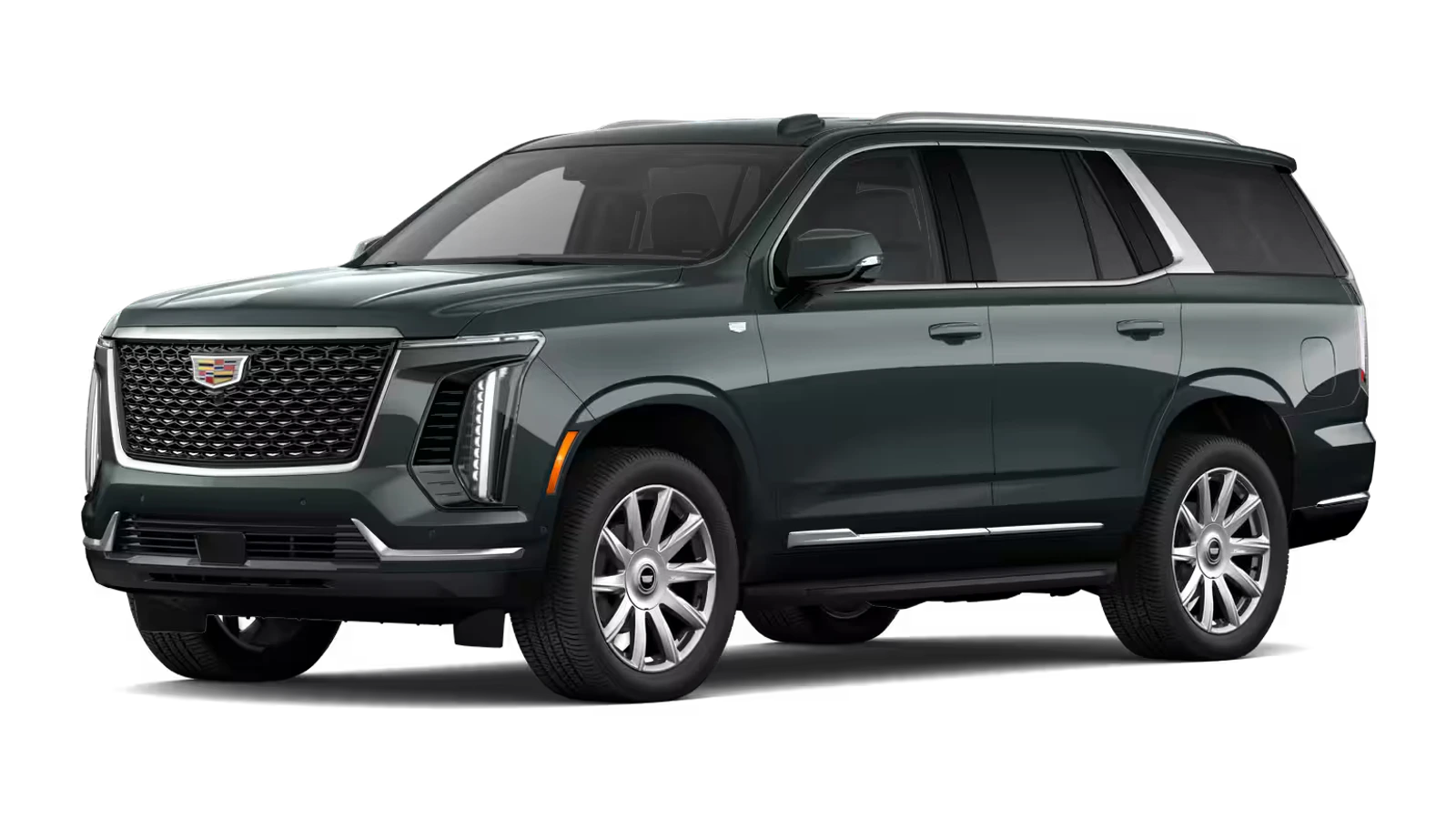
| Item | Share of CIF | Amount |
|---|---|---|
| Vehicle priceIPAS price for a car sourced in the USA | 409,875 SARUS$109,300 | |
| Shipping and insuranceUSA to Saudi Arabia | 29,276 SARUS$7,807 | |
| CIF valueCost, insurance and freight: the customs value | 439,151 SARUS$117,107 | |
| Customs duties and taxes | ||
| Basic customs duty (5%)5% of CIF | 21,956 SARUS$5,855 | |
| GST/VAT (15%)15% of CIF plus the duties above15.7% of CIF | 69,165 SARUS$18,444 | |
| Total duties and taxes20.7% of CIF | 91,121 SARUS$24,299 | |
| Service and handling | ||
| Premium Import ServiceOptional end-to-end import management by IPAS | 15,641 SARUS$4,171 | |
| Destination handlingPort terminal and customs clearance handling | 6,675 SARUS$1,780 | |
| Total landed cost | 552,589 SARUS$147,357 | |
Documents Required for Import
Since December 2024, citizens and residents can import a vehicle directly through ZATCA's "Vehicle Import for Individuals" e-service without a customs broker.
Customs Clearance Documents
- Proof of Ownership — original vehicle title or registration certificate, certified by competent authority. For US/Canada: certified Certificate of Origin. For Europe: Certificat de Conformite (CoC). For GCC: export certificate
- Commercial Invoice — must include vehicle details, chassis number, price, and seller information
- Bill of Lading (B/L) or Air Waybill
- Certificate of Origin (CoO) — a GCC certificate of origin is needed to claim the 0% GCC rate
- Saudi Customs Declaration (Bayan) — filed electronically via FASAH / ZATCA
- SASO Conformity Certificate via SABER — both PCoC (Product Certificate of Conformity) and SCoC (Shipment Certificate of Conformity) are mandatory
- National ID (Saudi citizens) or Iqama (Residency Permit for expats)
- Document explaining payment method (proof of purchase funds)
- Vehicle history reports — if you contest a ZATCA salvage finding, you must submit three reports from approved sources (AutoCheck, CARFAX and the motor vehicle department)
Diplomatic Imports
- Ministry of Foreign Affairs exemption form (grants duty and VAT exemption based on reciprocity principle)
Customs Clearance Timeline
| Stage | Typical Duration | Notes |
|---|---|---|
| Pre-arrival (SABER SCoC issuance, documentation) | 3-10 days | Complete before vessel docks |
| Arrival and cargo declaration | 1-2 days | Electronic customs declaration via FASAH |
| Duty and VAT assessment | 1-2 business days | ZATCA issues a draft Bayan for the importer to check HS code, value and duty |
| Payment | Same day | Final Bayan paid through FASAH-linked payment channels; deferred payment is available to qualifying importers |
| Physical inspection (if selected) | 1-2 business days | Chassis number verification, document matching |
| Release and temporary plates | 1 day | Gate pass issued after payment |
| Technical inspection (Fahas) | Within 15 days of arrival | Mandatory safety inspection |
| Total (clean documents) | 5-10 business days | Complex cases may take 3-4 weeks |
The most common delay factor is incomplete SABER conformity documentation. Ensuring both PCoC and SCoC are obtained before the vessel docks can significantly speed up the process.
Homologation and Vehicle Approval
SASO Standards and SABER Platform
All imported vehicles must complete conformity assessment through SASO's mandatory SABER electronic platform. Customs will not release any vehicle without valid conformity certificates. Certification typically costs SAR 1,500-3,000 and takes 3-7 business days when the model already has a PCoC.
The SABER process involves seven steps:
- Register on saber.sa
- Select the applicable SASO Technical Regulation by HS code
- Engage an accredited Conformity Assessment Body (CAB)
- Submit lab test reports, technical specifications, user manuals, and labelling
- Obtain PCoC (Product Certificate of Conformity) — valid for 1 year
- Create a shipment entry on SABER and link to the PCoC
- The CAB issues the SCoC (Shipment Certificate of Conformity)
GSO Technical Regulations
Vehicles must comply with Gulf Standards Organization (GSO) standards. European (UN ECE) type approval is accepted through GSO equivalence. US FMVSS/EPA-certified vehicles from the US and Canada are accepted, but still need a Saudi PCoC — a US certificate alone is not a substitute. The current emissions minimum is Euro 4, with a Euro 6-equivalent standard planned for 2027.
Energy Efficiency Certification
SASO requires all imported vehicles to meet the fuel-economy (CAFE) standard SASO 2864:2019. Enforcement is active: 21 automakers were temporarily suspended in late 2025 for missing CAFE compliance documents. Vehicles that fail the standard can still be imported by Saudi citizens and premium residency holders, but only with payment of the vehicle import fee (20-50% of vehicle value, minimum SAR 20,000) under Ministerial Resolution 335.
Registration Procedures and Costs
After customs clearance, vehicle registration is managed through Muroor (General Directorate of Traffic) via the Absher digital platform.
Step 1: Technical Inspection (Fahas)
Must be completed within 15 days of the vehicle's arrival in Saudi Arabia. The vehicle is inspected for safety compliance including braking, lighting, emissions, tyres, and structural integrity.
Step 2: Obtain Insurance
Third-party liability insurance is mandatory before registration. Comprehensive insurance is recommended but not required by law.
Step 3: Submit Registration Documents to Muroor (via Absher)
- Customs clearance certificate from ZATCA
- Fahas (technical inspection certificate)
- National ID or Iqama
- Proof of valid insurance
- Completed traffic registration form
Step 4: Pay Registration Fee and Receive Istimara
| Fee | Amount | Notes |
|---|---|---|
| Annual registration — private cars | SAR 100/year | Paid via SADAD |
| Annual registration — private trucks | SAR 200/year | Paid via SADAD |
| Export plates (if needed) | SAR 100 | Additional charge |
| Technical inspection (Fahas) | Typically SAR 150-250 | Paid to the inspection centre |
The Istimara (vehicle registration card) is issued electronically as a downloadable PDF through Absher, with physical card delivery available via Saudi Post (SPL). Licence plates are issued through the same portal.
Frequently Asked Questions
How much does it cost to import a car to Saudi Arabia?
Taxes add 20.75% on top of the CIF value for any passenger car or pickup: 5% customs duty on CIF, then 15% VAT on CIF plus duty. There is no excise tax, luxury surcharge or separate service fee. A SAR 100,000 CIF car pays SAR 20,750. Use CarImport.AI for your exact calculation.
Can I import a used car to Saudi Arabia?
Yes. Unlike many countries, Saudi Arabia does not ban used vehicle imports. However, the vehicle must be no more than 5 years old. For 2026, this means model year 2021 or newer.
Can I import a right-hand drive vehicle?
No. Saudi Arabia strictly prohibits the import of right-hand drive vehicles, including vehicles that have been converted from RHD to LHD. Only factory-built left-hand drive vehicles are accepted. The only exception is a 30-year-plus classic imported for display, which cannot be driven on public roads.
What is the SABER conformity requirement?
All imported vehicles must have both a PCoC (Product Certificate of Conformity) and SCoC (Shipment Certificate of Conformity) obtained through the SABER platform (saber.sa). Customs will not release vehicles without these certificates.
How many cars can I import as an expat?
Expat residents (Iqama holders) may import 1 private car every 3 years. The vehicle cannot be resold for 3 years from the import date, unless you leave on final exit. Residents cannot import transport vehicles, which includes every pickup. Saudi and GCC citizens may import 2 vehicles in any 12 months.
Can I import a pickup truck to Saudi Arabia?
Yes, if you are a Saudi or GCC citizen. All pickups are classified as goods vehicles (HS 8704) and pay the same 5% duty and 15% VAT as a car. Resident expats are prohibited from importing them.
Are electric vehicles cheaper to import?
No. Electric and hybrid cars pay the same 5% duty and 15% VAT as petrol cars, with no VAT relief. The only electrification benefit is on goods vehicles: hybrid and electric trucks pay 5% duty at every weight, where diesel light trucks pay 12% and cab-chassis 15%.
How long does customs clearance take?
With complete documentation and pre-approved SABER certificates, customs clearance typically takes 5-10 business days. The most common delay is incomplete SABER conformity documentation — complete this before the vessel docks.
Is there a luxury car tax in Saudi Arabia?
No. Saudi Arabia does not impose any excise tax, luxury surcharge, or selective tax on vehicles. The same 5% duty + 15% VAT applies whether you are importing a compact sedan or a luxury supercar.
Ready to Import Your Vehicle?
Saudi Arabia offers one of the most straightforward and cost-effective import regimes in the world — 20.75% total tax on cars and pickups, with no excise tax, no luxury surcharges, and no complex bracket systems. Whether you are importing a daily driver or a high-end luxury vehicle, the process is transparent and increasingly digital.
Two tools to get you started:
CarImport.AI — Calculate the exact landed cost of importing any vehicle to Saudi Arabia. Get a complete breakdown of customs duty, VAT, and shipping costs tailored to your specific vehicle and origin country. Calculate your landed cost
IPAS EXPRESS Pro Car Shipping — Already have a vehicle? Get instant shipping quotes for sea freight to Jeddah or Dammam. Compare container and RoRo options with real-time pricing. Get a shipping quote
Ready to Import Your Vehicle?
Two tools, two use cases. Pick the one that fits your needs.
Source a vehicle through IPAS and calculate the full landed cost — customs duties, shipping, and compliance — to destinations across the world.
Calculate Landed CostIPAS Express
Already have a vehicle? Get instant shipping quotes — sea freight, air freight, or RoRo — for one car or multiple vehicles worldwide.
Get Shipping Quote