
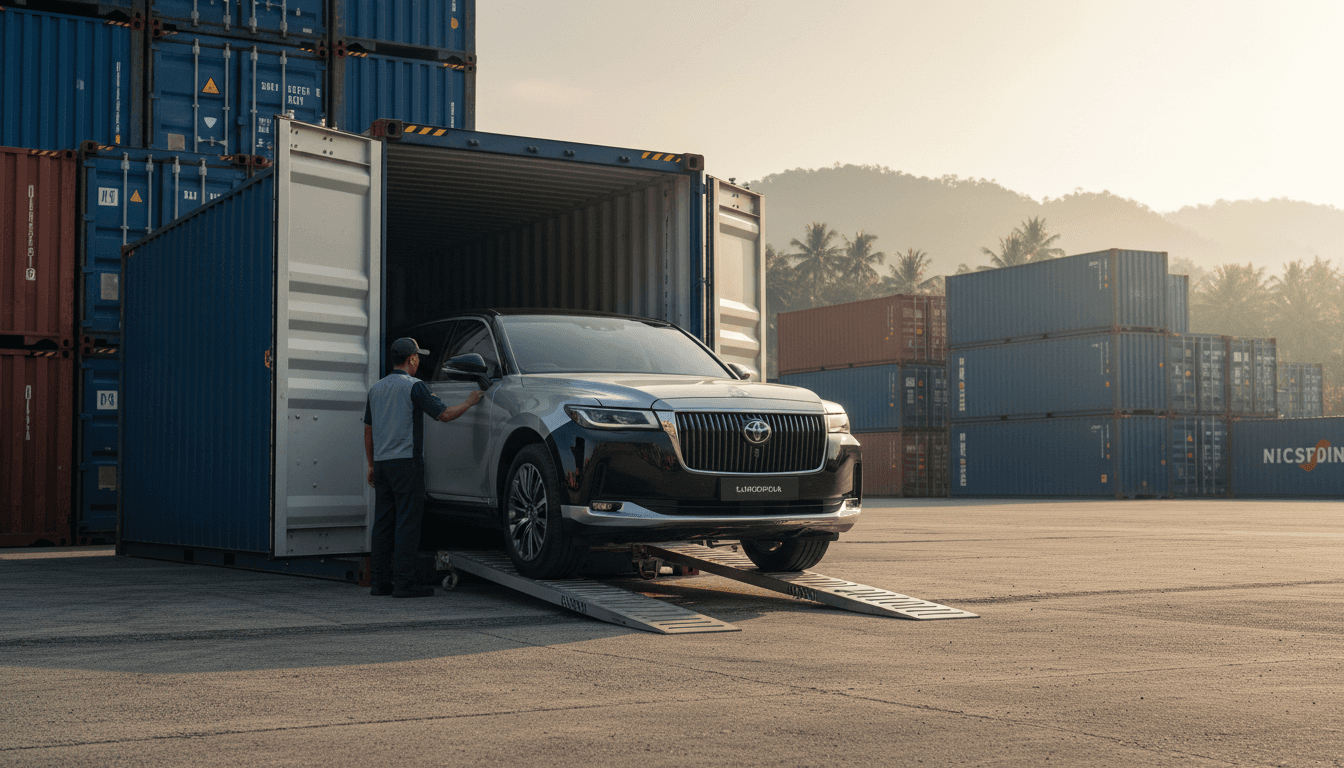
Introduction
Singapore is a free port, and that single fact makes its vehicle import tax look deceptively cheap. Customs duty on motor vehicles is 0% — for every origin, from every country, with or without a trade agreement. What you pay at the border is a 20% excise duty and 9% GST, giving a total of 30.8% of the vehicle's Open Market Value.
That is the whole of the import tax. It is also nowhere near the cost of putting the car on a Singapore road.
Singapore separates the cost of importing a vehicle from the cost of registering one, and it loads almost everything onto the second stage. After customs, the Land Transport Authority collects an Additional Registration Fee that rises through marginal bands to 320% of Open Market Value, applies emissions rebates or surcharges, and — the big one — requires you to win a Certificate of Entitlement at open auction. COE premiums in mid-2026 have been running around S$124,000 to S$130,000, which routinely exceeds the value of the car itself.
Understanding which side of that line each charge sits on is the single most useful thing to get right about Singapore. The 30.8% is the import duty. Everything else is registration, it is much larger, and it is not what a customs calculator returns.
Two further constraints shape what is worth importing. Singapore drives on the left, so right-hand drive is the normal configuration and left-hand-drive vehicles face registration obstacles severe enough to treat as inadmissible. And used vehicles may be no more than three years old from first registration — the tightest used-car window of any market IPAS serves apart from Israel.
Quick Facts
| Detail | Information |
|---|---|
| Customs Authority | Singapore Customs — customs.gov.sg |
| Registration Authority | Land Transport Authority (LTA) / OneMotoring |
| Emissions Authority | National Environment Agency (NEA) |
| Traffic Side | Left-hand traffic (drive on the left) |
| Steering Requirement | RHD required — LHD effectively inadmissible for private registration |
| Customs Duty | 0% — Singapore is a free port. Origin is irrelevant |
| Excise Duty | 20% of Open Market Value (motor cars); 12% motorcycles |
| GST | 9% on (OMV + excise), since 1 January 2024 |
| Total border charges | 30.8% of OMV — identical for petrol, diesel, hybrid, PHEV and BEV |
| Free trade agreements | A non-lever — duty is already zero and FTAs do not touch excise or GST |
| Additional Registration Fee (ARF) | Registration stage — marginal bands from 100% to 320% of OMV |
| Vehicular Emissions Scheme (VES) | Registration stage — rebate or surcharge against ARF |
| EV Early Adoption Incentive (EEAI) | Registration stage — BEV only, 45% of gross ARF capped at S$7,500 for 2026 |
| Registration Fee | Flat S$350 |
| Certificate of Entitlement (COE) | Auction-based 10-year ownership right — approximately S$124,000–130,000 in mid-2026 |
| Used vehicle age limit | Maximum 3 years from date of first registration |
| New vehicles | No age restriction |
| Pickup Classification | HS 8703 or 8704 by construction — border rate impact is zero |
| Main Terminals | PSA Singapore — Pasir Panjang, Tanjong Pagar, Brani, Keppel; Tuas Port |
| Currency | Singapore Dollar (SGD, S$) |
Types of Cars That Can Be Imported
Steering — right-hand drive required
Singapore drives on the left, and right-hand drive is the standard configuration. Left-hand-drive vehicles face registration and roadworthiness obstacles serious enough that they should be treated as effectively inadmissible for normal private registration.
This shapes sourcing considerably. Japan, the UK, Australia, New Zealand, Thailand and Malaysia all supply right-hand-drive vehicles; the United States, Germany, Korea and the wider EU generally do not. For Singapore, a European or American car is usually the wrong starting point unless it is a right-hand-drive export variant.
Age — a three-year ceiling on used vehicles
Used vehicles may be no more than three years old, measured from the date of first registration. New vehicles have no age restriction.
This is an LTA registration eligibility rule rather than a customs rule, but the effect is the same: an older car cannot be put on the road. It is one of the tightest windows anywhere, and it effectively closes the mainstream used-import market. Combined with the COE system, it is a deliberate policy of keeping the vehicle fleet young and small.
The LTA does operate a Classic Vehicle Scheme allowing certain older cars onto the road with restricted use. Note that this is an admissibility route only — the 20% excise still applies and there is no tariff concession.
Fuel type
All propulsion types pay the identical border tax. Petrol, diesel, hybrid, plug-in hybrid and battery-electric vehicles are all charged 20% excise and 9% GST — electric vehicles receive no border-tax break at all in Singapore. The EV incentives are entirely at the registration stage.
Cars You Can Import to Singapore
Each card is a full landed-cost calculation: the car's price, shipping, every duty and tax, and handling, worked out on 9 November 2026 with the rules in force that day. All are right-hand drive to suit Singapore's roads. Tap a car to see its full breakdown, or open it to change the trim, colour or port.
More cars you can import to Singapore
New cars IPAS sources to order that meet Singapore's import rules. Prices are ex works, before shipping and duty. Open a car to work out its full landed cost.
 RHDBackorder2026
Skoda Kylaq
SUV · 9 VariantsPetrolFrom $10,400Ex Works, India RHDBackorder2026
Honda Amaze
Sedan · 8 VariantsPetrolFrom $8,300Ex Works, India RHDBackorder2026
Suzuki Victoris
SUV · 21 VariantsPetrol · Hybrid · CNGFrom $9,500Ex Works, India RHDBackorder2026
Suzuki Fronx
SUV · 16 VariantsPetrol · CNGFrom $7,600Ex Works, India RHDBackorder2026
Mahindra Thar OG
SUV · 15 VariantsPetrol · DieselFrom $11,000Ex Works, India RHDBackorder2026
Mahindra XEV 9s
SUV · 6 VariantsElectricFrom $27,200Ex Works, India RHDBackorder2026
Mahindra BE 6 Sporteq
SUV · 20 VariantsElectricFrom $23,400Ex Works, India RHDBackorder2026
Mercedes-Benz EQS SUV
SUV · 4 VariantsElectricFrom $163,800Ex Works, UK RHDBackorder2026
Hyundai Venue
SUV · 13 VariantsPetrol · DieselFrom $8,700Ex Works, India RHDBackorder2026
Hyundai Creta
SUV · 33 VariantsPetrol · DieselFrom $9,800Ex Works, India RHDBackorder2026
Renault Triber
Van & MPV · 18 VariantsPetrol · CNGFrom $6,700Ex Works, India RHDBackorder2026
BMW M5 Touring
Hatchback · 2 VariantsPlug-in HybridFrom $148,500Ex Works, UK RHDBackorder2026
BMW M5
Sedan · 2 VariantsPlug-in HybridFrom $146,700Ex Works, UK RHDBackorder2026
Porsche Cayenne
SUV · 12 VariantsPetrol · Plug-in Hybrid · ElectricFrom $117,700Ex Works, UK RHDBackorder2025
Toyota Tundra
Pickup · 2 VariantsHybridFrom $118,500Ex Works, Australia RHDBackorder2026
Kia Syros EV
SUV · 7 VariantsElectricFrom $16,200Ex Works, India
Ports Supporting Vehicle Import
| Facility | Role |
|---|---|
| PSA Singapore — Pasir Panjang Terminal | Major container terminal, principal vehicle handling |
| PSA Singapore — Tanjong Pagar, Brani, Keppel | City terminals, progressively consolidating into Tuas |
| Tuas Port | The new mega-port, absorbing capacity as the city terminals close |
Singapore is one of the best-connected ports on earth, with sailings from essentially everywhere. Freight is rarely a constraint or a significant cost driver relative to the taxes and the COE.
Restrictions on Vehicle Import for Individuals
- Left-hand-drive vehicles cannot practically be registered.
- Used vehicles must be under three years old from first registration.
- A COE must be obtained before registration. This is not a formality — it is an auction you must win, at a price you do not control.
- FTA preference does not exist for vehicles, because there is no duty to reduce.
Duty Structure Overview — Stage 1, the Border
The border cascade is simple:
- Customs Duty at 0% — Singapore is a free port.
- Excise Duty at 20% of Open Market Value.
- GST at 9% on (OMV + excise duty).
Open Market Value
OMV is assessed by Singapore Customs and comprises the transaction value — the price paid or payable — plus freight, insurance and other charges incidental to the sale and delivery of the vehicle to Singapore. It is CIF-style in construction.
For used vehicles, depreciation may be applied to the original price, still with freight, insurance and incidentals added on top.
OMV is the base for both the excise duty and the registration-stage ARF, which is why it is the single most consequential number in a Singapore import.
The cascade, worked
| Charge | Rate | Base |
|---|---|---|
| Customs Duty | 0% | OMV |
| Excise Duty | 20% | OMV |
| GST | 9% | OMV + Excise |
| Total | 30.8% | of OMV |
Worked example — OMV S$22,000
| Charge | Calculation | Amount (S$) |
|---|---|---|
| Open Market Value | — | 22,000 |
| Customs duty | 0% — free port | 0 |
| Excise duty (20%) | 22,000 × 0.20 | 4,400 |
| GST (9%) | (22,000 + 4,400) × 0.09 | 2,376 |
| Total border charges | 6,776 (30.8% of OMV) | |
| Border landed cost | 28,776 |
That figure is identical whether the car is a petrol hatchback, a diesel SUV, a hybrid or a battery EV, and identical whether it comes from Japan, Germany or Thailand.
This is the import-duty figure. The registration-stage costs below are considerably larger. Get a full picture for your specific vehicle using CarImport.AI.

Calculate your exact import duty to Singapore
Get a vehicle-specific duty and full landed-cost breakdown — HS classification, every tax, levy and FTA, plus shipping — calculated for your exact make, model and specs.
- Vehicle-specific HS code
- All duties, taxes & FTAs
- Shipping + est. landed cost
Free trade agreements are irrelevant here
Singapore has one of the world's largest FTA networks, and none of it changes what you pay on a car. FTA preferential treatment applies only to dutiable goods, and the vehicle customs tariff is already zero. FTAs do not touch the 20% excise duty or the 9% GST.
A car from an FTA partner and a car from a country with no agreement at all face exactly the same Singapore import tax. Do not apply any origin-based preferential rate, and treat any quote that shows an FTA saving on a Singapore import as mistaken.
This is the inverse of most markets, where origin is the dominant variable.
Worked Example: Importing a 2026 Denza B5 to Singapore
Here is the full landed cost of one car, a 2026 Denza B5 shipped from China to Singapore, worked out on 9 November 2026 with the customs rules in force that day. It lands at 107,515 SGD (about US$83,806), and duties and taxes come to 30.8% of its CIF value.
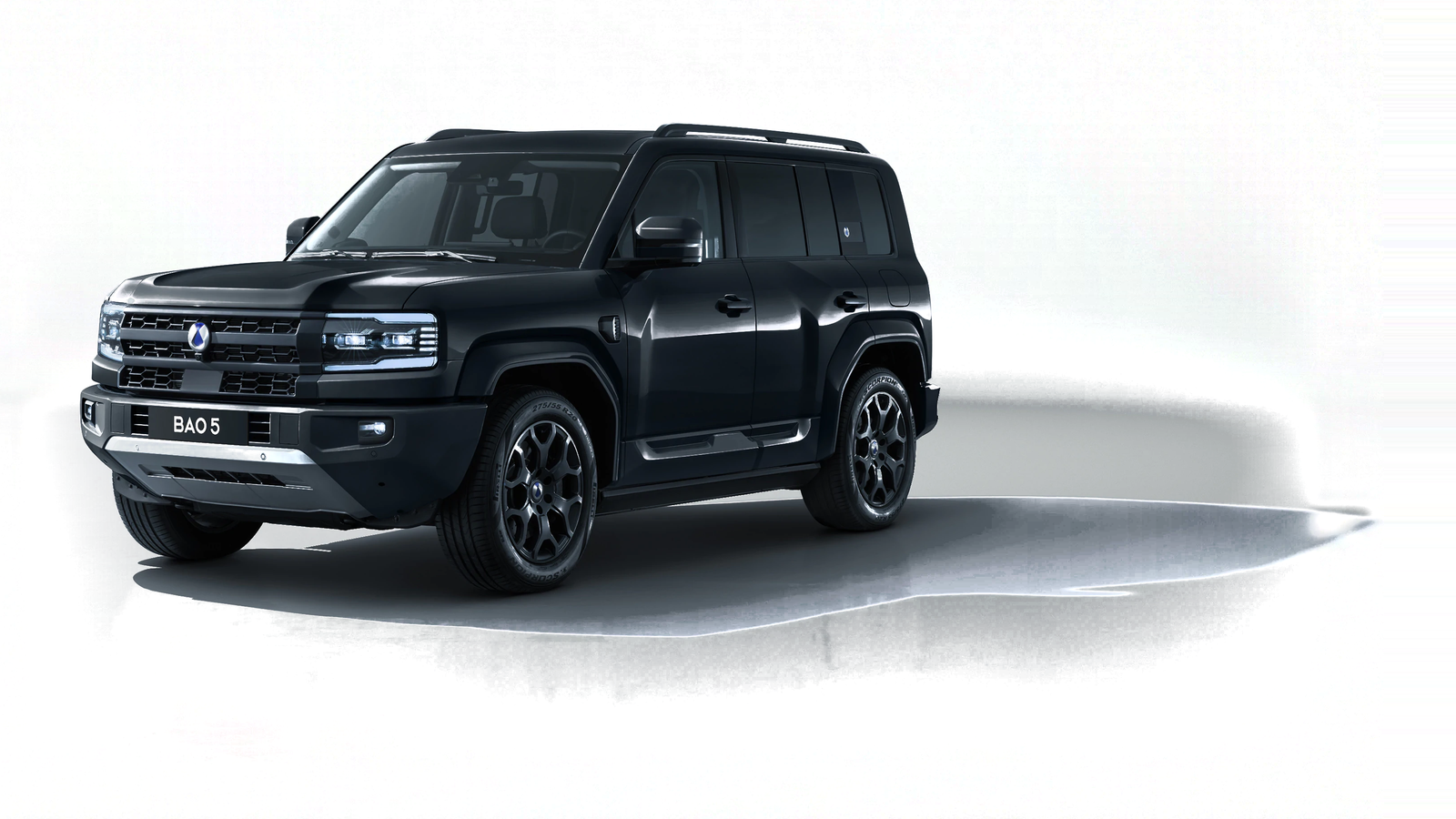
| Item | Share of CIF | Amount |
|---|---|---|
| Vehicle priceIPAS price for a car sourced in China | 73,125 SGDUS$57,000 | |
| Shipping and insuranceChina to Singapore | 5,012 SGDUS$3,907 | |
| CIF valueCost, insurance and freight: the customs value | 78,138 SGDUS$60,907 | |
| Customs duties and taxes | ||
| Basic customs duty (0%)0% of CIF | 0 SGDUS$0 | |
| Additional duty (20%)20% of CIF | 15,627 SGDUS$12,181 | |
| GST/VAT (9%)9% of CIF plus the duties above10.8% of CIF | 8,439 SGDUS$6,578 | |
| Total duties and taxes30.8% of CIF | 24,066 SGDUS$18,759 | |
| Service and handling | ||
| Premium Import ServiceOptional end-to-end import management by IPAS | 3,015 SGDUS$2,350 | |
| Destination handlingPort terminal and customs clearance handling | 2,296 SGDUS$1,790 | |
| Total landed cost | 107,515 SGDUS$83,806 | |
Stage 2 — Registration Costs
These are collected by the LTA after customs clearance. They are not import duty, they are not what a customs calculator returns, and they dwarf the border charges. Anyone planning a Singapore import needs to model them explicitly.
Additional Registration Fee (ARF)
ARF is charged on OMV only — not on OMV plus excise plus GST — and it rises through marginal bands:
| OMV band | Marginal ARF rate |
|---|---|
| First S$20,000 | 100% |
| Next S$20,000 (S$20,001–40,000) | 140% |
| Next S$20,000 (S$40,001–60,000) | 190% |
| Next S$20,000 (S$60,001–80,000) | 250% |
| Above S$80,000 | 320% |
The bands are marginal, so each portion of OMV is charged at its own rate. Two illustrations:
- OMV S$22,000 → 100% on the first S$20,000 plus 140% on the remaining S$2,000 = S$22,800
- OMV S$50,000 → 100% on S$20,000, 140% on S$20,000, 190% on S$10,000 = S$67,000
Note what happens on the second example: a car with an Open Market Value of S$50,000 attracts S$67,000 in ARF alone, on top of S$15,400 in border charges. The tax structure is explicitly and steeply progressive against expensive cars.
Vehicular Emissions Scheme (VES)
VES applies a fixed rebate or surcharge against ARF, banded by emissions and determined by the worst-performing of five pollutants — CO2, hydrocarbons, carbon monoxide, nitrogen oxides and particulates. A car that is excellent on CO2 but poor on NOx is banded on the NOx.
There is an important change for 2026–2027: rebates are now EV-only. Hybrids no longer receive VES rebates, having previously qualified, and surcharges on polluting vehicles have been increased. For context, the 2025 quanta ran from a S$25,000 rebate in the cleanest band to a S$25,000 surcharge in the dirtiest.
Confirm the exact band amounts against the current NEA and LTA annex for your registration date, as these are revised on a rolling basis.
EV Early Adoption Incentive (EEAI)
A battery-electric-only rebate against ARF, calculated as 45% of gross ARF subject to a cap. The cap has been falling steadily: S$20,000 in 2021–23, S$15,000 in 2024–25, and S$7,500 for 2026. It is scheduled to end on 1 January 2027 unless extended.
Neither internal-combustion nor hybrid nor plug-in hybrid vehicles qualify.
The ARF floor
Net ARF is gross ARF less the VES rebate and EEAI rebate, plus any VES surcharge, subject to a floor. The floor is normally S$5,000 — but for battery-electric cars registered between 1 January 2022 and 31 December 2027 it is S$0, which means the VES and EEAI rebates can offset ARF entirely.
Registration Fee
A flat S$350 per vehicle, unchanged since 19 December 2022. Guides still showing S$220 are out of date.
Certificate of Entitlement (COE)
The COE is a ten-year right to own and use a vehicle, won through twice-monthly open bidding. Categories are:
| Category | Coverage |
|---|---|
| A | Up to 1,600cc and 97kW, or a BEV up to 110kW |
| B | Over 1,600cc or 97kW, or a BEV over 110kW |
| C | Goods vehicles and buses |
| D | Motorcycles |
| E | Open |
Premiums in mid-2026 have run around S$124,000 to S$130,000 for cars. The COE is auction-set and changes every bidding round — it is never a fixed figure, it is frequently larger than the vehicle's Open Market Value, and it should never be treated as a duty. Budget it as a separate, variable and dominant line.
PARF rebate
The Preferential Additional Registration Fee rebate returns a portion of ARF when the vehicle is later deregistered or scrapped, banded by age and capped at S$30,000 under the 2026 schedule. It is money back at the end of the vehicle's Singapore life, not a reduction in import cost.
Pickup Trucks
Classification between HS 8703 and HS 8704 turns on construction and intended use, and a dual-cab pickup may fall under HS 8704 where it is genuinely a goods vehicle.
The border rate impact is zero — both headings carry 0% customs duty, 20% excise and 9% GST. What the classification affects is LTA registration treatment and, importantly, the COE category: goods vehicles bid in Category C rather than A or B, which is a different and generally cheaper auction.
Given the scale of COE premiums, that category difference can matter more than any tax consideration.
Documents Required for Import
- Commercial invoice showing the purchase price
- Bill of Lading (original or telex release)
- Packing list with make, model, year, VIN, engine capacity and power output
- Certificate of Title or equivalent ownership document
- Export certificate or deregistration document from the origin country
- Evidence of the date of first registration — to establish the three-year eligibility position
- Singapore Customs import permit and declaration
- Manufacturer emissions and fuel-consumption data, for VES banding
- LTA vehicle approval documentation
- COE bidding documentation
- Singapore motor insurance, at registration
Customs Clearance Timeline
| Stage | Typical duration | Notes |
|---|---|---|
| Vessel arrival to discharge | 1–2 days | Singapore is exceptionally efficient |
| Customs permit, OMV assessment and clearance | 2–5 working days | OMV assessment is the key step |
| Excise and GST payment | 1 day | |
| LTA vehicle inspection and approval | 1–2 weeks | Emissions and roadworthiness |
| COE bidding | 2 weeks to several months | Twice-monthly rounds; you may not win first time |
| Registration and plates | 2–5 days | After COE is secured |
| Typical total | 1–3 months | Dominated by COE bidding |
Customs clearance in Singapore is fast and predictable. The variable is the COE — bidding rounds run twice monthly and there is no guarantee of success in any given round, so a car can sit waiting for an entitlement.
The other item worth attention is the OMV assessment. Because OMV drives both the excise duty and the ARF, an assessment higher than you expected has a compounding effect on total cost.
Homologation and Vehicle Approval
The LTA administers vehicle approval, with the NEA responsible for emissions banding under VES. An imported vehicle must satisfy Singapore's roadworthiness and emissions requirements before registration.
Because Singapore is a right-hand-drive market closely aligned with international standards, a vehicle built for the Japanese, UK, Australian or Malaysian markets generally presents few technical obstacles. The practical difficulty is more often documentary — supplying manufacturer emissions and fuel-consumption data in the form the NEA requires for VES banding, since the band determines a rebate or surcharge worth tens of thousands of dollars.
Recent Regulatory Changes (2022–2026)
- 1 January 2022 — BEV ARF floor set to S$0, running through 31 December 2027, allowing rebates to fully offset ARF for electric cars.
- February 2023 — ARF bands restructured, adding the 250% and 320% top tiers for OMV above S$60,000 and S$80,000.
- 19 December 2022 — Registration Fee raised to S$350 from S$220.
- 1 January 2024 — GST raised to 9% from 8%, having been 7% before 2023. No further increase has been announced.
- 2024–25 — EEAI cap reduced to S$15,000 from S$20,000.
- 2026 — EEAI cap reduced again to S$7,500, scheduled to end 1 January 2027 unless extended.
- 2026–2027 — VES rebates restricted to electric vehicles. Hybrids no longer receive rebates, and surcharges on polluting vehicles have increased.
Frequently Asked Questions
How much is import duty on a car in Singapore?
Customs duty is zero — Singapore is a free port. What you pay at the border is 20% excise duty on the Open Market Value plus 9% GST on the OMV-plus-excise total, giving 30.8% of OMV. On a car with an OMV of S$22,000, that is S$6,776. But this is only the import stage; registration costs are substantially larger.
Why is a car so expensive in Singapore if there is no import duty?
Because the cost is loaded onto registration rather than importation. After the 30.8% border charge come the Additional Registration Fee, which rises through marginal bands from 100% to 320% of OMV, and the Certificate of Entitlement, an auctioned ten-year ownership right running around S$124,000 to S$130,000 in mid-2026. A car with an OMV of S$50,000 attracts S$67,000 in ARF alone before the COE is even considered. The tax is deliberately structured to restrain vehicle population rather than to protect a domestic industry.
Do trade agreements reduce the cost of importing a car to Singapore?
No. This is the reverse of most markets. FTA preferential treatment applies only to dutiable goods, and the vehicle customs tariff is already zero, so there is nothing for an agreement to reduce. FTAs do not touch the 20% excise duty or the 9% GST. A Japanese, German or Thai car all face identical Singapore import tax.
Are electric vehicles cheaper to import into Singapore?
Not at the border. Battery EVs pay exactly the same 20% excise and 9% GST as a petrol car — there is no border-tax concession for electrification. The EV incentives are entirely at the registration stage: the EV Early Adoption Incentive gives a rebate of 45% of gross ARF capped at S$7,500 for 2026, VES rebates are now restricted to electric vehicles, and battery EVs registered through 2027 have a S$0 ARF floor so rebates can offset ARF completely. Note that the EEAI cap has been falling — S$20,000, then S$15,000, now S$7,500 — and is scheduled to end on 1 January 2027.
Do hybrids still get an emissions rebate?
No, not from 2026. VES rebates are now electric-vehicle-only. Hybrids previously qualified for rebates but have lost them, and surcharges on more polluting vehicles have simultaneously increased. This is a meaningful change for anyone whose plan was built on earlier VES tables.
What is the age limit for importing a used car to Singapore?
Three years from the date of first registration — one of the tightest windows anywhere. New vehicles have no age restriction. This is an LTA registration eligibility rule rather than a customs rule, but the effect is the same: an older car cannot be put on the road. A Classic Vehicle Scheme exists for certain older cars with restricted use, but it carries no tax concession and the 20% excise still applies.
Can I import a left-hand-drive car to Singapore?
Not practically. Singapore drives on the left and right-hand drive is the standard configuration; left-hand-drive vehicles face registration and roadworthiness obstacles severe enough to treat as inadmissible for normal private use. Source from right-hand-drive markets — Japan, the UK, Australia, Thailand or Malaysia.
Do I need a COE, and can I get one in advance?
Yes, a COE is required before the vehicle can be registered, and it must be won at auction. Bidding runs twice monthly and you may not succeed in the first round, which is why a Singapore import can sit for weeks or months after clearing customs. The premium is set by the auction, varies every round, and frequently exceeds the value of the car — so it should always be modelled as a separate variable line rather than a fixed cost.
Ready to Import?
Singapore rewards clear thinking about which costs are which. The import duty is genuinely low — 30.8% of Open Market Value, with no customs duty at all and no origin to optimise. If someone quotes you a Singapore landed cost, that is the number they are quoting.
The real decision is whether the registration stage works for you. ARF climbs to 320% at the top band, VES now rebates only electric vehicles, the EEAI cap has fallen to S$7,500 and expires at the end of 2026, and the COE is an auction you must win at whatever the market sets. Together these usually exceed the vehicle and the import tax combined.
Two practical rules follow. Keep the Open Market Value down, because it drives the excise and the ARF simultaneously. And check the two gates first: right-hand drive, and under three years old if used.
IPAS provides two tools to plan and execute your import:
CarImport.AI — Source a vehicle through IPAS and calculate the full landed cost to Singapore, including the 20% excise duty, 9% GST and shipping, with registration-stage costs shown separately so you can see the whole picture.
IPAS EXPRESS — Already have a vehicle? Get instant shipping quotes to Singapore — sea freight, RoRo or air — with transparent, itemised pricing and a stage-by-stage timeline.
Ready to Import Your Vehicle?
Two tools, two use cases. Pick the one that fits your needs.
Source a vehicle through IPAS and calculate the full landed cost — customs duties, shipping, and compliance — to destinations across the world.
Calculate Landed CostIPAS Express
Already have a vehicle? Get instant shipping quotes — sea freight, air freight, or RoRo — for one car or multiple vehicles worldwide.
Get Shipping Quote