
Introduction
Importing a new car to South Africa typically costs 50% to 85% of its FOB value in taxes: 25% customs duty (18% for EU or UK-made petrol, diesel and hybrid cars with a EUR.1), ad valorem excise of up to 30%, a CO2 levy and 15% VAT. Used imports are effectively banned; only right-hand drive cars can be registered.
South Africa is the industrial powerhouse of the African continent and the only country in sub-Saharan Africa with a significant domestic automobile manufacturing sector. Global brands including Toyota, Volkswagen, BMW, Mercedes-Benz, Ford, Nissan, and Isuzu all operate assembly plants within the country, producing vehicles for both the local market and export. This manufacturing base is the driving force behind one of the most restrictive vehicle import regimes on the continent: South Africa has effectively banned the import of used vehicles for the general public.
The vehicle import framework is administered by the South African Revenue Service (SARS) for customs duties, the International Trade Administration Commission (ITAC) for import permits, and the National Regulator for Compulsory Specifications (NRCS) for vehicle safety compliance. South Africa operates within the Southern African Customs Union (SACU) alongside Botswana, Namibia, Lesotho, and Eswatini, sharing a Common External Tariff structure. South Africa's duty regime is a multi-layer system: customs duty and an ad valorem excise duty (a sliding-scale tax based on vehicle value) are charged on the FOB value, not CIF, followed by a CO2 emissions levy and 15% VAT. The total tax burden on a new imported vehicle is typically 50% to 85% of its FOB value, depending on its price, emissions and origin.
South Africa drives on the left side of the road and requires right-hand drive (RHD) vehicles. Left-hand drive vehicles face a near-total ban under the National Road Traffic Act: an LHD car generally cannot be registered for normal road use, with narrow exceptions such as vehicles registered in South Africa before 1 January 2000, vintage or special-purpose vehicles and diplomatic vehicles. This guide covers every step of importing a new vehicle into South Africa, from eligibility and duty estimation through NRCS approval, customs clearance, and eNaTIS registration.
Quick Facts
| Detail | Information |
|---|---|
| Customs Authority | South African Revenue Service (SARS) |
| Trade Authority | International Trade Administration Commission (ITAC) |
| Safety Regulator | National Regulator for Compulsory Specifications (NRCS) |
| Registration System | eNaTIS (electronic National Administration Traffic Information System) |
| Traffic Side | Left-hand traffic |
| Steering Requirement | Right-Hand Drive (RHD) only |
| LHD Vehicles | Not registrable for normal road use (narrow exceptions only) |
| Used Vehicle Imports | Banned for general public (permit-only exceptions) |
| Customs Value | FOB (international freight and insurance excluded) |
| Customs Duty (Standard) | 25% on new passenger vehicles (HS 8703), all engine sizes |
| Customs Duty (EU/UK Origin) | 18% for petrol, diesel and hybrid cars and light pickups with a EUR.1; battery EVs stay at 25% |
| Customs Duty (SADC Origin) | Free with a SADC certificate of origin |
| Ad Valorem Excise Duty | (0.00003 x Value B - 0.75)%, from 0% up to a 30% cap; Value B = FOB x 1.15 + customs duty |
| CO2 Emissions Levy | R146 per g/km above 95 g/km (cars); R195 per g/km above 175 g/km (double-cabs); EVs R0 |
| VAT | 15% on FOB + 10% uplift + duty + ad valorem + CO2 levy |
| Total Tax Burden Range | Typically 50-85% of FOB for new cars, depending on value, emissions and origin |
| Primary Port | Port of Durban (KwaZulu-Natal) |
| Secondary Ports | Cape Town, Gqeberha (Port Elizabeth) |
| SACU Membership | Yes (shared tariff with Botswana, Namibia, Lesotho, Eswatini) |
| Currency | South African Rand (ZAR) |
Types of Cars That Can Be Imported
South Africa's vehicle import rules are sharply divided between new and used vehicles. The used vehicle import ban is arguably the single most important fact for any prospective importer to understand before beginning the process.
New Vehicles
Any individual or company may import a brand-new vehicle into South Africa, subject to customs duties, NRCS Letter of Authority, and ITAC import permit requirements. New vehicles from any origin country are permitted, though the total tax burden varies significantly based on the vehicle's value and country of manufacture. Vehicles made in the EU or the UK pay 18% instead of 25% customs duty on petrol, diesel and hybrid models, provided they travel with a EUR.1 certificate of origin.
Used Vehicles -- Effectively Banned
South Africa has effectively banned used vehicle imports for the general public. The ban exists to protect the domestic motor vehicle manufacturing industry, which employs hundreds of thousands of workers and contributes significantly to GDP and export revenue.
Used vehicles may only be imported under specifically defined, permit-based circumstances administered by ITAC (Import Permit IE462), and the permit must be issued before the vehicle is shipped. Without it, the vehicle is seized at the port:
- Returning South African residents who worked or studied abroad for at least six months and owned the vehicle for at least six months (employer letter required)
- Bona fide immigrants holding a South African permanent residence certificate
- Physically disabled persons importing an adapted vehicle
- Racing cars and vintage or classic passenger vehicles (vintage means at least 40 years old)
- Specially designed vehicles such as ambulances, mobile cranes, and other purpose-built equipment
- Inherited vehicles
A critical restriction applies to all used vehicle imports under permit: the vehicle may not be sold or disposed of for the first 24 months after entry into South Africa. SARS determines the age of a vehicle by its manufacturing year, not its model year.
Electric Vehicles
Electric vehicles (BEVs) can be imported as new vehicles, but there is no import-duty reduction for finished EVs: the standard 25% customs duty applies regardless of origin, so EU and UK-manufactured EVs do not get the 18% rate available to petrol, diesel and hybrid cars from those origins (SARS tariff line 8703.80.90). EVs also pay the ad valorem excise, often at or near the 30% cap given their prices, and 15% VAT. Their only tax advantage is a zero CO2 levy. The incentives announced for EVs in 2025 apply to local assembly and components, not to imported finished cars. This has drawn criticism from industry groups such as the CHARGE consortium. Additional documentation requirements apply to EV imports, including a Battery Material Safety Data Sheet (MSDS) and ECTN/CTN/ACID certificates submitted at least five days before the vessel's arrival.
Commercial Vehicles
Light pickups (bakkies) and vans up to 3.5 tonnes (HS 8704) pay 25% customs duty, or 18% from the EU or UK with a EUR.1. Double-cab bakkies are caught by the ad valorem excise like passenger cars and pay a CO2 levy of R195 per g/km above 175 g/km. Heavy trucks over 5 tonnes pay 20%. The same NRCS and ITAC requirements apply.
Steering Requirement
Only RHD vehicles may be imported and registered for road use. The National Road Traffic Act Regulation 200(2B) states that a left-hand drive vehicle may only be legally imported and operated on a South African public road if it was registered in the Republic in the owner's name before 1 January 2000; other narrow exceptions cover vintage, special-purpose and diplomatic vehicles. No new LHD vehicle registrations are permitted for normal road use. This effectively bars vehicles built for the United States, continental Europe, and other LHD markets. An LHD-to-RHD conversion is not automatically accepted (it needs NRCS homologation and roadworthiness approval), so source a factory RHD vehicle.
Cars You Can Import to South Africa
Each card is a full landed-cost calculation: the car's price, shipping, every duty and tax, and handling, worked out on 9 November 2026 with the rules in force that day. All are right-hand drive to suit South Africa's roads, converted where the car is only built left-hand drive. Tap a car to see its full breakdown, or open it to change the trim, colour or port.
More cars you can import to South Africa
New cars IPAS sources to order that meet South Africa's import rules. Prices are ex works, before shipping and duty. Cars marked C-RHD are built left-hand drive and converted to right-hand drive before shipping; the calculator adds the conversion. Open a car to work out its full landed cost.
 LHD/C-RHDBackorder2026
Chevrolet Tahoe
SUV · 14 VariantsPetrol · DieselFrom $79,800Ex Works, USA RHDBackorder2026
Chevrolet Silverado 1500
Pickup · 2 VariantsPetrolFrom $89,100Ex Works, NZ RHDBackorder2026
Chevrolet Corvette Stingray Convertible
Convertible · 1 VariantPetrolFrom $139,400Ex Works, NZ RHDBackorder2026
Kia Syros EV
SUV · 7 VariantsElectricFrom $16,200Ex Works, India LHD/C-RHDBackorder2026
Ford Super Duty F-450 DRW
Pickup · 5 VariantsDieselFrom $73,600Ex Works, USA RHDBackorder2026
Land Rover Range Rover Evoque
SUV · 2 VariantsPetrol · DieselFrom $53,600Ex Works, India RHDBackorder2026
Land Rover Range Rover Velar
SUV · 3 VariantsPetrol · DieselFrom $64,900Ex Works, India RHDBackorder2025
Ram 1500
Pickup · 6 VariantsPetrol · HybridFrom $70,800Ex Works, NZ RHDBackorder2026
Suzuki Grand Vitara
SUV · 35 VariantsHybrid · CNGFrom $9,700Ex Works, India RHDBackorder2026
Tata Curvv EV
SUV · 3 VariantsElectricFrom $20,400Ex Works, India RHDBackorder2026
Tata Altroz
Hatchback · 27 VariantsPetrolFrom $6,900Ex Works, India RHDBackorder2026
Nissan Gravite
SUV · 8 VariantsPetrolFrom $6,700Ex Works, India RHDBackorder2026
Toyota Fortuner
SUV · 8 VariantsPetrol · Diesel · HybridFrom $31,000Ex Works, India LHD/C-RHDBackorder2025
GMC Yukon
SUV · 5 VariantsPetrolFrom $81,500Ex Works, USA RHDBackorder2026
Mahindra Thar OG
SUV · 15 VariantsPetrol · DieselFrom $11,000Ex Works, India RHDBackorder2026
Lexus ES
Sedan · 7 VariantsElectricFrom $54,600Ex Works, Japan
Seaports and Airports
South Africa has well-developed port infrastructure, with Durban serving as the primary vehicle import hub in the country and one of the busiest ports in Africa.
Seaports
| Port | Province | Primary Role | Notes |
|---|---|---|---|
| Port of Durban | KwaZulu-Natal | Primary vehicle import hub | Main RoRo terminal, highest container throughput in Africa |
| Port of Cape Town | Western Cape | Secondary vehicle imports | Handles European and American shipments |
| Port of Gqeberha (Port Elizabeth) | Eastern Cape | Vehicle manufacturing exports, some imports | Adjacent to major assembly plants |
The Port of Durban handles the vast majority of vehicle imports into South Africa. It operates dedicated RoRo terminals for vehicle shipments and is the natural entry point for vehicles arriving from Asia, India, and the Middle East. Cape Town serves as an alternative for shipments from Europe and the Americas. Gqeberha is primarily an export port for locally manufactured vehicles but handles some imports.
Estimated Shipping Costs to Durban
Shipping costs vary by origin, shipping method, and vehicle size. As a general indication, sea freight from major Asian ports to Durban ranges from approximately $1,500 to $3,500 per vehicle. Transit times from the US East Coast are typically 30-45 days, and from the US West Coast 45-60 days. Transit from India is approximately 14-21 days.
Get exact shipping costs for your specific vehicle and route using IPAS EXPRESS Pro Car Shipping
Airports
| Airport | Code | City | Notes |
|---|---|---|---|
| OR Tambo International Airport | JNB | Johannesburg | Primary air freight hub |
| Cape Town International Airport | CPT | Cape Town | Secondary air freight option |
| King Shaka International Airport | DUR | Durban | Proximate to main seaport |
Air freight is available for urgent or high-value vehicle shipments but is rarely used for standard imports due to significantly higher costs.
Restrictions on Vehicle Import
South Africa maintains some of the strictest vehicle import restrictions in Africa. Understanding these restrictions before initiating any import process is essential.
Used Vehicle Import Ban
The import of used vehicles by the general public is prohibited. Only permit holders with qualifying circumstances (returning residents, bona fide immigrants, disabled persons, vintage and specialty vehicles) may import used vehicles under ITAC Permit IE462, issued before shipment. Vehicles imported under this permit cannot be sold for 24 months.
Left-Hand Drive Ban
LHD vehicles cannot be imported for normal road use. The National Road Traffic Act Regulation 200(2B) restricts LHD registration to vehicles that were registered in South Africa in the owner's name before 1 January 2000, plus narrow vintage, special-purpose and diplomatic exceptions. No exceptions exist for new LHD vehicles, and an RHD conversion is not automatically accepted. Source a factory RHD vehicle.
NRCS Letter of Authority (Mandatory)
Every imported vehicle requires a Letter of Authority (LOA) from the National Regulator for Compulsory Specifications (NRCS) before it can enter the country. The LOA application (Form LOA1) must be submitted and approved prior to the vehicle's arrival at port. NRCS LOA fees are non-refundable. Proof of conformity to safety standards is required -- vehicles compliant with EEC or UN ECE regulations face fewer hurdles, while vehicles from non-European origins may face stricter scrutiny.
ITAC Import Permit
An import permit from ITAC is required. Processing typically takes up to 5 business days once all documents have been received.
EV-Specific Requirements
Electric vehicles require additional documentation: a Battery Material Safety Data Sheet (MSDS), ECTN/CTN/ACID certificates (submitted at least 5 days before vessel arrival), and a manifest with VIN and battery capacity (submitted at least 72 hours before arrival). SABS certification is mandatory for EVs, costing approximately $2,000 with a 2-year validity period.
24-Month Disposal Restriction
Used vehicles imported under ITAC permit cannot be sold or transferred for 24 months from the date of entry. This is actively enforced by SARS.
Duty Structure Overview
South Africa's customs duty framework is a multi-layer system that makes it one of the more expensive countries in which to import a vehicle. Two features set it apart: duty is charged on the FOB value (international freight and insurance are excluded), and two statutory uplifts inflate the bases -- 15% for the ad valorem excise and 10% for VAT.
Key Tax Components (in order)
- Customs Duty (SACU Tariff) -- 25% of FOB for new passenger cars (HS 8703), whatever the engine size or fuel. EU or UK-made petrol, diesel and hybrid cars pay 18% with a EUR.1; battery EVs pay 25% from every origin; SADC-made vehicles are free.
- Ad Valorem Excise Duty -- Charged on Value B = (FOB x 1.15) + customs duty. The rate is (0.00003 x Value B - 0.75)%, rounded to three decimals, floored at 0% and capped at 30%. Cheaper cars pay a low rate; premium and luxury cars reach the 30% cap.
- CO2 Emissions Levy -- R146 for every g/km above 95 g/km for passenger cars, and R195 for every g/km above 175 g/km for double-cab bakkies. Battery EVs pay R0. A small tyre levy (R2.30 per kg of tyre) also applies.
- VAT (15%) -- Charged on the Added Tax Value: FOB + 10% of FOB + customs duty + ad valorem excise + CO2 levy. Because VAT is charged on every earlier line, it amplifies them all.
Worked Examples (new vehicles, rand)
| Vehicle | FOB | Customs duty | Ad valorem excise | CO2 levy | VAT | Total taxes | % of FOB |
|---|---|---|---|---|---|---|---|
| Small car, 1.2 L, 130 g/km, from Asia (25%) | R200,000 | R50,000 | R21,420 (7.65%) | R5,110 | R44,480 | R121,010 | 60.5% |
| BMW 320i, 150 g/km, from Germany with EUR.1 (18%) | R450,000 | R81,000 | R102,972 (17.205%) | R8,030 | R103,050 | R295,052 | 65.6% |
| Double-cab bakkie, 220 g/km, from Asia (25%) | R450,000 | R112,500 | R114,345 (18.15%) | R8,775 | R109,593 | R345,213 | 76.7% |
| Petrol SUV, 2.5 L, 180 g/km, from Japan (25%) | R500,000 | R125,000 | R141,750 (20.25%) | R12,410 | R124,374 | R403,534 | 80.7% |
| Battery EV, 0 g/km, any origin (25%) | R600,000 | R150,000 | R205,380 (24.45%) | R0 | R152,307 | R507,687 | 84.6% |
Taking the Japanese petrol SUV step by step: duty is 25% of R500,000 = R125,000. Value B is R500,000 x 1.15 + R125,000 = R700,000, so the ad valorem rate is 0.00003 x 700,000 - 0.75 = 20.25%, or R141,750. The CO2 levy is (180 - 95) x R146 = R12,410. VAT is 15% of R500,000 + R50,000 + R125,000 + R141,750 + R12,410 = R829,160, or R124,374. Total taxes: R403,534, or 80.7% of FOB. Add the actual ocean freight and insurance for the door-to-door cost.
If freight and insurance are not shown separately from the vehicle price, the IPAS calculator treats the full CIF figure as the customs value, so its estimate errs on the high side. Keep freight separate on the invoice: SARS may otherwise include it in the value.
Tax Burden Range
- Lower-value cars with a low ad valorem rate: roughly 60% of FOB
- EU/UK-origin petrol, diesel and hybrid cars: lower, thanks to the 18% duty (about 66% in the BMW 320i example)
- Mid-range SUVs and double-cab bakkies: roughly 75-80% of FOB
- Premium cars and most EVs at or near the 30% ad valorem cap: 85% of FOB or more
EV Duty Disadvantage
Electric vehicles from EU/UK origins pay the standard 25% customs duty rather than the 18% rate available to petrol, diesel and hybrid cars from those origins. This means an EU-manufactured EV faces a higher customs duty than an EU-manufactured petrol or diesel car of equivalent value -- a policy that has drawn significant criticism from the CHARGE industry consortium and EV advocates. The zero CO2 levy is the only tax break for an imported EV.
SACU Context
Vehicles manufactured within the SACU bloc (Botswana, Namibia, Lesotho, Eswatini) enter South Africa duty-free under intra-SACU trade rules, and SADC-made vehicles are free with a SADC certificate of origin. Since South Africa is the primary manufacturing hub within SACU, this flow is predominantly outward rather than inward. Japan, Korea, China, Thailand, India and the USA have no vehicle trade agreement with South Africa and pay the full 25%.
Get exact duty rates for your specific vehicle using CarImport.AI

Calculate your exact import duty to South Africa
Get a vehicle-specific duty and full landed-cost breakdown — HS classification, every tax, levy and FTA, plus shipping — calculated for your exact make, model and specs.
- Vehicle-specific HS code
- All duties, taxes & FTAs
- Shipping + est. landed cost
Worked Example: Importing a 2026 GMC Hummer EV SUV to South Africa
Here is the full landed cost of one car, a 2026 GMC Hummer EV SUV shipped from the USA to South Africa, worked out on 9 November 2026 with the customs rules in force that day. It lands at 5,156,238 ZAR (about US$311,851), and duties and taxes come to 93.5% of its CIF value.
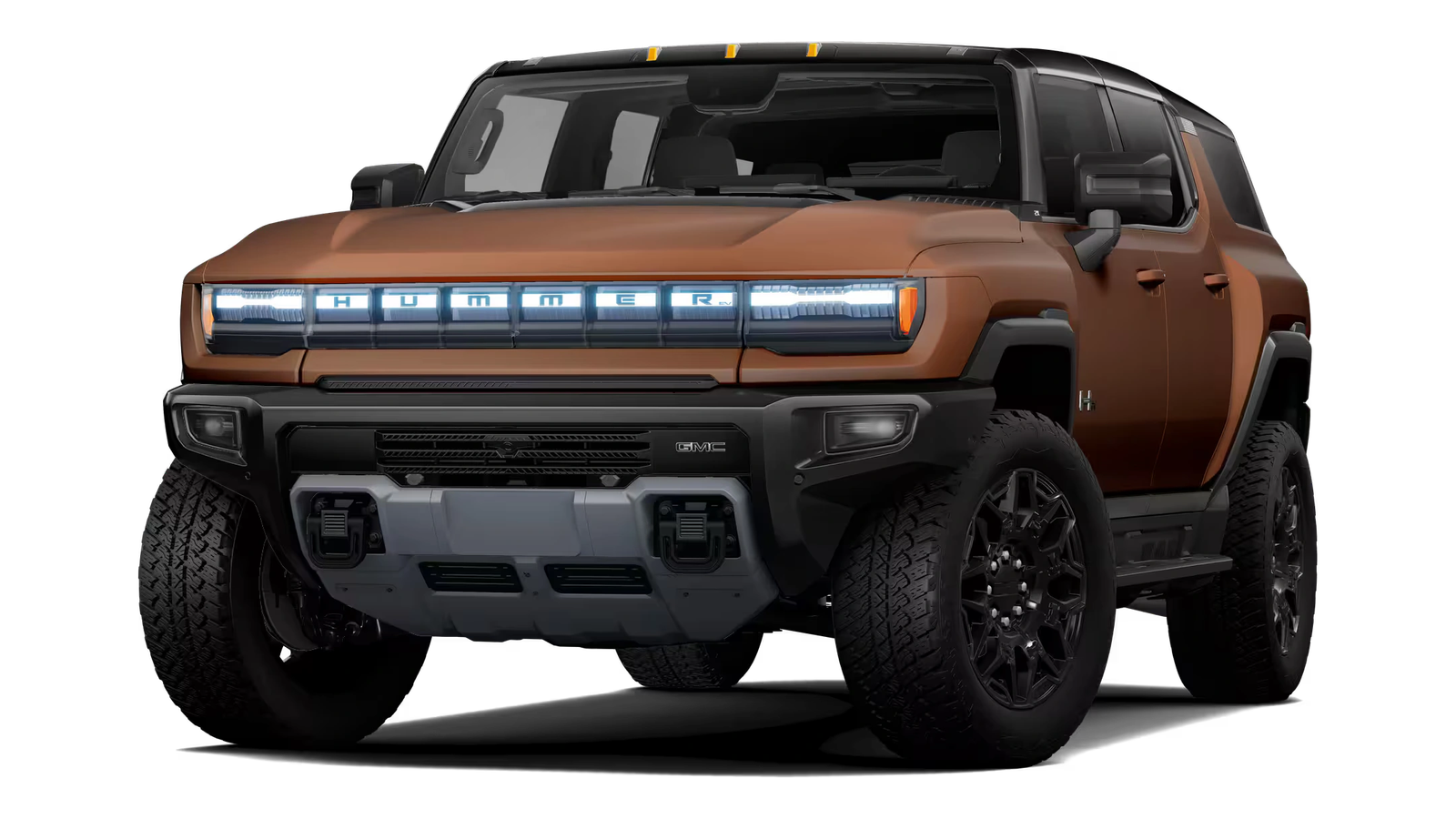
| Item | Share of CIF | Amount |
|---|---|---|
| Vehicle priceIPAS price for a car sourced in the USA | 1,686,499 ZARUS$102,000 | |
| Right-hand-drive conversion | 562,166 ZARUS$34,000 | |
| Shipping and insuranceUSA to South Africa | 324,353 ZARUS$19,617 | |
| CIF valueCost, insurance and freight: the customs value | 2,573,018 ZARUS$155,617 | |
| Customs duties and taxes | ||
| Basic customs duty (25%)25% of CIF | 643,250 ZARUS$38,904 | |
| Additional duty (30%)Base or related charges differ from CIF; see the duty structure above42% of CIF | 1,080,665 ZARUS$65,359 | |
| GST/VAT (15%)Base or related charges differ from CIF; see the duty structure above26.5% of CIF | 683,131 ZARUS$41,316 | |
| Total duties and taxes93.5% of CIF | 2,407,047 ZARUS$145,579 | |
| Service and handling | ||
| Premium Import ServiceOptional end-to-end import management by IPAS | 146,907 ZARUS$8,885 | |
| Destination handlingPort terminal and customs clearance handling | 29,266 ZARUS$1,770 | |
| Total landed cost | 5,156,238 ZARUS$311,851 | |
Documents Required for Import
South Africa requires an extensive set of documents for vehicle import. All documentation should be prepared and verified well before the vehicle is shipped, as missing or incorrect documents are the most common cause of clearance delays.
NRCS and ITAC Approvals (Pre-Shipment)
- NRCS Letter of Authority (Form LOA1) -- Mandatory for all vehicles; must be approved before the vehicle arrives at port
- ITAC Import Permit (IE462 for used vehicles) -- From the International Trade Administration Commission
- Proof of LOA fee payment -- NRCS fees are non-refundable
Core Customs Documents
- Commercial Invoice -- Showing vehicle value, specifications, and transaction details
- Bill of Lading -- Original shipping document from the carrier
- Customs Declaration (Bill of Entry) -- Filed with SARS
- Packing List -- Detailing the shipment contents
Vehicle-Specific Documents
- Original foreign vehicle registration certificate -- From the country of origin
- Proof of conformity to SABS/UN ECE/EEC standards -- Certificate of compliance with applicable safety standards
- Police clearance certificate -- From the RPI (SAPS / Interpol) confirming the vehicle is not stolen
- Vehicle identification documentation -- VIN verification
Importer Documents
- Certified copy of South African ID or passport
- Proof of residence in South Africa
- Tax registration documentation
Additional for Used Vehicle Permits
- Employer letter confirming permanent employment abroad (for returning residents)
- South African Permanent Residence Certificate (for bona fide immigrants)
- Foreign passport (for immigrants)
- Translated registration documents (if not in English)
Additional for Electric Vehicles
- Battery Material Safety Data Sheet (MSDS)
- ECTN/CTN/ACID certificate -- Must be submitted at least 5 days before vessel arrival
- Shipping manifest with VIN and battery capacity -- Must be submitted at least 72 hours before arrival
- SABS certification (approximately $2,000, valid for 2 years)
Customs Clearance Timeline
| Stage | Duration | Description |
|---|---|---|
| ITAC import permit application | Up to 5 business days | Once all documents have been received by ITAC |
| NRCS LOA application | 10-15 business days | Must be approved before vehicle arrives |
| Sea freight transit to Durban | 14-60 days | Varies by origin (India ~14-21 days, Europe ~21-28 days, USA East Coast ~30-45 days, USA West Coast ~45-60 days) |
| Port arrival and documentation check | 2-5 business days | SARS reviews customs declaration and supporting documents |
| Physical inspection (if required) | 1-3 business days | SARS may conduct physical inspection of vehicle |
| Duty assessment and payment | 1-2 business days | SARS issues duty assessment; payment triggers release |
| Vehicle release from port | Same day to 1 business day | Upon confirmed duty payment and all clearances |
Total estimated time (from port arrival to release): 5-15 business days
Factors That Can Cause Delays
- Incomplete NRCS LOA application (most common -- apply early)
- Discrepancy between the declared value and SARS valuation (keep freight and insurance separate on the invoice)
- Missing police clearance certificates
- EV documentation not submitted within required timeframes (MSDS 5 days, manifest 72 hours)
- Port congestion at Durban (particularly during peak periods)
- Demurrage fees apply -- budget approximately 3% of cargo value for potential port storage costs
Homologation and Vehicle Approval
South Africa's vehicle approval system is centred on the NRCS Letter of Authority, which serves as the primary gateway for all imported vehicles. The country's standards are aligned with European EEC and UN ECE regulations, meaning European-specification vehicles face the fewest compliance hurdles.
NRCS Letter of Authority (LOA)
The LOA is mandatory for every imported vehicle without exception. The application process requires:
- Completed Form LOA1
- Proof of conformity to applicable compulsory specifications
- Vehicle technical documentation and specifications
- Payment of non-refundable LOA fees
The NRCS reviews the application to verify that the vehicle meets South African compulsory specifications for motor vehicle safety. Processing typically takes 10-15 business days.
Standards Alignment
South Africa's compulsory specifications are aligned with EEC and UN ECE regulations. This means:
- European-specification vehicles (EU type-approved) generally face the smoothest approval process
- Japanese and Korean vehicles meeting UN ECE standards are typically accepted
- Vehicles from non-European origins (USA, China) may face additional scrutiny and documentation requirements
- Proof of compliance with applicable standards must accompany the LOA application
SABS Certification for EVs
Electric vehicles require certification from the South African Bureau of Standards (SABS) in addition to the standard NRCS LOA. SABS certification costs approximately $2,000 and is valid for 2 years. This covers battery safety, electrical system compliance, and EV-specific safety standards.
No Formal Type-Approval System
Unlike Australia (RAWS/SEVS) or the EU (WVTA), South Africa does not operate a comprehensive type-approval system for individual imports. The NRCS LOA process serves as a compliance check rather than a full homologation. However, the requirement for proof of conformity to compulsory specifications means that vehicles significantly different from European norms may face difficulty obtaining the LOA.
Registration Procedures and Costs
After customs clearance and NRCS approval, the vehicle must be registered through the eNaTIS (electronic National Administration Traffic Information System) before it can be driven on public roads.
Registration Steps
- Obtain Roadworthy Certificate -- The vehicle must pass a roadworthiness inspection at an approved testing station. This covers brakes, steering, lights, tyres, suspension, body integrity, and emissions.
- Obtain SAPS Clearance -- A police vehicle identification check from the South African Police Service confirms the vehicle is not stolen and has no outstanding flags in the SAPS or Interpol databases.
- Prepare Registration Documents -- Gather the following for submission to the local licensing authority:
- Completed eNaTIS registration form
- South African ID or passport
- Proof of residence
- Original foreign vehicle registration certificate
- Proof of purchase (commercial invoice)
- NRCS Letter of Authority
- SARS customs release documentation
- Roadworthy certificate
- SAPS clearance certificate
- Submit to Local Licensing Authority -- Present all documents at the relevant provincial licensing department.
- Pay Registration Fees -- Registration fees are based on the vehicle's value and weight category.
- Receive Licence Disc -- Upon successful registration, the vehicle is assigned a registration number, licence plates, and a licence disc that must be displayed on the windscreen at all times.
Annual Renewal
Vehicle licences must be renewed annually. The renewal fee is based on the vehicle's tare (unladen) weight and province of registration.
Important Notes
- Only South African residents or citizens can register vehicles through eNaTIS
- The roadworthy certificate is a prerequisite -- vehicles that fail must be repaired and re-tested before registration can proceed
- Foreign-registered vehicles on temporary import permits have limited time before full registration is required
Frequently Asked Questions
Can I import a used car to South Africa?
No. South Africa has banned the import of used vehicles for the general public. This ban exists to protect the domestic motor vehicle manufacturing industry. Used vehicles may only be imported under limited, permit-based exceptions administered by ITAC -- specifically for returning South African residents, bona fide immigrants, physically disabled persons, racing cars, vintage vehicles (at least 40 years old), and specially designed vehicles. The permit must be issued before shipment; without it the vehicle is seized at the port. Even under these permits, the imported vehicle cannot be sold for 24 months.
Can I import a left-hand drive vehicle?
No. The National Road Traffic Act Regulation 200(2B) prohibits the registration and road use of LHD vehicles unless they were registered in South Africa in the owner's name before 1 January 2000. No new LHD vehicles can be imported for road use. Narrow exceptions cover vintage, special-purpose and diplomatic vehicles. An LHD-to-RHD conversion is not automatically accepted (it needs NRCS homologation and roadworthiness approval), so source a factory RHD vehicle.
How much does it cost to import a car to South Africa?
Taxes on a new car typically come to 50% to 85% of its FOB value (the price before freight and insurance), depending on its price, CO2 emissions and origin. A R200,000 small car from Asia pays about R121,000 (60.5%); a R500,000 Japanese petrol SUV pays about R403,500 (80.7%); premium cars and most EVs reach the 30% ad valorem cap and pay 85% or more. EU and UK-made petrol, diesel and hybrid cars pay less thanks to the 18% duty. Use CarImport.AI to calculate the exact landed cost for your specific vehicle, origin, and shipping method.
Why do electric vehicles pay higher duty than ICE vehicles from the EU?
Under the SACU-EU and SACU-UK trade agreements, petrol, diesel and hybrid cars from the EU and UK pay 18% customs duty with a EUR.1. That preference does not extend to battery electric vehicles (BEVs), which pay the standard 25% from every origin. The result is that an EU-manufactured EV faces a higher customs duty than an EU-manufactured petrol car of the same value. EVs also pay the ad valorem excise and VAT in full; their only break is a zero CO2 levy. Industry group CHARGE has been actively lobbying for EV duty parity.
What is ad valorem excise duty?
Ad valorem excise duty is a sliding-scale tax that increases with the vehicle's value. For imports it is charged on Value B = (FOB x 1.15) + customs duty, at a rate of (0.00003 x Value B - 0.75)%, floored at 0% and capped at 30%. A car with a Value B of R700,000 pays 20.25%; high-value cars hit the 30% cap. The duty is applied after customs duty and before the CO2 levy and VAT, and VAT is then charged on FOB + a 10% uplift + customs duty + ad valorem excise + CO2 levy.
What is the NRCS Letter of Authority?
The NRCS LOA is a mandatory approval document required for every imported vehicle. It confirms that the vehicle meets South African compulsory specifications for motor vehicle safety. The LOA must be obtained before the vehicle arrives at port. The application requires proof of conformity to EEC or UN ECE standards, technical documentation, and a non-refundable fee. Without an approved LOA, the vehicle cannot be cleared through customs.
How long does it take to clear a vehicle through South African customs?
From port arrival to vehicle release, the typical timeline is 5-15 business days. This includes SARS documentation review (2-5 days), possible physical inspection (1-3 days), and duty payment processing (1-2 days). However, this assumes all pre-shipment requirements are already met -- the NRCS LOA (10-15 business days) and ITAC permit (up to 5 business days) must be obtained before arrival. Delays most commonly occur due to incomplete NRCS applications or discrepancies in declared vehicle values.
Does South Africa share a customs union with other countries?
Yes. South Africa is a member of the Southern African Customs Union (SACU) alongside Botswana, Namibia, Lesotho, and Eswatini. SACU members share a Common External Tariff, meaning imported vehicles entering any SACU country face the same external customs and ad valorem excise rates; VAT differs by country. Vehicles manufactured within the SACU bloc move between member states duty-free. For more on importing to neighbouring SACU countries, see the Botswana import guide.
Ready to Import?
Importing a new vehicle to South Africa requires navigating a multi-layer duty structure (customs duty, ad valorem excise, CO2 levy and VAT), obtaining NRCS safety approval, securing an ITAC import permit, and completing eNaTIS registration. A total tax burden of typically 50-85% of the FOB value makes South Africa one of the more expensive import destinations, and the used vehicle ban and LHD prohibition significantly limit what can be brought into the country. Careful planning, particularly around the NRCS LOA timeline, is essential to avoid costly delays and demurrage charges.
IPAS provides two powerful tools to help you plan and execute your vehicle import to South Africa:
CarImport.AI -- Source a vehicle through IPAS and calculate the full landed cost to South Africa, including customs duty, ad valorem excise duty, CO2 levy, VAT, shipping, and compliance costs. Get exact duty rates for your specific vehicle, origin country, and shipping method.
IPAS EXPRESS Pro Car Shipping -- Already have a vehicle? Get instant shipping quotes to Durban, Cape Town, or Gqeberha, with container, RoRo, and air freight options.
Ready to Import Your Vehicle?
Two tools, two use cases. Pick the one that fits your needs.
Source a vehicle through IPAS and calculate the full landed cost — customs duties, shipping, and compliance — to destinations across the world.
Calculate Landed CostIPAS Express
Already have a vehicle? Get instant shipping quotes — sea freight, air freight, or RoRo — for one car or multiple vehicles worldwide.
Get Shipping Quote