Introduction
Importing a new car to Tanzania in 2026 costs about 49.5–64% of its CIF value in taxes: 25% EAC import duty, 0%, 5% or 10% excise by engine size, 18% VAT and a 2% railway levy. Used cars aged 8–10 years pay an extra 15% excise, and those over 10 years an extra 30%. Right-hand drive is required.
Tanzania is East Africa's largest country by area and one of the region's fastest-growing economies. With a population exceeding 65 million and a rapidly expanding urban middle class centred on Dar es Salaam, Dodoma, Arusha, and Mwanza, demand for personal and commercial vehicles has surged over the past decade. Yet Tanzania has no significant domestic vehicle manufacturing base. Nearly every car, SUV, pickup, and bus on Tanzanian roads arrived as an import.
Historically, the Tanzanian market has been dominated by used vehicles from Japan. Right-hand drive Japanese models — Toyota, Nissan, Suzuki, Mitsubishi — account for the overwhelming majority of imports passing through the Port of Dar es Salaam. Dealers like SBT Japan, BE FORWARD, and local agents in Kariakoo have built entire businesses around shipping five-to-eight-year-old Japanese sedans and SUVs to Tanzanian buyers.
But the landscape is shifting. Tanzania's membership in the East African Community (EAC) means it follows the Common External Tariff (CET), and the government uses age-based excise surcharges to discourage older vehicles. At the same time, India's booming automotive export sector — producing modern, feature-rich, right-hand drive vehicles at price points well below Japanese equivalents — represents a compelling alternative that most Tanzanian buyers have not yet explored. A brand-new Maruti Suzuki, Tata, Mahindra, or Hyundai from India can land in Dar es Salaam at a total cost comparable to a seven-year-old Japanese model, with zero age penalty and modern safety features. This guide covers every step of the Tanzanian vehicle import process for 2026, from eligibility and duties through clearance, registration, and the emerging India-to-Tanzania corridor.
Quick Facts
| Detail | Information |
|---|---|
| Lead Agency | Tanzania Revenue Authority (TRA) |
| Standards Body | Tanzania Bureau of Standards (TBS) — PVoC inspections |
| Steering | Right-Hand Drive (RHD) required; LHD vehicles cannot be registered |
| EAC Import Duty (Passenger) | 25% of CIF Value |
| Import Duty (Pickups/Vans/Lorries) | 25% of CIF Value (heavy trucks over 20 tonnes: 10%) |
| Excise Duty (by engine size) | 0% (up to 1,000cc), 5% (1,001-2,000cc), 10% (over 2,000cc); 0% for battery EVs and pickups |
| Age-Based Excise Surcharge (Used) | +15% (8-10 years), +30% (over 10 years) |
| VAT | 18% |
| Railway Development Levy (RDL) | 2% of CIF Value |
| Customs Processing Fee | 0.6% of FOB Value |
| Main Port | Port of Dar es Salaam |
| Customs Clearance | 3-7 business days (documents complete) |
| Total Tax Burden (typical new car) | About 49.5-64% of CIF depending on engine size; 79-108% for cars over 8 years old |
Types of Cars That Can Be Imported
Tanzania permits the import of both new and used vehicles by individuals and companies. There is no age ban and no blanket ban on any fuel category, but vehicles must be right-hand drive. The government uses a progressive excise duty structure to steer the market toward newer, smaller-engined vehicles.
New Vehicles
New vehicles of any origin, fuel type, and engine size may be imported. They are subject to the standard EAC CET rate of 25% import duty, for passenger vehicles (HS 8703) and for pickups, vans and lorries (HS 8704) alike; only heavy trucks over 20 tonnes pay 10%. Excise duty on passenger cars, including hybrids, is banded by engine displacement:
- Up to 1,000cc: 0% excise
- 1,001cc to 2,000cc: 5% excise
- Over 2,000cc: 10% excise
New vehicles face no age-based surcharge, making them significantly more tax-efficient than used imports aged 8 years or more. A new 1,500cc sedan from India attracts about 57% total tax on CIF, while a used equivalent aged 8-10 years faces about 79%.
Used Vehicles
Used vehicles are permitted but face escalating excise surcharges based on age from the year of manufacture:
| Vehicle Age | Additional Excise Surcharge |
|---|---|
| Under 8 years | 0% (standard excise only) |
| 8-10 years | +15% |
| Over 10 years | +30% |
These surcharges stack on top of the engine-based excise duty, on the same base (CIF plus import duty). A used 2,000cc sedan that is nine years old would face 5% base excise plus 15% age surcharge, resulting in 20% total excise — versus just 5% for a new vehicle of the same engine size. While Tanzania does not impose an outright age ban, vehicles over 10 years old become expensive: a 2.4-litre petrol car over 10 years old pays about 108.5% of CIF in taxes.
Electric Vehicles and Hybrids
Tanzania has no EV-specific import duty concession: battery electric vehicles pay the same 25% import duty and 18% VAT as conventional vehicles. Because the excise bands are set by engine cylinder capacity and a battery EV has none, BEVs pay 0% excise, for a total of about 49.5% of CIF. TRA has not published a specific ruling on this, so confirm the excise treatment before shipping. Hybrids and plug-in hybrids pay the normal engine-size excise (0%, 5% or 10%), as TRA's excise schedule includes hybrid motor vehicles in the same bands.
Get the exact duty breakdown for your specific vehicle and engine size using CarImport.AI.
The India RHD Advantage
Most Tanzanian buyers default to used Japanese vehicles because the supply chain is well-established. But the economics increasingly favour new Indian vehicles. India produces right-hand drive vehicles natively — no conversion cost — in segments from compact hatchbacks (Maruti Swift, Tata Tiago) through mid-size SUVs (Hyundai Creta, Mahindra Scorpio N) to premium offerings (Toyota Fortuner India-spec, Mahindra XUV700). A brand-new Indian compact SUV priced at $15,000-$20,000 FOB can land in Dar es Salaam for roughly the same total cost as a seven-year-old Japanese SUV — but with zero age surcharge, modern safety features (airbags, ABS, ESP), and significantly better fuel efficiency. IPAS sources new vehicles in India and handles the complete export-to-delivery pipeline.
Cars You Can Import to Tanzania
Each card is a full landed-cost calculation: the car's price, shipping, every duty and tax, and handling, worked out on 9 November 2026 with the rules in force that day. All are right-hand drive to suit Tanzania's roads. Tap a car to see its full breakdown, or open it to change the trim, colour or port.
More cars you can import to Tanzania
New cars IPAS sources to order that meet Tanzania's import rules. Prices are ex works, before shipping and duty. Cars marked C-RHD are built left-hand drive and converted to right-hand drive before shipping; the calculator adds the conversion. Open a car to work out its full landed cost.
 RHDBackorder2026
Honda City
Sedan · 8 VariantsPetrol · HybridFrom $10,800Ex Works, India RHDBackorder2026
Kia Syros EV
SUV · 7 VariantsElectricFrom $16,200Ex Works, India RHDBackorder2026
Kia Sorento
SUV · 32 VariantsDiesel · HybridFrom $25,200Ex Works, India LHD/C-RHDBackorder2025
Lincoln Navigator L
SUV · 3 VariantsPetrolFrom $122,900Ex Works, USA LHD/C-RHDBackorder2025
Chevrolet Silverado 3500 HD
Pickup · 10 VariantsPetrol · DieselFrom $46,400Ex Works, USA LHD/C-RHDBackorder2026
Ram 3500
Pickup · 9 VariantsPetrol · DieselFrom $57,800Ex Works, USA RHDBackorder2026
Ford Everest
SUV · 5 VariantsDieselFrom $46,000Ex Works, Thailand RHDBackorder2026
Suzuki e Vitara
SUV · 4 VariantsElectricFrom $20,200Ex Works, India RHDBackorder2026
Tata Curvv
SUV · 22 VariantsPetrol · DieselFrom $8,900Ex Works, India RHDBackorder2026
Jeep Meridian
SUV · 12 VariantsDieselFrom $21,000Ex Works, India RHDBackorder2026
Toyota Land Cruiser 70
SUV · 1 VariantDieselFrom $38,400Ex Works, Japan RHDBackorder2026
Mercedes-Benz EQS Saloon
Sedan · 9 VariantsElectricFrom $121,900Ex Works, UK RHDBackorder2026
Zeekr 009
Van & MPV · 3 VariantsElectricFrom $77,600Ex Works, China🇨🇳 RHDBackorder2025
GMC Yukon Denali
SUV · 1 VariantPetrolFrom $110,300Ex Works, NZ RHDBackorder2026
Renault Kiger
SUV · 19 VariantsPetrolFrom $6,700Ex Works, India RHDBackorder2026
BMW 7 Series
Sedan · 5 VariantsPlug-in HybridFrom $137,900Ex Works, UK
Seaports and Airports Supporting Vehicle Import
Tanzania's vehicle import infrastructure is concentrated at the Port of Dar es Salaam, which handles the vast majority of containerised and RoRo vehicle shipments entering the country. Two secondary seaports and two international airports supplement the network for specialised or time-sensitive shipments.
| Port/Airport | Code | Type | Location | Role |
|---|---|---|---|---|
| Port of Dar es Salaam | TZDAR | Seaport | Dar es Salaam | Primary vehicle import gateway; handles over 90% of vehicle imports |
| Port of Tanga | — | Seaport | Tanga (Northern Tanzania) | Secondary port; limited vehicle handling capacity |
| Port of Mtwara | — | Seaport | Mtwara (Southern Tanzania) | Primarily bulk cargo; minimal vehicle traffic |
| Julius Nyerere International Airport | DAR | Airport | Dar es Salaam | Air freight for high-value or urgent vehicle imports |
| Kilimanjaro International Airport | JRO | Airport | Hai District (Arusha region) | Secondary air freight; serves northern Tanzania |
Transit Corridors
Dar es Salaam also serves as a critical transit hub for landlocked countries in the region. The Central Corridor connects Dar es Salaam to Rwanda, Burundi, and eastern Democratic Republic of Congo via road and rail. The new Standard Gauge Railway (SGR) under construction will further strengthen this corridor. Under the EAC Single Customs Territory (SCT) framework, vehicles transiting through Tanzania to neighbouring EAC member states benefit from streamlined customs processing.
For most vehicle importers, the Port of Dar es Salaam is the only realistic entry point. Its container terminals and RoRo berths handle the full range of vehicle types, from compact cars to heavy commercial trucks.
Restrictions on Vehicle Import for Individuals
Tanzania maintains relatively open import rules compared to some regional peers, but several restrictions and practical considerations apply.
Steering Configuration
Tanzania drives on the left side of the road, and right-hand drive (RHD) is required: left-hand drive (LHD) vehicles cannot be registered for use on Tanzanian roads. Buy RHD stock from the start — sources such as Japan, India, Thailand and the UK supply RHD vehicles natively.
Pre-Shipment Verification of Conformity (PVoC)
All vehicles — new and used — must undergo a Pre-shipment Verification of Conformity (PVoC) inspection in the country of export before shipment to Tanzania. This is administered by TBS-approved inspection agencies. Vehicles arriving at Dar es Salaam without a valid Certificate of Conformity (CoC) will be subject to Destination Inspection (DI) at the port, which is more expensive, time-consuming, and carries the risk of rejection if the vehicle fails to meet TBS standards.
Quantity and Commercial Restrictions
There is no published limit on the number of vehicles an individual can import for personal use. However, importing multiple vehicles in a single consignment may trigger commercial classification, requiring a business licence and potentially different duty treatment. Commercial importers must be registered with TRA and hold a valid Taxpayer Identification Number (TIN).
Prohibited Modifications
Vehicles with non-standard modifications (e.g., armoured vehicles, significantly altered chassis) may require special permits from the Tanzania Police Force and additional TBS scrutiny. Salvage-title vehicles and vehicles previously declared as total losses are not explicitly banned but face extremely rigorous inspection and may be rejected under PVoC.
Duty Structure Overview
Tanzania applies the EAC Common External Tariff with multiple cascading tax layers. The total landed cost depends on the vehicle's CIF value, engine displacement, age, and HS code classification. Duties are assessed sequentially — each layer builds on the previous. Unlike Kenya, Tanzania taxes the CIF transaction value rather than a retail reference price.
The main duty layers for a passenger vehicle (HS 8703) are:
- EAC Import Duty — 25% of CIF value
- Excise Duty — on (CIF + Import Duty): 0%, 5% or 10% by engine size, plus the age surcharge of 15% (8-10 years) or 30% (over 10 years) on the same base
- VAT — 18% of (CIF + Import Duty + all Excise Duty)
- Railway Development Levy (RDL) — 2% of CIF value
- Customs Processing Fee — 0.6% of FOB value
For pickups, vans, and commercial vehicles (HS 8704), import duty is the same 25%, but the engine-size excise is generally not applied to goods vehicles, so a new pickup pays about 49.5% of CIF. Open-bed pickups such as the Hilux, Ranger and D-Max are HS 8704; pickup-based SUVs with an enclosed body (Fortuner, Everest, MU-X, Pajero Sport) are passenger cars under HS 8703 and pay the engine-size excise.
Typical total tax on CIF (import duty, excise, VAT and RDL; the 0.6% FOB processing fee is extra):
| Vehicle Profile | Estimated Total Tax on CIF |
|---|---|
| New or under-8-year car, up to 1,000cc | 49.5% |
| New or under-8-year car, 1,001-2,000cc | 56.9% |
| New or under-8-year car/SUV, over 2,000cc | 64.3% |
| Used car (8-10 years), 1,001-2,000cc | 79.0% |
| Used car (8-10 years), over 2,000cc | 86.4% |
| Used car (over 10 years), 1,001-2,000cc / over 2,000cc | 101.1% / 108.5% |
| New battery EV (HS 8703.80) | 49.5% |
| New pickup truck (HS 8704) | 49.5% |
Worked Example — new Toyota Land Cruiser Prado 2.8 diesel (2,755cc), CIF TZS 80,000,000
| Component | Base | Rate | Amount (TZS) |
|---|---|---|---|
| Import Duty | CIF | 25% | 20,000,000 |
| Excise Duty (over 2,000cc) | CIF + Duty (100,000,000) | 10% | 10,000,000 |
| VAT | CIF + Duty + Excise (110,000,000) | 18% | 19,800,000 |
| RDL | CIF | 2% | 1,600,000 |
| Total | 51,400,000 (64.25% of CIF) |
The same car at 9 years old would add a 15% age surcharge (15,000,000) and the VAT on it, for a total of about 86.4% of CIF.
These figures are based on the current TRA schedule (Taxes and Duties at a Glance 2025/26). The exact duty for your vehicle depends on its specific HS code classification, declared CIF value, engine capacity, and age.
Get exact duty rates for your specific vehicle using CarImport.AI — input your vehicle details and destination Tanzania to receive a full customs breakdown in seconds.

Calculate your exact import duty to Tanzania
Get a vehicle-specific duty and full landed-cost breakdown — HS classification, every tax, levy and FTA, plus shipping — calculated for your exact make, model and specs.
- Vehicle-specific HS code
- All duties, taxes & FTAs
- Shipping + est. landed cost
Worked Example: Importing a 2026 Toyota Urban Cruiser Hyryder to Tanzania
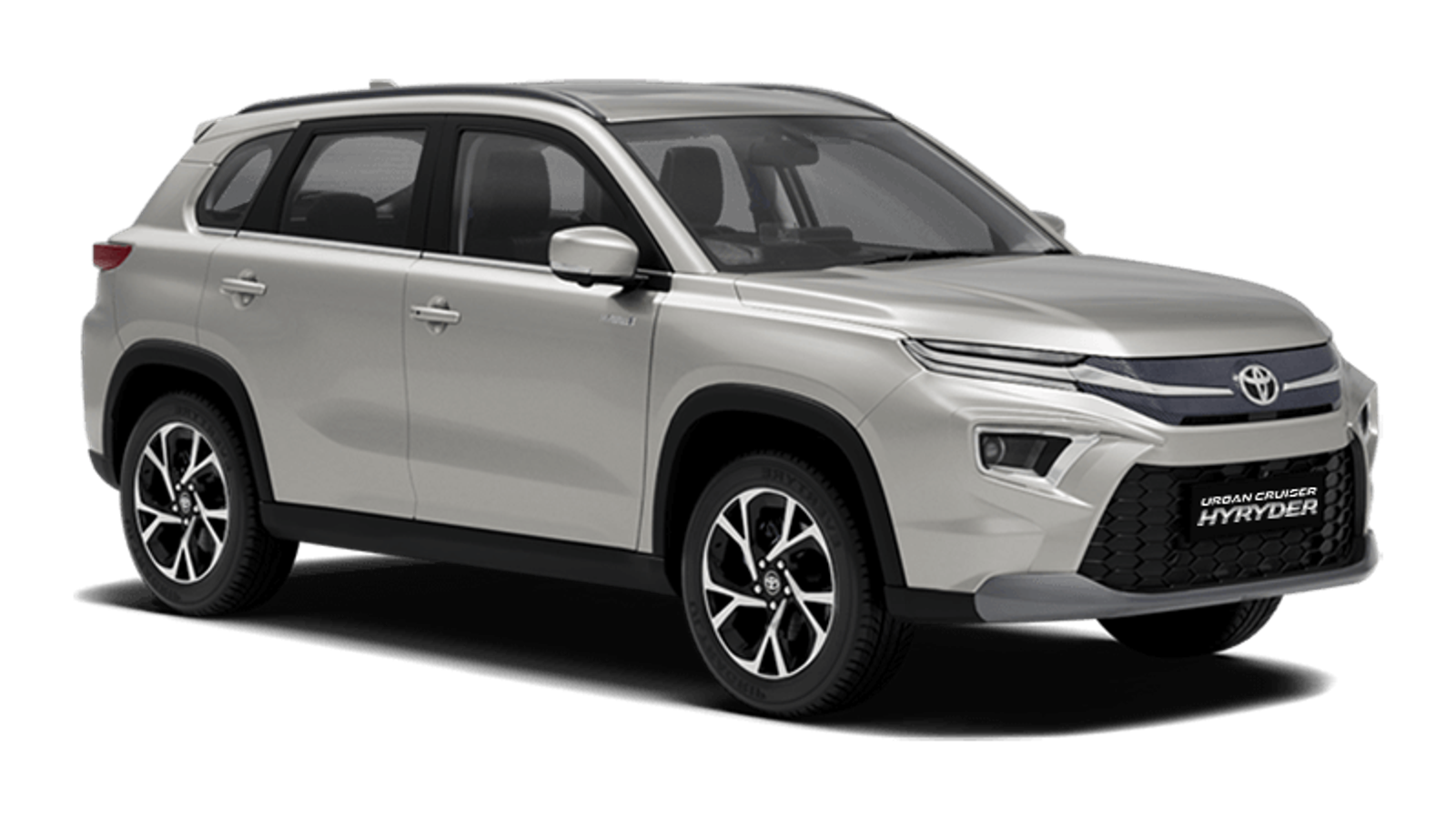
Here is the full landed cost of one car, a 2026 Toyota Urban Cruiser Hyryder shipped from India to Tanzania, worked out on 9 November 2026 with the customs rules in force that day. It lands at 97,463,789 TZS (about US$36,970), and duties and taxes come to 57.2% of its CIF value.
| Item | Share of CIF | Amount |
|---|---|---|
| Vehicle priceIPAS price for a car sourced in India | 40,862,557 TZSUS$15,500 | |
| Shipping and insuranceIndia to Tanzania | 16,577,017 TZSUS$6,288 | |
| CIF valueCost, insurance and freight: the customs value | 57,439,574 TZSUS$21,788 | |
| Customs duties and taxes | ||
| Basic customs duty (25%)25% of CIF | 14,359,893 TZSUS$5,447 | |
| Additional duty (5%)Base or related charges differ from CIF; see the duty structure above8.3% of CIF | 4,740,057 TZSUS$1,798 | |
| GST/VAT (18%)18% of CIF plus the duties above24% of CIF | 13,777,272 TZSUS$5,226 | |
| Total duties and taxes57.2% of CIF | 32,877,222 TZSUS$12,471 | |
| Service and handling | ||
| Premium Import ServiceOptional end-to-end import management by IPAS | 2,665,293 TZSUS$1,011 | |
| Destination handlingPort terminal and customs clearance handling | 4,481,700 TZSUS$1,700 | |
| Total landed cost | 97,463,789 TZSUS$36,970 | |
Documents Required for Import
Importing a vehicle into Tanzania requires a comprehensive set of documents. Missing or incomplete paperwork is the single most common cause of clearance delays at the Port of Dar es Salaam. Prepare every document before your vehicle ships.
Customs and Tax Documents
- Import Declaration Form (IDF) — Filed electronically through the TRA system before the vehicle arrives. This is mandatory.
- Commercial Invoice / Proof of Purchase — Must show the vehicle description, chassis number, purchase price, and payment details. TRA uses the CIF value (transaction value plus freight and insurance) as the dutiable value.
- Original Bill of Lading — Issued by the shipping line; required to claim the vehicle at the port.
- Packing List — If the vehicle is shipped in a container with other goods or personal effects.
- Proof of Payment of Duties and Taxes — Generated through the TRA electronic payment system after duty assessment.
Vehicle-Specific Documents
- Pre-shipment Inspection Certificate (TBS PVoC) — The Certificate of Conformity issued by a TBS-approved inspection agency in the country of export. This is the single most critical document. Without it, the vehicle is subject to expensive and uncertain Destination Inspection.
- Original Vehicle Registration Documents — From the country of export, showing ownership history and the vehicle's year of manufacture and first registration (critical for the age-based excise calculation).
- Export Certificate — For Japan-origin vehicles, this is typically a JEVIC or JAAI certificate. For other origins, the equivalent deregistration or export proof.
- Chassis Number Verification — TBS inspectors will cross-reference the physical chassis number against all documentation.
Importer Documents
- Taxpayer Identification Number (TIN) — Every importer must have a valid TIN registered with TRA. This applies to both individuals and companies.
- Passport or National ID — Personal identification of the importer.
- Power of Attorney — If using a clearing agent (highly recommended), a signed power of attorney authorising the agent to act on your behalf.
Tips for Clean Documentation
Ensure the commercial invoice value matches the amount actually paid. TRA checks declared values, and significant under-declarations will trigger a valuation uplift. All documents should reference the same chassis number. Discrepancies between the invoice, B/L, and registration documents will cause delays.
Customs Clearance Timeline
Customs clearance at the Port of Dar es Salaam follows a structured process administered by TRA. With complete documentation and a reputable clearing agent, the entire process typically takes 3-7 business days. Complications with paperwork, valuation disputes, or missing PVoC certificates can extend this to two weeks or more.
| Stage | Duration | Description |
|---|---|---|
| Sea Transit (Japan to Dar es Salaam) | 4-6 weeks | Typical transit time for RoRo or container from Yokohama/Nagoya |
| Sea Transit (India to Dar es Salaam) | 2-3 weeks | Shorter route from Mumbai/Chennai/Nhava Sheva |
| Engage Clearing Agent | 1-2 days | Hire a licensed customs broker, submit power of attorney |
| IDF Filing and Document Submission | 1 day | Electronic filing through TRA; attach all required documents |
| TRA Document Review | 1-3 days | TRA officers review documents, verify the declared value, assign HS code |
| Vehicle Physical Inspection | 1 day | TRA and TBS officers inspect the vehicle at the port; verify chassis number, condition, mileage |
| Duty Assessment and Payment | 1-2 days | TRA issues duty assessment notice; importer pays via electronic transfer |
| Release Order Issuance | 1 day | TRA issues release order once all duties are paid and documents clear |
| Port Collection / Transport | 1 day | Vehicle released from port; transported to importer or agent premises |
Total from vessel arrival to release: 3-7 business days (assuming clean documentation)
The India-to-Tanzania corridor offers a meaningful time advantage. Sea transit from Mumbai or Chennai to Dar es Salaam is approximately 2-3 weeks, compared to 4-6 weeks from Japan. Combined with the zero age surcharge on new vehicles, this makes the India route both faster and more cost-efficient for many vehicle categories.
Homologation and Vehicle Approval
Tanzania does not operate a separate type-approval agency in the European or Australian sense. Instead, the Tanzania Bureau of Standards (TBS) serves as the unified standards and conformity enforcement body for all imported vehicles. The approval process has two stages: pre-shipment and destination.
Pre-shipment Verification of Conformity (PVoC)
PVoC is the primary vehicle approval mechanism. All vehicles destined for Tanzania must be inspected in the country of export by a TBS-approved inspection agency before shipment. The inspection covers:
- Vehicle identification (chassis number, engine number, body type)
- Roadworthiness assessment (brakes, suspension, steering, tyres, lights)
- Odometer reading verification
- Emissions screening (no formal Euro standard is enforced, but PVoC implicitly screens for gross non-compliance)
- Safety equipment check (seatbelts, mirrors, horn)
- Verification against TBS import standards
Upon passing, the inspection agency issues a Certificate of Conformity (CoC) that must accompany the vehicle to Tanzania. TBS extended the PVoC compliance deadline in July 2025, giving importers additional time to arrange inspections.
Destination Inspection (DI)
Vehicles arriving at Dar es Salaam without a valid CoC are subject to Destination Inspection at the port. DI is conducted by TBS officers and is significantly more expensive than pre-shipment PVoC. There is also a real risk of the vehicle being rejected or held indefinitely if it fails DI standards. DI should be treated as a last resort, not a planned alternative to PVoC.
Roadworthiness Certificate
After customs clearance, the vehicle must obtain a Roadworthiness Certificate before it can be registered and driven on Tanzanian roads. This involves a physical inspection — typically at a TRA-appointed inspection centre — covering brakes, lights, tyres, steering, emissions, and general structural condition. New vehicles in good condition pass routinely. Older vehicles may require repairs before certification.
Registration Procedures and Costs
Vehicle registration in Tanzania is administered by the Tanzania Revenue Authority (TRA), which serves as the single authority for both customs processing and vehicle registration. The process is straightforward once the vehicle has cleared customs and obtained its roadworthiness certificate.
Step-by-Step Registration
- Apply for Vehicle Registration — Submit an application to TRA with the customs release order, roadworthiness certificate, and all import documents.
- Pay Registration Fees — Fees are scaled by engine capacity and vehicle type. Passenger vehicles pay a higher rate than commercial vehicles. TRA publishes the fee schedule annually.
- Obtain Number Plates — TRA issues Tanzanian number plates upon registration approval.
- Obtain Road Licence — An annual road licence fee is required to legally operate the vehicle on Tanzanian roads. This is renewed yearly.
- Secure Motor Vehicle Insurance — Third-party liability insurance is the minimum legal requirement. Comprehensive cover is strongly recommended for imported vehicles.
- Emissions Test — Some local authorities require an emissions test as part of the registration process. This is typically a formality for vehicles that have already passed PVoC and roadworthiness certification.
Registration Costs
Registration fees vary by engine capacity and vehicle category. As a general guide:
| Component | Approximate Cost |
|---|---|
| Registration fee (passenger vehicle) | TZS 150,000-350,000 ($55-$130) |
| HIV/AIDS Response Levy on first registration | TZS 50,000 (up to 1,000cc), 100,000 (1,001-1,500cc), 150,000 (1,501-2,500cc), 200,000 (over 2,500cc) |
| Electric vehicle registration tax | TZS 95,000 (below 50 kW) or 250,000 (above 50 kW) |
| Number plates | TZS 50,000-100,000 ($18-$37) |
| Annual road licence | TZS 50,000-250,000 ($18-$95) depending on engine size |
| Third-party insurance (annual) | TZS 100,000-300,000 ($37-$112) |
| Roadworthiness inspection | TZS 30,000-80,000 ($11-$30) |
Total post-import registration costs typically range from $150-$400 depending on the vehicle category and engine size.
TIN Requirement
Every vehicle owner must have a valid Taxpayer Identification Number (TIN) registered with TRA. If you do not already have a TIN, you must apply for one before starting the registration process. TIN registration is free and can be completed at any TRA office or online through the TRA portal.
Frequently Asked Questions
Can I import a car to Tanzania from Japan?
Yes. Japan is the largest source of vehicle imports to Tanzania. Used Japanese passenger cars must comply with the age-based excise surcharge schedule — vehicles aged 8-10 years pay 15% additional excise and those over 10 years pay 30%, on top of the engine-size excise. All vehicles must pass TBS PVoC inspection in Japan before shipment. Transit time from Japanese ports to Dar es Salaam is typically 4-6 weeks.
What is the maximum age limit for importing a car to Tanzania?
Tanzania does not impose a hard age ban. Instead, it uses progressive excise surcharges to discourage older imports: +15% for vehicles aged 8-10 years and +30% for vehicles over 10 years old, on top of the standard engine-based excise. Practically, the sweet spot for used imports is under 8 years old, where no age surcharge applies.
How much duty will I pay to import a car to Tanzania?
Total duty depends on the vehicle's CIF value, engine size, age, and HS code classification. For a new passenger sedan with a 1,500cc engine, expect a total tax burden of about 57% of CIF. For a used sedan aged 8-10 years with a 2,000cc engine, the total is about 79%, and above 10 years it passes 100%. Use CarImport.AI to calculate the exact landed cost for your specific vehicle.
Is it cheaper to import a new car from India or a used car from Japan?
In many cases, the total landed cost is surprisingly similar — or even favours the new Indian vehicle. A new Indian compact SUV (e.g., Hyundai Creta, Tata Nexon) priced at $15,000-$20,000 FOB attracts zero age surcharge and only 5% excise (for engines from 1,001cc to 2,000cc). A comparable seven-year-old Japanese SUV might have a lower FOB price ($6,000-$10,000) and pays no age surcharge yet, but an 8-year-old one pays an extra 15% excise. When you factor in modern safety features, better fuel efficiency, and the shorter shipping time from India (2-3 weeks vs 4-6 weeks from Japan), the new Indian vehicle becomes highly competitive.
Do I need a clearing agent in Tanzania?
While not legally mandatory, using a licensed customs clearing agent is extremely strongly recommended. The TRA clearance process involves electronic filings, physical inspections, valuation assessments, and coordinated interactions with TBS. An experienced agent familiar with the Port of Dar es Salaam will navigate this process efficiently and can typically complete clearance in 3-5 business days. Without an agent, delays of two weeks or more are common for first-time importers.
Can I import a left-hand drive (LHD) vehicle to Tanzania?
No. Tanzania drives on the left and requires right-hand drive: an LHD vehicle cannot be registered for road use. Choose an RHD vehicle from the outset.
What happens if my vehicle fails PVoC inspection?
If your vehicle fails PVoC in the country of export, you must rectify the identified deficiencies and have the vehicle re-inspected. If the vehicle arrives in Tanzania without a valid CoC (or with a failed inspection), it will be subject to Destination Inspection (DI) at the Port of Dar es Salaam. DI is more expensive, takes longer, and carries a real risk of the vehicle being rejected outright if it does not meet TBS standards.
Are there any incentives for importing electric vehicles to Tanzania?
There is no EV-specific cut to import duty or VAT: a battery EV pays 25% duty and 18% VAT like any car. Because Tanzania's excise bands are set by engine cylinder capacity, a battery EV pays 0% excise, which puts its total at about 49.5% of CIF, the same as a car of 1,000cc or less. Hybrids pay the normal engine-size excise. Confirm the excise treatment with TRA before shipping, as no specific EV ruling has been published.
Ready to Import?
Whether you are considering a brand-new SUV from India or a well-maintained used sedan from Japan, the Tanzanian import process is navigable with the right preparation. The key to a smooth experience is complete documentation, a valid TBS PVoC certificate, an accurate understanding of your duty obligations, and — ideally — an experienced clearing agent at the Port of Dar es Salaam.
IPAS offers two specialised tools to help you plan your Tanzania import with confidence:
CarImport.AI calculates the complete landed cost for any vehicle to Tanzania — including EAC import duty, excise duty (engine-size and age-based), VAT, the railway levy, and shipping. Input your vehicle details and get an itemised breakdown in seconds. No guesswork, no surprises at the port.
IPAS EXPRESS Pro Car Shipping provides instant shipping quotes from any origin to Dar es Salaam — container, RoRo, or air freight. Compare methods, see transit times, and lock in your rate before you commit.
Get a Shipping Quote to Dar es Salaam
For buyers interested in new vehicles sourced in India, IPAS handles the complete pipeline: vehicle procurement, export documentation, TBS PVoC coordination, sea freight to Dar es Salaam, and guidance through TRA clearance. Contact IPAS to discuss your requirements.
Related Guide: How to Import a Car to Kenya (2026) — Kenya and Tanzania are both in the EAC, but Kenya applies 35% import duty for FY 2026/27, much higher excise rates (20-35%), CRSP-based valuation and a hard limit of under 8 years. Compare both countries if you are considering East African import options.
Ready to Import Your Vehicle?
Two tools, two use cases. Pick the one that fits your needs.
Source a vehicle through IPAS and calculate the full landed cost — customs duties, shipping, and compliance — to destinations across the world.
Calculate Landed CostIPAS Express
Already have a vehicle? Get instant shipping quotes — sea freight, air freight, or RoRo — for one car or multiple vehicles worldwide.
Get Shipping Quote