

Introduction
Georgia has the most unusual vehicle tax structure of any market IPAS serves, and once you understand it the entire import decision changes shape.
Georgia does not tax the value of your car. There is no import duty on motor vehicles — zero, on every line. There is no VAT on light passenger cars. The entire border tax on a passenger vehicle is a single excise charged per cubic centimetre of engine displacement, with the rate chosen by the car's age, its steering side and its propulsion type. The purchase price never enters the calculation. Neither does the freight, the insurance or the origin.
The practical consequence is striking: a 2022 petrol sedan with a 1,600cc engine pays exactly the same GEL 2,400 in tax whether you bought it for US$5,000 or US$50,000. Georgia's own Revenue Service calculator has no field for value at all — it asks only for engine capacity, age, steering and fuel type.
That makes Georgia extraordinarily cheap for expensive cars and comparatively expensive for cheap, old, large-engined ones. It is also why Georgia has become one of the largest destinations in the world for US salvage-auction vehicles.
There is a second track. Goods vehicles under HS 8704 — pickups with an open cargo bed, vans, lorries — are on a completely different regime: no excise at all, but 18% VAT on CIF. The classification decision does not change a rate; it changes which tax exists. Get it wrong and your calculation is not slightly off, it is entirely the wrong shape.
One more thing to know before sourcing. Right-hand-drive vehicles are permitted in Georgia — but they pay three times the excise. And converting one to left-hand drive does not help: the law applies the tripled rate to any vehicle whose steering has been moved.
Quick Facts
| Detail | Information |
|---|---|
| Country | Georgia, South Caucasus — capital Tbilisi. Not the US state |
| Customs Authority | Revenue Service (rs.ge), Ministry of Finance |
| Traffic Side | Right-hand traffic (drive on the right) |
| Steering Requirement | RHD permitted — but at 3× the excise. Conversion does not avoid it |
| Import Duty | 0% on all vehicle lines — HS 8703 and HS 8704 alike |
| VAT — light passenger cars (HS 8703) | Exempt — Tax Code Article 173 |
| VAT — goods vehicles (HS 8704) | 18% of CIF |
| Excise — HS 8703 | Per cubic centimetre, by age, steering and propulsion |
| Excise — HS 8704 | Does not apply — Georgian vehicle excise attaches to HS 8703 only |
| Value sensitivity | None on the passenger track — CIF does not enter any formula |
| Free trade agreements | A complete non-lever — MFN is already 0% on every line |
| Country of origin | Fiscally irrelevant |
| Vehicle Age Limit on import | None |
| Registration gate | Euro 5 required since 1 January 2024 — bars roughly pre-2013 vehicles from registration |
| Salvage / flood titles | No categorical bar — Georgia is a major destination for US salvage stock |
| Importer type | No distinction between individuals, dealers and companies |
| Main Ports | Poti, Batumi (Black Sea) |
| Currency | Georgian Lari (GEL) |
Cars You Can Import to Georgia
Each card is a full landed-cost calculation: the car's price, shipping, every duty and tax, and handling, worked out on 9 November 2026 with the rules in force that day. All are left-hand drive to suit Georgia's roads. Tap a car to see its full breakdown, or open it to change the trim, colour or port.
More cars you can import to Georgia
New cars IPAS sources to order that meet Georgia's import rules. Prices are ex works, before shipping and duty. Open a car to work out its full landed cost.
 RHDBackorder2026
Tata Tiago
Hatchback · 20 VariantsPetrol · CNGFrom $5,700Ex Works, India RHDBackorder2026
Tata Altroz
Hatchback · 27 VariantsPetrolFrom $6,900Ex Works, India RHDBackorder2026
Hyundai Verna
Sedan · 12 VariantsPetrolFrom $9,900Ex Works, India LHD/C-RHDBackorder2026
Ford Bronco
SUV · 10 VariantsPetrolFrom $48,600Ex Works, USA LHDBackorder2026
Lincoln Aviator
SUV · 5 VariantsPetrolFrom $70,300Ex Works, USA LHDBackorder2026
Mercedes-Benz G-Class
SUV · 8 VariantsDiesel · Hybrid · ElectricFrom $140,300Ex Works, Germany RHDBackorder2026
Mercedes-Benz E-Class
Sedan · 3 VariantsHybridFrom $66,100Ex Works, India RHDBackorder2026
Kia Carens Clavis EV
SUV · 17 VariantsElectricFrom $21,700Ex Works, India LHDBackorder2025
Toyota Tacoma
Pickup · 11 VariantsPetrol · HybridFrom $37,900Ex Works, USA LHDBackorder2026
Toyota Hilux Double Cab V6 4.0
Pickup · 2 VariantsPetrolFrom $47,400Ex Works, UAE RHDBackorder2026
Toyota Innova Hycross
SUV · 15 VariantsPetrol · HybridFrom $17,600Ex Works, India LHD/C-RHDBackorder2025
GMC Yukon XL
SUV · 11 VariantsPetrol · DieselFrom $88,200Ex Works, USA RHDBackorder2026
Suzuki Ignis
SUV · 11 VariantsPetrolFrom $6,300Ex Works, India RHDBackorder2026
Ram 2500
Pickup · 3 VariantsDieselFrom $112,100Ex Works, NZ RHDBackorder2026
Nissan Magnite
SUV · 48 VariantsPetrol · CNGFrom $6,600Ex Works, India RHDBackorder2026
Land Rover Range Rover Velar
SUV · 3 VariantsPetrol · DieselFrom $64,900Ex Works, India
The Two-Track Architecture
This is the single most important thing to internalise about Georgia.
Track A — HS 8703, light passenger vehicles
| Component | Treatment |
|---|---|
| Import duty | 0% |
| Excise | Per cubic centimetre, by age / steering / propulsion |
| VAT | Exempt |
| Total border tax | Excise only |
The customs value does not enter any formula on this track.
Track B — HS 8704, goods vehicles
| Component | Treatment |
|---|---|
| Import duty | 0% |
| Excise | Not applicable |
| VAT | 18% of CIF |
| Total border tax | 18% of CIF |
Georgian vehicle excise attaches to commodity heading 8703 alone — the string "8704" does not appear anywhere in the Tax Code. So a pickup with an open cargo platform pays no excise regardless of how large its engine is, but pays VAT that a passenger car would not.
Classify carefully. This is not a rate difference; it is a different tax entirely.
The Excise Rate Table (HS 8703)
Rates are set by Article 188 of the Tax Code, as amended by Law No. 1477 of 1 April 2026, in force from 2 April 2026.
| Case | Excise rate |
|---|---|
| LHD, 0–6 years, petrol or diesel | 1.50 GEL per cm³ |
| LHD, more than 6 years | 4.50 GEL per cm³ |
| LHD hybrid, 0–6 years | 0.60 GEL per cm³ (a 60% reduction) |
| LHD hybrid, more than 6 years | 4.50 GEL per cm³ — the hybrid relief does not extend past 6 years |
| RHD or steering-relocated, 0–6 years | 4.50 GEL per cm³ (3×) |
| RHD or steering-relocated, more than 6 years | 13.50 GEL per cm³ (3×) |
| Battery electric, LHD | Exempt — GEL 0 |
| Battery electric, RHD or steering-relocated | GEL 3,000 flat per vehicle |
| Classic vehicle, over 30 years old | 1.00 GEL per cm³ |
| Sport-purpose light vehicle | GEL 100 flat per vehicle |
| Factory-adapted for a wheelchair user, imported by such a person | Exempt (usable once every three years) |
How age is measured
Age is the difference between the year of the customs declaration and the year of manufacture — calendar years only, no months, no part-years, no rounding.
age = declaration year − manufacture year
For a declaration made during 2026:
- Manufacture year 2020 or later → the 1.50 GEL band
- Manufacture year 2019 or earlier → the 4.50 GEL band
That single-year boundary is worth real money. A 2020 car declared in 2026 is six years old and pays 1.50; a 2019 car declared in the same week pays 4.50 — three times as much, for one model year.
Worked Examples
Example 1 — LHD petrol sedan, 1,600cc, 2022 model, declared 2026
Age = 2026 − 2022 = 4 years → the 0–6 band.
| Charge | Calculation | Amount |
|---|---|---|
| Import duty | 0% | GEL 0 |
| Excise | 1,600 cm³ × 1.50 | GEL 2,400 |
| VAT | exempt (HS 8703) | GEL 0 |
| Total border tax | GEL 2,400 |
This figure is the same whether the car cost US$5,000 or US$50,000.
Example 2 — LHD petrol SUV, 3,000cc, 2017 model, declared 2026
Age = 9 years → the "more than 6" band.
| Charge | Calculation | Amount |
|---|---|---|
| Excise | 3,000 cm³ × 4.50 | GEL 13,500 |
| VAT | exempt | GEL 0 |
| Total border tax | GEL 13,500 |
Older and larger is where Georgia becomes expensive — this car pays more than five times the first example.
Example 3 — LHD hybrid, 2,000cc, 2023 model, declared 2026
Age = 3 years → hybrid relief applies.
| Charge | Calculation | Amount |
|---|---|---|
| Excise | 2,000 cm³ × 0.60 | GEL 1,200 |
| Total border tax | GEL 1,200 |
The hybrid concession is a 60% cut, and it is one of the most valuable levers available — but only while the car is six years old or younger.
Example 4 — RHD Japanese import, 2,000cc, 2022 model, declared 2026
Age = 4 years, but right-hand drive triples the rate.
| Charge | Calculation | Amount |
|---|---|---|
| Excise | 2,000 cm³ × 4.50 | GEL 9,000 |
| Total border tax | GEL 9,000 |
The same car in left-hand drive would pay GEL 3,000. The steering side costs GEL 6,000.
Example 5 — LHD battery electric vehicle, any size, any value
| Charge | Amount |
|---|---|
| Import duty | GEL 0 |
| Excise | Exempt |
| VAT | Exempt |
| Total border tax | GEL 0 |
A left-hand-drive electric car enters Georgia entirely free of border tax. This is among the most generous EV treatments anywhere in the world.
Example 6 — Pickup truck (HS 8704), CIF US$25,000
| Charge | Calculation | Amount |
|---|---|---|
| Import duty | 0% | $0 |
| Excise | not applicable to HS 8704 | $0 |
| VAT (18%) | $25,000 × 0.18 | $4,500 |
| Total border tax | $4,500 (18% of CIF) |
Note the reversal: the pickup pays no excise no matter how big its engine, but it pays VAT that a passenger car is exempt from — and unlike the passenger track, its tax is value-sensitive.
These figures show the structure. Get the exact excise for your vehicle's displacement, age band and steering using CarImport.AI.

Calculate your exact import duty to Georgia
Get a vehicle-specific duty and full landed-cost breakdown — HS classification, every tax, levy and FTA, plus shipping — calculated for your exact make, model and specs.
- Vehicle-specific HS code
- All duties, taxes & FTAs
- Shipping + est. landed cost
Free Trade Agreements Do Nothing Here
Georgia has agreements with the EU (the DCFTA), the UK, EFTA, China, Türkiye, Hong Kong and the CIS states. None of them affects a vehicle import.
The reason is structural: the MFN duty is already 0% on every vehicle line, so there is nothing for a preference to reduce. The excise and the VAT exemption are internal tax measures that make no reference to origin whatsoever.
The operational consequences are worth stating plainly:
- Do not obtain a Certificate of Origin, EUR.1 or origin declaration. No preferential claim is available or needed.
- Do not vary any rate by origin. A Japanese, American, Chinese, German, Turkish or Russian vehicle of identical age, displacement, steering and propulsion pays exactly the same in Georgia.
- Direct-shipment and non-manipulation rules are irrelevant.
No origin-based ban, quota or surcharge on motor vehicles was identified, including for Russian-origin vehicles. Georgia's Russia-related measures concern export and re-export control rather than inbound vehicle tariffs.
Two Widely-Published Errors
Georgia attracts more incorrect online guidance than almost any market, so two corrections are worth making explicitly.
"18% VAT applies to imported cars." It does not, for light passenger vehicles. Article 173, subparagraph (z), of the Tax Code exempts the import of an HS 8703 light motor vehicle from VAT unconditionally — regardless of origin, importer type, age, propulsion or value. A great deal of 2026 web content, including shipping-company blogs and third-party customs calculators, applies 18% VAT to Georgian passenger car imports, sometimes on CIF plus excise. That content is contradicted by the statute and by the Revenue Service's own operational guidance. There should never be a VAT line on an HS 8703 vehicle.
"Import duty is GEL 0.05 per cm³ plus 5% per year of age." This rule comes from the Law on Customs Tariff and Duty of 1999, which was repealed. It has no basis in the current Tax Code, yet it still appears in practitioner calculators and at least one major professional tax summary. Import duty on vehicles is 0%. If a clearing agent levies a small charge along these lines, it belongs in administrative fees, not in duty.
Admissibility
| Gate | Rule |
|---|---|
| Euro 5 emissions | Since 1 January 2024 a vehicle that does not meet Euro 5 may not be registered in Georgia. In practice this bars vehicles manufactured before roughly 2013. It restricts registration, not import — export, re-export and transit are unaffected, as are already-registered vehicles |
| Steering | RHD may be imported and registered. Georgia debated an outright ban in 2015–17 and rejected it, choosing instead to triple the fiscal charge from January 2017. This is a cost gate, not a ban |
| Steering conversion | A converted RHD-to-LHD car still pays the 3× rate — the law applies it to any vehicle whose steering has been moved. Separately, a vehicle with relocated steering first registered on or after 1 April 2020 is reported to fail periodic technical inspection. Conversion is a trap, not a workaround |
| Age on import | None. Any age may be imported and cleared. The constraints are fiscal (over 6 years triples the rate) and the Euro 5 registration gate |
| Salvage / flood / rebuilt | No categorical bar. Georgia is one of the largest destinations for US Copart and IAAI salvage vehicles. A repaired car must still satisfy periodic technical inspection and the Euro 5 gate |
| Importer type | No distinction between private individuals, dealers, companies or manufacturers, and no per-person annual quota |
The Euro 5 requirement deserves emphasis because it interacts awkwardly with the excise. The cheapest excise band applies to cars six years old or newer, and the Euro 5 gate excludes cars older than about thirteen years — so the practical import window sits between those, with the sweet spot firmly at the newer end.
Ports and Logistics
| Port | Role |
|---|---|
| Poti | The principal Black Sea vehicle gateway; heavy roll-on/roll-off and container traffic |
| Batumi | Second Black Sea port, also handling vehicles |
Both are on the Black Sea and are reached via the Mediterranean and the Bosphorus. Poti in particular is a major regional vehicle hub, and it serves not only Georgia but onward overland movements into Armenia, Azerbaijan and Central Asia.
That regional role is why Georgian ports see very high volumes of US-origin vehicles, including salvage stock, and why freight from North America to Poti is unusually well served for a market of Georgia's size.
Charges Outside the Border Tax
These are administrative and registration-stage charges. They are not taxes, sit in no tax base, and should be reported separately:
| Item | Fee |
|---|---|
| Vehicle registration certificate | GEL 100 |
| One pair of state registration plates | GEL 80 |
| Transfer-of-right card | GEL 25 |
| Transit number, general | GEL 370 |
| Transit number for a vehicle leaving under export or re-export | GEL 150 |
Customs broker fees, terminal handling and inland transport are additional and commercially set.
Worked Example: Importing a 2026 Toyota RAV4 to Georgia
Here is the full landed cost of one car, a 2026 Toyota RAV4 shipped from the USA to Georgia, worked out on 9 November 2026 with the customs rules in force that day. It lands at 123,836 GEL (about US$47,743), and duties and taxes come to 1.4% of its CIF value.
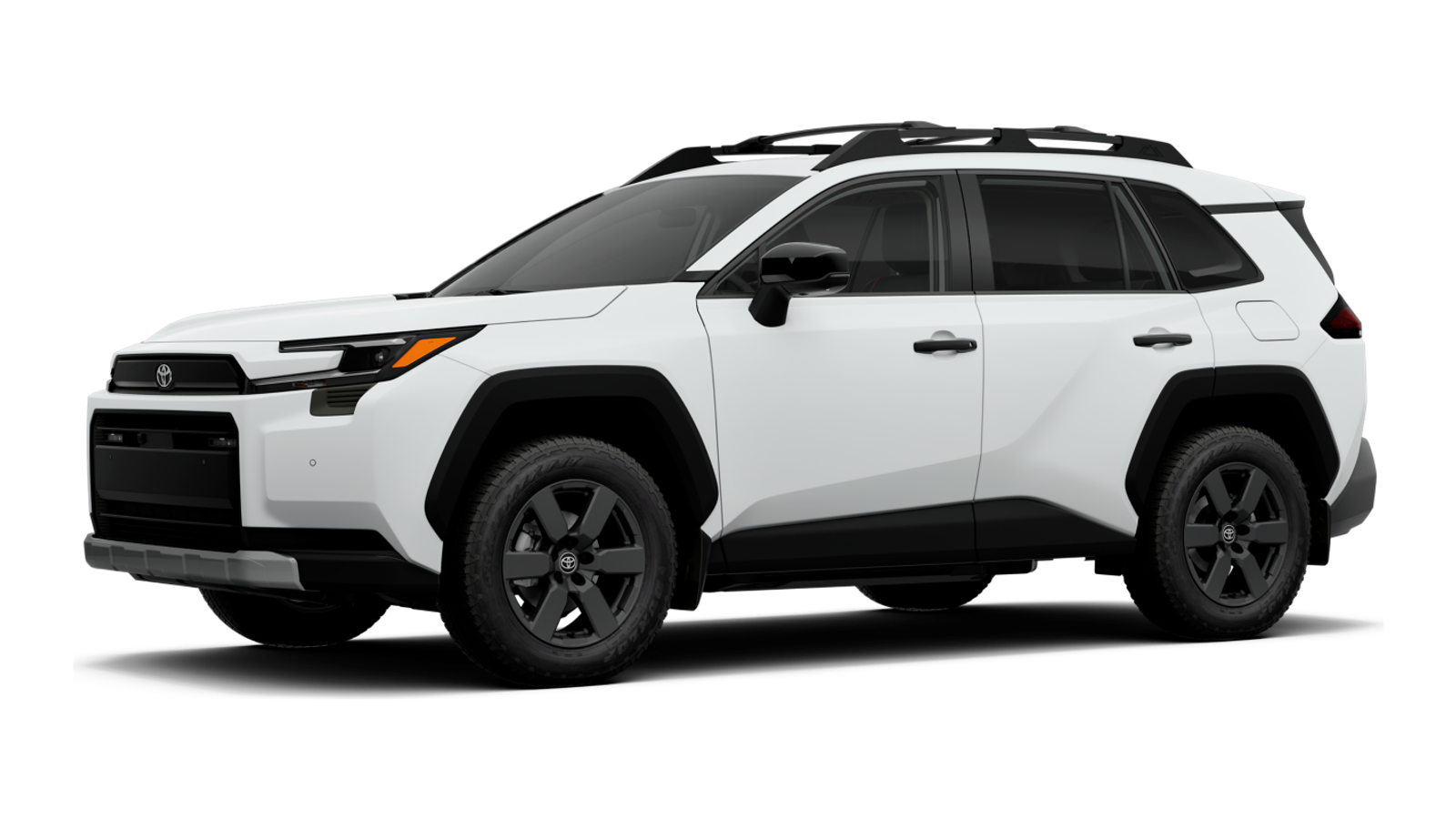
| Item | Share of CIF | Amount |
|---|---|---|
| Vehicle priceIPAS price for a car sourced in the USA | 99,343 GELUS$38,300 | |
| Shipping and insuranceUSA to Georgia | 14,844 GELUS$5,723 | |
| CIF valueCost, insurance and freight: the customs value | 114,187 GELUS$44,023 | |
| Customs duties and taxes | ||
| Basic customs duty (0.1089%)0.1% of CIF | 125 GELUS$48 | |
| Additional duty (1.306805%)1.3% of CIF | 1,491 GELUS$575 | |
| Total duties and taxes1.4% of CIF | 1,616 GELUS$623 | |
| Service and handling | ||
| Premium Import ServiceOptional end-to-end import management by IPAS | 3,416 GELUS$1,317 | |
| Destination handlingPort terminal and customs clearance handling | 4,617 GELUS$1,780 | |
| Total landed cost | 123,836 GELUS$47,743 | |
Documents Required for Import
- Commercial invoice or auction purchase documentation
- Bill of Lading (original or telex release)
- Packing list with make, model, year of manufacture, VIN, engine displacement in cm³, steering side and fuel type
- Certificate of Title or equivalent ownership document
- Export certificate or deregistration document from the origin country
- Georgian customs declaration
- Emissions documentation supporting Euro 5 compliance, for registration
- Importer identity documentation
Note what is not on this list: any certificate of origin. It serves no purpose in Georgia.
Note also which fields actually drive the tax — manufacture year, engine displacement and steering side. Those three data points determine the entire passenger-car bill, so they must be accurate and consistent across the documents.
Customs Clearance Timeline
| Stage | Typical duration | Notes |
|---|---|---|
| Vessel arrival to discharge | 1–3 days | Poti or Batumi |
| Customs declaration and excise assessment | 1–3 working days | Straightforward — displacement, year and steering determine the figure |
| Excise payment and release | 1 day | |
| Technical inspection | 1–3 days | |
| Registration and plates | 1–3 days | Euro 5 verified here |
| Typical total | 1–2 weeks |
Georgian clearance is fast and administratively light, which is part of the country's appeal as a regional import hub. The most common complication is a Euro 5 problem discovered at registration on an older vehicle that cleared customs without difficulty.
Recent Regulatory Changes (2017–2026)
- 1 January 2017 — RHD charge tripled. After rejecting an outright ban, Georgia instead applied a 3× multiplier to the excise on right-hand-drive vehicles, now codified in Article 188.
- 1 April 2020 — steering-relocation inspection consequence. A vehicle with relocated steering gear first registered on or after this date is reported to fail periodic technical inspection, closing conversion as a workaround.
- 1 January 2024 — Euro 5 registration requirement. Vehicles not meeting Euro 5 may no longer be registered, effectively barring pre-2013 vehicles from Georgian roads while leaving import, transit and re-export unaffected.
- 2 April 2026 — current excise rates in force. Law No. 1477 of 1 April 2026 amended Article 188, setting the rates in the table above.
Frequently Asked Questions
How much does it cost to import a car to Georgia?
For a light passenger car, it depends on engine size, age and steering — not on what you paid. A left-hand-drive petrol car with a 1,600cc engine, six years old or newer, pays 1,600 × GEL 1.50 = GEL 2,400, and nothing else. There is no import duty and no VAT on passenger cars. The same car at ten years old would pay GEL 7,200, and in right-hand drive it would pay three times the applicable rate.
Is it true that Georgia doesn't tax the value of the car?
Yes, for light passenger vehicles. The entire border tax is an excise measured per cubic centimetre of engine displacement, selected by age, steering side and propulsion. The customs value never enters the formula. Georgia's own Revenue Service vehicle calculator has no field for value at all — only engine capacity, age, steering and fuel type. This is why Georgia is remarkably cheap for expensive cars and relatively expensive for cheap old ones.
Do I pay 18% VAT on an imported car in Georgia?
Not on a light passenger car. Article 173, subparagraph (z), of the Tax Code exempts HS 8703 vehicle imports from VAT unconditionally. A great deal of online content — shipping blogs and third-party calculators — wrongly applies 18% VAT to Georgian car imports, sometimes on top of the excise. That is contradicted by the statute and by the Revenue Service. VAT at 18% does apply to goods vehicles under HS 8704, which conversely pay no excise.
Can I import a right-hand-drive car to Georgia?
Yes — Georgia permits both import and registration of right-hand-drive vehicles. It considered banning them in 2015–17 and decided instead to triple the excise, which has applied since January 2017. So a right-hand-drive car six years old or newer pays 4.50 GEL per cm³ instead of 1.50, and an older one pays 13.50 instead of 4.50. Converting the car to left-hand drive does not avoid this: the law applies the tripled rate to any vehicle whose steering has been moved, and a converted vehicle first registered from April 2020 is also reported to fail periodic technical inspection.
What is the age limit for importing a car to Georgia?
There is no age limit on import. There are two constraints that behave like one. Fiscally, a vehicle over six years old moves from 1.50 to 4.50 GEL per cm³ — a tripling at a single calendar-year boundary. And since January 2024, a vehicle that does not meet Euro 5 cannot be registered, which in practice excludes cars built before roughly 2013. Older vehicles can still be imported for transit, re-export or parts.
Are electric cars really tax-free in Georgia?
A left-hand-drive battery-electric vehicle is exempt from excise under Article 194, subparagraph (l), and passenger cars are already exempt from VAT and duty — so it enters entirely free of border tax, at any value and any size. A right-hand-drive electric car instead pays a flat GEL 3,000 per vehicle. Note also that the hybrid concession — a 60% excise reduction — applies only to hybrids six years old or newer; past that point a hybrid pays the full 4.50 GEL per cm³ like any petrol car.
Do trade agreements or country of origin matter?
No, in either case. The MFN duty is already 0% on every vehicle line, so Georgia's agreements with the EU, UK, EFTA, China, Türkiye and others have nothing to reduce. The excise and the VAT exemption make no reference to origin at all. Do not obtain a certificate of origin for a Georgian import — it serves no purpose. A Japanese, American, German and Chinese car of identical specification pay identical tax.
Can I import a salvage or flood-damaged car?
There is no categorical bar, and Georgia is in fact one of the largest destinations in the world for US Copart and IAAI salvage vehicles — a trade its low, value-blind tax structure actively encourages. The vehicle must still pass periodic technical inspection and meet the Euro 5 requirement to be registered.
Are pickups cheaper or more expensive?
Different, rather than simply cheaper. A pickup with an open cargo bed classifies under HS 8704, which carries no excise at all regardless of engine size — but it pays 18% VAT on CIF, which a passenger car does not. So a large-engined pickup avoids what would be a punishing excise, while a cheap small one may pay more than an equivalent car. Unlike the passenger track, the goods-vehicle tax is sensitive to value.
Ready to Import?
Georgia rewards a completely different sourcing instinct from most markets. Because the passenger-car tax ignores value entirely, the usual logic — find something cheap — works against you. The expensive car and the cheap car pay the same. What you are actually optimising is engine size, model year and steering side.
Three rules follow. Keep the displacement down, because the tax is charged per cubic centimetre. Stay inside the six-year window, because crossing it triples the rate at a single calendar-year boundary. And buy left-hand drive, because right-hand drive triples the rate again and conversion is expressly no escape.
If you can source a left-hand-drive electric car, the border tax is zero — duty, excise and VAT all fall away.
Then check Euro 5 before you commit. A pre-2013 vehicle will clear customs perfectly happily and then fail to register.
IPAS provides two tools to plan and execute your import:
CarImport.AI — Source a vehicle through IPAS and calculate the exact excise for your vehicle's displacement, age band, steering side and propulsion, plus shipping to Poti or Batumi.
IPAS EXPRESS — Already have a vehicle? Get instant shipping quotes to Poti or Batumi — sea freight, RoRo or container — with transparent, itemised pricing and a stage-by-stage timeline.
Ready to Import Your Vehicle?
Two tools, two use cases. Pick the one that fits your needs.
Source a vehicle through IPAS and calculate the full landed cost — customs duties, shipping, and compliance — to destinations across the world.
Calculate Landed CostIPAS Express
Already have a vehicle? Get instant shipping quotes — sea freight, air freight, or RoRo — for one car or multiple vehicles worldwide.
Get Shipping Quote