
Introduction
Importing a car to Guyana in 2026 depends on age and engine size. A new car up to 1,500 cc pays 35% duty only; 1,501-2,000 cc pays 45% duty, 10% excise and 14% VAT (about 82% of CIF); above 2,000 cc excise jumps to 110-140%. Electric vehicles pay nothing, and cars four years or older pay a formula-based excise.
Guyana is one of the fastest-growing economies in the Western Hemisphere, driven by a transformative oil and gas boom that has reshaped the country's purchasing power and consumer expectations. Situated on the northern coast of South America but culturally and politically aligned with the Caribbean through its membership in CARICOM, Guyana occupies a unique position in the global vehicle import landscape. It is a left-hand-traffic, right-hand-drive (RHD) market — one of only two on the South American mainland — making it a natural destination for vehicles sourced from Japan, the UK, and other RHD-origin countries.
The Guyana Revenue Authority (GRA) administers the vehicle import regime under the CARICOM Common External Tariff framework. Import duties, excise taxes, and VAT combine to create a layered cost structure that varies significantly depending on engine size, fuel type, vehicle age, and whether the importer is an individual or a licensed dealer. The total tax burden on a new petrol vehicle with a large engine can reach about 250-300% of CIF value, while electric vehicles pay no duty, excise or VAT. The 2026 Budget measures, in force from 16 February 2026, also cut the taxes on new small cars and hybrids and gave double-cab pickups a flat excise.
This guide covers every step of the Guyana vehicle import process in 2026: eligibility requirements, duty structure, required documents, customs clearance through ASYCUDA World, physical examination, and GRA Licence Revenue Office registration. Whether you are importing a fuel-efficient Japanese hatchback, a rugged pickup truck, or a fully electric vehicle, this guide provides the regulatory and cost framework you need to plan your import with confidence.
Planning to import a vehicle to Guyana? Use CarImport.AI to calculate your exact landed cost — customs duties, excise, VAT, and shipping — in under 60 seconds.
Quick Facts
| Detail | Information |
|---|---|
| Administering Authority | Guyana Revenue Authority (GRA) |
| Customs System | ASYCUDA World (electronic pre-arrival lodgement) |
| Registration Body | GRA Licence Revenue Office (LRO) |
| Steering Requirement | Right-Hand Drive (RHD) is the norm |
| Traffic Side | Left-hand traffic |
| CARICOM Member | Yes — Common External Tariff applies |
| Customs Duty Range | 35% (up to 1,500 cc) or 45% (above); 0% for EVs and for double-cab pickups up to 2,500 cc |
| Excise Tax Range | 0-140% of (CIF + duty) for vehicles under 4 years; formula-based flat-rate excise for vehicles 4 years and older |
| VAT | 14% on (CIF + Duty + Excise) for under-4-year vehicles; exempt for vehicles 4 years and older |
| Electric Vehicles | 0% Duty + 0% Excise + 0% VAT |
| New Cars and Hybrids (from 16 Feb 2026) | Up to 1,500 cc: 35% duty only. Hybrids 1,501-2,000 cc: 45% duty only |
| Double-Cab Pickups up to 2,500 cc | 0% duty, flat excise of GYD 2,000,000 or GYD 3,000,000, 0% VAT, any age |
| Maximum Vehicle Age | 8-year rule under review — confirm any vehicle 8 years or older with GRA |
| Used Vehicle Imports | Permitted (both individuals and dealers) |
| Primary Port | Port of Georgetown (Guyana Ports Inc., Demerara River) |
| Customs Clearance | 3-7 working days with complete documentation |
| Currency | Guyanese Dollar (GYD) |
Types of Cars That Can Be Imported
Guyana permits the importation of both new and used vehicles by individuals and licensed dealers alike. There is no restriction limiting used vehicle imports to diplomats, returning residents, or registered importers — the market is fully open. However, several critical eligibility rules apply.
New Vehicles (Under 4 Years Old)
New and recently manufactured vehicles — defined as those less than four years old, calculated as 48 months or four calendar years preceding January 1 of the importation year — are subject to the standard three-layer tax structure: Customs Duty on CIF, Excise Tax on CIF plus duty, and 14% VAT on the running total. The rates depend on engine displacement and fuel type.
Small-engine vehicles up to 1,500 cc attract the lowest burden — 35% customs duty with no excise and no VAT under the 2026 Budget measures. Vehicles of 1,501-2,000 cc pay 45% duty, 10% excise and 14% VAT, about 82% of CIF. Above 2,000 cc the excise rate jumps to 110% (and 140% for petrol cars over 3,000 cc), so the taxes can be two to three times the CIF value itself. This tiered structure is designed to encourage fuel efficiency and smaller displacement engines.
Used Vehicles (4 Years and Older)
Vehicles aged four years or older fall under a separate flat-rate excise regime that replaces the percentage-based calculation. VAT is exempt for these vehicles. Excise is calculated with a formula that adds a fixed US-dollar amount to the CIF value, applies a percentage, then adds the fixed amount again: ((CIF + K) × rate) + K. The result can still be substantial for larger engines.
Small used vehicles up to 1,500 cc pay a flat excise of GYD 800,000 (roughly USD 3,800) instead of the formula — making them the most affordable category to import.
The customs duty on a vehicle four years and older is not stated in the published excise schedule. IPAS conservatively adds the under-4-year duty rate (35% up to 1,500 cc, 45% above) until GRA confirms the position, so a quote for an older car may overstate the final bill.
Important for dealers: Licensed dealers are taxed on a different base. Where a vehicle less than four years old is imported by a motor vehicle dealer, excise is calculated on 1.5 times the CIF value plus duty, rather than CIF plus duty; vehicles four years and older imported other than by an individual fall under a separate table.
Age Limit: 8-Year Rule Under Review
Guyana's Customs Regulations define a vehicle as "eight years old" when 96 months (eight calendar years) have passed before 1 January of the year of importation, which points to an eight-year rule in Guyanese customs law. IPAS has not yet confirmed the current text of the operative rule, so any vehicle that is eight years old or more must be confirmed with GRA before you buy it.
Electric Vehicles — Complete Tax Exemption
Guyana offers one of the most generous EV incentive programmes in the Caribbean. Battery electric vehicles are exempt from excise tax and, whether new or four years and older, from VAT, regardless of power rating. Customs duty on EVs is 0% in GRA's published motor-vehicle guidance. This means the landed cost of an EV in Guyana is essentially the vehicle price plus shipping and handling fees, with zero government taxes applied. Hybrids are not treated as electric vehicles.
Additionally, businesses that purchase EVs benefit from a 50% annual write-down allowance, enabling full tax deduction within two years. This makes Guyana one of the most attractive EV import destinations in the region.
Hybrid Vehicles — New Relief from February 2026
Under the 2026 Budget measures, in force from 16 February 2026, new hybrids and plug-in hybrids (under four years old) pay:
- Up to 1,500 cc: 35% customs duty, no excise, no VAT
- 1,501-2,000 cc: 45% customs duty, no excise, no VAT
- 2,001-2,500 cc: 45% customs duty, 110% excise and 14% VAT — the full cascade
The excise relief does not apply to hybrids over 2,000 cc or to hybrids four years and older, which pay the excise for their fuel type and engine size. The 2,000 cc line is the largest cliff in the hybrid schedule: a 1,987 cc hybrid pays 45% of CIF in tax, while a 2,487 cc hybrid pays about 247%.
Other Special Measures (February 2026)
Several additional vehicle categories received reduced taxes from 16 February 2026:
- Double-cab pickups up to 2,500 cc, any age: 0% customs duty and 0% VAT, with a flat excise of GYD 2,000,000 (up to 2,000 cc) or GYD 3,000,000 (2,001-2,500 cc). Guyana classifies double cabs as passenger vehicles on their own tariff lines. Above 2,500 cc the flat excise ends: a new double cab of 2,501-3,000 cc pays 45% duty, 75% excise and 14% VAT.
- New vehicles under four years old with engine displacement of 1,500 cc or less: 35% customs duty, no excise and no VAT
- All-terrain vehicles (ATVs, not UTVs): no duty, excise or VAT
These measures reflect the government's broader strategy of reducing the cost of small, efficient, and utility vehicles while maintaining higher tariffs on large-engine luxury imports.
Fuel Types
Guyana places no restrictions on fuel type. Gasoline, diesel, hybrid, compressed natural gas (CNG), and fully electric vehicles are all eligible for import, with duty rates varying by fuel category and engine size.
Cars You Can Import to Guyana
Each card is a full landed-cost calculation: the car's price, shipping, every duty and tax, and handling, worked out on 9 November 2026 with the rules in force that day. All are right-hand drive to suit Guyana's roads. Tap a car to see its full breakdown, or open it to change the trim, colour or port.
More cars you can import to Guyana
New cars IPAS sources to order that meet Guyana's import rules. Prices are ex works, before shipping and duty. Open a car to work out its full landed cost.
 RHDBackorder2026
Lexus IS 300h
Sedan · 4 VariantsHybridFrom $40,100Ex Works, Japan RHDBackorder2026
Toyota Century SUV
SUV · 1 VariantPlug-in HybridFrom $189,000Ex Works, Japan LHDBackorder2026
Toyota Land Cruiser 79 Double Cab
Pickup · 5 VariantsDieselFrom $59,100Ex Works, UAE RHDBackorder2026
Tata Sierra
SUV · 24 VariantsPetrol · DieselFrom $10,300Ex Works, India LHD/C-RHDBackorder2025
GMC Yukon
SUV · 5 VariantsPetrolFrom $81,500Ex Works, USA RHDBackorder2026
Mitsubishi Pajero
SUV · 2 VariantsDieselFrom $47,200Ex Works, NZ LHDBackorder2026
Cadillac VISTIQ
SUV · 4 VariantsElectricFrom $92,900Ex Works, USA LHDBackorder2026
Zeekr 009
Van & MPV · 4 VariantsElectricFrom $69,800Ex Works, China🇨🇳 RHDBackorder2026
Hyundai Creta
SUV · 33 VariantsPetrol · DieselFrom $9,800Ex Works, India RHDBackorder2026
Hyundai i10 NIOS
Hatchback · 15 VariantsPetrol · CNGFrom $6,500Ex Works, India LHD/C-RHDBackorder2026
Ram 3500
Pickup · 9 VariantsPetrol · DieselFrom $57,800Ex Works, USA RHDBackorder2026
Ram 2500
Pickup · 3 VariantsDieselFrom $112,100Ex Works, NZ RHDBackorder2026
Mercedes-Benz AMG GT 4-Door Coupe Electric
Coupe · 3 VariantsElectricFrom $134,700Ex Works, UK RHDBackorder2026
BMW M4 Convertible
Convertible · 2 VariantsPetrolFrom $128,100Ex Works, UK LHDBackorder2026
Denza B5
SUV · 2 VariantsPlug-in HybridFrom $41,200Ex Works, China🇨🇳 RHDBackorder2026
Suzuki Grand Vitara
SUV · 35 VariantsHybrid · CNGFrom $9,700Ex Works, India
Seaports and Airports
Port of Georgetown
The Port of Georgetown, operated by Guyana Ports Inc. on the Demerara River, is the country's primary entry point for vehicle imports. Located in the capital city, it handles the vast majority of containerised and RoRo cargo entering Guyana. The GRA Customs Division maintains its main clearance office at 200-201 Camp Street, Georgetown, where all vehicle import documentation is processed.
Georgetown is served by major shipping lines connecting to ports in North America (Miami, New York), Asia (Yokohama, Singapore), Europe (Southampton, Rotterdam), and the Caribbean (Port of Spain, Kingston). Transit times from Japan — the most common RHD vehicle source — typically range from four to six weeks via transhipment through Caribbean or US Gulf ports.
Secondary Registration Offices
While customs clearance occurs at Georgetown, vehicle registration can be completed at GRA Licence Revenue Offices in several secondary locations:
- New Amsterdam
- Corriverton
- Linden
- Suddie (primarily agricultural vehicles)
These regional offices are particularly useful for buyers located outside the Greater Georgetown area.
Restrictions and Prohibitions
Right-Hand Drive
Guyana drives on the left side of the road and RHD vehicles are the norm. IPAS supplies right-hand-drive vehicles for Guyana. We have not found a published instrument banning left-hand-drive (LHD) imports, so if you plan to import an LHD vehicle, confirm with GRA that it can be registered for road use before shipping it.
The primary source markets for Guyana are Japan, the UK, Singapore, Australia, and other RHD countries.
Unsure whether your vehicle meets Guyana's requirements? CarImport.AI checks steering compatibility and calculates your full landed cost.
8-Year Age Rule
Guyanese customs law defines an "eight years old" vehicle (96 months before 1 January of the year of importation), which points to an eight-year import rule. The current operative rule is under review by IPAS, so confirm with GRA before buying any vehicle that is eight years old or more. Vehicles found in contravention of an import restriction are subject to forfeiture by the GRA Customs Division.
Mandatory Inspection Certificate (Since January 2025)
Effective January 1, 2025, all used vehicles imported into Guyana must carry an Inspection Certificate issued by a Competent Authority in the country of export. This requirement applies to every used vehicle regardless of age or origin — there are no exceptions. New vehicles are excluded from this requirement.
The inspection certificate must confirm that the vehicle is roadworthy, meets basic safety standards, and that the engine and chassis numbers match the accompanying documentation. Buyers should arrange this inspection before shipping, as vehicles arriving without a valid certificate may face delays or rejection at the port.
Tint Compliance
All imported vehicles are subject to tint compliance checks during physical examination at customs. Excessively tinted windows may need to be replaced or removed before the vehicle can be registered.
Duty Structure Overview
Guyana's vehicle import tax structure operates as a three-layer system: Customs Duty, Excise Tax, and VAT. The rates vary dramatically depending on engine displacement, fuel type, vehicle age, and whether the vehicle is electric, hybrid or a double-cab pickup.
How Duties Are Calculated
For new and under-4-year vehicles, the calculation follows a cascading formula:
- Customs Duty is applied to the CIF value (Cost + Insurance + Freight)
- Excise Tax is applied to the CIF value plus Customs Duty
- VAT at 14% is applied to the CIF value plus Customs Duty plus Excise Tax
For vehicles aged four years or older, a separate flat-rate excise regime applies: VAT is exempt, and excise is calculated as ((CIF + a fixed US-dollar amount) × a percentage) + the fixed amount again. IPAS adds customs duty at the under-4 rate as a conservative default until GRA confirms the duty position for these vehicles.
Rates for Vehicles Under 4 Years Old
| Engine capacity | Petrol: duty / excise / VAT | Diesel: duty / excise / VAT | Effective rate (no relief) |
|---|---|---|---|
| Up to 1,500 cc | 35% / 0% / 0% | 35% / 0% / 0% | 35% |
| 1,501-2,000 cc | 45% / 10% / 14% | 45% / 10% / 14% | 81.83% |
| 2,001-3,000 cc | 45% / 110% / 14% | 45% / 110% / 14% | 247.13% |
| Over 3,000 cc | 45% / 140% / 14% | 45% / 110% / 14% | 296.72% petrol / 247.13% diesel |
Hybrids up to 2,000 cc, EVs, double cabs up to 2,500 cc and ATVs follow the reliefs described above. CARICOM-origin vehicles with a CARICOM certificate of origin pay 0% customs duty; vehicles from Japan, the UK, the USA, India and other non-CARICOM origins pay the national rate.
Flat-Rate Excise for Vehicles 4 Years and Older (individual importers)
| Fuel and engine capacity | Excise |
|---|---|
| Petrol or diesel up to 1,500 cc | GYD 800,000 flat |
| Petrol 1,501-1,800 cc | ((CIF + US$6,000) × 30%) + US$6,000 |
| Petrol 1,801-2,000 cc | ((CIF + US$6,500) × 30%) + US$6,500 |
| Petrol 2,001-3,000 cc | ((CIF + US$13,500) × 70%) + US$13,500 |
| Petrol over 3,000 cc | ((CIF + US$14,500) × 100%) + US$14,500 |
| Diesel 1,501-2,000 cc | ((CIF + US$8,200) × 30%) + US$8,200 |
| Diesel 2,001-2,500 cc | ((CIF + US$15,400) × 70%) + US$15,400 |
| Diesel 2,501-3,000 cc | ((CIF + US$15,500) × 70%) + US$15,500 |
| Diesel over 3,000 cc | ((CIF + US$17,200) × 100%) + US$17,200 |
Example: a six-year-old 2.0-litre petrol car (1,986 cc) with a CIF of USD 10,000 pays excise of ((10,000 + 6,500) × 30%) + 6,500 = USD 11,450, no VAT, and — under IPAS's conservative duty default — USD 4,500 of customs duty, for USD 15,950 in total (159.5% of CIF).
Duty Ranges by Category
The total tax burden varies widely:
- Electric vehicles: 0% total — no duty, excise or VAT
- New hybrids up to 1,500 cc / 1,501-2,000 cc: 35% / 45% (duty only)
- New vehicles up to 1,500 cc: 35% (duty only)
- Double-cab pickups up to 2,500 cc: a flat GYD 2,000,000 or GYD 3,000,000 excise, nothing else
- New vehicles 1,501-2,000 cc: about 82% of CIF
- New vehicles over 2,000 cc (and hybrids 2,001-2,500 cc): about 247% of CIF, or about 297% for petrol cars over 3,000 cc
- Used small vehicles (4+ years, up to 1,500 cc): Flat excise of GYD 800,000 with no VAT — the most affordable used import category
- Used large vehicles (4+ years, over 3,000 cc): Excise calculated using formulas that include fixed amounts of USD 14,500 (petrol) or USD 17,200 (diesel) plus a 100% multiplier
The difference between importing an EV (0% total tax) and a new large-engine petrol vehicle (around 250-300% total tax) is enormous. Guyana's duty structure strongly rewards efficiency and electrification.
Get your exact duty breakdown for any vehicle and engine size using CarImport.AI. The calculator applies Guyana's cascading duty, excise, and VAT formulas automatically.

Calculate your exact import duty to Guyana
Get a vehicle-specific duty and full landed-cost breakdown — HS classification, every tax, levy and FTA, plus shipping — calculated for your exact make, model and specs.
- Vehicle-specific HS code
- All duties, taxes & FTAs
- Shipping + est. landed cost
Worked Example: Importing a 2026 Toyota Urban Cruiser Hyryder to Guyana
Here is the full landed cost of one car, a 2026 Toyota Urban Cruiser Hyryder shipped from India to Guyana, worked out on 9 November 2026 with the customs rules in force that day. It lands at 8,042,465 GYD (about US$38,345), and duties and taxes come to 35% of its CIF value.
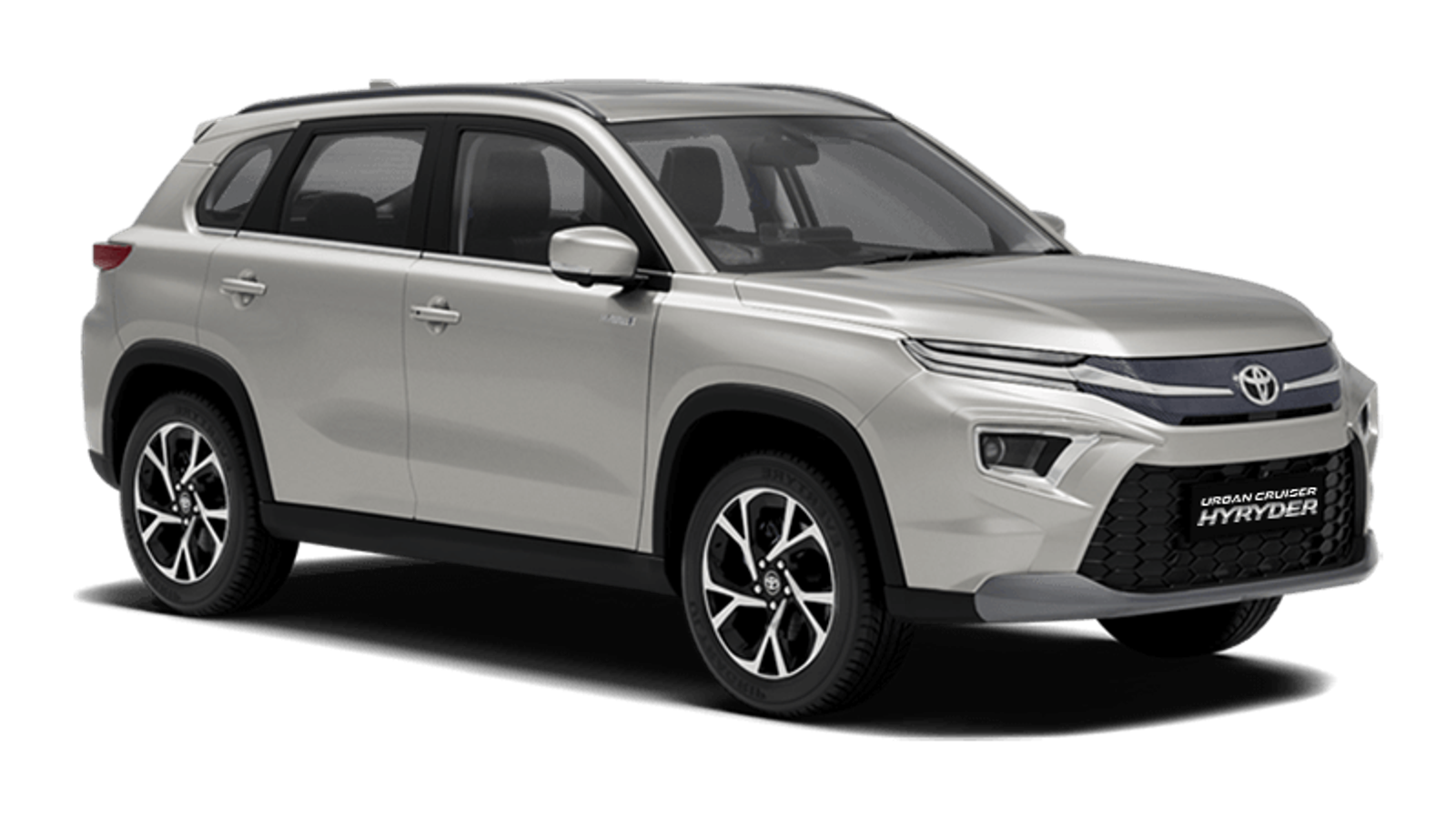
| Item | Share of CIF | Amount |
|---|---|---|
| Vehicle priceIPAS price for a car sourced in India | 3,250,964 GYDUS$15,500 | |
| Shipping and insuranceIndia to Guyana | 2,273,158 GYDUS$10,838 | |
| CIF valueCost, insurance and freight: the customs value | 5,524,122 GYDUS$26,338 | |
| Customs duties and taxes | ||
| Basic customs duty (35%)35% of CIF | 1,933,380 GYDUS$9,218 | |
| Total duties and taxes35% of CIF | 1,933,380 GYDUS$9,218 | |
| Service and handling | ||
| Premium Import ServiceOptional end-to-end import management by IPAS | 220,017 GYDUS$1,049 | |
| Destination handlingPort terminal and customs clearance handling | 364,947 GYDUS$1,740 | |
| Total landed cost | 8,042,465 GYDUS$38,345 | |
Documents Required for Vehicle Import
Guyana requires a comprehensive set of documents for vehicle customs clearance. Missing or incomplete documentation is the most common cause of delays at the Port of Georgetown. Prepare all documents before shipping.
Mandatory Core Documents
| Document | Details |
|---|---|
| Bill of Lading (Original) | Must carry freight-certified stamp from the shipping line |
| Commercial Invoice | Must show CIF value (Cost, Insurance, Freight) |
| Electronic Single Administrative Document (eSAD) | Filed through ASYCUDA World — the GRA's electronic customs system |
| Taxpayer Identification Number (TIN) | Required for all importers (individuals and companies) |
| C-72 Form | Vehicle examination and customs assessment form |
| Title and Registration Certificate | From the vehicle's country of export |
| De-registration / Export Certificate | Proof that the vehicle was legally de-registered in the origin country |
| On-sale Certificate | Proof of purchase or transfer of ownership |
| Insurance Certificate | Marine transit insurance covering the shipment |
| Proof of Payment | Evidence of payment to the seller (bank transfer, invoice receipt) |
For Used Vehicles (Mandatory Since January 2025)
| Document | Details |
|---|---|
| Inspection Certificate | Issued by a Competent Authority in the country of export — mandatory for ALL used vehicles |
Conditional Documents
| Document | When Required |
|---|---|
| Import Licence | If required by the Ministry of Tourism, Industry, and Commerce for specific vehicle types |
| Tax Exemption Letter | If claiming EV, hybrid, or other duty exemptions |
| Certificate of Origin (CARICOM) | If claiming preferential tariff rates under CARICOM Common External Tariff |
Document Tips
- The eSAD can be lodged electronically through ASYCUDA World before the vehicle arrives in Guyana, enabling pre-arrival clearance processing
- A licensed Customhouse Broker is strongly recommended for navigating the ASYCUDA system and ensuring all forms are correctly completed
- Ensure the Bill of Lading, Commercial Invoice, and Title Certificate all show consistent vehicle identification (VIN, engine number, chassis number)
- For hybrids and double cabs, make sure the documents show the exact engine capacity — the 2,000 cc and 2,500 cc lines change the tax bill dramatically
- For CARICOM-origin vehicles, the Certificate of Origin must be presented to claim reduced or zero duty rates
Customs Clearance Timeline
Guyana uses the ASYCUDA World electronic customs management system, which supports pre-arrival lodgement of import declarations. This significantly accelerates the clearance process compared to paper-based systems.
Typical Timeline
| Stage | Duration | Notes |
|---|---|---|
| Pre-arrival eSAD lodgement | Before vessel arrival | File through ASYCUDA World; engage a Customhouse Broker |
| Vessel arrival and unloading | 1-2 days | Port of Georgetown, Demerara River |
| Document verification | 1-2 working days | GRA reviews eSAD, invoice, BoL, and supporting documents |
| Duty assessment and payment | 1 working day | GRA calculates duties; payment via approved channels |
| Physical examination | 1-2 working days | Joint inspection by LRO and Customs officers |
| Release | Same day after examination | Vehicle released from port custody |
Total estimated clearance time: 3-7 working days from vessel arrival, assuming all documents are complete and duties are paid promptly.
Accelerating Clearance
- Pre-lodge your eSAD: Filing before vessel arrival can shave two or more days off the process
- Engage a licensed Customhouse Broker: Brokers familiar with ASYCUDA World can prevent documentation errors that cause delays
- Pay duties promptly: Delays in payment hold up the physical examination stage
- Ensure inspection certificate is ready: For used vehicles, the export-country inspection certificate must be presented at document verification — missing it will cause a hold
GRA Tax Exemptions Helpdesk
For questions about EV exemptions, hybrid incentives, or other tax relief, contact the GRA's Tax Exemptions unit through the official GRA website before you ship.
Homologation and Compliance
Guyana does not operate a formal vehicle homologation or emissions type-approval regime comparable to those found in the European Union, Australia, or Japan. There is no requirement to submit vehicles for emissions testing, crash certification, or engineering compliance review before or after import.
Physical Examination at Port
Instead of type-approval, Guyana relies on a physical examination process conducted jointly by a GRA Licence Revenue Officer and a Customs Officer. This examination covers:
- Engine and chassis number verification: Officers confirm that the vehicle's engine number and chassis/VIN number match the documentation presented (Bill of Lading, Commercial Invoice, Title Certificate)
- Duty verification: Officers confirm the declared CIF value and vehicle specifications align with what is physically present
- Tint compliance: Window tinting is checked against local regulations
- General condition: Officers verify the vehicle matches its declared condition (new vs. used)
External Inspection Certificate (Used Vehicles)
Since January 1, 2025, all used vehicles must carry an Inspection Certificate issued by a Competent Authority in the country of export. This certificate serves as the primary roadworthiness and safety check, replacing the need for a domestic type-approval system. The inspection must be completed and the certificate obtained before the vehicle is shipped.
New vehicles are exempt from this requirement.
No Emissions Testing at Port
Guyana does not currently require emissions testing as part of the import or registration process. However, the Guyana National Bureau of Standards (GNBS) began an EV charger verification programme in 2026, signalling that technical standards for electric vehicles and their infrastructure are under active development.
Registration Process
Once customs clearance is complete and all duties are paid, the vehicle must be registered through the GRA Licence Revenue Office (LRO). This is a separate process from customs clearance and results in the issuance of a Certificate of Registration and licence plates.
Step-by-Step Registration
- Complete customs clearance: Ensure all duties, excise, and VAT are paid and the vehicle is released from port custody
- Gather registration documents: Customs release documents, Bill of Lading, Commercial Invoice, Export Certificate, proof of duty payment, and valid photo identification
- Submit registration application: Visit the GRA Licence Revenue Office in Georgetown (or a regional office in New Amsterdam, Corriverton, Linden, or Suddie for agricultural vehicles)
- Joint physical examination: A Licence Revenue Officer and a Customs Officer jointly inspect the vehicle. They verify engine and chassis numbers, confirm duty payment, check tint compliance, and complete the examination form
- Document verification and system update: Officers verify all documentation, update the GRA system with the vehicle's details, and prepare the Certificate of Registration
- Pay registration fees: Registration fees are paid at the LRO office
- Receive registration documents: The Certificate of Registration is printed and issued along with licence plates
Regional Registration Offices
Buyers located outside Georgetown can complete registration at the following regional offices:
- New Amsterdam — serves East Berbice-Corentyne region
- Corriverton — serves the border area near Suriname
- Linden — serves Upper Demerara-Berbice region
- Suddie — primarily handles agricultural vehicle registrations
Frequently Asked Questions
Can I import a left-hand drive (LHD) vehicle to Guyana?
Guyana drives on the left and right-hand drive is the norm; IPAS supplies RHD vehicles for Guyana. We have not found a published instrument that bans LHD imports, so if you are considering an LHD vehicle from the United States or continental Europe, confirm with GRA that it can be registered for road use before you ship it.
Are electric vehicles really completely tax-free in Guyana?
Yes. Battery electric vehicles are exempt from excise tax and VAT (new or four years and older, any power rating), and GRA's published guidance shows 0% customs duty. This is one of the most generous EV incentive programmes in the Caribbean. Hybrids and plug-in hybrids are not electric vehicles and are taxed under the hybrid rules. Additionally, business buyers benefit from a 50% annual write-down allowance, allowing full tax deduction within two years.
What is the maximum age for importing a vehicle?
Guyana's Customs Regulations define an "eight years old" vehicle, which points to an eight-year import rule. IPAS is still confirming the current operative rule, so check with GRA before buying any vehicle that is eight years old or more. Separately, a vehicle's age decides how it is taxed: under four years is taxed ad valorem, four years and older under the flat-rate excise.
How does the duty structure differ for new vs. used vehicles?
Guyana operates a dual tax regime. Vehicles under 4 years old pay Customs Duty (35% up to 1,500 cc, 45% above), Excise Tax (0% to 140% of CIF plus duty) and 14% VAT — all calculated as cascading percentages, with reliefs for small cars, hybrids up to 2,000 cc, EVs and double cabs. Vehicles aged four years or older are VAT-exempt and pay a flat-rate excise of ((CIF + a fixed US-dollar amount) × a percentage) + the fixed amount, or a flat GYD 800,000 up to 1,500 cc; IPAS adds customs duty conservatively until GRA confirms it. Use CarImport.AI to get the precise breakdown for your vehicle.
Do I need an inspection certificate?
Yes, if your vehicle is used. Since January 1, 2025, all used vehicles imported into Guyana must carry an Inspection Certificate issued by a Competent Authority in the country of export. This must be arranged before shipping. New vehicles are exempt from this requirement.
What are the new tax measures effective February 2026?
From 16 February 2026: new vehicles up to 1,500 cc pay 35% customs duty with no excise or VAT; new hybrids pay 35% (up to 1,500 cc) or 45% (1,501-2,000 cc) duty with no excise or VAT; double-cab pickups up to 2,500 cc of any age pay no duty or VAT but a flat excise of GYD 2,000,000 or GYD 3,000,000; and ATVs pay nothing. These sit alongside the existing tax exemption for electric vehicles.
Can I import a vehicle as a dealer?
Yes. Both individuals and licensed dealers can import new and used vehicles into Guyana. However, dealers should note that for vehicles less than four years old, excise tax is calculated on 1.5 times the CIF value plus duty — a higher base than the CIF plus duty applied to individual importers — and older vehicles imported by dealers fall under a separate table.
How long does the entire process take from shipping to registration?
The total timeline depends on the origin country and shipping method. Sea freight from Japan typically takes four to six weeks. Customs clearance at Georgetown takes three to seven working days with complete documentation. Registration at the GRA Licence Revenue Office can be completed within one to two additional working days. In total, expect six to ten weeks from shipping to driving your vehicle on Guyanese roads.
How does Guyana compare to Trinidad and Tobago or Jamaica for vehicle imports?
All three are CARICOM members, but their duty structures differ significantly. Guyana's EV exemption (0% total) is among the most generous in the Caribbean. Trinidad and Tobago applies motor vehicle tax based on engine size, while Jamaica uses a combination of import duty, special consumption tax, and GCT. For a detailed comparison, see our guides on importing to Trinidad and Tobago and importing to Jamaica.
Ready to Import a Car to Guyana?
Guyana's import regime offers exceptional opportunities — particularly for electric vehicle buyers who pay zero taxes, and for buyers of small-engine cars, hybrids up to 2,000 cc and double-cab pickups that benefit from the February 2026 measures. The combination of a growing economy, simplified ASYCUDA World processing, and progressive EV incentives makes Guyana an increasingly attractive import destination in the Caribbean.
Whether you are shipping a fuel-efficient Japanese kei car, a rugged double cab pickup for Guyana's interior roads, or a fully electric vehicle to take advantage of the complete tax exemption, IPAS provides the tools and expertise to calculate your exact landed cost and manage the entire import process.
Calculate your exact landed cost now:
- Use CarImport.AI to get a complete duty, excise, VAT, and shipping breakdown for any vehicle to Guyana
- Use IPAS EXPRESS Pro Car Shipping to get instant shipping quotes — sea freight, air freight, or RoRo — from any origin port to Georgetown
Ready to Import Your Vehicle?
Two tools, two use cases. Pick the one that fits your needs.
Source a vehicle through IPAS and calculate the full landed cost — customs duties, shipping, and compliance — to destinations across the world.
Calculate Landed CostIPAS Express
Already have a vehicle? Get instant shipping quotes — sea freight, air freight, or RoRo — for one car or multiple vehicles worldwide.
Get Shipping QuoteRelated Guides
How to Import a Car to Trinidad and Tobago (2026)
Complete guide to importing a car to Trinidad and Tobago in 2026. Covers customs duty (20-67.5% by fuel and engine size), Motor Vehicle Tax, 12.5% VAT, hybrid and EV relief, the 6-year used-car limit, Import Licence, VMCOTT inspection and registration.
26 min readHow to Import a Car to Jamaica: Duties, EV Incentives & Process (2026)
Complete guide to importing a vehicle to Jamaica in 2026. Covers Import Duty, Special Consumption Tax, GCT, the 0.85% Environmental Protection Levy, EV incentives, the 6-year age limit, Kingston Wharves clearance and TAJ registration.
26 min read