
Introduction
Importing a new car to Namibia from outside SACU typically costs 64% to 94% of its CIF value in taxes: 25% customs duty (18% for EU or UK-built cars), ad valorem excise up to 30%, 15% VAT and a CO2 levy. Only right-hand drive vehicles are allowed; used cars need a permit and must be 12 years old or younger.
Namibia is a Southern African nation with a small but steadily growing vehicle market. As a member of the Southern African Customs Union (SACU) — alongside South Africa, Botswana, Lesotho, and Eswatini — Namibia shares a common customs area in which goods move without customs duty, making South Africa the dominant source of vehicles entering the country. For vehicles from outside SACU, the common external tariff applies, and importers face a layered structure of customs duty, ad valorem excise duty, VAT and a CO2 emissions levy.
The Namibia Revenue Agency (NamRA) administers customs assessment and tax collection. The Ministry of International Relations and Trade issues the import permits required for used vehicle imports. The Ministry of Works and Transport oversees vehicle roadworthiness and the National Traffic Information System (NaTIS), which handles registration and licensing. Understanding the interplay between these three agencies is essential for a smooth import experience.
Namibia bars second-hand vehicles older than 12 years from outside the common customs area. Left-hand drive vehicles are prohibited — only right-hand drive vehicles may be imported. The Port of Walvis Bay is the country's principal gateway for vehicle imports and the designated port of entry for second-hand vehicles from outside the common customs area. This guide covers every step of the process, from eligibility and permits through customs clearance, duty payment, and NaTIS registration.
Quick Facts
| Detail | Information |
|---|---|
| Lead Agency | Namibia Revenue Agency (NamRA) — Customs and Excise |
| Permits Authority | Ministry of International Relations and Trade |
| Registration Body | Ministry of Works and Transport — NaTIS |
| Steering | Right-Hand Drive (RHD) only — LHD prohibited |
| Customs Value | FOB (international freight and insurance excluded) |
| Customs Duty | 25% on cars and light pickups (18% for EU/UK-built cars with proof of origin; battery EVs stay at 25%); 20% on heavier goods vehicles |
| Ad Valorem Excise Duty | ((0.00003 x B) - 0.75)%, from 0% up to a 30% cap; B = customs value x 1.15 + customs duty |
| CO2 Emissions Levy | N$40 (petrol) / N$45 (diesel) per g/km above 120 g/km for cars, above 140 g/km for pickups; hybrids and EVs N$0 |
| VAT | 15% |
| SACU Intra-Trade | No customs duty on vehicles in free circulation in South Africa, Botswana, Lesotho or Eswatini |
| Age Limit | Used vehicles older than 12 years prohibited (from outside the common customs area) |
| Main Port | Port of Walvis Bay (designated port of entry for second-hand vehicles) |
| Customs Clearance | Approximately 5 working days |
| Total Tax Burden (typical) | About 64-94% of CIF for new cars from outside SACU |
Types of Cars That Can Be Imported
Namibia permits the import of both new and used vehicles, subject to age restrictions, steering requirements, and permit conditions. Vehicles already in free circulation within the customs union move without customs duty, while vehicles from outside SACU face the common external tariff.
New Vehicles
New vehicles from any origin may be imported into Namibia, provided they are right-hand drive. No import permit is required for new vehicles. New vehicles from outside SACU are subject to the full tax structure — customs duty, ad valorem excise, VAT and the CO2 levy.
Used Vehicles
Used vehicles may be imported by individuals and businesses, but several additional requirements apply. An import permit must be obtained before the vehicle is shipped (Import and Export Control Act 30 of 1994). Government Notice 266 of 2022, as corrected by Government Notice 320 of 2023, prohibits second-hand vehicles older than 12 years from outside the common customs area. The ban covers passenger cars, including station wagons, and light single-cab and double-cab pickups. Confirm how the age of your vehicle will be counted when you apply for the permit.
Car Carrier Transport Mandate
Since 1 March 2023, all second-hand vehicles imported into Namibia must be transported on a car carrier trailer. Driving a newly imported used vehicle under its own power from the port or border is no longer permitted. This applies to vehicles entering from all origins, including SACU member states.
Left-Hand Drive Prohibition
Namibia drives on the left side of the road. The import of left-hand drive (LHD) vehicles is prohibited by Government Notice 257 of 2004, paragraph (b), which remains in force. NaTIS registration also requires a mandatory Confirmation of Steering Mechanism form to verify compliance.
Electric and Alternative Fuel Vehicles
Battery-electric, hybrid and plug-in hybrid cars pay the same 25% customs duty and the same ad valorem excise as petrol cars. The EU/UK preference does not reach battery EVs: their EU/UK rate is also 25%. The one saving is the CO2 levy, which does not apply to hybrids, plug-in hybrids or battery EVs. Whether any rebate item applies to electric vehicles is under review (due November 2026); until then, expect the full tax stack.
Common Customs Area Rule for Used Vehicles
The 12-year limit cannot be avoided by registering a car briefly in a neighbouring country. Government Notice 266 of 2022 also prohibits a second-hand vehicle older than 12 years that came from outside the common customs area and was registered in a common customs area country (Botswana, Eswatini, Lesotho or South Africa) for less than two years before being imported into Namibia.
Special-Purpose Vehicle Exemptions
Annexure B of Government Notice 266 of 2022 exempts special-purpose vehicles of heading 87.05 from the age restriction: crane lorries, mobile drilling derricks, fire-fighting vehicles, concrete-mixer lorries and other special-purpose vehicles such as breakdown lorries, road sweepers, spraying lorries, mobile workshops and mobile radiological units. Chassis fitted with engines for tractors and special-purpose vehicles are also outside the ban.
Prohibited Vehicles
- Left-hand drive vehicles
- Second-hand vehicles older than 12 years from outside the common customs area (including those registered in a common customs area country for less than two years), unless exempt under Annexure B
- Used vehicles without a valid import permit
Cars You Can Import to Namibia
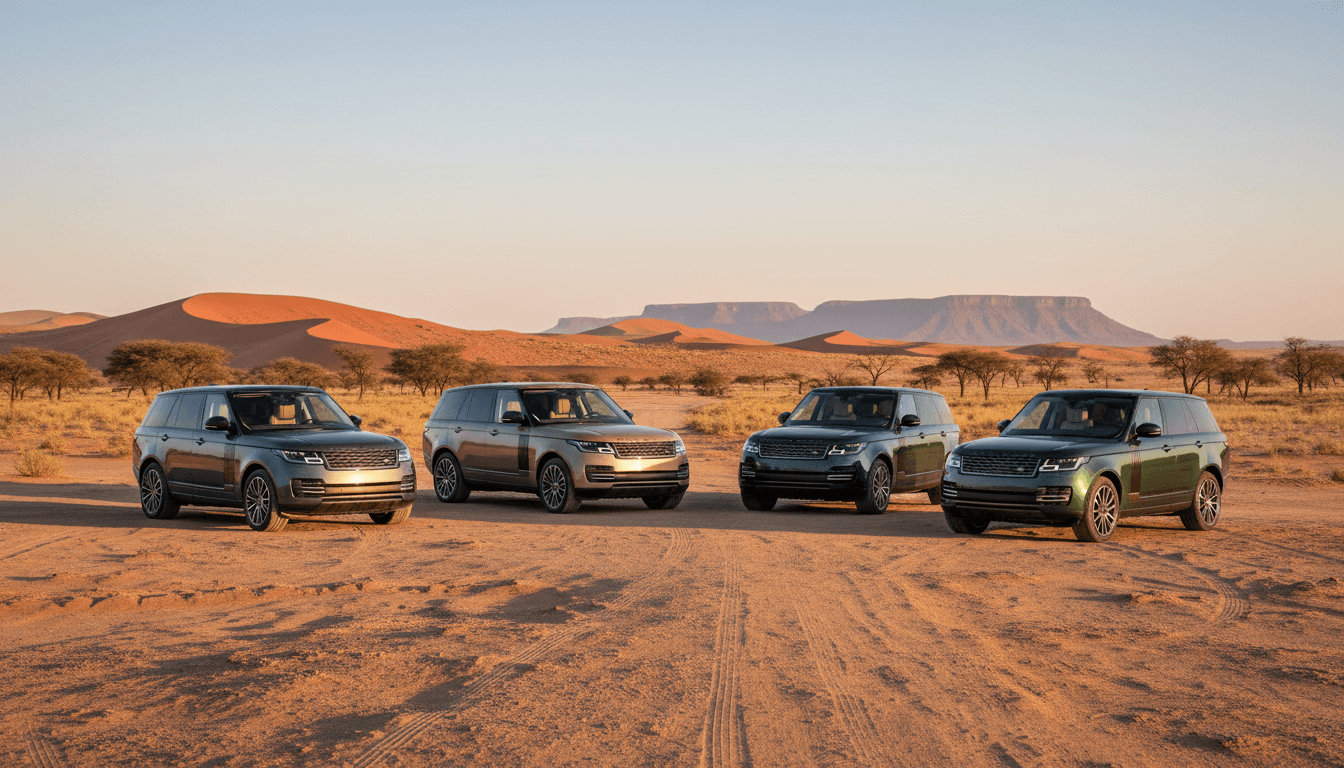
Each card is a full landed-cost calculation: the car's price, shipping, every duty and tax, and handling, worked out on 9 November 2026 with the rules in force that day. All are right-hand drive to suit Namibia's roads. Tap a car to see its full breakdown, or open it to change the trim, colour or port.
More cars you can import to Namibia
New cars IPAS sources to order that meet Namibia's import rules. Prices are ex works, before shipping and duty. Cars marked C-RHD are built left-hand drive and converted to right-hand drive before shipping; the calculator adds the conversion. Open a car to work out its full landed cost.
 LHD/C-RHDBackorder2026
GMC Hummer EV Pickup
Pickup · 3 VariantsElectricFrom $115,900Ex Works, USA LHD/C-RHDBackorder2026
Chevrolet Silverado 3500 HD
Pickup · 10 VariantsPetrol · DieselFrom $64,100Ex Works, USA RHDBackorder2026
Mercedes-Benz AMG GT 4-Door Coupe Electric
Coupe · 3 VariantsElectricFrom $134,700Ex Works, UK RHDBackorder2027
Mercedes-Benz AMG G-Class
SUV · 4 VariantsHybridFrom $224,800Ex Works, UK RHDBackorder2026
Mercedes-Benz AMG GLE Coupe
SUV · 5 VariantsHybrid · Plug-in HybridFrom $132,100Ex Works, UK RHDBackorder2026
BMW M4 Convertible
Convertible · 2 VariantsPetrolFrom $128,100Ex Works, UK RHDBackorder2026
Mahindra Thar OG
SUV · 15 VariantsPetrol · DieselFrom $11,000Ex Works, India RHDBackorder2026
Toyota Glanza
Hatchback · 13 VariantsPetrol · CNGFrom $7,800Ex Works, India RHDBackorder2026
Skoda Kylaq
SUV · 9 VariantsPetrolFrom $10,400Ex Works, India RHDBackorder2026
Bentley Torcal
SUV · 3 VariantsElectricFrom $212,500Ex Works, UK RHDBackorder2026
Hyundai Exter
SUV · 19 VariantsPetrol · CNGFrom $6,700Ex Works, India RHDBackorder2026
Hyundai Venue N Line
SUV · 6 VariantsPetrolFrom $11,400Ex Works, India LHD/C-RHDBackorder2027
Lincoln Navigator L
SUV · 6 VariantsPetrolFrom $111,600Ex Works, USA RHDBackorder2026
Volkswagen Virtus
Sedan · 12 VariantsPetrolFrom $9,600Ex Works, India RHDBackorder2025
Lexus LX 700h
SUV · 5 VariantsHybridFrom $109,800Ex Works, Japan RHDBackorder2026
Jeep Compass
SUV · 17 VariantsDieselFrom $16,200Ex Works, India
Seaports and Airports Supporting Vehicle Import
Namibia has one principal seaport for vehicle imports and one main international airport. Second-hand vehicles from outside the common customs area must enter through the Port of Walvis Bay.
Seaports
| Port | Code | City | Notes |
|---|---|---|---|
| Port of Walvis Bay | NAWVB | Walvis Bay | Principal port; designated port of entry for second-hand vehicles from outside the common customs area |
Port Details
The Port of Walvis Bay is Namibia's only deep-water commercial port and handles all containerised and RoRo vehicle shipments. Government Notice 266 of 2022 (Government Gazette 7902) designates Walvis Bay as the port of entry for all second-hand motor vehicles imported from outside the common customs area. The port has modern container handling facilities and connects to the national road and rail network for onward transport to Windhoek and other cities.
Walvis Bay also serves as a regional transhipment hub for landlocked countries in Southern Africa, including Botswana, Zambia, and Zimbabwe. This regional role means the port has well-established clearing agent infrastructure and bonded storage facilities.
Airports
| Airport | Code | City | Notes |
|---|---|---|---|
| Hosea Kutako International Airport | WDH | Windhoek | International airport; air freight available for high-value vehicles |
Land Border Crossings
Vehicles in free circulation in SACU (particularly from South Africa and Botswana) frequently enter by road. Common entry points include:
- Noordoewer / Vioolsdrif (South Africa border)
- Ariamsvlei / Nakop (South Africa border)
- Buitepos / Mamuno (Botswana border — Trans-Kalahari corridor)
- Ngoma (Botswana border — Zambezi Region)
Vehicles entering by land from SACU countries benefit from duty-free movement within the common customs area and simpler customs processing, though the car carrier transport mandate still applies to used vehicles.
Restrictions on Vehicle Import
Age Limit — 12 Years
The core restriction is the 12-year limit on second-hand vehicles from outside the common customs area, set by Government Notice 266 of 2022 (Government Gazette 7902, 13 September 2022) as corrected by Government Notice 320 of 2023. Its Annexure A lists passenger cars (including station wagons) and light pickups, both single cab and double cab, by tariff line. Heavier trucks and the special-purpose vehicles in Annexure B are not covered. Used vehicles of 12 years or younger are importable with a permit.
LHD Prohibition
Left-hand drive vehicles may not be imported into Namibia (Government Notice 257 of 2004, paragraph (b), under the Import and Export Control Act). NaTIS also verifies steering through the mandatory Confirmation of Steering Mechanism form during registration.
Import Permit Requirement
All second-hand vehicle imports require a prior import permit from the Ministry of International Relations and Trade. This permit must be obtained before the vehicle is shipped. New vehicles do not require an import permit.
Car Carrier Transport Mandate
Since 1 March 2023, all imported second-hand vehicles must be transported on a car carrier trailer — they may not be driven under their own power from the port or border crossing to their destination. This rule was introduced to prevent odometer manipulation and undocumented road use before registration.
SARPCCO Police Clearance
A SARPCCO (Southern African Regional Police Chiefs Cooperation Organisation) Police Clearance Certificate is mandatory for all imported used vehicles. This certificate confirms the vehicle is not stolen and has no criminal history in the SACU/SADC region. It is valid for 90 days from the date of issue.
Quantity and Commercial Restrictions
Individual importers may bring in vehicles for personal use. Commercial-scale imports typically require a business registration and may attract additional regulatory scrutiny. Licensed clearing agents are required for all customs processing.
Duty Structure Overview
For a vehicle from outside SACU, Namibia charges four taxes in sequence: customs duty, ad valorem excise duty, VAT and a once-off CO2 emissions levy. For a new passenger car the total usually comes to about 64% to 94% of CIF value. The excise rises with the vehicle's value and reaches its 30% cap once the excise base passes NAD 1,025,000, which at the 25% duty rate means a customs value of about NAD 732,000.
Customs Value Is FOB
Under the Customs and Excise Act 20 of 1998 (s.77(2)(a)), international freight and marine insurance are deducted from the price, so the customs value is FOB. IPAS's calculator works from the CIF figure when freight and insurance are not itemised separately. That slightly overstates the taxes, so the estimate errs on the safe side.
SACU Duty-Free Trade
Vehicles in free circulation in the common customs area — built in South Africa, Botswana, Lesotho or Eswatini, or duty-paid when they first entered SACU — move into Namibia without customs duty. The ad valorem excise on a South African-built car is charged in South Africa and is already in its price. A Japan- or Thailand-built car shipped to Namibia is not SACU origin, even if the same model is also built in South Africa, and pays the full tax structure.
For related SACU country guides, see How to Import a Car to South Africa (2026) and How to Import a Car to Botswana (2026).
Non-SACU Imports — Tax Layers
For vehicles imported from outside SACU (Japan, Thailand, India, the UK, the USA, Europe, etc.), the following taxes apply:
- Customs duty: 25% of the customs value for passenger cars of every engine size and for light pickups (single and double cab, vehicle mass up to 2,000 kg or G.V.M. up to 3,500 kg); 20% for heavier goods vehicles (Schedule 1 Part 1, Government Notice 391 of 2024).
- Ad valorem excise duty: rate = ((0.00003 x B) - 0.75)%, where B = customs value x 1.15 + customs duty. The rate is 0% when B is NAD 25,000 or less and reaches the 30% maximum at B of NAD 1,025,000. The excise is the rate multiplied by B. It applies to every passenger car (petrol, diesel, hybrid and electric) and to light single-cab and double-cab pickups, but not to heavier goods vehicles. The 30% maximum follows the current SACU schedule; the Namibian gazetted wording is still being confirmed (review due November 2026).
- VAT: 15%. By law the import value is the greater of FOB plus 10% or the open market value. IPAS quotes VAT on customs value x 1.10 + customs duty + excise, which may slightly overstate it; this base is under review.
- CO2 emissions levy: N$40 per g/km for petrol and N$45 per g/km for diesel, on every g/km above 120 g/km for cars and above 140 g/km for pickups and other goods vehicles (Schedule 1 Part 3, Government Notice 226 of 2019). Without a manufacturer's CO2 certificate, NamRA uses a formula: the threshold plus 0.05 g/km per cm³ of engine capacity. Hybrids, plug-in hybrids and battery EVs pay no CO2 levy.
Pickups and Commercial Vehicles
Double-cab pickups are goods vehicles under the tariff (HS 8704.21.81 diesel / 8704.31.81 petrol) and single cabs are 8704.21.83 / 8704.31.83. Both pay 25% duty and the ad valorem excise, with the CO2 levy above 140 g/km. Pickup-based SUVs such as the Fortuner, Everest and Pajero Sport are passenger cars (HS 8703). Goods vehicles above 2,000 kg vehicle mass and 3,500 kg G.V.M. pay 20% duty and no ad valorem excise.
Worked Example: Toyota Corolla 1.8 Petrol from Japan
A new Toyota Corolla 1.8 petrol (HS 8703.23.90, 1,798 cm³) with a CIF value of NAD 350,000, no CO2 certificate, customs value taken as the CIF figure:
| Component | Calculation | Amount (NAD) |
|---|---|---|
| Customs value | CIF (freight and insurance not itemised) | 350,000 |
| Customs duty (25%) | 350,000 x 25% | 87,500 |
| Excise base B | 350,000 x 1.15 + 87,500 | 490,000 |
| Ad valorem excise (13.95%) | 490,000 x 13.95% | 68,355 |
| VAT (15%) | (350,000 x 1.10 + 87,500 + 68,355) x 15% | 81,128 |
| CO2 levy | (209.9 - 120) g/km x N$40 | 3,596 |
| Total taxes | 240,579 (68.7% of CIF) |
Typical Tax Burden by Vehicle
| Vehicle (new) | HS Code | CIF (NAD) | Total Taxes (% of CIF) |
|---|---|---|---|
| Toyota Corolla 1.8 petrol, Japan | 8703.23.90 | 350,000 | 68.7% |
| Toyota Hilux 2.4 diesel single cab, Thailand | 8704.21.83 | 400,000 | 72.4% |
| Nissan Leaf battery EV, Japan | 8703.80.90 | 500,000 | 77.9% |
| BMW 320i petrol, built in Germany (EU rate 18%) | 8703.23.90 | 700,000 | 79.3% |
| Toyota Hilux 2.8 diesel double cab, Thailand | 8704.21.81 | 600,000 | 85.7% |
| Toyota Land Cruiser 300 3.5 petrol, Japan | 8703.24.90 | 1,400,000 | 94.0% |
| Toyota Land Cruiser Prado 2.8 diesel, Japan | 8703.33.90 | 800,000 | 94.3% |
| Isuzu FVR truck, G.V.M. 14.5 t, Japan | 8704.22.90 | 1,200,000 | 41.0% |
Preferential Trade Agreements
Two preferences in Namibia's tariff matter for vehicles. Neither removes the ad valorem excise, VAT or CO2 levy:
- EU and UK (SADC–EU EPA and SACUM–UK EPA) — 18% duty instead of 25% on petrol, diesel and hybrid cars and light pickups (12% on heavier goods vehicles; free on cars of 1,000 cm³ or less). Battery EVs stay at 25%. The car must be built in the EU or UK and carry a EUR.1 or origin declaration; shipping from a European port is not enough.
- SADC Trade Protocol — no customs duty for vehicles originating in a SADC member state with a SADC certificate of origin.
Vehicles built in Japan, Korea, China, Thailand, India, the USA, Canada, Australia, New Zealand, the UAE or Mexico pay the general 25% rate.
Used Vehicle Valuation
NamRA values a used vehicle on the price paid. Where it does not accept the declared value, it applies a published allowance off the new price: 12% for vehicles up to 6 months old, 25% for over 6 months to 1 year, 35% for 1 to 2 years, 50% for 2 to 3 years and 60% for 3 to 4 years.
VAT Deferral
Importers may defer payment of import VAT to the 20th of the month following importation by registering for a NamRA Import VAT Account. This cash-flow benefit is particularly useful for dealers and commercial importers.
Get exact duty calculations for your specific vehicle using CarImport.AI

Calculate your exact import duty to Namibia
Get a vehicle-specific duty and full landed-cost breakdown — HS classification, every tax, levy and FTA, plus shipping — calculated for your exact make, model and specs.
- Vehicle-specific HS code
- All duties, taxes & FTAs
- Shipping + est. landed cost
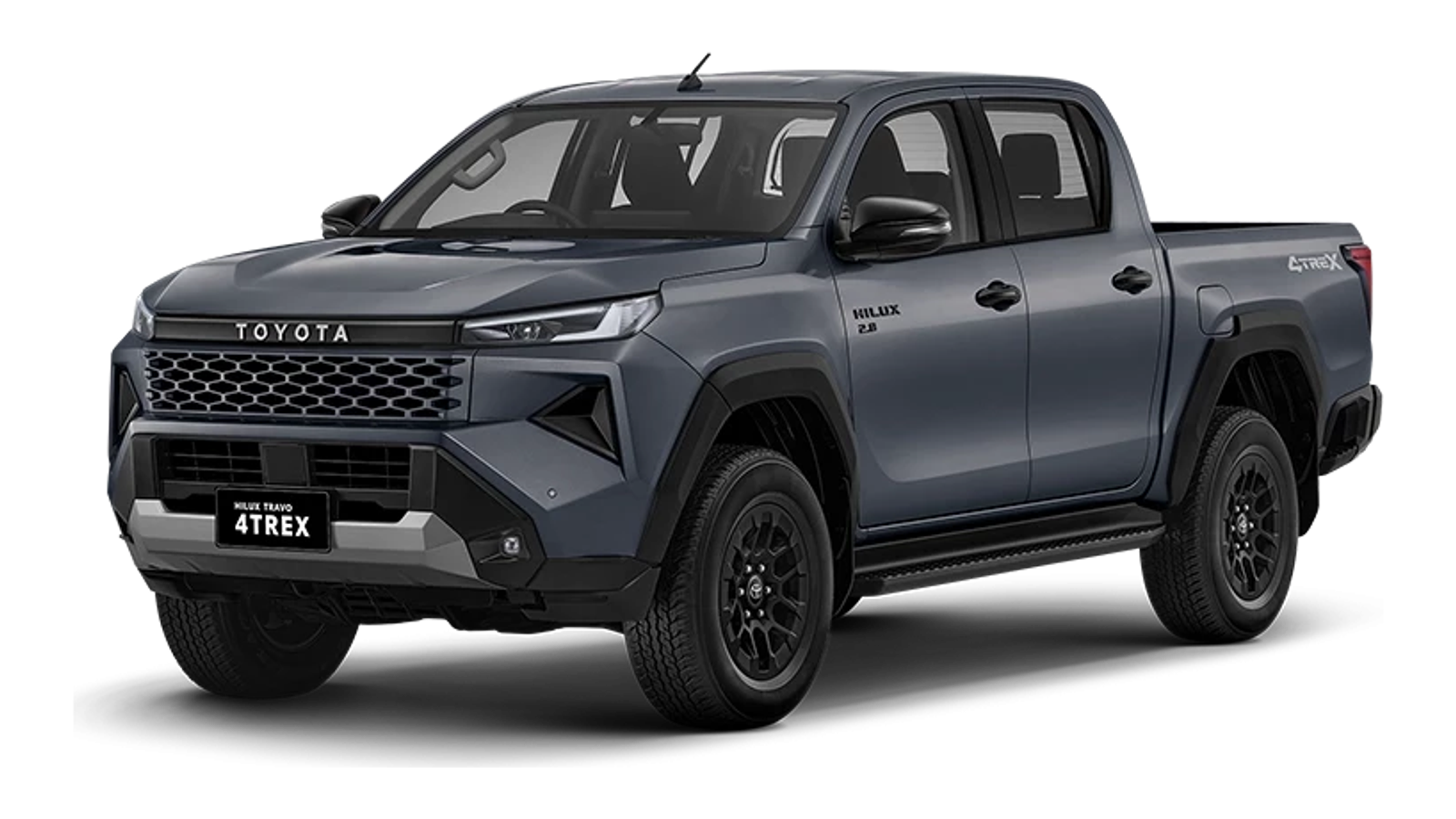
Worked Example: Importing a 2026 Toyota Hilux Travo to Namibia
Here is the full landed cost of one car, a 2026 Toyota Hilux Travo shipped from Thailand to Namibia, worked out on 9 November 2026 with the customs rules in force that day. It lands at 1,112,796 NAD (about US$67,299), and duties and taxes come to 83.8% of its CIF value.
| Item | Share of CIF | Amount |
|---|---|---|
| Vehicle priceIPAS price for a car sourced in Thailand | 448,101 NADUS$27,100 | |
| Shipping and insuranceThailand to Namibia | 124,592 NADUS$7,535 | |
| CIF valueCost, insurance and freight: the customs value | 572,693 NADUS$34,635 | |
| Customs duties and taxes | ||
| Basic customs duty (25%)25% of CIF | 143,177 NADUS$8,659 | |
| Ad valorem excise (23.303%)Base or related charges differ from CIF; see the duty structure above32.6% of CIF | 186,830 NADUS$11,299 | |
| CO₂ emissions levyest. 198 g/km1.1% of CIF | 6,201 NADUS$375 | |
| GST/VAT (15%)Base or related charges differ from CIF; see the duty structure above25.1% of CIF | 143,988 NADUS$8,708 | |
| Total duties and taxes83.8% of CIF | 480,196 NADUS$29,041 | |
| Service and handling | ||
| Premium Import ServiceOptional end-to-end import management by IPAS | 31,053 NADUS$1,878 | |
| Destination handlingPort terminal and customs clearance handling | 28,854 NADUS$1,745 | |
| Total landed cost | 1,112,796 NADUS$67,299 | |
Documents Required for Import
For All Vehicle Imports (New and Used)
- Commercial invoice or tax invoice showing the purchase price, vehicle description, engine number, and VIN
- Original Bill of Lading — must state the engine number, VIN, and colour of the vehicle
- Original vehicle registration certificate from the country of export, or a deregistration / cancellation certificate
- Certified copy of the importer's Namibian ID or passport (or company registration documents for entities)
- SAD 500 customs declaration form — processed through NamRA Customs and Excise
- Proof of payment or transfer of funds for the vehicle purchase
- EUR.1 or origin declaration, if claiming the EU/UK preferential rate
Additional Documents for Used Vehicle Imports
- Import permit from the Ministry of International Relations and Trade — must be obtained before shipping
- SARPCCO Police Clearance Certificate — confirms the vehicle is not stolen; valid for 90 days
- Export documentation from the country of origin
- De-registration documentation from the country of origin — confirms the vehicle has been legally removed from the foreign register
For NaTIS Registration (Post-Customs)
- Application for Registration and Licensing (blue form)
- Confirmation of Steering Mechanism form — mandatory for all imported vehicles
- Certified copy of Namibian ID, driving licence, or NaTIS Traffic Register Certificate
- Original manufacturer's certificate (new vehicles) or registration certificate from country of origin (used vehicles)
- Customs import duty documents with original NamRA customs stamp — SAD 500, Release Order, and Declarant Receipt
- SARPCCO or NamPol clearance certificate — valid for 90 days
- Roadworthy certificate — valid for 6 months (required for used imports)
- Weigh-bridge certificate (required for used imports)
- Registration fees based on vehicle weight
For Foreign Nationals
Foreign nationals must first obtain a NaTIS Traffic Register Certificate before they can register a vehicle in Namibia. This requires a valid passport, proof of residence in Namibia, and applicable fees.
All documents not in English must be translated by a certified translator before submission.
Customs Clearance Timeline
| Stage | Duration | Details |
|---|---|---|
| Import permit application (used vehicles) | 5-10 working days | Apply to Ministry of International Relations and Trade before shipping |
| SARPCCO police clearance | 5-10 working days | Apply through NamPol or SARPCCO; valid 90 days |
| Sea freight transit | 2-6 weeks | Depends on origin (Japan 4-5 weeks, UK 3-4 weeks, South Africa 3-5 days) |
| Port discharge and inspection | 1-2 days | Vehicle unloaded and documentation verified at Walvis Bay |
| NamRA customs assessment | 2-3 working days | SAD 500 processing, duty assessment, physical inspection |
| Duty payment and release | 1-2 working days | Electronic or bank payment; release order issued |
| Transport to destination | 1-3 days | Car carrier from Walvis Bay to Windhoek or other cities |
| Roadworthy inspection (used) | 1-2 days | At approved testing station; certificate valid 6 months |
| NaTIS registration | 3-5 working days | Document submission, steering confirmation, plates issued |
Total Estimated Timeline: 4-10 weeks (from shipping to registration, depending on origin)
Tips to Avoid Delays
- Obtain the import permit and SARPCCO clearance well before shipping — both can take up to 10 working days
- Ensure the Bill of Lading accurately lists the VIN, engine number, and vehicle colour
- Appoint a licensed clearing agent at Walvis Bay — NamRA requires all customs declarations to be processed through an authorised agent
- Have the manufacturer's CO2 certificate ready; without it the CO2 levy is assessed on a formula that is usually higher
- Prepare the Confirmation of Steering Mechanism form in advance to avoid delays at NaTIS registration
- For vehicles entering by land from SACU, keep the documents showing the vehicle is in free circulation (South African manufacturer's papers or the first-entry SAD 500)
Homologation and Vehicle Approval
Roadworthiness Requirement
All imported used vehicles must obtain a roadworthy certificate before they can be registered through NaTIS. The inspection is conducted at an approved testing station and the certificate is valid for 6 months. The inspection covers:
- Braking system and brake efficiency
- Steering mechanism (including RHD verification)
- Lighting and electrical systems
- Tyres and wheel condition
- Exhaust and emissions (visual check)
- Chassis and body structural integrity
- Windscreen and glazing condition
Weigh-Bridge Certificate
In addition to the roadworthiness inspection, imported used vehicles must obtain a weigh-bridge certificate. This records the vehicle's tare weight and is required for NaTIS registration. The weigh-bridge certificate is used to calculate registration and licensing fees, which are weight-based.
No Formal Type Approval for Individual Imports
Namibia does not currently operate a formal type-approval or homologation system for individual vehicle imports equivalent to the European WVTA or Australian RAWS. Vehicles must comply with the Road Traffic and Transport Act, administered by the Ministry of Works and Transport. Compliance is primarily verified through the roadworthiness inspection rather than a pre-import type-approval certificate.
New Vehicle Requirements
New vehicles imported by manufacturers or authorised dealers must comply with applicable safety and environmental standards. Individual imports of new vehicles are subject to the same roadworthiness inspection as used vehicles before NaTIS registration.
Registration Procedures and Costs
NaTIS Registration Process
All vehicles in Namibia must be registered through the National Traffic Information System (NaTIS), administered by the Ministry of Works and Transport. The registration process for imported vehicles follows these steps:
- Obtain customs clearance — Receive the stamped SAD 500, Release Order, and Declarant Receipt from NamRA
- Complete roadworthiness inspection — Take the vehicle to an approved testing station for inspection and weigh-bridge certificate (used vehicles)
- Obtain police clearance — Ensure SARPCCO or NamPol clearance is current (valid 90 days)
- Submit registration documents — Present the blue Application for Registration and Licensing form, Confirmation of Steering Mechanism form, and all supporting documents to the nearest NaTIS registration office
- Pay registration fees — Fees are calculated based on the vehicle's tare weight
- Receive number plates — Upon approval, the vehicle is assigned a Namibian registration number and plates are issued
Confirmation of Steering Mechanism
This is a mandatory form unique to Namibia's registration process. It requires the applicant to declare and confirm that the vehicle is right-hand drive. A NaTIS official may physically inspect the vehicle to verify the declaration. LHD vehicles will be rejected at this stage.
Registration Fees
Registration and licensing fees in Namibia are based on the vehicle's tare weight. The fee schedule is published by the Ministry of Works and Transport. Annual licensing renewal is also weight-based. Exact fee amounts should be confirmed at the NaTIS office at the time of registration.
Foreign Nationals
Foreign nationals wishing to register a vehicle in Namibia must first obtain a NaTIS Traffic Register Certificate. This requires:
- Valid passport with Namibian visa or residence permit
- Proof of residential address in Namibia
- Application form and applicable fees
Once the Traffic Register Certificate is issued, the foreign national can follow the standard registration process.
Frequently Asked Questions
Is there customs duty when importing from South Africa to Namibia?
No, provided the vehicle is in free circulation in SACU — built in South Africa, Botswana, Lesotho or Eswatini, or duty-paid when it first entered the customs union. The ad valorem excise on a South African-built car is already in its price. A Japan- or Thailand-built car shipped to Namibia pays the full 25% duty and excise, even if the same model is also built in South Africa.
Can I import a left-hand drive vehicle to Namibia?
No. Government Notice 257 of 2004 prohibits the import of left-hand drive vehicles, and NaTIS checks steering through the mandatory Confirmation of Steering Mechanism form. The vehicle may be physically inspected to verify it is right-hand drive.
What is the age limit for importing a used car to Namibia?
Second-hand vehicles older than 12 years may not be imported from outside the common customs area (Government Notice 266 of 2022, as corrected by Government Notice 320 of 2023). The limit covers passenger cars, including station wagons, and light single-cab and double-cab pickups. Used vehicles of 12 years or younger need an import permit and must enter through Walvis Bay.
Can I drive my imported used car from the port or border?
No. Since 1 March 2023, all second-hand vehicles imported into Namibia must be transported on a car carrier trailer. Driving a newly imported used vehicle under its own power is no longer permitted, regardless of whether it enters by sea through Walvis Bay or overland from a neighbouring country.
Can I avoid the 12-year limit by registering the car in South Africa first?
Not quickly. The 12-year prohibition also covers a second-hand vehicle from outside the common customs area that was registered in a common customs area country (Botswana, Eswatini, Lesotho or South Africa) for less than two years before being imported into Namibia.
Do I need an import permit for a new vehicle?
No. Import permits from the Ministry of International Relations and Trade are only required for used (second-hand) vehicle imports. New vehicles can be imported without a permit, provided they meet RHD and customs requirements.
Do pickups pay the ad valorem excise in Namibia?
Yes. Light single-cab and double-cab pickups (vehicle mass up to 2,000 kg or G.V.M. up to 3,500 kg) pay the same 25% duty and ad valorem excise formula as passenger cars, plus the CO2 levy above 140 g/km. A new Hilux 2.4 single cab at CIF NAD 400,000 pays about 72% of CIF in taxes. Only heavier goods vehicles escape the excise.
What is the SARPCCO Police Clearance Certificate?
The SARPCCO (Southern African Regional Police Chiefs Cooperation Organisation) certificate confirms that a vehicle is not recorded as stolen in any SACU or SADC member state database. It is mandatory for all imported used vehicles and is valid for 90 days from the date of issue. Apply through NamPol (Namibian Police) or through a SARPCCO office in the country of export.
How much does it cost to import a car to Namibia from outside SACU?
For a new passenger car, total taxes are usually about 64% to 94% of CIF value: 25% customs duty, ad valorem excise of up to 30%, 15% VAT and the CO2 levy. A car with a CIF value of USD 30,000 (about NAD 496,000) pays roughly 78% of CIF, or about USD 23,400. Use CarImport.AI for an exact landed cost for your vehicle and origin.
Get exact landed cost calculations for your vehicle using CarImport.AI
Ready to Import Your Vehicle to Namibia?
Whether you are sourcing a new vehicle from outside SACU or a used car from South Africa, IPAS provides the tools to calculate your complete landed cost and arrange international shipping.
Calculate Your Landed Cost
Source a vehicle through IPAS and calculate the full landed cost — customs duty, ad valorem excise, VAT, the CO2 levy, shipping, and compliance — delivered to Walvis Bay or any Namibian destination.
Calculate Landed Cost with CarImport.AI
Get a Shipping Quote
Already have a vehicle? Get instant shipping quotes — sea freight, air freight, or car carrier — for delivery to Walvis Bay from any origin worldwide.
Ready to Import Your Vehicle?
Two tools, two use cases. Pick the one that fits your needs.
Source a vehicle through IPAS and calculate the full landed cost — customs duties, shipping, and compliance — to destinations across the world.
Calculate Landed CostIPAS Express
Already have a vehicle? Get instant shipping quotes — sea freight, air freight, or RoRo — for one car or multiple vehicles worldwide.
Get Shipping QuoteRelated Guides
How to Import a Car to South Africa: Duties, Used Car Ban & NRCS (2026)
Complete guide to importing a car to South Africa in 2026: 25% customs duty on FOB (18% for EU/UK petrol, diesel and hybrid cars), ad valorem excise up to 30%, the CO2 levy, 15% VAT (typically 50-85% of FOB), the used-car ban, RHD rule, NRCS LOA and eNaTIS registration.
21 min readHow to Import a Car to Botswana: SACU Duties & Process (2026)
Complete guide to importing a vehicle to Botswana in 2026: 25% SACU customs duty on FOB (18% for EU/UK-built cars), ad valorem excise up to 30% on cars and light pickups, 14% VAT (typically 58-90% of CIF in total), 0% duty for SACU-built vehicles, no age limit, RHD for registration, transit via Durban, BURS clearance and DRTS registration.
18 min read